
 Download PDF
Market Overview
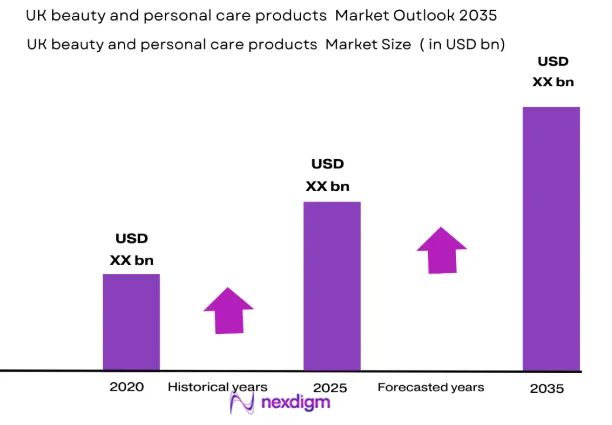
The UK Beauty and Personal Care Products Market is valued at USD ~ billion, based on a 2025 industry assessment. The market is driven by recurring demand for skin care, hair care, fragrances, hygiene, grooming, and make-up products. A separate UK cosmetics assessment values the cosmetics category at USD 10,130.51 million, while Grand View Research projects the broader UK beauty and personal care market to grow at a CAGR of 8.2% to 2030.
London, Birmingham, Manchester, Leeds, Glasgow, Liverpool, and Edinburgh dominate the UK Beauty and Personal Care Products Market because they concentrate premium retail, pharmacy chains, department stores, salons, beauty clinics, e-commerce fulfilment, and high-frequency beauty spending. The UK population reached 69,281,400, rising by 755,300 from the prior year, while England and Wales reached 61,806,682 residents, supporting stronger beauty retail density in major urban regions.
Market Segmentation
By Product Type
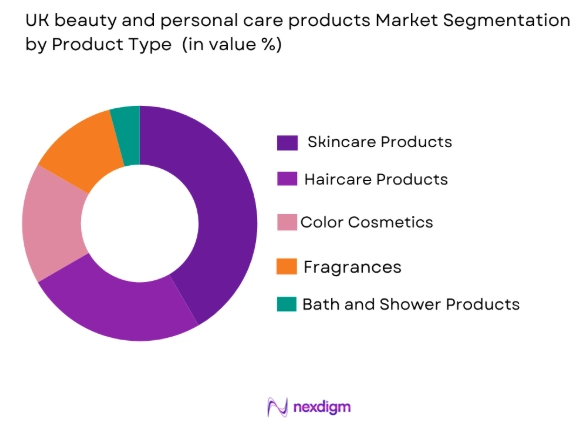
UK Beauty and Personal Care Products Market is segmented by product type into skin care products, hair care products, fragrances, and color cosmetics. Recently, skin care products have held the dominant market share under product type segmentation because consumers increasingly prefer daily-use facial care, sun protection, anti-aging products, moisturizers, serums, cleansers, and dermatology-backed formulations. The segment benefits from strong pharmacy distribution, premium beauty retail, influencer-led skin routines, and consumer willingness to spend on products that combine appearance, wellness, and prevention. Skin care also performs well across both mass and premium price tiers, making it more resilient than discretionary make-up categories. Industry sources identify skin care as the largest revenue-generating product segment in the UK beauty and personal care market, while a separate UK cosmetics source reports skin care accounting for around 37.62% of the UK cosmetics category.
By Distribution Channel
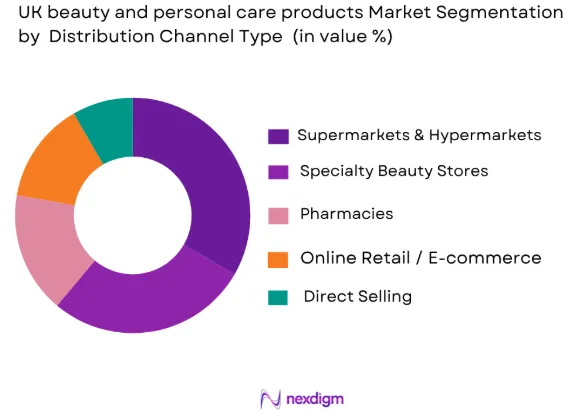
UK Beauty and Personal Care Products Market is segmented by distribution channel into online retail, specialty stores, pharmacies and drugstores, and supermarkets and hypermarkets. Recently, online retail has held the dominant market share because beauty consumers increasingly use digital platforms for price comparison, product reviews, subscription replenishment, influencer recommendations, shade discovery, and access to international brands. Digital retail is particularly strong in skin care, make-up, fragrance discovery sets, men’s grooming, and premium beauty products. The UK also has a mature e-commerce ecosystem, strong logistics networks, and established beauty platforms such as Lookfantastic, Cult Beauty, Boots.com, Sephora UK, and Amazon. Industry data identifies online as a major channel in the UK beauty and personal care market, while another UK cosmetics source notes online channels are projected to grow rapidly during the forecast period.
Competitive Landscape
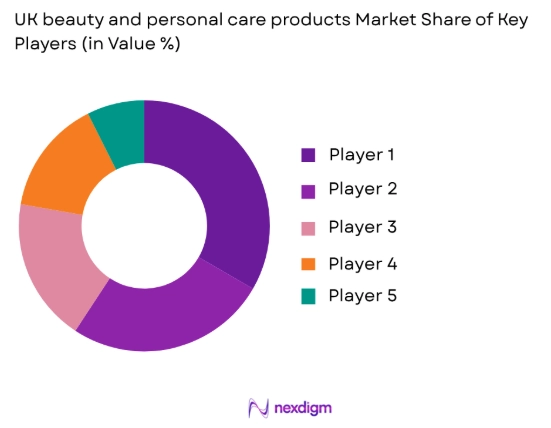
The UK Beauty and Personal Care Products Market is dominated by a mix of global consumer goods companies, prestige beauty groups, domestic beauty brands, pharmacy-led retailers, and e-commerce specialists. Companies such as Unilever, L’Oréal, Procter & Gamble, Estée Lauder, and Boots hold strong positions because they combine brand recognition, broad retail access, product innovation, digital marketing, and category coverage across skin care, hair care, personal hygiene, fragrances, grooming, and color cosmetics.
| Company | Establishment Year | Headquarters | Core Categories | UK Channel Strength | Brand Positioning | Product Innovation Focus | Digital Beauty Presence | Sustainability Focus |
| Unilever | 1929 | London, UK | ~ | ~ | ~ | ~ | ~ | ~ |
| L’Oréal Group | 1909 | Clichy, France | ~ | ~ | ~ | ~ | ~ | ~ |
| Procter & Gamble | 1837 | Cincinnati, USA | ~ | ~ | ~ | ~ | ~ | ~ |
| Estée Lauder Companies | 1946 | New York, USA | ~ | ~ | ~ | ~ | ~ | ~ |
| Boots / No7 Beauty Company | 1849 | Nottingham, UK | ~ | ~ | ~ | ~ | ~ | ~ |
UK Beauty and Personal Care Products Market Analysis
Growth Drivers
Rising Consumer Spending on Personal Grooming
The UK Beauty and Personal Care Products Market is supported by stronger household outlay on discretionary and daily-use goods. ONS reported average weekly household expenditure of £623.30 in FYE 2024, rising by £55.60 from FYE 2023, while real expenditure increased by £15.40. The richest fifth spent £948.70 weekly, compared with £378.60 for the poorest fifth, sustaining demand across premium and mass personal care. Miscellaneous goods and services, which include personal care-related spending, rose by £3.20 weekly, supporting purchases of toiletries, grooming, skin care, fragrance, and hair care. Source: ONS.
Expansion of E-commerce and Digital Beauty Retail
The UK Beauty and Personal Care Products Market benefits from a mature online retail base and high digital engagement. ONS tracks internet sales as a dedicated share of total retail sales, showing online retail remains structurally embedded in UK purchasing behavior. Ofcom reported YouTube reached 44.5 million UK online adults in May 2024, Facebook/Messenger reached 43.1 million, and Reddit reached 22.9 million, creating large digital discovery channels for beauty routines, product reviews, influencer content, and brand education. These platforms support online conversion for skin care, make-up, fragrance discovery sets, and replenishment-led personal care. Sources: ONS and Ofcom.
Challenges
Regulatory Compliance and Product Safety Standards
The UK Beauty and Personal Care Products Market faces strict compliance pressure because every cosmetic product available to consumers in Great Britain must be notified to OPSS before sale. GOV.UK states non-notification can lead to an unlimited fine in England and Wales or up to £5,000 in Scotland and Northern Ireland, plus imprisonment of up to 3 months. OPSS also recorded 1,418 product safety notifications covering 1,792 products in 2024 to 2025, including 213 cosmetics notifications, making cosmetics one of the most reported categories. Sources: GOV.UK and OPSS.
Price Sensitivity Due to Cost-of-Living Pressure
The UK Beauty and Personal Care Products Market remains exposed to value-seeking behavior because disposable income recovery is uneven. ONS reported median household disposable income of £36,700 in FYE 2024, while the poorest fifth fell to £16,800 and the richest fifth fell to £71,100. Mean gross income declined to £55,200, and original income fell by £1,400. These figures pressure discretionary beauty purchases, particularly premium fragrances, make-up, salon-grade hair care, and luxury skin care, while encouraging consumers to trade down, wait for promotions, buy smaller formats, or switch to pharmacy and supermarket private-label personal care. Source: ONS.
Opportunities
Clean Beauty and Sustainable Packaging
The UK Beauty and Personal Care Products Market has future growth opportunity in clean beauty, refill packs, recyclable materials, and low-waste packaging because UK packaging regulation is moving toward stronger producer responsibility. DEFRA states that UK organisations importing or supplying packaging may be responsible for packaging waste costs under extended producer responsibility, with reporting obligations based on packaging data. DEFRA also reported that 64.1 of UK packaging waste was recycled in 2024, with paper and cardboard at 74.3, metal at 68.4, and glass at 65.7, encouraging beauty brands to redesign primary and secondary packaging. Sources: DEFRA and GOV.UK.
Men’s Grooming Segment Expansion
The UK Beauty and Personal Care Products Market has future growth potential in men’s grooming because the male consumer base is large, employed, and digitally reachable. ONS estimated 30.3 million males in England and Wales in mid-2024, while World Bank data reported the UK labour force at 35,358,530 people. Ofcom also found Reddit’s UK adult audience was 52 men and 48 women in May 2024, while 61 of total Reddit time was spent by men, supporting grooming education, fragrance discovery, beard care, hair loss products, and skin care discussion. Sources: ONS, World Bank, and Ofcom.
Future Outlook
Over the next five years, UK Beauty and Personal Care Products Market is expected to expand steadily, supported by digital beauty retail, premium skin care, dermocosmetics, sustainable packaging, refillable products, inclusive beauty, and men’s grooming. The market will continue to benefit from high urban retail density, mature pharmacy channels, and strong consumer engagement with beauty content on social media.
Major Players
- Unilever
- L’Oréal Group
- Procter & Gamble
- Estée Lauder Companies
- Coty Inc.
- Beiersdorf
- Shiseido
- Johnson & Johnson
- Reckitt Benckiser
- Haleon
- Boots / No7 Beauty Company
- Lush
- The Body Shop
- Charlotte Tilbury
- Revolution Beauty
Key Target Audience
- Beauty and personal care product manufacturers
- Cosmetics and fragrance brands
- Skin care and hair care companies
- Pharmacy and drugstore chains
- Supermarket and hypermarket retail groups
- E-commerce and marketplace operators
- Investments and venture capitalist firms
- Government and regulatory bodies
Research Methodology
Step 1: Identification of Key Variables
The initial phase involves constructing an ecosystem map encompassing all major stakeholders within the UK Beauty and Personal Care Products Market. This includes manufacturers, importers, retailers, pharmacy chains, online marketplaces, salon channels, logistics providers, and regulatory bodies. The objective is to identify the variables that influence demand, category performance, distribution, and pricing.
Step 2: Market Analysis and Construction
In this phase, historical data for the UK Beauty and Personal Care Products Market is compiled and reviewed across product categories, sales channels, consumer groups, and competitive structures. This includes assessing product penetration, retail presence, e-commerce strength, and revenue contribution by category. The output is used to construct a structured view of market performance.
Step 3: Hypothesis Validation and Expert Consultation
Market hypotheses are developed and validated through computer-assisted telephone interviews with industry experts across beauty brands, retailers, distributors, e-commerce operators, and professional salon channels. These discussions provide operational and financial insights that help refine assumptions related to product mix, consumer demand, channel strength, and competitive positioning.
Step 4: Research Synthesis and Final Output
The final phase involves synthesizing secondary research, company-level information, expert validation, and bottom-up category analysis. Inputs are cross-verified to ensure consistency across market size, segmentation, competitive landscape, and future outlook. The final report presents a validated assessment of the UK Beauty and Personal Care Products Market.

- Executive Summary
- Research Methodology (Market Definitions and Scope, Primary and Secondary Data Sources, UK Regulatory Framework Reference, Product Classification Standards, Market Sizing Approach, Price Benchmarking Method, Forecasting Model Logic,
Data Confidence and Margin of Error)

- Definition and Industry Scope
- Consumer Usage and Beauty Value Chain
- Retail and Distribution Structure
- Product Category Overview
- Supply Chain Flow from Manufacturers to End Consumers
- Regulatory and Safety Approval Framework in the UK

- Growth Drivers
Rising Consumer Spending on Personal Grooming
Growing Demand for Natural and Organic Beauty Products
Expansion of E-commerce and Digital Beauty Retail
Influence of Social Media and Beauty Trends
Rising Demand for Premium Skin Care and Fragrances - Challenges
High Competition Among Domestic and Global Brands
Regulatory Compliance and Product Safety Standards
Price Sensitivity Due to Cost-of-Living Pressure
Counterfeit and Grey Market Beauty Products
Sustainability and Packaging Compliance Pressure - Opportunities
Clean Beauty and Sustainable Packaging
Men’s Grooming Segment Expansion
Premiumization in Skin Care and Fragrances
Personalized Beauty and AI-Led Product Recommendations
Growth of Dermatology-Backed and Functional Beauty Products - Trends
Vegan and Cruelty-Free Beauty Products
Refillable and Low-Waste Packaging
Hybrid Beauty and Skinification Products
Inclusive Beauty and Diverse Shade Ranges
Subscription-Based Beauty Retail Models - Government and Industry Regulations
- SWOT Analysis of Key Competitors
- Pricing and Procurement Analysis
- Porter’s Five Forces Analysis

- By Market Value, 2020-2025
- By Product Volume, 2020-2025
- By Average Selling Price, 2020-2025
- By Product Category, 2020-2025

- By Product Type (In Value %)
Skin Care Products
Hair Care Products
Color Cosmetics
Fragrances
Bath and Shower Products - By Distribution Channel (In Value %)
Supermarkets and Hypermarkets
Pharmacies
Beauty Specialty Stores
Online Retail / E-commerce
Direct Selling
- By Price Segment (In Value %)
Mass Market Products
Premium Products
Luxury Products
Professional and Salon-Grade Products - By Gender (In Value %)
Women
Men
Unisex - By Age Group (In Value %)
Teenagers
Young Adults
Middle-Aged Consumers
Senior Consumers

- Market Structure
- Competitive Intensity and Entry Barriers
- Pricing Matrix by Product Category
- Product Portfolio Comparison
- Cross-Comparison Parameters (Company Overview, Regional Distribution Reach, Product Category Focus, Product Formulation and Technology Specs, Brand Positioning, Regulatory Approvals and Compliance, Average Selling Price Bands, Channel Presence, Annual Revenue from UK Operations, After-Sales and Customer Support Network, Marketing and Influencer Strategy, Sustainability Initiatives, Private Label and Retail Partnerships, Customer Satisfaction Scores)
- SWOT Analysis of Key Competitors
- Pricing and Procurement Analysis
- Porter’s Five Forces Analysis
- Key Players
Unilever
L’Oréal Group
Procter & Gamble
Estée Lauder Companies
Coty Inc.
Beiersdorf
Haleon
Reckitt Benckiser
Johnson & Johnson
Shiseido
Lush
The Body Shop
Boots
Charlotte Tilbury
Revolution Beauty
No7 Beauty Company

- Middle to upper-income, beauty-conscious consumers
- Demand for non-invasive, daily-use personal care solutions
- Preference for clean, sustainable, and dermatologically tested products
- Premium services, discount options, and subscription models
- Seeking advanced, innovative, and personalized beauty products
- Social media-driven beauty trends and influencer recommendations

- By Market Value, 2026-2035
- By Product Volume, 2026-2035
- By Average Selling Price, 2026-2035
- By Product Category, 2026-2035


 Request a Sample
 Ask for Customization
 Get a Quote
 Enquire Now