

 Download PDF
 Download PDF
Market Overview
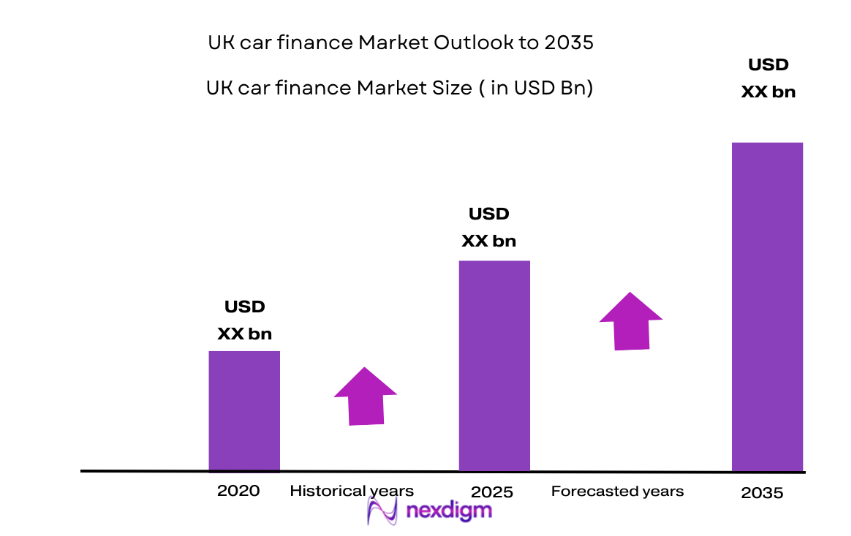
The UK car finance market has seen substantial growth, valued at billions ~ USD based on recent assessments. The market is primarily driven by the increasing demand for flexible financing options such as Personal Contract Purchase (PCP) and Hire Purchase (HP). These models offer lower monthly payments and greater flexibility for consumers, allowing them to own vehicles without significant financial burden. Additionally, the growing popularity of electric vehicles (EVs) has further fueled market demand, supported by government incentives for greener transportation options. The rise in digital financing platforms and the accessibility of instant credit scoring have also played a significant role in driving the market.
The dominant cities in the UK, such as London, Manchester, and Birmingham, lead the market due to their strong economic foundations, higher-income populations, and a concentration of car dealerships. These regions benefit from advanced infrastructure, making car financing options more accessible to urban dwellers. Furthermore, the increasing adoption of electric vehicles in these cities is driving the demand for specialized financing solutions tailored for greener mobility. As a result, these cities continue to play a central role in the expansion of the UK car finance market.
Market Segmentation
By Product Type
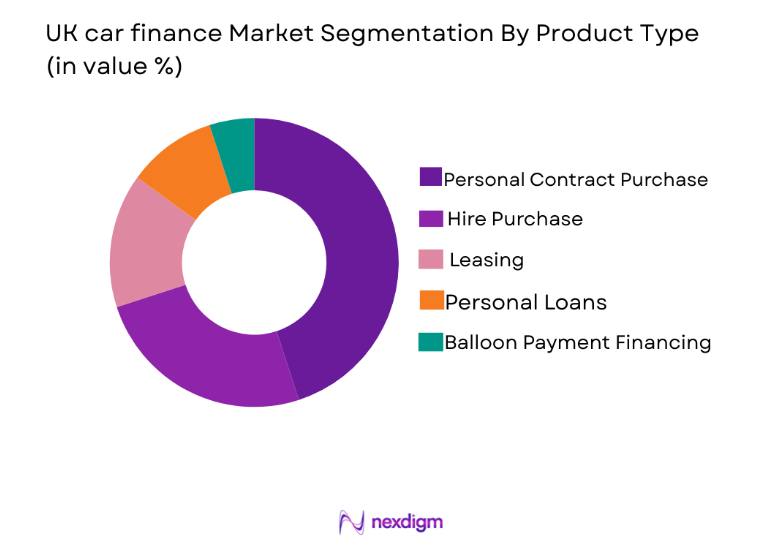
The UK car finance market is segmented by product type into several key categories, with Personal Contract Purchase (PCP) being the dominant sub-segment. PCP’s popularity is driven by its flexibility, allowing consumers to choose between paying off the entire cost of the car or returning it at the end of the contract. This option provides low monthly payments and the ability to switch vehicles regularly, which resonates with the preferences of younger consumers and urban dwellers. The growing adoption of PCP financing is further supported by strong marketing from financial institutions and automotive manufacturers, which have integrated PCP models into their sales strategies. As a result, PCP continues to maintain a dominant position in the market, driving a significant share of the overall car finance market value.
By Platform Type
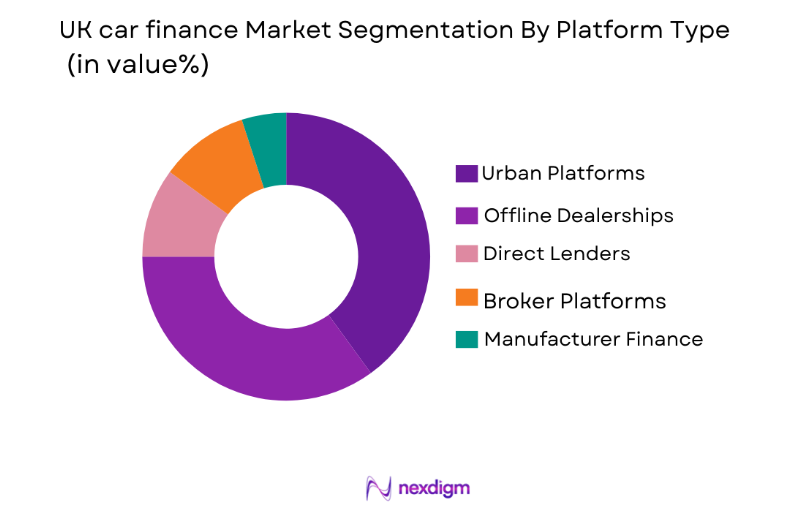
The UK car finance market is also segmented by platform type, with online platforms emerging as the leading sub-segment. The shift towards online car finance platforms is largely attributed to the convenience of digital applications and the growing trust in online financial transactions. Consumers prefer the ability to compare financing options and complete the entire process from the comfort of their homes, a trend accelerated by the COVID-19 pandemic. The availability of instant credit scoring, e-signatures, and digital contract management systems has made online platforms more appealing than traditional dealership-based financing methods. As a result, the digitalization of car financing is expected to continue growing, with online platforms gaining an increasing share of the market.
Competitive Landscape
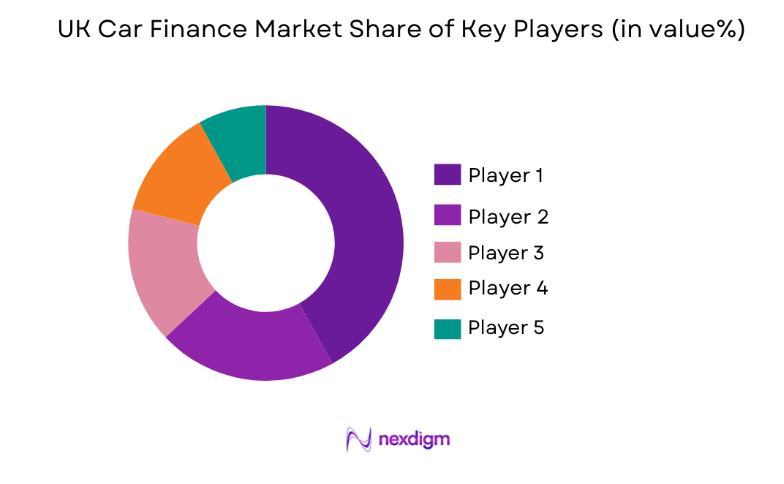
The UK car finance market is highly competitive, with consolidation among major players and an increasing presence of online platforms. Financial institutions, automotive manufacturers, and fintech companies are leading the charge in offering flexible financing solutions to consumers. Major players in the market are continuously innovating their financing models, integrating digital tools, and collaborating with automotive manufacturers to stay competitive. The increasing demand for electric vehicles is also reshaping the competitive landscape, prompting key players to introduce green finance options for environmentally conscious consumers.
| Company Name | Establishment Year | Headquarters | Technology Focus | Market Reach | Key Products | Revenue | Additional Parameter |
| Barclays | 1690 | London | ~ | ~ | ~ | ~ | ~ |
| Santander Consumer | 1857 | London | ~ | ~ | ~ | ~ | ~ |
| Close Brothers | 1878 | London | ~ | ~ | ~ | ~ | ~ |
| Hitachi Capital | 1982 | London | ~ | ~ | ~ | ~ | ~ |
| Volkswagen Financial | 1994 | Milton Keynes | ~ | ~ | ~ | ~ | ~ |
UK Car Finance Market Analysis
Growth Drivers
Increasing demand for flexible car financing options
The UK car finance market is experiencing growth due to rising consumer demand for flexible and affordable car financing options. The growth in demand for Personal Contract Purchase (PCP) and Hire Purchase (HP) models, which offer consumers lower monthly payments and the option to upgrade vehicles regularly, has made these financing models highly attractive. The financial products cater to a wide variety of consumers, from private individuals to businesses, and help facilitate vehicle ownership with minimal financial burden. This increasing flexibility has made car financing more accessible and appealing, contributing significantly to the market’s expansion. With the rise in consumer spending power, more people are opting for car financing options, leading to increased market value. Furthermore, the expansion of digital platforms that allow consumers to apply for finance online has further driven demand, as these platforms offer ease of access, quick approvals, and a seamless experience. The growing availability of credit and competitive interest rates has played a crucial role in enabling more consumers to finance their vehicles through PCP and HP, driving market growth.
Adoption of electric vehicles (EVs)
Another major growth driver in the UK car finance market is the increasing adoption of electric vehicles (EVs), supported by government incentives, tax benefits, and environmental consciousness. As more consumers make the switch to EVs, the demand for financing solutions tailored to electric cars has risen sharply. Financial institutions and car manufacturers have responded by offering specialized EV financing options, including low-interest loans and subsidized PCP deals. In addition, the UK government’s push to ban the sale of petrol and diesel vehicles in the coming years has accelerated the transition to electric mobility, further boosting demand for electric vehicle financing. Consumers are increasingly aware of the environmental impact of traditional internal combustion engine vehicles and are more likely to invest in cleaner alternatives like EVs. This shift in consumer preference has led to a surge in demand for EV financing, thereby propelling the overall car finance market.
Market Challenges
Economic uncertainty and its impact on consumer confidence
The UK car finance market faces challenges due to economic uncertainty, which affects consumer confidence and spending behavior. As inflation rises and the cost of living increases, consumers become more cautious about making large financial commitments, including purchasing a new vehicle through financing. Economic factors such as fluctuations in interest rates, job security concerns, and a volatile housing market contribute to a more cautious approach to car financing. While flexible financing options like PCP have helped mitigate some of these concerns, the overall economic environment remains a challenge for the market. Consumer hesitation to take on new debt and a growing focus on saving rather than spending may lead to slower growth in the car finance sector. The ongoing uncertainty surrounding Brexit and global trade relations has also added to the volatility in the financial markets, further complicating consumer decision-making. This uncertainty could potentially dampen demand for car financing in the near future.
Regulatory challenges and compliance issues
The UK car finance market faces ongoing regulatory challenges, particularly related to consumer protection and financial transparency. Regulatory bodies, including the Financial Conduct Authority (FCA), have implemented stricter regulations aimed at improving the fairness and transparency of the market, particularly in areas like advertising and credit assessments. While these regulations have helped protect consumers, they also add complexity to the market for car finance providers. Compliance with these rules requires financial institutions to invest in systems and processes that ensure full transparency in the approval and pricing of car loans, which can increase operational costs. Additionally, regulatory measures designed to curb irresponsible lending can reduce the availability of finance options for consumers, particularly those with less-than-perfect credit scores. As the regulatory landscape continues to evolve, car finance providers must remain agile and adaptable to maintain compliance while also ensuring they can continue to offer competitive financing products.
Opportunities
Expansion of subscription-based car financing models
Subscription-based car financing models present a significant growth opportunity in the UK market. This model allows consumers to lease vehicles on a flexible, short-term basis without the long-term commitment typically associated with traditional car financing options. It is particularly attractive to urban consumers who may not want to commit to long-term contracts but still wish to enjoy the convenience of owning a car. Car subscription models provide consumers with the flexibility to switch cars frequently, offering a level of convenience that traditional financing models do not. This growing trend is expected to drive demand for new car finance products that cater to a more transient, mobility-focused consumer base. Additionally, the increased focus on sustainability and cost-effective mobility options makes the subscription model highly attractive for eco-conscious consumers looking to drive electric vehicles or hybrid cars. As the popularity of car subscription services rises, new partnerships between car manufacturers and financial institutions are expected to emerge, opening up new avenues for market growth.
Technological innovation in car financing platforms
Another opportunity for the UK car finance market is the continued innovation in digital platforms and the integration of advanced technologies like artificial intelligence (AI) and blockchain. Digital car finance platforms offer a more streamlined, efficient experience for both consumers and providers, enabling faster approvals, automated risk assessments, and enhanced customer service. AI-powered credit scoring algorithms allow for more accurate assessments of consumer creditworthiness, enabling providers to offer tailored financing options that better match the needs of individual customers. Blockchain technology can enhance transparency and security in car financing transactions, reducing fraud risks and improving the overall trust in digital platforms. The growing acceptance of digital solutions in the financial sector, combined with the increasing adoption of smart technologies, presents a significant opportunity for growth in the UK car finance market. As consumers become more comfortable with digital transactions, the demand for innovative online financing platforms is expected to increase, driving further market expansion.
Future Outlook
The future outlook for the UK car finance market is promising, with a strong emphasis on technological innovation and sustainability. The market is expected to grow steadily over the next five years, driven by the continued demand for flexible financing options, particularly in the electric vehicle (EV) sector. Technological advancements such as AI-driven risk assessments, enhanced digital platforms, and blockchain integration are expected to streamline the financing process, making it more efficient and user-friendly. The UK government’s policies supporting green initiatives and the transition to electric vehicles will also play a crucial role in shaping the future of the market, with increased demand for specialized EV financing solutions. Additionally, the ongoing shift towards subscription-based car financing models and the growth of online platforms are expected to drive further market expansion.
Major Players
- Barclays
- Santander Consumer
- Close Brothers
- Hitachi Capital
- Volkswagen Financial
- Ford Credit
- Toyota Financial
- BMW Financial Services
- Leasing.com
- Zuto
- Mann Island Finance
- Carwow
- Motorpoint
- AutoTrader
- Cazoo
Key Target Audience
- Investments and venture capitalist firms
- Government and regulatory bodies
- Automotive manufacturers
- Car dealerships
- FinTech startups
- Fleet management companies
- Insurance companies
Research Methodology
Step 1: Identification of Key Variables
The key variables affecting the UK car finance market are identified, including consumer behavior, regulatory changes, technological advancements, and economic factors.
Step 2: Market Analysis and Construction
Data is gathered from primary and secondary sources to construct an accurate market model, reflecting both current market trends and future predictions.
Step 3: Hypothesis Validation and Expert Consultation
Expert consultations are conducted with industry leaders, market analysts, and stakeholders to validate hypotheses and ensure the accuracy of the research.
Step 4: Research Synthesis and Final Output
All findings are synthesized into a comprehensive report, providing clear insights and actionable recommendations for market participants.

- Executive Summary
- Research Methodology (Definitions, Scope, Industry Assumptions, Market Sizing Approach, Primary & Secondary Research Framework, Data Collection & Verification Protocol, Analytic Models & Forecast Methodology, Limitations & Research Validity Checks)

- Market Definition and Scope
- Value Chain & Stakeholder Ecosystem
- Regulatory / Certification Landscape
- Sector Dynamics Affecting Demand

- Growth Drivers
Rising Demand for Car Leasing and PCP Models
Increasing Popularity of Electric Vehicles and EV Financing
Government Incentives for Green Cars and Financial Subsidies
Growing Middle-Class Population with Increased Spending Power
Technological Advancements in Financing Platforms - Market Challenges
High Interest Rates and Affordability Issues
Regulatory Compliance Challenges in Financing Models
Economic Uncertainty and Its Impact on Consumer Confidence
Increasing Competition from Alternative Financing Models
Consumer Debt and Financial Stability Concerns - Market Opportunities
Expansion of EV Car Financing Options
Introduction of Subscription-Based Car Financing Models
Partnerships with FinTech Startups for Digital Transformation - Trends
Growth in Digital Car Financing Platforms
Increased Adoption of Artificial Intelligence for Risk Assessment
Shift Toward Flexible Financing Options Like Car Subscription Models
Expansion of Green Financing for Electric Vehicles
Innovative Leasing Models for Autonomous Vehicles - Government Regulations & Defense Policy
Consumer Protection and Interest Rate Caps
Environmental Regulations and EV Incentives
Data Protection Regulations for Online Financing - SWOT Analysis
- Stakeholder and Ecosystem Analysis
- Porter’s Five Forces Analysis

- By Market Value, 2020-2025
- By Installed Units, 2020-2025
- By Average System Price, 2020-2025
- By System Complexity Tier, 2020-2025

- By System Type (In Value%)
Personal Contract Purchase (PCP)
Hire Purchase (HP)
Leasing
Personal Loans
Balloon Payment Financing - By Platform Type (In Value%)
Online Platforms
Offline Dealerships
Direct Lenders
Broker Platforms
Manufacturer Finance - By Fitment Type (In Value%)
New Car Financing
Used Car Financing
Electric Vehicle Financing
Luxury Car Financing
Commercial Vehicle Financing - By End User Segment (In Value%)
Private Individuals
Fleet Operators
Leasing Companies

- Market share of major players
- Cross Comparison Parameters (System Type, Platform Type, Procurement Channel, End User Segment, Fitment Type)
- SWOT Analysis of Key Competitors
- Pricing & Procurement Analysis
- Key Players
Barclays
Santander Consumer Finance
Close Brothers
Hitachi Capital Vehicle Solutions
Volkswagen Financial Services
Ford Credit
Toyota Financial Services
BMW Financial Services
Leasing.com
Zuto
Mann Island Finance
Carwow
Motorpoint
AutoTrader
Cazoo

- Private Individuals’ Increasing Preference for Flexible Payment Models
- Fleet Operators’ Growing Demand for Short-Term Car Leasing
- Leasing Companies Focusing on Digital Financing Platforms
- Banks and Financial Institutions Supporting EV Financing

- Forecast Market Value, 2026-2035
- Forecast Installed Units, 2026-2035
- Price Forecast by System Tier, 2026-2035
- Future Demand by Platform, 2026-2035


 Request a Sample
 Ask for Customization
 Get a Quote
 Enquire Now