

 Download PDF
Market Overview
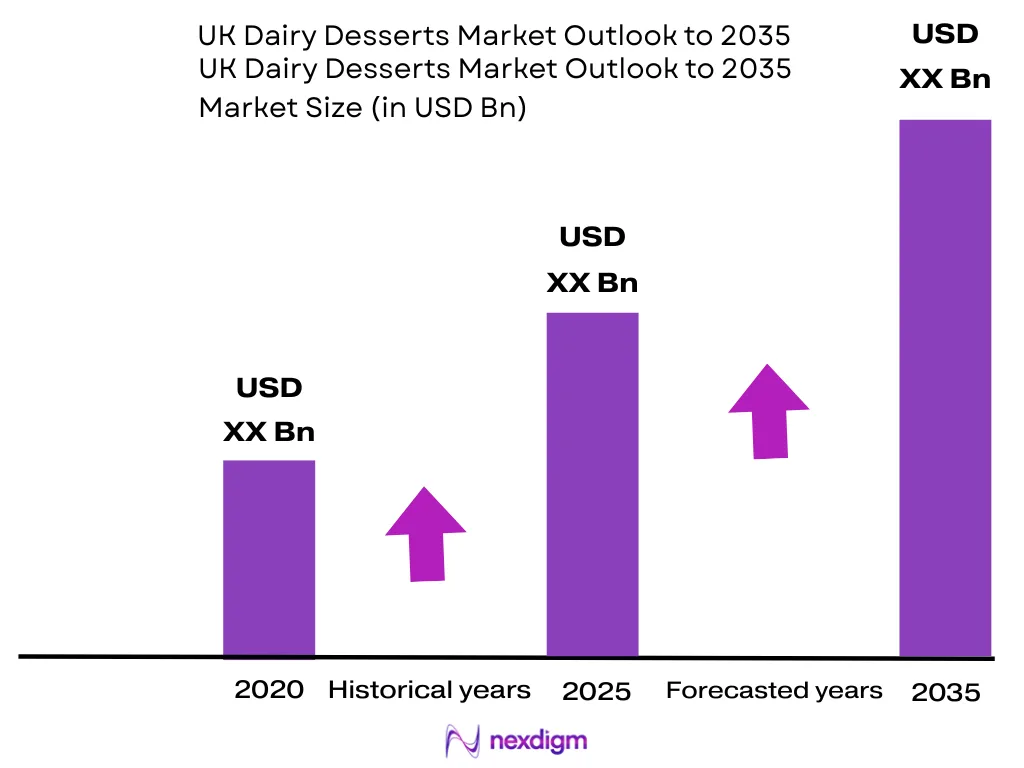
The UK Dairy Desserts Market was valued at approximately USD ~ Billion in 2024 and has demonstrated steady expansion supported by the country’s mature dairy sector, high per capita dairy consumption, and strong retail penetration. The market includes yogurt desserts, custards, rice puddings, cheesecakes, mousses, trifles, and chilled dairy-based indulgence products. Demand is primarily driven by increasing consumer preference for convenient ready-to-eat desserts, premium dessert experiences, and protein-enriched dairy products. The UK’s dairy industry processes over 15 billion liters of milk annually, creating a strong foundation for value-added dairy categories. Growth is further supported by innovation in low-sugar formulations, premium flavors, and single-serve dessert formats. Supermarkets continue to allocate substantial shelf space to chilled dairy desserts, while foodservice operators increasingly incorporate premium dairy dessert offerings into menus. The expansion of online grocery platforms and demand for indulgent yet convenient food options continue to strengthen category performance.
Market Segmentation
By Product Type
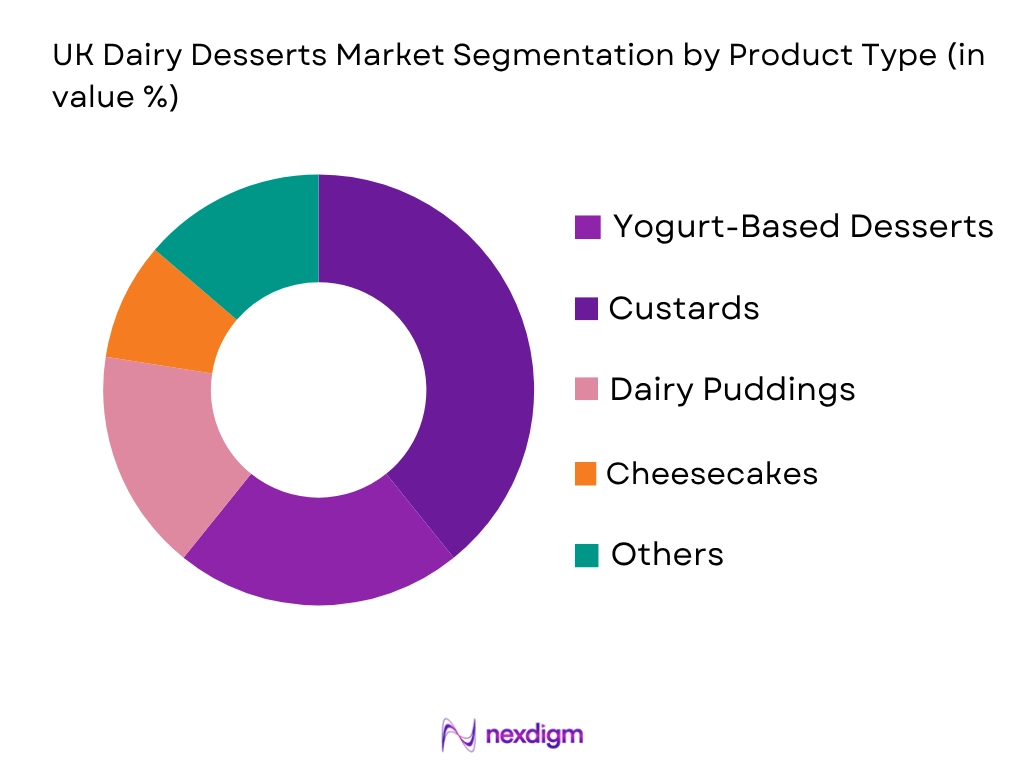
The UK Dairy Desserts Market is segmented into yogurt-based desserts, custards, dairy puddings, cheesecakes, rice puddings, mousse desserts, trifles, and other dairy desserts. Yogurt-based desserts hold the dominant market share due to their ability to combine indulgence with perceived health benefits. Consumers increasingly prefer products that offer protein, calcium, and digestive wellness benefits while maintaining dessert-like taste profiles. Major manufacturers have expanded their portfolios through Greek yogurt desserts, layered fruit yogurts, and premium indulgent variants. The category benefits from extensive supermarket visibility, strong brand loyalty, and frequent product innovation. Additionally, yogurt desserts appeal to a broad demographic base, ranging from health-conscious consumers to families seeking convenient snack options. Their versatility across breakfast, snack, and dessert occasions further strengthens demand. Continuous innovation in flavors, textures, and packaging formats has enabled yogurt-based desserts to maintain category leadership over traditional dairy dessert alternatives.
By Distribution Channel
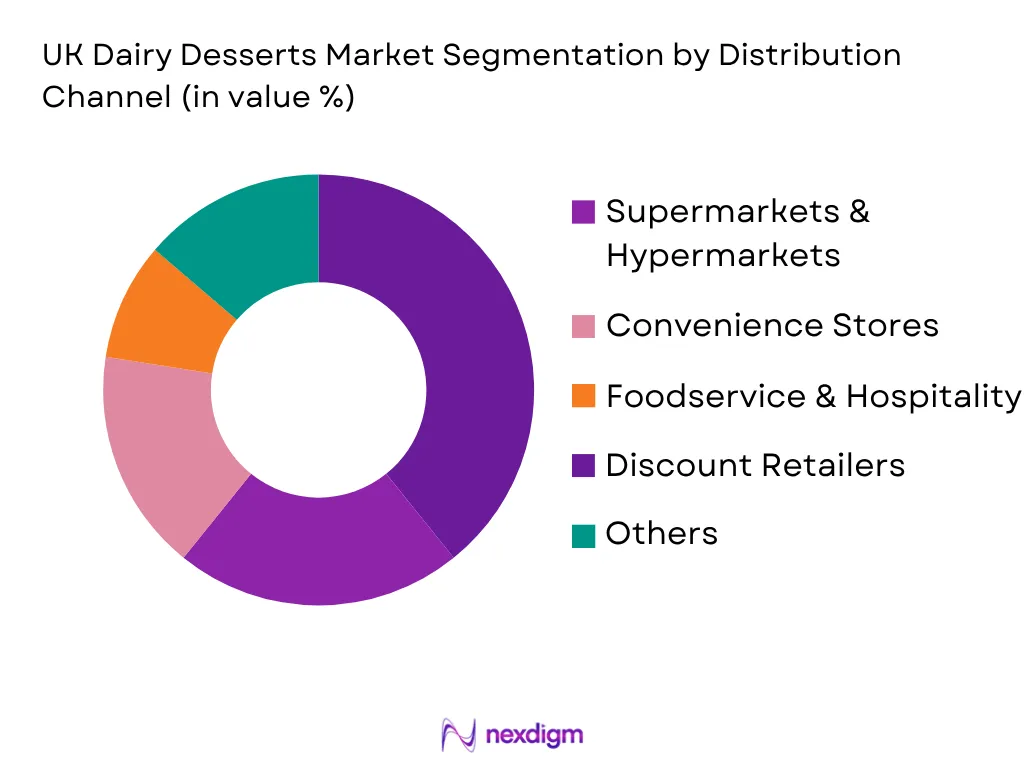
The UK Dairy Desserts Market is segmented into supermarkets and hypermarkets, convenience stores, foodservice and hospitality, discount retailers, online grocery platforms, and direct-to-consumer channels. Supermarkets and hypermarkets dominate the market due to their extensive chilled storage capabilities, broad product assortments, and ability to offer both premium and private-label dairy dessert products. Leading retailers such as Tesco, Sainsbury’s, Asda, Morrisons, and Waitrose provide consumers with a wide selection of dairy dessert brands and flavors, enabling high product visibility and impulse purchases. These retailers also benefit from established supply chain networks that ensure product freshness and availability. Frequent promotional campaigns, loyalty programs, and expanding premium dessert sections have further strengthened their position. Additionally, consumers prefer purchasing dairy desserts alongside routine grocery shopping, making supermarkets the most convenient purchasing destination. The ability to introduce innovative products rapidly through national retail chains continues to support the channel’s dominant market position.
Competitive Landscape
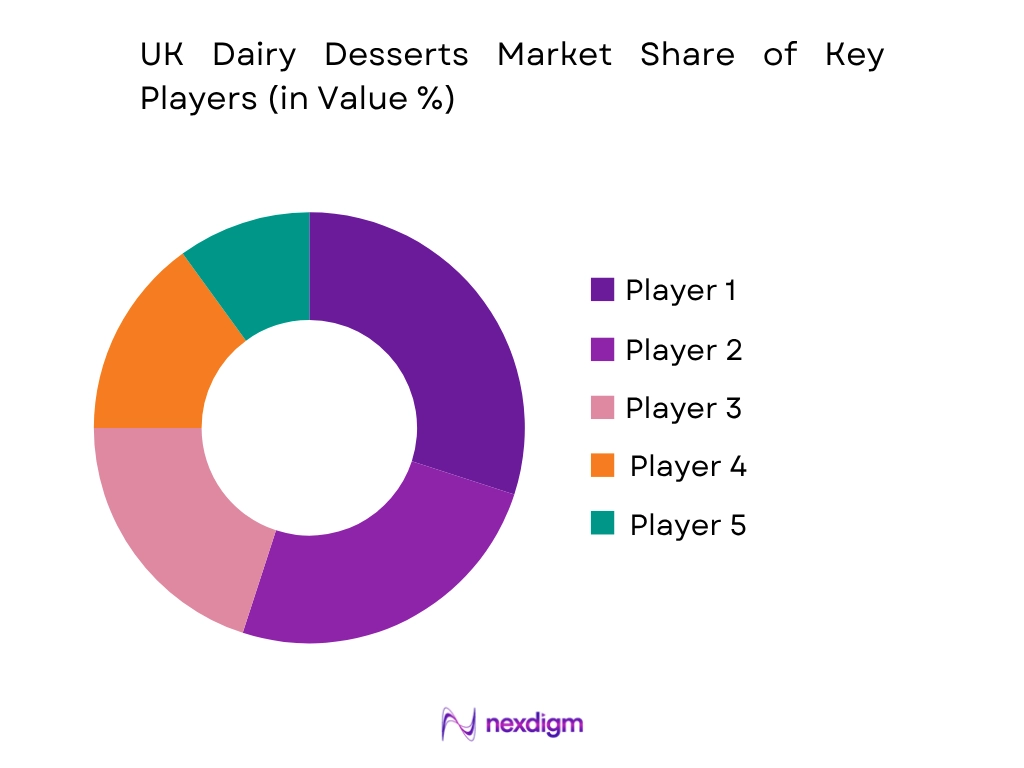
The UK Dairy Desserts Market is characterized by the presence of several established dairy manufacturers and branded dessert producers competing across premium, mainstream, and private-label categories. Companies focus on product innovation, premium flavor introductions, health-oriented formulations, and sustainable packaging initiatives to strengthen market positioning. The competitive landscape remains moderately consolidated, with major players leveraging extensive distribution networks and strong retailer relationships to maintain market leadership. Private-label offerings from leading supermarkets also represent a significant competitive force, particularly in mainstream dairy dessert categories.
| Company | Establishment Year | Headquarters | Key Brands | Product Portfolio | Distribution Reach | Premium Product Presence | Packaging Formats | Innovative Focus |
| Müller UK & Ireland | 1896 | ~ | ~ | ~ | ~ | ~ | ~ | ~ |
| Danone UK | 1919 | ~ | ~ | ~ | ~ | ~ | ~ | ~ |
| Gü Desserts | 2003 | ~ | ~ | ~ | ~ | ~ | ~ | ~ |
| Arla Foods UK | 1880 | ~ | ~ | ~ | ~ | ~ | ~ | ~ |
| Nestlé UK | 1866 | ~ | ~ | ~ | ~ | ~ | ~ | ~ |
UK Dairy Desserts Market Analysis
Growth Drivers
Rising Demand for Convenient Ready-to-Eat Dairy Products
The increasing demand for convenient and ready-to-eat food products is a major driver for the UK Dairy Desserts Market. The UK population reached approximately 68.3 million people according to the UK Office for National Statistics (ONS), creating a large consumer base for packaged dairy desserts. The country’s urban population exceeded 57 million residents, supporting higher consumption of convenience foods due to busy lifestyles. According to the IMF, the UK economy generated over USD 3.5 trillion in GDP, while GDP per capita remained above USD 50,000, indicating strong purchasing power for premium dairy dessert categories. Retail food sales remained robust, with grocery retailers continuing to expand chilled dessert offerings. The growth of dual-income households and increasing workforce participation have accelerated demand for single-serve yogurt desserts, custards, mousses, and chilled puddings that require minimal preparation. Additionally, the UK maintained internet penetration above 67 million users, supporting online grocery purchases and home delivery of refrigerated products. These macroeconomic and demographic indicators collectively strengthen consumption of dairy desserts across retail and foodservice channels.
Increasing Consumer Preference for Premium and Protein-Enriched Desserts
Consumer interest in premium and nutritionally enhanced food products continues to support the UK Dairy Desserts Market. The UK’s household final consumption expenditure exceeded USD 2.3 trillion, reflecting substantial spending capacity for premium food categories. According to DEFRA, the UK dairy sector processes more than 15 billion litres of milk annually, ensuring strong raw material availability for value-added dairy desserts. The country’s population aged between 20 and 64 years exceeded 40 million individuals, representing a key consumer segment seeking convenient protein-rich snacks and desserts. Rising participation in health and fitness activities has encouraged manufacturers to launch high-protein puddings, Greek yogurt desserts, and low-sugar dairy snacks. Food and drink manufacturing remains the UK’s largest manufacturing sector, generating more than GBP 35 billion in gross value added, supporting continuous innovation in dessert formulations. The expansion of premium retail chains and specialty food retailers further enhances consumer access to premium dairy dessert products. These factors continue to create favorable conditions for market expansion and product diversification.
Market Challenges
Volatility in Dairy Raw Material Supply and Agricultural Pressures
The UK Dairy Desserts Market faces challenges from fluctuations in dairy raw material availability and broader agricultural pressures. Agricultural land utilization in the UK covers approximately 17 million hectares, while climate variability increasingly impacts milk production conditions. According to DEFRA, the UK dairy herd consists of approximately 1.8 million dairy cows, making dairy processors vulnerable to feed cost fluctuations and weather-related disruptions. The UK imported food and feed products valued at more than GBP 58 billion, highlighting continued reliance on global supply chains for certain ingredients used in dairy dessert production. Energy-intensive dairy processing operations also face operational pressures due to manufacturing and refrigeration requirements. Furthermore, maintaining chilled logistics across the country requires extensive cold-chain infrastructure, increasing operational complexity. Rising sustainability requirements and environmental compliance obligations add additional challenges for dairy processors seeking to balance profitability with responsible production practices. These structural constraints can affect production efficiency and long-term operational planning within the dairy desserts sector.
Growing Competition from Plant-Based Dessert Alternatives
The increasing availability of plant-based alternatives presents a significant challenge to the UK Dairy Desserts Market. The UK remains one of Europe’s most developed markets for alternative dairy products, supported by a population exceeding 68 million consumers and strong retail penetration. Food retailers continue to allocate shelf space to plant-based yogurt alternatives, vegan puddings, oat-based desserts, and coconut-based products. According to the World Bank, urbanization levels remain high with more than 57 million people residing in urban areas, where awareness of sustainability and dietary alternatives is particularly strong. Younger consumers increasingly seek products aligned with environmental and lifestyle preferences, intensifying competition for traditional dairy dessert manufacturers. Furthermore, the UK food manufacturing industry contains more than 12,000 food and beverage enterprises, resulting in heightened competition and frequent product launches across dessert categories. To maintain market relevance, dairy dessert producers must continuously innovate in flavor profiles, nutritional content, packaging, and sustainability credentials while differentiating themselves from rapidly expanding plant-based alternatives.
Market Opportunities
Expansion of Functional and High-Protein Dairy Dessert Categories
The growing demand for functional foods presents a significant opportunity for the UK Dairy Desserts Market. The UK economy supports strong consumer spending through household consumption exceeding USD 2.3 trillion, creating favorable conditions for premium and functional food categories. The country’s working-age population of more than 40 million people increasingly seeks convenient products offering additional nutritional benefits. Dairy desserts fortified with protein, probiotics, vitamins, and digestive health ingredients align closely with evolving consumer preferences. The UK dairy industry’s processing capacity of over 15 billion litres of milk annually provides manufacturers with substantial resources to develop value-added products. Additionally, food innovation remains strong due to the presence of advanced food processing facilities and research capabilities across the country. As consumers increasingly prioritize nutritional value alongside indulgence, manufacturers have opportunities to introduce functional puddings, yogurt desserts, mousse products, and protein-enriched snack formats that command premium positioning within retail and foodservice channels.
Growth of Premiumization and Sustainable Packaging Solutions
Premiumization and sustainability trends continue to create opportunities within the UK Dairy Desserts Market. The UK generated retail sales worth hundreds of billions of pounds annually, providing a strong platform for premium food and beverage categories. Urban centers such as London, Manchester, Birmingham, Leeds, and Glasgow collectively serve tens of millions of consumers with access to premium grocery retailers and specialty food stores. The UK’s commitment to environmental sustainability has accelerated demand for recyclable packaging, reduced plastic usage, and responsible sourcing initiatives. Food manufacturers increasingly invest in premium glass containers, paper-based packaging solutions, and sustainable supply chain practices. Furthermore, the UK’s advanced retail infrastructure enables rapid adoption of innovative premium dessert products. Consumers continue to demonstrate willingness to purchase indulgent, high-quality desserts featuring gourmet flavors, artisanal ingredients, and attractive packaging. These factors create favorable conditions for manufacturers seeking to differentiate their offerings through premium positioning and environmentally responsible product development.
Future Outlook
The UK Dairy Desserts Market is expected to maintain positive growth momentum over the forecast period, supported by rising demand for premium indulgent products, protein-enriched desserts, and convenient ready-to-eat formats. Manufacturers are increasingly focusing on clean-label ingredients, reduced sugar formulations, and sustainable packaging to align with evolving consumer preferences. The expansion of premium private-label offerings and growth in online grocery sales are expected to create additional opportunities. Innovation in flavor profiles, portion-controlled desserts, and functional dairy products will remain key competitive differentiators. Furthermore, increasing consumer interest in health-conscious indulgence is likely to encourage the development of hybrid dairy dessert products that combine nutritional benefits with premium taste experiences.
Major Players
- Müller UK & Ireland
- Danone UK
- Gü Desserts
- Arla Foods UK
- Nestlé UK
- Lactalis UK
- Yeo Valley Organic
- The Collective UK
- Ambrosia (Premier Foods)
- Dale Farm
- Rachel’s Organic
- Longley Farm
- Tesco Private Label
- Sainsbury’s Private Label
- Waitrose Private Label
Key Target Audience
- Dairy Dessert Manufacturers
- Dairy Ingredient Suppliers
- Supermarkets and Hypermarkets
- Convenience Retail Chains
- Foodservice and Hospitality Operators
- Private Label Manufacturers
- Investment and Venture Capitalist Firms
- Government and Regulatory Bodies (Food Standards Agency (FSA), Department for Environment, Food & Rural Affairs (DEFRA), Competition and Markets Authority (CMA))
Research Methodology
Step 1: Identification of Key Variables
The initial stage involves developing a comprehensive ecosystem map of the UK Dairy Desserts Market. Extensive secondary research is conducted through industry publications, company reports, trade associations, retail databases, and government sources. The objective is to identify critical market variables including product categories, consumption patterns, retail distribution channels, pricing structures, manufacturing capacity, and competitive positioning.
Step 2: Market Analysis and Construction
Historical market information is collected and analyzed to establish market performance trends. This stage includes evaluating dairy dessert consumption, retail sales performance, product availability, private label penetration, foodservice demand, and category-level revenue generation. Data points are validated using multiple sources to ensure consistency and reliability throughout the market sizing process.
Step 3: Hypothesis Validation and Expert Consultation
Preliminary market findings and assumptions are validated through interviews with industry stakeholders including dairy manufacturers, distributors, retailers, procurement managers, category specialists, and industry experts. These discussions provide practical insights regarding consumer preferences, product innovation trends, operational challenges, and future growth opportunities within the market.
Step 4: Research Synthesis and Final Output
The final stage involves triangulating findings from primary and secondary research to develop accurate market estimates and forecasts. Information gathered from manufacturers, retailers, distributors, and industry experts is consolidated with quantitative data to ensure a balanced and comprehensive analysis of the UK Dairy Desserts Market. Final outputs are reviewed for consistency, accuracy, and strategic relevance.

- Executive Summary
- Research Methodology (Market Definitions and Assumptions, Abbreviations, Market Sizing Approach, Consolidated Research Approach, Primary Research Interviews, Secondary Research Framework, Forecasting Methodology, Data Triangulation, Limitations and Future Conclusions)

- Definition and Scope
- Market Evolution and Industry Genesis
- Industry Ecosystem Overview
- Business Cycle Analysis
- Supply Chain Analysis

- Growth Drivers(Rising Premium Dessert Consumption, Expansion of Convenience Food Consumption, Growth in Chilled Dairy Categories, Increasing Demand for Protein-Enriched Desserts, Expansion of Modern Grocery Retail)
- Market Challenges (Sugar Reduction and HFSS Compliance, Volatility in Dairy Raw Material Availability, Competition from Plant-Based Dessert Alternatives, Refrigerated Logistics and Storage Constraints)
- Market Opportunities (Functional Dairy Desserts, High-Protein and Low-Sugar Innovations, Premium Artisan Dairy Desserts, Sustainable Packaging Solutions, Private Label Expansion)
- Market Trends (Clean Label Product Development, Protein-Enriched Dessert Launches, Premium Mini-Portion Formats, Gourmet and Indulgent Flavor Innovation, Sustainable Ingredient Sourcing, Digital Grocery Driven Consumption)
- Government Regulations (UK Food Standards Agency Compliance, HFSS Regulations, Food Labeling Standards, Dairy Product Composition Standards, Packaging Sustainability Regulations)
- SWOT Analysis
- PESTLE Analysis
- Porter’s Five Forces Analysis
- Demand-Supply Gap Assessment
- Stakeholder Ecosystem
- Competitive Ecosystem Mapping

- By Market Value (2020-2025)
- By Volume Consumption (2020-2025)
- By Average Selling Price (2020-2025)

- By Product Type (In Value %)
Yogurt-Based Desserts
Custards
Dairy Puddings
Rice Puddings
Cheesecakes
Mousse Desserts
Cream-Based Desserts
Frozen Dairy Desserts
Trifles
Other Dairy Desserts - By Flavor Type (In Value %)
Chocolate
Vanilla
Strawberry
Caramel
Coffee
Fruit-Based Flavors
Mixed Flavors
Seasonal and Limited-Edition Flavors - By Distribution Channel (In Value %)
Supermarkets and Hypermarkets
Convenience Stores
Discount Retailers
Online Grocery Platforms
Direct-to-Consumer Channels
Foodservice and Hospitality - By Region (In Value %)
England
Scotland
Wales
Northern Ireland
Greater London - By Packaging Type (In Value %)
Single-Serve Cups
Family Packs
Multi-Pack Formats
Tubs
Glass Containers
Sustainable Packaging Formats

- Market Share of Major Players (By Value, Volume, Product Category, Distribution Channel )
- Cross Comparison Parameters (Brand Portfolio Strength, Dairy Dessert SKU Count, Distribution Reach, Presence Across Major Retail Chains, Product Innovation Pipeline, Premium Product Portfolio, Sustainability Initiatives, Packaging Diversification)
- SWOT Analysis of Major Players
- Pricing Analysis by Product Category and Pack Size
- Detailed Profiles of Major Companies
Müller UK & Ireland
Nestlé UK Danone UK
Arla Foods UK
Gü Desserts
Ambrosia (Premier Foods)
Yeo Valley Organic
Lactalis UK
The Collective UK
Dale Farm
Longley Farm
Rachel’s Organic
Tesco Private Label
Sainsbury’s Private Label
Waitrose Private Label

- Consumption Pattern Analysis (Frequency, Occasion-Based Consumption, Category Preferences)
- Demographic Analysis (Age Group, Household Composition, Income Level)
- Household Spending Analysis (Dairy Dessert Expenditure, Basket Contribution)
- Consumer Preference Mapping (Flavor Preference, Texture Preference, Health Orientation)
- Purchase Decision Analysis (Brand Loyalty, Price Sensitivity, Product Attributes)
- Consumer Pain Point Assessment

- By Market Value (2026-2035)
- By Volume Consumption (2026-2035)
- By Average Selling Price (2026-2035)


 Request a Sample
 Ask for Customization
 Get a Quote
 Enquire Now