

 Download PDF
 Download PDF
Market Overview
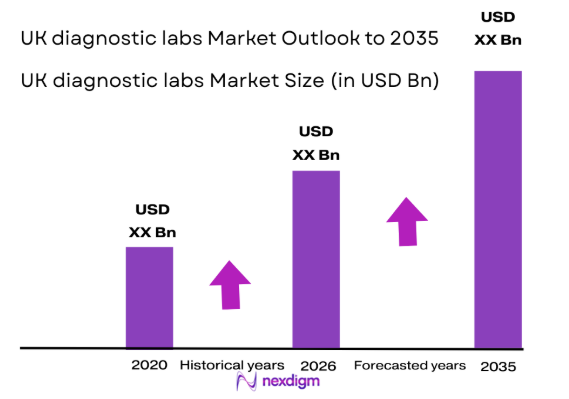
The UK diagnostic labs market is a rapidly growing sector, driven by technological advancements in medical equipment and diagnostic technologies. Based on a recent historical assessment, the market size for diagnostic labs is expected to reach USD ~ billion. This growth is propelled by increasing demand for diagnostic services, the expansion of healthcare facilities, and a rise in chronic diseases, requiring more frequent and advanced diagnostic testing. The shift towards personalized medicine and the adoption of innovative diagnostic tools also contribute to market growth.
The UK diagnostic labs market is primarily dominated by major cities, including London, Birmingham, and Manchester, which house advanced healthcare infrastructure. These regions benefit from well-established healthcare systems and government-backed investments aimed at improving healthcare services. The demand for diagnostic testing is further bolstered by a growing elderly population, an increasing number of outpatient facilities, and the rising trend of medical tourism. These areas serve as hubs for medical research and innovation, attracting both domestic and international patients seeking quality diagnostic care.
Market Segmentation
By Product Type
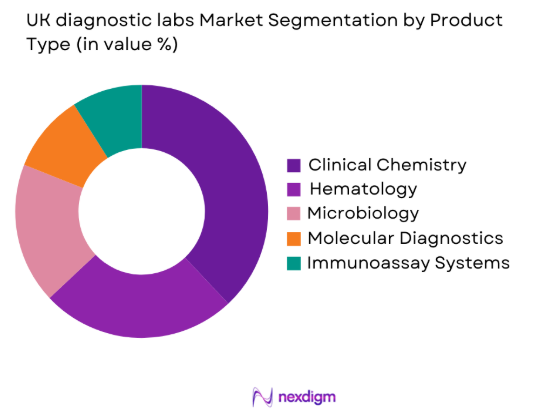
The UK diagnostic labs market is segmented by product type into clinical chemistry, hematology, microbiology, molecular diagnostics, and immunoassay systems. Recently, clinical chemistry systems have dominated the market share due to the increased demand for diagnostic tests related to chronic diseases such as diabetes, cardiovascular conditions, and kidney disease. Clinical chemistry systems provide critical testing capabilities that help in early detection and management of these prevalent health conditions. Additionally, the availability of automated platforms and technological advancements in clinical chemistry, such as the integration of artificial intelligence for better diagnostic precision, has led to the growth of this segment.
By Platform Type
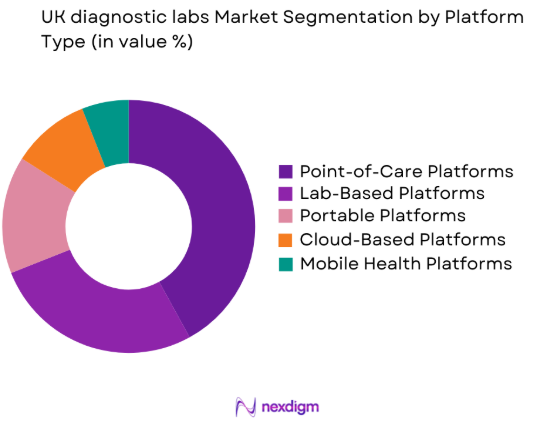
The market is segmented by platform type into lab-based platforms, point-of-care platforms, portable platforms, cloud-based platforms, and mobile health platforms. Point-of-care platforms have recently captured a dominant market share due to the increasing preference for rapid testing in various healthcare settings, such as emergency rooms, outpatient clinics, and at-home testing. These platforms offer faster results, improving decision-making and treatment speed. Their adoption is growing as healthcare providers seek to enhance patient care, reduce wait times, and reduce healthcare costs. The trend of decentralized healthcare further strengthens the position of point-of-care platforms in the market.
Competitive Landscape
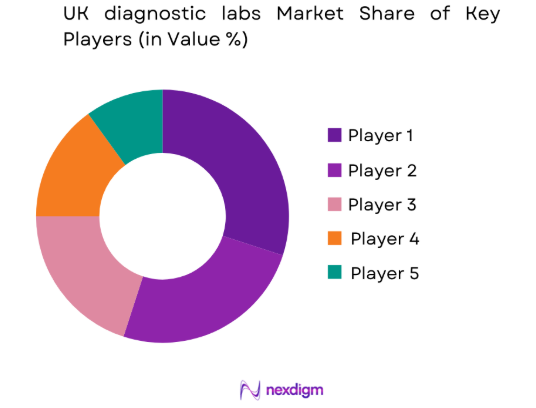
The UK diagnostic labs market is highly competitive, with a strong presence of both local and global players. The competition is largely driven by advancements in technology, regulatory compliance, and the need for innovation in diagnostic testing. The market has seen considerable consolidation, with major players expanding their product portfolios through acquisitions and partnerships. Companies such as Abbott Laboratories, Roche Diagnostics, and Siemens Healthineers dominate the market due to their robust product offerings and technological expertise.
| Company Name | Establishment Year | Headquarters | Technology Focus | Market Reach | Key Products | Revenue | Additional Parameter |
| Abbott Laboratories | 1888 | USA | ~ | ~ | ~ | ~ | ~ |
| Roche Diagnostics | 1896 | Switzerland | ~ | ~ | ~ | ~ | ~ |
| Siemens Healthineers | 1847 | Germany | ~ | ~ | ~ | ~ | ~ |
| Thermo Fisher Scientific | 1956 | USA | ~ | ~ | ~ | ~ | ~ |
| BioMérieux | 1963 | France | ~ | ~ | ~ | ~ | ~ |
UK diagnostic labs Market Analysis
Growth Drivers
Technological Advancements in Diagnostic Equipment
The UK diagnostic labs market is growing due to advancements in diagnostic equipment, including automated systems, high-throughput technologies, and AI-powered solutions. These innovations enhance the accuracy, speed, and cost-effectiveness of diagnostic services. By enabling early disease detection and improving patient outcomes, these technologies have increased the demand for diagnostic testing across multiple medical fields. Additionally, the ongoing development of molecular diagnostics and imaging systems is expected to further boost growth, allowing diagnostic labs to offer a wider variety of tests with greater precision. The continuous evolution of these technologies supports more efficient testing, addresses diverse patient needs, and enhances the overall quality of healthcare delivery in the UK.
Aging Population
The growing elderly population in the UK is a significant driver for the diagnostic labs market. Older adults are more vulnerable to chronic conditions such as diabetes, hypertension, and cardiovascular diseases, all of which necessitate regular diagnostic testing. The rising prevalence of age-related illnesses has led to an increased demand for healthcare services, particularly in diagnostic testing. As the elderly population continues to grow, diagnostic labs are expected to expand their services to meet the increasing need for early disease detection and ongoing management of these conditions. This demographic shift is driving demand for more frequent and specialized diagnostic tests, creating opportunities for labs to enhance their service offerings and address the healthcare needs of an aging population.
Market Challenges
High Operational Costs
A key challenge in the UK diagnostic labs market is the high operational costs tied to advanced diagnostic equipment. The significant initial capital investment for diagnostic systems, along with ongoing expenses for maintenance, training, and operation, creates a financial burden for labs. Smaller diagnostic labs, in particular, find it difficult to compete with larger facilities that benefit from economies of scale. As healthcare providers continue to adopt expensive diagnostic technologies, balancing affordability with profitability becomes increasingly challenging. The rising costs of cutting-edge equipment, coupled with the need for continuous staff training and system updates, poses a considerable obstacle to maintaining sustainable operations in the market.
Regulatory and Compliance Barriers
The UK diagnostic labs market faces significant challenges due to stringent regulatory and compliance requirements. Regulatory bodies such as the Medicines and Healthcare products Regulatory Agency (MHRA) enforce strict guidelines for diagnostic tests, equipment, and procedures that labs must follow. These regulations can result in delays in product launches, extended time to market, and higher operational costs. Additionally, frequent changes in healthcare policies and standards require diagnostic labs to continuously adapt, which can be resource-intensive and reduce market agility. Compliance with evolving regulations adds complexity to operations and increases the cost of maintaining up-to-date certifications, impacting the overall efficiency and competitiveness of diagnostic labs in the market.
Opportunities
Expansion of Home-Based Diagnostic Testing
The UK diagnostic labs market has significant growth potential with the expansion of home-based diagnostic testing solutions. As consumers increasingly value convenience and privacy, home diagnostic testing becomes a preferred option. The rise of wearable health devices, at-home test kits, and telehealth consultations is driving this trend, providing diagnostic labs with an opportunity to meet growing demand. By offering services outside traditional healthcare settings, diagnostic labs can reach a broader audience, making testing more accessible. This shift toward home diagnostics not only caters to consumer preferences but also helps reduce the burden on healthcare facilities, leading to higher patient satisfaction and greater market penetration for diagnostic services.
Integration of Artificial Intelligence and Big Data
The integration of artificial intelligence (AI) and big data analytics into diagnostic testing is unlocking significant opportunities in the market. AI algorithms enhance the precision of diagnostic tools, streamline testing procedures, and minimize human error. Additionally, the ability to process and analyze large volumes of data enables better decision-making in clinical and administrative environments. As digital technologies gain traction in the UK healthcare system, diagnostic labs are increasingly adopting AI and big data solutions. These technologies not only improve patient care by providing faster and more accurate results but also optimize operational efficiency by automating processes and reducing costs, thereby driving overall market growth and advancing healthcare delivery.
Future Outlook
The UK diagnostic labs market is expected to continue its growth trajectory in the coming years, driven by technological advancements and an increasing demand for personalized medicine. The adoption of artificial intelligence, machine learning, and data analytics will revolutionize diagnostic procedures, enabling faster and more accurate results. Additionally, the aging population and the rise of chronic diseases will drive the demand for diagnostic services, further expanding the market. Government investments in healthcare infrastructure and the growing trend of medical tourism will also contribute to the market’s future success.
Major Players
- Abbott Laboratories
- Roche Diagnostics
- Siemens Healthineers
- ThermoFisher Scientific
- BioMérieux
- Danaher Corporation
- PerkinElmer
- Mindray Medical
- General Electric Healthcare
- Becton Dickinson
- Sysmex Corporation
- Beckman Coulter
- Abbott Diagnostics
- Luminex Corporation
- Bio-Rad Laboratories
Key Target Audience
- Investments and venture capitalist firms
- Government and regulatory bodies
- Hospitals and healthcare providers
- Private diagnosticcenters
- Insurance companies
- Research institutions
- Pharmaceutical companies
- Technology developers
Research Methodology
Step 1: Identification of Key Variables
The key variables affecting the UK diagnostic labs market, such as technological advancements, market trends, and consumer demand, are identified through a comprehensive review of market reports, industry publications, and expert opinions.
Step 2: Market Analysis and Construction
Market data is analyzed using both qualitative and quantitative methods. The data is used to construct an accurate picture of the current market size, growth trends, and competitive landscape.
Step 3: Hypothesis Validation and Expert Consultation
A detailed validation process is conducted, involving consultations with industry experts, company stakeholders, and key opinion leaders. The insights gathered are used to refine hypotheses and ensure accurate market predictions.
Step 4: Research Synthesis and Final Output
The research findings are synthesized into a comprehensive market report, ensuring that all findings are backed by credible data and industry insights. The final report is crafted to meet the information needs of stakeholders.

- Executive Summary
- Research Methodology (Definitions, Scope, Industry Assumptions, Market Sizing Approach, Primary & Secondary Research Framework, Data Collection & Verification Protocol, Analytic Models & Forecast Methodology, Limitations & Research Validity Checks)

- Market Definition and Scope
- Value Chain & Stakeholder Ecosystem
- Regulatory / Certification Landscape
- Sector Dynamics Affecting Demand
- Strategic Initiatives & Infrastructure Growth

- Growth Drivers
Technological Advancements in Diagnostic Technologies
Increasing Chronic Disease Prevalence
Government Investments in Healthcare Infrastructure - Market Challenges
High Capital Expenditure for Lab Equipment
Regulatory and Compliance Barriers
Shortage of Skilled Laboratory Personnel - Market Opportunities
Emerging Demand for Home Diagnostics
Integration of AI and Big Data in Diagnostics
Expansion of Point-of-Care Testing - Trends
Integration of Artificial Intelligence in Diagnostics
Growing Demand for Molecular Diagnostics
Rise in Personalized Medicine - Government Regulations
- SWOT Analysis of Key Competitors
- Porter’s Five Forces

- By Market Value, 2020-2025
- By Installed Units, 2020-2025
- By Average System Price, 2020-2025
- By System Complexity Tier, 2020-2025

- By System Type (In Value%)
Clinical Chemistry Systems
Hematology Systems
Microbiology Systems
Molecular Diagnostics Systems
Immunoassay Systems - By Platform Type (In Value%)
Lab-Based Platforms
Point-of-Care Platforms
Portable Platforms
Cloud-Based Platforms
Mobile Health Platforms - By Fitment Type (In Value%)
Standalone Systems
Integrated Systems
Modular Systems
Portable Systems
Point-of-Care Systems - By End User Segment (In Value%)
Hospitals
Private Diagnostic Centers
Public Health Institutions
Research and Academic Institutions
Home Care Providers - By Procurement Channel (In Value%)
Direct Procurement
Government Tenders
Private Sector Procurement
Online Bidding Platforms
Third-party Distributors

- Market Share Analysis
- Cross Comparison Parameters (System Type, Platform Type, Procurement Channel, End User Segment, Fitment Type, Geography, Technology Integration, Customer Demographics, Service Model, Regulatory Compliance)
- SWOT Analysis of Key Competitors
- Pricing & Procurement Analysis
- Key Players
Abbott Laboratories
Roche Diagnostics
Siemens Healthineers
Thermo Fisher Scientific
Danaher Corporation
BioMérieux
Medtronic
General Electric Healthcare
PerkinElmer
Johnson & Johnson
Mindray Medical
Fujifilm Holdings Corporation
Sysmex Corporation
Becton Dickinson
Horiba Ltd

- Demand for Diagnostic Services from Hospitals
- Growth in Private Diagnostic Centers
- Increased Adoption of Home Diagnostics
- Research Institutions’ Contribution to Market Innovation

- Forecast Market Value, 2026-2035
- Forecast Installed Units, 2026-2035
- Price Forecast by System Tier, 2026-2035
- Future Demand by Platform, 2026-2035


 Request a Sample
 Ask for Customization
 Get a Quote
 Enquire Now