
 Download PDF
Market Overview
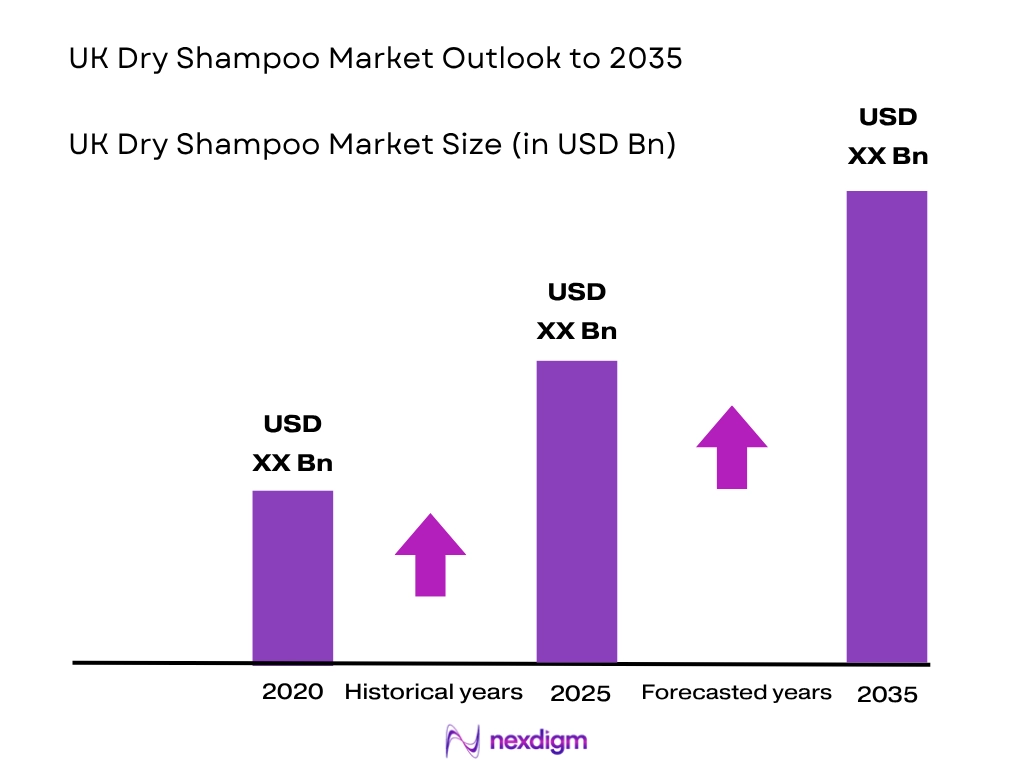
The UK dry shampoo market is valued at USD ~ billion in 2025, based on industry estimates that track revenue across retail, direct‑to‑consumer, and salon channels within the personal care sector. This scale reflects the product’s transition from niche usage to mainstream haircare accessory, driven by rising consumer demand for convenient, no‑water solutions, busy lifestyles, and digital beauty trends that normalize “second‑day hair” care practices. Retail expansion and sustained e‑commerce growth have supported broader access across value and premium tiers.
Cities such as London, Manchester, and Birmingham are key demand centres in the UK dry shampoo market. High consumer density, greater disposable income, and advanced retail ecosystems in these foster rapid adoption of beauty innovations. London’s fashion and media influence also accelerates trend adoption via social media and influencer culture, enhancing exposure and purchase intent for premium and sustainable formulations relative to other regions.
Market Segmentation
By Product Type
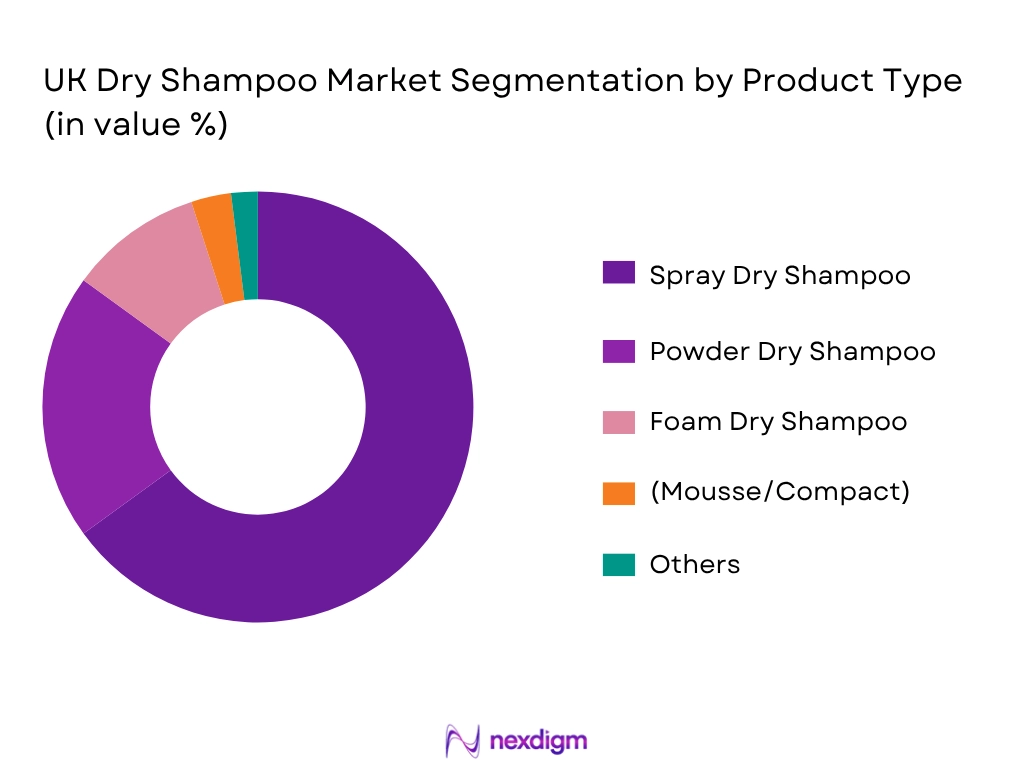
By product type, spray dry shampoo dominates the UK market due to its ease of application and familiarity among mainstream consumers. Spray formats offer quick oil absorption and a consistent mist that appeals to both new and habitual users, supporting higher adoption in both retail and online channels. Established brands have heavily marketed spray variants through influencer partnerships and e‑commerce promotions, reinforcing consumer preference. Powder and foam variants cater to niche preferences, powder for eco‑friendly and aerosol‑free demand, foam for premium salon‑style performance, but collectively account for a smaller market share given their higher price points and limited distribution.
By Distribution Channel
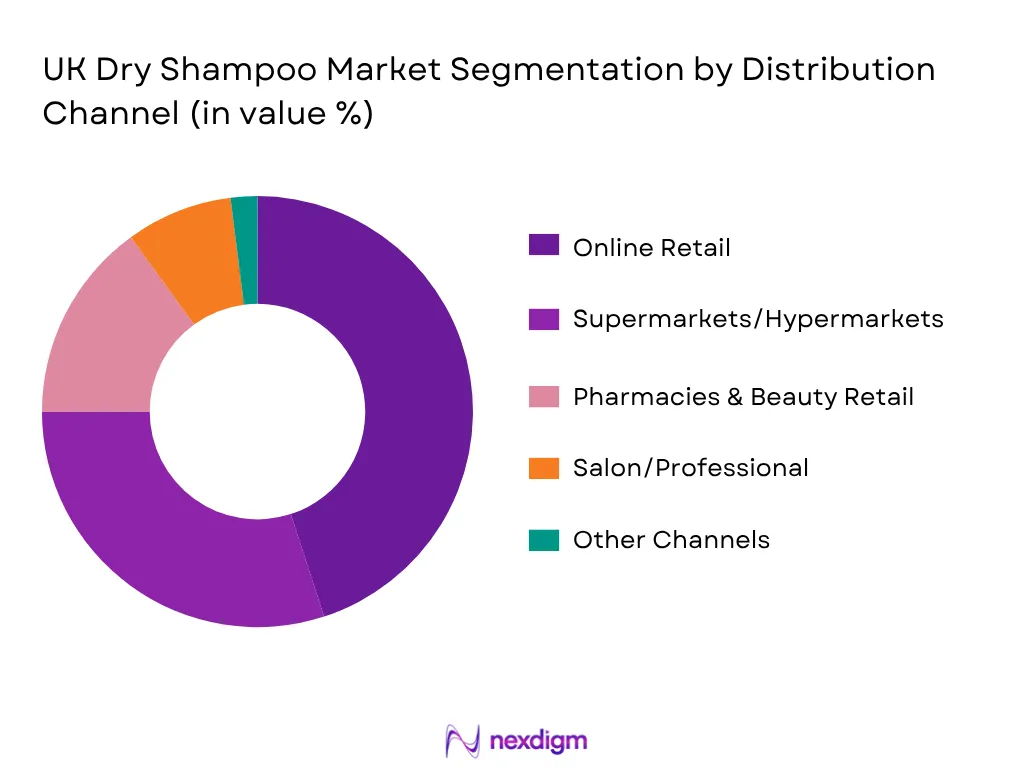
Under distribution channels, online retail leads due to the increasing shift of UK consumers toward digital purchasing behaviours. Platforms like Amazon, Boots Online, and branded D2C stores offer wider assortments, easy trial through reviews, and subscription options that cater to frequent users. Digital discovery through social media and influencer content also directs traffic to online channels, helping brands achieve broader reach. Supermarkets and hypermarkets remain significant due to high foot traffic and impulse buy behaviour for personal care essentials. Pharmacy and beauty retail channels are preferred for premium and dermatologist‑recommended formulations, while salons are a smaller but influential touchpoint for professional‑grade offerings.
Competitive Landscape
The UK dry shampoo market features a mix of global conglomerates and specialized beauty brands. This consolidation highlights the influence of established players and the importance of innovation and brand equity in securing consumer loyalty.
| Company | Establishment Year | Headquarters | Portfolio Breadth | Distribution Reach | Brand Positioning | Innovation Index | Sustainability Score | Digital Engagement |
| Procter & Gamble | 1837 | USA | ~ | ~ | ~ | ~ | ~ | ~ |
| Unilever | 1929 | UK/Netherlands | ~ | ~ | ~ | ~ | ~ | ~ |
| L’Oréal UK Ltd. | 1909 | France | ~ | ~ | ~ | ~ | ~ | ~ |
| Church & Dwight Co. | 1846 | USA | ~ | ~ | ~ | ~ | ~ | ~ |
| Henkel AG & Co. KGaA | 1876 | Germany | ~ | ~ | ~ | ~ | ~ | ~ |
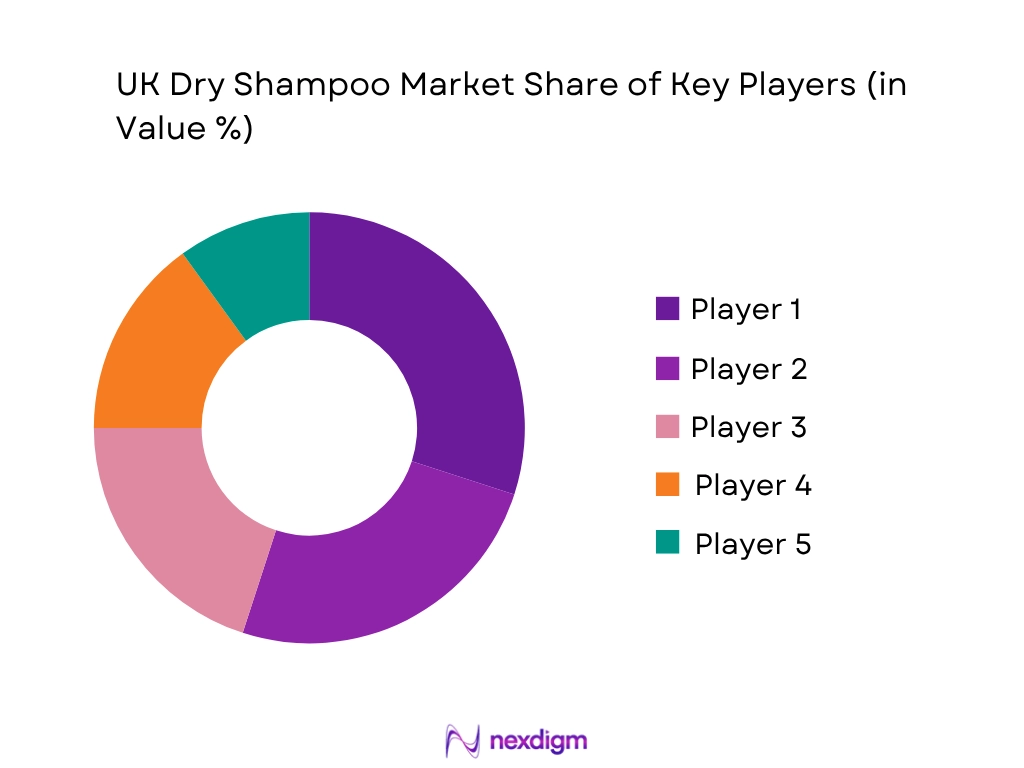
UK Dry Shampoo Market Analysis
Growth Drivers
Urban Lifestyle & Busy Grooming Routines
Urban living patterns and time pressures in the UK underpin the adoption of convenient grooming solutions such as dry shampoo. The UK population exceeded 69 million people in 2024, with London’s metropolitan population at around 14.9 million, reflecting concentrated urban density that correlates with lifestyle convenience behaviours and beauty time‑saving routines. Urban residents often juggle work commitments and social engagements, increasing reliance on quick‑use haircare products that deliver freshness without water and time spent in salons. Household expenditure on personal care, including grooming goods and services that encompass haircare products, reached approximately £28.9 billion in volume terms, indicating significant allocation of consumer budgets toward products that support on‑the‑go maintenance. Additionally, quarterly spending on personal care goods in the third quarter of 2024 reached about £9.4 billion, suggesting sustained retail engagement despite broader economic pressures. These economic and demographic markers illustrate why urban lifestyles and busy routines drive dry shampoo demand in the UK.
Rising Disposable Income & Personal Care Spend
Household economic capacity and personal care expenditure levels significantly influence discretionary spending on grooming and cosmetic products, including premium dry shampoo offerings. According to the World Bank, the UK’s GDP per capita reached 52,636 USD in 2024, ranking among the highest globally and reflecting relatively high income levels that support consumer spending power beyond essential goods. Additionally, personal care spending measured by UK households stood at approximately £28.9 billion in 2024 in terms of volume consumption, showing substantial allocation of disposable income toward personal grooming and care categories. Hairdressing salons and grooming services expenditure was estimated at £9.1 billion in 2024, emphasizing the cultural prioritisation of hair care and grooming. These expenditure levels demonstrate that British consumers maintain elevated spending on personal care products and services, providing a robust economic foundation for continued adoption of innovative and convenience-driven haircare formats like dry shampoo. High disposable income combined with persistent expenditure on grooming reinforces the market’s capacity to absorb diversified haircare products.
Market Challenges
Product Regulatory Scrutiny
Regulatory frameworks and product compliance obligations in the UK present tangible constraints for dry shampoo manufacturers. Post‑Brexit, the UK enforces its own UK Cosmetic Product Regulations, requiring rigorous safety assessment and documentation for ingredients and product claims. These regulations mandate that cosmetic and personal care products including dry shampoos meet strict chemical safety standards and labelling accuracy obligations. Compliance extends to REACH (Registration, Evaluation, Authorisation and Restriction of Chemicals) alignment and adherence to UKCA marking protocols, which involve detailed ingredient safety dossiers and toxicological evaluations before products can enter UK markets. Regulatory scrutiny increases the complexity and cost of product development for smaller players and international brands seeking entry or continued operations in the UK. In contrast to markets with broader harmonised standards, UK regulators may stringently interpret product safety and environmental claims, limiting high‑risk formulations and placing greater emphasis on documented safety testing. This necessitates elevated investment in compliance infrastructure, safety data reporting, and quality assurance for dry shampoo producers, thereby constraining rapid product proliferation and innovation for those without established regulatory expertise. Regulatory complexity is particularly impactful for new entrants and niche brands targeting natural or novel ingredient formulations.
Aerosol Restrictions & Environmental Concerns
Environmental policy and public concern regarding aerosol‑based products restrain growth trajectories within the UK dry shampoo market. Government and regulatory guidance increasingly target reduced emissions and controlled use of volatile organic compounds (VOCs) in consumer products, leading to scrutiny over traditional aerosol delivery systems commonly used in dry shampoos. Public discourse around environmental sustainability highlighted by the UK’s commitment to net‑zero emissions by 2050 and elevated position in the Environmental Performance Index has accelerated consumer preference for non‑aerosol alternatives, refillable formats, and formulations with reduced environmental impact. Although no outright bans exist, environmental campaigns and retailer sustainability policies have discouraged heavy aerosol reliance, compelling brands to reformulate and invest in alternative delivery platforms such as powders or pump sprays. Transitioning product portfolios requires R&D investment and marketing shifts to educate consumers on performance parity, adding complexity to go‑to‑market strategies. This friction between historical product formats and evolving environmental expectations restrains pure aerosol‑centric growth in the dry shampoo category, particularly in mainstream retail channels where sustainability credentials increasingly influence shelf placement and purchase decision.
Opportunities
Expansion of Premium & Clean Beauty Segments
The UK beauty landscape increasingly rewards premium positioning and “clean beauty” credentials, offering significant opportunity for differentiated dry shampoo formats that align with health‑forward and ingredient‑transparent consumer preferences. Consumer expenditure patterns reflect that categories emphasising innovation and perceived value, such as skin care and scalp‑focused products, have maintained resilience even amid broad retail pressures. Notably, spending on health and beauty products rose by 7.3 per cent year‑on‑year in parts of 2024, outpacing overall retail growth and indicating consumer prioritisation of self‑care categories over general discretionary goods. This resilience shows willingness among UK shoppers to allocate disposable income toward products perceived as higher quality or wellness oriented. The premiumisation trend is underscored by elevated household expenditure on grooming services, which reached £9.1 billion in 2024, as consumers invest in personal care outcomes. Dry shampoo brands that develop premium formulations with scalp care benefits, botanically derived ingredients, or clinical claims can capture value‑seeking consumers who equate premium products with efficacy and lifestyle expression. With high per capita income levels the UK had a GDP per capita of about 52,600 USD in 2024 affluent segments are particularly receptive to premium and “clean” haircare innovations, positioning this subset as a future growth driver.
Sustainable & Refillable Format Adoption
Environmental sustainability and reduced waste are core drivers shaping future product development in the UK beauty sector, creating an opportunity for dry shampoo brands to innovate beyond traditional formats. UK consumers are increasingly conscious of product lifecycle impacts, from packaging to end‑of‑use disposal, and sustainability criteria increasingly influence purchase decisions. This shift is evident in broader beauty spending behaviours where eco‑certified, recyclable packaging, and refillable options attract interest, particularly among younger demographics prioritising ethical consumption. Household personal care expenditure trends, with consumers spending nearly £28.9 billion on personal care products and services in 2024, indicate a robust market that can absorb sustainable variants that align with environmental values. Refillable and reduced‑waste dry shampoo formats resonate with regulatory emphasis on reduced single‑use plastics and correspond with retail initiatives that highlight low‑impact products. Given the environmental discourse and policy frameworks targeting sustainability goals, brands that adopt refillable systems, biodegradable ingredients, and transparent sustainability claims stand to appeal to consumers seeking both performance and eco‑responsibility. Strategic adoption of these formats can enable differentiation, strengthen brand equity, and unlock growth among environmentally motivated consumers without relying on broad price competition.
Future Outlook
The UK dry shampoo market is projected to maintain steady long‑term growth driven by evolving consumer routines, enhanced product innovation, and continued expansion of e‑commerce sales channels. Demand for sustainable and clean formulations, such as aerosol‑free and biodegradable options, is anticipated to influence product development and pricing structures. Adoption among male consumers and formulation improvements targeting scalp health are expected to broaden the user base beyond traditional segments. Expansion of digital brand experiences and subscription models will also play a pivotal role in customer retention and lifetime value enhancements.
Major Players
- Procter & Gamble (Batiste)
- Unilever (Tresemmé)
- L’Oréal UK Ltd.
- Church & Dwight Co., Inc. (OGX)
- Henkel AG & Co. KGaA
- Colgate‑Palmolive
- Revlon
- Burt’s Bees
- Klorane
- Moroccanoil UK
- Living Proof
- Amika
- Dove
- Avon
- Marc Anthony
Key Target Audience
- Potential purchasers of this report include:
- Consumer Packaged Goods (CPG) Brand Managers
- Haircare Product Category Directors
- Retail Buying & Merchandising Heads
- Investment and Venture Capitalist Firms (Beauty & Personal Care)
- Private Equity Investors in Personal Care
- E‑commerce Growth & Marketplace Strategy Teams
- Government and Regulatory Bodies (UK Office for Product Safety, UK Advertising Standards Authority)
- Strategic Sourcing & Supply Chain Directors
Research Methodology
Step 1: Market Scoping & Secondary Research
The process begins with defining the UK dry shampoo market boundaries and identifying relevant variables. We conduct extensive desk research using secondary data from industry reports, government sources, trade associations, and reputable market intelligence platforms to understand market size and key trends.
Step 2: Data Consolidation & Segmentation Analysis
Historical data on revenue, product formats, and channels are collated and triangulated to develop reliable baseline figures for the UK market. Segmentation by product type and distribution channels is refined with contextual analysis of consumer behaviour patterns.
Step 3: Primary Validation & Expert Engagement
Market hypotheses and assumptions are validated via structured interviews with industry experts, category buyers, and brand representatives. Insights provide operational perspectives on supply chains, pricing dynamics, and demand shifts.
Step 4: Forecasting & Synthesis
Validated data inform bottom‑up forecasting models to project future market values and growth rates. Cross‑verification with global and regional trends ensures comprehensive and accurate outputs tailored to UK market specifics.

- Executive Summary
- Research Methodology (Market Definitions and UK Personal Care Categorization, Data Sources and Triangulation, Market Sizing Framework, Forecasting Techniques, Primary Stakeholder Interview Panel, Assumptions & Limitations, Validity and Reliability Checks)

- Definition and Market Scope
- Product Classification and Haircare Integration
- Historic Adoption Trends in UK Grooming Habits
- Consumer Decision Cycle
- Supply Chain Structure
- Regulatory Framework

- Growth Drivers (Urban Lifestyle & Busy Grooming Routines, Rising Disposable Income & Personal Care Spend, Digital Beauty Content & Social Media Influence, Increased Salon‑Level Adoption, E‑commerce Penetration & D2C Growth)
- Market Restraints (Product Regulatory Scrutiny (UKCA/REACH Cosmetic Compliance), Consumer Perception of Efficacy vs. Traditional Shampoo, Aerosol Restrictions & Environmental Concerns, Input Cost Volatility (Propellants & Specialty Powders))
- Opportunities (Expansion of Premium & Clean Beauty Segments, Sustainable & Refillable Format Adoption, Private Label Growth by UK Retailers, Salon & Professional Channel Partnerships)
- Emerging Trends (Non‑Aerosol Dry Shampoo Innovation, Scalp Health Multifunction Formulations, Micro‑Powder Technology, Personalised & Hair‑Type Specific Offerings)
- Regulatory Environment (UK Cosmetic Product Regulations & Labeling Standards, Post‑Brexit Chemical & Safety Compliance (UKCA/REACH), Claims Substantiation & Advertising Standards)
- Porter’s Five Forces Analysis (Threat of New Entrants, Bargaining Power of Suppliers, Bargaining Power of Buyers, Threat of Substitutes, Competitive Rivalry)
- SWOT Analysis (Market Level) (Strengths, Weaknesses, Opportunities, Threats Overview Specifically for UK Dry Shampoo)
- Value Chain and Supply Chain Analysis (Raw Material Sourcing – Powders, Absorbents, Fragrance Inputs; UK vs. Imported Ingredients; Manufacturing & Filling Nodes; Quality Testing & Compliance; Distribution Networks – E‑com, Retail, Salon)

- By Market Value (2020-2025)
- By Market Volume (2020-2025)
- By Value vs. Volume Dynamics and Price Realisation (2020-2025)
- By Market Growth Curves vs. Traditional Haircare Products (2020-2025)

- By Type (In Value%)
Spray
Powder
Foam
Mousse
Compact Powder - By Function / Performance Claim (In Value%)
Oil Absorption
Volume Enhancer
Scalp Refreshing
Color Protection
Anti‑Dandruff
Multifunction Haircare - By Hair Type Targeted (In Value%)
Fine Hair
Curly/Coarse Hair
Colored Hair
Sensitive Scalp
All Hair Types - By Distribution Channel (In Value%)
Online Retail
Supermarkets/Hypermarkets
Pharmacies & Health Shops
Beauty Shops
Specialty Haircare Retailers
Salon Channels - By Price Tier (In Value%)
Mass‑Value (Economy)
Mid‑Tier
Premium / Prestige - By Sustainability Credentials (In Value%)
Natural/Organic
Sulfate‑Free
Aerosol‑Free
Recyclable Packaging
Cruelty‑Free

- Market Share & Ranking (Market Share by Value & Volume; Leading Brands vs Niche Players; Premium vs Mass Segment Share; Channel‑Specific Market Concentration)
- Cross Comparison Parameters (Brand Portfolio Breadth, Distribution Network Strength, SKU Depth & Variant Coverage, Pricing & Positioning Strategy, Sustainability Credentials & Eco Initiatives, R&D & Innovation Investment, Digital & Social Media Engagement, Promotional & Marketing Tactics)
- SWOT Analysis of Major Players (Strengths – Brand Equity, Distribution Reach; Weaknesses – Limited Innovation, Pricing Constraints; Opportunities – Eco & Premium Expansion, Salon Partnerships; Threats – New Entrants, Substitutes, Regulatory Pressure)
- Pricing Strategy & SKU Analysis (Average Selling Price by Tier – Value, Mid, Premium; Price Differentiation Across Channels – Online vs Offline; Promotions & Discount Dynamics; Gross Margin Analysis by SKU; Cost Pass‑Through Mechanisms)
- Distribution & Go-to-Market Benchmarking (Channel Penetration – E‑Commerce, Supermarkets, Pharmacies, Salon/Professional Channels; Omnichannel Strategy Alignment; Retail Shelf Space & Visibility; Online Conversion & Subscription Analytics)
- Competitive Intensity & Strategic Positioning (Analysis of Competitive Rivalry, Threat of New Entrants, Market Fragmentation, Barriers to Entry, Collaboration & Acquisition Moves, Niche vs Mass Strategy Dynamics)
- Detailed Profiles of Major Players
Procter & Gamble
Unilever
L’Oréal UK Ltd.
Church & Dwight Co., Inc.
Henkel AG & Co. KGaA
Colgate‑Palmolive
Revlon
Burt’s Bees
Klorane
Moroccanoil UK
Living Proof
Amika
Dove
Avon
Marc Anthony

- Consumer Demographics & Segmentation (Age Groups – Millennials, Gen Z, Working Professionals; Gender Dynamics – Female Dominance, Male Grooming Uptake; Income Segments – Mass, Mid, Premium; Urban vs Suburban Consumers; Hair Type & Concern‑Based Segmentation)
- Purchase Drivers (Convenience & Time-Saving, Hair Freshness Between Washes, Volume & Styling Benefits, Brand Trust & Reputation, Influence of Social Media & Beauty Influencers)
- Consumer Pain Points & Barriers (Residue/White Powder Issues, Sensitivity & Scalp Concerns, Price Sensitivity, Lack of Awareness of Eco‑Friendly Options, Misalignment Between Product Claims and Expectations)
- Buying Behavior & Decision Journey (Research Channels – Online Reviews, Social Media, Retail Displays; Trial Patterns – Sampling, Multi‑Brand Testing; Repeat Purchase Triggers; Loyalty & Subscription Behaviors)
- Channel Preference & Consumption Patterns (Online Shopping vs Retail Outlets; Preference for Supermarkets, Pharmacies, Specialty Retailers, Salon Purchase; Seasonal & Occasion‑Based Demand; Bulk vs Single SKU Purchase Patterns)

- By Market Value (2026-2035)
- By Market Volume (2026-2035)
- By Value vs. Volume Dynamics and Price Realisation (2026-2035)
- By Market Growth Curves vs. Traditional Haircare Products (2026-2035)


 Request a Sample
 Ask for Customization
 Get a Quote
 Enquire Now