

 Download PDF
Market Overview
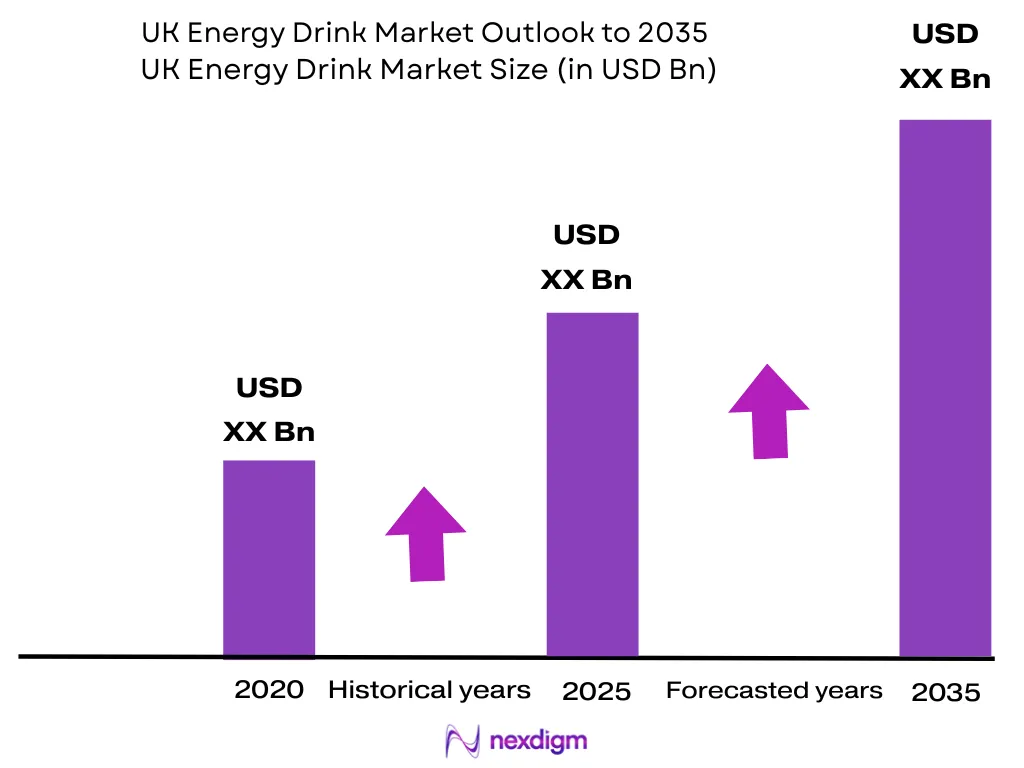
The UK Energy Drink Market is valued at USD ~ billion, while a separate historical benchmark valued the market at USD ~ billion in the preceding base, showing strong category expansion across functional RTD beverages. Growth is driven by convenient energy, mental alertness, fitness use, low-sugar innovation and wider supermarket, convenience and e-commerce availability. The long-term market outlook indicates a 6.40% CAGR toward 2035. The UK Energy Drink Market is concentrated in London, Birmingham, Manchester, Leeds, Glasgow, Edinburgh and other large urban centres due to commuting, universities, office density, nightlife, gyms and convenience-led retail. The UK population reached 69,281,400, increasing by 755,300 from the prior base, while England and Wales reached 61,806,682 people. London’s estimated population of 8,799,800 supports the country’s strongest energy drink consumption cluster.
Market Segmentation
By Product Type
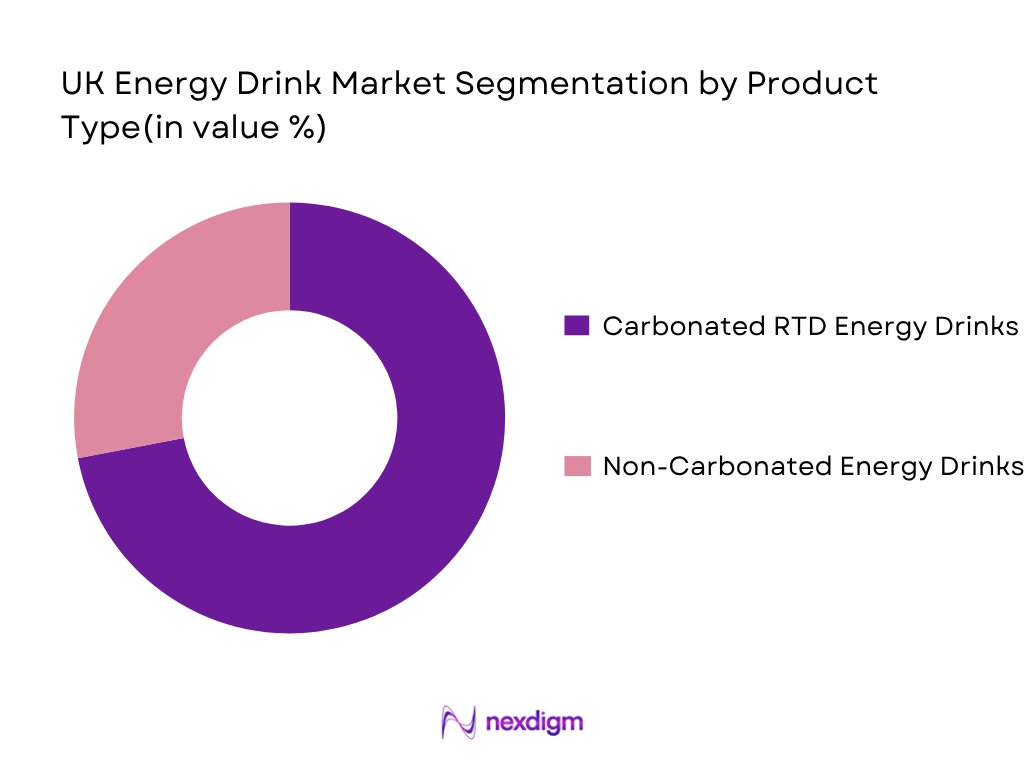
The UK Energy Drink Market is segmented by product type into energy drinks and energy shots. Recently, energy drinks have a dominant market share under product type segmentation because canned and bottled RTD formats serve the widest range of everyday consumption occasions, including work, study, commuting, driving, gym use, gaming and night-time leisure. Brands such as Red Bull, Monster, Lucozade, Rockstar, Relentless, Boost and Prime Energy benefit from stronger grocery listings, larger SKU ranges, multipacks, price-marked packs, and chilled convenience-store visibility. Energy shots remain relevant for compact caffeine delivery, checkout placement and work-travel occasions, but they serve a narrower usage mission and have lower shelf visibility than RTD cans. Energy drinks also benefit from sugar-free, low-calorie and functional ingredient innovation, which makes them more adaptable to health-conscious and performance-focused consumers.
By Packaging Type
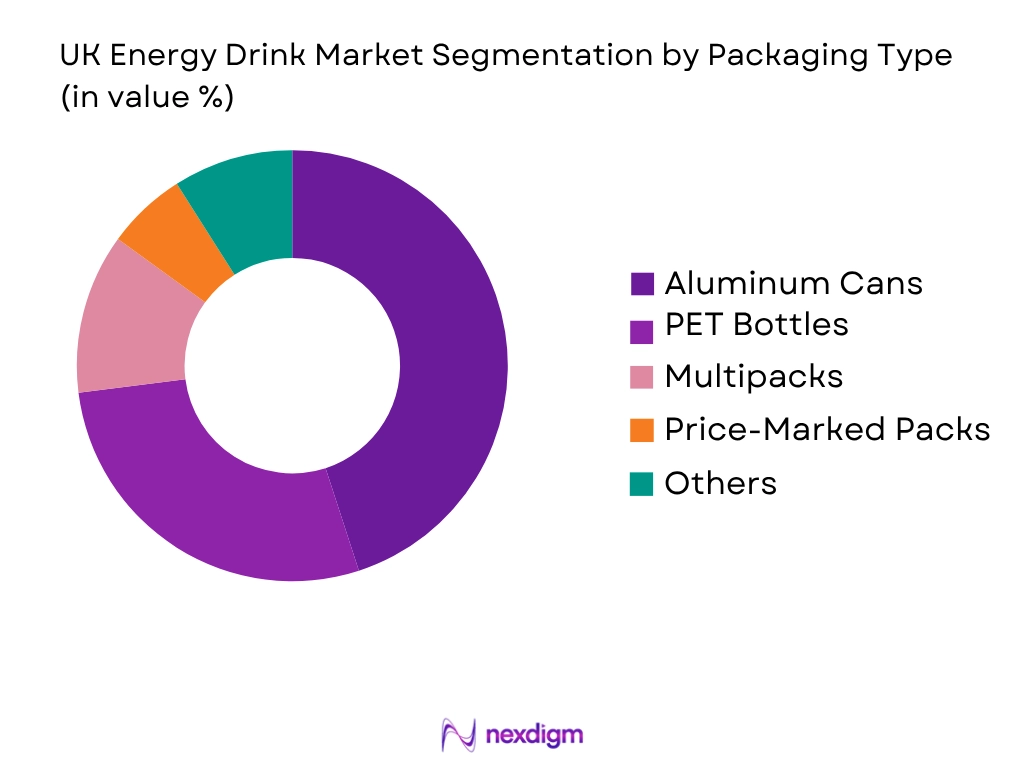
The UK Energy Drink Market is segmented by packaging type into cans and PET bottles. Recently, cans have a dominant market share under packaging type segmentation because aluminum cans fit the category’s main operating model: chilled single-serve purchase, strong brand visibility, rapid consumption and high convenience-store rotation. Cans support large-format, slim-can, zero-sugar, premium and price-marked pack strategies, making them suitable for supermarkets, petrol forecourts, symbol stores, discounters, wholesalers and vending. Leading brands use cans for their flagship SKUs because they preserve carbonation, chill quickly and allow high-impact shelf branding. PET bottles remain relevant for resealable and longer-consumption occasions, particularly sport, workday and travel use, but they are less strongly associated with the core energy drink image than cans.
Competitive Landscape
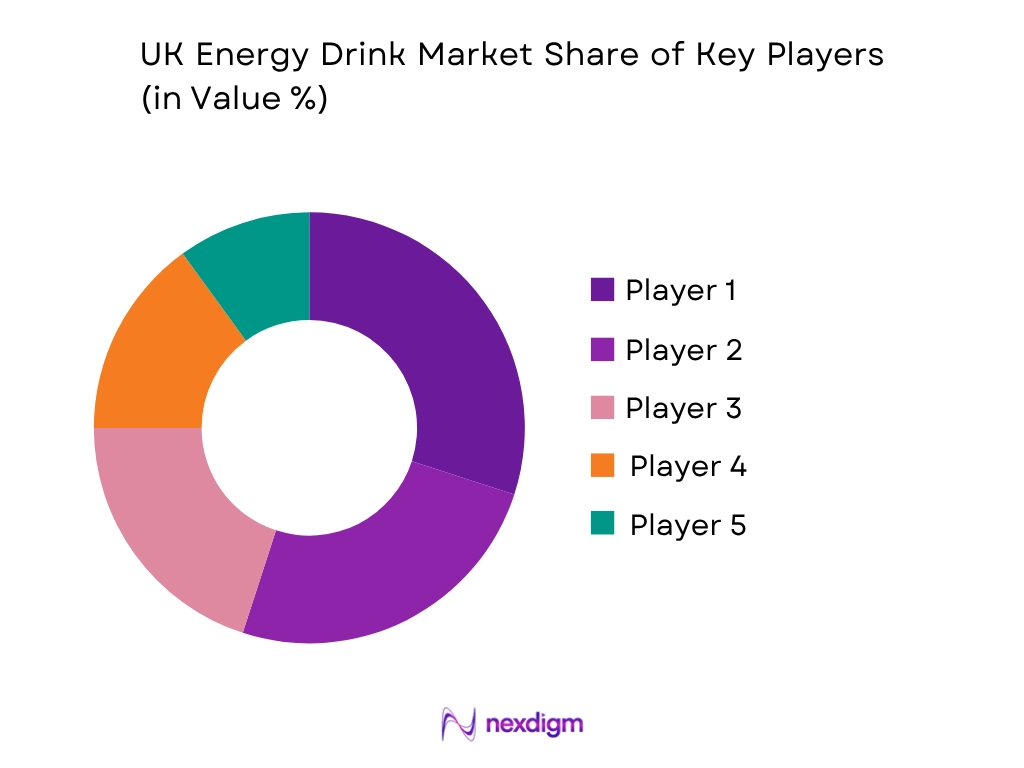
The UK Energy Drink Market is led by global brands and strong domestic or UK-established challengers. Red Bull and Monster maintain premium and mainstream leadership through high brand recall, convenience-channel strength, sports sponsorships and wide grocery presence. Lucozade benefits from UK heritage and functional beverage recognition, while Rockstar, Relentless, Boost, Rubicon RAW, Carabao, Prime Energy, Tenzing and sports nutrition brands compete through sugar-free variants, price-marked packs, gaming, gym positioning, natural caffeine and youth-focused marketing. The competitive structure is intense because retailers allocate limited chilled space to fast-moving SKUs and brands with strong repeat purchase.
| Company | Establishment Year | Headquarters | Core Energy Portfolio | UK Positioning | Packaging Focus | Channel Strength | Product Innovation Focus | Market-Specific Edge |
| Red Bull GmbH | 1984 | Fuschl am See, Austria | ~ | ~ | ~ | ~ | ~ | ~ |
| Monster Beverage Corporation | 1935 | Corona, California, USA | ~ | ~ | ~ | ~ | ~ | ~ |
| Suntory Beverage & Food GB&I | 1899 / UK Lucozade heritage | Uxbridge, UK / Tokyo, Japan | ~ | ~ | ~ | ~ | ~ | ~ |
| PepsiCo UK | 1965 | Purchase, New York, USA | ~ | ~ | ~ | ~ | ~ | ~ |
| A.G. Barr | 1875 | Cumbernauld, Scotland | ~ | ~ | ~ | ~ | ~ | ~ |
UK Energy Drink Market Analysis
Growth Drivers
Large Workforce and On-the-Go Energy Consumption
The UK Energy Drink Market is supported by a large working population that creates frequent RTD beverage occasions across commuting, office work, logistics, night shifts, delivery, retail and service-sector routines. ONS reported 36.8 million workforce jobs in September 2024, supporting demand for portable energy drinks consumed during work breaks, travel and long-hour occupations. The World Bank reported UK GDP per capita at USD 53,246.37, indicating strong consumer purchasing capacity for branded functional beverages. DfT reported 336.2 billion vehicle miles on Great Britain’s roads in 2024, supporting forecourt, travel-retail and convenience-store energy drink demand.
Urban Population Density and Convenience Retail Relevance
The UK Energy Drink Market benefits from dense urban consumption clusters where universities, offices, gyms, nightlife, convenience stores, forecourts and transport hubs support high-frequency single-serve purchases. ONS estimated the UK population at 69,281,400 in mid-2024, adding 755,300 people from the prior year. London alone had an estimated population of 8,799,800, making it the largest concentration of commuters, students, professionals, tourists and nightlife consumers in the country. World Bank data placed UK GDP per capita at USD 53,246.37, supporting premium cans, sugar-free variants, multipacks and functional beverage experimentation in major retail corridors.
Market Challenges
High-Caffeine Labelling and Youth-Suitability Constraints
The UK Energy Drink Market faces regulatory pressure because high-caffeine beverages require explicit warnings when caffeine content exceeds 150 mg per litre. Government food-labelling guidance requires the statement “Not suitable for children, pregnant women and persons sensitive to caffeine” for drinks above that threshold. This directly affects energy drinks positioned around alertness, gaming, studying and performance. The challenge is amplified by a large youth and young-adult consumption base, including 2,863,180 higher-education student enrolments in 2024/25. With the UK population at 69,281,400, brands must scale responsibly across grocery, convenience, campus, vending and online channels.
Sugar Reformulation and Health-Policy Pressure
The UK Energy Drink Market faces formulation pressure from sugar regulation and public-health scrutiny. Government consultation confirms the Soft Drinks Industry Levy threshold will move from 5 g of total sugar per 100 ml to 4.5 g per 100 ml, tightening the reformulation environment for sweetened energy drinks. NHS England reported that 30 adults in every 100 were living with obesity and 66 adults in every 100 were overweight or living with obesity in 2024, reinforcing demand for lower-sugar product architecture. These conditions push brands toward zero-sugar, low-sugar, no-added-sugar and functional stacks while maintaining flavour, caffeine performance and repeat purchase.
Market Opportunities
Student, Campus and Productivity-Oriented Energy Drinks
The UK Energy Drink Market has a strong opportunity in student, campus, study and productivity occasions because higher education creates dense demand clusters near universities, accommodation, transport nodes and city-centre convenience retail. HESA reported 2,863,180 higher-education student enrolments in 2024/25, compared with 2,900,240 in 2023/24, sustaining a large target base for study, exam-period, gaming and late-evening energy consumption. The UK also recorded 36.8 million workforce jobs, extending productivity-led demand beyond students into office workers and shift workers. This supports future growth for focus-positioned, zero-sugar, vending-ready and campus-compliant energy drink formats.
Tourism, Nightlife and Travel-Retail Expansion
The UK Energy Drink Market has future growth opportunity through travel hubs, nightlife, festivals, hotels, rail stations, airports and tourist-heavy city centres because energy drinks match late-night, mixer, travel and fatigue-management occasions. ONS reported 42.6 million inbound visits to the UK in 2024 and 293 million visitor nights, supporting retail demand across London, Edinburgh, Manchester, Birmingham and other visitor centres. DfT reported 336.2 billion vehicle miles on Great Britain’s roads in 2024, reinforcing forecourt and travel-retail relevance. The UK population base of 69,281,400 further strengthens domestic convenience and night-time economy demand.
Future Outlook
The UK Energy Drink Market is expected to maintain steady long-term growth as energy drinks become a broader functional beverage category rather than a narrow stimulant drink category. The market outlook to 2035 indicates a supported by demand for convenient energy, active lifestyles, zero-sugar products, natural formulations, e-commerce accessibility and specialised retail channels.
Over the next phase, the market will be shaped by reformulation, functional stacking and channel-specific pack architecture. Sugar-free and low-calorie products will continue gaining shelf space because the UK soft drinks levy has pushed manufacturers toward lower-sugar portfolios. The strongest product development areas will include caffeine plus vitamins, natural caffeine, amino acids, electrolytes, nootropics, protein-energy hybrids and gaming-focused powdered products.
Convenience stores, petrol forecourts, supermarkets, discounters, wholesalers and e-commerce will remain critical routes to market. Price-marked packs will stay important in independent retail, while multipacks will support grocery and discounter purchase. Growth will also be linked to consumer occasions such as office productivity, university study, commuting, gym use, delivery work, gaming, festivals and nightlife. Retailer age-restriction policies and high-caffeine labelling will remain important risk factors for brands.
Major Players
- Red Bull UK
- Monster Energy UK
- Suntory Beverage & Food GB&I
- PepsiCo UK
- Coca-Cola Europacific Partners GB
- A.G. Barr
- Boost Drinks
- Carabao Energy Drink UK
- Prime Hydration UK
- Applied Nutrition
- Grenade
- G Fuel UK
- Sneak Energy
- Tenzing Natural Energy
- Hell Energy UK
Key Target Audience
- Energy drink manufacturers and brand owners
- Functional beverage companies
- Carbonated soft drink and non-alcoholic beverage companies
- Supermarket, discounter and convenience retail chains
- Petrol forecourt, vending and workplace micro-market operators
- Sports nutrition, gym retail and e-commerce beverage operators
- Investments and venture capitalist firms
- Government and regulatory bodies (Food Standards Agency, Department of Health and Social Care, HM Treasury, Advertising Standards Authority, Trading Standards, Competition and Markets Authority)
Research Methodology
Step 1: Identification of Key Variables
The initial phase involves constructing an ecosystem map covering energy drink brands, soft drink manufacturers, importers, co-packers, ingredient suppliers, wholesalers, convenience retailers, supermarkets, discounters, forecourts, gyms, universities, vending operators and regulators. Critical variables include product type, sugar profile, caffeine strength, packaging type, pack size, distribution channel, consumer occasion and regional demand concentration.
Step 2: Market Analysis and Construction
In this phase, historical market data is compiled using company portfolios, retailer listings, public market benchmarks, grocery and convenience availability, soft drinks regulation and product-level claims. The analysis reviews how cans, PET bottles, multipacks, price-marked packs, sugar-free variants, high-caffeine products and functional ingredient claims influence category revenue and brand positioning.
Step 3: Hypothesis Validation and Expert Consultation
Market hypotheses are validated through computer-assisted telephone interviews with grocery buyers, convenience store operators, wholesalers, petrol forecourt retailers, vending suppliers, sports nutrition retailers, beverage distributors and category managers. These consultations provide operational insights into SKU velocity, shelf competition, reformulation, promotional pressure, channel profitability and consumer switching.
Step 4: Research Synthesis and Final Output
The final phase involves triangulating bottom-up SKU and channel evidence with top-down market benchmarks and regulatory analysis. Direct engagement with beverage manufacturers and retail stakeholders helps verify segmentation, distribution depth, pricing architecture, consumer occasions and competitive positioning, producing a validated assessment of the UK Energy Drink Market.

- Executive Summary
- Research Methodology (market definitions and assumptions, RTD energy drink classification, stimulant beverage scope, high-caffeine beverage threshold, soft drinks levy impact mapping, retail scan triangulation, grocer and convenience-store checks, distributor interviews, top-down and bottom-up sizing)

- Definition and Scope
- Overview Genesis
- Timeline of Major Players
- Business Cycle

- Growth Drivers (functional beverage adoption, convenience retail, sugar-free expansion, gaming culture, gym participation, price-marked packs, commuter consumption)
- Market Challenges (caffeine restrictions, under-age sales controls, soft drinks levy exposure, retailer delisting, health perception, SKU saturation)
- Market Opportunities (zero sugar, natural caffeine, focus energy, hydration energy, protein energy, campus retail, vending, DTC subscriptions)
- Market Trends (reformulation, zero sugar, price-marked packs, large cans, gaming energy, licensed flavors, premiumization, functional stacking)
- SWOT Analysis
- Porter’s Five Forces

- By Value (2020-2025)
- By Volume (2020-2025)
- By Unit Sales(2020-2025)

- By Product Type (In Value %)
Carbonated RTD Energy Drinks
Non-Carbonated Energy Drinks
Energy Shots
Powdered Energy Drinks
- By Packaging Type (In Value %)
Aluminum Cans
PET Bottles
Multipacks
Price-Marked Packs
Slim Cans - By Distribution Channel (In Value %)
Supermarkets and Hypermarkets
Discounters
Convenience Stores and Symbol Groups
Petrol Forecourts and Travel Retail
Cash-and-Carry and Wholesalers
- By Region (In Value %)
England
Scotland
Wales
Northern Ireland

- Market Share of Major Players on the Basis of Value and Volume
- Cross Comparison Parameters (caffeine mg per litre, sugar grams per 100 ml, zero-sugar SKU mix, price-marked-pack availability, grocery and convenience distribution, multipack architecture, gaming and sports sponsorship intensity, compliance with under-age retail policies)
- SWOT Analysis of Major Players
- Detailed Profiles of Major Companies
Red Bull UK
Monster Energy UK
Suntory Beverage & Food GB&I
PepsiCo UK
Coca-Cola Europacific Partners GB
Boost Drinks
Carabao Energy Drink UK
AG Barr
Prime Hydration UK
Applied Nutrition
Grenade
G Fuel UK
Sneak Energy
Emerge Energy
Hell Energy UK

- Market Demand and Utilization
- Purchasing Power and Budget Allocation
- Regulatory and Compliance Requirements
- Needs, Desires and Pain Point Analysis

- By Value (2026-2035)
- By Volume (2026-2035)
- By Unit Sales (2026-2035)


 Request a Sample
 Ask for Customization
 Get a Quote
 Enquire Now