
 Download PDF
 Download PDF
Market Overview
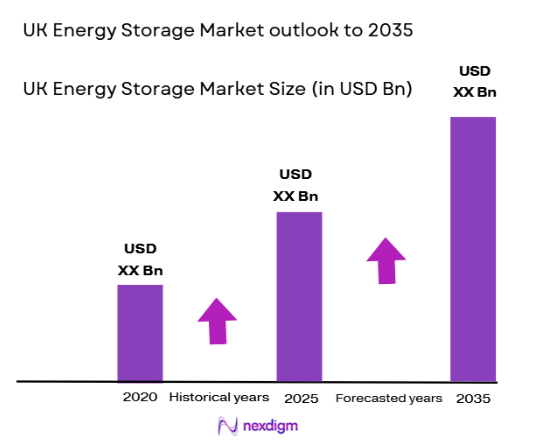
The UK Energy Storage Market is expected to reach a size of approximately USD ~ billion based on a recent historical assessment. This growth is primarily driven by the increasing demand for renewable energy sources, especially solar and wind, which require efficient storage solutions to manage their intermittent nature. Energy storage systems are critical for grid stability and ensuring reliable power supply, making them an integral part of the UK’s energy transition. Additionally, government incentives and technological advancements in battery storage have contributed to the market’s expansion.
The UK leads the energy storage market in Europe, with significant investments in infrastructure and innovation. Key cities such as London, Manchester, and Birmingham are at the forefront of adopting advanced energy storage systems, driven by the government’s renewable energy targets and commitments to decarbonization. The UK’s favorable regulatory environment, including subsidies for energy storage solutions, along with its push for smart grids, has reinforced its leadership. The nation’s focus on integrating renewable energy sources into the grid has also played a crucial role in establishing its dominance in the market.
Market Segmentation
By System Type:
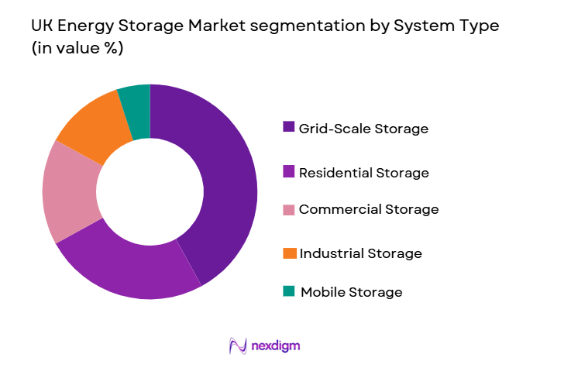
The UK Energy Storage Market is segmented by system type into grid-scale storage, residential storage, commercial storage, industrial storage, and mobile storage solutions. Recently, grid-scale storage systems dominate the market due to the increasing demand for large-scale energy storage to manage renewable energy sources like wind and solar. This dominance can be attributed to the need for long-duration storage solutions to balance supply and demand across the grid. Moreover, large-scale projects supported by government incentives and technological advancements in battery storage have facilitated the widespread adoption of these systems. As grid-scale storage helps stabilize the national grid and reduce the dependency on fossil fuels, it has become the most favored solution in the market.
By Platform Type:
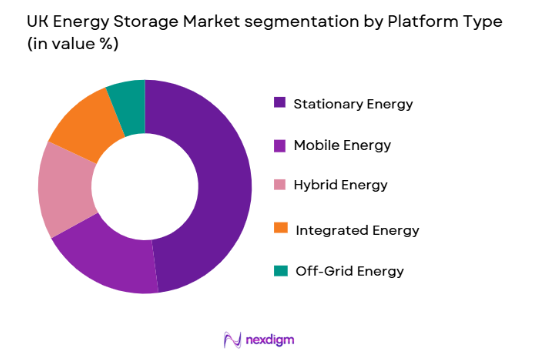
The market is segmented by platform type into stationary energy storage, mobile energy storage, hybrid energy storage, integrated energy storage, and off-grid energy storage. Stationary energy storage solutions are the dominant platform type, as they provide reliable storage for the grid and renewable energy sources, such as solar and wind. These systems are integral to stabilizing power supply and enhancing energy resilience. The growth of stationary systems is supported by their widespread use in both residential and industrial settings, making them a preferred choice for energy storage. Additionally, advancements in battery technologies and the scalability of these systems have driven their market share dominance.
Competitive Landscape
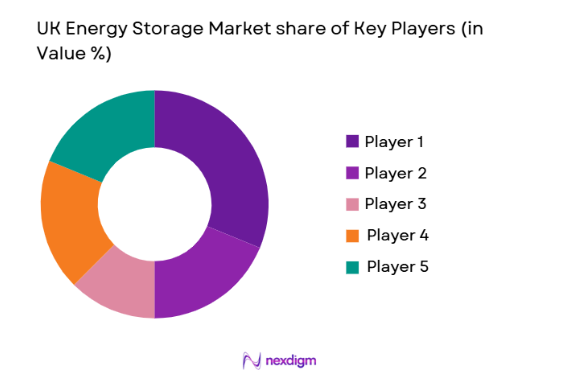
The competitive landscape in the UK Energy Storage Market is characterized by significant consolidation, with major players continually innovating to enhance storage capacities and efficiency. Several established energy firms dominate the market, alongside emerging players with cutting-edge technology solutions. The ongoing consolidation in the market has led to more strategic partnerships and joint ventures to enhance technological capabilities and expand market reach. With increasing investments in research and development, players are striving to improve the cost-effectiveness and efficiency of their energy storage solutions. Additionally, government regulations and environmental policies are pushing for more sustainable and eco-friendly storage solutions, which has influenced the competitive dynamics of the market.
| Company Name | Establishment Year | Headquarters | Technology Focus | Market Reach | Key Products | Revenue (USD Billion) | Additional Parameter |
| Tesla | 2003 | Palo Alto, USA | ~ | ~ | ~ | ~ | ~ |
| Siemens Energy | 2020 | Munich, Germany | ~ | ~ | ~ | ~ | ~ |
| Vattenfall | 1909 | Stockholm, Sweden | ~ | ~ | ~ | ~ | ~ |
| EDF Energy | 2000 | Paris, France | ~ | ~ | ~ | ~ | ~ |
| Ørsted | 1972 | Fredericia, Denmark | ~ | ~ | ~ | ~ | ~ |
UK Energy Storage Market Analysis
Growth Drivers
Government Support for Renewable Energy:
The UK government has made significant investments in renewable energy projects, offering subsidies and incentives for energy storage solutions. These policies have driven demand for energy storage systems, especially to support the integration of solar and wind energy into the grid. The government’s commitment to achieving net-zero emissions by 2050 has spurred a surge in renewable energy adoption, thus creating a growing need for reliable storage solutions. As renewable energy production is intermittent, energy storage plays a crucial role in stabilizing supply and ensuring grid reliability. With ongoing incentives and green energy policies, the market is expected to continue benefiting from governmental support, leading to sustained growth in energy storage demand.
Technological Advancements in Battery Storage:
Significant progress in battery technology has been a major driver of growth in the UK Energy Storage Market. As the efficiency and energy density of storage systems improve, costs have decreased, making energy storage more affordable and accessible for residential, commercial, and industrial sectors. Advances in lithium-ion and solid-state batteries have revolutionized the market, enabling longer-duration storage and higher capacity. Additionally, innovations in battery management systems and grid integration technologies have enhanced the functionality of energy storage systems. These advancements have not only driven the adoption of storage systems but also increased their integration with renewable energy sources, which is critical to reducing carbon footprints and enhancing grid stability.
Market Challenges
High Initial Capital Investment:
One of the primary challenges faced by the UK Energy Storage Market is the high upfront cost of installing energy storage systems, particularly for large-scale grid applications. While the long-term benefits, such as reduced energy costs and improved grid stability, make energy storage a compelling investment, the initial financial barrier is often prohibitive for many consumers and businesses. The high capital required to install advanced battery systems and integrate them into existing infrastructure remains a significant hurdle for widespread adoption. Despite falling costs due to technological advancements, the financial burden of energy storage systems still presents a significant challenge, especially for small and medium-sized enterprises.
Regulatory and Policy Barriers:
Despite the growing demand for energy storage solutions, regulatory and policy challenges remain a major obstacle in the UK market. The lack of standardized regulations and inconsistent incentives across regions can hinder the smooth deployment of energy storage projects. Additionally, the complexity of certification processes and the slow pace of policy reforms in certain areas can delay the approval and installation of energy storage systems. As energy storage is often integrated with other energy solutions, navigating these regulatory barriers becomes increasingly challenging for businesses and stakeholders. The need for more comprehensive and cohesive policies to streamline regulatory approvals and promote energy storage adoption is essential for the market to fully realize its potential.
Opportunities
Expansion of Off-Grid Energy Solutions:
Off-grid energy solutions present a significant opportunity for the UK Energy Storage Market. With the increasing demand for self-sufficient energy systems, especially in remote and rural areas, off-grid energy storage has become a viable solution for homeowners and businesses seeking reliable power sources. Technological advancements in battery storage and energy management systems have made off-grid solutions more affordable and efficient. Additionally, the growing interest in renewable energy sources, such as solar and wind, has further enhanced the attractiveness of off-grid storage solutions. As consumers seek energy independence and the ability to reduce their carbon footprints, the off-grid energy storage market is poised for significant growth.
Integration of Smart Grids with Energy Storage:
The integration of smart grid technology with energy storage systems offers significant opportunities for the market. Smart grids allow for real-time monitoring and management of energy consumption, enabling more efficient use of energy storage. By integrating energy storage with smart grids, the UK can improve grid stability, enhance energy management, and optimize energy distribution. Furthermore, the ability to store excess energy during off-peak hours and use it during peak demand periods can result in cost savings and a more sustainable energy system. The continued development of smart grids, coupled with advancements in energy storage technologies, creates a favorable environment for innovation and investment in this sector.
Future Outlook
Over the next five years, the UK Energy Storage Market is expected to experience substantial growth. With continued government support for renewable energy, technological advancements in energy storage systems, and increasing demand for grid stability, the market is positioned for expansion. The integration of smart grids and the growing adoption of off-grid energy solutions will further drive the market forward. Additionally, as battery technologies improve and costs continue to decline, energy storage will become more accessible to a broader range of consumers, helping to accelerate the UK’s transition to a sustainable and low-carbon energy future.
Major Players
- Tesla
- Siemens Energy
- Vattenfall
- EDF Energy
- Ørsted
- General Electric
- Samsung SDI
- LG Chem
- Fluence Energy
- BYD
- ABB Ltd.
- Schneider Electric
- Eaton Corporation
- Johnson Controls
- AES Energy Storage
Key Target Audience
- Investments and venture capitalist firms
- Government and regulatory bodies
- Renewable energy developers
- Utilities and grid operators
- Residential consumers
- Commercial energy users
- Industrial energy users
- Battery storage technology developers
Research Methodology
Step 1: Identification of Key Variables
The first step involves identifying the key variables influencing the UK Energy Storage Market, including technological advancements, regulatory factors, and demand patterns.
Step 2: Market Analysis and Construction
Market trends and data are analyzed to construct a detailed market model, focusing on market size, segmentation, and competitive landscape.
Step 3: Hypothesis Validation and Expert Consultation
The initial hypotheses are validated through consultations with industry experts, technology providers, and regulatory bodies.
Step 4: Research Synthesis and Final Output
The final research output synthesizes all collected data into a cohesive market report, providing insights into trends, growth drivers, and key challenges.

- Executive Summary
- Research Methodology (Definitions, Scope, Industry Assumptions, Market Sizing Approach, Primary & Secondary Research Framework, Data Collection & Verification Protocol, Analytic Models & Forecast Methodology, Limitations & Research Validity Checks)

- Market Definition and Scope
- Value Chain & Stakeholder Ecosystem
- Regulatory / Certification Landscape
- Sector Dynamics Affecting Demand
- Strategic Initiatives & Infrastructure Growth

- Growth Drivers
Rising Demand for Renewable Energy
Government Incentives for Clean Energy
Technological Advancements in Storage Systems
Declining Battery Prices
Increased Energy Security Concerns - Market Challenges
High Initial Investment Costs
Limited Grid Integration Solutions
Regulatory and Policy Barriers
Technology Adoption and Interoperability Issues
Energy Storage System Maintenance Costs - Market Opportunities
Growth in Electric Vehicle Battery Storage
Expansion of Off-Grid Energy Solutions
Integration of AI and IoT in Energy Storage Systems - Trends
Growing Interest in Hybrid Energy Storage Solutions
Rise in Battery Recycling Initiatives
Advancements in Solid-State Battery Technology
Shift Toward Decentralized Energy Systems
Increase in Public and Private Sector Collaborations - Government Regulations & Defense Policy
Incentives for Renewable Energy Storage
Energy Storage System Safety Standards
Grid Modernization Initiatives - SWOT Analysis
- Stakeholder and Ecosystem Analysis
- Porter’s Five Forces Analysis
- Competition Intensity and Ecosystem Mapping

- By Market Value, 2020-2025
- By Installed Units, 2020-2025
- By Average System Price, 2020-2025
- By System Complexity Tier, 2020-2025

- By System Type (In Value%)
Grid-Scale Energy Storage
Commercial & Industrial Storage
Residential Storage
Battery Storage Systems
Thermal Storage Systems - By Platform Type (In Value%)
Stationary Energy Storage
Mobile Energy Storage
Hybrid Energy Storage
Solar-Integrated Energy Storage
Off-Grid Energy Storage - By Fitment Type (In Value%)
On-premise Storage Solutions
Grid-connected Solutions
Battery-as-a-Service
Standalone Energy Storage Systems
Microgrid Storage Solutions - By EndUser Segment (In Value%)
Utilities
Residential Consumers
Industrial Sector
Commercial Sector
Renewable Energy Providers - By Procurement Channel (In Value%)
Direct Procurement
Third-party Distributors
Online Procurement Platforms
Energy Service Providers
Government Tenders - By Material / Technology (in Value%)
Lithium-ion Batteries
Lead-Acid Batteries
Solid-State Batteries
Flow Batteries
Flywheel Energy Storage Systems

- Market structure and competitive positioning
- Market share snapshot of major players
- CrossComparison Parameters (System Type, Platform Type, Procurement Channel, EndUser Segment, Fitment Type, Material/Technology, Government Regulations, Price Trends, Market Growth, Technological Innovations)
- SWOT Analysis of Key Players
- Pricing & Procurement Analysis
- Key Players
SSE Plc
EDF Energy
Ørsted
National Grid
Vattenfall
Tesla Inc.
Siemens AG
LG Chem
E.ON
Sungrow Power Supply Co.
NEC Energy Solutions
BYD Co. Ltd.
ABB Ltd.
Fluence Energy
Samsung SDI

- Utilities’ Investment in Storage Systems
- Residential Adoption of Energy Storage Solutions
- Industrial Demand for Peak Shaving
- Government’s Role in Subsidizing Energy Storage

- Forecast Market Value, 2026-2035
- Forecast Installed Units, 2026-2035
- Price Forecast by System Tier, 2026-2035
- Future Demand by Platform, 2026-2035


 Request a Sample
 Ask for Customization
 Get a Quote
 Enquire Now