

 Download PDF
 Download PDF
Market Overview
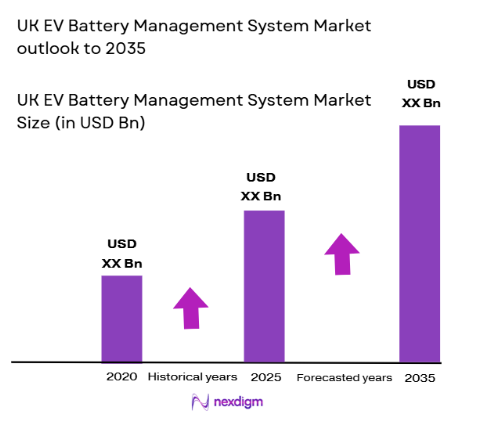
The UK EV Battery Management System market is expected to reach USD ~ billion by 2024, driven by the rapid adoption of electric vehicles (EVs) and advancements in battery technology. The market growth is propelled by government incentives, increasing environmental awareness, and the push for sustainable transport solutions. The rising demand for high-performance EVs and efficient energy storage solutions are additional factors contributing to the growing market size. The need for enhanced battery life, improved safety features, and fast-charging solutions are key drivers behind the demand for EV battery management systems in the region.
The dominance of the UK in the EV Battery Management System market can be attributed to the country’s progressive environmental policies and increasing investments in EV infrastructure. Leading cities such as London, Birmingham, and Manchester are seeing a rapid expansion of EV charging stations and government-backed initiatives promoting clean energy and sustainable transport. The UK’s well-established automotive industry, along with strong collaborations between automakers and technology providers, solidifies the nation’s position as a leader in the European EV market.
Market Segmentation
By Product Type:
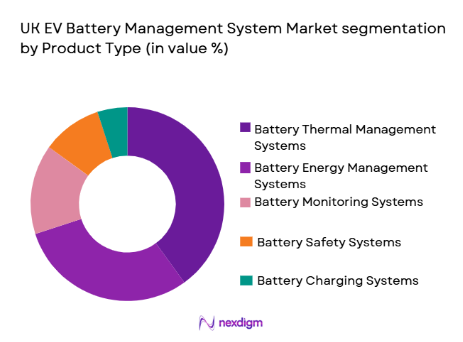
The UK EV Battery Management System market is segmented by product type into various sub-segments. Recently, the Battery Thermal Management Systems sub-segment has gained significant traction due to the growing demand for optimizing battery performance and ensuring the safety and longevity of electric vehicle batteries. This sub-segment benefits from advancements in thermal management technologies that reduce the risk of overheating, improve energy efficiency, and enhance battery life, making it a crucial component for EVs in the market.
By Platform Type:
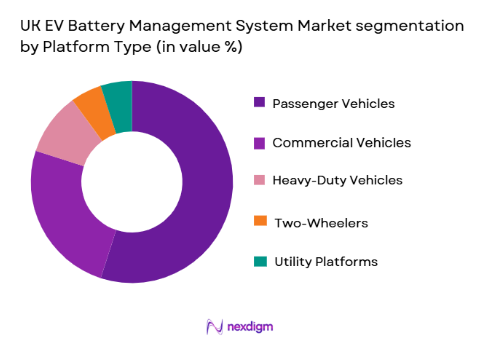
The UK EV Battery Management System market is segmented by platform type into various sub-segments. Recently, the Passenger Vehicles sub-segment has dominated the market share. This is driven by the rising consumer demand for personal electric vehicles, fueled by government incentives, a growing focus on sustainable transportation, and advancements in battery technology that make EVs more affordable. Increased public awareness of the environmental impact of traditional vehicles has also contributed to the expansion of passenger electric vehicle sales in the UK.
Competitive Landscape
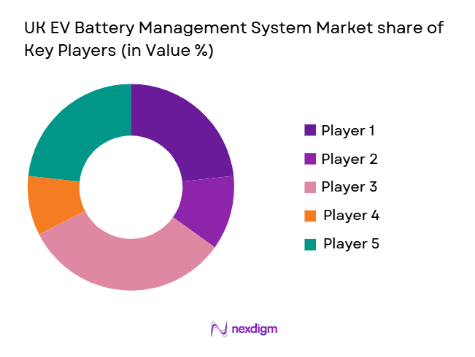
The competitive landscape of the UK EV Battery Management System market is characterized by significant consolidation, with major players forming strategic partnerships to expand their technological capabilities and market reach. Key players are focusing on enhancing their product offerings through innovations in battery management systems, with an emphasis on energy efficiency, cost-effectiveness, and improving the safety of EV batteries. Additionally, leading companies are increasing investments in research and development to keep pace with the rapid technological advancements in the EV sector. The market has become highly competitive, with players leveraging partnerships, collaborations, and acquisitions to strengthen their positions.
| Company Name | Establishment Year | Headquarters | Technology Focus | Market Reach | Key Products | Revenue | Additional Parameter |
| Tesla | 2003 | USA | ~ | ~ | ~ | ~ | ~ |
| LG Chem | 1947 | South Korea | ~ | ~ | ~ | ~ | ~ |
| Panasonic | 1918 | Japan | ~ | ~ | ~ | ~ | ~ |
| BYD | 1995 | China | ~ | ~ | ~ | ~ | ~ |
| Siemens | 1847 | Germany | ~ | ~ | ~ | ~ | ~ |
UK EV Battery Management System Market Analysis
Growth Drivers
Government Policies and Incentives:
Government policies and incentives are a primary growth driver for the UK EV Battery Management System market. The UK government has implemented several regulations to promote the adoption of electric vehicles, including tax breaks and subsidies for both consumers and manufacturers. The UK’s ambitious plans to phase out fossil-fuel vehicles and become a net-zero emission economy by 2030 are expected to create a substantial demand for EV battery management systems. With the increasing focus on sustainability and reducing carbon emissions, EV manufacturers are looking to integrate more efficient battery systems, making these government initiatives essential for driving market growth. The government’s support for infrastructure development, such as the installation of charging stations, further accelerates the transition to electric vehicles, thus boosting demand for battery management systems. Additionally, increasing investments in renewable energy sources and government-backed grants for EV development are providing manufacturers with the resources needed to innovate and expand their EV offerings. This solid governmental support is expected to continue driving the demand for battery management solutions across the market, thus contributing to the long-term growth of the sector.
Technological Advancements in Battery Management:
Another significant growth driver for the UK EV Battery Management System market is the ongoing advancements in battery management technologies. Innovations in battery performance, such as improvements in energy density, charging speed, and battery longevity, have helped overcome previous challenges associated with EVs. Battery management systems play a critical role in optimizing these aspects by ensuring safe charging, thermal management, and real-time performance monitoring. As EV battery systems become more sophisticated, the demand for more advanced battery management solutions has surged. The integration of artificial intelligence and machine learning into battery management systems is another key technological advancement, enabling better predictive maintenance and enhanced efficiency. Moreover, advancements in solid-state batteries, which offer greater energy density and faster charging times, are further pushing the boundaries of battery performance, thus enhancing the overall growth of the EV battery management system market. These advancements are crucial in making electric vehicles more practical and appealing to the mainstream consumer, driving the widespread adoption of EVs.
Market Challenges
High Cost of Battery Systems:
One of the most significant challenges faced by the UK EV Battery Management System market is the high cost of battery systems, which remains a key barrier to EV adoption. While the cost of batteries has steadily declined in recent years, it still represents a substantial portion of the total cost of an electric vehicle. This is particularly problematic for manufacturers aiming to offer affordable EV options to consumers. The high cost of batteries is also compounded by the complexity of battery management systems, which require advanced technology and materials. Manufacturers are under constant pressure to reduce costs while maintaining high performance and safety standards, making it difficult to keep EV prices competitive. Furthermore, the reliance on rare materials such as lithium and cobalt for battery production has resulted in price volatility, which affects the overall cost structure of battery systems. As a result, companies must balance the cost of components with the need for technological innovation, which remains a persistent challenge for the market.
Limited Charging Infrastructure:
The limited charging infrastructure is another challenge hindering the growth of the UK EV Battery Management System market. Despite significant government investments in charging networks, the current charging infrastructure is insufficient to meet the growing demand for electric vehicles. A lack of widespread charging stations, especially in rural and remote areas, presents an inconvenience for consumers, reducing the attractiveness of EVs as a practical alternative to conventional vehicles. The uneven distribution of charging infrastructure across different regions of the UK creates disparities in EV adoption, with urban areas experiencing higher penetration compared to rural regions. Additionally, long charging times remain a significant drawback compared to the quick refueling times of traditional gasoline vehicles. Although rapid-charging technologies are emerging, the pace of infrastructure development has not kept up with the increasing demand for electric vehicles. This imbalance between the growth of electric vehicle adoption and the development of charging infrastructure poses a serious challenge for the market.
Opportunities
Integration of Renewable Energy Sources:
One of the key opportunities for the UK EV Battery Management System market is the integration of renewable energy sources with electric vehicles. As the UK works towards its net-zero emission goals, the synergy between renewable energy and electric vehicles presents a compelling opportunity for both sectors. The ability to use solar or wind energy to charge electric vehicles could reduce the carbon footprint of EVs even further, making them a more sustainable option for consumers. Furthermore, the integration of renewable energy sources with EV charging stations offers the potential for more cost-effective and environmentally friendly energy consumption. Battery management systems are critical in this context, as they ensure the efficient use of energy, particularly in the case of energy storage solutions that allow excess renewable energy to be stored and used later. With growing awareness of the environmental impact of energy consumption, both consumers and businesses are increasingly seeking ways to incorporate renewable energy into their EV usage, thus creating significant opportunities for the market.
Expansion of EV Fleets for Commercial Use:
The expansion of electric vehicle fleets for commercial use is another promising opportunity for the UK EV Battery Management System market. As businesses look for ways to reduce their environmental impact and operating costs, the adoption of electric vehicles in commercial fleets is rapidly increasing. Many companies, particularly those in logistics, transportation, and delivery services, are transitioning to electric vehicles to lower emissions, reduce fuel costs, and meet regulatory requirements. This trend is supported by the UK government’s push for greener commercial fleets, which includes providing incentives and tax breaks for businesses that invest in electric vehicles. The use of electric vans, trucks, and buses for commercial applications is becoming more viable as battery technology improves, offering longer ranges and shorter charging times. As a result, fleet operators are increasingly looking to invest in electric vehicles, driving the demand for advanced battery management systems to optimize fleet performance, ensure safety, and maximize battery life. This shift towards electric commercial fleets presents a substantial growth opportunity for the UK EV battery management system market.
Future Outlook
The future outlook for the UK EV Battery Management System market is promising, with significant growth expected over the next few years. Continued advancements in battery technology, coupled with increasing government support for sustainable transportation, will drive market expansion. The growing adoption of electric vehicles across both passenger and commercial sectors will further boost the demand for advanced battery management systems. Additionally, the integration of renewable energy sources with EV charging infrastructure and the development of rapid charging technologies will contribute to the market’s positive growth trajectory. The market will also see significant innovation in battery management systems, focusing on enhancing energy efficiency, improving safety, and reducing costs. The UK’s commitment to achieving its net-zero carbon emissions target by 2030 will continue to provide a favorable regulatory environment, supporting long-term growth in the EV sector and battery management systems.
Major Players
- Tesla
- LG Chem
- Panasonic
- BYD
- Siemens
- General Motors
- BMW Group
- ABB
- Northvolt
- CATL
- Volkswagen
- Ford
- Hyundai
- Nissan
- Mercedes-Benz
Key Target Audience
- Investments and venture capitalist firms
- Government and regulatory bodies
- EV manufacturers
- Battery manufacturers
- Commercial fleet operators
- Automotive technology companies
- Charging infrastructure providers
- Renewable energy companies
Research Methodology
Step 1: Identification of Key Variables
We identify the key variables affecting the market, such as battery technology trends, government policies, and EV adoption rates.
Step 2: Market Analysis and Construction
The market is analyzed through both primary and secondary research, collecting data from reputable sources such as government publications and industry reports.
Step 3: Hypothesis Validation and Expert Consultation
Expert consultations and interviews are conducted to validate assumptions and refine market projections based on real-world insights.
Step 4: Research Synthesis and Final Output
The data is synthesized to produce a comprehensive market report that includes analysis, segmentation, and future projections.

- Executive Summary
- Research Methodology (Definitions, Scope, Industry Assumptions, Market Sizing Approach, Primary & Secondary Research Framework, Data Collection & Verification Protocol, Analytic Models & Forecast Methodology, Limitations & Research Validity Checks)

- Market Definition and Scope
- Value Chain & Stakeholder Ecosystem
- Regulatory / Certification Landscape
- Sector Dynamics Affecting Demand
- Strategic Initiatives & Infrastructure Growth

- Growth Drivers
Increase in Electric Vehicle Adoption
Government Initiatives for EV Infrastructure
Rising Demand for Energy Efficiency Solutions
Advancements in Battery Technology
Support for Sustainable Transportation Solutions - Market Challenges
High Initial Investment for Battery Systems
Technological Barriers in Battery Performance
Regulatory and Compliance Hurdles
Limited Charging Infrastructure
Consumer Adoption of Electric Vehicles - Market Opportunities
Integration of Renewable Energy Sources in EV Charging
Collaborations with Tech Firms for Improved Battery Efficiency
Expansion in EV Fleet Solutions - Trends
Growth in Fast-Charging EV Infrastructure
Emergence of AI & IoT in Battery Management
Shift Toward Green & Sustainable Energy Solutions
Advancements in Battery Recycling Technologies
Growth of Electric Two-Wheelers - Government Regulations & Defense Policy
Policy Support for Clean Energy
Electric Vehicle Regulations
Incentives for EV Battery Recycling - SWOT Analysis
- Stakeholder and Ecosystem Analysis
- Porter’s Five Forces Analysis
- Competition Intensity and Ecosystem Mapping

- By Market Value, 2020-2025
- By Installed Units, 2020-2025
- By Average System Price, 2020-2025
- By System Complexity Tier, 2020-2025

- By System Type (In Value%)
Battery Thermal Management Systems
Battery Energy Management Systems
Battery Charging Systems
Battery Monitoring Systems
Battery Safety Systems - By Platform Type (In Value%)
Passenger Vehicles
Commercial Vehicles
Heavy-Duty Vehicles
Two-Wheelers
Utility Platforms - By Fitment Type (In Value%)
OEM (Original Equipment Manufacturer) Solutions
Aftermarket Solutions
Integrated Solutions
Modular Solutions
Custom Fitment Solutions - By EndUser Segment (In Value%)
Automobile Manufacturers
Battery Manufacturers
EV Fleet Operators
Government & Regulatory Agencies
Private Consumers - By Procurement Channel (In Value%)
Direct Procurement
Third-Party Distributors
Online Bidding Platforms
OEM Partnerships
Private Sector Procurement - By Material / Technology (In Value%)
Lithium-Ion Batteries
Solid-State Batteries
Lead-Acid Batteries
Nickel-Metal Hydride Batteries
Other Advanced Materials

- Market structure and competitive positioning
- Market share snapshot of major players
- CrossComparison Parameters (System Type, Platform Type, Procurement Channel, EndUser Segment, Fitment Type, Material/Technology, Market Value, Installed Units, System Complexity Tier, Price)
- SWOT Analysis of Key Players
- Pricing & Procurement Analysis
- Key Players
Tesla
Nissan
BMW
Volkswagen
BYD
LG Chem
Panasonic
Samsung SDI
CATL
A123 Systems
Fujitsu
Siemens
BASF
GE
ABB

- Automobile Manufacturers Increasing Battery Investment
- Government Support for EV Integration
- Battery Manufacturers Enhancing Production Capabilities
- Consumers Seeking More Affordable EV Solutions

- Forecast Market Value, 2026-2035
- Forecast Installed Units, 2026-2035
- Price Forecast by System Tier, 2026-2035
- Future Demand by Platform, 2026-2035


 Request a Sample
 Ask for Customization
 Get a Quote
 Enquire Now