
 Download PDF
Market Overview
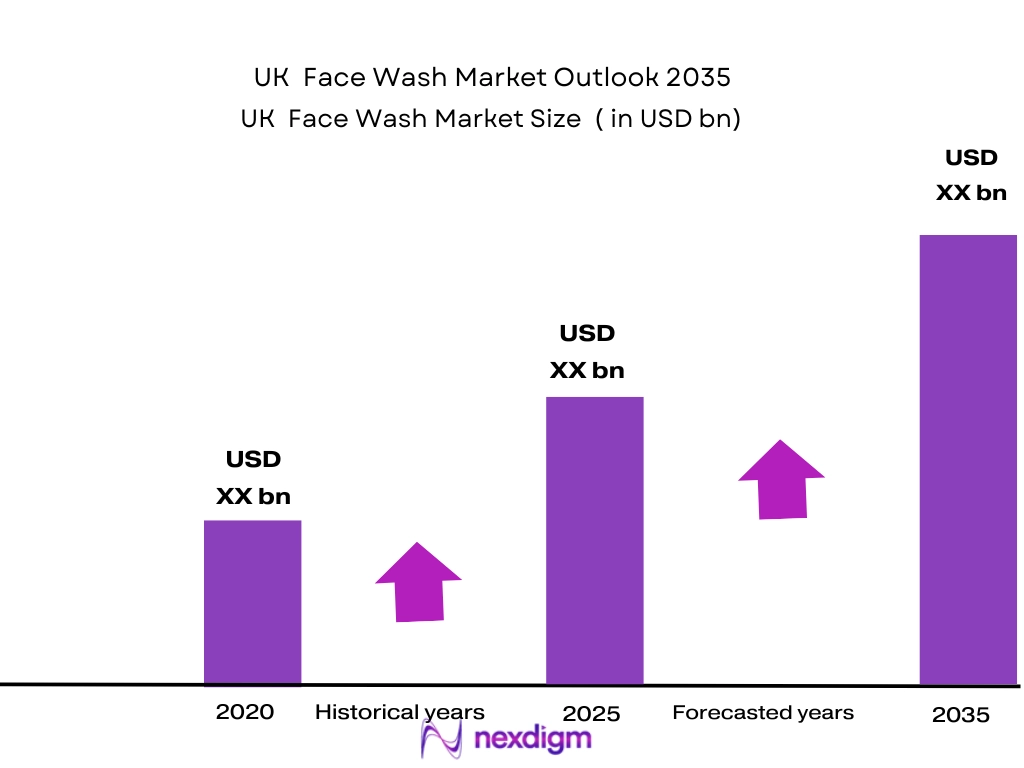
The UK face wash market is valued at USD ~ billion in 2024, reflecting a growth from USD 1.9 billion in 2023, based on a five-year historical analysis. The market expansion is primarily driven by rising consumer awareness regarding skincare routines, increased adoption of natural and organic products, and higher disposable income levels. Innovations in product formulations, including anti-aging, acne-fighting, and skin-brightening face washes, are further propelling market demand, especially in urban regions with a growing focus on personal grooming and wellness.
England, Scotland, Wales, and Northern Ireland dominate the UK face wash market due to high population density in metropolitan regions, robust retail and e-commerce penetration, and a strong presence of international and domestic skincare brands. Cities like London, Manchester, and Edinburgh lead in market activity, driven by higher consumer spending power, evolving lifestyle trends, and greater exposure to beauty and wellness awareness campaigns. These urban centers act as trendsetters influencing the rest of the UK market landscape.
Market Segmentation
By Product Type
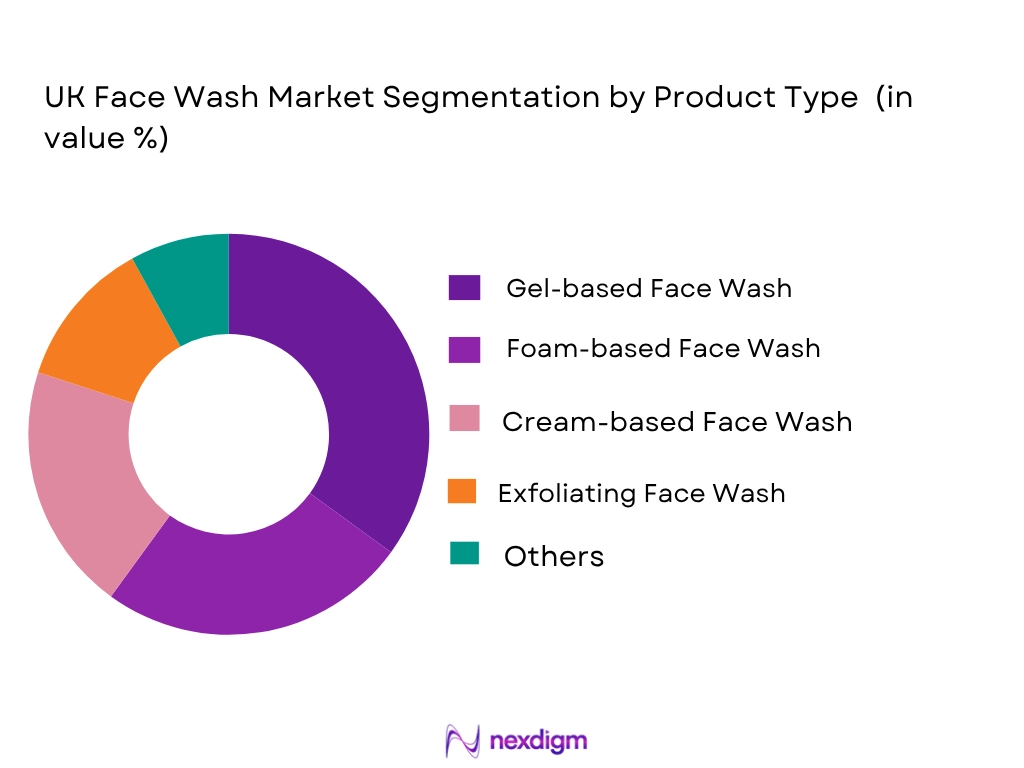
UK face wash market is segmented by product type into gel-based, foam-based, cream-based, exfoliating, and others. Gel-based face washes hold the largest market share due to their versatility for all skin types, gentle cleansing properties, and popularity among young adults. Major brands offering gel-based options have established strong brand loyalty through consistent product quality and marketing campaigns. The convenience and effectiveness of gel-based formulations in daily skincare routines make them a preferred choice among consumers.
By Ingredients Type
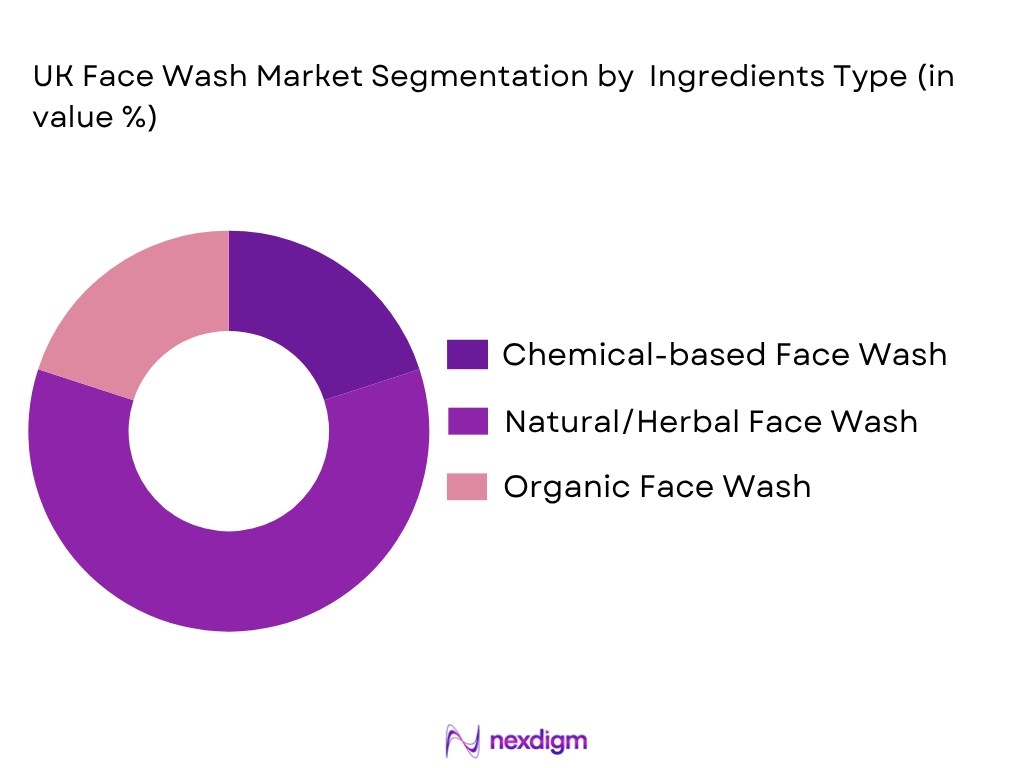
The UK face wash market is categorized into chemical-based, natural/herbal, and organic formulations. Natural/herbal face washes dominate due to increasing consumer preference for products with fewer synthetic chemicals, perceived skin benefits, and eco-friendly attributes. Brands focusing on herbal ingredients such as aloe vera, green tea, and chamomile have gained consumer trust. Social media influence and rising awareness regarding skin sensitivity and chemical reactions also reinforce the dominance of natural/herbal formulations across various demographics.
Competitive Landscape
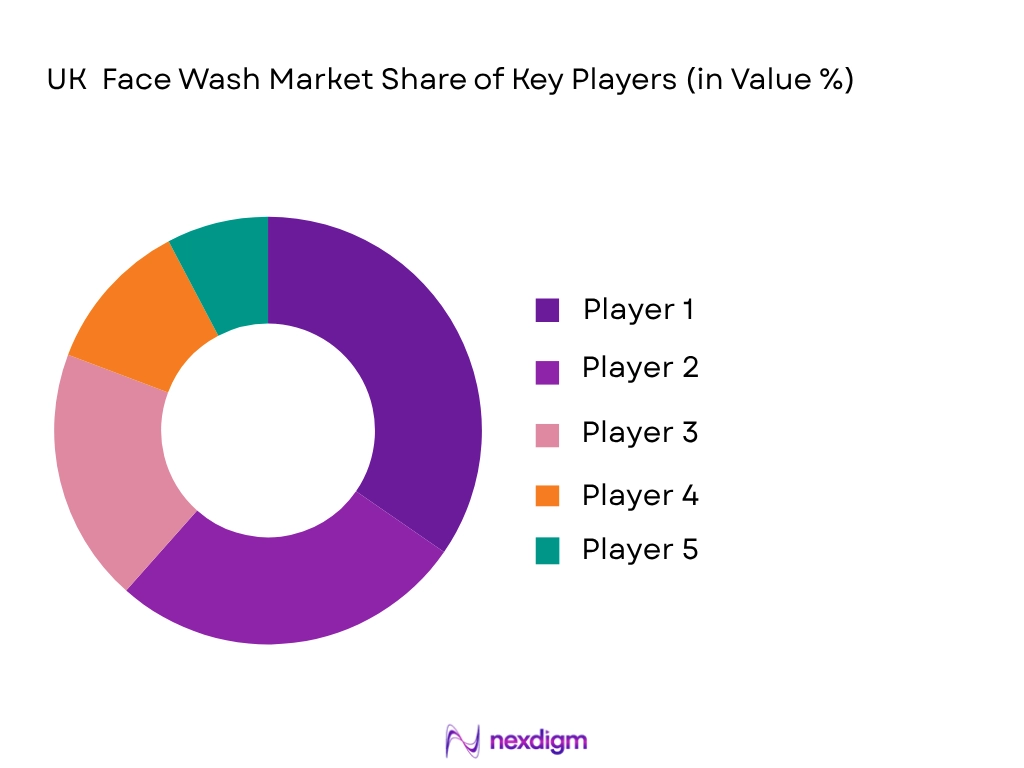
The UK face wash market is dominated by a few major players, including global skincare giants such as L’Oréal, Unilever, and Johnson & Johnson. The market demonstrates high consolidation, with these companies leveraging strong brand equity, extensive distribution channels, and diversified product portfolios to maintain a competitive edge. The presence of innovative, niche, and premium players further intensifies competition, driving product differentiation and marketing strategies.
| Company | Establishment Year | Headquarters | Product Portfolio | Distribution Channels | Revenue 2024 (USD mn) | Market Reach | Innovation Initiatives | Production Capacity |
| L’Oréal | 1909 | Paris, France | ~ | ~ | ~ | ~ | ~ | ~ |
| Unilever | 1929 | London, UK | ~ | ~ | ~ | ~ | ~ | ~ |
| Procter & Gamble | 1837 | Cincinnati, USA | ~ | ~ | ~ | ~ | ~ | ~ |
| Johnson & Johnson | 1886 | New Jersey, USA | ~ | ~ | ~ | ~ | ~ | ~ |
| Beiersdorf AG | 1882 | Hamburg, Germany | ~ | ~ | ~ | ~ | ~ | ~ |
UK Face Wash Market Analysis
Growth Drivers
Increase in Awareness About Skincare and Personal Hygiene
In the UK, growing consumer awareness regarding skincare and personal hygiene is a key driver of the face wash market. Public campaigns, social media influence, and wellness trends have emphasized the importance of regular facial cleansing, leading to increased daily usage across demographics. Consumers are more informed about the benefits of maintaining healthy skin, such as preventing acne, improving skin texture, and slowing visible signs of aging. This awareness has encouraged both men and women to incorporate face wash products into their routine. Brands are capitalizing on this trend through educational marketing, skincare tutorials, and collaborations with dermatologists, which strengthens consumer trust and drives sustained demand in the market.
Expansion of E-commerce and Online Retail
The growth of e-commerce and online retail platforms has significantly boosted the UK face wash market. Online channels provide consumers with access to a wide variety of domestic and international brands, enabling comparison, reviews, and home delivery convenience. This trend has particularly benefited niche and premium products that may not be widely available in traditional stores. Additionally, online platforms allow brands to implement targeted marketing campaigns and personalized recommendations, enhancing consumer engagement. Retail expansion in supermarkets, drugstores, and specialty beauty stores complements digital channels by providing visibility and in-store trials. The combination of online and offline availability has improved accessibility, convenience, and overall sales, contributing to market growth.
Market Challenges
High Competition and Price Sensitivity
The UK face wash market is highly competitive due to the presence of numerous domestic and international brands. This competition often results in price-sensitive behavior among consumers, who frequently switch brands seeking better deals or perceived value. Established companies face constant pressure to innovate and maintain product quality while keeping prices attractive. New entrants must differentiate themselves through unique formulations, branding, or eco-friendly initiatives to gain market share. Intense competition also increases marketing and promotional expenditures, adding operational costs. Overall, sustaining brand loyalty and profitability in a price-sensitive, saturated market remains a significant challenge for manufacturers.
Regulatory Compliance and Quality Standards
Manufacturers in the UK face strict regulatory requirements to ensure product safety, labeling accuracy, and compliance with cosmetic standards. Regulatory bodies monitor ingredients, preservatives, and product claims, requiring extensive testing and documentation before products reach the market. Compliance with these standards ensures consumer safety but increases operational complexity and costs. Additionally, evolving regulations around organic, natural, or vegan claims demand continuous monitoring and adaptation. Non-compliance can result in penalties, product recalls, or reputational damage, impacting both revenue and consumer trust. Maintaining rigorous quality assurance protocols is essential but can slow product launches and innovation.
Opportunities
Rising Popularity of Organic and Eco-friendly Products
There is a growing demand in the UK for organic and eco-friendly face wash products as consumers become more environmentally conscious. Ingredients like aloe vera, green tea, chamomile, and essential oils are preferred due to their natural, safe, and sustainable properties. Eco-friendly production practices, cruelty-free testing, and certifications enhance brand credibility and appeal. This trend allows companies to differentiate products, attract premium pricing, and cultivate long-term brand loyalty. Moreover, consumers increasingly consider the environmental impact of packaging, favoring recyclable and biodegradable materials. The growing preference for sustainable skincare offers manufacturers the opportunity to expand product lines and capture a segment that combines health, safety, and environmental responsibility.
Innovation in Product Formulations and Packaging
Innovation in face wash formulations and packaging presents substantial opportunities in the UK market. Companies are introducing multifunctional products combining cleansing, exfoliation, hydration, and anti-aging benefits in a single formula. Advanced delivery systems, such as gels, foams, and microbeads, enhance user experience and effectiveness. Packaging innovations, including travel-friendly sizes, recyclable materials, and convenient dispensers, cater to modern consumer lifestyles. Personalization and skin-type-specific products further increase market appeal. Continuous innovation enables brands to differentiate themselves in a highly competitive market, attract new customers, and maintain loyalty. Leveraging these trends allows manufacturers to expand market share and respond effectively to evolving consumer expectations.
Future Outlook
Over the next five years, the UK face wash market is expected to witness significant growth driven by continuous innovation in natural and organic formulations, increasing awareness of skincare routines, and expansion of online retail platforms. Rising demand for personalized and multifunctional products will further contribute to market growth. Sustainability trends and eco-conscious packaging adoption will become critical differentiators for brands aiming to attract environmentally aware consumers. Emerging trends in men’s grooming and dermatologically backed products are also expected to drive revenue.The market is projected to grow at a CAGR of 6.8% from 2024 to 2030, with the market size reaching an estimated USD 3.5 billion by 2030. Key growth drivers include increasing adoption of premium skincare products, awareness campaigns promoting daily skincare, and the proliferation of e-commerce channels offering convenient access to domestic and international brands.
Major Players
- L’Oréal
- Unilever
- Procter & Gamble (P&G)
- Beiersdorf AG
- Johnson & Johnson
- GlaxoSmithKline (GSK)
- The Body Shop
- Aveeno (Johnson & Johnson)
- Simple (Unilever)
- Neutrogena (Johnson & Johnson)
- Nivea (Beiersdorf AG)
- Dove (Unilever)
- Ren Skincare
- La Roche-Posay (L’Oréal)
- Clinique (Estée Lauder Companies)
- Kiehl’s (L’Oréal)
Key Target Audience
- Skincare and Cosmetic Companies
- Retail and E-commerce Chains
- Luxury and Premium Beauty Brands
- Pharmacies and Drugstore Chains
- Investments and Venture Capitalist Firms
- Government and Regulatory Bodies
- Healthcare and Dermatology Clinics
- Personal Care Product Distributors
Research Methodology
Step 1: Identification of Key Variables
The initial phase involves constructing an ecosystem map encompassing all major stakeholders within the UK face wash market. This step is underpinned by extensive desk research, utilizing a combination of secondary and proprietary databases to gather comprehensive industry-level information. The primary objective is to identify and define the critical variables that influence market dynamics.
Step 2: Market Analysis and Construction
In this phase, historical data pertaining to the UK face wash market is compiled and analyzed. This includes assessing product penetration, revenue contributions by segment, and consumer preference trends. Additionally, production capacities, distribution efficiency, and marketing impacts are evaluated to ensure reliable revenue and volume estimates.
Step 3: Hypothesis Validation and Expert Consultation
Market hypotheses are developed and validated through computer-assisted interviews with industry experts from leading skincare companies. These consultations provide operational and financial insights, verifying assumptions related to product demand, formulation trends, and regional consumer behavior.
Step 4: Research Synthesis and Final Output
The final phase involves direct engagement with multiple manufacturers, retailers, and distributors to gather detailed insights on sales performance, consumer preferences, and market challenges. This interaction complements the bottom-up and top-down analysis, ensuring accurate and validated market statistics.

- Executive Summary
- Research Methodology (Market Definitions and Assumptions, Abbreviations, Market Sizing Approach, Consolidated Research Approach, Understanding Market Potential Through In- Depth Industry Interviews, Primary Research Approach, Limitations and Future Conclusions)

- Definition and Scope
- Market Dynamics Overview
- Market Genesis
- Major Players and Market Timeline
- Business Cycle and Trends
- Supply Chain and Value Chain Analysis

- Growth Drivers
Increase in Awareness About Skincare and Personal Hygiene
Rising Demand for Natural and Organic Products
Growing Male Grooming Market
Expansion of E-commerce and Online Retail
Innovation in Product Formulations and Packaging - Market Challenges
High Competition and Price Sensitivity
Fluctuations in Raw Material Prices
Regulatory Compliance and Quality Standards
Consumer Preference Shifts and Brand Loyalty - Opportunities
Rising Popularity of Organic and Eco-friendly Products
Expansion of Retail and Online Channels
Growing Demand for Premium and Anti-aging Face Wash
Emergence of Customized and Multi-functional Products
Adoption of Sustainable Packaging and Practices - Key Trends
Shift Toward Natural and Herbal Ingredients
Focus on Anti-acne, Anti-aging, and Skin Brightening Formulations
Increasing Demand for Travel-size and On-the-go Products
Integration of Technology in Skincare Products (Smart Face Wash Devices)
Expansion of Brand Portfolio and Product Lines - Government Regulations
- SWOT Analysis
- Porter’s Five Forces

- By Value, 2020–2025
- By Volume, 2020–2025
- By Average Price, 2020–2025

- By Product Type (In Value %)
Gel-based Face Wash
Foam-based Face Wash
Cream-based Face Wash
Exfoliating Face Wash
Others - By Ingredients Type (In Value %)
Chemical-based Face Wash
Natural/Herbal Face Wash
Organic Face Wash - By Application (In Value %)
Daily Skincare
Dermatological Use
Men’s Grooming
Teenage/Youth Use
Others - By Distribution Channel (In Value %)
Direct Sales
Retail Pharmacies
Online Channels
Supermarkets and Hypermarkets
Specialty Stores - By Region (In Value %)
England
Scotland
Wales
Northern Ireland
Rest of UK

- Market Share of Major Players by Value/Volume
- Market Share of Major Players by Product Type
- Cross Comparison Parameters (Company Overview, Business Strategies, Recent Developments, Strength, Weakness, Organizational Structure, Revenues, Revenues by Product Type, Number of Touchpoints, Distribution Channels, Number of Dealers and Distributors, Margins, Production Plant, Capacity, Unique Value Offering and Others)
- SWOT Analysis of Major Players
- Pricing Analysis Based on Product Categories for Major Players
- Detailed Profiles of Major Companies
L’Oréal
Unilever
Procter & Gamble (P&G)
Beiersdorf AG
Johnson & Johnson
GlaxoSmithKline (GSK)
The Body Shop
Aveeno (Johnson & Johnson)
Simple (Unilever)
Neutrogena (Johnson & Johnson)
Nivea (Beiersdorf AG)
Dove (Unilever)
Ren Skincare
La Roche-Posay (L’Oréal)
Clinique (Estée Lauder Companies)
Kiehl’s (L’Oréal)

- Market Demand and Utilization
- Purchasing Power and Budget Allocations
- Regulatory and Compliance Requirements
- Needs, Desires, and Pain Point Analysis
- Decision-Making Process

- By Value, 2026–2035
- By Volume, 2026–2035
- By Average Price, 2026–2035


 Request a Sample
 Ask for Customization
 Get a Quote
 Enquire Now