
 Download PDF
Market Overview
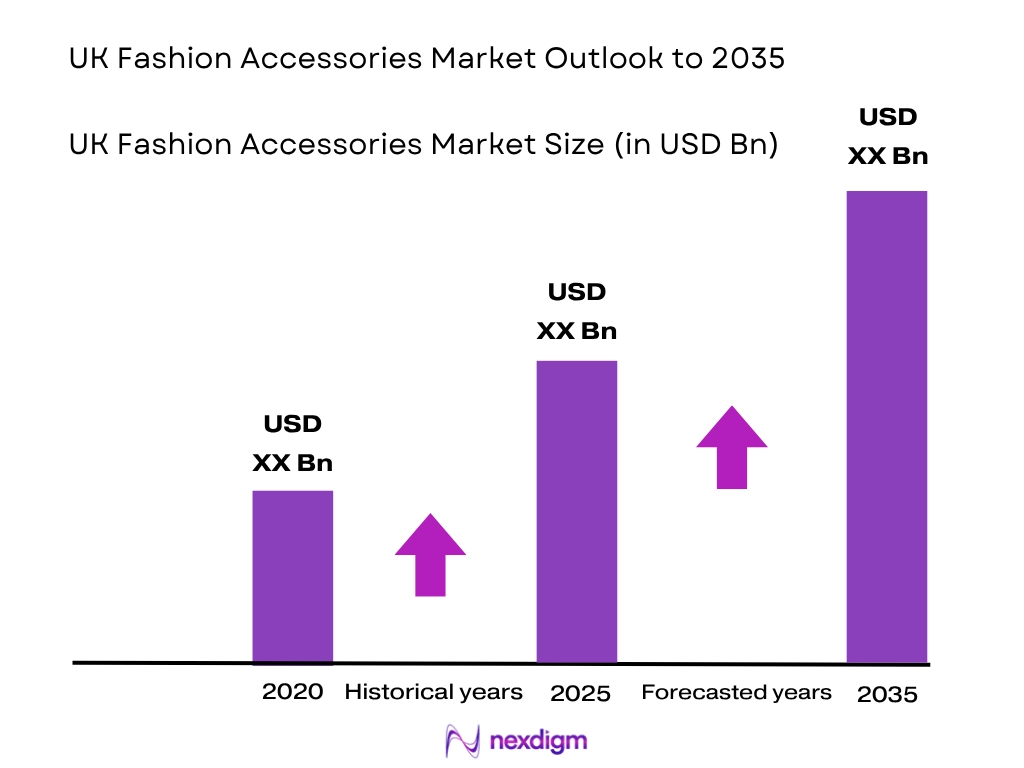
The UK Fashion Accessories Market is valued at USD ~ billion in 2025, based on comprehensive retail and consumer spending data covering apparel, bags, jewellery, eyewear, watches, belts, and related items. Performance in 2023 and 2024 reflects broader consumer behaviour shifts, including increased selective spending on value‑for‑money and stylish accessories across online and high‑street channels. Growth is driven by strong e‑commerce penetration, resurgence in travel and events‑related spending, and expanding demand for premium and sustainable accessory products.
London, Manchester, and Birmingham dominate UK accessory sales due to the density of luxury and high‑street retail networks, high footfall, and tourism inflows. London’s extensive flagship stores, department store presence, and fashion event ecosystem support premium and mass‑market demand. Manchester’s robust retail districts and Birmingham’s central location attract regional consumers and retailers alike. Other cities such as Edinburgh and Leeds also host growing boutique and specialist accessory markets. This spatial dominance arises from retail infrastructure, higher disposable incomes, and concentrated fashion ecosystems.
Market Segmentation
By Product Category
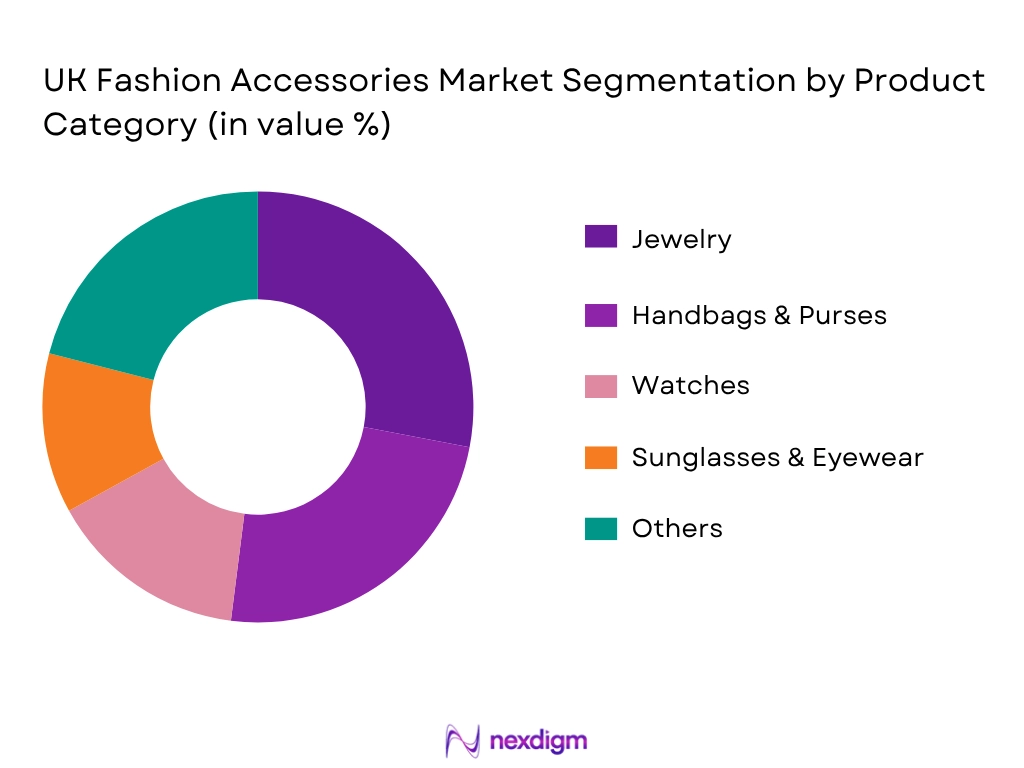
Within the UK fashion accessories landscape, Jewellery holds the leading share of market value, reflecting broader trends where personal adornment and gifting occasions drive consistent consumer spend. The jewellery category benefits from both mid‑tier fashion lines and premium fine jewellery purchases, which appeal to a range of demographic segments and price points. Its resilience is anchored in strong cultural demand for personal expression, gifting (weddings, holidays), and fashion statements across gender and age cohorts. Handbags & Purses, while slightly smaller by value, capture significant retail attention due to style cycles, seasonality, and digital discovery driving trends. Mass market and luxury handbags benefit from both online conversion and traditional retail exposure, securing their strong position in overall accessory consumption.
By Distribution Channel
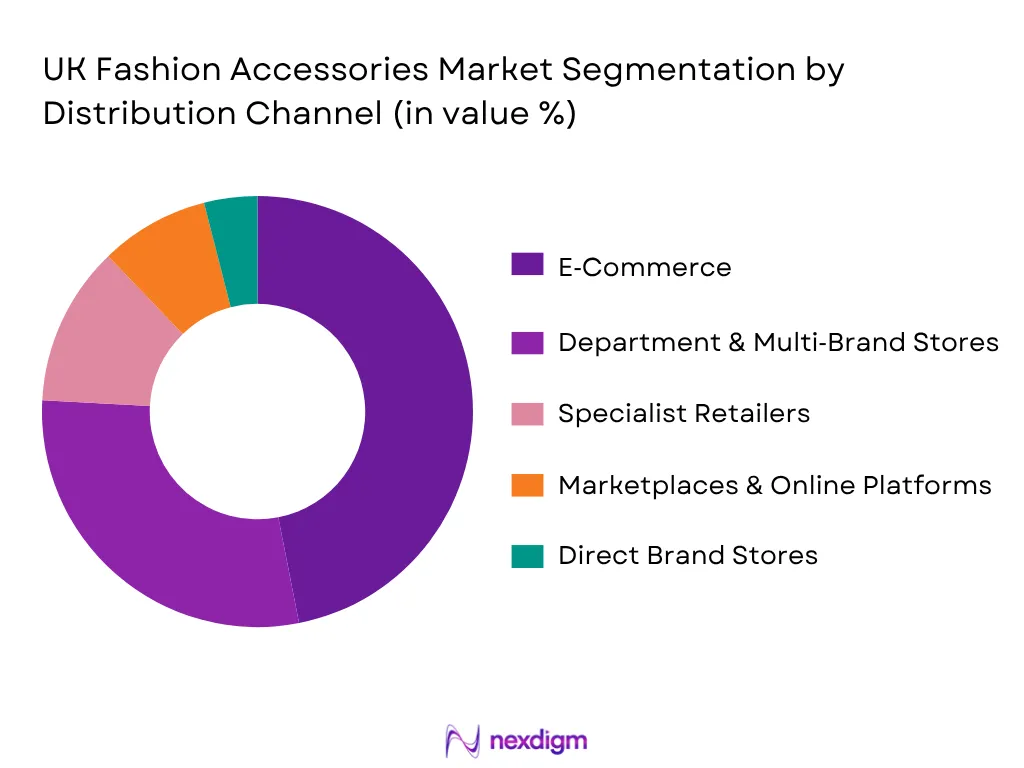
In distribution terms, E‑Commerce is the dominant channel for fashion accessory sales in the UK. Online retail platforms and marketplaces account for the largest share, driven by strong digital adoption, convenience, and breadth of choice. Customers increasingly use mobile and desktop platforms to explore, compare, and purchase accessories, with visual search and social commerce further accelerating conversion rates. Department stores and multi‑brand retailers remain significant for premium brands, offering curated experiences and services that online platforms struggle to replicate. Physical retail still attracts consumers seeking immediate purchase, tactile evaluation, and personalised service, particularly for high‑value accessories such as watches and jewellery. Specialist retailers serve niche segments where product expertise and brand identity add value.
Competitive Landscape
The UK fashion accessories market is competitive and led by both iconic domestic brands and established global luxury houses. Brand convergence occurs across price tiers, from accessible fashion to premium luxury. The UK market features a mix of heritage and contemporary players. Luxury brands such as Burberry and Chanel leverage global brand equity, while specialist domestic accessory labels maintain strong niche appeal. High‑street and fast‑fashion players influence value segments and attract a broad demographic. Competition is shaped by omni‑channel retail strategies, digital engagement, sustainability credentials, and product innovation.
| Brand | Est. Year | Headquarters | Product Focus | Channel Strength | Price Positioning | Global Presence | Brand Differentiator |
| Radley | 1998 | London, UK | ~ | ~ | ~ | ~ | ~ |
| Mulberry | 1971 | Somerset, UK | ~ | ~ | ~ | ~ | ~ |
| Pandora | 1982 | Copenhagen, DK | ~ | ~ | ~ | ~ | ~ |
| Kurt Geiger | 1963 | London, UK | ~ | ~ | ~ | ~ | ~ |
| Selfridges | 1909 | London, UK | ~ | ~ | ~ | ~ | ~ |
| Marks & Spencer | 1884 | London, UK | ~ | ~ | ~ | ~ | ~ |
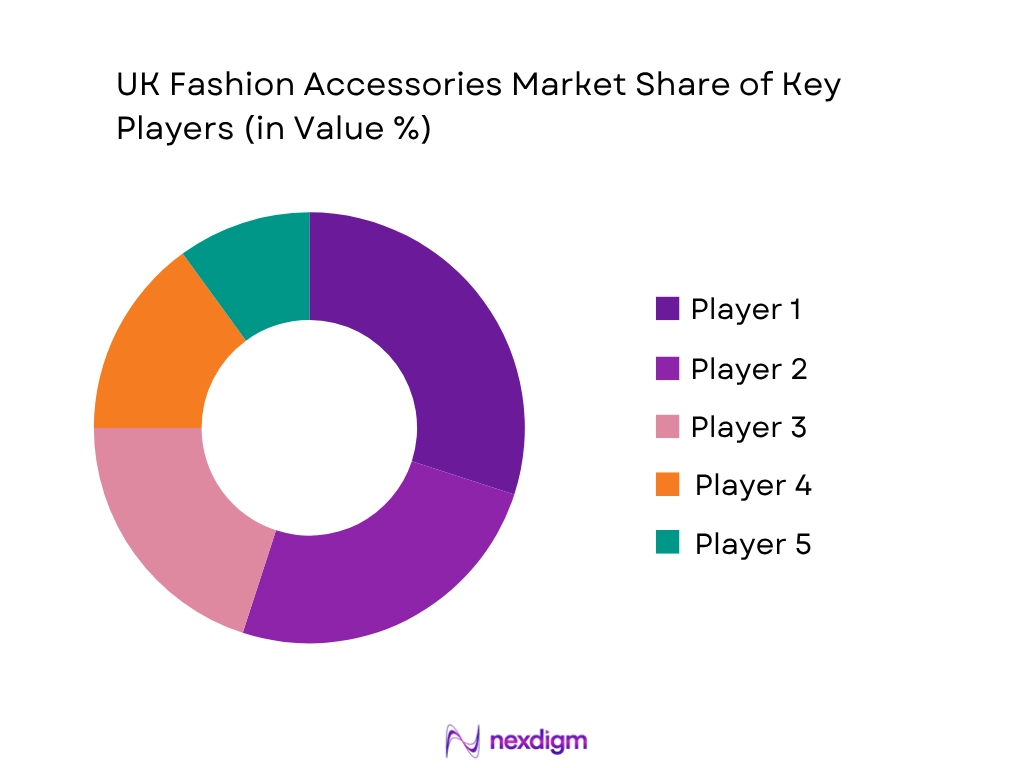
UK Fashion Accessories Market Analysis
Market Drivers
Accessory Adoption & Wardrobe Penetration Metrics
The UK’s fashion spending environment in 2024 indicates sustained consumer engagement with wardrobe items that include accessories, as overall clothing and footwear expenditure reached 79.8 billion British pounds, underscoring robust fashion consumption behaviour among households. Over half of UK consumers reportedly purchased at least one accessory item in the last 12 months, showing that accessory adoption remains embedded within general purchasing patterns even as household consumption spending showed modest declines or stagnation in broader categories. Household final consumption expenditure on non‑essential items such as apparel and accessories faced downward pressure as real household consumption in 2024 declined by 0.2 percent, reflecting cautious discretionary spend; however, fashion accessories continued to buoy consumer outlays due to their association with personal style, gifting occasions, and seasonal trends. This sustained accessory purchase behaviour, amid overall subdued consumption, illustrates that accessories are not only supplementary but also resilient components of the personal fashion ecosystem in the UK. The ongoing relevance of accessories is supported by data showing that the online channel accounted for over 25 percent of clothing and footwear retail sales, reinforcing that fashion‑related purchases (including accessories) retain strong omni‑channel adoption across the UK consumer base.
Premiumisation Trends
Premiumisation within the UK fashion accessories segment is being driven by several macroeconomic indicators from 2024 that reflect elevated household purchasing power and selective consumer spending. Real household gross disposable income increased by 2.8 percent per head, indicating that UK households had more spending capacity after adjusting for price pressures, which supports consumer willingness to allocate expenditure toward higher‑end accessories such as designer jewellery, luxury leather goods, and branded eyewear. Household net disposable income per head also increased by 3.5 percent, signaling recovery in real income levels that enhances consumers’ ability to absorb premium priced items in the accessories category. In parallel, import dynamics show that total goods imports a driver of the availability of premium fashion accessories sourced internationally — recorded values such as USD 65.7 billion in December 2024, reflecting the extensive variety of foreign‑sourced apparel and accessory products accessible in the UK market. These macro indicators coincide with trends where premium accessory brands maintain presence through flagship stores, aspirational marketing, and digital platforms, capturing consumers with discretionary spend. While overall household consumption expenditure contracted moderately, the nuanced growth in disposable income implies that consumers may trade up on quality and brand heritage within accessories, aligning with premiumisation trends where a portion of consumer budgets is directed toward value‑perceived goods rather than purely essential items. This pattern suggests that even within a cautious economic landscape, segments of the population with higher disposable income continue to underpin premium accessory demand.
Market Challenges
Currency Fluctuation
Currency fluctuation has been a significant operational challenge for UK fashion accessories firms in 2024, as movements in the British pound relative to global currencies have directly impacted the cost base for imported products and associated accessories components. In 2024, official UK trade data shows that total goods imports were valued at USD 65.7 billion, illustrating the scale of inbound goods including fashion items and raw materials sourced from EU and non‑EU countries. When sterling depreciates against other major currencies especially the US dollar and euro UK importers face higher costs when converting payments into foreign currencies for suppliers located abroad. This increase in input costs can squeeze profit margins for accessory brands reliant on foreign supply chains, particularly for luxury and premium goods that source materials from Italy, France, and other fashion production hubs. While official macro data for monthly currency exchange averages in 2024 are not published in the UK national accounts, broader trade imbalance figures show that the UK remains a net importer, with imports exceeding exports by significant value, making the currency sensitivity more pronounced. This volatility strains forecasting for retail buyers and forces businesses to hedge exchange risk, which increases overhead costs. For accessory retailers operating on thin margins, such as high‑street jewellery or niche boutique items currency swings can influence pricing decisions, supplier contracts, and inventory valuation. Therefore, annual import values illustrate the critical nature of currency impacts on fashion accessory cost structures amid ongoing global trade dynamics.
Import Cost Impact
Import cost inflation continues to challenge UK fashion accessories companies, intersecting with broader macroeconomic conditions in 2024 that affect the pricing of goods sourced internationally. Official trade figures indicate that imports of goods from both EU and non‑EU partners experienced fluctuations, with total imports from EU partners previously noted near USD 30.7 billion for EU imports in December 2024 and USD 34.9 billion from non‑EU partners, highlighting the extensive reliance on international supply chains for materials and finished accessories. The rise in import costs, driven by transport, shipping delays, and global supply pressures, contributes to increased landed costs of products sold in the UK. Even as total UK imports decreased slightly in late 2024 relative to prior months, the import dependence by volume and value remains high, meaning UK accessory brands absorb these elevated costs directly or pass them onto consumers. Elevated import costs are compounded by trade balance shifts; in December 2024, UK exports were valued at USD 46.1 billion, significantly lower than goods imports, implying that the merchandise trade deficit persists. This imbalance can further pressure sterling and increase cost pressure on imported goods. For fashion accessory players, particularly SMEs without scale negotiating power, direct import costs pose challenges in maintaining competitive pricing while also preserving margins. As a result, import cost impacts are a core strategic concern, affecting purchasing strategies, inventory planning, and retail pricing decisions as firms align with broader trade cost dynamics.
Market Opportunities
Pre‑Owned & Circular Economy Channels
The continued expansion of pre‑owned and circular economy channels presents a significant opportunity for the UK fashion accessories market, supported by measurable consumer behaviour shifts in resale and second‑hand spending. Data shows that the UK second‑hand online market for clothing, which closely overlaps with fashion accessory segments including bags, belts, and jewellery reached USD 4.3 billion in 2024, demonstrating a notable consumer commitment to resale and sustainable procurement alternatives. This figure underscores that a structured resale ecosystem already exists, with consumers allocating substantial spend away from new items toward quality pre‑owned options. Platforms that facilitate authenticated pre‑owned goods attract a wide demographic, including younger buyers who prioritise style and affordability. The growth in this resale sector suggests accessory brands and retailers can leverage pre‑owned channels as revenue drivers, either through certified resale programmes or collaborative partnerships with online marketplaces. This alternative route not only supports expanded product lifecycles but also diversifies touchpoints for consumer engagement. UK consumer data indicating a substantial resale market value highlights that circular channels are not peripheral but are increasingly mainstream components of fashion consumption patterns, offering strategic growth avenues for brands that can integrate resale with their core business operations and sustainability narratives.
Sustainable & Traceable Material Demand
Demand for sustainable and traceable materials within the UK fashion accessories market reflects broader environmental and ethical awareness among consumers, backed by relevant industry indicators of resource usage and waste. Independent data highlights that around 350,000 tons of clothing end up in UK landfills every year, revealing the scale of waste generated by fashion consumption. As consumers increasingly seek brands that prioritise eco‑friendly materials and transparent sourcing, fashion accessory producers are incentivised to adopt circular production models, recycled inputs, or traceable supply chains. This shift aligns with consumer preferences toward responsible consumption, which is now a measurable purchase consideration in purchasing decisions for apparel and related items. Sustainability credentials support brand differentiation, and the quantifiable environmental impact underscores the strategic necessity for traceable material credentials in accessory product lines. Firms that invest in sustainable materials and transparent lifecycle reporting can attract consumers who evaluate environmental performance alongside design and price, reinforcing the opportunity for sustainable product strategies that resonate with value‑driven purchase behaviour.
Future Outlook
Over the next decade, the UK Fashion Accessories Market is expected to grow at a CAGR of approximately 8–9% between 2026 and 2035, as forecast by industry analyses. Growth will be supported by rising fashion consciousness, ageing populations with discretionary income, sustained digital adoption, and expansion of resale and circular economy channels that appeal to eco‑conscious consumers. Premium and personalised accessories will increasingly influence value creation, while omni‑channel strategies and sustainability initiatives will become essential for competitive advantage. Digital product credentials, blockchain transparency, and supply chain traceability will further shape market evolution.
Major Players
- Burberry Group PLC
- Radley + Co. Limited
- Mulberry Group plc
- Pandora A/S
- Kurt Geiger
- Coach (Tapestry Inc.)
- Michael Kors (Capri Holdings)
- Selfridges Group
- Marks & Spencer Group
- ASOS plc
- Ted Baker
- Longchamp
- Fiorelli
- Missoma
- Monica Vinader
Key Target Audience
- Fashion & luxury goods retail chains
- Multi‑brand department store investors
- Investments and venture capitalist firms focused on fashion & lifestyle retail
- Government and regulatory bodies (Department for Business & Trade; UK Trade & Investment)
- E‑commerce platform operators & marketplaces
- Brand licensing & distribution partners
- Apparel manufacturers diversifying into accessories
- Retail technology solution providers (POS, digital commerce)
Research Methodology
Step 1: Identification of Core Market Variables
Market variables such as product categories (bags, jewellery, eyewear), channels (online vs offline), pricing tiers, and consumer behaviour drivers were mapped using industry reports, customs import data, and retail panels to set a structured analysis framework.
Step 2: Market Data Aggregation & Trend Analysis
Historical revenue and unit sales data were compiled from verified sources, including retail associations, company disclosures, and third‑party industry research. Trend analysis covered online penetration, category share shifts, and retail channel performance.
Step 3: Expert Validation & Industry Consultation
Hypotheses were validated through consultations with UK retail executives, merchandising leaders, and category specialists to ensure real‑world alignment of data insights and emerging trends.
Step 4: Synthesis & Forecast Modelling
Quantitative data was analysed through bottom‑up and top‑down forecasting models to derive reliable CAGR projections. The final report was triangulated with third‑party forecasts and retail expenditure metrics to ensure robustness.

- Executive Summary
- Research Methodology (Market Definitions & Accessory Taxonomy, Assumptions & Abbreviations, Data Sources & Quality Controls, Market Sizing Methodology (Top‑down & Bottom‑up Integration), Forecast Methodology (Scenario & Sensitivity Layers), Limitations & Reliability Matrix)

- Market Genesis & Evolution
- Market Structure
- Supply Chain & Value Chain
- Consumer Purchase Behaviour
- Retail Infrastructure Landscape

- Market Drivers (Accessory Adoption & Wardrobe Penetration Metrics, E‑Commerce Growth & Digital Engagement Rates, Premiumisation Trends)
- Market Challenges (Currency Fluctuation, Import Cost Impact, Ingredient & Material Compliance)
- Market Opportunities (Pre‑Owned & Circular Economy Channels, Sustainable & Traceable Material Demand)
- Emerging Trends (Digital Loyalty & Personalisation Metrics, Influencer & Social Commerce Conversion Rates)
- Policy & Regulatory Environment (Import Tariffs & Trade Policy Effects, UK Sustainability Regulation Impacts)
- SWOT Analysis of Industry
- Stakeholder Ecosystem (Manufacturers, Retailers, Distributors, Fashion Brands, E-commerce Platforms, Government Agencies)
- Porter’s Five Forces (Price Competition, Substitute Threat, Supplier Power)

- By Market Value (2020-2025)
- By Market Volume (2020-2025)
- By Average Retail Price Trends (2020-2025)

- By Product Category (In Value%)
Jewellery (Fine, Fashion/Costume)
Handbags & Purses
Sunglasses & Eyewear
Watches
Belts & Wallets
Scarves & Stoles - By Consumer Demographic (In Value%)
Female
Male
Unisex
Age Cohorts - By Price Tier & Product Positioning (In Value%)
Luxury & Accessible Luxury
Mid‑Market Branded
Mass Market / Fast Fashion - By Distribution Channel (In Value%)
Department Stores
Multi‑Brand & Specialist Retailers
E‑Commerce Platforms
Brand DTC Stores
Marketplaces & Third‑Party Retail - By Sourcing Region (In Value%)
Imported (EU, Asia, Middle East)
Domestic (UK Registered Brands & Makers)

- Market Share Analysis ( By Value, By Volume, By Product Category)
- Cross Comparison Parameters (Company Overview, Business Model Type, Distribution Channel Reach, Digital Engagement Index, Retail Footprint, Price Positioning, Sustainability Credential, Brand Loyalty Index, Seasonal SKU Rotation)
- SKU Pricing and Pack Architecture Analysis (price per unit/accessory type, promotion depth, product range ladder (entry to premium), product sizing & bundling, seasonal price adjustments)
- SWOT Analysis (strengths, weaknesses, opportunities, threats of major competitors in UK fashion accessories market)
- Competitive Company Profiles
Burberry Group PLC
Radley
Strathberry Ltd.
Dr. Martens plc
Mulberry Group plc
Fiorelli
Missoma
Monica Vinader
Pandora
Kurt Geiger
River Island
Claire’s
Ted Baker
Marks & Spencer
Adidas

- Buyer Cohort Profiling (age, gender, income level, lifestyle orientation, fashion-consciousness, urban vs suburban residence)
- Purchase Drivers and Barriers (brand reputation, price sensitivity, trend adoption, sustainability perception, availability, counterfeit concerns)
- Shopper Journey and Decision Funnel (awareness channels, influencer/social media impact, trial triggers, review & rating influence, purchase friction points, repurchase motivators)
- Channel Behavior Analysis (discovery channels, purchase channels (online vs offline), replenishment frequency, basket mission (occasional vs daily use), cross-category bundling)
- E-Commerce, DTC, and Social Commerce Analysis (traffic source, customer acquisition cost (CAC), conversion rate, subscription/rental service mix, repeat purchase rate, AR/VR engagement)

- By Market Value (2026-2035)
- By Market Volume (2026-2035)
- By Average Retail Price Trends (2026-2035)


 Request a Sample
 Ask for Customization
 Get a Quote
 Enquire Now