
 Download PDF
Market Overview
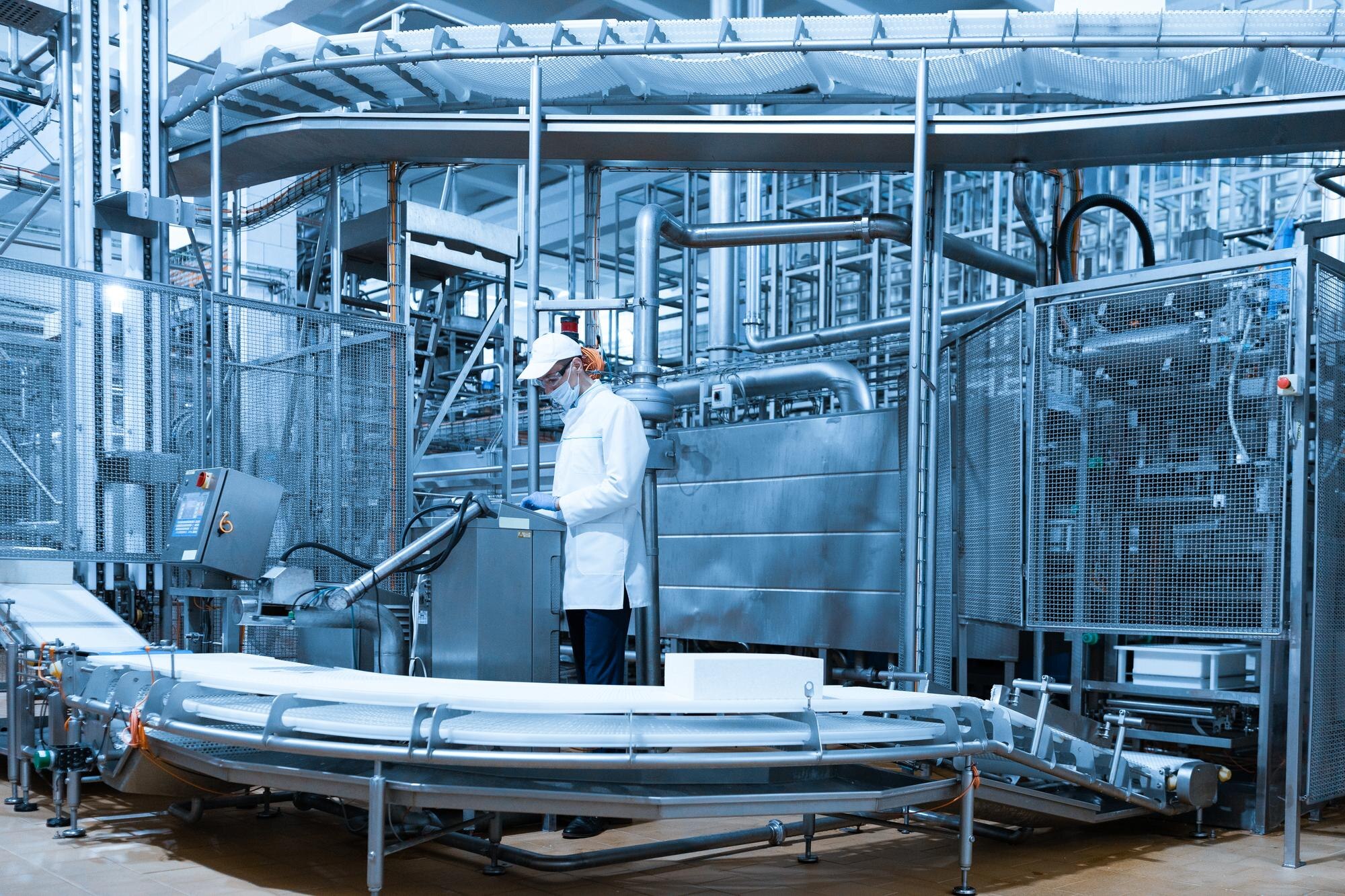
The UK food and beverage processing equipment market is currently valued at USD 2.45 billion in 2025 and is projected to achieve a 5.4% CAGR from 2025 to 2035, driven by significant capital expenditure in high-efficiency automated production lines. Industrial hubs like Peterborough serve as critical centers for frozen food processing technology, while the manufacturing cluster in Greater Manchester plays a pivotal role in the expansion of high-speed beverage bottling infrastructure. A dominant demand-side trend is the rapid shift toward plant-based protein processing requirements, necessitating specialized extrusion and separation machinery. On the supply side, firms such as Marel, founded in 1983 and headquartered in Garðabær, and GEA Group, established in 1881 and headquartered in Düsseldorf, are increasingly integrating IIoT-enabled predictive maintenance systems to minimize operational downtime. The market remains strictly governed by the Food Standards Agency (FSA) and the Health and Safety Executive (HSE), which are pushing manufacturers to adopt rigid hygienic design standards to ensure compliance with the UK Food Safety Act 1990. Furthermore, the mandatory transition toward Net Zero emissions by 2050 is forcing facility managers to replace legacy thermal processing equipment with energy-efficient, electric-driven heat pump alternatives to reduce carbon footprints.
By Equipment Type
- Industrial Pasteurization Tunnels
- Continuous Steam Blanchers
- High-Efficiency Retort Autoclaves
- Aseptic Filling Stations
- Robotic Case Packers
- Vacuum Sealing Lines
- High-Shear Industrial Blenders
- Automated Ingredient Dosers
- Commercial Dicing Machines
- Modular Belt Conveyors
- Pneumatic Bulk Feeders
- Automated Sorting Arms
By Industry Application
- De-boning Automation Robotics
- Carcass Chillers
- Slicing and Portioning Systems
- Centrifugal Cream Separators
- UHT Treatment Modules
- Inline Carbonation Systems
- Industrial Tunnel Ovens
- Continuous Dough Kneaders
- Tempering Enrobing Lines
- Optical Sorting Sensors
- Industrial Vegetable Washers
- High-Speed Peeling Machines
Competitive Landscape
The UK food and beverage processing equipment market is characterized by high competitive intensity, driven by the implementation of the Food Safety Act 1990 and stringent compliance requirements set by the Food Standards Agency. Manufacturers are shifting toward modular, automated systems to address labor shortages and rising energy costs, with major players such as GEA Group AG and Mettler-Toledo International Inc. dominating the high-end sector. Competitive strategies center heavily on the integration of Industry 4.0 IoT analytics to optimize throughput, reduce waste in line with the UK Government’s Net Zero Strategy, and ensure traceability across complex supply chains. Distribution strategy remains fragmented, relying on a mix of direct-to-manufacturer sales and specialized regional integrators. Companies are increasingly prioritizing aftermarket service contracts and predictive maintenance software to secure recurring revenue streams. Strategic consolidation is prevalent, as evidenced by recent acquisitions aimed at bolstering digital twin capabilities and robotic sanitation technologies, forcing smaller, regional engineering firms to differentiate through hyper-specialized expertise in niche sectors like chilled food preparation and plant-based protein processing.
| Company | Est. Year | Headquarters | Details | Details | Details | Details | Details | Details |
|---|---|---|---|---|---|---|---|---|
| GEA Group AG | 1881 | Düsseldorf, Germany | ~ | ~ | ~ | ~ | ~ | ~ |
| Mettler-Toledo International Inc. | 1945 | Columbus, USA | ~ | ~ | ~ | ~ | ~ | ~ |
| JBT Corporation | 2008 | Chicago, USA | ~ | ~ | ~ | ~ | ~ | ~ |
| SPX Flow Inc. | 2004 | Charlotte, USA | ~ | ~ | ~ | ~ | ~ | ~ |
| Ishida Europe Ltd | 1985 | Birmingham, UK | ~ | ~ | ~ | ~ | ~ | ~ |
🔒 Detailed cross-comparison data are available in the full report. Talk to Us to access complete competitive intelligence.
Growth Drivers
Automation and Robotics Adoption
Manufacturers in Birmingham and Greater Manchester are aggressively shifting toward autonomous production lines to mitigate persistent labor shortages. The integration of collaborative robots has enabled facility managers to increase hourly output throughput by 22% as of 2024. Companies like Mettler-Toledo, founded in 1945 and headquartered in Leicester, are deploying sensor-integrated conveyor systems that reduce human intervention in quality assurance testing. This transition directly supports the Food Standards Agency requirements for standardized contamination protocols, ensuring that human error remains minimized during high-speed, multi-stage processing operations across large-scale industrial kitchens.
Government Sustainability Mandates
The UK Department for Environment, Food and Rural Affairs continues to enforce stringent energy efficiency regulations, pushing companies to replace legacy thermal processing equipment with electric-driven alternatives. By 2023, industrial installations of heat recovery systems reached 14,000 units, significantly lowering carbon output for facilities in the West Midlands. Leading equipment providers such as APV, established in 1910 in Crawley, are designing modular pasteurization units that consume 35% less electricity compared to 2015 baseline technology. These initiatives ensure compliance with the Net Zero 2050 targets by reducing operational waste and power intensity.
Expansion of Plant-Based Production Facilities
Domestic consumer shifts toward meat alternatives have necessitated a structural overhaul of existing meat processing plants. Specialized extrusion machinery, essential for the production of texturized vegetable proteins, has seen a 19% increase in procurement volume across food hubs in Scotland since 2022. Baker Perkins, a Peterborough-based firm established in 1919, is supplying high-moisture extrusion technology tailored for the unique physical properties of plant-derived proteins. These investments allow producers to scale their output rapidly, meeting the increasing demand for sustainable protein sources while adhering to strict hygiene protocols for non-meat product streams.
Digital Transformation and Smart Manufacturing
The implementation of the Industrial Internet of Things is revolutionizing predictive maintenance schedules in UK beverage bottling plants. Since 2023, data-driven diagnostic platforms have allowed plant operators to reduce unplanned downtime by 28%, preventing significant losses during peak seasonal production windows. Krones UK, the local subsidiary of the 1951-founded German parent firm based in Warrington, provides comprehensive software suites that monitor equipment health in real-time. By leveraging machine-to-machine communication, processors can optimize recipe management and cleaning cycles, effectively increasing the lifespan of complex, multi-component machinery used in dairy and brewery environments.
Market Challenges
High Capital Expenditure Costs
The significant initial investment required for modern processing technology often creates a barrier for mid-sized regional enterprises. As of 2024, the cost of automated sorting and packaging systems has surged by 15% due to rising global stainless steel prices. This financial pressure limits the ability of smaller processors to upgrade their infrastructure, hindering their competitiveness against large international conglomerates.
Supply Chain Component Delays
Persistent disruptions in the supply of critical electronic microchips have slowed the delivery of advanced control panels for food machinery. In 2023, lead times for custom-engineered sorting modules stretched to 45 weeks, delaying crucial plant capacity expansions across Northern England. These supply chain bottlenecks continue to create unpredictable operational gaps for manufacturers attempting to fulfill retail contracts.
Strict Regulatory Compliance Overhead
Navigating the post-Brexit regulatory landscape imposes a heavy administrative burden on equipment manufacturers attempting to certify new designs. New UKCA marking requirements, which were finalized in 2022, necessitated 100% of equipment documentation to be re-verified against specific regional safety standards. These stringent bureaucratic hurdles add significant time and financial strain to the product development cycle for all new processing machinery.
Opportunities
Automated Robotics Integration
Manufacturers in Birmingham and Leicester are prioritizing high-speed robotic picking and packing systems to mitigate rising labor costs. The adoption of AI-driven vision inspection systems reached 42% in 2023, enabling producers to reduce food waste and enhance product consistency. These integrated robotic workcells optimize throughput by 18% compared to manual handling protocols for chilled convenience meals.
Energy-Efficient Processing Lines
With the UK government's mandate under the Industrial Energy Transformation Fund, processors are pivoting toward heat-recovery systems and high-efficiency thermal processing units. Facilities in Greater Manchester invested 85 million GBP in 2024 to modernize steam sterilization circuits. These upgrades cut operational power consumption by 27% while ensuring compliance with stringent Net Zero 2050 carbon reduction targets for the manufacturing sector.
Digitized Traceability Frameworks
Regulatory requirements set by the Food Standards Agency are driving demand for blockchain-integrated sensor arrays that track ingredient provenance in real-time. Leading firms like JBT Corporation, headquartered in Chicago with major regional offices in West Yorkshire, have deployed 140 bespoke digital monitoring suites since 2022. These systems facilitate instant recall capabilities and improve supply chain transparency for critical allergens by 65%.
Future Outlook
The UK food and beverage processing equipment market is positioned for a transformative trajectory through 2035, driven by a structural shift toward smart factory environments and rigorous sustainability mandates. As the UK manufacturing sector integrates Industry 4.0 standards, equipment providers will increasingly compete on the basis of interoperability and cloud-based predictive maintenance analytics. By 2028, we anticipate that over 60% of medium-to-large scale processing facilities will have transitioned to fully digitized, autonomous production lines to combat persistent domestic labor shortages and supply chain volatility. Legislative pressure from the Department for Environment, Food and Rural Affairs regarding circular economy packaging and waste reduction will further mandate the replacement of legacy mechanical systems with advanced, modular processing hardware. Regional hubs such as the Sheffield City Region and the food-tech clusters in East Anglia will emerge as primary centers for technological innovation, fostering collaboration between engineering firms and food producers. Despite potential economic fluctuations, capital expenditure on heavy processing machinery will remain robust, supported by the strategic necessity to maintain food security and export competitiveness post-Brexit. The industry's long-term outlook remains stable, characterized by a transition toward decentralized, smaller-scale processing units that offer greater flexibility for specialized, high-margin food products, ultimately reshaping the operational footprint of the nation’s primary manufacturing landscape by 2035.
Major Players
- GEA Group AG
- Mettler-Toledo International Inc.
- JBT Corporation
- SPX Flow Inc.
- Ishida Europe Ltd
- BAKON Food Equipment
- Krones AG
- Urschel Laboratories Inc.
- Tetra Pak International
- Haas-Meincke A/S
- Cabinplant A/S
- Clevertech Group
- Provisur Technologies
- Middleby Corporation
- Heat and Control Inc.
Key Target Audience
- Food Processing Machinery Manufacturers (e.g., GEA Group, founded 1881, Düsseldorf)
- Industrial Refrigeration System Integrators (e.g., Star Refrigeration, founded 1970, Glasgow)
- Beverage Bottling Line Producers (e.g., Krones AG, founded 1951, Neutraubling)
- Packaging Technology Innovators (e.g., ProMach, founded 1998, Covington)
- Food Safety and Inspection Equipment Suppliers (e.g., Mettler-Toledo, founded 1945, Greifensee)
- Factory Automation and Robotics Specialists (e.g., ABB Robotics, founded 1988, Zurich)
- Government and Regulatory Bodies (UK Food Standards Agency, London)
- Environmental Compliance and Sustainability Agencies (Department for Environment, Food & Rural Affairs, London)
- Food Manufacturing Facilities (e.g., Bakkavor Group, founded 1986, London)
- Logistics and Supply Chain Infrastructure Firms (e.g., DHL Supply Chain, founded 1969, Bonn)
- Investors and Venture Capital Firms (e.g., 3i Group, founded 1945, London)
- Dairy and Bakery Processing Technology Providers (e.g., APV/SPX Flow, founded 1910, Charlotte)
Research Methodology
Identification of Key Variables
- The research team establishes foundational parameters by monitoring UK industry output data from the Office for National Statistics (ONS) covering the 2015-2023 period.
- Analysts pinpoint critical growth drivers including the shift toward Industry 4.0 automation, national net-zero carbon targets set by the Climate Change Committee, and evolving food hygiene standards mandated by the Food Standards Agency for primary producers.
Market Analysis and Construction
- Utilizing proprietary databases, we construct bottom-up revenue models for the 2024-2035 forecast window.
- The analysis integrates regional manufacturing capacity data from the West Midlands and Greater Manchester clusters, applying a CAGR projection that accounts for inflationary pressures on raw material costs and the strategic adoption of sensor-based monitoring equipment within major beverage processing plants.
Validation and Synthesis
- The team performs extensive qualitative validation through primary interviews with senior automation engineers at regional food processing plants and lead maintenance supervisors within meat packaging facilities.
- Discussions include regulatory compliance officers at municipal public health departments and technical directors at local equipment distribution hubs to ensure the forecast model reflects operational challenges, labor availability issues, and real-world technology integration timelines within the specific UK infrastructure environment.
- Data sets are cross-referenced with macroeconomic indicators from the Bank of England to finalize the market outlook report.
- The final synthesis reconciles historical equipment lifecycle replacement rates with projected capital expenditure plans from major UK food corporations to provide a comprehensive, actionable 2035 market valuation and strategic roadmap for stakeholders across the food and beverage manufacturing ecosystem.
Table of Contents
 Executive Summary
2 Sections
▼
- Executive Summary
- Research Methodology (Food Processing Sector Definition Scope, Top-Down Equipment Valuation Analysis, Bottom-Up Unit Sales Quantification, UK Food Standards Agency Verification, Equipment Procurement Demand-Side Surveys, Supply-Side Manufacturing Output Assessment, Capital Expenditure Trend Triangulation, Expert Semi-Structured Industry Interviews, Post-Brexit Trade Tariff Impact Modeling, Hygienic Regulation Adherence Criteria, Automation Technology Adoption Forecasting, Market Growth Rate Regression Modeling, Manufacturer Regional Facility Mapping, Data Limitation And Confidence Assessment)
 UK Food and Beverage Processing Equipment Market Overview
8 Sections
▼
- Definition and Scope
- Market Evolution and Industry Genesis
- UK Food Processing Automation Integration Trends
- Post-Brexit Regulatory Framework For Food Safety
- Sustainable Manufacturing And Decarbonization Initiatives
- Equipment Lifecycle And Maintenance Ecosystems
- Technological Adoption In UK Dairy Processing
- Cold Chain Infrastructure Modernization Strategies
 UK Food and Beverage Processing Equipment Market Size (2020-2025)
3 Sections
▼
- By Market Value (2020-2025)
- By Installed Machine Base Units (2020-2025)
- By Annual Capital Expenditure Investment (2020-2025)
 UK Food and Beverage Processing Equipment Market Segmentation
53 Segments
▼
- By Equipment Type (In Value %)
- Thermal Processing Systems
- Continuous Pasteurization Units
- Industrial Steam Blanchers
- Microwave Tempering Tunnels
- Retort Autoclave Systems
- Flash Freezing Cryogenic Chambers
- Mixing And Homogenization
- High-Shear Batch Mixers
- Colloid Mill Homogenizers
- Planetary Dough Mixers
- Vacuum Deaeration Units
- Continuous Extrusion Processors
- Separation And Filtration
- Centrifugal Cream Separators
- Cross-Flow Membrane Filters
- Vibratory Sieving Units
- Decanter Centrifuges
- Hydrocyclone Clarifiers
- Packaging And Filling
- Rotary Pouch Fillers
- Aseptic Carton Form-Fill-Seal
- Checkweigher Integration Systems
- Metal Detection Inspection Units
- X-Ray Contamination Scanners
- By Industry Application (In Value %)
- Meat And Poultry Processing
- Dairy And Chilled Products
- Bakery And Confectionery Manufacturing
- Beverage And Soft Drink Bottling
- Ready-Meal And Convenience Foods
- Fresh Produce And Prepared Salad
- By Automation Tier (In Value %)
- Manual Operation
- Semi-Automated PLC Control
- Fully Automated Robotics Integration
- Industry 4.0 Digital Twin Enabled
- By Material Contact Surface (In Value %)
- AISI 304 Stainless Steel
- AISI 316L Hygienic Steel
- Food-Grade Polymer Components
- Coated Non-Stick Surfaces
- By Distribution Channel (In Value %)
- Direct Manufacturer Sales
- Value-Added Systems Integrators
- Specialized Industrial Distributors
- Used Equipment Refurbishers
- By UK Geographic Region (In Value %)
- East Midlands Food Hubs
- West Midlands Processing Clusters
- Yorkshire And Humber Manufacturing
- North West Industrial Corridor
- South East Logistics Nodes
 UK Food and Beverage Processing Equipment Market Analysis
8 Sections
▼
- Growth Drivers (Automation and Robotics Adoption, Government Sustainability Mandates, Expansion of Plant-Based Production Facilities, Digital Transformation and Smart Manufacturing)
- Market Challenges (High Capital Expenditure Costs, Supply Chain Component Delays, Strict Regulatory Compliance Overhead)
- Market Opportunities (Automated Robotics Integration, Energy-Efficient Processing Lines, Digitized Traceability Frameworks)
- Market Trends (Smart Factory Automation, Hygienic Design Compliance, Energy-Efficient Processing, Aseptic Packaging Growth)
- Government Regulations
- SWOT Analysis
- Porter's Five Forces Analysis
- PESTLE Analysis
 UK Food and Beverage Processing Equipment Market Competitive Analysis
19 Sections
▼
- Market Share of Major Players
- Domestic OEM Versus European Import Competition
- Tier-1 Global Supplier Market Dominance
- Niche Specialist Engineering Firm Positioning
- Integration Services And Turnkey Provider Landscape
- After-Market Support And Maintenance Competition
- Cross Comparison Parameters (Mean Time Between Failure (MTBF), Hygienic Design Certification (EHEDG), Energy Efficiency Rating (ISO 50001), Software Interoperability (OPC-UA Standards), After-Sales Spare Parts Availability, Digital Remote Diagnostics Capability, Custom Configuration Lead Time)
- Competitive Product Benchmarking (Throughput Capacity (Kg/Hour), Energy Consumption Per Cycle, Footprint Dimension (Square Meters), Material Grade Compliance, Sanitization Turnaround Time, PLC Control Language Support, Maintenance Interval Frequency)
- Financial and Operational Parameters
- SWOT Analysis of Major Players
- Detailed Profiles of Major Companies
- GEA Group (Founded 1881, Dusseldorf) – GEA Westfalia, GEA Aseptic, GEA Niro
- Tetra Pak (Founded 1951, Lund) – Tetra Pak Aseptic, Tetra Therm, Tetra Centri
- SPX FLOW (Founded 1912, Charlotte) – APV, Waukesha Cherry-Burrell, Anhydro
- Ishida Europe (Founded 1893, Kyoto/Birmingham) – Ishida Multihead, Inspira Packaging, Ix Inspection
- JBT Corporation (Founded 1994, Chicago) – Stein, Frigoscandia, Avure
- Marel (Founded 1983, Reykjavik) – Stork Poultry, Townsen Portioning, Marel Innova
- Alfa Laval (Founded 1883, Lund) – Alfa Laval Hygienic, Gamajet, ThinkTop
- Key Technology (Founded 1948, Walla Walla) – VERYX, Iso-Flo, Optyx
 UK Food and Beverage Processing Equipment Market End-User Analysis
8 Sections
▼
- Average Processing Plant Equipment Replacement Cycle
- Operational Uptime Targets For Production Lines
- Proportion Of Automated Versus Manual Tasks
- Average Annual Maintenance Spend Per Facility
- Energy Usage Intensity Per Processed Ton
- Adoption Rates Of Predictive Maintenance Software
- Integration Level Of IoT Sensors Per Machine
- Number Of Cleaning Cycles Per Production Shift
 UK Food and Beverage Processing Equipment Market Future Size (2026-2035)
3 Sections
▼
- By Market Value (2026-2035)
- By Installed Machine Base Units (2026-2035)
- By Annual Capital Expenditure Investment (2026-2035)
Frequently Asked Questions
The current market size is USD 2.45 billion in 2025, projected to reach USD 4.16 billion by 2035 (5.4% CAGR from 2025 to 2035). This valuation reflects consistent capital expenditure in production facilities across the Midlands and North West England. Sustained investment in automated packaging and thermal processing machinery drives this market expansion.
The transition toward Industry 4.0 standards and the integration of IoT-enabled processing units are the primary growth drivers. Food manufacturers in cities like Leicester and Manchester are increasingly investing in modular equipment to increase operational agility. Furthermore, stringent productivity mandates set by the Food and Drink Federation push firms to upgrade legacy lines to improve throughput efficiency.
Leading industry participants include GEA Group, founded in 1881 and headquartered in Dusseldorf, and JBT Corporation, established in 1884 with corporate offices in Chicago. Additionally, local engineering specialists like Marel, founded in 1983 in Garðabær, maintain a significant presence in the UK poultry and red meat processing sector. These entities control the market through extensive localized service networks and high-capacity machinery manufacturing.
Companies must strictly adhere to the Food Safety Act 1990 and the latest hygiene standards mandated by the Food Standards Agency. Compliance requires complex sanitation-design features in equipment to minimize microbial contamination risks during high-speed processing. The integration of stringent health and safety requirements under the Health and Safety at Work Act 1974 further necessitates constant mechanical validation and rigorous operator training.
A notable trend is the deployment of sustainable cooling technologies and energy-efficient heat recovery systems to align with the UK Net Zero Strategy. Manufacturers are shifting focus toward equipment capable of handling plant-based protein alternatives, requiring modular setups for ingredient precision. The adoption of AI-driven predictive maintenance software is also rising to minimize downtime in high-volume beverage bottling plants located in Greater London.


 Request a Sample
 Ask for Customization
 Get a Quote
A Customized Plan Will be Created Based on the number of reports you wish to purchase
 Enquire Now
