

 Download PDF
Market Overview
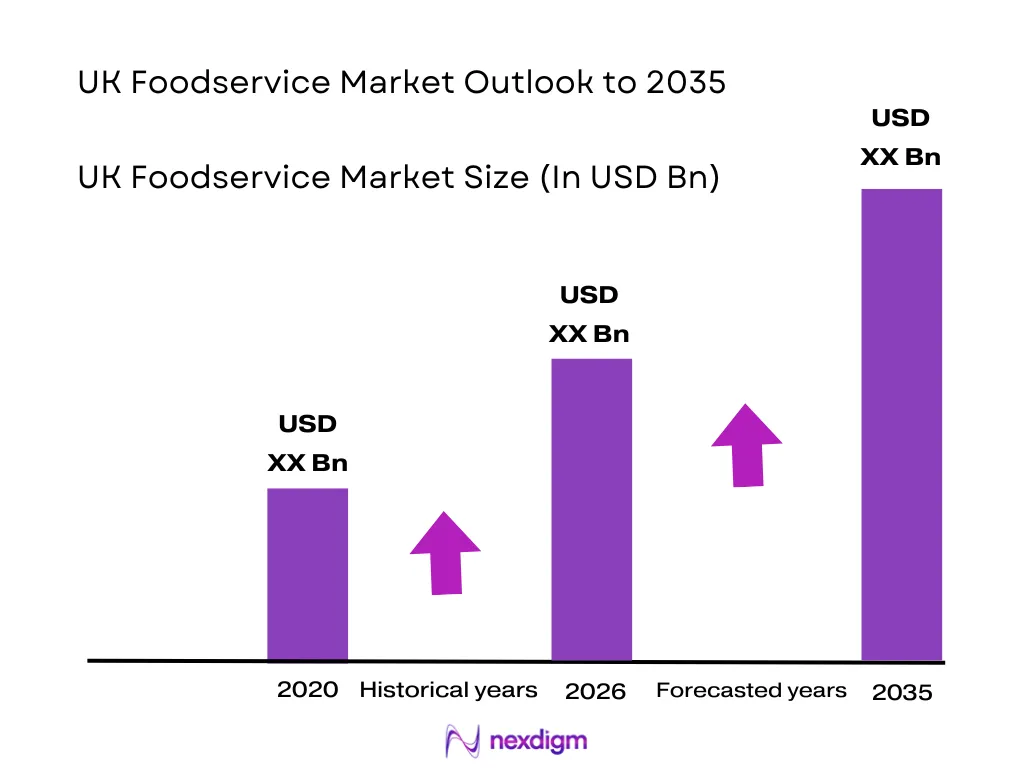
The UK Foodservice Market is valued at approximately USD ~ billion in 2024, supported by increasing consumer expenditure on out-of-home dining, rapid adoption of digital ordering systems, and expansion of convenience-led restaurant formats. Restaurants, cafés, pubs, and takeaway outlets continue benefiting from rising urban population density and increased tourism activity across major UK cities. The growing penetration of app-based delivery ecosystems and contactless payment infrastructure has accelerated transaction volumes across quick-service restaurants and café chains. In addition, rising workforce participation and hybrid work culture are increasing demand for takeaway meals, grab-and-go products, and premium coffee consumption across metropolitan regions.
Cities and regions such as London, Manchester, Birmingham, Glasgow, and Edinburgh dominate the UK Foodservice Market because of strong tourism inflows, high disposable income levels, multicultural dining preferences, and dense concentration of hospitality infrastructure. London remains the primary foodservice hub due to premium dining demand, international cuisine diversity, and high delivery platform penetration. Northern and central UK regions are witnessing rapid expansion of takeaway outlets, cloud kitchens, and franchise-led quick-service restaurants because of lower operating costs and increasing urban population growth. Major transportation hubs and business districts further support high-frequency dining and food delivery demand.
Market Segmentation
By Foodservice Type
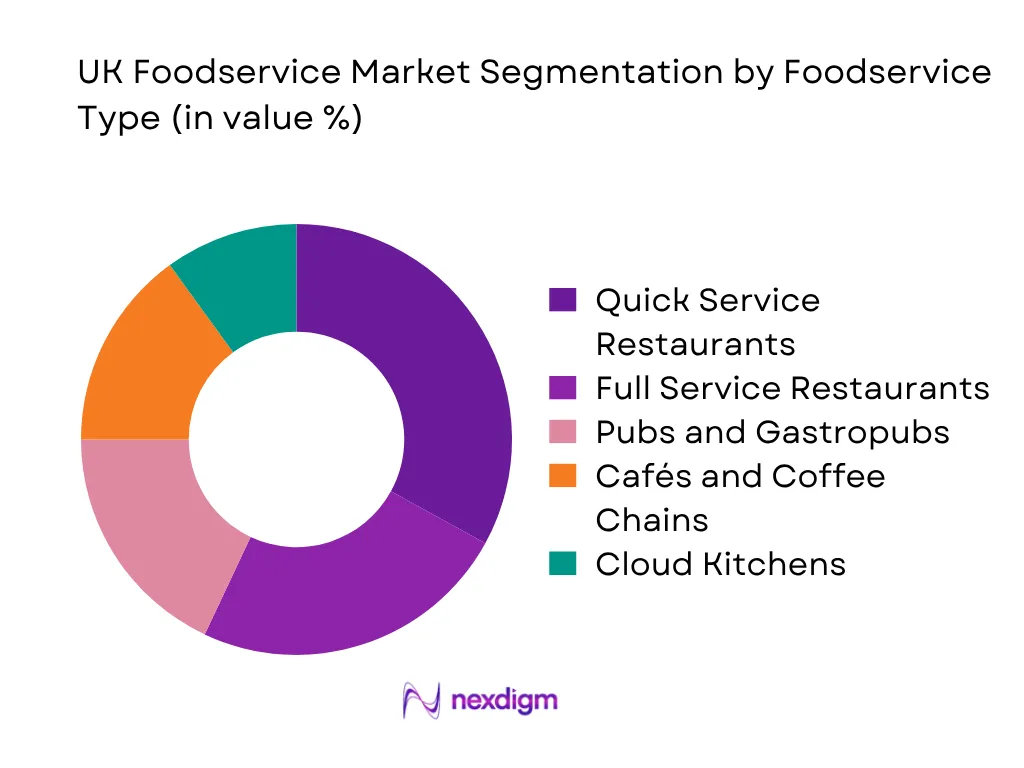
The UK Foodservice Market is segmented by foodservice type into quick service restaurants, full service restaurants, cafés and coffee chains, pubs and gastropubs, cloud kitchens, street food outlets, and contract catering services. Quick service restaurants dominate the UK Foodservice Market under this segmentation due to their strong outlet penetration, affordability, and integration with food delivery platforms. Consumers increasingly prefer convenience-oriented meals because of fast-paced urban lifestyles and increasing office commuting activities. The expansion of drive-thru infrastructure, app-based loyalty systems, and value meal offerings has strengthened category dominance across metropolitan and suburban markets. Quick service operators also benefit from higher operational scalability and franchise expansion opportunities compared to full-service dining formats. The growing popularity of takeaway and delivery consumption among younger demographics further strengthens demand across the segment. Additionally, quick service chains continue investing in automated kiosks, AI-driven ordering systems, and kitchen optimization technologies to improve service speed and customer retention across the UK market.
By Service Mode
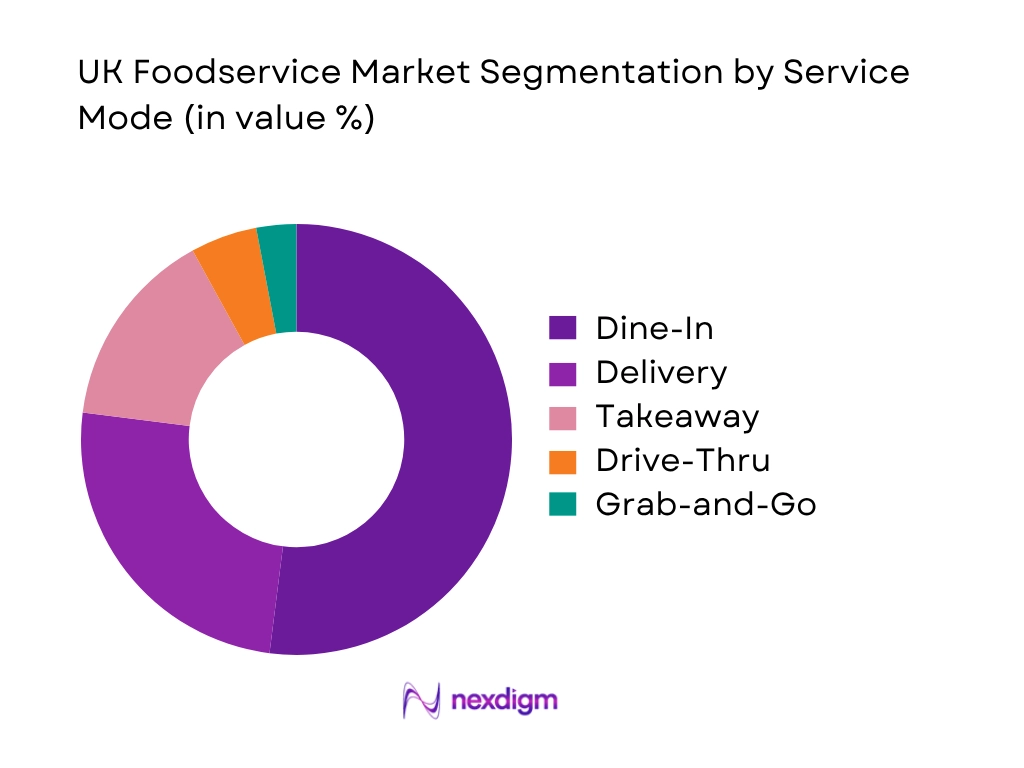
The UK Foodservice Market is segmented by service mode into dine-in, takeaway, home delivery, drive-thru, and click-and-collect. Dine-in services dominate the market because of the UK’s strong restaurant culture, increasing experiential dining preferences, and growth in social consumption occasions. Consumers increasingly prefer restaurants offering ambience-driven experiences, premium menu customization, and social engagement opportunities. Full-service restaurants, premium cafés, and gastropubs particularly benefit from dine-in traffic across urban and tourism-focused regions. The recovery in domestic tourism and office attendance has further increased demand for physical dining experiences. Operators are investing heavily in reservation technologies, customer engagement platforms, and premium seating environments to improve occupancy rates and average spend per customer. Dine-in formats also support higher-margin beverage sales and upselling opportunities unavailable within delivery-only operations. Despite strong growth in delivery ecosystems, dine-in continues maintaining leadership because consumers prioritize freshness, hospitality experiences, and social interaction during meal consumption.
Competitive Landscape
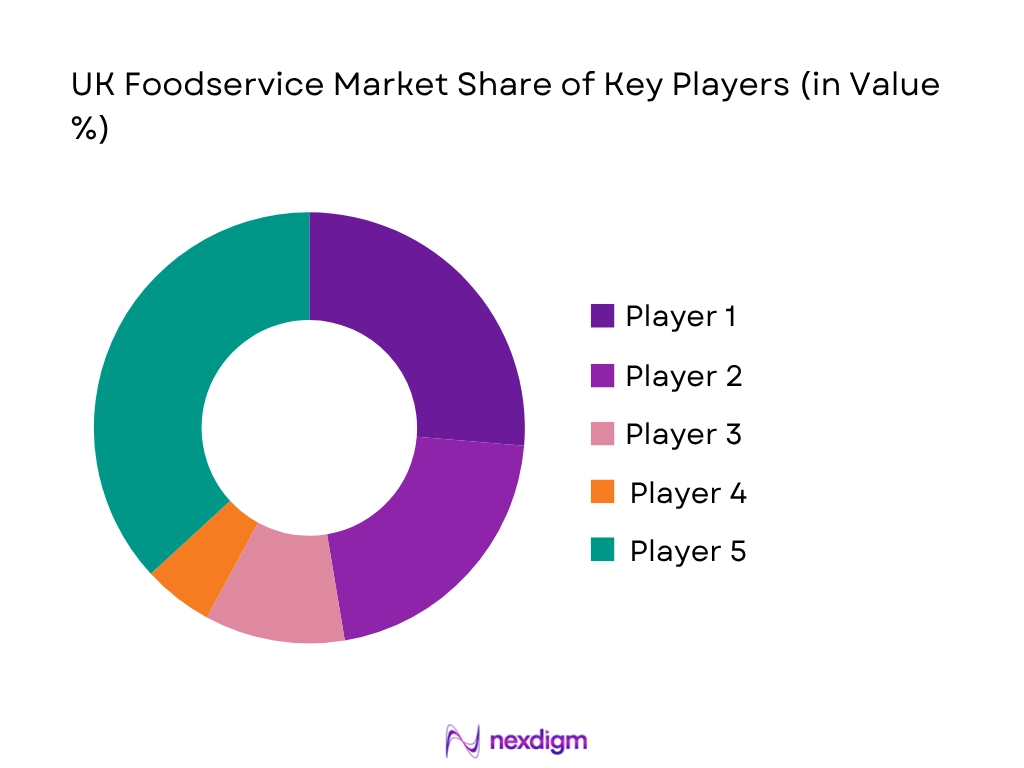
The UK Foodservice Market is moderately consolidated, with leading operators focusing on digital ordering expansion, menu innovation, delivery integration, and franchise-led outlet growth. Market participants are strengthening their competitive positioning through sustainability initiatives, AI-driven operations management, loyalty applications, and cloud kitchen partnerships. The market is also witnessing rising competition from independent restaurants and premium café chains specializing in healthy dining, ethnic cuisine offerings, and experiential foodservice concepts.
| Company | Establishment Year | Headquarters | Core Segment Focus | UK Outlet Presence | Delivery Integration | Franchise Presence | Digital Ordering Capability | Sustainability Initiatives |
| McDonald’s | 1940 | Chicago, USA | Quick Service Restaurants | ~ | ~ | ~ | ~ | ~ |
| Greggs | 1939 | Newcastle, UK | Bakery and Food-to-Go | ~ | ~ | ~ | ~ | ~ |
| Costa Coffee | 1971 | Dunstable, UK | Coffee Chain | ~ | ~ | ~ | ~ | ~ |
| Domino’s Pizza Group | 1960 | Milton Keynes, UK | Pizza Delivery | ~ | ~ | ~ | ~ | ~ |
| Deliveroo | 2013 | London, UK | Delivery Aggregator | ~ | ~ | ~ | ~ | ~ |
UK Foodservice Market Analysis
Growth Drivers
Rising Consumer Spending on Out-of-Home Dining and Hospitality Activities
The UK foodservice market is strongly supported by increasing consumer expenditure on restaurants, cafés, pubs, takeaway outlets, and leisure dining activities. According to the UK Office for National Statistics, household expenditure on restaurants and hotels exceeded GBP 134 billion in 2024, compared to GBP 124 billion in 2023, reflecting stronger discretionary spending across hospitality services. The World Bank reported that the UK economy generated GDP exceeding USD 3.3 trillion in 2024, supporting urban consumption and foodservice demand. Tourism remains another major catalyst, with inbound visitor spending surpassing GBP 31 billion during 2024, strengthening restaurant traffic across London, Manchester, and Edinburgh. Expanding workforce participation and increasing office attendance are also supporting weekday takeaway and café consumption across major urban business districts.
Expansion of Digital Ordering and Contactless Payment Infrastructure
Digital transformation across the UK hospitality ecosystem continues accelerating foodservice demand and operational scalability. Contactless payments accounted for more than 94% of eligible card transactions across the UK during 2024, significantly improving transaction efficiency for restaurants and cafés. Internet penetration exceeded 97% of UK households, enabling large-scale adoption of mobile food ordering applications and aggregator platforms. Delivery ecosystems continue expanding logistics capabilities across urban and suburban regions, improving accessibility to takeaway and restaurant services. Additionally, the hospitality industry employs over 3 million people across foodservice and catering operations, encouraging operators to adopt automation technologies, digital loyalty systems, AI-enabled inventory management, and self-service ordering kiosks to improve labour productivity and customer retention.
Market Challenges
Labour Shortages and Rising Employment Costs Across Hospitality Operations
The UK foodservice market continues facing labour shortages across restaurants, cafés, pubs, and catering operations. The hospitality sector reported tens of thousands of open vacancies during 2024 and 2025, creating staffing pressure across kitchen operations and customer-facing roles. Rising minimum wage obligations and higher employer tax contributions have increased payroll burdens for foodservice operators, particularly independent restaurants and pubs. Labour shortages continue affecting service quality, operating hours, and expansion capabilities across the industry. Recruitment difficulties are especially severe for chefs, delivery personnel, and skilled hospitality staff. Operators are increasingly investing in kitchen automation, digital ordering systems, and labour optimization technologies to reduce operational dependency on manual staffing and improve long-term cost efficiency.
Inflationary Pressure on Food Ingredients and Energy Costs
Foodservice operators across the UK continue facing inflationary pressure on food ingredients, logistics, utilities, and imported raw materials. Elevated prices for meat, dairy, oils, cereals, and packaging materials have increased procurement complexity for restaurants and catering providers. Energy-intensive hospitality operations such as pubs, hotel kitchens, and full-service restaurants remain particularly vulnerable to electricity and gas price volatility. Supply chain disruptions affecting seafood imports, fresh produce availability, and transportation logistics have further increased operational uncertainty across the market. Smaller independent operators are especially affected because of lower supplier bargaining power and limited pricing flexibility. Rising warehousing and distribution costs continue pressuring profitability across takeaway chains, cafés, and institutional catering operations.
Market Opportunities
Expansion of Plant-Based and Health-Focused Foodservice Offerings
The increasing shift toward healthier eating habits and sustainable consumption patterns presents a major opportunity for the UK foodservice market. Consumers are increasingly demanding lower-calorie meals, plant-based proteins, vegan alternatives, and clean-label menu offerings across restaurants and cafés. Growing awareness regarding obesity, dietary health, and sustainability concerns has accelerated menu innovation across quick-service chains and premium dining operators. Urban consumers particularly prefer functional beverages, healthy snacks, and ethically sourced ingredients. Restaurant operators are increasingly expanding vegetarian and vegan offerings to strengthen customer retention among younger demographics and environmentally conscious consumers. The expansion of premium healthy dining concepts and sustainable ingredient sourcing programs is expected to support long-term growth opportunities across metropolitan UK markets.
Growth of Institutional Catering and Travel-Linked Foodservice Demand
Institutional catering across healthcare, education, transportation hubs, and corporate offices represents a significant growth opportunity for the UK foodservice market. Large-scale catering demand continues expanding across hospitals, schools, universities, sports venues, and airports due to increasing workforce and passenger traffic volumes. The recovery in business travel and tourism activities is supporting demand for airport restaurants, hotel dining services, and event catering operations across major UK cities. Corporate offices are increasingly strengthening outsourced catering partnerships to improve employee engagement and workplace dining experiences. The expansion of healthcare infrastructure and ageing population demographics are additionally supporting long-term demand for nutritional meal services and institutional foodservice contracts across the United Kingdom.
Future Outlook
The UK Foodservice Market is expected to witness substantial transformation over the coming years due to evolving consumer dining preferences, increasing digital ordering penetration, and expansion of convenience-oriented restaurant formats. Hybrid operating models integrating dine-in, takeaway, and delivery services are expected to dominate future market development. Foodservice operators are increasingly investing in automation technologies, cloud kitchens, AI-driven inventory systems, and sustainable packaging solutions to improve efficiency and profitability. The growing demand for premium café experiences, healthier meal options, and plant-based menu offerings is expected to strengthen product innovation across the industry. Urban population growth, tourism recovery, and increasing office attendance are likely to support higher restaurant visitation frequency and takeaway consumption across metropolitan regions. Additionally, franchise-led expansion strategies and technological integration across foodservice operations are expected to accelerate long-term market growth throughout the United Kingdom.
Major Players
- McDonald’s
- Greggs
- Compass Group
- Costa Coffee
- Domino’s Pizza Group
- Pret A Manger
- Restaurant Group
- Mitchells & Butlers
- Nando’s
- Wagamama
- Starbucks
- Burger King
- KFC
- Deliveroo
- Whitbread
Key Target Audience
- Quick Service Restaurant Operators
- Full Service Restaurant Chains
- Cloud Kitchen Operators
- Food Delivery Aggregators
- Hospitality Procurement Companies
- Investments and Venture Capitalist Firms
- Government and Regulatory Bodies
- Institutional Catering Service Providers
Research Methodology
Step 1: Identification of Key Variables
The initial stage involved identifying critical variables influencing the UK Foodservice Market, including outlet density, consumer dining frequency, delivery penetration, average order value, labour availability, and digital ordering adoption. Extensive secondary research was conducted using government publications, hospitality databases, trade journals, and company disclosures to understand industry structure and operational dynamics.
Step 2: Market Analysis and Construction
Historical market analysis was conducted using transaction volumes, restaurant spending trends, delivery platform penetration, tourism statistics, and outlet expansion data across the United Kingdom. Revenue estimations were derived using bottom-up calculations across foodservice formats, service modes, and regional markets to ensure accurate segmentation and forecasting reliability.
Step 3: Hypothesis Validation and Expert Consultation
Preliminary market findings were validated through interviews with restaurant operators, delivery aggregators, franchise managers, catering providers, and hospitality procurement specialists. These consultations provided operational insights regarding menu pricing, customer behaviour, labour costs, delivery economics, and expansion strategies within the UK foodservice ecosystem.
Step 4: Research Synthesis and Final Output
The final phase involved consolidating quantitative and qualitative findings into a comprehensive analytical framework. Cross-validation was conducted using trade statistics, hospitality reports, government indicators, and operator disclosures to ensure consistency and reliability of market estimates, segmentation analysis, and long-term growth projections for the UK Foodservice Market.

- Executive Summary
- Research Methodology (Market Definitions and Assumptions, Abbreviations, Research Framework, Bottom-Up Market Estimation, Top-Down Validation, Demand-Supply Mapping, Consumer Spending Analysis, Trade Flow Assessment, Primary Interviews with Restaurant Operators and Aggregators, Forecasting Model, Limitations and Assumptions)

- Definition and Scope
- Evolution of Out-of-Home Dining in the UK
- Industry Ecosystem and Stakeholder Mapping
- Supply Chain and Value Chain Analysis
- Restaurant Procurement and Distribution Landscape

- Growth Drivers
Rising Consumer Spending on Out-of-Home Dining and Hospitality Activities
Expansion of Digital Ordering and Contactless Payment Infrastructure - Market Challenges
Labour Shortages and Rising Employment Costs Across Hospitality Operations
Inflationary Pressure on Food Ingredients and Energy Costs - Market Opportunities
Expansion of Plant-Based and Health-Focused Foodservice Offerings
Growth of Institutional Catering and Travel-Linked Foodservice Demand - Market Trends
Growth of Cloud Kitchens and Delivery-Only Models
Expansion of AI-Driven Restaurant Operations
Premiumization of Café and Beverage Offerings
Increasing Adoption of Sustainable Packaging
Rise of Health-Focused and Functional Menus - Government Regulations
Food Safety and Hygiene Standards
Calorie Labelling Requirements
Employment and Wage Regulations
Alcohol Licensing and Service Compliance
Packaging Waste and Recycling Policies - Porter’s Five Forces Analysis
- PESTLE Analysis
- Pricing Analysis
- Competition Ecosystem

- By Value, 2020-2025
- By Transaction Volume, 2020-2025
- By Number of Foodservice Outlets, 2020-2025
- By Average Order Value, 2020-2025

- By Foodservice Type (in Value %)
Outlet Density
Average Ticket Size
Customer Footfall
Delivery Penetration - By Cuisine Type (in Value %)
Consumer Preference Index
Average Spend Per Visit
Menu Diversification
Repeat Purchase Frequency - By Service Mode (in Value %)
Dine-In Utilization
Takeaway Frequency
Delivery Dependency
Drive-Thru Penetration - By Ordering Channel (in Value %)
Mobile App Usage
Digital Payment Penetration
Aggregator Contribution
Online Order Frequency - By End User Category (in Value %)
Consumption Frequency
Institutional Demand
Corporate Meal Spending
Leisure Dining Preference - By Location Type (in Value %)
High Street Presence
Transit Hub Consumption
Urban Footfall Density
Rental Economics - By Price Positioning (in Value %)
Average Meal Spend
Gross Margin Structure
Consumer Affordability
Premium Dining Penetration - By Ownership Structure (in Value %)
Franchise Penetration
Chain Expansion Rate
Independent Outlet Density
Operational Scalability - By Region (in Value %)
England
Scotland
Wales
Northern Ireland
Greater London

- Market Share Analysis of Major Players on the Basis of Revenue and Volume
- Cross Comparison Parameters (Company Overview, Outlet Presence, Average Ticket Size, Delivery Integration Strength, Digital Ordering Capability, Franchise Penetration, Sustainability Initiatives, Cuisine Portfolio, Operational Scalability, Customer Loyalty Programs, Menu Innovation, Seating Capacity Utilization, Regional Presence, Employee Strength, Expansion Strategy, EBITDA Margins)
- Competitive Benchmarking Matrix
- SWOT Analysis of Major Players
- Pricing Analysis by Foodservice Category and SKU
- Detailed Profiles of Major Companies
McDonald’s
Greggs
Compass Group
Costa Coffee
Domino’s Pizza Group
Pret A Manger
Restaurant Group
Mitchells & Butlers
Nando’s
Wagamama
Starbucks
Burger King
KFC
Deliveroo
Whitbread

- Consumption Frequency Analysis
- Consumer Spending and Basket Analysis
- Brand Loyalty and Switching Behaviour
- Purchase Decision Parameters
- Digital Ordering Preference Mapping

- By Value, 2026-2030
- By Transaction Volume, 2026-2030
- By Number of Foodservice Outlets, 2026-2030
- By Average Order Value, 2026-2030


 Request a Sample
 Ask for Customization
 Get a Quote
 Enquire Now