

 Download PDF
Market Overview
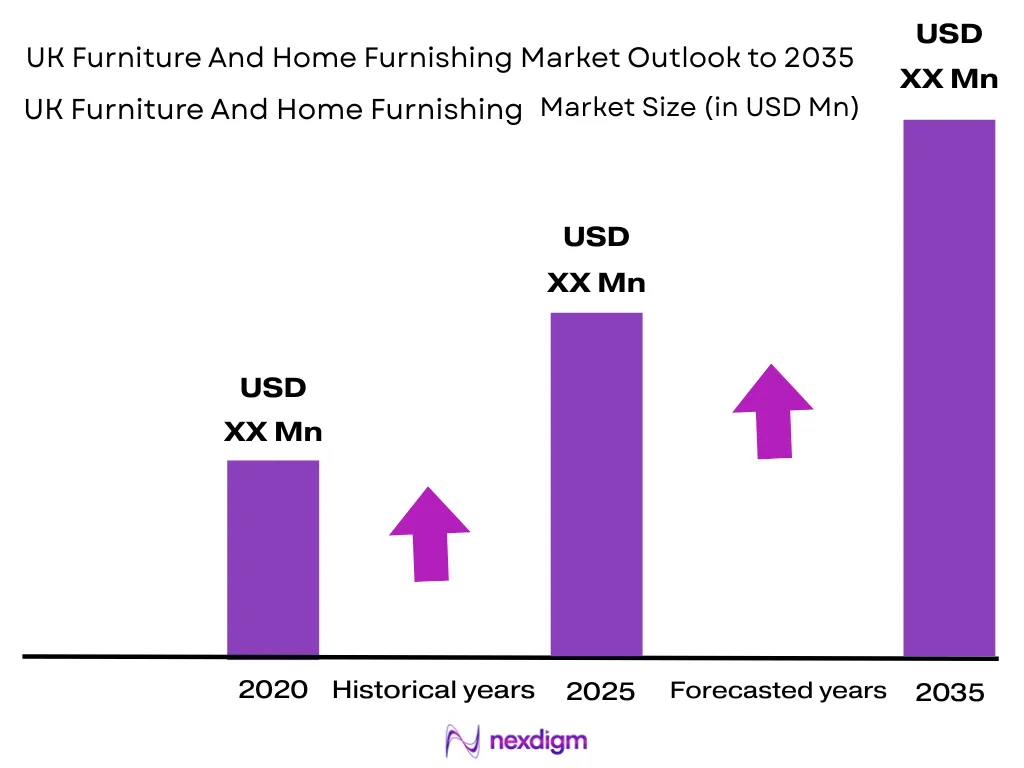
The UK Furniture And Home Furnishing Market is valued at USD ~ million, based on latest base-year industry assessment, while the UK furniture-only market is estimated at USD ~ billion. The market is driven by household replacement demand, rental mobility, online furniture platforms, fitted furniture, home renovation, mattresses, soft furnishings, garden furniture and compact-living products. UK household expenditure averaged GBP 623.30 per week in the latest official family-spending period, supporting consumer-led furnishing purchases. England dominates UK furniture and home furnishing demand because it holds the largest consumer base, retail warehouse network, import gateways, housing stock and online delivery infrastructure. The UK population increased from 68,526,100 to 69,281,400, strengthening household furnishing demand across key urban clusters. London, Birmingham, Manchester, Leeds, Glasgow and Edinburgh dominate because they combine dense households, rental turnover, student accommodation, premium retail, design services, build-to-rent projects, commercial buyers and last-mile delivery networks.
Market Segmentation
By Product Type
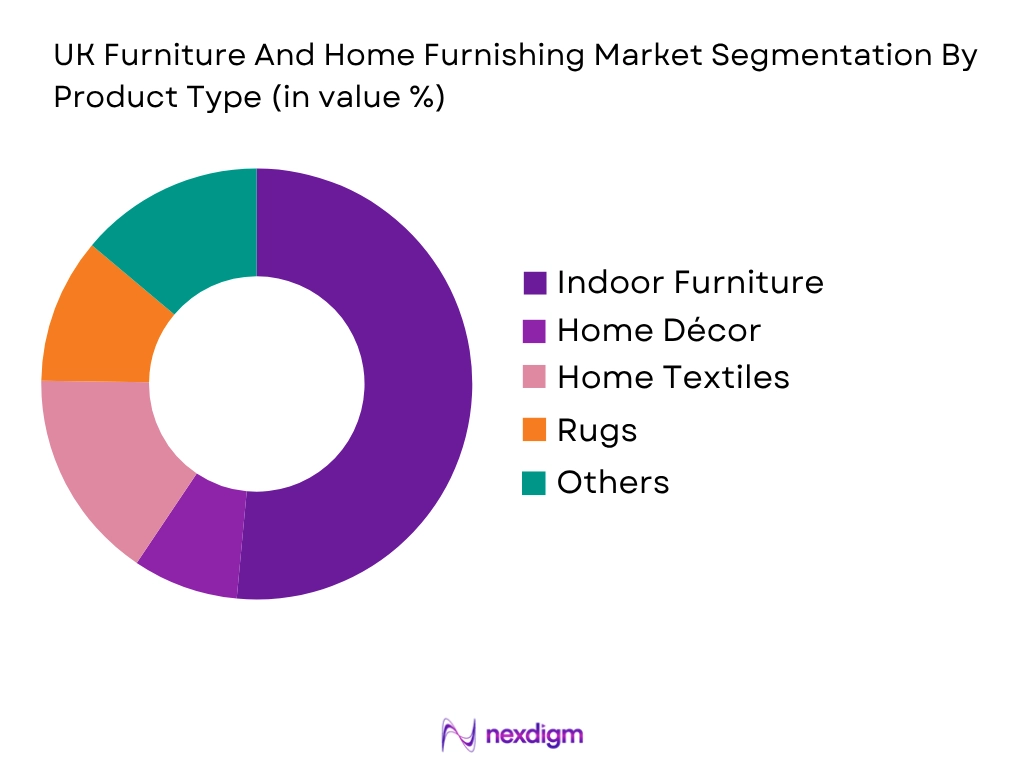
The UK Furniture And Home Furnishing Market is segmented by product type into indoor furniture and furnishings, home textiles and soft furnishings, floor coverings and rugs, lighting and decorative fixtures, home décor and accessories, and outdoor and garden furniture. Indoor furniture and furnishings hold the dominant market share because sofas, beds, wardrobes, dining sets, mattresses, storage units and fitted furniture are essential household purchase categories. The segment benefits from move-ins, rental changes, home renovations, replacement cycles and smaller urban homes requiring multifunctional products. UK consumers also continue to use retail parks, homeware stores, online marketplaces and DTC furniture websites for large-ticket household purchases. Indoor furniture acts as the anchor category for attachment sales in rugs, lamps, curtains, cushions, bedding and decorative accessories.
By Distribution Channel
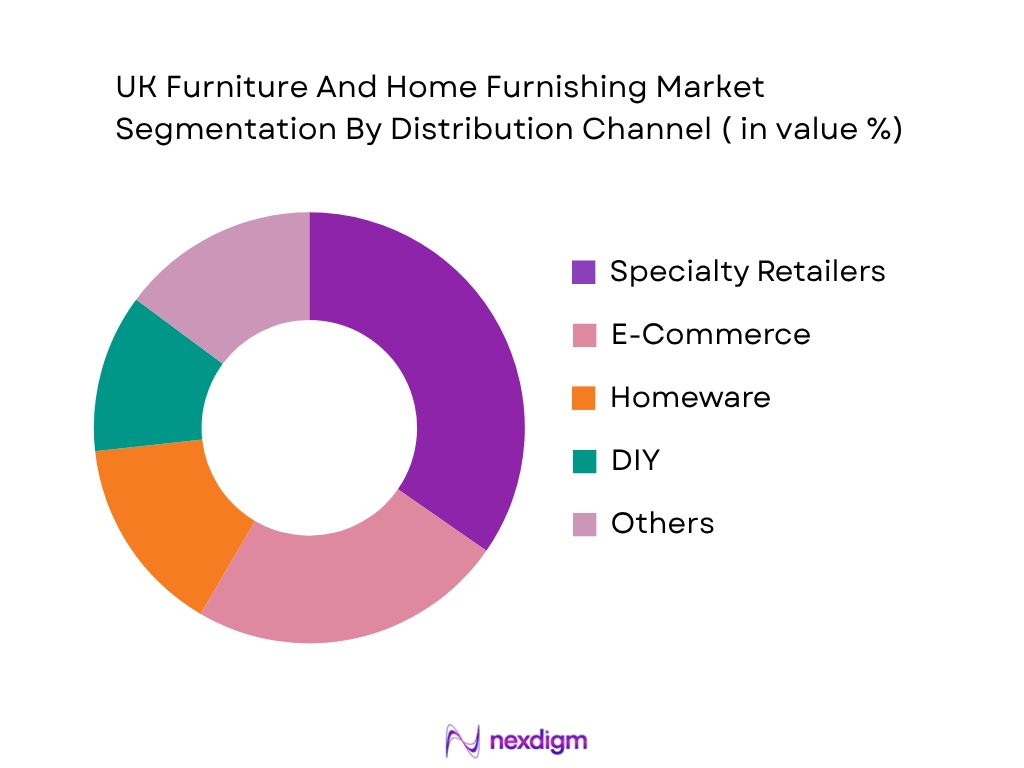
The UK Furniture And Home Furnishing Market is segmented by distribution channel into furniture specialty retailers, online marketplaces and e-commerce platforms, homeware and soft furnishing retailers, DIY and home improvement retailers, department stores, and trade, contract and interior design channels. Furniture specialty retailers dominate because high-consideration products such as sofas, beds, mattresses, recliners, wardrobes and dining sets require physical testing, material evaluation, delivery scheduling and financing support. Retailers such as DFS, Furniture Village, Bensons for Beds and Dreams benefit from showroom-based selling where consumers test comfort and compare fabric, finish and size. The channel is also supported by retail-park formats, two-person delivery networks, made-to-order sofa models and interest-free credit. However, online platforms are expanding quickly through wider SKU discovery, reviews, room imagery and home delivery.
Competitive Landscape
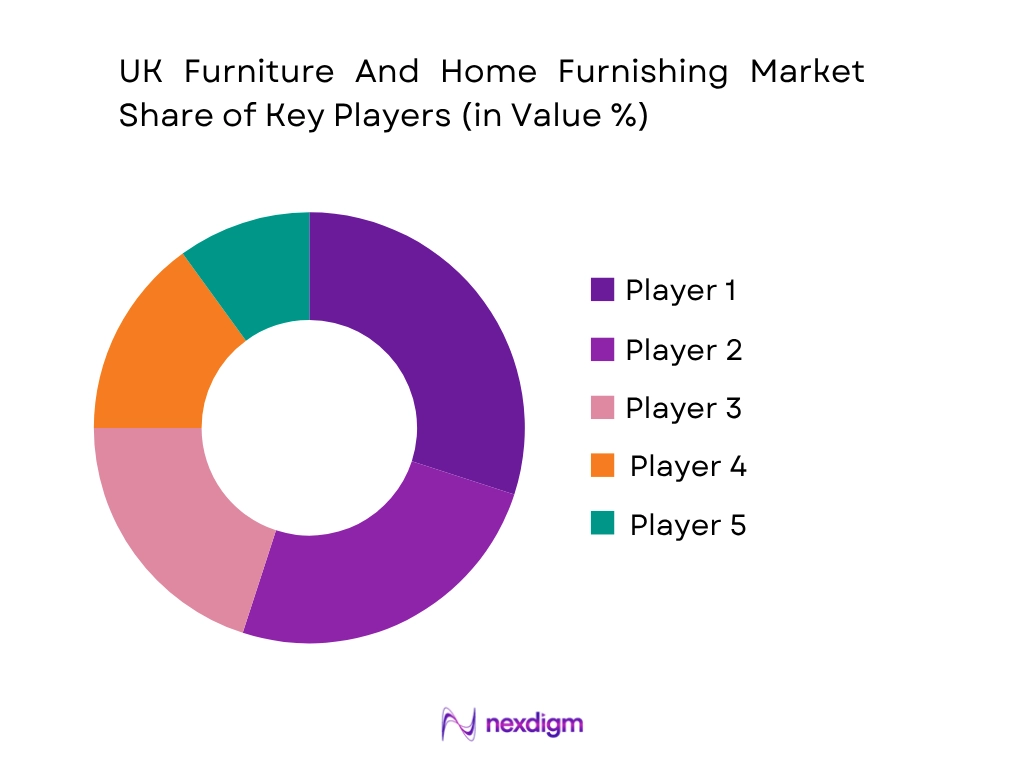
The UK Furniture And Home Furnishing Market is competitive, with large furniture specialists, homeware chains, department stores, DIY retailers, fitted-kitchen providers and online platforms competing across value, mid-market, premium and contract segments. IKEA UK, DFS, Dunelm, Next Home and John Lewis influence the market through store networks, online reach, private-label ranges, design positioning, financing, fitted furniture, home textiles, mattresses and bulky-goods delivery capability.
| Company | Establishment Year | Headquarters | Core Positioning | Product Strength | Sales Channel | Fulfillment Model | Price Tier | Market-Specific Capability |
| IKEA UK | 1943 | Delft, Netherlands / UK operations in London | ~ | ~ | ~ | ~ | ~ | ~ |
| DFS Furniture plc | 1969 | Doncaster, UK | ~ | ~ | ~ | ~ | ~ | ~ |
| Dunelm Group plc | 1979 | Syston, UK | ~ | ~ | ~ | ~ | ~ | ~ |
| Next Home | 1982 | Enderby, UK | ~ | ~ | ~ | ~ | ~ | ~ |
| John Lewis & Partners | 1864 | London, UK | ~ | ~ | ~ | ~ | ~ | ~ |
UK Furniture And Home Furnishing Market Analysis
Growth Drivers
Large Household Base Supporting Recurring Furnishing Replacement
UK Furniture And Home Furnishing Market is supported by a broad installed household base that creates recurring demand for sofas, beds, mattresses, wardrobes, curtains, rugs, lighting and storage furniture. ONS reported 28.6 million households in the UK in 2024, with 8.4 million people living alone and an average household size of 2.35 residents. The same source reported 19.7 million families, supporting demand for bedroom furniture, dining furniture, children’s furniture, soft furnishings and full-room replacement cycles. World Bank also reported UK GDP per capita at USD 53,246.4, supporting household capacity for discretionary home furnishing purchases.
New Housing Supply Creating Post-Occupancy Furniture Demand
UK Furniture And Home Furnishing Market is driven by the flow of new dwellings, because every completed or converted home creates demand for beds, sofas, wardrobes, mattresses, dining tables, floor coverings, lighting and fitted storage. The UK government reported 208,600 net additional dwellings in England in 2024-25, including 190,600 new build homes, 17,710 gains from change of use, 3,850 conversions between houses and flats, and 1,080 other gains. These additions expand the occupiable housing base and create furniture demand across entry-level, mid-market and fitted categories. The same release stated England had 25.6 million dwellings at 31 March 2024.
Market Challenges
Interest Rate Conditions Restraining Big-Ticket Furniture Purchases
UK Furniture And Home Furnishing Market faces pressure from tight credit conditions because sofas, fitted kitchens, mattresses, wardrobes and full-room packages are often purchased alongside mortgages, moving costs or retail finance. Bank of England data shows the official Bank Rate at 3.75 in 2026, keeping borrowing sensitivity relevant for large household purchases. HMRC reported 101,030 seasonally adjusted residential transactions in April 2026, compared with 89,880 in April 2024 and 65,960 in April 2025. Transaction volatility directly affects move-triggered furniture demand, including beds, dining sets, curtains, storage, garden furniture and fitted furniture ordered after completion.
Household Income Pressure Limiting Discretionary Home Furnishing Spend
UK Furniture And Home Furnishing Market is challenged by household income pressure, as consumers prioritise essential spending before buying sofas, beds, rugs, lighting, curtains, fitted furniture and home décor. ONS reported mean gross income for all UK households at GBP 55,200 in financial year ending 2024, with mean original income decreasing by GBP 1,400 in real terms. For the poorest fifth of people, mean gross income was GBP 18,100, while the richest fifth recorded GBP 120,000. This wide income gap makes demand more uneven across value, mid-market and premium furniture categories. Retailers must manage product mix, financing and promotions carefully.
Market Opportunities
Compact Furniture Opportunity from Single-Person and Smaller Households
UK Furniture And Home Furnishing Market has a growth opportunity in compact, modular and multifunctional products because single-person households need smaller beds, sofa beds, storage beds, extendable tables, compact desks, modular shelving and apartment-friendly lighting. ONS reported 8.4 million people living alone in 2024, including 4.3 million people aged 65 years or over. The UK also had 28.6 million households and an average household size of 2.35 residents. These indicators support demand for smaller-scale furniture, easy-assembly storage, lighter home furnishings, accessible bedroom furniture and living-room products suited to flats, downsized homes and rental properties.
Student and Rental Housing Supporting Durable, Replaceable Furniture Demand
UK Furniture And Home Furnishing Market has future growth potential in durable beds, desks, wardrobes, mattresses, compact storage and contract furniture for student housing, private rentals and furnished accommodation. HESA statistics reported 2.86 million students at UK higher education institutions in 2024-25, including 2.2 million UK students and 0.7 million overseas students. ONS also reported the private rented sector included households in the year ending March 2024, with the most common reference-person age group being 25 to 34 years. This supports demand for replaceable, space-efficient, lower-maintenance furniture used by landlords, build-to-rent operators, universities and student accommodation providers.
Future Outlook
The UK Furniture And Home Furnishing Market is expected to grow steadily, supported by online purchase platforms, urban living, home renovation, rental mobility, fitted furniture, replacement demand and changing consumer preferences. The forecasted CAGR for the 2035 outlook period is 10.27% for the UK home furnishing market, while the UK furniture-only market outlook is supported by a 4.93% CAGR. Growth will be increasingly shaped by omnichannel retail, where consumers discover products online, compare reviews, visit showrooms for comfort testing and complete purchases through digital or store-based channels. Retailers with strong delivery visibility, product availability, finance options and easy returns are expected to gain advantage. Compact and multifunctional furniture will remain a key future opportunity in cities such as London, Manchester, Birmingham, Bristol, Leeds, Glasgow and Edinburgh. Demand will be supported by private renters, students, young professionals, hybrid workers and households living in smaller urban homes. Sustainability and compliance will also influence future buying. Fire safety, product labelling, timber traceability, recycling, mattress disposal, furniture resale and lower-waste packaging will become important differentiators for manufacturers, importers and retailers.
Major Players
- IKEA UK
- DFS Furniture plc
- Dunelm Group plc
- Next Home
- John Lewis & Partners
- Bensons for Beds
- Dreams
- Furniture Village
- ScS
- Oak Furnitureland
- Wren Kitchens
- Howdens
- The Cotswold Company
- Loaf
- The Senator Group
Key Target Audience
- Furniture manufacturers and upholstered furniture producers
- Home furnishing retailers and omnichannel homeware chains
- Online furniture marketplaces and DTC furniture brands
- Fitted kitchen, wardrobe and bespoke joinery providers
- Real estate developers, landlords and build-to-rent operators
- Investments and venture capitalist firms
- Government and regulatory bodies
- Logistics, warehousing, two-person delivery and furniture assembly service providers
Research Methodology
Step 1: Identification of Key Variables
The initial phase involves constructing an ecosystem map for the UK Furniture And Home Furnishing Market, covering manufacturers, retailers, importers, marketplaces, designers, logistics operators and end users. Key variables include product category demand, housing-linked purchases, online penetration, store footprint, import exposure, material use, compliance standards and delivery capability.
Step 2: Market Analysis and Construction
In this phase, historical and current information is compiled across furniture, home textiles, lighting, rugs, décor, mattresses, garden furniture and fitted furniture. Market construction is conducted through top-down demand analysis and bottom-up mapping of retailer revenue, manufacturer presence, channel contribution, product mix and regional demand clusters.
Step 3: Hypothesis Validation and Expert Consultation
Market hypotheses are validated through computer-assisted telephone interviews with furniture retailers, upholstery manufacturers, mattress companies, importers, interior designers, logistics providers and contract furniture buyers. These consultations provide insight into product demand, channel performance, delivery issues, compliance burden, financing behaviour and competitive strategy.
Step 4: Research Synthesis and Final Output
The final phase synthesizes secondary research, company benchmarking, expert interviews and segmentation analysis into a validated market model. The output assesses market size, future growth, segmentation, competitive landscape, consumer demand, supply chain structure and strategic opportunities in the UK Furniture And Home Furnishing Market.

- Executive Summary
- Research Methodology (Market Definitions and Assumptions, Abbreviations, Furniture and Home Furnishing Scope, Market Sizing Approach, Top-Down Household Expenditure Mapping, Bottom-Up Retailer Revenue Build-Up, Manufacturer Shipment Assessment, Import-Export Triangulation, E-Commerce Sales Estimation, Store Network Mapping, Primary Interviews with Retailers/Manufacturers/Distributors/Interior Designers, Consumer Purchase Journey Validation, Limitations and Future Conclusions)

- Definition and Scope
- Overview Genesis
- Evolution of UK Furniture Retail and Manufacturing
- Timeline of Major Retail Formats
- Business Cycle
- Supply Chain and Value Chain Analysis

- Growth Drivers (Home Renovation, Rental Mobility, Replacement Demand, Omnichannel Retail, Outdoor Living, Fitted Furniture, Sustainability Preferences)
- Market Challenges (Interest Rate Pressure, Housing Affordability, High Street Weakness, Bulky Delivery Cost, Product Returns, Import Dependence, Compliance Costs)
- Market Opportunities (Bespoke Furniture, Compact Living, Circular Furniture, Trade Channels, Smart Home Integration, Premium Outdoor Living)
- Market Trends (Omnichannel Showrooms, Retail Park Strength, DTC Mattresses, Sofa Customization, Furniture Resale, Made-to-Order, Sustainability Claims)
- SWOT Analysis
- Porter’s Five Forces
- PESTLE Analysis

- By Value (2020-2025)
- By Volume (2020-2025)
- By Average Selling Price (2020-2025)

- By Product Category (In Value %)
Living Room Furniture
Bedroom Furniture
Mattresses and Sleep Products
Dining and Kitchen Furniture
Home Office Furniture - By Sales Channel (In Value %)
Furniture Specialty Retailers
Homeware and Soft Furnishing Retailers
Department Stores
DIY and Home Improvement Retailers - By End User (In Value %)
Residential Homeowners
Private Renters
Student Accommodation Operators
Build-to-Rent and Multifamily Operators
Hospitality Sector - By Region (In Value %)
England
Scotland
Wales
Northern Ireland
Greater London

- Market Share of Major Players (Value Share, Volume Share, Category Share, Channel Share, Regional Presence)
- Cross Comparison Parameters (Store Footprint, Online Sales Capability, Sofa and Upholstery Portfolio, Bed and Mattress Portfolio, Fitted Furniture Capability, Delivery and Assembly Network, Interest-Free Credit Offering, Fire-Safety Compliance Capability)
- SWOT Analysis of Major Players
- Pricing Analysis by Key SKUs
- Detailed Profiles of Major Companies
IKEA UK
DFS Furniture plc
Dunelm Group plc
Next Home
John Lewis & Partners
Bensons for Beds
Dreams
Furniture Village
ScS
Oak Furnitureland
Wren Kitchens
Howdens
The Cotswold Company
Loaf
The Senator Group

- Residential Homeowner Demand Analysis
- Private Renter Demand Analysis
- Student Accommodation Demand Analysis
- Build-to-Rent and Landlord Demand Analysis
- Hospitality and Leisure Demand Analysis

- By Value (2020-2025)
- By Volume (2020-2025)
- By Average Selling Price (2020-2025)


 Request a Sample
 Ask for Customization
 Get a Quote
 Enquire Now