
 Download PDF
Market Overview
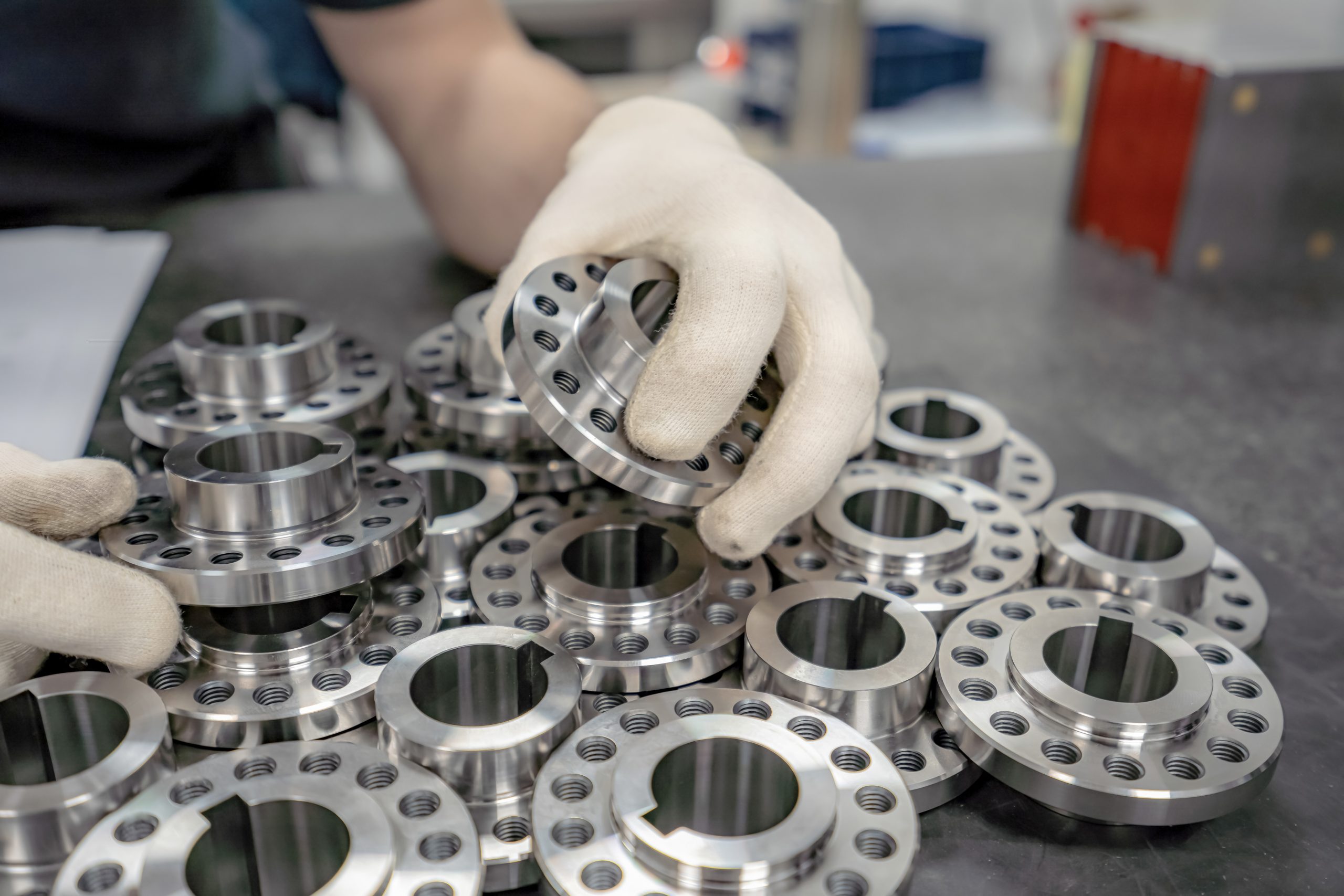
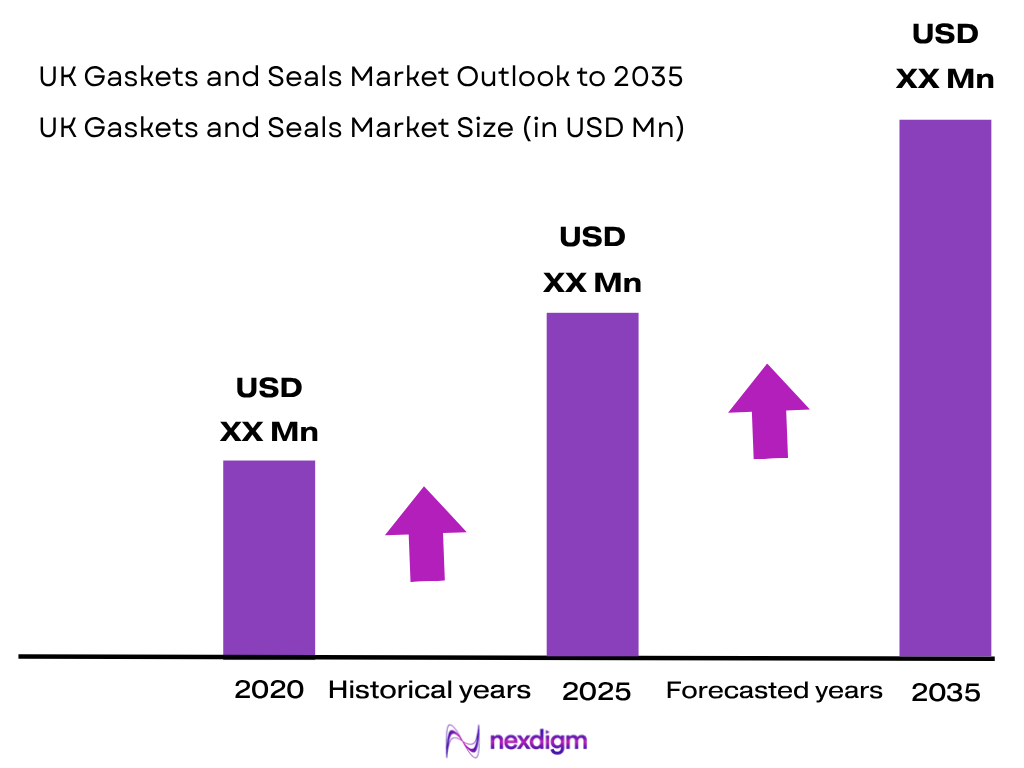
The UK Gaskets and Seals Market is valued at approximately USD ~XX million, supported by energy, aerospace, automotive, chemicals, water infrastructure and industrial MRO. UK motor-vehicle production moved from approximately 1.03 million units in the preceding period to around 905,000 units in the latest period, while UK Continental Shelf production remained around 1.1 million barrels of oil equivalent per day, sustaining demand for mechanical seals, gaskets, O-rings, packing and engineered elastomers.
Aberdeen, Teesside, Humber, West Midlands and South Wales represent major UK sealing-demand clusters because they concentrate offshore-energy services, refining and chemicals, automotive engineering and compound-semiconductor activities. UKCS production remained around 1.1 million barrels of oil equivalent per day, while UK vehicle manufacturing produced around 905,000 units, following approximately 1.03 million units previously. These industrial corridors consequently support substantial OEM, replacement, turnaround and mechanical-seal refurbishment requirements.
Market Segmentation
By Product Type
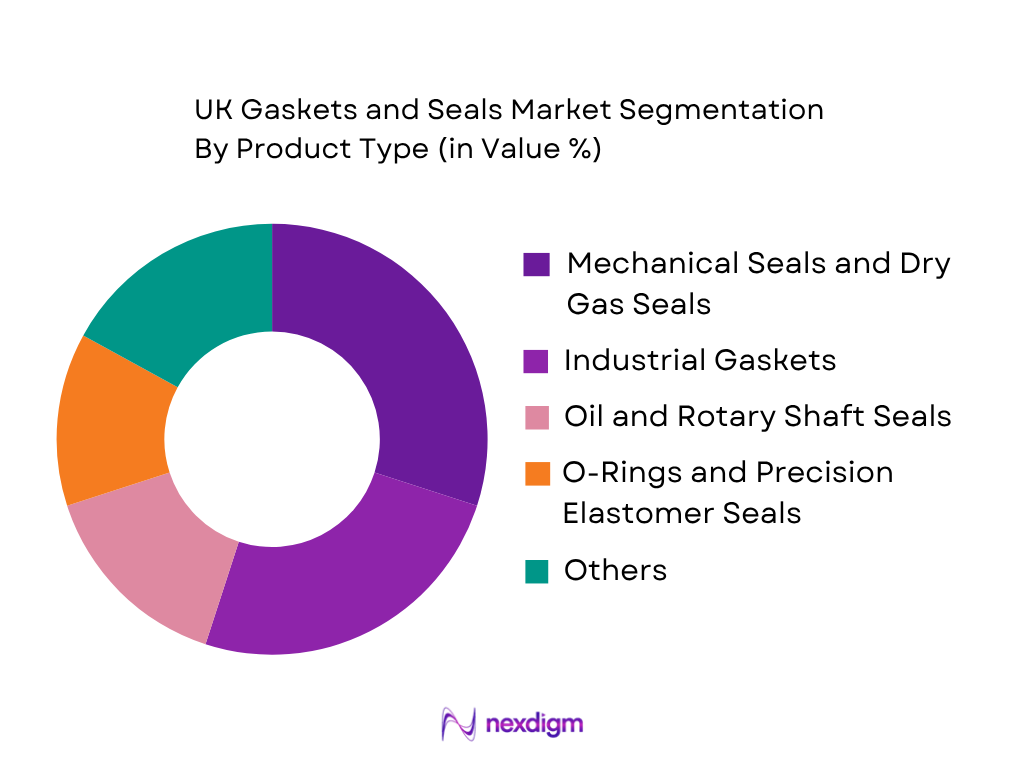
By Product Type: The UK Gaskets and Seals Market is segmented into mechanical seals, industrial gaskets, oil and rotary shaft seals, O-rings and precision elastomer seals, hydraulic and pneumatic seals, and compression packing and specialty seals. Mechanical seals hold the dominant modeled share because the UK maintains a large installed base of pumps, compressors, mixers and other rotating equipment across North Sea energy operations, refineries, chemical plants, utilities and manufacturing facilities. Mechanical seals also capture comparatively high value through cartridge seals, dry gas seals, engineered seal faces and support systems. Offshore equipment creates particularly demanding requirements for reliability because seal failures can contribute to unplanned equipment shutdowns and expensive maintenance interventions. UK water infrastructure further expands the rotating-equipment population through pumping, treatment and wastewater assets. Established domestic engineering and service capabilities around Aberdeen, Teesside and other industrial centres reinforce mechanical-seal replacement, repair, refurbishment and reliability-engineering activity.
By End-Use Industry
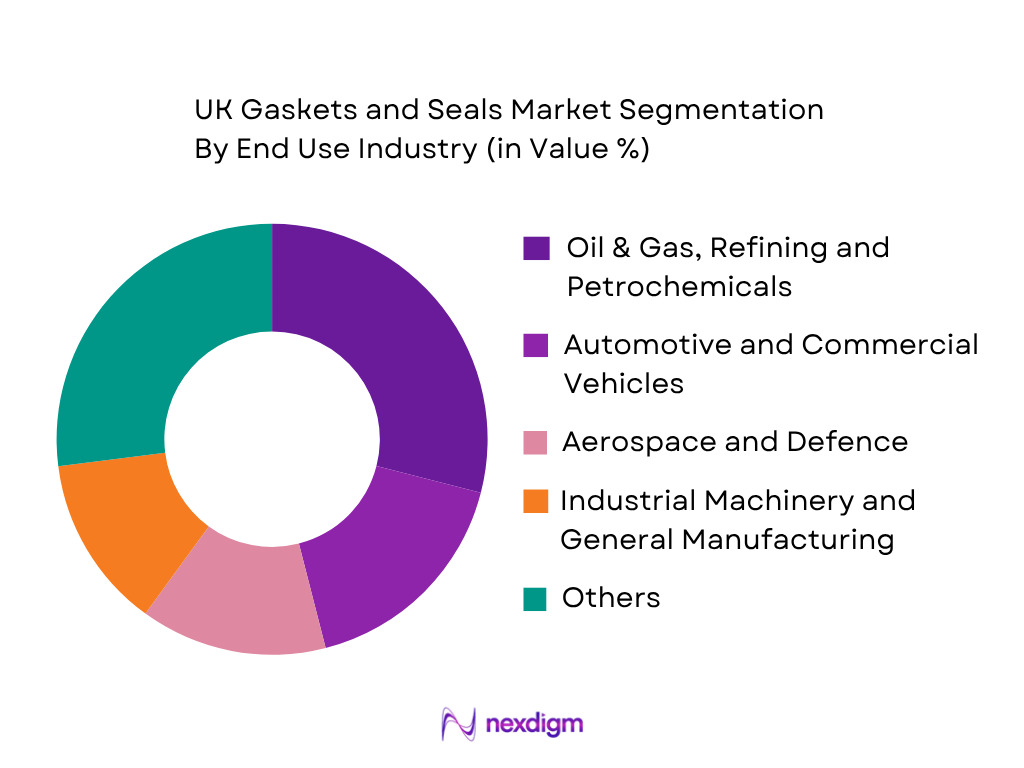
By End-Use Industry: The UK Gaskets and Seals Market is segmented into oil and gas and refining, automotive, aerospace and defence, chemicals and industrial manufacturing, water and wastewater, semiconductor and electronics, power and renewables, and other processing industries. Oil and gas, refining and chemicals form the dominant modeled demand cluster, supported by offshore platforms, subsea infrastructure, compressors, process pumps, valves, pipelines, heat exchangers and flanged connections. UK Continental Shelf production of around 1.1 million barrels of oil equivalent per day demonstrates the continuing scale of operating energy infrastructure requiring mechanical seals, RTJ gaskets, spiral-wound gaskets, packing and specialist elastomers. Aberdeen supports the offshore MRO ecosystem, while Teesside and Humber concentrate process-industry applications. Aerospace contributes a significant higher-performance sealing segment, while automotive manufacturing generates volume demand for rotary shaft seals, O-rings, transmission seals and increasingly electrified-powertrain sealing systems.
Competitive Landscape
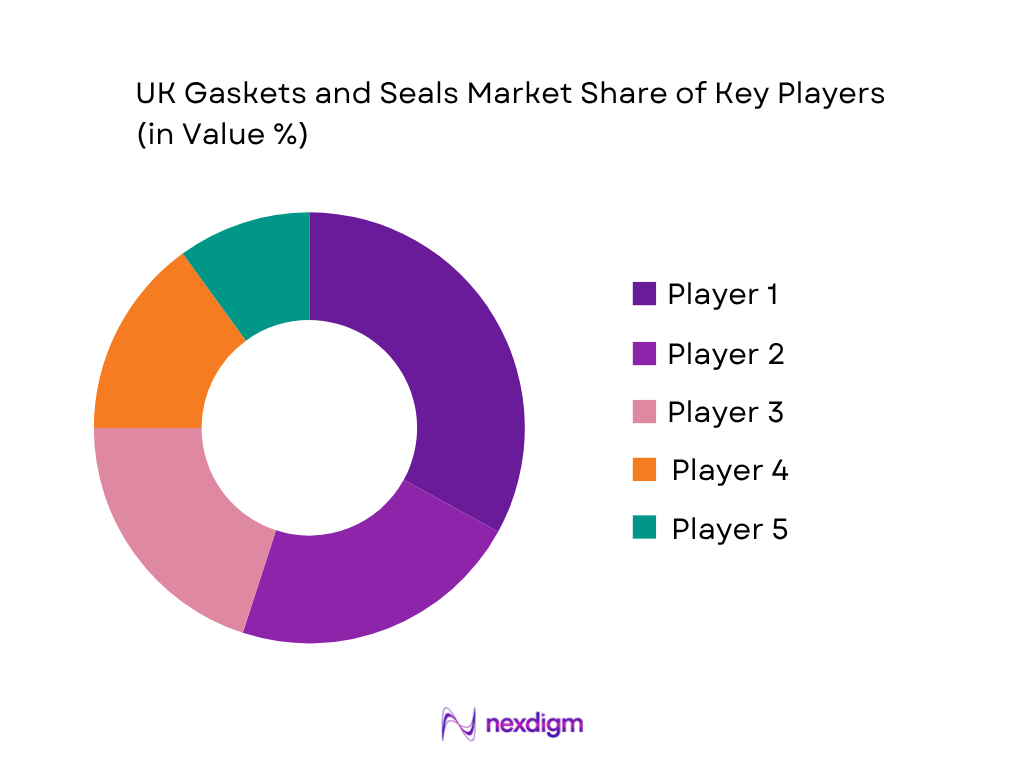
The UK Gaskets and Seals Market has a substantial domestic engineering and aftermarket-service base. John Crane and AESSEAL have particularly strong mechanical-seal capabilities, while James Walker combines engineered elastomers, gaskets and industrial sealing. Flexitallic is strongly positioned in metallic and semi-metallic gasket applications, and KLINGER UK competes across gaskets, packing and fluid-control products. Competitive differentiation increasingly depends on UK manufacturing, offshore field support, emergency availability, material engineering and mechanical-seal refurbishment capability.
| Major Player | Establishment Year | Headquarters | Core Sealing Portfolio | Material Capability | Energy & Process Exposure | Aerospace / Advanced Industry Exposure | UK Manufacturing & Service Capability | Application Engineering & MRO |
| John Crane | 1917 | Slough, UK | ~ | ~ | ~ | ~ | ~ | ~ |
| AESSEAL | 1979 | Rotherham, UK | ~ | ~ | ~ | ~ | ~ | ~ |
| James Walker | 1882 | Woking, UK | ~ | ~ | ~ | ~ | ~ | ~ |
| Flexitallic | 1912 | Cleckheaton, UK | ~ | ~ | ~ | ~ | ~ | ~ |
| KLINGER UK | 1886 Group Origin | Bradford, UK Operations | ~ | ~ | ~ | ~ | ~ | ~ |
UK Gaskets and Seals Market Analysis
Growth Drivers
North Sea Rotating Equipment, Refining and Industrial MRO Installed Base
The UK’s extensive offshore-energy and process-equipment installed base creates recurring demand for mechanical seals, dry gas seals, RTJ gaskets, spiral-wound gaskets, compression packing and engineered elastomers used across pumps, compressors, pipelines, valves and processing systems. North Sea Transition Authority data show that UK Continental Shelf production reached approximately 401 million barrels of oil equivalent in 2024, while 47.7 billion barrels of oil equivalent had been produced cumulatively from the basin. Department for Energy Security and Net Zero data show domestic crude oil and natural gas liquids production at 30.4 million tonnes in 2024, while refinery production of petroleum products reached 50.8 million tonnes. UKCS refineries received 4.0 million tonnes of domestically produced crude, illustrating the continued integration of upstream and refining infrastructure. This equipment base requires planned shutdown work, mechanical-seal rebuilding, flange-gasket replacement and compressor-seal maintenance even as mature-field output declines. In addition, two field development projects sanctioned during 2024 represented just under 40 million barrels of oil equivalent of potential production, sustaining future maintenance requirements. World Bank data record UK GDP at USD 3.686 trillion in 2024 and GDP per capita at USD 53,246.4, supporting a substantial industrial and maintenance economy around these critical assets.
Automotive, Aerospace, Semiconductor and Advanced Manufacturing Demand
Advanced manufacturing is broadening the UK Gaskets and Seals Market toward precision elastomers, rotary seals, thermal-management seals, high-temperature aerospace materials, FFKM O-rings and high-purity vacuum sealing. Society of Motor Manufacturers and Traders data show UK factories produced 905,233 vehicles in 2024, consisting of 779,584 cars and 125,649 commercial vehicles, creating substantial demand across powertrains, transmissions, braking systems, hydraulics and electrified thermal-management circuits. UK defence export orders reached GBP 13.2 billion in 2024, compared with GBP 11.9 billion previously, while aerospace accounted for a major component of UK defence export activity, supporting demanding sealing applications in engines, actuation systems, landing gear and fuel systems. Semiconductor development is adding another high-specification demand channel. The Department for Science, Innovation and Technology allocated GBP 11 million each to two semiconductor Innovation and Knowledge Centres and GBP 4.8 million for semiconductor skills initiatives in 2024, alongside the UK’s broader GBP 1 billion semiconductor strategy. These facilities require vacuum-compatible and chemically resistant sealing materials. World Bank data record UK GDP at USD 3.686 trillion in 2024, providing the macroeconomic base for high-value engineering, manufacturing and industrial equipment investment.
Market Challenges
Declining North Sea Production and Pressure on Traditional Manufacturing Demand
The maturity of the UK Continental Shelf presents a structural challenge for suppliers heavily dependent on traditional upstream sealing demand, even though maintenance requirements remain substantial. Department for Energy Security and Net Zero data show crude oil and natural gas liquids production declined to 30.4 million tonnes in 2024, while broader primary oil production was reported at approximately 30.7 million tonnes, its lowest level since North Sea production began. UKCS production during 2024 totaled around 401 million barrels of oil equivalent, while only two field development plans were sanctioned during the year, moving less than 50 million barrels of oil equivalent from contingent resources into reserves. Manufacturing conditions also create pressure on sealing demand. Office for National Statistics data show annual UK production output weakened in 2024, with manufacturing output declining during the year and mining and quarrying experiencing an even sharper contraction. Automotive production similarly declined to 905,233 vehicles in 2024, from more than 1 million units previously, as plants retooled for electrified models. These trends create uneven demand across traditional industrial applications and increase competitive pressure for aftermarket business. World Bank data place UK GDP at USD 3.686 trillion in 2024 and GDP per capita at USD 53,246.4, indicating that suppliers must redirect technical capabilities toward higher-value MRO, aerospace, water, semiconductor and energy-transition applications rather than relying on legacy industrial volume alone.
High Qualification Requirements and Specialist Material Capability Constraints
UK gasket and seal suppliers increasingly face demanding qualification requirements across aerospace, semiconductor, hydrogen and critical process applications, where products must meet strict standards for traceability, chemical resistance, contamination control and long operating life. Defence export orders reached GBP 13.2 billion in 2024, placing additional emphasis on aerospace-grade sealing materials capable of operating under temperature cycling, hydraulic pressure and demanding certification frameworks. Semiconductor applications impose a different technical burden through vacuum compatibility, plasma resistance and ultra-low contamination requirements. The UK government committed GBP 22 million across two semiconductor Innovation and Knowledge Centres and another GBP 4.8 million to semiconductor skills projects in 2024, demonstrating both the sector’s growth potential and the need to strengthen specialist technical capability. South Wales remains a central compound-semiconductor cluster, while additional manufacturing investment continued into 2025, including a GBP 250 million semiconductor facility investment in Newport. Meanwhile, conventional industrial maintenance requires technicians capable of seal-face lapping, cartridge rebuilding, failure analysis and legacy-equipment reverse engineering. These increasingly diverse application requirements raise qualification costs and lengthen product approval cycles for suppliers entering high-value sectors. World Bank data record UK GDP at USD 3.686 trillion in 2024, yet capturing advanced sealing demand depends increasingly on engineering depth, specialty FFKM and fluoropolymer capability, documented quality systems and application-specific qualification rather than economic scale alone.
Market Opportunities
North Sea Asset-Life Extension, Decommissioning and Water Infrastructure MRO
The UK’s mature offshore infrastructure and expanding water-investment cycle create a strong future opportunity for mechanical-seal refurbishment, dry gas seal servicing, emergency gasket fabrication, field engineering and predictive maintenance. North Sea Transition Authority data show approximately 401 million barrels of oil equivalent were produced from the UK Continental Shelf in 2024, with 47.7 billion barrels of oil equivalent produced cumulatively, indicating a substantial installed asset base that will continue requiring maintenance, integrity management and eventual decommissioning services. Even where production declines, pumps, compressors, pipelines and process systems must remain sealed safely throughout extended operation and retirement. Water infrastructure creates an additional growth platform. Ofwat proposed an GBP 88 billion sector investment package in 2024, including approximately GBP 35 billion directed toward pollution reduction, resilience, river quality and improved services, plus GBP 10 billion targeted toward storm-overflow improvements. These programs increase the installed population of pumping stations, treatment equipment, sludge-handling machinery and valves requiring mechanical seals, packing and corrosion-resistant gasket materials. World Bank data record UK GDP at USD 3.686 trillion in 2024 and GDP per capita at USD 53,246.4, supporting significant infrastructure and industrial-service expenditure. Current offshore assets and water-sector capital programs therefore create future opportunities for regional repair centres, seal condition monitoring, rapid-response MRO and engineered replacement products.
CCUS, Offshore Wind, Hydrogen and Semiconductor High-Performance Sealing
The UK energy transition and advanced-manufacturing pipeline creates future opportunities for hydrogen-compatible elastomers, carbon-capture compressor seals, offshore-wind rotary seals, semiconductor-grade FFKM products and high-purity vacuum components. The UK government committed GBP 21.7 billion in 2024 to support initial carbon capture, usage and storage projects, while East Coast Cluster projects reached financial close with approximately GBP 4 billion of supply-chain contracts linked to development activity. CCUS installations will require compressor seals, valve packing, pipeline gaskets and engineered sealing systems capable of handling pressurized carbon dioxide. Offshore wind provides another substantial installed-equipment opportunity: the UK had approximately 14.8 GW of offshore wind capacity in 2024, while the Contracts for Difference Allocation Round secured 9.6 GW of new renewable capacity across 128 projects, including a 400 MW floating offshore wind project. Semiconductor technology adds a further high-value application base, supported by GBP 22 million for two semiconductor innovation centres and GBP 4.8 million for specialist skills initiatives. These sectors require highly engineered products rather than commodity seals, increasing the strategic value of FFKM, PTFE, engineered thermoplastics and condition-monitoring capabilities. World Bank data put UK GDP at USD 3.686 trillion in 2024, providing a strong economic foundation for future energy-transition and advanced-manufacturing sealing demand.
Future Outlook
The UK Gaskets and Seals Market is expected to expand at approximately ~XX% CAGR during 2026-2035, with growth increasingly shifting toward engineered and application-critical sealing products. North Sea asset-life extension, aerospace manufacturing, water infrastructure investment, offshore wind, hydrogen projects and semiconductor applications will broaden demand beyond traditional industrial replacement. North Sea energy infrastructure will remain important even as the basin matures. Existing platforms, pipelines, pumps, compressors and subsea equipment require continued inspection, maintenance and replacement, creating an aftermarket opportunity for mechanical seals, dry gas seals, RTJ gaskets and high-performance elastomers. Decommissioning activity can additionally create specialized requirements for temporary isolation, fluid handling and equipment servicing.
Major Players
- John Crane
- AESSEAL
- EagleBurgmann UK
- James Walker
- Flexitallic UK
- KLINGER UK
- Garlock
- Trelleborg Sealing Solutions UK
- Parker Hannifin UK
- Freudenberg Sealing Technologies UK
- Flowserve
- A.W. Chesterton UK
- SKF UK
- Greene Tweed
- ERIKS UK
Key Target Audience
- Gasket, Mechanical Seal and Engineered Sealing Manufacturers
- Offshore Oil & Gas, Refining and Chemical Operators
- Automotive and EV Manufacturers
- Aerospace and Defence Manufacturers
- Water Utilities and Infrastructure Operators
- Investments and Venture Capitalist Firms
- Government and Regulatory Bodies (Department for Business and Trade, Department for Energy Security and Net Zero, North Sea Transition Authority, Health and Safety Executive, Environment Agency, Ofwat)
- Private Equity Firms, Industrial Distributors and Strategic Investors
Research Methodology
Step 1: Identification of Key Variables
The initial phase constructs the UK Gaskets and Seals Market ecosystem covering gasket manufacturers, mechanical-seal OEMs, elastomer processors, industrial distributors, equipment manufacturers, MRO providers and end users. Critical variables include UKCS activity, refinery and chemical assets, automotive output, aerospace production, water infrastructure, semiconductor activity, rotating-equipment populations and replacement cycles.
Step 2: Market Analysis and Construction
Historical market construction combines top-down industrial demand with bottom-up sealing consumption. The top-down model evaluates energy production, manufacturing output, vehicle production, aerospace activity and utility infrastructure, while bottom-up assessment incorporates gasket volumes, mechanical-seal replacements, elastomer consumption, domestic manufacturing, imports and seal-repair activity.
Step 3: Hypothesis Validation and Expert Consultation
Market hypotheses are validated through computer-assisted telephone interviews with gasket manufacturers, mechanical-seal engineers, industrial distributors, offshore maintenance specialists, pump OEMs, automotive suppliers and process-industry procurement professionals. Consultations validate replacement cycles, material preferences, refurbishment intensity, qualification requirements, imported-product dependency and customer purchasing criteria.
Step 4: Research Synthesis and Final Output
Primary findings are triangulated against government industrial statistics, North Sea operating information, automotive production, water infrastructure activity, trade information and company disclosures. Company-level revenues and product volumes are reconciled against application-level equipment demand to prevent double counting between OEM installation, distributor sales, aftermarket replacement and mechanical-seal refurbishment.

- Executive Summary
- Research Methodology (Market Definitions and Assumptions, Industrial Gasket Classification, Mechanical Seal Installed Base Assessment, Precision Elastomer Demand Mapping, Oil and Rotary Shaft Seal Consumption Assessment, Hydraulic and Pneumatic Seal Demand, North Sea Rotating Equipment Mapping, Refinery and Chemical Plant Assessment, Automotive OEM Demand Mapping, Aerospace Qualification Assessment, Semiconductor High-Purity Seal Assessment, Water and Wastewater Equipment Mapping, Domestic Manufacturing Assessment, Import Dependency Analysis, Mechanical Seal Replacement Cycle Assessment, Top-Down Market Sizing, Bottom-Up Company Revenue Analysis, Primary Industry Interviews, MRO Demand Assessment, Data Triangulation, Forecasting Framework, Limitations and Future Conclusions)

- Definition and Scope
- UK Gaskets and Seals Industry Evolution
- UK Gaskets and Seals Value Chain Analysis
- UK Gaskets and Seals Supply Chain Analysis
- Domestic Manufacturing Versus Imported Specialty Sealing Product Structure
- OEM Installation Versus Replacement Versus Refurbishment Demand Structure

- Growth Drivers (North Sea Rotating Equipment Installed Base, Refinery and Chemical Processing Assets, Automotive and Commercial Vehicle Manufacturing, Aerospace Production and MRO, Compound Semiconductor Manufacturing, Water Infrastructure Modernisation, Offshore Wind Equipment Demand, Mechanical Seal Replacement Cycles, Industrial Machinery Maintenance, Fugitive Emission Reduction Requirements)
- Market Challenges (Declining Mature North Sea Production Base, Specialty FFKM and Fluoropolymer Availability, Aerospace Qualification Requirements, Semiconductor Purity Qualification, Mechanical Seal Technician Availability, Imported Commodity Seal Competition, Raw Material Supply Volatility, Legacy Equipment Diversity, Long OEM Approval Cycles, Pressure on UK Manufacturing Output)
- Market Opportunities (North Sea Asset-Life Extension Sealing, Offshore Decommissioning Services, Low-Emission Mechanical Seals, Dry Gas Seal Retrofits, Hydrogen-Compatible Seals, Carbon Capture Equipment Sealing, Semiconductor-Grade FFKM Seals, Compound Semiconductor Vacuum Sealing, EV Battery Sealing, Aerospace High-Temperature Seals, Water and Wastewater Pump Seals, Offshore Wind Turbine Seals, Domestic Specialty Elastomer Localization, Predictive Seal Condition Monitoring)
- Market Trends (Cartridge Mechanical Seal Adoption, Dry Gas Seal Technology, Low-Emission Packing, Expanded PTFE Gaskets, FFKM High-Purity Seals, Sensor-Enabled Seal Monitoring, Split Mechanical Seals, Bearing Isolators, Electrified Powertrain Seals, Hydrogen-Compatible Elastomers, Offshore Wind Sealing, Advanced Aerospace Polymer Seals)
- Government Regulations and Technical Standards (UK Pressure Equipment Safety Regulations, UK REACH Requirements, Offshore Safety Regulations, COMAH Requirements, ATEX-DSEAR Requirements, Environmental Permitting Regulations, API 682 Mechanical Seal Requirements, BS EN 1514 Gasket Standards, BS EN 12560 Gasket Standards, Aerospace Material Qualification, Drinking Water Product Approval Requirements)
- SWOT Analysis
- Porter’s Five Forces Analysis
- PESTLE Analysis

- By Market Value (2020-2025)
- By Industrial Gasket Consumption Volume (2020-2025)
- By Mechanical Seal Consumption Volume (2020-2025)
- By Oil and Rotary Shaft Seal Consumption Volume (2020-2025)
- By O-Ring and Precision Elastomer Consumption Volume (2020-2025)
- By Hydraulic and Pneumatic Seal Consumption Volume (2020-2025)

- By Product Type (In Value %)
Spiral Wound Gaskets
Ring Type Joint Gaskets
Kammprofile Gaskets
Metal Jacketed Gaskets
Compressed Fibre Gaskets
Flexible Graphite Gaskets
PTFE and Expanded PTFE Gaskets
Mechanical Seals
Cartridge Mechanical Seals
Dry Gas Seals
Metal Bellows Seals - Oil and Rotary Shaft Seals
Hydraulic Seals
Pneumatic Seals
Compression Packing
Bearing Isolators
High-Purity and Vacuum Seals
Custom Engineered Sealing Assemblies - By Material Type (In Value %)
NBR
HNBR
EPDM
FKM Fluoroelastomer
FFKM Perfluoroelastomer
Silicone
Fluorosilicone
Polyurethane
PTFE
Expanded PTFE
PEEK and Engineered Thermoplastics
Flexible Graphite
Compressed Fibre
Carbon and Graphite Seal Faces
Silicon Carbide
Tungsten Carbide - By Equipment Application (In Value %)
Centrifugal Pumps
Positive Displacement Pumps
Compressors
Turbines
Valves and Actuators
Pipeline Flanges
Heat Exchangers
Pressure Vessels and Reactor
Mixers and Agitators
Industrial Gearboxes
Hydraulic Cylinders
Automotive Engines and Transmissions - By End-Use Industry (In Value %)
Offshore Oil and Gas
Onshore Oil and Gas Processing
Petroleum Refining
Petrochemicals and Chemicals
Automotive and Commercial Vehicles
Electric Vehicles and Battery Manufacturing
Aerospace and Defence
Semiconductor and Compound Semiconductor Manufacturing
Power Generation
Offshore Wind and Renewable Energy
Water and Wastewater Treatment
Pharmaceutical and Biotechnology
Food and Beverage Processing - By Demand Type (In Value %)
OEM Equipment Installation
Routine Industrial MRO
Refinery and Chemical Plant Turnarounds
Offshore Platform Maintenance
Mechanical Seal Replacement
Mechanical Seal Repair and Refurbishment
Emergency Gasket Fabrication
Automotive OEM Sealing Demand
Automotive Aftermarket Replacement
Aerospace MRO Sealing Demand
Water Utility MRO - By Sales Channel (In Value %)
Direct Manufacturer Sales
Authorized Industrial Distributors
Gasket Fabricators and Converters
Mechanical Seal Service Centres
Pump and Rotating Equipment Service Providers
Equipment OEM Procurement
EPC and Project Procurement
Plant MRO Procurement
Automotive Tier Supplier Procurement
Aerospace Approved Supplier Procurement
Digital Industrial Procurement

- Market Share of Major Players (UK Revenue, Industrial Gasket Volume, Mechanical Seal Volume, Oil and Gas Exposure, Aerospace Exposure, Automotive Exposure, Semiconductor Exposure, UK Manufacturing and MRO Footprint)
- Cross Comparison Parameters (UK Gaskets and Seals Revenue, Static-Dynamic-High-Performance Sealing Portfolio Breadth, North Sea-Refining-Aerospace-Semiconductor Application Coverage, UK Manufacturing-Gasket Fabrication-Elastomer Moulding Capability, FFKM-PTFE-Graphite-Metallic Material Portfolio, Mechanical Seal Repair and Refurbishment Footprint, UK Inventory-Distribution and Field-Service Network Coverage, API-OEM-Aerospace-Semiconductor Qualification and Application Engineering Capability)
- SWOT Analysis of Major Players (Product Technology, UK Manufacturing Presence, Mechanical Seal Capability, Specialty Material Capability, Industry Exposure, MRO Infrastructure, Qualification Strength, Supply Chain Resilience)
- Detailed Profiles of Major Companies
John Crane
AESSEAL
EagleBurgmann UK
James Walker
Flexitallic UK
KLINGER UK
Garlock
Trelleborg Sealing Solutions UK
Parker Hannifin UK
Freudenberg Sealing Technologies UK
Flowserve
A.W. Chesterton UK
SKF UK
Greene Tweed
ERIKS UK

- North Sea Operator Procurement Assessment
- Refinery and Chemical Customer Requirement Analysis
- Automotive OEM Procurement Assessment
- Aerospace Customer Requirement Assessment
- Semiconductor Customer Requirement Assessment

- By Market Value (2026-2035)
- By Industrial Gasket Consumption Volume (2026-2035)
- By Mechanical Seal Consumption Volume (2026-2035)
- By Oil and Rotary Shaft Seal Consumption Volume (2026-2035)
- By O-Ring and Precision Elastomer Consumption Volume (2026-2035)
- By Hydraulic and Pneumatic Seal Consumption Volume (2026-2035)


 Request a Sample
 Ask for Customization
 Get a Quote
 Enquire Now