

 Download PDF
Market Overview
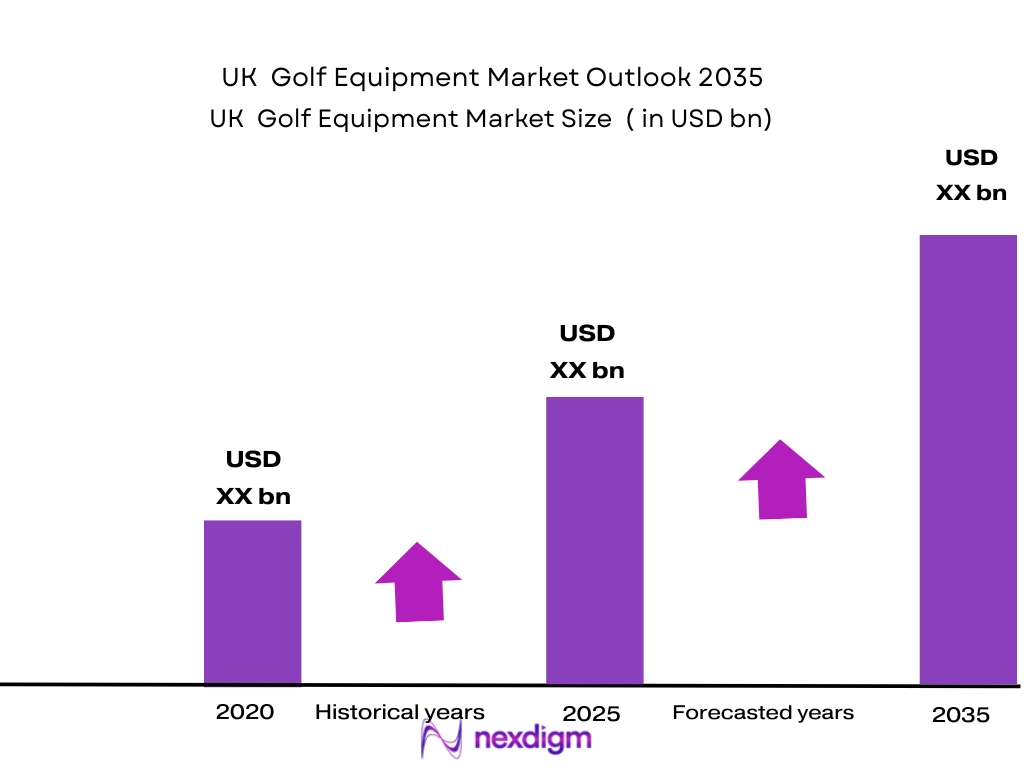
Based on a recent historical assessment, the UK golf equipment market is expected to reach USD ~ billion in 2024, driven by the increasing interest in golf, both recreationally and professionally. This growth is largely attributed to advancements in golf equipment technology, including innovations in smart devices, customization options, and the rising adoption of sustainable materials in production. Additionally, consumer spending on premium equipment, combined with a growing focus on fitness and wellness, is accelerating demand for golf products, especially within high-income demographics.
In the UK, golf’s popularity is most prominent in cities like London, Edinburgh, and Manchester, where access to premier golf courses, higher disposable income, and a concentrated base of golf enthusiasts drive market performance. London, in particular, has long been a hub for both amateur and professional players, thanks to its established golf clubs and extensive retail networks. Other dominant regions include Scotland, recognized as the birthplace of golf, where the sport’s deep-rooted cultural ties contribute to sustained demand for equipment. These cities are seeing strong market growth due to their developed infrastructure, access to global sporting events, and local investments in the golf sector.
Market Segmentation
By Product Type
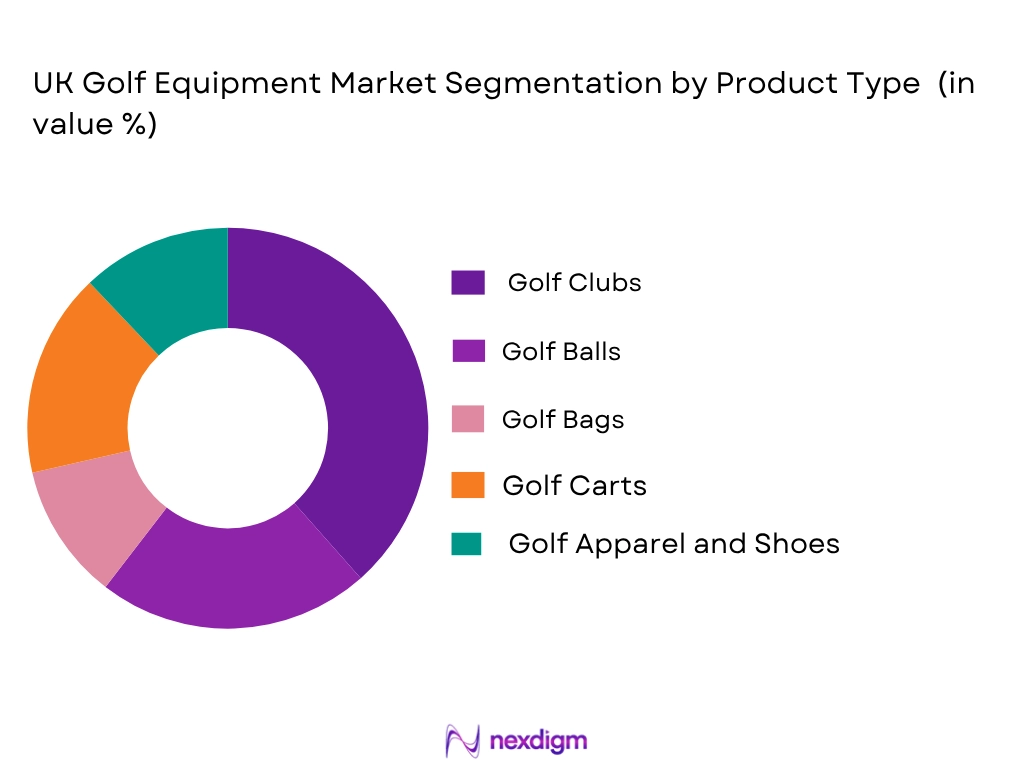
The UK golf equipment market is segmented by product type into golf clubs, golf balls, golf bags, golf carts, golf apparel, golf shoes, golf accessories, and golf technology. Recently, golf clubs have dominated the market share due to consumer demand for technologically advanced, customizable, and high-performance products. The advancement in club design, with features such as adjustable shafts and smart technology integration, has led to a growing interest among both amateur and professional golfers. Furthermore, strong brand presence from top manufacturers, like TaylorMade and Callaway, has bolstered demand, with golfers seeking precision and personalization in their club fittings. In addition, the widespread marketing of golf clubs through both online and offline retail channels has increased accessibility, further contributing to their dominance in the market.
By Distribution Channel
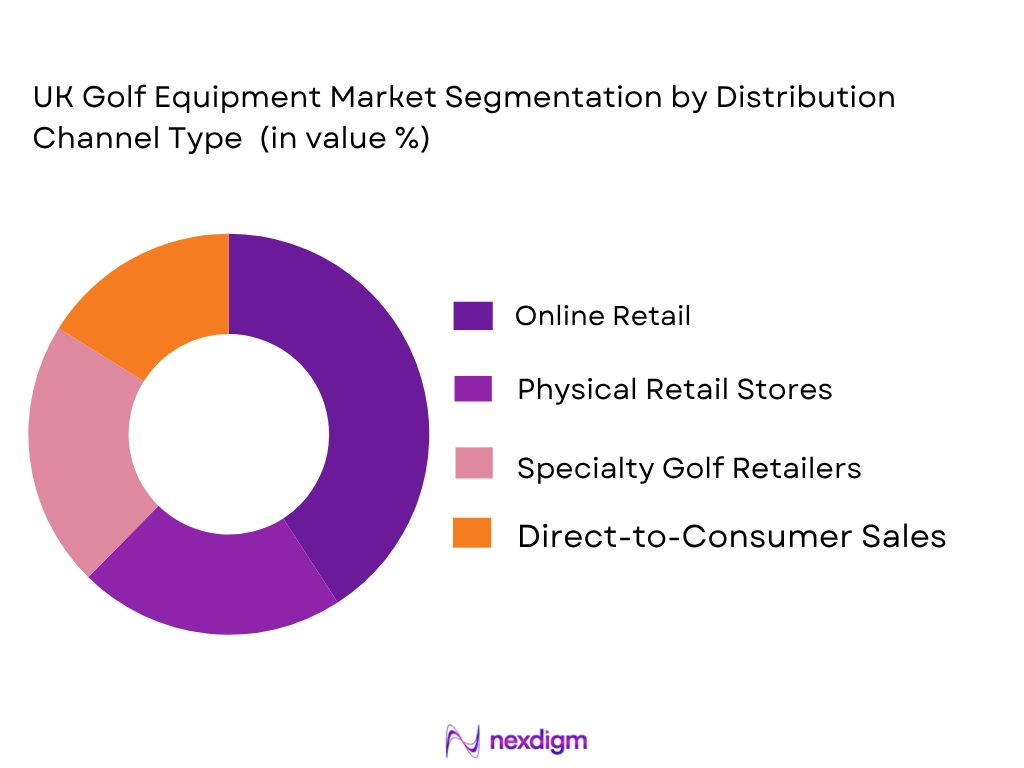
The market is segmented by distribution channels into online retail, physical retail stores, specialty golf retailers, and direct-to-consumer sales. Online retail has recently gained significant traction and now holds a dominant market share. The growing preference for e-commerce platforms, driven by the convenience of shopping from home, competitive pricing, and a wider selection of products, has contributed to this shift. Consumers are increasingly looking for the ease of browsing through detailed product descriptions, customer reviews, and the ability to compare various brands and models online. Additionally, online sales channels are complemented by free delivery and return policies, making them an attractive option for UK consumers.
Competitive Landscape
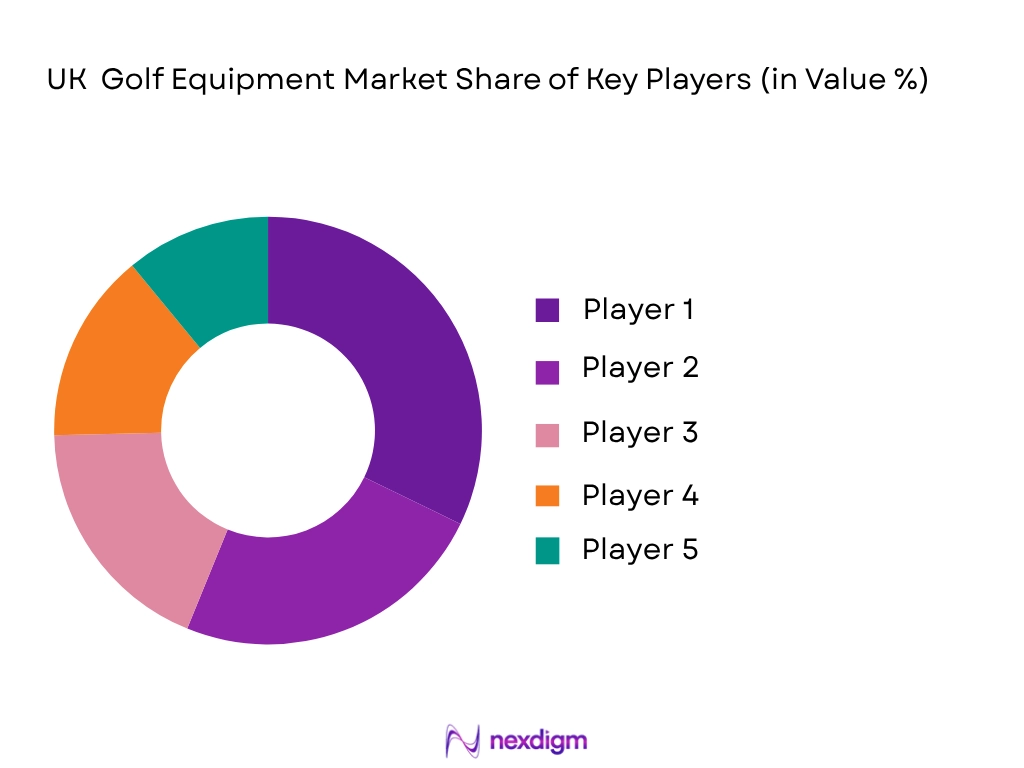
The competitive landscape of the UK golf equipment market is shaped by the dominance of key international players who are consistently innovating and driving demand through advanced technology and brand loyalty. Consolidation within the sector has also been evident, as leading companies expand their product portfolios and regional presence, leveraging strong marketing campaigns and partnerships with professional golfers. Major brands continue to exert significant influence on the market, especially through sponsorship deals and global distribution networks. These companies are further focusing on technological advancements, such as smart golf clubs, GPS-based accessories, and advanced material engineering for more durable and performance-enhancing products.
| Company Name | Establishment Year | Headquarters | Technology Focus | Market Reach | Key Products | Revenue | Additional Parameter |
| Callaway Golf | 1982 | Carlsbad, California | ~ | ~ | ~ | ~ | ~ |
| TaylorMade | 1979 | Carlsbad, California | ~ | ~ | ~ | ~ | ~ |
| Ping | 1959 | Phoenix, Arizona | ~ | ~ | ~ | ~ | ~ |
| Mizuno | 1906 | Osaka, Japan | ~ | ~ | ~ | ~ | ~ |
| Wilson Sporting Goods | 1914 | Chicago, Illinois | ~ | ~ | ~ | ~ | ~ |
UK Golf Equipment Market Analysis
Growth Drivers
Rising Popularity of Golf Post-Pandemic
The golf industry has experienced a significant surge in popularity following the COVID-19 pandemic, as more people sought outdoor activities that allowed for social distancing. This shift has resulted in a larger, more diverse consumer base, including individuals of various age groups and skill levels. Golf has become a favored sport for individuals looking to engage in healthy, recreational activities while maintaining a safe distance from others. As a result, demand for golf equipment, particularly clubs, balls, and accessories, has grown rapidly, driving market expansion.
Technological Advancements in Golf Equipment
Golf equipment has undergone substantial technological advancements in recent years, contributing significantly to market growth. Innovations such as smart golf clubs, GPS devices, swing analysis tools, and wearables are transforming the golfing experience, enabling players to monitor and enhance their performance. With the integration of artificial intelligence and data analytics, golfers can now personalize their equipment to suit their playing style. These advancements not only appeal to professional golfers but also attract recreational players seeking to improve their game, thereby fueling demand for technologically advanced equipment.
Market Challenges
High Cost of Premium Golf Equipment
One of the significant challenges in the UK golf equipment market is the high cost associated with premium products. High-end golf clubs, advanced technology, and custom-fit equipment often come with premium price tags, which can limit accessibility for many consumers. While these products are marketed for their superior performance and long-term durability, the cost remains a barrier for those looking for more affordable options. This challenge is particularly evident among newcomers to the sport who may be reluctant to invest in expensive equipment without first gaining proficiency.
Seasonality and Weather Dependency
The seasonality of golf presents another challenge for the UK market. Weather conditions significantly impact golfing participation, with the sport being more popular during the warmer months. As the UK experiences unpredictable weather, the demand for golf equipment fluctuates, causing seasonal peaks and troughs. This creates challenges for equipment retailers and manufacturers who need to manage inventory and ensure consistent sales throughout the year. Additionally, adverse weather conditions can affect golf course accessibility, further limiting play and, consequently, the need for new equipment during certain times of the year.
Opportunities
Growth of Women’s and Youth Golf
The growing interest in golf among women and youth offers significant opportunities for market expansion. Golf is increasingly being promoted as an inclusive sport that caters to diverse demographics. Programs aimed at introducing young people to the sport, combined with a rise in female participation, are helping to expand the consumer base. Equipment manufacturers are recognizing this shift and offering more products tailored to women and youth, such as lightweight clubs, customized accessories, and youth-friendly gear. This trend promises to drive sales in the UK golf equipment market by broadening the appeal of the sport.
Demand for Custom-Fit Golf Clubs and Equipment
As golfers become more serious about improving their game, the demand for custom-fit equipment is growing. Personalized golf clubs that are tailored to an individual’s swing mechanics, height, and strength have become a popular trend. The ability to customize equipment offers golfers a competitive edge by optimizing performance. This trend is driving an increase in demand for custom fitting services and products, particularly in premium segments. Golfers are increasingly willing to invest in personalized gear to enhance their playing experience, providing manufacturers with new revenue streams and opportunities for growth.
Future Outlook
The UK golf equipment market is expected to continue its growth trajectory over the next five years, driven by advancements in product innovation, the growing popularity of golf among younger generations, and increasing participation in golf tourism. Technological developments in golf equipment, such as smart clubs, wearable devices, and virtual golf simulators, will further fuel demand. Additionally, regulatory support and investments in infrastructure will help promote the sport to a broader audience. Overall, these factors will collectively contribute to the continued expansion of the golf equipment market.
Major Players
- Callaway Golf
- TaylorMade
- Ping
- Mizuno
- Wilson Sporting Goods
- Titleist
- Cobra Golf
- Cleveland Golf
- Odyssey Golf
- PXG
- Nike Golf
- Adams Golf
- Scotty Cameron
- Srixon
- Titelist
Key Target Audience
- Investments and venture capitalist firms
- Government and regulatory bodies
- Golf equipment retailers
- Golf course operators and owners
- Sports associations and clubs
- Golf coaching academies
- International golf tourists
- Equipment distributors and wholesalers
Research Methodology
Step 1: Identification of Key Variables
This step involves identifying the primary drivers of the market, including key product categories, customer segments, and competitive factors, which are crucial for understanding market dynamics.
Step 2: Market Analysis and Construction
In this step, the market size, historical trends, and growth projections are assessed using reliable data sources to build a comprehensive picture of the market’s present and future potential.
Step 3: Hypothesis Validation and Expert Consultation
The data from step 2 is validated by consulting industry experts, manufacturers, and market leaders, ensuring that assumptions and forecasts align with the real-world market conditions.
Step 4: Research Synthesis and Final Output
This final step synthesizes all collected data and insights to produce a complete report, offering actionable recommendations and a deep understanding of the market.

- Executive Summary
- Research Methodology (Market Definitions and Scope of Golf Equipment, Classification Framework: Clubs, Balls, Bags, Carts, Apparel, Shoes, Accessories, Golf Technology, Primary Interviews with Manufacturers and Retailers, Market Trends and Consumer Behavior, Market Sizing and Forecasting, TAM/SAM/SOM Analysis, Assumptions on Product Penetration, Retail Trends, and Consumer Spending Patterns, Limitations and Data Triangulation Techniques)

- Definition and Scope
- Evolution of the Golf Equipment Ecosystem in the UK
- Timeline of Key Market Trends and Innovations
- Consumer Demographics and Behavior
- Value Chain Analysis
- Stakeholder Ecosystem

- Growth Drivers
Rising Popularity of Golf Post-Pandemic
Technological Advancements in Golf Equipment
Increasing Investment in Youth and Amateur Golf
Rising Disposable Income and Spending on Sports
Golf Tourism Growth - Market Challenges
High Cost of Premium Golf Equipment
Seasonality and Weather Dependency
Intense Competition in the Golf Equipment Market
Consumer Shifting Preferences Between Traditional and Modern Equipment
Environmental Concerns in Equipment Manufacturing - Opportunities
Growth of Women’s and Youth Golf
Demand for Custom-Fit Golf Clubs and Equipment
Technological Integration in Golf Equipment (e.g., GPS, Sensors, Swing Analysis Tools)
Golf Lifestyle Products and Apparel
Sustainability Initiatives in Golf Equipment Manufacturing - Market Trends
Smart Golf Equipment and Wearables
Personalization and Customization in Equipment
Growth of E-Commerce and Online Retail
Social Media Influence on Golf Equipment Purchases
Collaborations Between Golf Brands and Athletes - Government Regulations
Health and Safety Standards for Equipment Manufacturing
Recycling and Sustainability Regulations in the Golf Industry
Import and Export Tariffs on Golf Equipment
Product Safety and Consumer Protection Laws - SWOT Analysis
- Porter’s Five Forces
- Impact of Technological Advancements
- Sustainability in Golf Equipment Manufacturing

- By Value, 2020–2025
- By Unit Sales, 2020–2025
- By Average Price per Unit, 2020–2025

- By Product Type (In Value %)
Golf Clubs
Golf Balls
Golf Bags
Golf Carts
Golf Apparel and Shoes
Golf Accessories
Golf Technology - By Distribution Channel (In Value %)
Online Retail
Physical Retail Stores
Specialty Golf Retailers
Direct-to-Consumer Sales - By End User (In Value %)
Amateur Golfers
Professional Golfers
Youth Golfers
Senior Golfers
Golf Clubs and Resorts - By Region (In Value %)
England
Scotland
Wales
Northern Ireland
London

- Market Share of Major Players
- By Value
- By Unit Sales
- By Retail Reach
- By Product Variety
- Cross Comparison Parameters (Price, Product Features, Brand Recognition, Customization Options, Customer Service, Regional Coverage , Technology Integration, Market Reach, Online Presence, Product Innovation, Customer Support, Manufacturing Facilities, Distribution Network, Customer Satisfaction, Pricing Strategy, Sustainability Practices)
- SWOT Analysis of Major Players
- Pricing Benchmarking
- Detailed Profiles of Major Companies
Callaway Golf
TaylorMade
Titleist
Ping
Cobra Golf
Wilson Sporting Goods
Nike Golf
Adidas Golf
Under Armour Golf
PXG
Mizuno Golf
Scotty Cameron
Cleveland Golf
Odyssey Golf
Clicgear

- Golfing Behavior and Purchase Patterns
- Golf Equipment Affordability and Price Sensitivity
- Brand Loyalty and Consumer Trust in Golf Brands
- Regional Demand Fluctuations
- End User TAM Analysis

- By Value, 2026–2035
- By Unit Sales, 2026–2035
- By Average Price per Unit, 2026–2035


 Request a Sample
 Ask for Customization
 Get a Quote
 Enquire Now