
 Download PDF
Market Overview
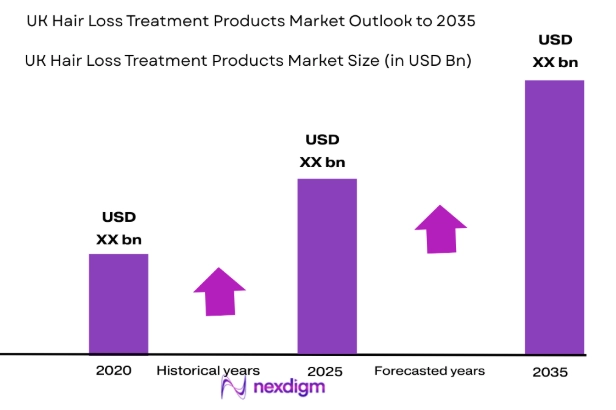
The UK Hair Loss Treatment Products market is valued at BP ~billion, based on a comprehensive historical analysis of the last few years. This market is primarily driven by the increasing incidence of hair loss due to genetic factors, aging, and lifestyle conditions. Additionally, advancements in treatment formulations and growing consumer awareness surrounding hair health have spurred market growth. Increased demand for both prescription and over-the-counter products, alongside heightened social media influence and marketing campaigns, has contributed significantly to the market expansion.
The UK Hair Loss Treatment Products market sees substantial demand in urban areas, with London, Birmingham, and Manchester leading the charge. This is due to high population density, the prevalence of modern lifestyle-related stress, and greater access to healthcare professionals specializing in hair treatments. London has established itself as a hub for medical aesthetics and dermatology, contributing to a higher concentration of clinics and treatment options. Additionally, the UK’s robust healthcare infrastructure and consumer spending power make it a dominant market within the region.
Market Segmentation
By Treatment Type
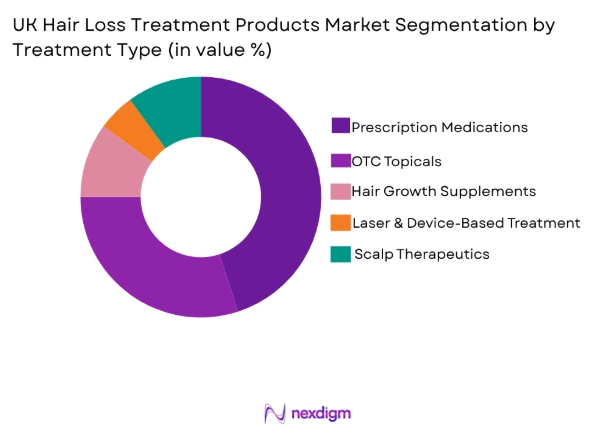
The UK Hair Loss Treatment Products market is segmented into prescription medications, over the counter (OTC) topicals, hair growth supplements, laser treatments, and scalp therapeutics. Among these, prescription medications, particularly Finasteride and Dutasteride, hold the dominant share. This is largely attributed to the high efficacy rates of prescription treatments in managing androgenic alopecia, a common condition affecting both men and women in the UK. Doctors often recommend these treatments, which leads to stronger market penetration for prescription-based solutions. Additionally, the established trust in pharmaceutical solutions, backed by clinical trials and regulatory approval, has reinforced the dominance of prescription medications in the market.
By Distribution Channel
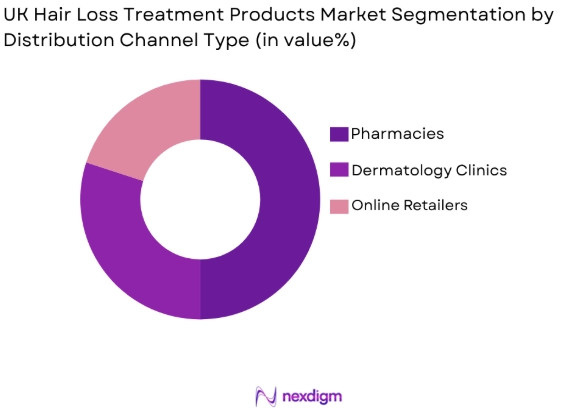
The market is also segmented by distribution channel, with pharmacies, dermatology clinics, and online retailers being the primary sources for purchasing hair loss treatment products. Among these, pharmacies remain the dominant channel. Pharmacies have long been the go-to destination for both prescription and OTC hair loss treatments due to their easy accessibility and the trust consumers place in them for healthcare-related products. Additionally, dermatology clinics provide a niche but growing market for more advanced treatments, contributing to the expansion of the market. The rise of online retail platforms has also bolstered the market by offering convenience and often better pricing, attracting a wider consumer base.
Competitive Landscape
The UK Hair Loss Treatment Products market is highly competitive, with several major players dominating the market. The competition is marked by the presence of large pharmaceutical companies, emerging biotech firms, and retail giants. Companies such as Johnson & Johnson and Procter & Gamble have a significant presence due to their strong portfolios of hair care products and established brand loyalty. Furthermore, niche companies like Follicum AB and HairMax are gaining attention for their innovative products such as laser devices and biologic therapies, catering to the growing consumer demand for non-invasive treatments.
| Company Name | Establishment Year | Headquarters | Market Focus | Product Portfolio | Regulatory Approvals |
| Johnson & Johnson | 1886 | New Brunswick, NJ, USA | ~ | ~ | ~ |
| Procter & Gamble | 1837 | Cincinnati, OH, USA | ~ | ~ | ~ |
| Pfizer | 1849 | New York, NY, USA | ~ | ~ | ~ |
| L’Oréal | 1909 | Paris, France | ~ | ~ | ~ |
| Church & Dwight | 1846 | Ewing, NJ, USA | ~ | ~ | ~ |
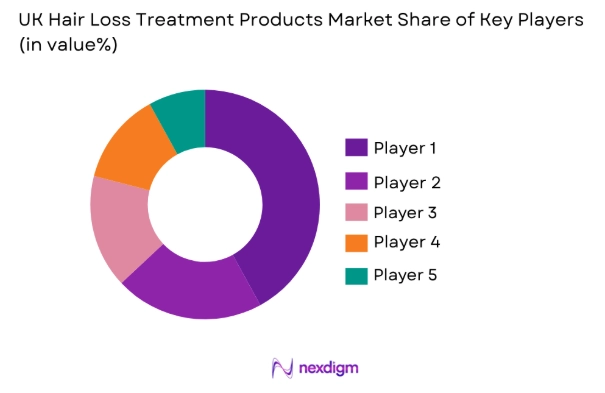
UK Hair Loss Treatment Products Market Analysis
Growth Drivers
Rising Incidence of Androgenetic Alopecia (Prevalence Metrics)
Androgenetic alopecia, a leading cause of hair loss, affects an estimated 50% of men and 40% of women worldwide. In the UK, recent studies estimate that approximately 8 million men and 4 million women are affected by this condition, with an increasing number of young adults being diagnosed. This uptick in cases is linked to various factors such as stress, environmental pollutants, and lifestyle changes, including dietary habits. According to the UK’s National Health Service (NHS), genetic predisposition remains the most significant contributor to its rising prevalence. The demand for effective treatments like Finasteride and Minoxidil is therefore increasing, as people seek solutions for long-term management of hair loss.
Increasing Consumer Awareness of Early Intervention
Consumer awareness surrounding early intervention for hair loss has seen a marked increase in recent years. Educational campaigns by healthcare providers, alongside widespread information dissemination via the internet, have contributed to a shift in consumer attitudes. According to data from the World Health Organization (WHO), increased public awareness about chronic conditions has led to more proactive healthcare decisions. With the rise of online platforms and social media, individuals are more likely to seek timely treatment, with data showing a 15% increase in early intervention consultations compared to 2022. This shift is expected to drive demand for hair loss treatments, especially in younger populations who are more aware of available options.
Market Challenges
Efficacy Perceptions
One of the primary challenges in the UK Hair Loss Treatment Products market is the varying perceptions of treatment efficacy among consumers. Clinical evidence suggests that hair loss treatments such as Minoxidil and Finasteride show mixed results, particularly in patients with advanced stages of hair loss. According to the National Health Service (NHS), only about 60% of individuals using Minoxidil experience significant results, with effectiveness diminishing in older age groups. These efficacy perceptions are influenced by factors such as genetics, the stage of hair loss, and the individual’s response to treatment. Inconsistent results lead to consumer skepticism, hindering adoption rates for new products.
Regulatory Barriers
The hair loss treatment market in the UK faces significant regulatory hurdles, particularly in the approval and marketing of new products. The Medicines and Healthcare products Regulatory Agency (MHRA) requires that all treatments meet strict clinical and safety standards. As of 2024, the MHRA has approved only a limited number of over-the-counter treatments for hair loss, such as Minoxidil, while other treatments are subjected to prolonged clinical trials before approval. Additionally, the European Medicines Agency (EMA) and the UK’s national regulatory frameworks impose barriers for products that make unverified claims, leading to delays in market entry. These regulatory restrictions add complexity to the development and distribution of new hair loss therapies.
Opportunities
Personalized and Genotype‑Based Therapy Solutions
Personalized medicine is a rapidly growing field within the hair loss treatment market, especially with the advent of genotype-based solutions. Treatments tailored to an individual’s genetic makeup have shown promise in improving efficacy rates and minimizing side effects. Companies are beginning to offer services that assess genetic markers linked to hair loss and then propose personalized treatment plans. Studies have indicated that genetics play a crucial role in hair follicle sensitivity to specific treatments. As genetic research and technologies advance, more customized solutions will be available, giving rise to a new wave of effective therapies. The availability of personalized treatments is expected to be a key growth driver, as it meets the demand for solutions that are both scientifically grounded and highly effective.
Novel Actives and Biologic Innovations
The introduction of novel actives and biologic treatments is reshaping the future of hair loss therapies. Recently, biologic innovations, including stem cell-based treatments, platelet-rich plasma (PRP) therapies, and growth factor-based solutions, have been gaining attention. These treatments focus on stimulating hair regrowth by enhancing follicle regeneration or rejuvenation of the scalp environment. The UK National Institute for Health Research (NIHR) reports that stem cell therapy for hair restoration is an area of active research with the potential to provide groundbreaking solutions for severe hair loss conditions. These novel treatments are poised to disrupt the market by offering alternatives to traditional pharmaceutical options, giving consumers more effective and lasting solutions.
Future Outlook
Over the next five years, the UK Hair Loss Treatment Products market is expected to experience steady growth, driven by increasing awareness of available treatments, an aging population, and advancements in technology that offer non-invasive alternatives. The introduction of personalized hair loss solutions, such as treatments based on genetic profiles, will further propel the market. Additionally, the rise of telemedicine and e-commerce platforms will make treatment options more accessible, fueling further growth. The market will also benefit from expanding consumer demand for both medical-grade and natural, non-pharmaceutical products.
Major Players
- Johnson & Johnson
- Procter & Gamble
- Pfizer
- GlaxoSmithKline
- Bayer
- Church & Dwight
- L’Oréal
- The Boots Company
- Unilever
- Follicum AB
- DS Laboratories
- HairMax
- Nutrafol
- Viviscal
- Keeps/ Hims
Key Target Audience
- Investments and Venture Capitalist Firms
- Government and Regulatory Bodies
- Dermatology and Trichology Clinics
- Retail and Pharmacy Chains
- E-commerce Platforms
- Healthcare Providers
- Private Hospitals and Aesthetic Centers
- Drug Manufacturers and Suppliers
Research Methodology
Step 1: Identification of Key Variables
The first step involves constructing a comprehensive map of the market ecosystem by identifying key stakeholders including manufacturers, distributors, and end-users. The research involves gathering data through both secondary and proprietary databases, focusing on key trends, market drivers, and regulatory influences.
Step 2: Market Analysis and Construction
This phase involves collecting historical data for the UK Hair Loss Treatment Products market, analyzing market penetration, product segmentation, and consumer preferences. Revenue generation is assessed along with the identification of emerging treatment options and consumer behavior patterns.
Step 3: Hypothesis Validation and Expert Consultation
Industry experts will be consulted through telephone and video interviews to validate hypotheses and obtain insights on market challenges and opportunities. This feedback is critical in ensuring the accuracy and relevance of the data collected.
Step 4: Research Synthesis and Final Output
The final phase involves synthesizing the findings from the previous stages, refining the analysis based on expert feedback, and preparing a comprehensive market report. This includes a bottom-up approach, combining primary and secondary data to create a validated and accurate market outlook.

- Executive Summary
- Research Methodology (Market Definitions and Treatment Classifications, Market Assumptions and Forecasting Approach, Sourcing and Triangulation Methods, Primary and Secondary Research Framework, Data Validation Protocols, Panel of Expert Interviews)

- Market Definition and Therapeutic Scope
- Pathophysiology and Epidemiological Drivers
- Historical Market Genesis and Evolution
- Treatment Pathways and Patient Journey
- Regulatory and Reimbursement Framework
- Supply Chain Structure and Channel Dynamics

- Growth Drivers
Rising Incidence of Androgenetic Alopecia (Prevalence Metrics)
Increasing Consumer Awareness of Early Intervention - Market Challenges
efficacy perceptions
regulatory barriers
- Opportunities
Personalized and Genotype‑Based Therapy Solutions
Novel Actives and Biologic Innovations
- Trends
Shift Toward Device‑Assisted Home Care Products
Surge in Natural/Herbal Treatment Preferences
Increasing Dermatologist‑Led Treatment Adoption - Regulatory, Safety & Compliance Landscape
UK MHRA Safety Guidelines and Product Classification
Advertising Compliance - Market SWOT Analysis
- Porter’s Five Forces Analysis
- Value Chain and Stakeholder Ecosystem

- BY Market Value, 2020-2025
- By Volumetric Unit Sales, 2020-2025
- By Average Selling Price, 2020-2025
- By Market Penetration Index, 2020-2025

- By Treatment Type (in Value %)
Prescription Medications
OTC Topicals
Hair Growth Supplements
Laser & Device‑based Treatments
Scalp Therapeutics - By Formulation (in Value%)
Solutions
Foams
Tablets/Capsules
Serums
Devices - By Distribution Channel (in Value %)
Pharmacies
Dermatology Clinics,
Online Retailers - By Demographic End‑User (in Value %)
Male Adults
Female Adults
Seniors
Post‑Partum Females
Ethnic Group Categories - By Price Tier (in Value%)
Economy
Mid‑Range
Premium

- Market Concentration and Share by Value & Volume
- Cross‑Comparison Parameters (Product Portfolio Breadth & Segment Coverage, Clinical Efficacy Evidence Base, Dermatologist/Clinician Endorsement Levels, SKU Price Stratification and ASP Trends, Digital Channel Penetration Index, E‑commerce share ,Pharmacy & Clinic Distribution Reach, R&D Investment Intensity, Consumer Satisfaction & Repeat Purchase Rates)
- SWOT Analysis of Major Players
- Pricing Analysis
- Pricing Trends and SKUs for Major Players
Detailed Profiles of Major Companies
Johnson & Johnson
Procter & Gamble
Pfizer
GlaxoSmithKline
Bayer
Church & Dwight
L’Oréal
The Boots Company
Unilever
Follicum AB
DS Laboratories
HairMax
Nutrafol
Viviscal
Keeps/ Hims

- Patient Demand Patterns and Utilization Rates
- Adoption Drivers by Demographic Cohorts
- Consumer Budget Allocation and Price Sensitivity
- Dermatologist/Trichologist Recommendation Influences
- Purchase Decision Triggers and Barriers

- By Market Value, 2026-2035
- By Volumetric Unit Sales, 2026-2035
- By Average Selling Price, 2026-2035
- By Market Penetration Index, 2026-2035


 Request a Sample
 Ask for Customization
 Get a Quote
 Enquire Now