

 Download PDF
Market Overview
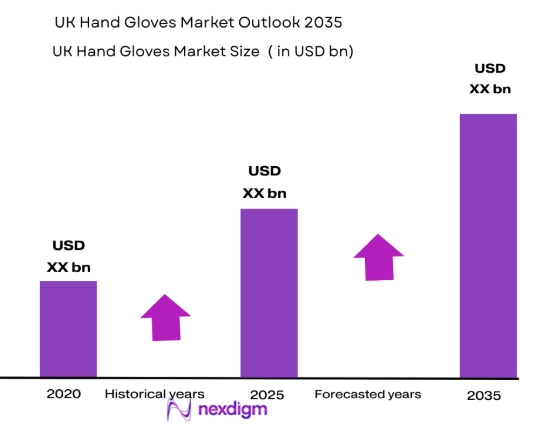
The UK hand gloves market is valued at approximately USD ~ billion, based on aggregated data from sources such as Office for National Statistics, HM Revenue and Customs, and industry trade databases. The market recorded an increase from nearly USD 1.9 billion, driven by heightened demand for disposable medical gloves, industrial safety compliance, and seasonal consumer purchases. Growth is supported by stringent workplace safety norms and expansion in healthcare services, with imports of nitrile and latex gloves forming a significant portion of supply.
The UK market is geographically concentrated in cities such as London, Manchester, and Birmingham due to dense healthcare infrastructure, industrial clusters, and high retail penetration. London dominates due to its advanced hospital network and strong retail ecosystem, while Manchester and Birmingham benefit from manufacturing and logistics hubs. Additionally, imports from countries such as Malaysia and China dominate supply due to cost-efficient production and large-scale manufacturing capabilities.
Market Segmentation
By Product Type
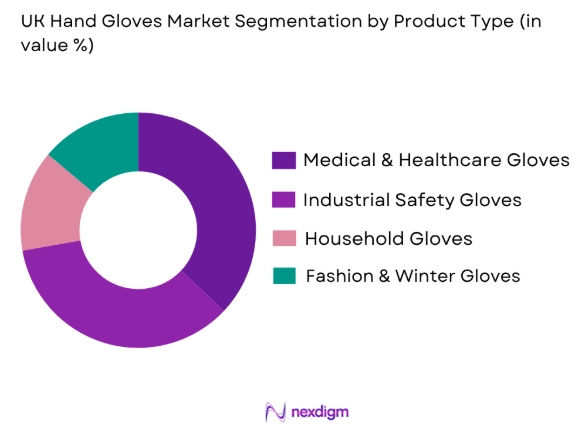
UK hand gloves market is segmented by product type into medical & healthcare gloves, industrial safety gloves, household gloves, and fashion & winter gloves. Medical & healthcare gloves dominate the market due to their critical role in infection prevention and hygiene maintenance across hospitals and clinics. Regulatory mandates from authorities such as National Health Service and infection control protocols significantly drive demand. The sustained procurement by healthcare institutions and increased awareness of cross-contamination risks have ensured continuous consumption. Furthermore, the rise in outpatient services and private healthcare facilities has strengthened the dominance of this segment, supported by bulk purchasing contracts and consistent replacement cycles.
By Material Type
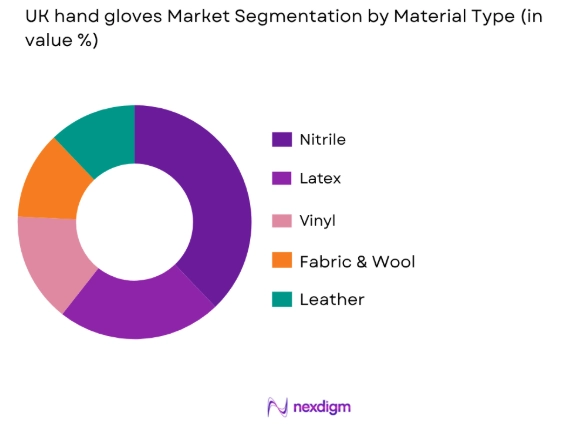
UK hand gloves market is segmented by material into nitrile, latex, vinyl, leather, and fabric & wool. Nitrile gloves dominate the market owing to their superior chemical resistance, durability, and hypoallergenic properties compared to latex. Increasing regulatory scrutiny regarding latex allergies has led healthcare and industrial sectors to shift toward nitrile alternatives. Moreover, nitrile gloves are widely used in laboratories, automotive industries, and food processing sectors due to their puncture resistance and versatility. The scalability of nitrile production in exporting countries has also ensured stable supply chains, reinforcing its leading position in the market.
Competitive Landscape
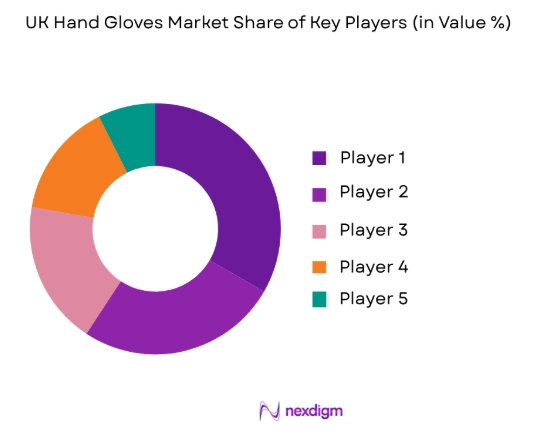
The UK hand gloves market is moderately consolidated, with a mix of global manufacturers and regional distributors dominating supply chains. Major players leverage strong import networks, diversified product portfolios, and long-term contracts with healthcare and industrial buyers. Companies such as Ansell Limited and Top Glove Corporation hold significant influence due to their production scale and technological capabilities.
| Company | Established | Headquarters | Product Portfolio | Distribution Network | Material Expertise | Healthcare Contracts | Industrial Reach | Sustainability Focus |
| Ansell Limited | 1893 | Australia | ~ | ~ | ~ | ~ | ~ | ~ |
| Top Glove Corporation | 1991 | Malaysia | ~ | ~ | ~ | ~ | ~ | ~ |
| Hartalega Holdings | 1988 | Malaysia | ~ | ~ | ~ | ~ | ~ | ~ |
| Unigloves UK | 1989 | UK | ~ | ~ | ~ | ~ | ~ | ~ |
| Globus Group | 1994 | UK | ~ | ~ | ~ | ~ | ~ | ~ |
UK Hand Gloves Market Analysis
Growth Drivers
Rising Awareness of Workplace Safety and Hygiene Standards
Rising awareness of workplace safety and hygiene standards has significantly strengthened demand for hand gloves across industrial and healthcare sectors in the UK. Regulatory enforcement by organizations such as Health and Safety Executive has compelled employers to ensure adequate personal protective equipment for workers. Industries including construction, manufacturing, and food processing are increasingly adopting protective gloves to comply with safety norms and reduce workplace injuries. Additionally, heightened public awareness regarding hygiene practices has extended glove usage beyond workplaces into households and retail environments, contributing to consistent demand growth across multiple end-user segments.
Growth in Healthcare and Medical Disposable Gloves Demand
Growth in healthcare and medical disposable gloves demand continues to be a primary driver of the UK hand gloves market. The expansion of healthcare services under National Health Service and private providers has led to increased consumption of single-use gloves for infection control. Rising outpatient procedures, diagnostic testing, and elderly care services have further intensified demand. Moreover, stringent hygiene protocols in hospitals and clinics require continuous glove replacement, ensuring recurring demand cycles. The increasing adoption of nitrile gloves due to allergy concerns associated with latex has also contributed to higher consumption volumes, strengthening this segment’s contribution to overall market growth.
Challenges
Fluctuations in Raw Material Prices
Fluctuations in raw material prices present a significant challenge to the UK hand gloves market, particularly for materials such as nitrile and latex. Global supply disruptions and dependence on imports from countries like Malaysia and Thailand create pricing volatility. Manufacturers and distributors face margin pressures as procurement costs vary unpredictably, making pricing strategies complex. Additionally, currency exchange rate fluctuations further impact import costs, leading to inconsistent pricing in domestic markets. These uncertainties can hinder long-term contracts and affect profitability for suppliers operating within the UK.
Environmental Concerns Related to Disposable Gloves
Environmental concerns related to disposable gloves are increasingly shaping regulatory and consumer behavior, posing challenges for market participants. Single-use gloves contribute to plastic waste, leading to stricter scrutiny from environmental agencies and policymakers. Organizations such as Environment Agency are emphasizing waste reduction and sustainable alternatives. Businesses are under pressure to adopt eco-friendly materials while maintaining product performance standards. Compliance with environmental regulations often increases production costs, while consumer preference shifts toward sustainable products require innovation investments, creating operational and financial challenges for manufacturers and suppliers.
Opportunities
Development of Sustainable and Biodegradable Gloves
Development of sustainable and biodegradable gloves presents a strong opportunity for growth in the UK market. Increasing environmental awareness among consumers and businesses is driving demand for eco-friendly alternatives to traditional disposable gloves. Manufacturers investing in plant-based materials and recyclable solutions can gain competitive advantage. Regulatory encouragement for reducing plastic waste further supports this transition. Companies that align with sustainability goals can strengthen brand positioning and access new customer segments, particularly in healthcare and retail sectors where environmentally responsible procurement practices are becoming more prevalent.
Technological Advancements in Protective Materials
Technological advancements in protective materials are opening new avenues for innovation and differentiation in the UK hand gloves market. Enhanced materials offering improved durability, chemical resistance, and tactile sensitivity are gaining traction across industrial and medical applications. Integration of antimicrobial coatings and advanced fabrication techniques improves product performance and safety standards. Additionally, innovations in lightweight and ergonomic designs enhance user comfort, encouraging adoption in prolonged-use environments. These advancements enable manufacturers to cater to specialized industry requirements, expand product portfolios, and create premium offerings that drive higher value realization in the market.
Future Outlook
The UK hand gloves market is expected to grow steadily over the forecast period, driven by increasing health awareness, regulatory compliance, and expansion in healthcare services. Demand from industrial sectors is also anticipated to rise due to stricter workplace safety standards. Technological advancements in glove materials and sustainable manufacturing practices will further influence market growth. Additionally, the shift toward eco-friendly and biodegradable gloves is expected to create new opportunities.The market is projected to grow at a CAGR of approximately 6.8% during the 2024-2030 period, supported by rising imports, increasing healthcare expenditure, and expansion of e-commerce distribution channels. Growth will also be influenced by innovation in reusable and high-performance gloves.
Major Players
- Ansell Limited
- Top Glove Corporation
- Hartalega Holdings
- Supermax Corporation
- Semperit AG Holding
- Unigloves UK
- Shield Scientific
- Globus Group
- SHOWA Group
- 3M Company
- Honeywell Safety Products
- Kimberly-Clark Professional
- Medline Industries
- B. Braun
- Polyco Healthline
Key Target Audience
- Healthcare procurement departments
- Industrial safety equipment distributors
- Retail chains and supermarket groups
- E-commerce platforms and wholesalers
- Manufacturing and construction companies
- Investments and venture capitalist firms
- Government and regulatory bodies
Research Methodology
Step 1: Identification of Key Variables
The initial phase involves constructing an ecosystem map encompassing all major stakeholders within the UK Hand Gloves Market. Extensive secondary research is conducted using trade databases, government publications, and company reports to identify key influencing variables such as import volumes, pricing, and regulatory compliance requirements.
Step 2: Market Analysis and Construction
This stage includes compiling historical data related to the UK hand gloves market, analyzing consumption patterns across healthcare, industrial, and consumer segments. The ratio of domestic production to imports and distribution channel performance is assessed to estimate market size accurately.
Step 3: Hypothesis Validation and Expert Consultation
Market assumptions are validated through expert consultations with manufacturers, distributors, and procurement managers. Interviews provide insights into pricing trends, demand fluctuations, and operational challenges, ensuring the accuracy of findings.
Step 4: Research Synthesis and Final Output
The final stage integrates primary and secondary research findings to deliver a comprehensive market analysis. Data triangulation methods are applied to validate estimates, ensuring consistency and reliability of the UK hand gloves market outlook.

- Executive Summary
- Research Methodology (Market Definitions and Assumptions, Abbreviations, Top-Down & Bottom-Up Sizing Approach, Retail & E-Commerce Channel Data Sources, Primary Research Framework, Secondary Data Validation, Forecasting Models and Assumptions, Limitations and Sensitivity Analyses)

- Definition and Scope
- Ecosystem Genesis and Evolution of Hand Gloves Demand
- Macro-Economic and Consumer Demand Drivers
- Protective Wear Adoption Index
- Import Dependency & Supply Chain Characteristics
- Retail & Distribution Infrastructure Mapping

- Growth Drivers
Rising Awareness of Workplace Safety and Hygiene Standards
Growth in Healthcare and Medical Disposable Gloves Demand
Seasonal Demand for Thermal and Fashion Gloves
Expansion of E-Commerce and Retail Accessibility - Challenges
Fluctuations in Raw Material Prices
Environmental Concerns Related to Disposable Gloves
Regulatory Compliance and Certification Requirements
Supply Chain Disruptions and Import Dependence - Opportunities
Development of Sustainable and Biodegradable Gloves
Expansion of Private Label and Direct-to-Consumer Brands
Technological Advancements in Protective Materials
Growth in Healthcare and Industrial Safety Sectors - Trends
Shift Toward Eco-Friendly and Reusable Gloves
Increasing Demand for Powder-Free and Allergy-Safe Gloves
Rising Popularity of Touchscreen-Compatible Gloves
Growth of Fashion-Driven Seasonal Collections - Government Regulations & Standards
Health and Safety Regulations for Protective Gloves
Medical Device Certification and Compliance Requirements
Import Regulations & Tariff Structures
Environmental and Waste Management Policies - SWOT Analysis
- Porter’s Five Forces
- Stakeholder Ecosystem

- By Retail Value, 2020-2025
- By Unit Sales, 2020-2025
- By Average Selling Price (ASP) and Product Type, 2020-2025
- By Channel Contribution, 2020-2025

- By Product (In Value %)
Industrial Safety Gloves
Medical & Healthcare Gloves
Household Gloves
Fashion & Winter Gloves - By Material (In Value %)
Latex
Nitrile
Vinyl
Leather
Fabric & Wool - By End-User (In Value %)
Industrial Sector
Healthcare Institutions
Households
Fashion & Retail Consumers - By Distribution Channel (In Value %)
Supermarkets & Hypermarkets
Pharmacies & Medical Supply Stores
Specialty Retail Stores
Online Marketplaces
Direct-to-Consumer - By Price Tier (In Value %)
Premium
Mid-Tier
Value

- Market Share by Value and Volume
- Cross-Comparison Parameters (Product Portfolio Breadth, Material Innovation Index, Distribution Network Reach, Retail Penetration, Brand Positioning, Price Point Clustering, Sustainability Index, After-Sales and Bulk Supply Contracts, Manufacturing Presence in Europe, Import Volume & Duty Classification, Supply Chain Resilience Index, Consumer Satisfaction & Return Rate, Revenue and Growth Metrics)
- SWOT of Major Players
- Pricing Tier Benchmark Analysis
- Major Competitors
Ansell
Top Glove Corporation
Hartalega Holdings
Supermax Corporation
Semperit AG Holding
Unigloves UK
Shield Scientific
Globus Group
Polyco Healthline
SHOWA Group
3M Company
Honeywell Safety Products
Kimberly-Clark Professional
Medline Industries
B. Braun

- Trends and Preferences in Hand Gloves Usage
- Adoption of Advanced Protective and Medical Gloves
- Growing Awareness of Hygiene and Safety Practices
- Impact on Product Demand Across Sectors
- Role of Retail and Digital Channels in Consumer Purchase Behavior

- By Retail Value, 2026-2035
- By Unit Sales, 2026-2035
- By Average Selling Price (ASP) and Product Type, 2026-2035
- By Channel Contribution, 2026-2035


 Request a Sample
 Ask for Customization
 Get a Quote
 Enquire Now