

 Download PDF
Market Overview
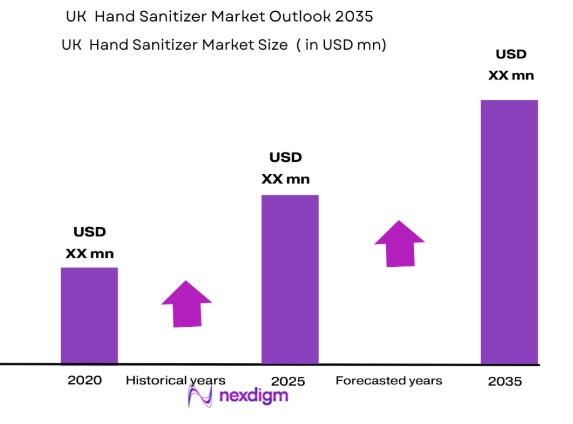
The UK hand sanitizer market has experienced a surge in demand, driven primarily by heightened hygiene awareness and stringent regulations in the wake of health crises such as the COVID-19 pandemic. In 2025, the market was valued at approximately USD ~ million, largely fueled by the increasing adoption of hand sanitizers in both public and private sectors. The demand continues to rise as consumers and businesses alike become more committed to personal hygiene and infection control measures. The market growth is also driven by innovations in product formats, such as alcohol-free sanitizers and eco-friendly packaging options, which appeal to a growing environmentally-conscious consumer base.
The dominant players in the UK hand sanitizer market are primarily concentrated in urban centers and key healthcare hubs. London, Manchester, and Birmingham have witnessed the highest consumption due to their dense populations and significant commercial activities. Additionally, cities with large healthcare facilities, such as London and Edinburgh, have seen a considerable increase in demand from hospitals, healthcare workers, and institutions. The emphasis on sanitation and hygiene in these cities has created a favorable environment for the growth of the market, which is expected to continue as consumer habits evolve toward more sustainable and convenient hygiene solutions.
Market Segmentation
By Product Type
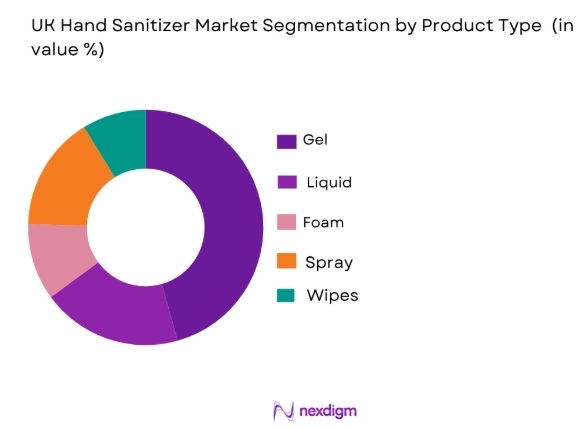
The UK hand sanitizer market is segmented by product type into gel, liquid, foam, spray, and wipes. Among these, gel hand sanitizers hold the dominant share of the market, largely due to their user-friendly application and high alcohol content, which offers effective germ protection. Gel sanitizers are widely available in both large and travel-sized formats, making them highly convenient for both home and on-the-go use. Their preference is particularly evident in commercial spaces such as offices, shopping malls, and airports, where ease of use and quick absorption are essential. Additionally, their effectiveness in killing germs has made them a staple in healthcare environments, further cementing their dominance. The availability of branded products, including those from well-established players like Purell, has also contributed to the widespread adoption of gel-based sanitizers.
By End-User
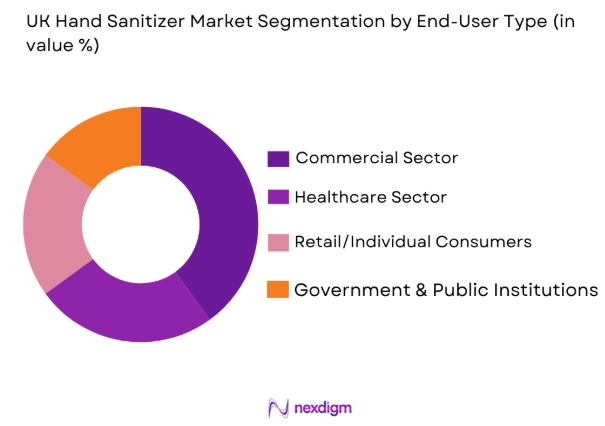
The market is also segmented by end-user into commercial, healthcare, retail/individual consumers, and government/public institutions. The healthcare sector is expected to hold the largest market share, driven by stringent hygiene protocols in hospitals, clinics, and healthcare facilities. Healthcare professionals, including doctors and nurses, have a constant need for hand sanitizers, especially during patient care and surgeries. Moreover, the rapid adoption of hand sanitizers during the COVID-19 pandemic reinforced their necessity in maintaining infection control in medical settings. Retail and individual consumers also represent a significant portion of the market, as personal hygiene routines, including regular hand sanitization, have become integral to daily life. The increased use of sanitizers in public spaces, offices, and even schools has contributed to the expansion of the market, with a noticeable shift toward portable and convenient packaging options.
Competitive Landscape
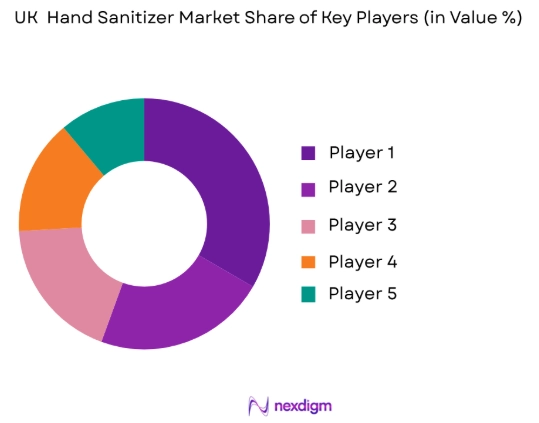
The UK hand sanitizer market is largely dominated by a few major players, including international brands like GOJO Industries (Purell), Reckitt Benckiser (Dettol), Unilever (Lifebuoy), and local manufacturers. These companies have a strong foothold in the market due to their established brand names, extensive distribution networks, and consistent product innovations. Additionally, the market is seeing the rise of niche players offering eco-friendly and organic hand sanitizers, tapping into the growing demand for sustainable products. The consolidation of leading brands highlights the market’s competitive nature, with continuous improvements in product formulations and packaging, as well as a strong focus on marketing and consumer education.
| Company | Establishment Year | Headquarters | Product Range | Distribution Network | Innovation Capacity | Brand Loyalty | Market Presence | Sustainability Initiatives | Compliance & Certifications |
| GOJO Industries (Purell) | 1946 | USA | ~ | ~ | ~ | ~ | ~ | ~ | ~ |
| Reckitt Benckiser (Dettol) | 1823 | UK | ~ | ~ | ~ | ~ | ~ | ~ | ~ |
| Unilever (Lifebuoy) | 1923 | UK | ~ | ~ | ~ | ~ | ~ | ~ | ~ |
| SaniSure | 2000 | UK | ~ | ~ | ~ | ~ | ~ | ~ | ~ |
| Bath and Body Works | 1990 | USA | ~ | ~ | ~ | ~ | ~ | ~ | ~ |
UK Hand Sanitizer Market Dynamics
Growth Drivers
Increased Hygiene Awareness
In the UK, the growing focus on hygiene is a significant driver for the hand sanitizer market. The importance of sanitation has been highlighted by the COVID-19 pandemic, which resulted in heightened hygiene practices across households, workplaces, and public spaces. According to Public Health England, in 2022, 60% of the population reported frequent use of hand sanitizers in public spaces and workplaces, reflecting a sustained commitment to personal hygiene practices. Additionally, increased hand washing campaigns and health advisories emphasize the need for sanitizers as part of routine hygiene, further enhancing their demand in 2023-2024. The government’s emphasis on health and safety regulations ensures that hygiene remains a priority.
Government Regulations and Health Guidelines
Government regulations and health guidelines have been instrumental in driving the hand sanitizer market in the UK. The UK’s Department of Health and Social Care issued mandatory sanitization protocols in 2020 for public places, schools, and healthcare facilities to combat the spread of COVID-19. These guidelines, which were extended through 2023, have encouraged businesses to implement sanitization procedures. The enforcement of these hygiene standards has ensured that sanitizers remain a critical part of both institutional and individual hygiene practices. In 2024, the government’s ongoing commitment to safety measures ensures that sanitizers are an essential hygiene product across all sectors.
Market Challenges
High Competition Among Brands
The UK hand sanitizer market is highly competitive, with numerous local and international brands vying for market share. The competition is particularly fierce in the gel sanitizer segment, where brands like Purell, Dettol, and Lifebuoy dominate the shelves. As of 2023, market research shows that major brands are constantly innovating to retain consumer interest by launching new variants, such as alcohol-free and eco-friendly options. However, smaller, niche brands also pose a challenge by offering competitive pricing and organic alternatives. The presence of well-established brands and frequent new product launches creates a tough competitive landscape, making it harder for new entrants to gain traction. .
Price Sensitivity in Consumer Markets
Price sensitivity remains a significant challenge for the UK hand sanitizer market. While demand is high, many consumers are hesitant to purchase premium-priced sanitizers when lower-cost alternatives are available. According to the Office for National Statistics, inflation in the UK reached 10.1% in 2023, which impacted consumer spending behavior, leading many to opt for more affordable brands. Despite the growing awareness of hygiene, this economic pressure forces consumers to prioritize cost over brand loyalty. This price-consciousness affects product sales, especially in supermarkets and retail chains where lower-priced options are readily available.
Opportunities
Eco-friendly Product Innovation
With an increasing demand for sustainable products, eco-friendly hand sanitizers represent a key opportunity for growth in the UK market. As consumers become more environmentally conscious, there has been a rising preference for products that use biodegradable ingredients, recyclable packaging, and minimal environmental impact. In 2023, approximately 40% of consumers reported that sustainability influenced their purchasing decisions, as highlighted in the UK Government’s Environment Agency reports. Brands that focus on reducing plastic waste and using plant-based alcohol sources are expected to capture the attention of this growing segment of environmentally-conscious buyers. The market opportunity lies in expanding this product range to cater to the demand for eco-friendly alternatives.
Growth in Online Retail and E-commerce Platforms
The UK hand sanitizer market has also benefited from the growth in online retail and e-commerce platforms, particularly since the pandemic. The rapid increase in online shopping has created a new distribution channel for hand sanitizers, with platforms like Amazon, Boots, and Superdrug seeing a surge in sales. Data from the Office for National Statistics indicates that in 2023, UK e-commerce grew by 15.2%, with hygiene products being one of the top-selling categories. The ease of access, coupled with consumers’ preference for home delivery, presents a growing opportunity for hand sanitizer sales through e-commerce. Brands are increasingly focusing on enhancing their digital presence to tap into this growing online retail segment.
Future Outlook
Over the next five years, the UK hand sanitizer market is expected to continue expanding, driven by the increasing focus on hygiene, especially within healthcare and commercial sectors. This growth will be further fueled by advancements in product formulations, such as alcohol-free and natural sanitizers, catering to the rising demand for environmentally friendly products. The ongoing trend of heightened health awareness, bolstered by regulatory requirements in public spaces and workplaces, will ensure that sanitization remains a core aspect of daily life in the UK. Innovations in packaging, alongside growing consumer preferences for convenient and sustainable products, will shape the market dynamics in the coming years.
Major Players
- GOJO Industries (Purell)
- Reckitt Benckiser (Dettol)
- Unilever (Lifebuoy)
- SaniSure
- Bath and Body Works
- Kimberly-Clark Professional
- Best Sanitizers Inc.
- Henkel AG & Co. KGaA
- Ecolab Inc.
- Procter & Gamble
- SC Johnson Professional
- Solvay Chemicals
- Deb Group
- PuraVation
- The Body Shop
Key Target Audience
- Investments and Venture Capitalist Firms
- Government and Regulatory Bodies (e.g., Department of Health and Social Care, Public Health England)
- Healthcare Providers (e.g., Hospitals, Clinics)
- Retail Chains and Supermarkets
- Corporate Offices (HR and Facility Management)
- Educational Institutions (Schools and Universities)
- Hospitality and Tourism Industry
- Manufacturers of Hygiene Products
Research Methodology
Step 1: Identification of Key Variables
The initial phase involves gathering relevant market data through desk research from industry reports, government publications, and credible databases. This step defines the key variables such as product types, distribution channels, end-users, and the regulatory framework that influence the UK hand sanitizer market.
Step 2: Market Analysis and Construction
We analyze historical data for the UK hand sanitizer market, assessing demand trends across various product types and end-users. We will also evaluate the impact of regulations, market penetration rates, and consumer behavior to ensure the accuracy and completeness of the market construction.
Step 3: Hypothesis Validation and Expert Consultation
To validate the market hypotheses, we engage in consultations with industry experts, including manufacturers, distributors, and retailers. This phase helps refine the initial findings and gain operational insights into key trends and market drivers.
Step 4: Research Synthesis and Final Output
The final phase includes synthesizing all gathered data and insights into a comprehensive market analysis. We engage with major stakeholders to verify data accuracy, ensuring the report offers a precise and validated outlook for the UK hand sanitizer market.

- Executive Summary
- Research Methodology (Market Definitions and Assumptions, Regulatory Framework Consideration, Market Sizing Approach, Market Data Collection and Analysis, Expert Interviews and Industry Insights, Limitations and Forecasting Assumptions)

- Definition and Scope
- Evolution of Hand Sanitizer Usage in the UK
- Regulatory Landscape and Licensing Framework
- Market Ecosystem
- Value Chain Analysis
- Role of Hand Sanitizers in Hygiene Practices
- Trends in Consumer Preferences for Hand Sanitizers

- Growth Drivers
Increased Hygiene Awareness
Government Regulations and Health Guidelines
Rising Health Concerns Amid Pandemics
Innovation in Product Formats and Packaging - Market Challenges
High Competition Among Brands
Price Sensitivity in Consumer Markets
Regulatory Compliance Costs
Sustainability and Environmental Concerns - Opportunities
Eco-friendly Product Innovation
Growth in Online Retail and E-commerce Platforms
Demand for Personal Hygiene Products in New Sectors
Expansion of Public Health Initiatives - Market Trends
Shift Toward Natural and Organic Ingredients
Increased Focus on Sustainable Packaging
Enhanced Product Customization
Integration of Anti-bacterial and Moisturizing Features - Regulatory Framework
Regulatory Standards for Hand Sanitizers in the UK
Government Guidelines and Compliance - SWOT Analysis of Key Competitors
- Pricing & Procurement Analysis
- Porter’s Five Forces

- By Revenue, 2020–2025
- By Market Share of Key Players, 2020–2025
- By Volume of Hand Sanitizer Sold, 2020–2025
- By Product Types and Variants, 2020–2025

- By Product Type (in Value %)
Gel
Liquid
Foam
Spray
Wipes - By End-User (in Value %)
Commercial Sector
Healthcare Sector
Retail/Individual Consumers
Government & Public Institutions - By Distribution Channel (in Value %)
Offline Retail (Pharmacies, Supermarkets)
Online Platforms
B2B Channels - By Industry Vertical Served (in Value %)
Healthcare and Pharmaceuticals
Retail & E-commerce
Hospitality & Travel
Education and Institutions
Corporate Offices
Government & Public Sector - By Geography (in Value %)
North England
South England
West England
East England
Scotland and Wales
Urban vs Rural Areas

- Market Share Analysis (By Revenue and Volume, %)
- Cross Comparison Parameters (Company Overview, Market Share, Product Range, Distribution Channels, Brand Reputation, Innovation Capacity, Environmental Initiatives, Pricing Strategy)
- Competitive Strategies
- Pricing & Promotional Strategies
- Market Penetration Approaches
- Strategic Partnerships and Alliances
- Detailed Profiles of Major Companies
Reckitt Benckiser Group Plc
Unilever Plc
Procter & Gamble Co.
GOJO Industries, Inc.
Henkel AG & Co. KGaA
Ecolab Inc.
Dove (Unilever)
SC Johnson Professional
Essity AB
Purell (GOJO Industries)

- Corporate and Institutional Buying Behavior
- Retail and Individual Consumer Trends
- Adoption of Hand Sanitizers in New Sectors
- Consumer Preferences and Decision-Making
- Pain Points Analysis
- Brand and Product Selection Criteria

- By Revenue, 2026–2035
- By Volume of Hand Sanitizer Sold, 2026–2035
- By Product Types and Variants, 2026–2035
- By Market Share of Key Players, 2026–2035


 Request a Sample
 Ask for Customization
 Get a Quote
 Enquire Now