

 Download PDF
Market Overview
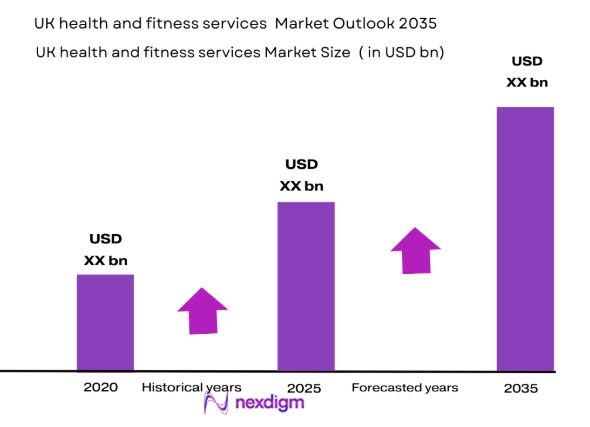
The UK health and fitness services market is valued at ~ billion, supported by 11.5 million members, 5,607 clubs, and more than 600 million facility visits, indicating strong recurring demand from memberships and in-person usage. Membership revenue rose from £4.05 billion to £5.19 billion across a two-year historical period, showing that growth is being driven by higher member penetration, greater facility utilisation, budget gym expansion, and consumer focus on physical and mental wellbeing.
England dominates the UK market because it has the largest facility base, with 5,778 gyms, 9.1 million members, and £5.2 billion in market value; London is the most prominent city market, with 826 gyms, 1.8 million members, and £1.38 billion in value. Dominance is supported by dense urban populations, high disposable income, corporate wellness demand, premium club clusters, boutique studios, and strong public transport access that improves gym catchment efficiency.
Market Segmentation
By Service Type
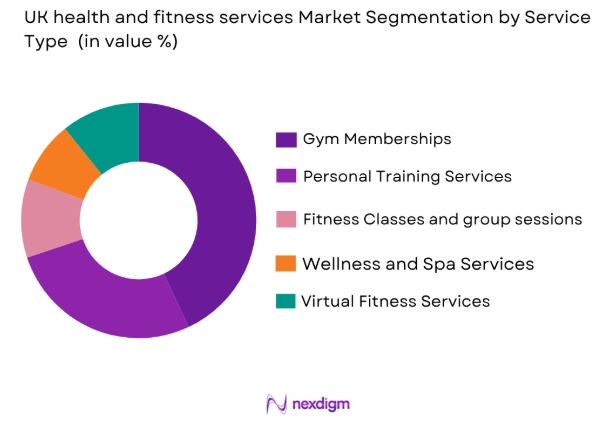
The UK health and fitness services market is segmented by Service model into private gyms and clubs, and public gyms and leisure centres. Private gyms hold the dominant position because they account for the larger site base, have faster growth in members and market value, and benefit from scalable formats such as low-cost 24/7 clubs, premium racquets-and-spa clubs, and boutique fitness concepts. PureGym remained the leading private operator by number of gyms, while private-sector member and value growth outpaced the public sector. Public leisure centres remain important for community access and social value, but the segment faces local-authority funding pressure, ageing facilities, and closures in some locations.
By End User Type
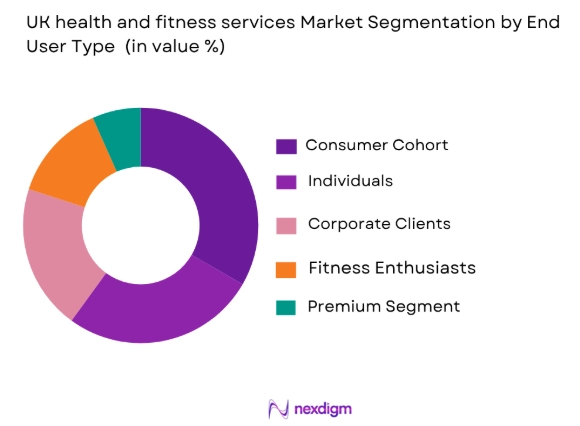
Individuals form the core end-user group, utilising gyms and fitness centres for general health, weight management, and lifestyle improvement through memberships and classes.Corporate clients represent organised demand, where companies engage fitness providers to deliver structured wellness programs, employee memberships, and on-site health initiatives. Fitness enthusiasts are a high-frequency segment, actively engaging in strength training, group classes, endurance activities, and advanced performance tracking services. The premium segment includes high-income consumers who prefer luxury fitness clubs offering spa, personal training, wellness therapies, and exclusive facilities. The price-sensitive segment consists of cost-conscious users who prefer low-cost gyms, flexible memberships, and pay-as-you-go fitness services.
Competitive Landscape
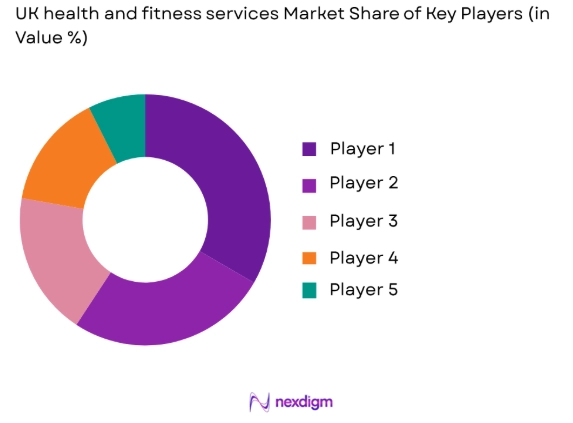
The UK health and fitness services market is led by large private operators, public leisure contractors, premium club networks, healthcare-linked operators, and fast-growing budget gyms. PureGym leads the private gym estate, GLL remains a major public operator, and The Gym Group, David Lloyd Clubs, Nuffield Health, JD Gyms, Everyone Active, and Bannatyne Health Clubs compete through scale, pricing, service mix, and location density.
| Player | Establishment year | Headquarters | Business model | UK footprint | Positioning | Core services | Digital capability | Market-specific strength |
| PureGym | 2009 | Leeds | Budget private gym | ~ | ~ | ~ | ~ | ~ |
| The Gym Group | 2007 | Croydon/London | Budget private gym | ~ | ~ | ~ | ~ | ~ |
| David Lloyd Clubs | 1982 | Hatfield | Premium health club | ~ | ~ | ~ | ~ | ~ |
| Nuffield Health | 1957 | Epsom | Charity health-wellbeing operator | ~ | ~ | ~ | ~ | ~ |
| GLL / Better | 1993 | London | Charitable social enterprise | ~ | ~ | ~ | ~ | ~ |
UK health and fitness services Market Analysis
Growth Drivers
Increasing Health & Wellness Awareness and Fitness Services Demand
The UK Health and Fitness Services Market is supported by rising participation in structured physical activity, as Sport England reported 30 million adults in England meeting recommended activity levels during November 2023–November 2024, compared with 29.5 million adults during November 2022–November 2023. Fitness-related activity has become a direct demand driver for gyms, leisure centres, fitness classes, swimming facilities, and personal training services, with Sport England reporting 904,000 more adults taking part in fitness activities compared with the previous 12-month period. Macroeconomic conditions also support recurring discretionary health spending: ONS reported UK median household disposable income of £36,700 in financial year ending 2024, while the World Bank recorded UK GDP per capita at US$53,246.4 in 2024. These indicators show a large addressable consumer base with capacity for paid health and fitness services.
Adoption of Digital Fitness Platforms and Virtual Classes
The UK Health and Fitness Services Market is gaining support from digital fitness adoption, as consumers increasingly combine physical gym usage with app-based tracking, virtual classes, and connected wellness platforms. Ofcom reported that fitness and exercise monitoring services ranked among the top UK online health and wellbeing services, with Fitbit reaching 3.9 million UK adults, Strava reaching 3.5 million UK adults, Samsung Health reaching 3.0 million UK adults, Garmin reaching 1.5 million men, and MyFitnessPal reaching 1.7 million women in May 2024. This creates opportunities for gyms and fitness operators to expand subscription-based hybrid services, app-led coaching, performance tracking, and virtual class bundles. The wider digital base is also strong: Ofcom recorded ChatGPT access by 4.4 million UK online adults in July 2024, indicating broader consumer familiarity with AI-enabled interfaces that can support personalised training, automated fitness planning, and digital member engagement.
Challenges
High Initial Consumer Investment and Membership Costs
The UK Health and Fitness Services Market faces constraints from household financial pressure, which directly affects discretionary spending on gym memberships and structured fitness services. The UK Office for National Statistics reported that real household disposable income per head fell by £227 between financial year ending 2022 and financial year ending 2023, reflecting reduced consumer spending capacity. At the same time, the Bank of England maintained higher interest rates, with the base rate reaching 5.25% in 2024, increasing borrowing costs and limiting household liquidity. Inflation also remained elevated, with ONS reporting CPI inflation averaging 4.0% in early 2024, increasing essential living costs such as housing, food, and energy. These macroeconomic pressures reduce affordability for non-essential services like gyms, particularly among lower-income groups, impacting membership growth and retention across the sector.
Limited Access to High-Quality Equipment and Facilities in Rural Areas
The UK Health and Fitness Services Market is constrained by uneven infrastructure distribution, particularly in rural and semi-urban regions where access to modern fitness facilities is limited. According to the UK Department for Environment, Food & Rural Affairs (DEFRA), 9.7 million people live in rural areas, accounting for a significant portion of the population with reduced access to large commercial gyms and premium facilities. Transport limitations further affect accessibility, as the Department for Transport reported that 31% of rural households in England do not have convenient access to frequent public transport services in 2023–2024. Additionally, Sport England data highlights that activity participation levels are consistently lower in less connected regions due to facility gaps and infrastructure challenges. This disparity restricts market penetration, reduces membership conversion rates, and limits expansion opportunities for operators targeting underserved geographies.
Opportunities
Expansion of Digital Fitness Platforms and Subscription Services
The UK Health and Fitness Services Market has strong growth potential through digital fitness ecosystems, supported by widespread internet adoption and mobile connectivity. Ofcom reported that 97% of UK households had internet access in 2024, compared with 95% in 2022, creating a near-universal digital infrastructure for online fitness services. Smartphone penetration is also high, with around 93% of adults owning a smartphone, enabling app-based training, remote coaching, and subscription fitness platforms. Additionally, the Office for National Statistics recorded that 16.0 million UK adults used online subscription services in 2024, including health and lifestyle applications. These macro indicators support the scalability of hybrid fitness models, where gyms combine physical memberships with digital subscriptions, virtual classes, and AI-based personalisation, expanding revenue streams without relying solely on physical infrastructure.
Integration of AI/AR/VR into Fitness Programs
The UK Health and Fitness Services Market can benefit from advanced technologies such as AI, AR, and VR, supported by the country’s strong digital economy and innovation ecosystem. The UK Office for National Statistics reported that the digital sector contributed £158.3 billion to the UK economy in 2023, reflecting a strong base for technology-driven service innovation. Additionally, the UK government’s Department for Science, Innovation and Technology reported over 3,700 AI companies operating in the UK in 2024, supporting rapid development of AI-enabled applications across industries, including health and fitness. Ofcom data also indicates rising consumer interaction with AI platforms, with 4.4 million UK adults accessing AI tools monthly in 2024. These conditions create a favourable environment for gyms to integrate AI-based coaching, immersive VR workouts, and AR-guided training, enhancing engagement, retention, and personalised fitness experiences.
Future Outlook
Over the next decade, the UK health and fitness services market is expected to expand through higher member penetration, premiumisation of clubs, broader budget-gym access, corporate wellness partnerships, and health-system alignment. Growth will be supported by younger consumers treating gyms as social and wellbeing spaces, while older adults and rehabilitation users create demand for active ageing, physiotherapy-led fitness, and prevention-based programmes.
Major Players
- PureGym
- The Gym Group
- David Lloyd Clubs
- Nuffield Health
- GLL / Better
- Everyone Active / SLM
- JD Gyms
- Bannatyne Health Clubs
- Virgin Active
- Anytime Fitness UK
- Fitness First UK
- énergie Fitness
- Total Fitness
- Snap Fitness UK
- Places Leisure
Key Target Audience
- Fitness club operators
- Gym equipment manufacturers
- Real estate developers and landlords
- Private equity firms
- Investments and venture capitalist firms
- Health insurers and corporate wellbeing buyers
- Government and regulatory bodies
- Digital fitness platform providers
Research Methodology
Step 1: Identification of Key Variables
The initial phase involves constructing an ecosystem map for the UK health and fitness services market. This includes private gyms, public leisure centres, premium clubs, budget chains, boutique studios, suppliers, technology platforms, landlords, and regulatory bodies.
Step 2: Market Analysis and Construction
Historical market data is compiled from operator disclosures, industry databases, sector associations, and government-linked participation sources. Key variables include facility count, memberships, penetration, visits, revenue, average member spend, regional distribution, and ownership structure.
Step 3: Hypothesis Validation and Expert Consultation
Market hypotheses are validated through interviews with operators, investors, equipment suppliers, landlords, and digital fitness providers. These discussions help assess pricing, churn, consumer demand, site economics, and the impact of hybrid and wellness-led services.
Step 4: Research Synthesis and Final Output
The final phase combines bottom-up operator data with secondary research and sector-level validation. The output includes market sizing, segmentation, competitive benchmarking, future outlook, and buyer-specific insights for commercial decision-making.

- Executive Summary
- Research Methodology (Market Definitions and Assumptions, Abbreviations, Top‑Down & Bottom‑Up Sizing Approach, E‑Commerce & Retail Channel Data Sources, Primary Research Framework, Secondary Data Validation, Forecasting Models and Assumptions, Limitations and Sensitivity Analyses)

- Definition and Scope
- Ecosystem Genesis and Evolution of Health and Fitness Services Adoption
- Macro‑Economic and Fitness Demand Drivers
- HealthNology Adoption Index
- Service Dependency & Delivery Characteristics
- Infrastructure Mapping of Fitness Centers and Wellness Hubs

- Growth Drivers
Increasing Health & Wellness Awareness and Fitness Services Demand
Adoption of Digital Fitness Platforms and Virtual Classes
Rising Disposable Incomes and Premium Fitness Uptake
Corporate Wellness Initiatives and Employee Health Focus - Challenges
High Initial Consumer Investment and Membership Costs
Lack of Standardization and Quality in Fitness Services
Competition from Traditional Gyms and Informal Fitness Providers
Limited Access to High-Quality Equipment and Facilities in Rural Areas - Opportunities
Expansion of Digital Fitness Platforms and Subscription Services
Integration of AI/AR/VR into Fitness Programs
Growth of Wellness and Lifestyle Coaching Services
Corporate Wellness Programs and B2B Fitness Solutions - Trends
Shift to Home-Based Fitness Solutions and On-Demand Training
Growth of Digital and Hybrid Fitness Models
Emerging Interest in Holistic Health and Mental Wellness Programs
Rise in Affordable and Flexible Membership Plans - Government Regulations & Standards
Fitness Service Regulations and Certification Framework
Import Regulations on Fitness Equipment and Technology
Health and Safety Standards for Public Gyms and Wellness Centers
Energy Efficiency Guidelines for Fitness Equipment - SWOT Analysis
- Porter’s Five Forces
- Stakeholder Ecosystem

- By Retail Value, 2020-2025
- By Service Sales, 2020-2025
- By Average Membership Fee (AMF) and Service Tier, 2020-2025
- By Channel Contribution, 2020-2025

- By Service Type (In Value %)
Gym Memberships
Personal Training Services
Fitness Classes and Group Sessions
Wellness and Spa Services
Virtual Fitness Services - By Technology (In Value %)
Online Fitness Platforms
Mobile Fitness Apps
Wearable Fitness Technology
Traditional Fitness Services - By End‑User (In Value %)
Consumer Cohort
Individuals
Corporate Clients
Fitness Enthusiasts
Premium Segment
Price‑Sensitive Segment - By Distribution Channel (In Value %)
Gym Chains and Fitness Centers
Boutique Fitness Studios
Online Fitness Platforms
Corporate Wellness Programs - By Price Tier (In Value %)
Premium
Mid‑Tier
Value

- Market Share by Value and Volume
- Cross‑Comparison Parameters (Service Portfolio Breadth, Technology Integration, Distribution Network Reach, Retail Touchpoints & Dealer Penetration, Brand Positioning, Price Point Clustering, Service & Wellness Footprint, After-Sales Revenue Streams, Service Quality Index, Consumer Satisfaction & Retention, Revenue and Growth Metrics)
- SWOT of Major Players
- Pricing Tier Benchmark Analysis
- Major Competitors
Gym Group
PureGym
David Lloyd Clubs
Virgin Active
Anytime Fitness
Nuffield Health
Fitness First
The Third Space
Bannatyne Health Club
F45 Training
Les Mills
JAB Fitness
MoveGB
SoulCycle UK
InBody UK

- Trends and Preferences in Fitness Services
- Growing Adoption of Digital Fitness Services
- Impact of Corporate Wellness Programs on Service Demand
- Role of Social Media and Fitness Influencers in Service Usage

- By Retail Value, 2026-2035
- By Service Sales, 2026-2035
- By Average Membership Fee (AMF) and Service Tier, 2026-2035
- By Channel Contribution, 2026-2035


 Request a Sample
 Ask for Customization
 Get a Quote
 Enquire Now