

 Download PDF
 Download PDF
Market Overview
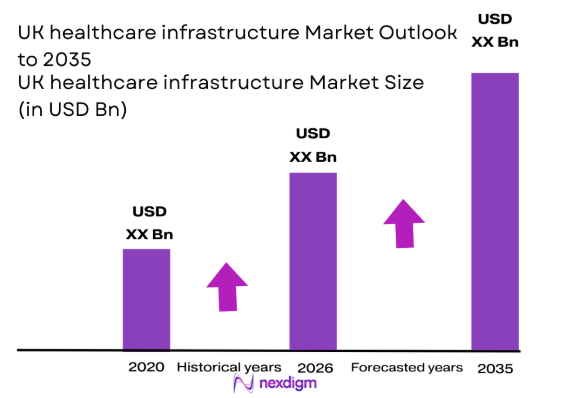
The UK healthcare infrastructure market is valued at USD ~ billion, driven by the increasing demand for healthcare services, aging population, and government investments in healthcare technology. As a result, private and public sector investments are accelerating in both physical and digital healthcare infrastructure. The healthcare infrastructure includes hospitals, diagnostic centers, medical IT systems, and patient care technologies. Significant funding from both the government and private sectors is aimed at modernizing existing infrastructure and expanding access to healthcare services, supporting the growth of the sector.
Dominant regions within the UK healthcare infrastructure market include London and the South East, as these areas benefit from higher population densities and substantial investments in healthcare projects. The increasing concentration of medical facilities in urban areas is a result of both government priorities and private sector interest. London, for example, is a key hub for healthcare innovation, with various national and international players investing heavily in the infrastructure, enhancing both service delivery and accessibility. Other regions, such as Manchester and Birmingham, have seen an increase in healthcare-focused infrastructure development as demand for services grows outside of the capital.
Market Segmentation
By Product Type
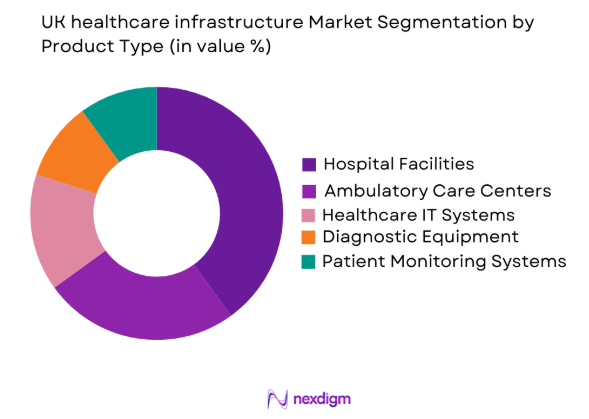
The UK healthcare infrastructure market is segmented by product type into hospital facilities, ambulatory care centers, healthcare IT systems, diagnostic equipment, and patient monitoring systems. The hospital facilities segment holds the largest market share due to the consistent demand for both inpatient and outpatient services, driven by the growing population and increasing prevalence of chronic diseases. New and upgraded hospitals are being built with modern infrastructure to provide advanced healthcare services, further boosting this segment’s market dominance.
By Platform Type
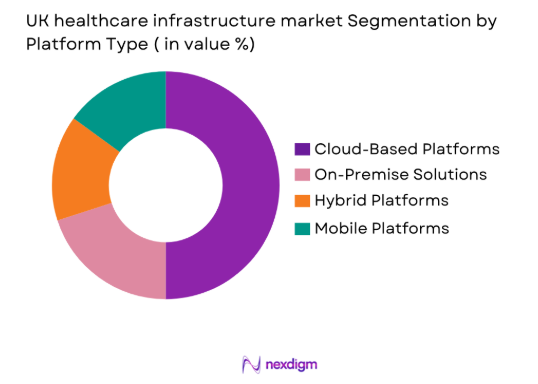
The digital health market is also segmented by platform type into cloud-based platforms, on-premise solutions, hybrid platforms, and mobile platforms. Cloud-based platforms have a dominant market share, as they offer scalable, cost-effective, and easily accessible solutions for healthcare providers. These platforms allow for seamless integration with existing healthcare systems and provide flexibility for remote healthcare service delivery. With the increasing emphasis on patient data security and the need for interoperability between healthcare systems, cloud-based platforms offer an ideal solution for many healthcare organizations looking to innovate and streamline operations.
Competitive Landscape
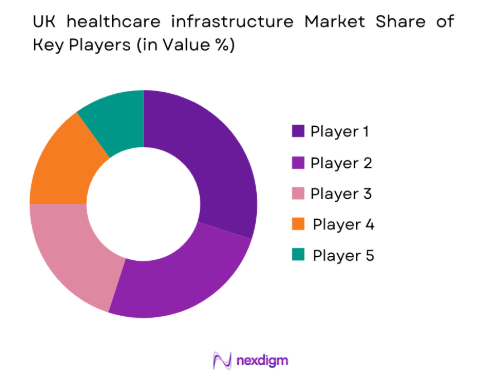
The competitive landscape of the UK healthcare infrastructure market is shaped by large public and private players focusing on modernization and digital healthcare solutions. Consolidation is occurring as companies merge or form partnerships to deliver comprehensive healthcare services. Major players have a significant influence on infrastructure upgrades and healthcare technology integration. The market sees continuous growth in demand for both traditional healthcare facilities and cutting-edge digital solutions like telemedicine and AI-based healthcare services.
| Company Name | Establishment Year | Headquarters | Technology Focus | Market Reach | Key Products | Revenue (USD) | Market-specific Parameter |
| NHS Foundation Trusts | 1948 | London, UK | ~ | ~ | ~ | ~ | ~ |
| Bupa | 1947 | London, UK | ~ | ~ | ~ | ~ | ~ |
| HCA Healthcare | 1968 | London, UK | ~ | ~ | ~ | ~ | ~ |
| Ramsay Healthcare | 1964 | London, UK | ~ | ~ | ~ | ~ | ~ |
| Spire Healthcare | 2007 | London, UK | ~ | ~ | ~ | ~ | ~ |
UK healthcare infrastructure Market Analysis
Growth Drivers
Government Investments in Healthcare
Government investments in healthcare infrastructure have been one of the largest drivers of growth in the UK healthcare infrastructure market. The UK government has allocated significant budgets for upgrading hospitals, integrating digital systems, and ensuring wider access to healthcare services. These investments are part of the long-term strategy to improve healthcare access and reduce the burden on existing healthcare facilities. The UK’s National Health Service (NHS) has been the largest benefactor of this, with funding going towards the development of modernized hospital buildings, advanced diagnostic equipment, and integrated care systems. This extensive investment into infrastructure provides a foundation for continued growth, enabling the healthcare sector to respond to the growing needs of the population.
Private Sector Demand for Advanced Healthcare Solutions
In addition to government investment, the private healthcare sector has been instrumental in expanding healthcare infrastructure. As demand for private healthcare services grows, providers are investing in advanced medical equipment, modern hospital facilities, and expanding their service offerings. Increased consumer spending on healthcare, particularly for elective procedures, has further fueled this growth. Private investors are actively seeking opportunities to build and upgrade healthcare infrastructure to cater to this rising demand. With a focus on maintaining competitiveness, the private sector’s emphasis on delivering high-quality healthcare facilities and services will continue to drive market expansion, meeting the evolving needs of patients and healthcare professionals alike.
Market Challenges
High Operational Costs
A significant challenge facing the UK healthcare infrastructure market is the rising operational costs, including facility development, equipment procurement, and ongoing maintenance. Despite increased investments, many healthcare organizations struggle to maintain and upgrade aging infrastructure. The costs associated with building new hospitals, refurbishing existing ones, and installing advanced technologies are substantial. Additionally, labor costs for skilled healthcare professionals and technicians are continuously rising, further straining operational budgets. Healthcare providers are tasked with balancing these rising costs while ensuring the continued delivery of high-quality services and maintaining patient care standards. Managing these financial pressures without compromising service quality is a key concern for healthcare organizations in the UK.
Regulatory Compliance and Standards
Regulatory compliance and adherence to standards present significant challenges in the UK healthcare infrastructure market. The healthcare sector is tightly regulated to ensure patient safety, data security, and ethical treatment, with organizations needing to meet strict requirements while managing budget constraints. Frequent changes in regulatory policies further complicate the planning and implementation of infrastructure projects, as healthcare providers must constantly adapt to new standards and guidelines. Obtaining the necessary approvals and meeting required standards can be time-consuming and costly. Additionally, maintaining continuous compliance with evolving regulations adds to operational complexity and delays infrastructure development. These factors make it challenging for healthcare organizations to deliver timely and cost-effective infrastructure upgrades, impacting their ability to expand services and improve patient care.
Opportunities
Emerging Demand for Telemedicine Infrastructure
The growth of telemedicine has opened up significant opportunities in the UK healthcare infrastructure market. With an increasing shift towards remote consultations, healthcare providers are looking to integrate telemedicine systems into their infrastructure. The demand for telemedicine infrastructure is expected to grow as patients seek more convenient and accessible healthcare options. This trend is being supported by the UK government, which is encouraging the use of telemedicine to reduce pressure on physical healthcare facilities and expand service access to rural areas. Healthcare organizations are increasingly investing in telemedicine solutions, which present an opportunity for infrastructure development, including digital infrastructure upgrades, equipment, and IT systems.
Integration of Artificial Intelligence in Healthcare Infrastructure
The integration of artificial intelligence (AI) in healthcare infrastructure offers a significant growth opportunity for the market. AI technologies like machine learning and data analytics can enhance the efficiency and accuracy of healthcare services. By incorporating AI into diagnostic tools, patient management systems, and care delivery, healthcare providers can streamline operations, reduce costs, and improve patient outcomes. This creates an opportunity for infrastructure modernization, as healthcare organizations invest in AI-powered solutions. The increasing demand for AI-driven healthcare infrastructure is expected to drive market growth, as providers seek advanced technologies to optimize operations and enhance service quality. As AI continues to evolve, its integration into healthcare infrastructure will play a crucial role in shaping the future of healthcare delivery.
Future Outlook
Over the next five years, the UK healthcare infrastructure market is expected to experience steady growth. Increasing government and private investments in healthcare facilities and digital health technologies will support market expansion. Technological developments in AI, telemedicine, and health IT systems will transform healthcare delivery and operations. Furthermore, regulatory support for infrastructure modernization and telemedicine adoption will be key factors driving market growth. The demand for both traditional healthcare facilities and innovative digital solutions will continue to rise as the UK adapts to evolving healthcare needs.
Major Players
- NHS Foundation Trusts
- Bupa
- HCA Healthcare
- Ramsay Healthcare
- Spire Healthcare
- Royal Philips
- Siemens Healthineers
- GE Healthcare
- Medtronic
- Cerner Corporation
- McKesson Corporation
- Johnson & Johnson
- Intuitive Surgical
- Allscripts Healthcare Solutions
- Cigna Corporation
Key Target Audience
- Investments and venture capitalist firms
- Government and regulatory bodies
- Healthcare providers and hospital chains
- Medical equipment manufacturers
- Digital health technology firms
- Healthcare IT solution providers
- Private healthcare investors
- Pharmaceutical companies
Research Methodology
Step 1: Identification of Key Variables
Identifying the key factors that drive market growth, including government investment, technological advancements, and demographic trends.
Step 2: Market Analysis and Construction
Gathering data from reliable sources and conducting market modeling to construct a clear market outlook for 2024 and beyond.
Step 3: Hypothesis Validation and Expert Consultation
Consulting with industry experts and key stakeholders to validate assumptions and refine the market analysis.
Step 4: Research Synthesis and Final Output
Synthesizing the data and expert insights to generate the final market report, providing actionable insights for stakeholders.

- Executive Summary
- Research Methodology (Definitions, Scope, Industry Assumptions, Market Sizing Approach, Primary & Secondary Research Framework, Data Collection & Verification Protocol, Analytic Models & Forecast Methodology, Limitations & Research Validity Checks)

- Market Definition and Scope
- Value Chain & Stakeholder Ecosystem
- Regulatory / Certification Landscape
- Sector Dynamics Affecting Demand
- Strategic Initiatives & Infrastructure Growth

- Growth Drivers
Increasing Government Investments in Healthcare
Rising Demand for Healthcare Services Due to Aging Population
Advancements in Medical Technologies and Infrastructure - Market Challenges
High Operational Costs in Healthcare Infrastructure
Regulatory Challenges and Compliance Issues
Limited Skilled Workforce in the Healthcare Sector - Market Opportunities
Emerging Demand for Telemedicine Infrastructure
Growth in Private Healthcare Investments
Shift Toward Integrated Healthcare Systems - Trends
Rise of AI and Automation in Healthcare
Shift Toward Sustainable and Green Healthcare Buildings
Increasing Adoption of Remote Monitoring Solutions - Government Regulations
- SWOT Analysis of Key Competitors
- Porter’s Five Forces

- By Market Value, 2020-2025
- By Installed Units, 2020-2025
- By Average System Price, 2020-2025
- By System Complexity Tier, 2020-2025

- By System Type (In Value%)
Hospital Facilities
Ambulatory Care Centers
Healthcare IT Systems
Diagnostic Equipment
Patient Monitoring Systems - By Platform Type (In Value%)
Cloud Platforms
On-premise Platforms
Integrated Platforms
Mobile Platforms
Hybrid Platforms - By Fitment Type (In Value%)
New Installations
Upgrades
Retrofits
System Integrations
Modular Systems - By End User Segment (In Value%)
Public Healthcare Providers
Private Healthcare Providers
Healthcare Technology Companies
Insurance Providers
Government Agencies - By Procurement Channel (In Value%)
Direct Procurement
Government Tenders
Private Sector Procurement
Online Bidding Platforms
Third-party Distributors

- Market Share Analysis
- Cross Comparison Parameters (System Type, Platform Type, Procurement Channel, End User Segment, Fitment Type, Geographic Region, Technology Adoption Rate, Regulatory Compliance, Market Pricing, Service Integration)
- SWOT Analysis of Key Competitors
- Pricing & Procurement Analysis
- Key Players
NHS Foundation Trusts
Bupa
HCA Healthcare
Ramsay Healthcare
Spire Healthcare
Royal Philips
Siemens Healthineers
GE Healthcare
Medtronic
Cerner Corporation
McKesson Corporation
Johnson & Johnson
Intuitive Surgical
Allscripts Healthcare Solutions
Cigna Corporation

- Public Healthcare Providers Increasing Infrastructure Investments
- Private Healthcare Providers Adopting Advanced Technologies
- Growing Demand for Digital Health Solutions
- Government Agencies Focusing on Healthcare Access and Equity

- Forecast Market Value, 2026-2035
- Forecast Installed Units, 2026-2035
- Price Forecast by System Tier, 2026-2035
- Future Demand by Platform, 2026-2035


 Request a Sample
 Ask for Customization
 Get a Quote
 Enquire Now