
 Download PDF
Market Overview
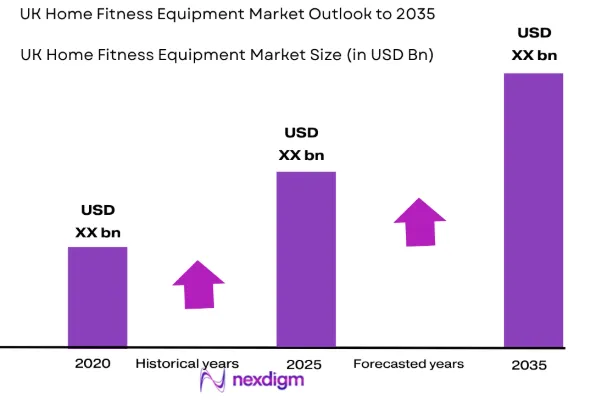
The UK Home Fitness Equipment Market is projected to reach a significant size in 2025, driven by increasing consumer interest in home-based fitness solutions. In 2024, the market was valued at approximately USD ~ billion, with growth primarily fueled by rising health consciousness, the shift towards remote working, and an increased focus on personal wellness. The market is further bolstered by the expansion of digital fitness platforms and smart equipment integration, which are attracting more consumers to invest in home fitness solutions. Consumer demand for high-quality, durable, and multifunctional equipment is also contributing to the overall market growth.
The market is dominated by key cities like London, Birmingham, and Manchester, where the urban population is inclined towards fitness-oriented lifestyles. London, in particular, stands as a central hub due to its high disposable income, diverse population, and access to a wide range of fitness options, from gyms to home fitness technology. Additionally, regions like Greater Manchester have seen a rise in fitness adoption due to the increasing number of middle-income earners investing in at-home fitness solutions. These cities are key drivers of market demand due to the population’s health-consciousness and high engagement with wellness trends.
Market Segmentation
By Product Type
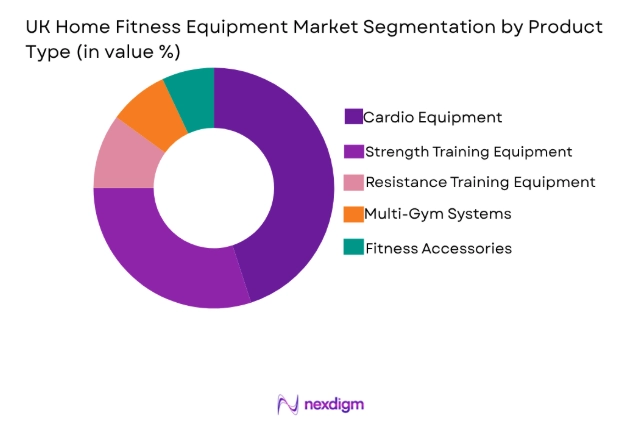
The UK Home Fitness Equipment market is segmented by Product type, which includes cardio equipment, strength training equipment, resistance training equipment, multi-gym systems, and fitness accessories. Among these, cardio equipment holds a dominant position in the market share. This segment is driven by the increasing popularity of home-based cardio workouts, including running, cycling, and rowing. The rise in demand for home treadmills, stationary bikes, and rowing machines reflects the broader trend of consumers incorporating fitness routines into their daily lives. Companies like Peloton and NordicTrack have capitalized on this trend by integrating digital solutions into their equipment, further boosting the demand for these products.
By Distribution Channel Type
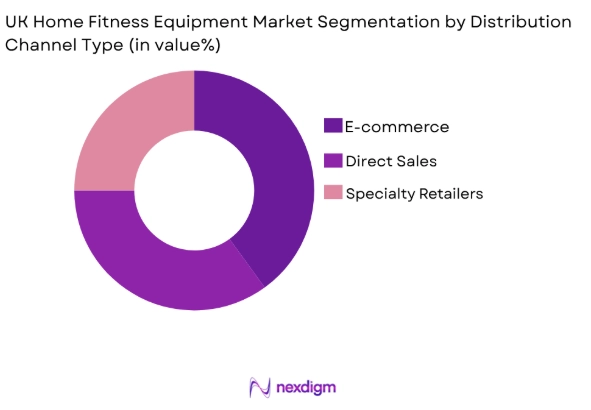
The distribution channel segmentation in the UK Home Fitness Equipment market includes direct sales, e-commerce, and specialty retailers. E-commerce has witnessed significant growth, contributing to a larger share of the market in 2024. The convenience of online shopping, combined with competitive pricing and home delivery services, has made e-commerce a preferred channel for many consumers. Major players such as Amazon, Argos, and direct-to-consumer brands like Peloton have tapped into this distribution model, allowing consumers easy access to home fitness products from the comfort of their homes. The growing preference for online platforms is also driven by an increasing number of digital fitness subscriptions, which complement home workout routines.
Competitive Landscape
The UK Home Fitness Equipment market is highly competitive, with several major global players dominating the industry. These include companies such as Peloton, NordicTrack, Technogym, Reebok, and Bow flex. The market has seen consolidation around these key players who leverage their strong brand equity, established distribution networks, and technological advancements to maintain leadership. The integration of digital fitness platforms and smart equipment, combined with extensive customer loyalty programs, has further cemented their market position. Additionally, the growing trend of hybrid fitness models, combining home equipment with virtual training, has become a central strategy for these companies, further intensifying competition.
| Company Name | Establishment Year | Headquarters | Key Products | Revenue (2024) | Market Share | Strategic Focus |
| Peloton | 2012 | New York, USA | ~ | ~ | ~ | ~ |
| NordicTrack | 1975 | Logan, Utah, USA | ~ | ~ | ~ | ~ |
| Technogym | 1983 | Cesena, Italy | ~ | ~ | ~ | ~ |
| Reebok | 1958 | Boston, USA | ~ | ~ | ~ | ~ |
| Bowflex | 1986 | Vancouver, Canada | ~ | ~ | ~ | ~ |
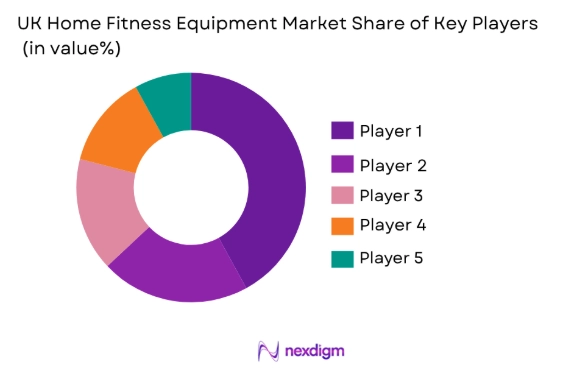
UK Home Fitness Equipment Market Analysis
Growth Drivers
Increasing Health Awareness and Fitness Trends
The UK has seen a significant shift towards health and fitness in recent years, with an increase in physical activity driven by greater health awareness. According to the UK Government’s Active Lives Survey, 29.8 million adults in England, or around 60% of the population, reported participating in sport or physical activity at least once a week in 2022. This rising participation is further fueled by the growing number of individuals investing in fitness equipment for home use, reflecting a societal shift towards preventive healthcare. Additionally, the UK’s National Health Service (NHS) encourages exercise as part of daily life, with recent figures showing that physical inactivity is linked to 1 in 6 deaths in the country. Health promotion campaigns have also led to a broadening focus on overall wellbeing, further driving demand for fitness equipment. The combination of these factors has led to increasing investments in fitness routines, driving home fitness equipment sales in the country.
Rise in Remote Working and Increased Home-Based Exercise
Remote working has surged in the UK, further boosting the demand for home fitness equipment. The Office for National Statistics (ONS) reported that as of 2022, 25.4% of UK employees worked primarily from home, a sharp increase from 12.4% in 2019. This change has led to a rise in home-based exercise as people look for convenient ways to stay active without the need to commute to a gym. A large portion of remote workers are investing in fitness solutions that enable them to stay active within their homes, ranging from home gyms to compact fitness equipment such as resistance bands and stationary bikes. This trend has contributed to a boost in demand for fitness products that cater to home environments. Furthermore, remote working policies are expected to remain stable, with an estimated 30% of the UK workforce predicted to engage in hybrid or remote work long-term, driving sustained interest in home fitness solutions.
Market Challenges
Economic Uncertainty and Consumer Spending Patterns
The UK economy faces several macroeconomic challenges that directly impact consumer spending, particularly in discretionary sectors like fitness equipment. The Bank of England has raised interest rates multiple times in 2023 and 2024 to combat inflation, which stood at 10.1% in January 2024, the highest since 1981. This has led to a reduction in disposable income for many households, which in turn affects consumer spending on non-essential goods, including fitness equipment. The UK’s cost-of-living crisis is also impacting the purchasing power of individuals, forcing many to prioritize essential expenditures over luxury or lifestyle investments. Furthermore, high inflation is leading to increased production and supply chain costs for manufacturers of fitness equipment, which can translate into higher retail prices, making it more challenging for consumers to purchase fitness products. As a result, the market is seeing some restraint in consumer demand despite the health trend.
High Competition in Low-Cost Equipment Segment
The UK home fitness equipment market faces significant competitive pressure, particularly in the low-cost segment. With major international and local brands offering budget-friendly fitness solutions, such as resistance bands, dumbbells, and yoga mats, there is a price war in this segment that limits profitability for many businesses. As of 2023, there are over 50 companies in the UK that manufacture and distribute home fitness equipment, with many focusing on low-cost alternatives. For example, stores like Argos, Tesco, and Lidl have all launched private label fitness products targeting cost-conscious consumers. While this is beneficial for consumers, it creates a highly fragmented market and intensifies price competition, making it difficult for smaller players to thrive without differentiation. Furthermore, the ease of entry into the fitness equipment market with low investment barriers means that new competitors continue to emerge, adding to the challenge of maintaining market share.
Opportunities
Integration of AI and Virtual Fitness
The integration of artificial intelligence (AI) and virtual fitness experiences is rapidly transforming the UK home fitness equipment market. According to the UK’s Digital Economy Council, the demand for AI-powered fitness products, such as smart fitness machines with built-in workout tracking and virtual coaching, has grown significantly. AI-driven fitness apps and platforms, such as Peloton, have revolutionized the way people work out at home, offering tailored workout plans based on individual preferences and performance metrics. The rise of smart home gyms that sync with fitness trackers and wearables is another growing trend. In fact, data from the Digital Fitness & Wellness Market indicates that the use of AI and virtual fitness technology is expected to be a driving force for future market expansion. The current shift towards personalized, virtual fitness solutions reflects a broader global trend, and the UK market is at the forefront of these innovations. This growing interest in AI-based fitness tools offers a significant opportunity for companies in the home fitness equipment sector to invest in cutting-edge technologies that appeal to the growing digitally connected consumer base.
Growing Demand for Sustainable and Eco-Friendly Equipment
Sustainability is becoming an increasingly important factor in consumer purchasing decisions within the UK’s home fitness market. According to the UK Department for Environment, Food & Rural Affairs (DEFRA), 2022 saw a marked increase in consumer interest in products that support environmental sustainability, with 52% of consumers stating that they actively seek out eco-friendly products. This shift towards sustainability is influencing the fitness industry, where consumers are demanding environmentally friendly alternatives such as fitness equipment made from recycled or sustainably sourced materials. Companies like Decathlon and Reebok are already offering products with eco-conscious manufacturing practices. The increasing focus on sustainability has also prompted several fitness equipment brands to explore energy-efficient products and biodegradable or recyclable materials, opening new opportunities for businesses to cater to eco-conscious customers. Furthermore, the growing popularity of second-hand fitness equipment and circular economy initiatives is expected to further drive this trend in the coming years.
Future Outlook
Over the next five years, the UK Home Fitness Equipment market is expected to experience steady growth driven by technological advancements, an increased focus on personal wellness, and rising health consciousness among consumers. With the growing adoption of hybrid fitness models that combine home equipment with virtual fitness training, the market is likely to see the emergence of more personalized fitness solutions. The expansion of the smart fitness equipment segment, along with the increasing integration of AI and IoT in home fitness devices, will drive future innovations. Furthermore, the ongoing demand for sustainable and eco-friendly fitness products will shape the future of this market.
Major Players
- Peloton
- NordicTrack
- Technogym
- Bowflex
- Reebok
- ProForm
- Life Fitness
- Precor
- JTX Fitness
- PowerBlock
- Concept2
- WaterRower
- Kettler
- Body-Solid
- Sole Fitness
Key Target Audience
- Fitness Enthusiasts
- Home Gym Users
- E-commerce Platforms
- Investment and Venture Capitalist Firms
- Fitness Equipment Manufacturers
- Retailers and Distributors
- Government and Regulatory Bodies
- Health and Wellness Influencers
Research Methodology
Step 1: Identification of Key Variables
The initial phase involves constructing an ecosystem map of all stakeholders within the UK Home Fitness Equipment market. Secondary research will be conducted using industry reports, market intelligence, and databases to identify key variables that influence market dynamics such as consumer behavior, product preferences, and distribution channels.
Step 2: Market Analysis and Construction
This phase focuses on gathering historical data to assess market size, product category penetration, and revenue generation. Additionally, we will evaluate the market’s growth in terms of technological trends, like the integration of digital platforms in fitness equipment, and consider the impact of e-commerce on market penetration.
Step 3: Hypothesis Validation and Expert Consultation
To validate the market hypotheses, consultations will be held with industry experts including equipment manufacturers, digital fitness service providers, and key market analysts. This phase aims to gather operational insights and enhance the accuracy of the data derived from desk research.
Step 4: Research Synthesis and Final Output
In this phase, comprehensive feedback from market experts, along with in-depth interviews with key stakeholders, will be used to validate market forecasts and ensure the reliability of the data. This will be followed by synthesizing all findings into a cohesive report, highlighting key market drivers, challenges, and growth opportunities for stakeholders.

- Executive Summary
- Research Methodology (Market Definitions and Assumptions, Abbreviations, Market Sizing Approach, Consolidated Research Approach, Understanding Market Potential Through In-Depth Industry Interviews, Primary Research Approach, Limitations and Future Conclusions)

- Definition and Scope
- Market Genesis and Evolution
- Timeline of Key Developments in the Market
- Business Cycle and Market Maturity
- Supply Chain and Value Chain Analysis
- Market Dynamics and Key Market Drivers

- Growth Drivers
Increasing Health Awareness and Fitness Trends
Rise in Remote Working and Increased Home-Based Exercise
- Market Challenges
Economic Uncertainty and Consumer Spending Patterns
High Competition in Low-Cost Equipment Segment - Opportunities
Integration of AI and Virtual Fitness
Growing Demand for Sustainable and Eco-friendly Equipment - Trends
Adoption of Hybrid Fitness Models
Expansion of Personalized Fitness Solutions
Surge in Fitness Subscription Services - Government Regulations
Import/Export Policies and Taxation
Safety Standards and Certifications for Equipment
Regulations on Energy Efficiency for Smart Equipment - SWOT Analysis
- Porter’s Five Forces Analysis
- Competition Ecosystem

- By Value, 2020-2025
- By Volume, 2020-2025
- By Average Price, 2020-2025
- By Product Category, 2020-2025
- By Distribution Channel, 2020-2025

- By Product Type (In Value %)
Cardio Equipment
Strength Training Equipment
Resistance Training Equipment
Multi-Gym Systems
Fitness Accessories - By Application (In Value %)
Home Gym Market
Commercial Gym Equipment
Fitness Enthusiasts and Casual Users - By Distribution Channel (In Value %)
E-commerce
Direct Sales
Specialty Retailers - By Region (In Value %)
North west England
South East England
Midlands
Greater London
Other Regions - By Pricing (In Value %)
Premium Fitness Equipment
Mid-Range Fitness Equipment
Budget Fitness Equipment

- Market Share of Major Players by Value/Volume
- Competitive Positioning of Major Players Based on Price/ Product Innovation
Cross-Comparison Parameters (Company Overview, Business Strategies, Product Portfolio and Differentiation, Revenue by Equipment Type, Key Geographic Presence and Market Penetration, Digital Engagement and Online Sales, Number of Dealers and Distributors, Customer Loyalty Programs)
- SWOT Analysis of Key Players
- Pricing Analysis of Top Competitors
- Profiles of Key Companies
Peloton
NordicTrack
Technogym
Bowflex
Reebok
ProForm
Life Fitness
Precor
JTX Fitness
PowerBlock
Concept2
WaterRower
Kettler
Body-Solid
Sole Fitness

- Market Demand and Utilization
- Consumer Preferences
- Purchasing Power and Buying Behaviors
- Needs, Desires, and Pain Point Analysis
- Decision-Making Process for Purchase
- Trends in User Engagement with Home Fitness Technologies

- By Value, 2026-2035
- By Volume, 2026-2035
- By Average Price, 2026-2035


 Request a Sample
 Ask for Customization
 Get a Quote
 Enquire Now