
 Download PDF
Market Overview
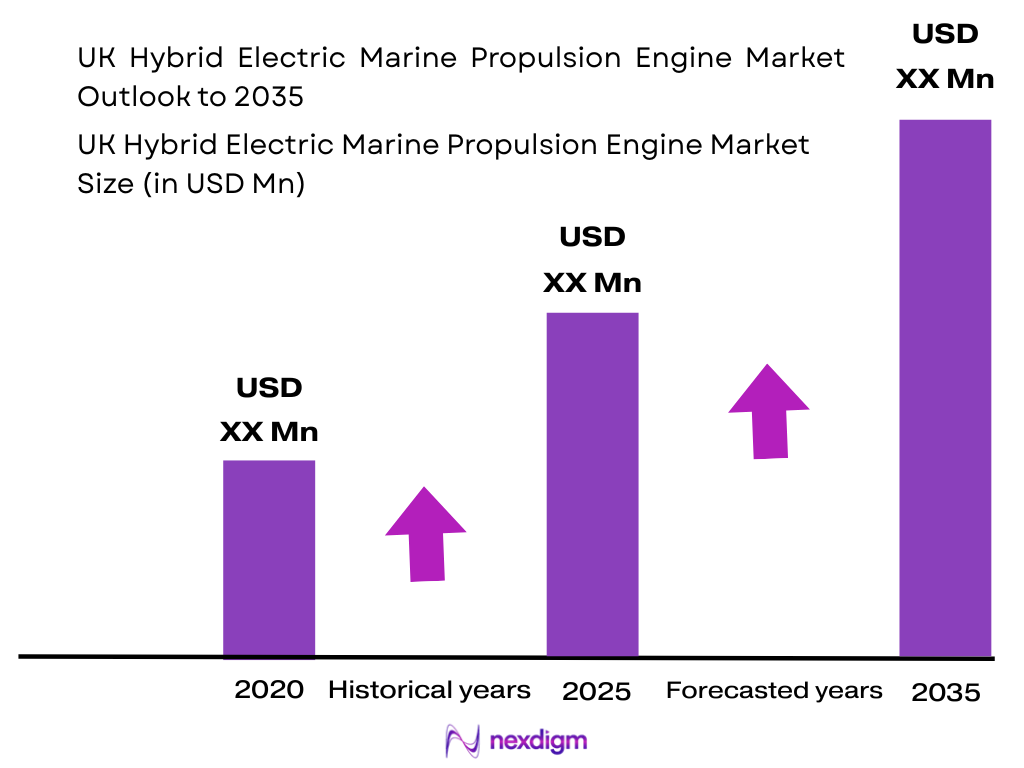
The UK Hybrid Electric Marine Propulsion Engine Market is valued at USD ~X billion, based on historical industry analysis, supported by increasing adoption of hybrid propulsion systems across ferries, offshore vessels, leisure boats, and commercial workboats. The market expansion is driven by vessel decarbonization requirements, rising marine fuel costs, and increasing demand for energy-efficient propulsion technologies. Global marine hybrid propulsion systems are being adopted as integrated solutions combining engines, batteries, electric motors, and energy management systems to reduce fuel consumption and emissions.
The UK market is concentrated around maritime hubs including London, Southampton, Aberdeen, Glasgow, and Liverpool, driven by their strong shipping ecosystem, commercial vessel operations, shipbuilding activities, offshore energy presence, and marine technology clusters. Southampton benefits from yacht manufacturing and marine engineering activities, Aberdeen is supported by offshore vessel demand, while Glasgow and Liverpool have strong maritime infrastructure supporting vessel modernization and electrification initiatives. The presence of major marine technology suppliers and ship operators further strengthens adoption across these regions.
Market Segmentation
By Propulsion Architecture
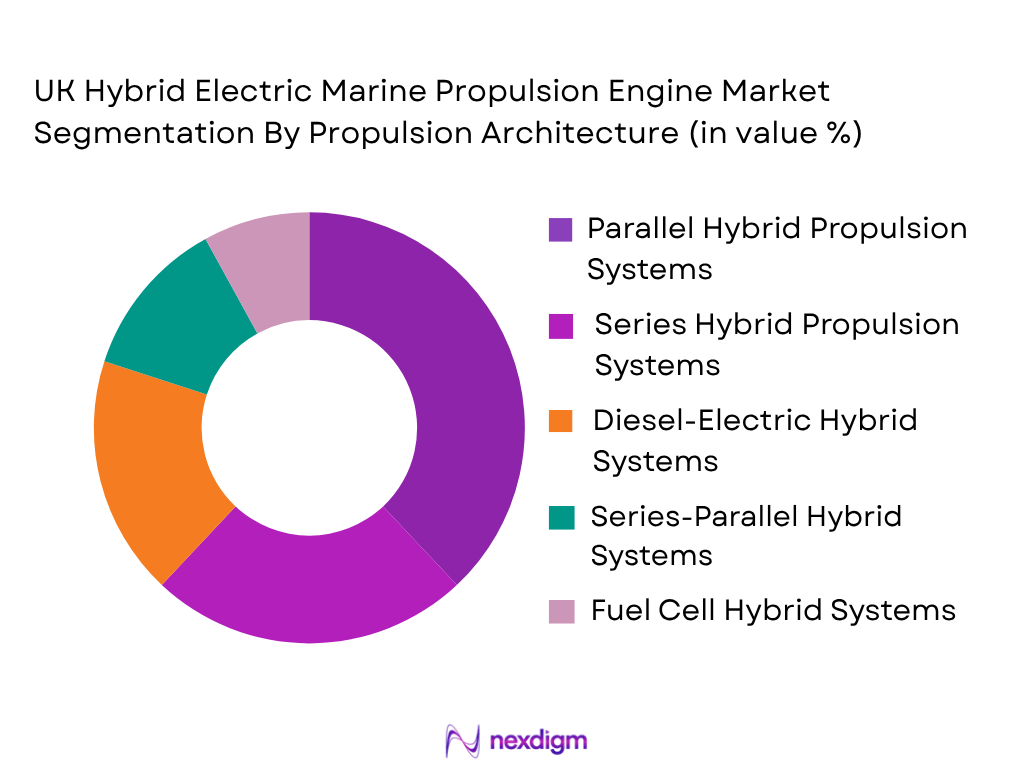
The UK Hybrid Electric Marine Propulsion Engine Market is segmented into parallel hybrid propulsion systems, series hybrid propulsion systems, series-parallel hybrid propulsion systems, diesel-electric hybrid propulsion systems, and fuel cell hybrid propulsion systems. Among these, parallel hybrid propulsion systems dominate the market due to their compatibility with existing marine engines, easier retrofit capability, and ability to combine conventional propulsion with electric assistance during maneuvering, low-speed operations, and peak power requirements. These systems allow vessel operators to reduce fuel consumption without completely replacing existing propulsion infrastructure. Commercial operators and leisure vessel owners increasingly prefer parallel hybrid configurations because they provide operational flexibility, lower conversion complexity, and improved lifecycle economics. Leading marine technology companies are developing integrated hybrid systems combining engines, energy storage systems, and intelligent energy management solutions to support both new vessel construction and retrofit projects.
By Vessel Type
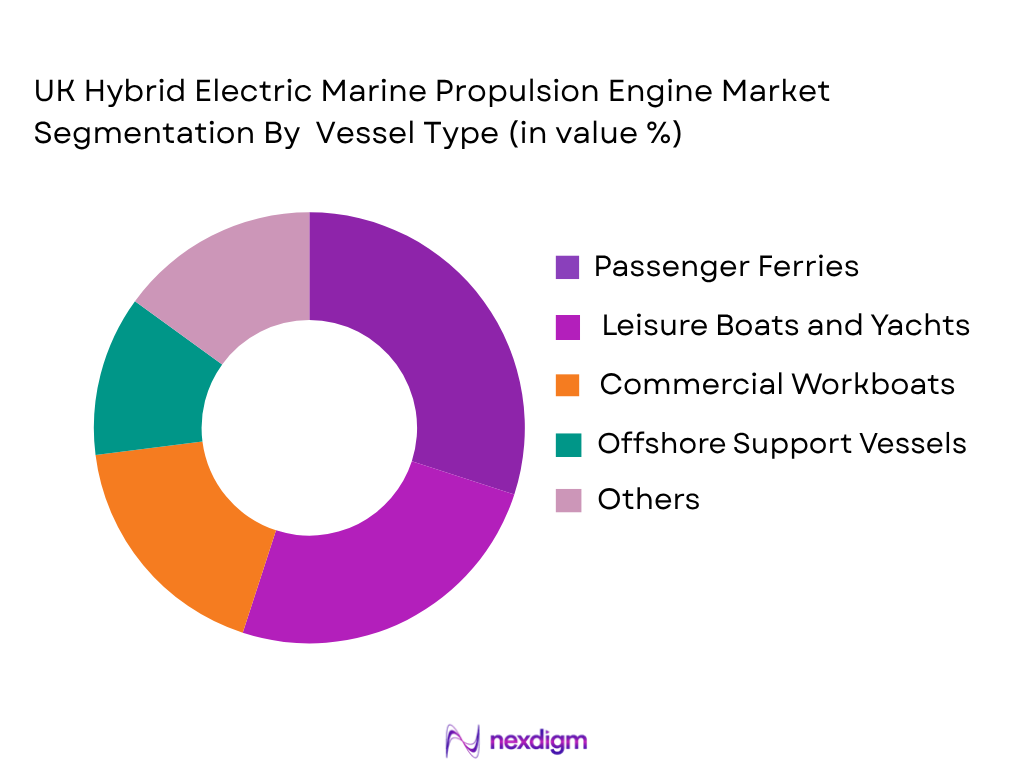
The UK Hybrid Electric Marine Propulsion Engine Market is segmented into commercial vessels, passenger ferries, leisure boats and yachts, offshore support vessels, fishing vessels, inland waterway vessels, and defense marine vessels. Among these segments, passenger ferries represent the dominant vessel category due to increasing electrification initiatives, predictable operating routes, frequent port operations, and strong requirements for emission reduction near coastal communities. Ferries operate under fixed schedules, making them suitable for hybrid propulsion systems that utilize battery power during docking, maneuvering, and short-distance operations while maintaining conventional propulsion capability for longer routes. Government-supported maritime decarbonization programs and increasing demand for low-emission transportation solutions are encouraging ferry operators to invest in hybrid propulsion upgrades. Leisure boats and yachts are also witnessing increased adoption due to demand for quieter propulsion, improved onboard comfort, and sustainable marine experiences.
Competitive Landscape
The UK Hybrid Electric Marine Propulsion Engine Market is characterized by the presence of established marine propulsion manufacturers, electrification technology providers, and integrated marine system developers. Major companies compete through hybrid propulsion architecture development, battery integration capabilities, retrofit expertise, vessel-specific solutions, and global marine service networks. Companies such as Wärtsilä, Rolls-Royce, ABB, Volvo Penta, and MAN Energy Solutions have strengthened their positions through advanced propulsion packages combining engines, electric motors, energy storage systems, and digital energy management platforms.
| Company | Establishment Year | Headquarters |
Hybrid Propulsion Solutions
|
Marine Battery Integration |
Key Vessel Applications
|
India Market Presence | Strategic Focus |
| Wärtsilä | 1834 | Helsinki, Finland | ~ | ~ | ~ | ~ | ~ |
| Rolls-Royce Holdings | 1906 | London, UK | ~ | ~ | ~ | ~ | ~ |
| Volvo Penta | 1907 | Gothenburg, Sweden | ~ | ~ | ~ | ~ | ~ |
| ABB | 1883 | Zurich, Switzerland | ~ | ~ | ~ | ~ | ~ |
| MAN Energy Solutions | 1758 | Augsburg, Germany | ~ | ~ | ~ | ~ | ~ |
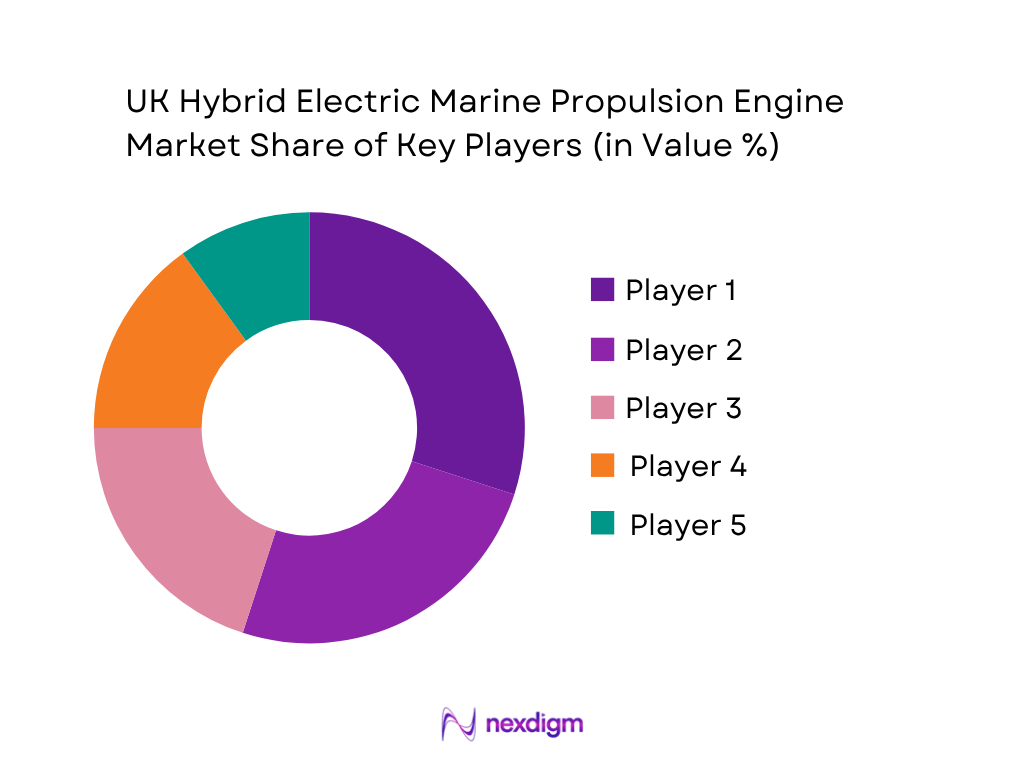
UK Hybrid Electric Marine Propulsion Engine Market Analysis
Growth Drivers
Increasing Maritime Decarbonization Initiatives and Demand for Low-Emission Vessel Technologies
The UK Hybrid Electric Marine Propulsion Engine Market is being supported by increasing government-led maritime decarbonization initiatives and regulatory pressure to reduce greenhouse gas emissions from marine operations. The UK Department for Transport reported that the maritime sector contributes around 10 million tonnes of CO₂ emissions annually, highlighting the requirement for cleaner propulsion technologies across commercial and passenger vessels. The UK has committed to achieving net-zero greenhouse gas emissions by 2050, with maritime transport identified as a key sector requiring transition toward alternative propulsion systems. According to the International Maritime Organization (IMO), international shipping accounted for approximately 706 million tonnes of CO₂ emissions in 2023, reinforcing global adoption of hybrid and electric propulsion technologies. Additionally, the UK registered approximately 11,000 commercial vessels in 2024, according to the Maritime and Coastguard Agency, creating a significant addressable fleet base for hybrid propulsion integration. Hybrid electric marine propulsion systems enable operators to reduce fuel consumption, optimize engine operating efficiency, and comply with increasingly strict emission requirements. The combination of regulatory support, fleet modernization requirements, and growing investment in sustainable marine infrastructure continues to accelerate adoption of hybrid propulsion technologies across ferries, offshore vessels, workboats, and leisure marine applications.
Expansion of UK Maritime Economy and Growth of Commercial Marine Activities
The expansion of maritime economic activities in the UK is creating stronger demand for efficient propulsion solutions, including hybrid electric marine propulsion engines. According to the UK Department for Transport, UK ports handled approximately 451 million tonnes of freight traffic in 2024, demonstrating continued dependence on marine transportation and supporting demand for advanced vessel technologies. The UK maritime sector contributes around £116 billion in economic value annually and supports more than 1 million jobs, according to Maritime UK, reflecting the importance of vessel efficiency improvements across commercial fleets. The World Bank reported that global merchandise trade volume continued expanding in 2024, supporting increased maritime transportation requirements and encouraging vessel operators to adopt technologies that reduce operational emissions. Additionally, the UK government identified more than 100 active ports across the country, creating opportunities for hybrid propulsion adoption in port service vessels, ferries, offshore support vessels, and coastal transportation applications. Increasing activity across offshore energy, passenger transportation, and commercial shipping operations is encouraging fleet owners to invest in propulsion technologies that improve operational efficiency while supporting environmental compliance objectives.
Market Challenges
High Technical Complexity and Infrastructure Limitations for Hybrid Marine Propulsion Adoption
The UK Hybrid Electric Marine Propulsion Engine Market faces challenges due to the technical complexity involved in integrating hybrid systems into existing vessels and the limited availability of supporting marine electrification infrastructure. According to the UK Department for Transport, the country operates more than 100 ports, but marine-specific charging infrastructure remains limited compared with road-based electric charging networks. The International Energy Agency reported that global battery storage deployment exceeded 90 GWh of additions in 2024, but marine applications continue to face challenges related to battery durability, safety requirements, and high energy-density requirements for vessel operations. The Maritime and Coastguard Agency highlights that marine battery systems require compliance with strict safety regulations covering fire protection, ventilation, and electrical system management. Existing vessels often require significant engineering modifications because hybrid propulsion integration involves changes to power management systems, electrical architecture, and onboard energy storage configurations. The UK fleet includes thousands of aging commercial and leisure vessels requiring technical assessment before retrofit implementation. These operational and infrastructure barriers can slow adoption among smaller vessel operators that lack specialized engineering capabilities and access to marine electrification support services.
Limited Availability of Skilled Workforce for Marine Electrification Technologies
A shortage of specialized technical skills represents a significant challenge for the UK Hybrid Electric Marine Propulsion Engine Market as marine electrification requires expertise in electrical engineering, battery management systems, automation, and advanced propulsion technologies. According to the UK Department for Transport Maritime Skills Commission, the UK maritime sector employs approximately 240,000 seafarers and shore-based workers, but the transition toward digital and low-carbon technologies requires additional specialized capabilities. The UK government’s Department for Education reported continued shortages in engineering-related occupations, affecting industries requiring advanced technical expertise. Hybrid marine propulsion systems require trained professionals capable of installing, maintaining, and troubleshooting integrated systems involving electric motors, lithium-ion batteries, power electronics, and energy management software. According to the International Energy Agency, clean energy technology deployment globally is increasing demand for skilled technical workers, with engineering skills identified as a key requirement for energy transition sectors. The limited availability of marine electrification specialists may increase implementation complexity for vessel operators, shipyards, and maintenance providers. Developing workforce capabilities through specialized training programs and technical certification will be essential for supporting wider deployment of hybrid propulsion systems across UK marine applications.
Market Opportunities
Increasing Electrification of Ferry and Short-Distance Marine Transportation Fleets
The UK Hybrid Electric Marine Propulsion Engine Market has significant growth opportunities from the electrification of ferries and short-distance marine transportation systems due to predictable routes and frequent port operations. According to the UK Department for Transport, domestic maritime passenger transport remains an important component of regional connectivity, with millions of passenger journeys conducted annually through ferry services and coastal transport networks. The UK operates more than 70 inhabited islands, many of which depend on ferry connectivity, creating demand for cleaner and more efficient marine transportation solutions. The Scottish Government has allocated significant investment toward reducing transport emissions, including maritime decarbonization initiatives under its climate strategy. The European Maritime Safety Agency reported continued growth in alternative propulsion adoption across short-sea shipping applications, particularly where operational routes allow efficient charging and energy management. Hybrid propulsion systems provide an intermediate pathway between conventional diesel vessels and fully electric vessels by enabling reduced fuel consumption, lower emissions, and improved operational flexibility. Increasing focus on sustainable coastal transportation, port emission reduction, and modernization of regional ferry fleets creates opportunities for hybrid propulsion suppliers, shipbuilders, and marine technology providers.
Growing Retrofit Potential Across Existing UK Marine Fleet
The large installed base of existing vessels in the UK creates substantial opportunities for hybrid electric propulsion retrofit solutions. According to the Maritime and Coastguard Agency, the UK maintains a large registered vessel population covering commercial vessels, fishing vessels, recreational boats, and specialized marine craft, creating demand for modernization technologies. The UK Department for Transport reported that maritime transport remains a major contributor to national logistics activity, with ports handling 451 million tonnes of freight traffic in 2024, increasing the importance of improving vessel efficiency. Retrofit hybrid propulsion systems allow operators to upgrade existing vessels without complete fleet replacement, making electrification more achievable for commercial operators. The International Maritime Organization has emphasized improving energy efficiency of existing ships through technologies including hybrid systems, optimized propulsion, and alternative energy solutions. The UK’s aging vessel fleet, combined with increasing environmental compliance requirements, provides opportunities for companies offering modular hybrid propulsion packages, battery integration solutions, and marine energy management systems. Retrofit adoption is expected to expand particularly among workboats, offshore support vessels, passenger vessels, and harbor craft where operational profiles are suitable for hybrid technology implementation.
Future Outlook
The UK Hybrid Electric Marine Propulsion Engine Market is expected to experience significant expansion due to increasing maritime decarbonization requirements, rising adoption of low-emission vessel technologies, and continuous improvements in battery energy density. Hybrid propulsion systems are expected to become increasingly important for ferries, workboats, offshore vessels, and leisure marine applications as operators focus on reducing fuel consumption and operational emissions. The market will also benefit from increasing retrofit opportunities as existing fleets transition toward cleaner propulsion technologies.
Growth will be supported by advancements in lithium-ion battery systems, intelligent energy management platforms, electric motor efficiency improvements, and integration of alternative fuels. Government initiatives supporting maritime emissions reduction and investments in sustainable marine infrastructure are expected to accelerate adoption across UK coastal and inland waterways.
Major Players
- Wärtsilä
- Rolls-Royce Holdings plc
- Volvo Penta
- ABB Ltd
- MAN Energy Solutions
- Cummins Inc.
- Caterpillar Inc.
- Kongsberg Maritime
- Siemens Energy
- Torqeedo
- ePropulsion
- BAE Systems
- Caterpillar Marine
- GE Aerospace
- Bruntons Propellers
Key Target Audience
- Shipbuilders and naval architecture companies
- Commercial vessel operators and fleet owners
- Leisure boat and yacht manufacturers
- Marine propulsion system manufacturers
- Battery and marine energy storage providers
- Investments and venture capitalist firms
- Government and regulatory bodies
- Ports and maritime infrastructure operators
Research Methodology
Step 1: Identification of Key Variables
The initial research phase involves developing a comprehensive ecosystem map covering all stakeholders operating within the UK Hybrid Electric Marine Propulsion Engine Market. This includes propulsion manufacturers, vessel operators, shipbuilders, battery suppliers, ports, regulatory bodies, and technology providers. Secondary research is conducted through industry databases, marine publications, company reports, and regulatory documents to identify major market variables affecting adoption.
Step 2: Market Analysis and Construction
This phase focuses on analysing historical market patterns, vessel electrification trends, propulsion technology adoption, and demand across different marine applications. Market sizing is developed using a combination of vessel installation data, propulsion system pricing, component contribution analysis, and supplier revenue assessment. Top-down and bottom-up approaches are applied to validate market estimates.
Step 3: Hypothesis Validation and Expert Consultation
Market assumptions are validated through discussions with marine propulsion specialists, vessel manufacturers, ship operators, technology suppliers, and industry professionals. Primary interviews are conducted to understand procurement behaviour, technology preferences, retrofit demand, pricing structures, and operational challenges influencing hybrid propulsion adoption.
Step 4: Research Synthesis and Final Output
The final stage integrates findings from primary and secondary research sources to develop a comprehensive market assessment. Data triangulation is performed by comparing supplier information, vessel deployment trends, regulatory developments, and technology adoption patterns to ensure accuracy and reliability of market insights.

- Executive Summary
- Research Methodology (Market Definition and Scope, Hybrid Electric Marine Propulsion Engine Classification Framework, Propulsion System Taxonomy, Market Sizing Methodology, Revenue Estimation Approach, Installed Base Assessment, Fleet Demand Analysis, Top-Down Market Analysis, Bottom-Up Market Analysis, Demand-Side Assessment, Supply-Side Assessment, Primary Interviews with Shipbuilders, Boat Manufacturers, Engine Suppliers, Marine Operators and Technology Providers, Secondary Research Sources, Data Validation, Market Triangulation, Forecasting Model, Assumptions, Limitations and Future Considerations)

- Definition and Scope
- Hybrid Electric Marine Propulsion Engine Industry Evolution
- UK Marine Electrification Transition Timeline
- Evolution of Marine Propulsion Technologies
- UK Maritime Decarbonization Landscape
- Marine Propulsion Technology Ecosystem
- Hybrid Electric Marine Propulsion Engine Value Chain Analysis
- Hybrid Electric Marine Propulsion Engine Supply Chain Analysis
- UK Marine Fleet Electrification Readiness Assessment
- Application Landscape of Hybrid Electric Marine Propulsion Systems

- Market Growth Drivers (Maritime Net-Zero Targets, IMO Emission Reduction Regulations, UK Clean Maritime Plan Implementation, Rising Fuel Cost Pressure, Expansion of Electric Vessel Fleets, Increasing Retrofit Demand, Government Funding for Marine Electrification, Growing Demand for Low-Noise Propulsion Systems)
- Market Challenges (High Initial Hybrid System Cost, Battery Weight Constraints, Limited Charging Infrastructure, Marine Battery Safety Concerns, Limited Skilled Workforce for Hybrid System Maintenance, Long Return-on-Investment Period, Vessel Integration Complexity)
- Market Opportunities (Electric Ferry Expansion, Port Electrification Initiatives, Offshore Hybridization Projects, Autonomous Vessel Development, Hydrogen Hybrid Propulsion Integration, Advanced Battery Technology Adoption, Commercial Vessel Retrofit Market)
- Market Trends (Increasing Lithium-Ion Battery Adoption, Modular Hybrid Propulsion Systems, AI-Based Energy Management Systems, Smart Marine Monitoring Systems, Sustainable Yacht Propulsion Solutions, Reduced Emission Harbor Operations)
- Technology Trends
- Government Regulations and Policy Framework
- Investment and Funding Landscape
- SWOT Analysis
- Porter’s Five Forces Analysis
- PESTLE Analysis
- Stakeholder Ecosystem Analysis
- Competition Ecosystem Analysis

- By Market Value (2020-2025)
- By Installed Hybrid Propulsion Systems (2020-2025)
- By Vessel Conversion and New Installation Volume (2020-2025)
- By Hybrid Propulsion Engine Capacity (2020-2025)
- By Average System Selling Price (2020-2025)
- By Component Revenue Contribution (2020-2025)

- By Hybrid Propulsion Architecture (In Value %)
Parallel Hybrid Propulsion Systems
Series Hybrid Propulsion Systems
Series-Parallel Hybrid Propulsion Systems
Diesel-Electric Hybrid Propulsion Systems
Plug-In Hybrid Marine Propulsion Systems
Fuel Cell Hybrid Propulsion Systems - By Propulsion Power Output (In Value %)
Below 50 kW Hybrid Systems
50–250 kW Hybrid Systems
250–500 kW Hybrid Systems
500–1,000 kW Hybrid Systems
Above 1 MW Hybrid Propulsion Systems - By Vessel Type (In Value %)
Leisure Boats and Yachts
Passenger Ferries
Commercial Workboats
Fishing Vessels
Offshore Support Vessels
Inland Waterway Vessels
Military and Defense Marine Vessels
Research and Survey Vessels - By Propulsion Component (In Value %)
Hybrid Marine Engines
Electric Motors
Lithium-Ion Battery Systems
Energy Storage Management Systems
Power Electronics and Inverters
Marine Control and Monitoring Systems - By Region (In Value %)
England
Scotland
Wales
Northern Ireland

- Market Share Analysis of Major Players
- Cross Comparison Parameters (Product Portfolio Coverage, Hybrid Propulsion Architecture Expertise, Marine Engine Power Range, Battery Integration Capability, Retrofit Solution Capability, Global Marine Installation Base, Energy Management System Capability, Marine OEM Partnership Network)
- Competitive Positioning Matrix
- Product Portfolio Benchmarking
- SWOT Analysis of Major Players
- Detailed Profiles of Major Companies
Volvo Penta
Yamaha Motor Co., Ltd.
Mercury Marine
MAN Energy Solutions
Rolls-Royce Holdings plc
Cummins Inc.
Caterpillar Inc.
Torqeedo
EPropulsion
Suzuki Motor Corporation
ABB Ltd
Siemens Energy
Kongsberg Maritime
Wärtsilä
Bruntons Propellers

- Marine Operator Adoption Assessment
- Vessel Owner Purchase Behaviour
- Fleet Electrification Readiness Assessment
- Application-Based Demand Analysis
- Procurement Decision-Making Analysis
- Hybrid Propulsion Performance Preference Analysis
- Total Cost of Ownership Analysis
- Retrofit Adoption Analysis

- By Market Value (2026-2035)
- By Installed Hybrid Propulsion Systems (2026-2035)
- By Vessel Conversion and New Installation Volume (2026-2035)
- By Hybrid Propulsion Engine Capacity (2026-2035)
- By Average System Selling Price (2026-2035)
- By Component Revenue Contribution (2026-2035)


 Request a Sample
 Ask for Customization
 Get a Quote
 Enquire Now