
 Download PDF
Market Overview
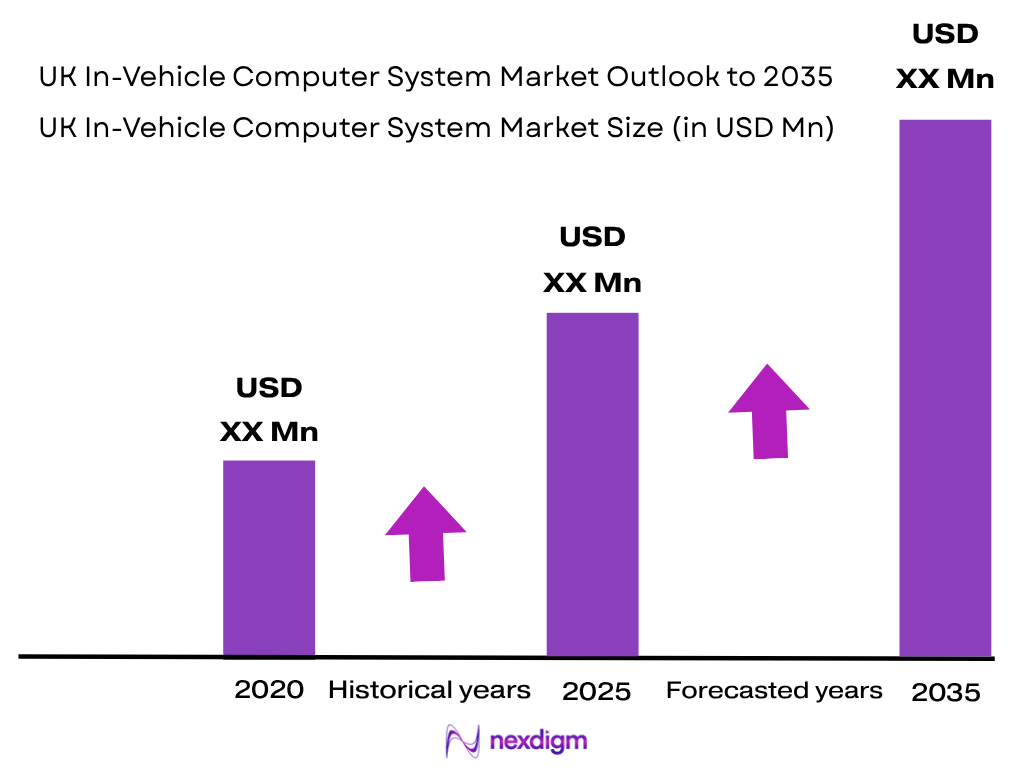
The UK In-Vehicle Computer System Market is valued at ~USD XX billion in 2024, supported by increasing adoption of connected vehicle technologies, fleet digitalization, public safety communication systems, and edge computing platforms. The market growth is driven by rising demand for real-time vehicle data processing, AI-based fleet analytics, and advanced driver assistance applications. The UK had more than 40 million licensed vehicles recorded in 2024, creating a significant installed base requiring digital computing solutions. Increasing deployment of 5G networks, vehicle telematics, and software-defined vehicle architectures is further supporting market expansion.
The UK In-Vehicle Computer System Market is concentrated around major automotive and technology hubs including London, West Midlands, Greater Manchester, and Oxford-Cambridge technology corridors. London dominates due to high adoption of connected mobility solutions, public transport digitalization, and extensive commercial fleet operations. The West Midlands remains a key automotive technology hub due to the presence of vehicle manufacturers, engineering suppliers, and testing facilities. Oxford and Cambridge contribute through AI research, autonomous mobility development, and advanced computing innovation. The concentration of automotive manufacturing, logistics operations, and technology companies strengthens demand for vehicle computing platforms across these regions.
Market Segmentation
By System Type
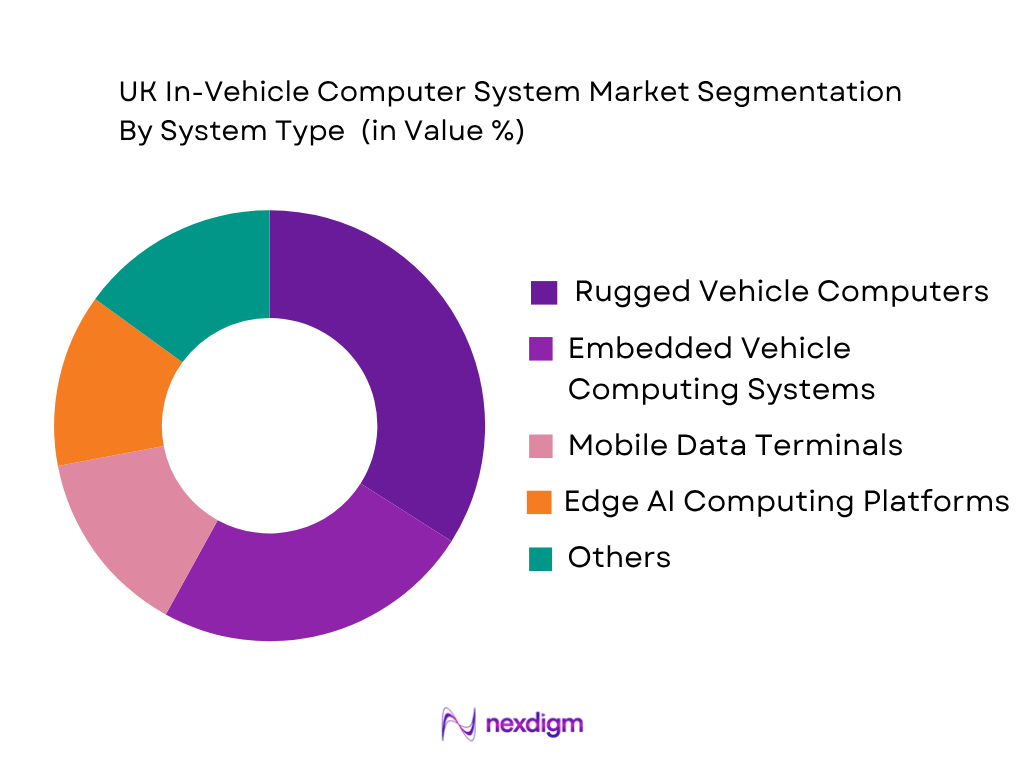
The UK In-Vehicle Computer System Market is segmented into rugged vehicle computers, embedded computing systems, mobile data terminals, edge AI platforms, and vehicle control computing units. Rugged vehicle computers hold a dominant position due to their extensive deployment across public safety fleets, logistics operations, and industrial vehicles where reliability under harsh operating conditions is essential. Police vehicles, emergency response units, and commercial fleets increasingly require computing systems capable of supporting navigation, communication, video monitoring, and real-time data processing. The increasing adoption of connected fleet platforms and AI-based analytics is strengthening demand for high-performance rugged computing solutions. Their longer lifecycle, resistance to vibration and temperature variations, and compatibility with multiple software applications contribute to their leading adoption across enterprise and government vehicle applications.
By Application
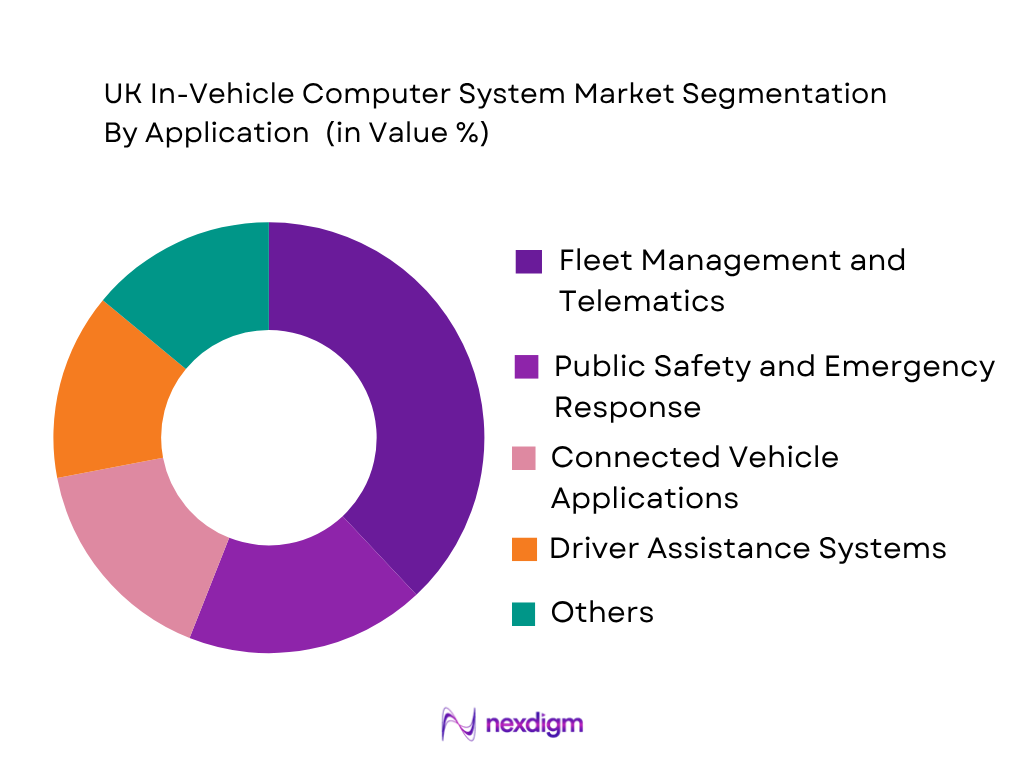
The UK In-Vehicle Computer System Market is segmented by fleet management, public safety, connected vehicle applications, driver assistance, logistics operations, and industrial mobility. Fleet management and telematics represent the dominant application segment due to increasing requirements for vehicle tracking, route optimization, predictive maintenance, and operational efficiency. Commercial fleet operators are adopting advanced computing systems to process vehicle information, monitor driver performance, and integrate cloud-based fleet management platforms. The expansion of e-commerce logistics and last-mile delivery operations has further accelerated demand for connected computing solutions. Additionally, government initiatives supporting intelligent transportation systems and connected mobility infrastructure are encouraging adoption of vehicle computing technologies across commercial and public transportation sectors.
Competitive Landscape
The UK In-Vehicle Computer System Market is characterized by competition among global rugged computing manufacturers, automotive technology suppliers, semiconductor companies, and fleet technology providers. Major players compete through hardware durability, AI processing capability, connectivity support, cybersecurity features, and integration with vehicle software ecosystems. The market includes established industrial computing companies and automotive technology firms providing solutions for public safety, logistics, defence, and connected vehicle applications.
| Company | Establishment Year | Headquarters | Product Portfolio | Vehicle Integration Capability | AI Computing Capability |
| Panasonic | 1918 | Japan | ~ | ~ | ~ |
| Getac | 1989 | Taiwan | ~ | ~ | ~ |
| Zebra Technologies | 1969 | USA | ~ | ~ | ~ |
| Advantech | 1983 | Taiwan | ~ | ~ | ~ |
| Kontron | 1959 | Germany | ~ | ~ | ~ |
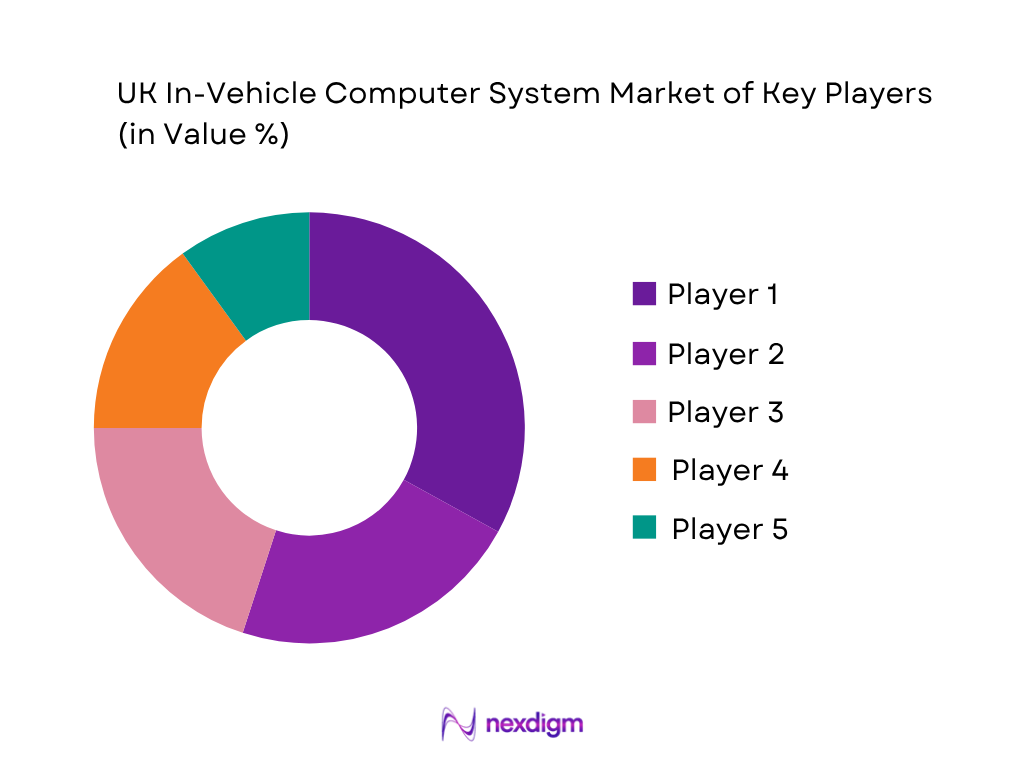
UK In-Vehicle Computer System Market Analysis
Growth Drivers
Public Safety Fleet Digitalization
Public safety fleet digitalization is becoming a significant growth driver for UK in-vehicle computer systems due to increasing demand for connected emergency response, real-time data sharing, and mobile command capabilities. The UK has approximately 42 million registered road vehicles, creating a large ecosystem requiring advanced fleet communication and monitoring solutions. The emergency services sector continues to modernize vehicle operations through connected computing platforms, supporting police, ambulance, and fire service fleets. The UK government reported that the country had more than 5.7 million businesses registered in 2024, increasing demand for secure commercial and operational mobility solutions across organizations. In addition, the UK’s digital infrastructure expansion supports adoption of rugged vehicle computers, mobile data terminals, and edge computing platforms. The National Police Chiefs’ Council and emergency response organizations are increasingly adopting digital systems that require onboard processing capabilities for vehicle location, communication, incident management, and video analytics. These developments are increasing demand for high-performance in-vehicle computing systems capable of operating under harsh conditions while maintaining secure connectivity, data processing, and interoperability with public safety networks.
Expansion of Commercial Fleet Telematics
The expansion of commercial fleet telematics is accelerating adoption of in-vehicle computer systems across logistics, transportation, and delivery sectors in the UK. The country operates one of Europe’s most developed logistics networks, supported by more than 500,000 heavy goods vehicles and millions of commercial light vehicles operating across freight, construction, retail, and service industries. According to government transport statistics, UK road freight remains a critical component of domestic supply chains, increasing demand for fleet optimization technologies such as vehicle tracking, route management, driver monitoring, and predictive maintenance. The UK economy recorded a GDP value of approximately USD 3.3 trillion in 2024, supporting continued investment in transportation digitization and operational efficiency. Commercial operators are increasingly deploying onboard computing platforms to process telematics data locally, improve fuel efficiency, enhance driver safety, and integrate with enterprise fleet software. Growth in e-commerce logistics and last-mile delivery operations is further encouraging adoption of rugged vehicle computers and connected computing systems capable of supporting real-time communication, navigation, and analytics applications.
Market Challenges
High Rugged Hardware Costs
High rugged hardware costs remain a challenge for the UK in-vehicle computer system market as advanced vehicle computing platforms require specialized components designed for vibration resistance, extreme temperature operation, cybersecurity protection, and long lifecycle performance. Unlike consumer-grade computing devices, rugged vehicle computers require industrial-grade processors, reinforced enclosures, specialized mounting systems, and extended warranty support, increasing deployment complexity for fleet operators. The UK transportation sector includes approximately 40 million licensed vehicles, creating significant replacement and upgrade requirements across commercial and public fleets. Smaller fleet operators often face difficulties allocating capital toward advanced onboard computing infrastructure due to competing operational expenses. The UK inflation environment has also affected technology procurement decisions, with consumer price inflation recorded at around 2.5% during 2024 according to national economic statistics, increasing pressure on businesses managing equipment investments. Additionally, public sector organizations operating emergency fleets must balance digital transformation initiatives with budget constraints. These factors can delay adoption of advanced in-vehicle computers, particularly among small and medium-sized fleet operators requiring cost-effective solutions with long operational lifecycles.
Legacy Software Integration Complexity
Legacy software integration complexity represents a major barrier for UK in-vehicle computer system adoption as many existing fleets operate with older fleet management platforms, vehicle communication systems, and proprietary software environments. Integrating modern edge computing systems with legacy architectures requires significant technical expertise, software customization, and cybersecurity validation. The UK has a highly developed transportation ecosystem, with millions of vehicles operating across logistics, public transportation, emergency response, and industrial applications, increasing the complexity of modernization efforts. Government digital infrastructure initiatives have highlighted the importance of interoperability and secure data exchange across critical services. Furthermore, the UK cybersecurity sector reported continued growth in demand for secure digital systems as connected devices and vehicle networks become increasingly exposed to cyber threats. Fleet operators must ensure compatibility between in-vehicle computers, telematics platforms, enterprise resource planning systems, and cloud-based applications. The transition toward software-defined vehicles and connected mobility solutions increases this complexity, requiring organizations to upgrade hardware and software simultaneously while maintaining operational continuity. These integration requirements can increase deployment timelines and restrict adoption among organizations with limited technical resources.
Market Opportunities
AI-Based Edge Vehicle Computing
AI-based edge vehicle computing presents a significant opportunity for the UK in-vehicle computer system market as organizations increasingly require real-time processing capabilities without relying entirely on cloud infrastructure. Edge computing enables vehicles to analyze camera feeds, sensor data, driver behavior information, and operational metrics directly onboard. The UK has established itself as a major technology economy, with digital sectors contributing significantly to national economic activity. According to government statistics, the UK employed more than 1.7 million people in digital technology-related industries, supporting innovation in artificial intelligence, connected mobility, and automotive software development. The increasing adoption of advanced driver assistance systems, autonomous technology trials, and intelligent fleet management solutions creates demand for powerful onboard computing platforms. Public and private fleets require faster decision-making capabilities for safety monitoring, route optimization, and predictive maintenance. AI-enabled vehicle computers can support applications including automated inspection, video analytics, driver assistance, and real-time fleet intelligence. Growing investment in artificial intelligence infrastructure and connected transport initiatives creates opportunities for suppliers offering high-performance processors, secure operating systems, and automotive-grade edge computing platforms.
Autonomous Fleet Computing Systems
Autonomous fleet computing systems provide future growth opportunities for the UK in-vehicle computer system market due to increasing development of automated mobility solutions, connected transport networks, and intelligent logistics operations. The UK government has supported autonomous vehicle testing and smart mobility initiatives through regulatory frameworks designed to encourage safe deployment of automated technologies. The country recorded more than 40 million licensed vehicles in operation, providing a broad environment for future integration of advanced computing systems across passenger, commercial, and industrial fleets. Autonomous and semi-autonomous vehicles require powerful onboard computers capable of processing large volumes of sensor information from cameras, radar, lidar, and communication networks. The expansion of logistics automation is also increasing demand for autonomous delivery vehicles and smart warehouse transportation systems. UK businesses continue to invest in productivity improvements as the economy adapts to digital transformation, with GDP reaching approximately USD 3.3 trillion in 2024. In-vehicle computing platforms supporting autonomous operations, fleet coordination, and vehicle-to-everything communication are positioned to benefit from increasing demand for intelligent transportation infrastructure and next-generation mobility solutions.
Future Outlook
The UK In-Vehicle Computer System Market is expected to experience significant growth over the forecast period, driven by increasing vehicle connectivity, AI adoption, and digital transformation across fleet operations. The transition toward software-defined vehicles will increase demand for high-performance computing platforms capable of processing large volumes of sensor and operational data. Growth in autonomous mobility testing, public safety modernization, and commercial fleet automation will further support adoption. The development of secure connected vehicle ecosystems and expansion of 5G infrastructure will create additional opportunities for advanced in-vehicle computing solutions.
Major Players
- Panasonic Holdings Corporation
- Getac Technology Corporation
- Zebra Technologies
- Advantech
- Kontron AG
- NVIDIA Corporation
- Qualcomm Technologies
- Intel Corporation
- Bosch Mobility
- Continental AG
- Trimble Inc.
- Geotab
- Moxa Inc.
- Axiomtek
- Digi International
Key Target Audience
- Automotive OEMs and vehicle manufacturers
- Commercial fleet operators and logistics companies
- Public safety organizations (UK Police Forces, Fire and Rescue Services, Ambulance Trusts)
- Government and regulatory bodies (Department for Transport, National Highways, UK Vehicle Certification Agency)
- Investments and venture capitalist firms
- Automotive electronics suppliers
- Semiconductor and computing hardware manufacturers
- Connected mobility technology providers
Research Methodology
Step 1: Identification of Key Variables
The initial stage involves defining the UK In-Vehicle Computer System ecosystem by mapping hardware suppliers, automotive manufacturers, fleet operators, government agencies, connectivity providers, and technology developers. Secondary research is conducted to identify market drivers, technology trends, adoption factors, and regulatory influences affecting vehicle computing solutions.
Step 2: Market Analysis and Construction
Historical market information is analyzed through assessment of vehicle deployment trends, fleet digitalization levels, computing hardware adoption, and application penetration. Supply-side and demand-side factors are evaluated to estimate market development patterns and identify major technology segments contributing to industry growth.
Step 3: Hypothesis Validation and Expert Consultation
Market assumptions are validated through discussions with industry participants including vehicle technology suppliers, fleet operators, system integrators, and automotive technology specialists. These consultations provide insights into deployment challenges, purchasing behavior, technology preferences, and future adoption opportunities.
Step 4: Research Synthesis and Final Output
The final stage combines primary and secondary research findings to develop a comprehensive assessment of the UK In-Vehicle Computer System Market. Data validation is conducted through triangulation of industry information, technology analysis, and stakeholder perspectives to ensure accuracy and reliability.

- Executive Summary
- Research Methodology (Market Definition and Scope, In-Vehicle Computer System Ecosystem Mapping, Market Sizing Framework, Top-Down Market Assessment, Bottom-Up Market Validation, Demand-Side Analysis, Supply-Side Analysis, Primary Industry Interviews, Fleet Operator Assessment, Public Safety Agency Assessment, Technology Adoption Analysis, Data Triangulation, Forecasting Model, Research Limitations)

- Definition and Scope
- Market Evolution and Development Timeline of Vehicle Computing Platforms
- UK Connected Vehicle Ecosystem Analysis
- UK Automotive Digital Transformation Landscape
- Connected Mobility Infrastructure Assessment
- Fleet Digitalization Ecosystem Analysis
- Public Safety Mobile Computing Ecosystem Analysis
- Commercial Vehicle Telematics Ecosystem
- Software-Defined Vehicle Computing Architecture Analysis

- Growth Drivers (Public Safety Fleet Digitalization, Expansion of Commercial Fleet Telematics, 5G Connected Vehicle Adoption, Edge AI Processing Requirements, Software Defined Vehicle Development, Fleet Automation)
- Market Challenges (High Rugged Hardware Costs, Legacy Software Integration Complexity, Automotive Cybersecurity Risks, Power Management Constraints, Vehicle Installation Complexity, Technology Obsolescence)
- Market Opportunities (AI-Based Edge Vehicle Computing, Autonomous Fleet Computing Systems, Secure Zero Trust Vehicle Architecture, V2X Computing Nodes, Connected Public Safety Platforms, Smart Logistics Computing)
- Market Trends (Software Defined Vehicles, AI Enabled Vehicle Platforms, Connected Fleet Operations, Vehicle Cybersecurity Solutions, Cloud-Connected Mobility Platforms, Autonomous Driving Computing Requirements)
- Government Regulations and Industry Standards (UK Connected and Automated Mobility Strategy, Vehicle Cybersecurity Regulations, Data Protection Requirements, Transport Infrastructure Standards, Automotive Safety Compliance)
- Porter’s Five Forces Analysis
- PESTLE Analysis

- By Market Value (2020-2025)
- By Installed Vehicle Base (2020-2025)
- By Hardware Deployment Volume (2020-2025)
- By Average System Deployment Value (2020-2025)
- By Vehicle Computing Unit Adoption (2020-2025)

- By Vehicle Type (In Value %)
Passenger Vehicles
Commercial Vehicles
Light Commercial Vehicles
Heavy Commercial Vehicles
Emergency Response Vehicles
Public Transportation Vehicles
Special Purpose Vehicles - By System Type (In Value %)
Rugged Vehicle Computers
Embedded Vehicle Computing Systems
Mobile Data Terminals
Edge Computing Platforms
Vehicle Control Computing Units
Fleet Management Computing Devices - By Application (In Value %)
Fleet Management and Telematics
Public Safety and Emergency Response
Connected Vehicle Applications
Driver Assistance and Safety Monitoring
Logistics and Delivery Operations
Industrial and Warehouse Mobility
Defence and Security Applications - By Connectivity Technology (In Value %)
4G LTE Connected Systems
5G Vehicle Computing Systems
Wi-Fi Enabled Vehicle Computers
Satellite Connected Computing Systems
Vehicle-to-Everything (V2X) Communication Systems - By Processor Architecture (In Value %)
ARM-Based Vehicle Computing Platforms
x86-Based Industrial Vehicle Computers
GPU Accelerated AI Computing Systems
Edge AI Processing Platforms - By End User (In Value %)
Government Fleet Operators
Police and Emergency Services
Logistics and Transportation Companies
Construction and Industrial Operators
Public Transport Operators
Private Commercial Fleet Owners

- Market Share Analysis of Major Players (By Revenue, Product Category, Vehicle Application, Customer Segment)
- Cross Comparison Parameters (Product Portfolio Breadth, Rugged Computing Capability, AI Processing Capability, Vehicle Integration Expertise, Connectivity Technology Support, Public Safety Deployment Experience, Fleet Management Integration Capability, Global Manufacturing Footprint)
- SWOT Analysis of Major Players
- Pricing and Product Positioning Analysis
- Detailed Profiles of Major Companies
Rugged Vehicle Computer and Embedded System Providers
Panasonic Holdings Corporation
Getac Technology Corporation
Zebra Technologies
Advantech
Axiomtek
Automotive Computing and Connected Vehicle Technology Providers
NVIDIA
Qualcomm Technologies
Intel Corporation
Continental AG
Robert Bosch GmbH
Fleet and Mobility Computing Providers
Trimble Inc.
Geotab
Moxa
Kontron AG
Digi International

- Fleet Operator Adoption Assessment
- Public Safety Agency Computing Requirements
- Commercial Fleet Digitalization Assessment
- Industrial Mobility Computing Assessment
- Purchasing Decision Factors
- Deployment Challenges Assessment

- By Market Value (2026-2035)
- By Installed Vehicle Base (2026-2035)
- By Hardware Deployment Volume (2026-2035)
- By Average System Deployment Value (2026-2035)
- By Vehicle Computing Unit Adoption (2026-2035)


 Request a Sample
 Ask for Customization
 Get a Quote
 Enquire Now