

 Download PDF
 Download PDF
Market Overview
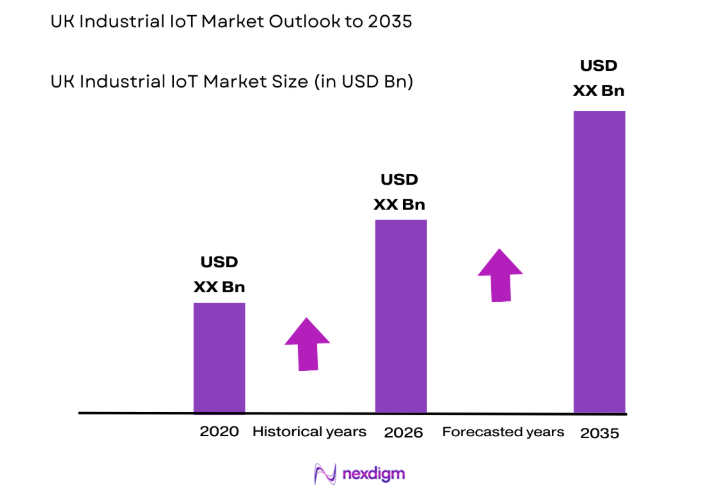
The UK Industrial IoT market is expected to reach USD ~ billion in 2024, driven by the growing demand for connected devices, sensors, and automation technologies across industries such as manufacturing, automotive, and energy. The increasing adoption of smart devices, data analytics, and real-time monitoring is enabling companies to optimize their operations and enhance productivity. Furthermore, the expansion of 5G networks and advancements in cloud computing are expected to fuel the market growth, offering faster and more reliable IoT solutions.
Dominant regions such as London, Manchester, and the West Midlands lead the UK’s Industrial IoT market due to their established industrial infrastructure and technological advancements. London is a hub for tech startups and research institutions that drive IoT innovation, while Manchester and the West Midlands benefit from robust manufacturing and automotive sectors that are increasingly integrating IoT solutions into their operations. These areas are supported by strong government initiatives to promote digital transformation, making them ideal environments for Industrial IoT adoption.
Market Segmentation
By Product Type
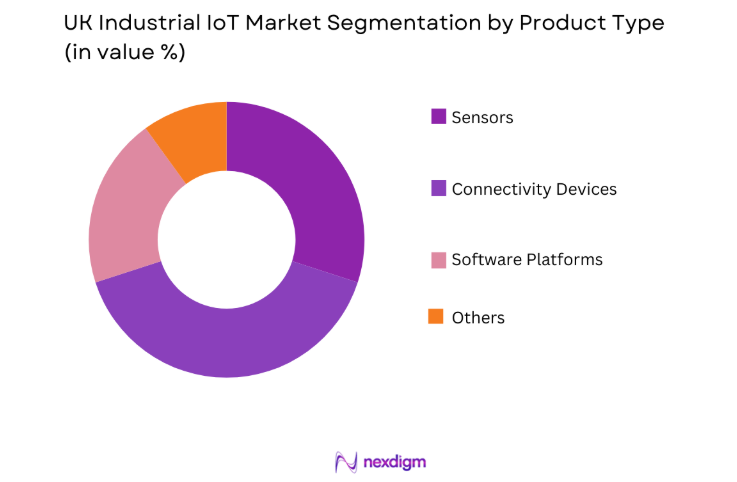
The UK Industrial IoT market is segmented by product type into sensors, connectivity devices, software platforms, and others. Sensors have gained a dominant market share due to their critical role in collecting real-time data, which is essential for monitoring equipment, optimizing processes, and predicting maintenance needs. The increasing use of sensors in industries like manufacturing, automotive, and energy, where real-time data collection and predictive analytics are crucial, has made them a key component of Industrial IoT systems. Additionally, advancements in sensor technologies, such as the development of smaller, more cost-effective sensors, are further driving their widespread adoption across various industries.
By End-User Industry
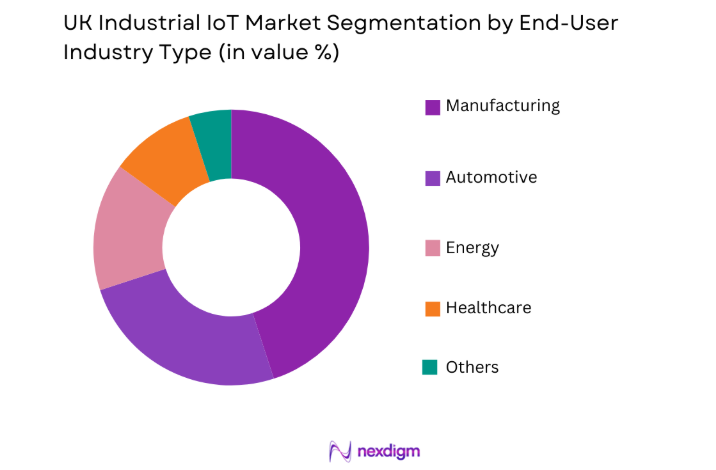
The UK Industrial IoT market is segmented by end-user industry into manufacturing, automotive, energy, healthcare, and others. The manufacturing industry holds a dominant market share in industrial IoT adoption, driven by the increasing need for smart factories and automation. Industrial IoT solutions in manufacturing enable real-time monitoring of equipment, predictive maintenance, and improved efficiency across production lines. As Industry 4.0 technologies such as robotics, AI, and machine learning become more integrated into manufacturing processes, the demand for Industrial IoT solutions continues to rise. The increasing focus on digital transformation, cost reduction, and operational optimization is further propelling the market’s growth in the manufacturing sector.
Competitive Landscape
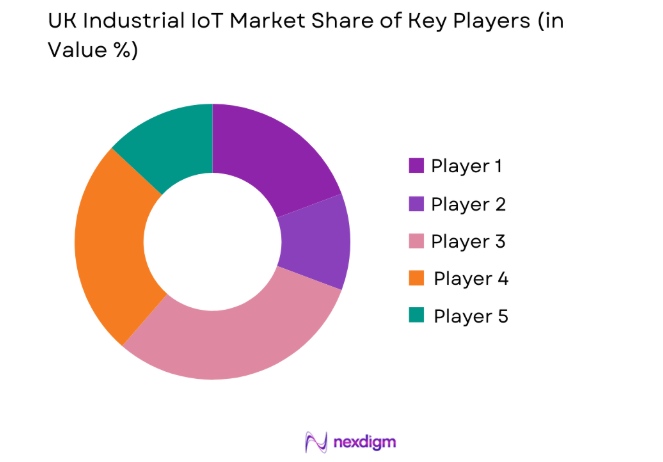
The UK Industrial IoT market is competitive, with major global players and local innovators continuously evolving their product offerings to meet the growing demand for smart solutions. Leading companies are focusing on enhancing their IoT platforms with integrated AI, machine learning, and cloud computing capabilities. Strategic partnerships, acquisitions, and continuous innovation in connectivity, security, and data analytics are key strategies to capture a larger market share. Government initiatives aimed at fostering digital transformation and the adoption of smart technologies further increase the competition within the market.
| Company Name | Establishment Year | Headquarters | Technology Focus | Market Reach | Key Products | Revenue | Additional Parameter |
| Siemens | 1847 | Munich, Germany | ~ | ~ | ~ | ~ | ~ |
| Honeywell | 1906 | Morris Plains, USA | ~ | ~ | ~ | ~ | ~ |
| IBM | 1911 | Armonk, USA | ~ | ~ | ~ | ~ | ~ |
| Rockwell Automation | 1903 | Milwaukee, USA | ~ | ~ | ~ | ~ | ~ |
| Cisco Systems | 1984 | San Jose, USA | ~ | ~ | ~ | ~ | ~ |
UK Industrial IoT Market Analysis
Growth Drivers
Increased Adoption of Smart Manufacturing
The increased adoption of smart manufacturing is one of the key growth drivers of the UK Industrial IoT market. With the rise of Industry 4.0 technologies, manufacturing companies are increasingly integrating IoT solutions into their operations to improve efficiency, optimize supply chains, and reduce downtime. IoT-enabled smart factories provide real-time data analytics, predictive maintenance, and remote monitoring capabilities, allowing manufacturers to make informed decisions that enhance operational efficiency. Moreover, IoT technologies allow for automation of production lines, reducing human error and improving product quality. As UK manufacturers continue to invest in automation and digital transformation to stay competitive, the demand for Industrial IoT solutions will continue to rise, making smart manufacturing a significant growth driver for the market.
Government Support for Digital Transformation
Government initiatives supporting digital transformation are a critical growth driver for the UK Industrial IoT market. The UK government has implemented various policies and funding programs aimed at accelerating the adoption of digital technologies in industries such as manufacturing, healthcare, and energy. Initiatives like the Made Smarter program, which aims to increase the adoption of advanced technologies in UK manufacturing, have created favorable conditions for Industrial IoT solutions. The government’s focus on smart cities, smart grids, and sustainable energy solutions is also driving the demand for IoT-enabled technologies. Furthermore, policies aimed at reducing carbon emissions and improving energy efficiency are encouraging industries to adopt smart IoT systems that enable better resource management and sustainability. As these government initiatives continue to promote digital transformation, the adoption of Industrial IoT technologies will be further supported, driving market growth.
Market Challenges
Data Security and Privacy Concerns
Data security and privacy concerns are major challenges in the UK Industrial IoT market. With the increased interconnectivity of devices and systems, there is a growing risk of cyberattacks and data breaches. Industrial IoT systems often handle sensitive information, such as production data, equipment specifications, and proprietary processes, making them prime targets for cybercriminals. Additionally, the lack of standardized security protocols across IoT devices and platforms can create vulnerabilities, further exacerbating the risks. As industries become more reliant on connected systems, ensuring the security of these devices and the data they collect is crucial to maintaining operational continuity. To address these concerns, companies must invest in robust cybersecurity solutions and adopt industry-specific security frameworks, which can add to the cost and complexity of implementing IoT technologies.
Integration with Legacy Systems
Another significant challenge for the UK Industrial IoT market is the integration of IoT solutions with existing legacy systems. Many businesses in the UK still rely on outdated equipment and infrastructure that was not designed to work with modern IoT technologies. Integrating new IoT systems with these legacy systems can be complex, time-consuming, and costly, as businesses may need to upgrade their entire infrastructure to ensure compatibility. Furthermore, the lack of standardized protocols across various IoT devices can create interoperability issues, making it difficult for companies to achieve seamless communication between their existing systems and new IoT solutions. This challenge is particularly pressing for small and medium-sized enterprises (SMEs) that may not have the resources to undertake large-scale system upgrades, limiting their ability to adopt Industrial IoT technologies.
Opportunities
Expansion of 5G Networks and Connectivity
The expansion of 5G networks presents a significant opportunity for the UK Industrial IoT market. 5G technology offers faster data transfer speeds, lower latency, and increased connectivity, making it ideal for supporting real-time IoT applications in industrial settings. The enhanced connectivity provided by 5G networks enables the seamless exchange of data between machines, sensors, and control systems, which is essential for optimizing manufacturing processes, monitoring critical infrastructure, and enabling autonomous operations. As 5G networks continue to roll out across the UK, they will provide the backbone for the next generation of Industrial IoT applications, driving demand for IoT solutions that require high-speed, low-latency communication. Industries such as manufacturing, automotive, and logistics will benefit greatly from 5G-enabled IoT systems, creating new opportunities for growth in the market.
Adoption of IoT in Energy and Sustainability Applications
The adoption of IoT technologies in energy and sustainability applications presents a significant growth opportunity for the UK Industrial IoT market. As the UK focuses on achieving its sustainability goals and reducing carbon emissions, the demand for IoT-enabled solutions to monitor and optimize energy usage is increasing. IoT technologies are being used to enhance the efficiency of energy management systems, including smart grids, smart meters, and renewable energy sources. By providing real-time data on energy consumption, IoT systems enable businesses and utilities to make more informed decisions about energy usage, identify inefficiencies, and reduce waste. Furthermore, IoT solutions play a key role in enabling the transition to a low-carbon economy by supporting the integration of renewable energy sources and enhancing grid management. As the UK continues to push for sustainability and energy efficiency, the adoption of Industrial IoT technologies in the energy sector will drive market growth.
Future Outlook
The UK Industrial IoT market is expected to continue its strong growth over the next five years, driven by advancements in IoT technologies and the increasing adoption of smart manufacturing, energy management, and automation solutions across industries. The expansion of 5G networks and ongoing government initiatives to promote digital transformation will further support the growth of the market. As industries seek to enhance productivity, reduce costs, and meet sustainability goals, demand for Industrial IoT solutions will continue to rise. The market will also see greater adoption of AI, machine learning, and edge computing in IoT systems, enabling real-time data analysis and optimization of industrial operations.
Major Players
- Siemens
- Rockwell Automation
- Honeywell International
- ABB
- IBM
- Cisco Systems
- Microsoft
- GE Digital
- PTC
- Schneider Electric
- SAP
- Oracle
- Yokogawa Electric
- Emerson Electric
- Bosch Rexroth
Key Target Audience
- Investments and venture capitalist firms
- Government and regulatory bodies
- Industrial IoT solution providers
- Manufacturing industry leaders
- Energy and utility companies
- Automotive manufacturers
- Logistics companies
Research Methodology
Step 1: Identification of Key Variables
Identification of key market drivers, challenges, and technological trends affecting the UK Industrial IoT market, including digital transformation, 5G expansion, and sustainability goals.
Step 2: Market Analysis and Construction
In-depth analysis of market segmentation, competition, and industry dynamics is conducted to create an accurate market model.
Step 3: Hypothesis Validation and Expert Consultation
Consultations with industry experts and key stakeholders are conducted to validate hypotheses and refine the market analysis.
Step 4: Research Synthesis and Final Output
The final research findings are synthesized into a comprehensive report that provides actionable insights, strategic recommendations, and growth opportunities for stakeholders.

- Executive Summary
- Research Methodology (Definitions, Scope, Industry Assumptions, Market Sizing Approach, Primary & Secondary Research Framework, Data Collection & Verification Protocol, Analytic Models & Forecast Methodology, Limitations & Research Validity Checks)

- Market Definition and Scope
- Value Chain & Stakeholder Ecosystem
- Regulatory / Certification Landscape
- Sector Dynamics Affecting Demand

- Growth Drivers
Rise in Industrial Automation Across Key Sectors
Increased Investment in Smart Cities and Infrastructure
Growth of Big Data Analytics and Machine Learning in Industrial Operations - Market Challenges
Data Privacy and Cybersecurity Concerns
High Initial Investment and Maintenance Costs for IoT Systems
Integration Complexities with Legacy Systems - Market Opportunities
Increased Demand for Industrial IoT Solutions in SMEs
Adoption of Predictive Maintenance Technologies
Expansion of IoT Applications in Smart Manufacturing - Trends
Adoption of 5G Networks for Enhanced Industrial IoT Connectivity
Increase in Use of Artificial Intelligence and Machine Learning in IoT - Government Regulations
- SWOT Analysis
- Porter’s Five Forces

- By Market Value, 2020-2025
- By Installed Units, 2020-2025
- By Average System Price, 2020-2025
- By System Complexity Tier, 2020-2025

- By System Type (In Value%)
Industrial Sensors
IoT Gateways
Industrial Wearables
Smart Meters
Robotic Process Automation - By Platform Type (In Value%)
Cloud-based IoT Platforms
Edge Computing Platforms
Network Platforms
Security Platforms - By Fitment Type (In Value%)
New IoT Installations
Upgraded IoT Systems
Integrated Smart Factory Solutions
IoT for Predictive Maintenance - By End User Segment (In Value%)
Manufacturing
Energy and Utilities
Transport and Logistics

- Market Share Analysis
- Cross Comparison Parameters (IoT System Integration, Platform Flexibility, Cost of Ownership, Security Features, Data Processing Speed, IoT Network Coverage, Vendor Reputation)
- SWOT Analysis of Key Competitors
- Pricing & Procurement Analysis
- Key Players
Siemens AG
General Electric
Cisco Systems
Honeywell International
Bosch Rexroth
Schneider Electric
Rockwell Automation
ABB Ltd
Mitsubishi Electric
Emerson Electric
Intel Corporation
Samsung Electronics
IBM
Microsoft
Parker Hannifin

- Increasing Adoption of IoT Solutions in Manufacturing
- Healthcare Providers Investing in IoT for Remote Monitoring
- Energy Sector Leveraging IoT for Energy Management and Monitoring
- Logistics Companies Enhancing Efficiency with IoT-enabled Fleet Management

- Forecast Market Value, 2026-2035
- Forecast Installed Units, 2026-2035
- Price Forecast by System Tier, 2026-2035
- Future Demand by Platform, 2026-2035


 Request a Sample
 Ask for Customization
 Get a Quote
 Enquire Now