
 Download PDF
Market Overview
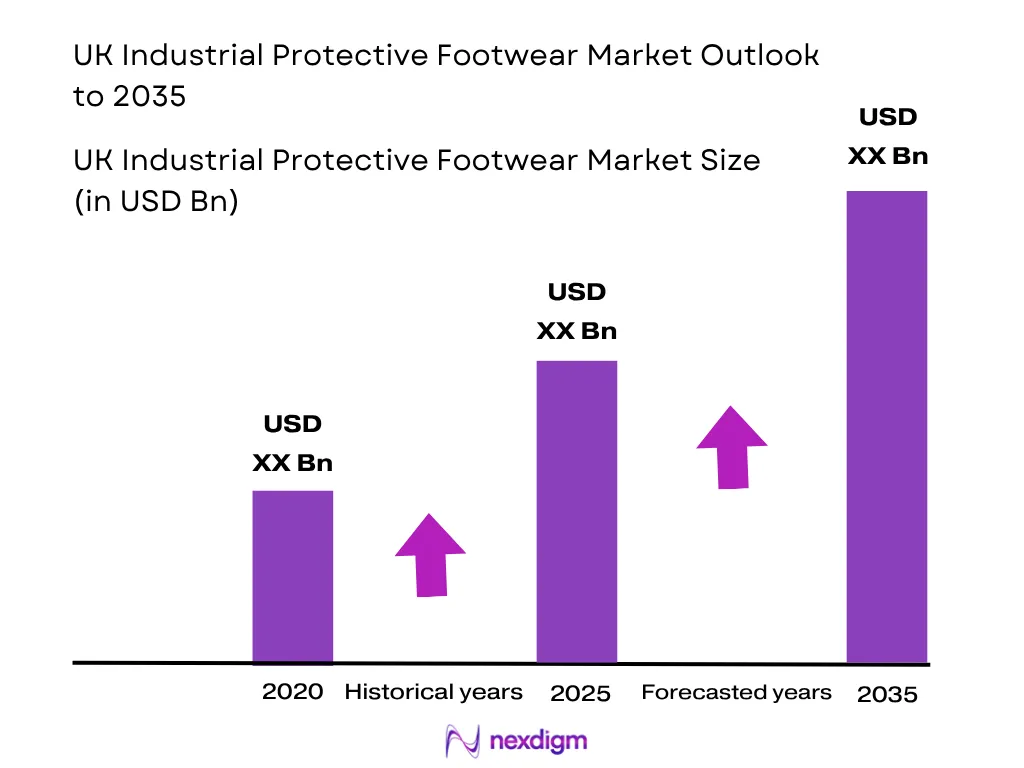
The UK Industrial Protective Footwear Market is a vital segment of the personal protective equipment (PPE) industry, valued at USD ~ billion in 2025. The market is driven by increased industrial safety regulations, growing consumer awareness of workplace safety, and rising labor force participation in industries such as construction, manufacturing, and healthcare. The demand for advanced protective footwear is also influenced by technological advancements such as smart footwear and materials offering enhanced comfort and protection. Market growth is bolstered by continuous innovations in safety features, including steel and composite toe protection, puncture resistance, and electrical hazard protection.
In the UK, regions with a strong presence of manufacturing, construction, and industrial sectors, such as London, Manchester, Birmingham, and Liverpool, dominate the protective footwear market. The prevalence of large-scale industries and the ongoing urbanization in these cities contribute to the demand for durable and high-quality protective footwear. The UK government’s stringent workplace safety regulations and the presence of leading footwear manufacturers in these regions further enhance their market dominance. Additionally, sectors like oil & gas and construction drive the demand for specialized footwear in these regions.
Market Segmentation
By Product Type
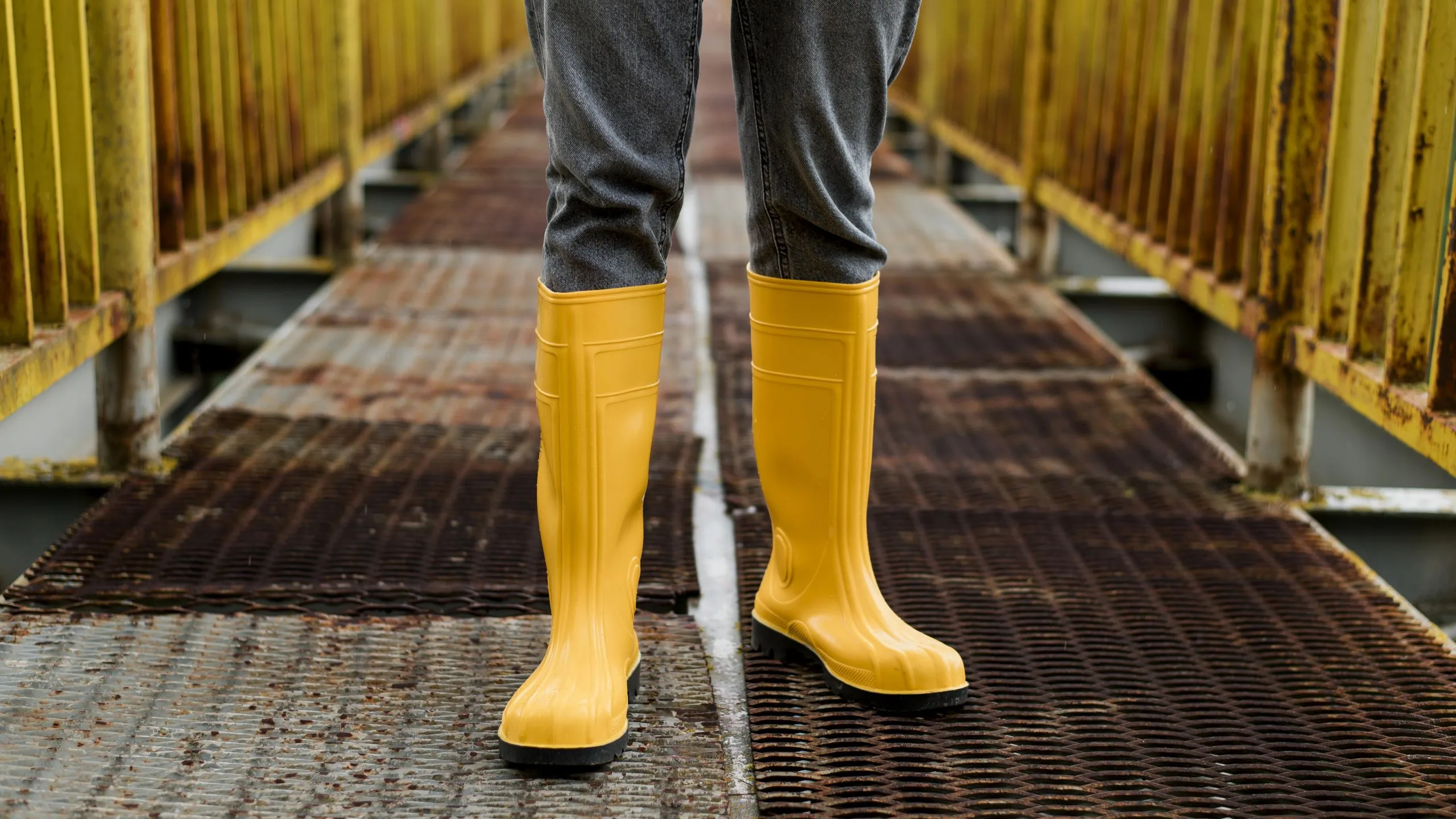
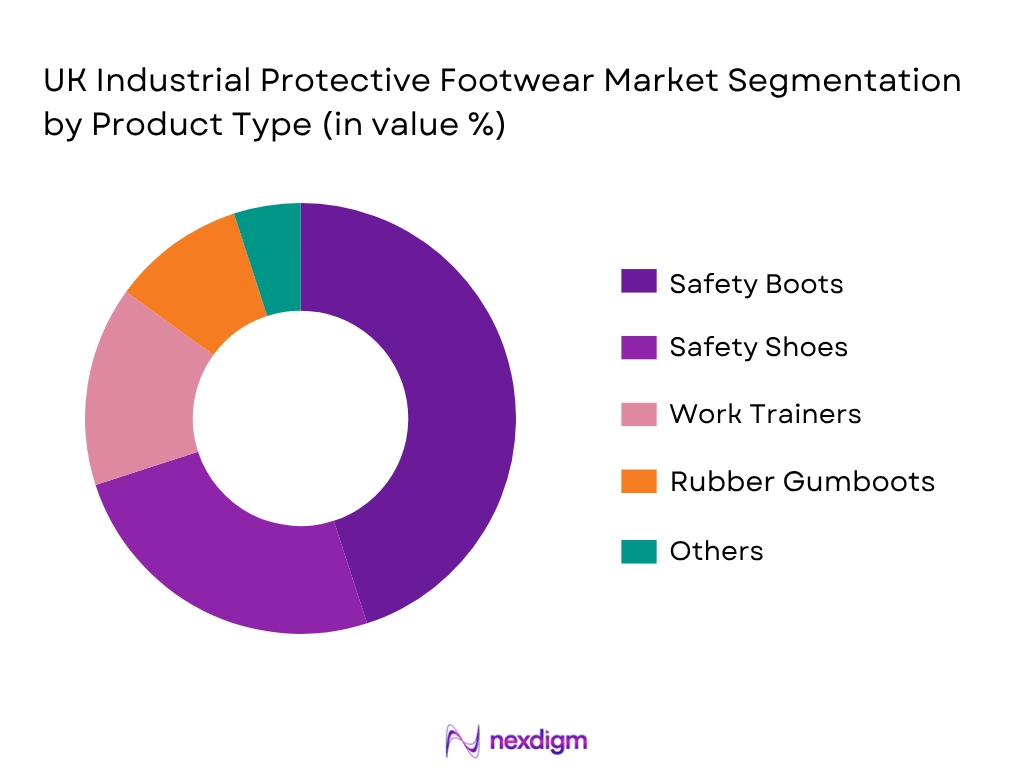
The UK Industrial Protective Footwear market is segmented by product type into safety boots, safety shoes, work trainers, rubber gumboots, and others. Among these, safety boots dominate the market share due to their widespread adoption in high-risk environments such as construction, mining, and heavy industries. Safety boots provide enhanced protection against various workplace hazards, including impacts, punctures, and electrical hazards, making them the preferred choice for workers in physically demanding sectors. Moreover, the continuous innovation in boot designs, incorporating comfort features like ergonomics and ventilation, contributes to their popularity. Safety boots remain the most sought-after product type in the UK market, owing to their effectiveness and reliability in ensuring worker safety.
By Material
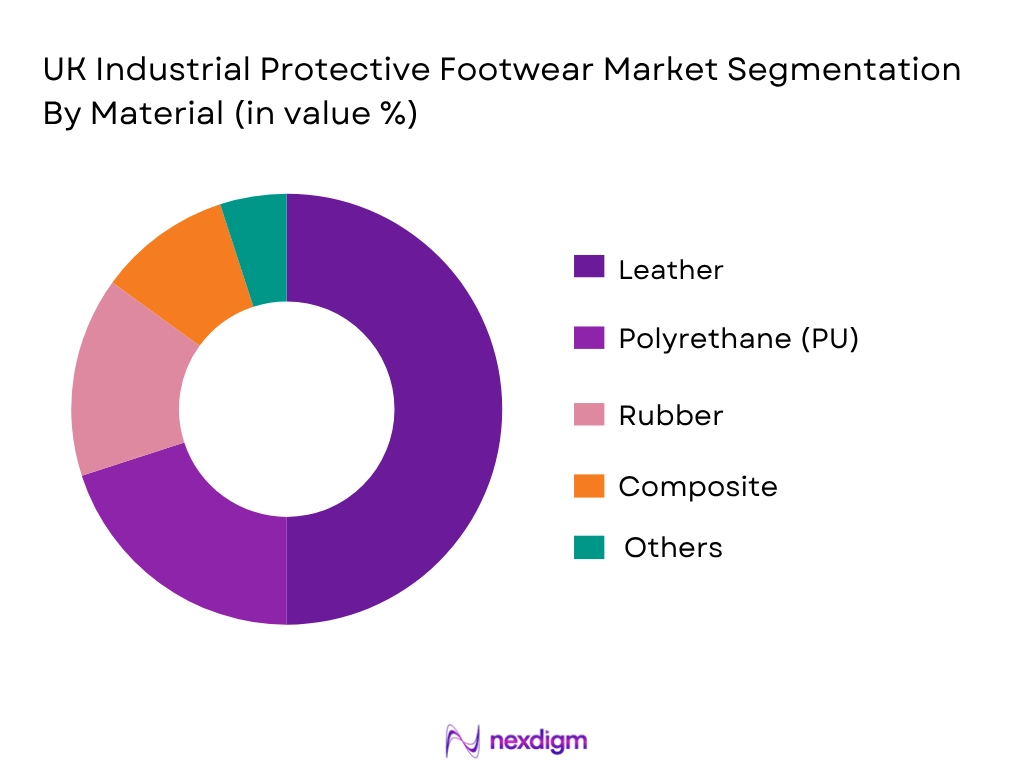
The market is further segmented by material, including leather, polyurethane (PU), rubber, composite, and others. Leather dominates the material segment due to its durability, comfort, and ability to provide superior protection against harsh working conditions. Leather footwear is preferred by workers in industries like manufacturing and construction due to its robustness and long-lasting nature. While materials like PU and rubber are growing in popularity, particularly in waterproof and lightweight footwear, leather remains the top choice for high-performance safety footwear. The material offers a blend of comfort, protection, and resilience, which is crucial in hazardous environments.
Competitive Landscape
The UK Industrial Protective Footwear Market is dominated by several key players that offer a wide range of safety footwear products, including Honeywell International Inc., 3M Company, and Timberland PRO, among others. These companies are consolidating the market due to their strong brand recognition, extensive product portfolios, and distribution networks. For example, Honeywell offers a diverse range of industrial footwear known for its high safety standards and ergonomic design, while 3M Company has a solid reputation in providing innovative solutions for industrial protection. The competitive environment is further intensified by the growing emphasis on technological innovations, such as smart footwear, by leading manufacturers.
| Company | Establishment Year | Headquarters | Product Portfolio | Safety Features | Manufacturing Capacity | Revenue | Distribution Network |
| Honeywell International Inc. | 1906 | Morris Plains, NJ, USA | ~ | ~ | ~ | ~ | ~ |
| 3M Company | 1902 | St. Paul, MN, USA | ~ | ~ | ~ | ~ | ~ |
| VF Corporation (Timberland PRO) | 1899 | Denver, CO, USA | ~ | ~ | ~ | ~ | ~ |
| Wolverine World Wide, Inc. | 1883 | Rockford, MI, USA | ~ | ~ | ~ | ~ | ~ |
| UVEX Safety Group GmbH | 1926 | Fürth, Germany | ~ | ~ | ~ | ~ | ~ |
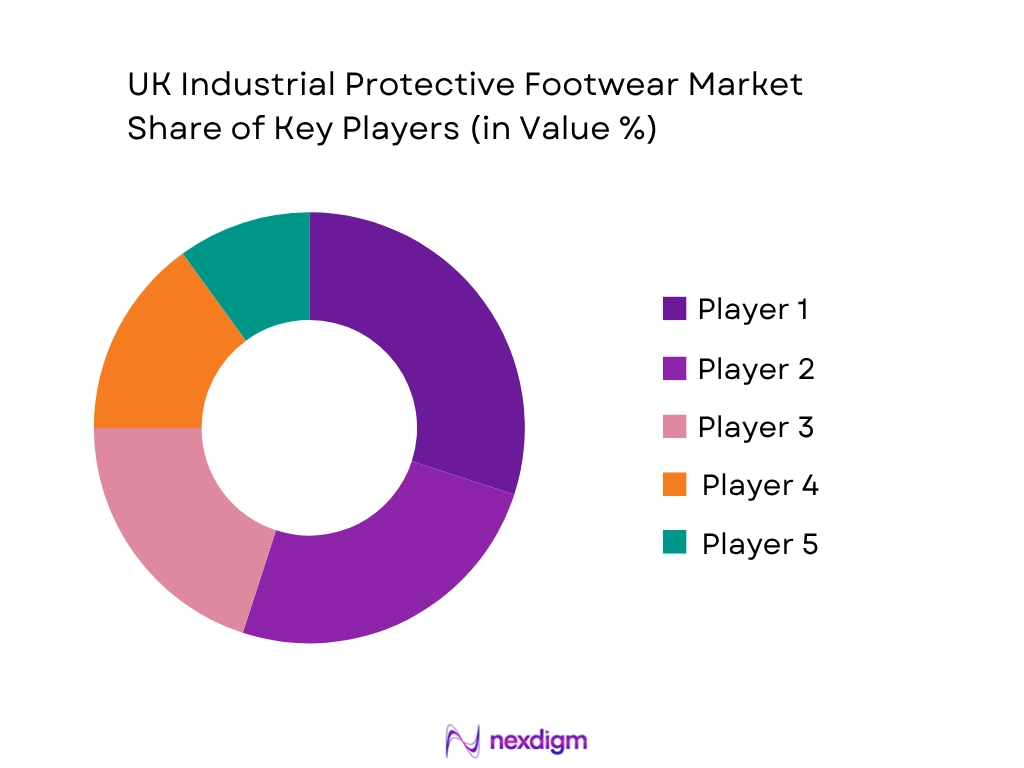
UK Industrial Protective Footwear Market Analysis
Growth Drivers
Industrial Safety Regulations
The UK has stringent industrial safety regulations that continuously drive the demand for protective footwear. The Health and Safety Executive (HSE) in the UK reports that over 70,000 workplace injuries occur each year, with a significant portion being foot injuries. In response to this, the UK government enforces strict compliance with the Personal Protective Equipment (PPE) Regulations, which mandates safety footwear in high-risk industries. Furthermore, the UK’s emphasis on workplace safety has led to increased investment in protective gear, with the government focusing on reducing workplace injuries by ensuring adherence to standards like EN ISO 20345. With a growing focus on compliance, industries such as construction and manufacturing are expected to continue prioritizing the procurement of protective footwear to meet safety guidelines.
Demand from High-Risk Industries
The demand for protective footwear is largely driven by high-risk industries like construction, manufacturing, and healthcare. As of 2024, the construction sector in the UK alone has a workforce of over 2.4 million people, many of whom are exposed to physical hazards such as heavy equipment, sharp objects, and falling materials. The Health and Safety Executive (HSE) indicates that foot injuries are among the most reported workplace injuries in these sectors. In manufacturing, where machinery and hazardous materials are prevalent, safety footwear remains a crucial element in preventing injuries. The increasing focus on reducing workplace accidents is expected to continue fueling this demand.
Market Challenges
Competition from Low-Cost Brands
The UK market faces considerable competition from low-cost protective footwear brands, particularly from international manufacturers in Asia. The rise in imports from countries with lower manufacturing costs has put pressure on local suppliers to compete on price. According to the UK government’s trade statistics, imports of footwear have seen a steady increase, with footwear imports from countries like China and Vietnam reaching approximately £1 billion in 2023. While the local market is flooded with affordable options, it is challenging for high-end protective footwear brands to maintain a competitive edge, as cost-sensitive buyers often prioritize price over quality. This pricing pressure challenges UK manufacturers to balance cost with innovation and quality in their product offerings.
Rising Material Costs
The cost of raw materials, especially leather, rubber, and polyurethane, has significantly risen in recent years, affecting the manufacturing cost of protective footwear. According to the World Bank, the price of rubber has surged by 18% in 2024 compared to the previous year. Additionally, leather prices have also been on the rise due to disruptions in the global supply chain, with some reports citing a 14% increase in the cost of leather. These rising material costs have placed a strain on manufacturers, who must either absorb these costs or pass them on to consumers, which may affect demand, especially in price-sensitive markets. This challenge has prompted some UK manufacturers to look for cost-efficient production solutions and alternative materials to mitigate the impact of rising raw material costs.
Market Opportunities
Construction Sector Expansion
The construction industry in the UK continues to be a key growth driver for protective footwear, as the sector undergoes significant expansion. According to the Office for National Statistics (ONS), the construction sector grew by 3.1% in 2024. This growth is attributed to increased infrastructure projects, housing developments, and the UK’s push for renewable energy projects such as offshore wind farms. As the workforce in construction increases, so does the demand for protective footwear to ensure compliance with safety standards. The focus on maintaining safety while scaling construction activities will further drive the demand for high-quality, durable footwear tailored to various construction-related hazards.
Sustainable Material Adoption
With increasing consumer awareness regarding environmental sustainability, the UK market for protective footwear is shifting towards sustainable material adoption. In 2024, approximately 16% of UK manufacturers are actively incorporating sustainable materials such as recycled plastic and plant-based alternatives into their products, a number that is steadily growing. This trend is supported by the UK’s commitment to reducing carbon emissions and promoting green practices within its industries. The government’s Green Industrial Revolution, which targets net-zero emissions by 2050, further incentivizes businesses to innovate and adopt sustainable solutions. As companies increasingly focus on sustainability, eco-friendly footwear options will capture a larger portion of the protective footwear market.
Future Outlook
Over the next decade, the UK Industrial Protective Footwear market is expected to experience steady growth, driven by advancements in safety technology and increasing consumer demand for high-performance footwear. The growing awareness of safety at the workplace, combined with stricter regulations from UK authorities, will continue to propel market expansion. Additionally, innovations in footwear, such as ergonomic designs, smart footwear, and the use of sustainable materials, will further drive growth. The market is anticipated to benefit from ongoing investments in industries like construction, healthcare, and manufacturing, which are core sectors driving the demand for protective footwear.
Major Players
- Honeywell International Inc.
- 3M Company
- VF Corporation (Timberland PRO)
- Wolverine World Wide, Inc.
- UVEX Safety Group GmbH
- Bata Industrials
- Cofra S.r.l.
- ELTEN GmbH
- Red Wing Shoes
- Dunlop Protective Footwear
- Rock Fall Ltd.
- ATG Safety (Ansell Ltd.)
- KEEN Utility
- Dr. Martens plc
- Shoes For Crews (Global)
Key Target Audience
- Industrial Manufacturers and Distributors
- Occupational Safety and Health Organizations
- Investments and Venture Capitalist Firms
- Government and Regulatory Bodies (Health and Safety Executive – HSE, UKCA)
- Construction Companies
- Mining and Oil & Gas Companies
- Healthcare Providers and Hospitals
- Retailers of Protective Footwear
Research Methodology
Step 1: Identification of Key Variables
This step involves mapping all critical stakeholders in the UK Industrial Protective Footwear Market. Data will be gathered through secondary research from credible sources such as industry reports, company filings, and news articles. The aim is to define key variables such as product types, materials, and key end-use sectors.
Step 2: Market Analysis and Construction
In this phase, historical data regarding market demand, growth trends, and production capacities will be analyzed. Market size and forecasts will be constructed using both bottom-up and top-down approaches to ensure accuracy.
Step 3: Hypothesis Validation and Expert Consultation
Industry experts from manufacturing, retail, and regulatory bodies will be interviewed to validate hypotheses and gain insights into emerging trends. This will ensure the credibility of the data used in our forecasts.
Step 4: Research Synthesis and Final Output
Final data will be synthesized to provide a comprehensive outlook on the UK Industrial Protective Footwear Market. All findings will be verified through consultations with key stakeholders to ensure the reliability of our analysis.

- Executive Summary
- Research Methodology (Market Definitions and Assumptions, Abbreviations, Market Sizing Approach, Consolidated Research Methodology, Primary Research Approach, Data Collection Methods, Limitations and Assumptions)

- Definition and Scope
- Market Genesis and Evolution
- Timeline of Major Companies and Technological Milestones
- Business Cycle and Economic Influence
- Supply Chain and Value Chain Analysis

- Growth Drivers (Rising industrial safety regulations, Increased demand from high-risk industries, Advancements in protective footwear technology, Growing awareness about worker safety and workplace injury prevention)
- Market Challenges (Competition from low-cost brands, Rising material costs, Counterfeit products, Regulatory compliance)
- Market Opportunities(Construction sector expansion, Sustainable material adoption, E-commerce growth, Technological innovations)
- Industry Trends (Smart & IoT Footwear, Sustainable Materials, Ergonomic Design)
Government Regulation (UK PPE Regulations, EN ISO 20345 Standards, UKCA/CE Marking) - SWOT Analysis (Market Strengths, Weaknesses, Opportunities, Threats)
- Stakeholder Ecosystem (Manufacturers, Distributors, Regulators, End-Users)
- Porter’s Five Forces Analysis
- Competitive Landscape and Market Concentration

- By Value (2020-2025)
- By Volume (2020-2025)
- By Average Selling Price (2020-2025)
- By Channel Sales Breakdown (2020-2025)

- By Product Type (In Value%)
Safety Boots
Safety Shoes
Work Trainers
Rubber Gumboots - By Material (In Value%)
Leather
Polyurethane
Rubber
Composite - By End-Use Industry (In Value%)
Construction
Manufacturing
Oil & Gas
Mining
Healthcare - By Distribution Channel (In Value%)
Wholesale/Distributors
Retail Outlets
E-commerce
Direct Sales - By End-User Segment (In Value%)
Heavy Industry
Light Industry
Service Sector - By Safety Feature (In Value%)
Toe Cap Type
Puncture-Resistan
Electrical Hazard (ESD) Protection

- Market Share of Major Players (by Value/Volume)
- Cross-Comparison Parameters (Company Overview, Business Strategy, Recent Developments, Product Portfolio & Safety Features, Manufacturing Capacity, Distribution Network, Revenue/Market Presence, Unique Value Proposition)
- SWOT Analysis of Leading Players
- Pricing Analysis (SKU-Level Price Ranges of Key Brands)
- Detailed Profiles of Major Companies
Honeywell International Inc.
3M Company
VF Corporation (Timberland PRO, Dickies)
Wolverine World Wide, Inc.
UVEX Safety Group GmbH
Bata Industrials (Bata Corporation)
Cofra S.r.l.
ELTEN GmbH
Japan Aviation Leather (JAL) Group (Red Wing)
Dunlop Protective Footwear
Rock Fall Ltd.
ATG Safety (Ansell Ltd.)
KEEN Utility
Dr. Martens plc (Industrial Division)
Shoes For Crews (Global)

- Market Demand and Utilization Patterns
- Purchasing Behavior and Budget Allocation
- Regulatory and Compliance Requirements (Buyer Side)
- Needs, Preferences and Pain Points (Comfort, Protection, Compliance)
- Decision-Making Process (Corporate Procurement vs. Individual Consumers)

- By Value (2026-2035)
- By Volume (2026-2035)
- By Average Price Outlook (2026-2035)


 Request a Sample
 Ask for Customization
 Get a Quote
 Enquire Now