
 Download PDF
Market Overview
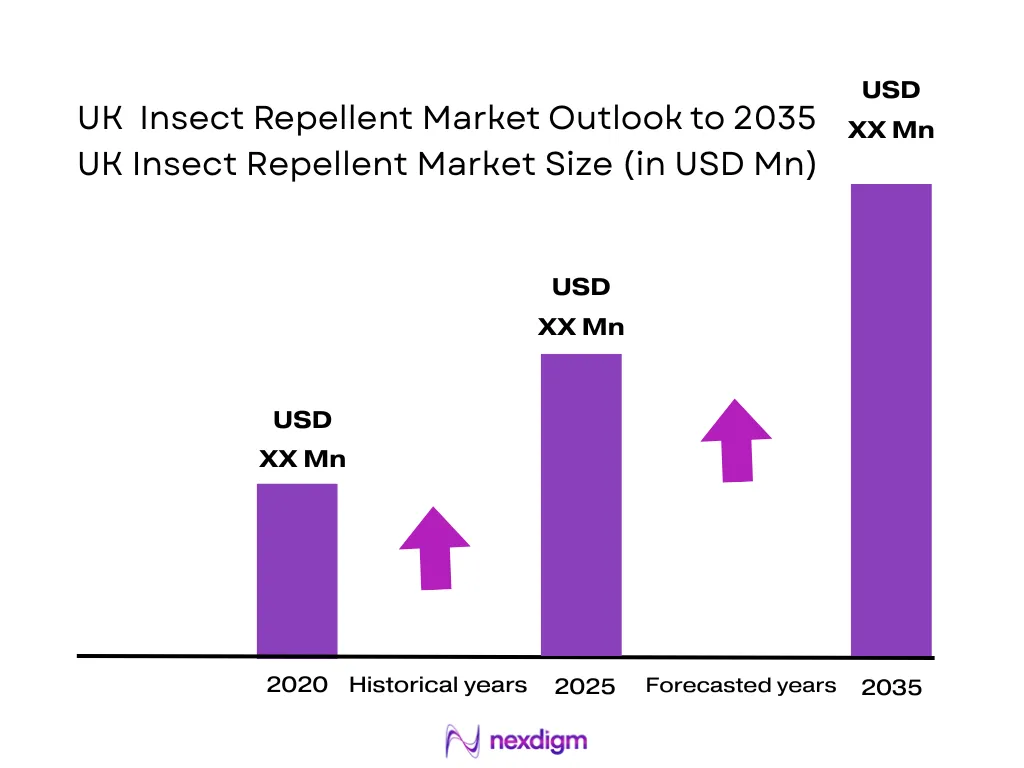
The UK insect repellent market is valued at USD ~ million based on comprehensive national and regional sales metrics reflecting retail, pharmacy, and online channel revenues for topical and spatial repellent products. This valuation reflects consolidated reporting through detailed revenue tracking by product type, insect target (e.g., mosquito, tick, fly), and distribution outlets across the UK market. Demand has been driven by heightened consumer focus on preventive health measures, increased incidence of tick‑borne diseases such as Lyme disease, and greater engagement in outdoor leisure activities like hiking and camping. Data suggests a notable rise in import trends for mosquito and other repellents in 2025 as UK consumers seek advanced and broad‑spectrum protection solutions. The market’s size is supported by independent industry revenue data, demonstrating robust commercial activity across mainstream retail and health‑focused outlets.
Market Segmentation
By Insect Type
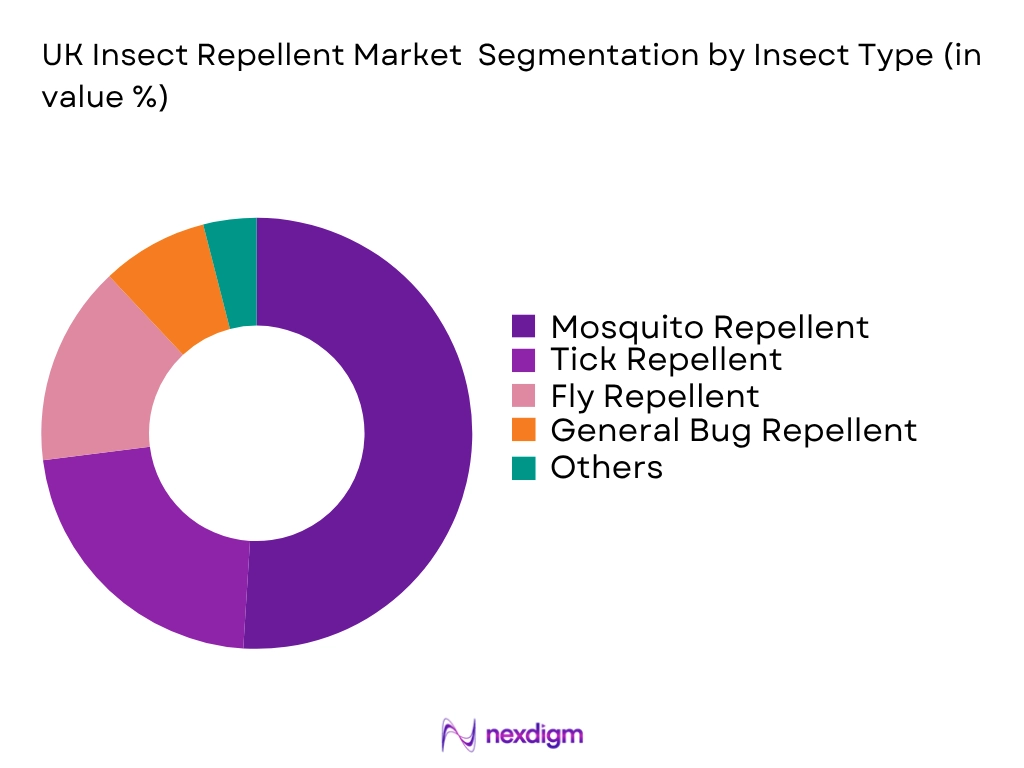
The UK insect repellent market is segmented by target insect into mosquito, tick, fly, general bug, and other targeted repellent types. Mosquito repellent holds the dominant share due to widespread traveller and domestic use for protection against mosquito bites during international travel to tropical regions and during seasonal UK summer months when nuisance mosquito activity spikes. Public‑health guidance frequently recommends mosquito repellent for travel to regions with disease risk, creating consistent demand in retail pharmacies and health outlets. Tick repellent ranks next, supported by rising Lyme disease incidence across woodland and rural areas, prompting UK health advisories for outdoor walkers and pet owners to adopt specialized tick repellents. Fly repellents maintain relevance around outdoor family activities, gardens, and rural events. General bug repellents encompass broad‑spectrum products that appeal to consumers seeking overall protection during outdoor use. Other insect types include niche formulations for midges and gnats, which see localized demand in specific geographies such as Scotland and coastal regions during peak summer.
By Product Type
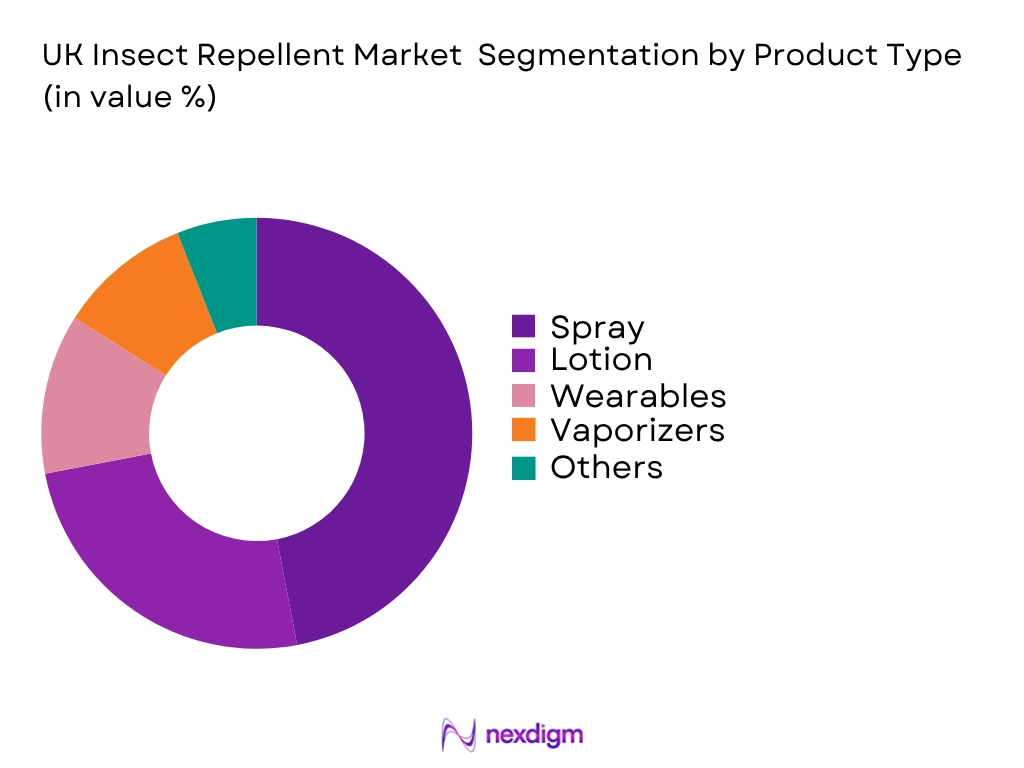
The UK market by product format includes aerosols/sprays, lotions/creams, wearable devices, vaporizers/spatial products, and other specialized delivery formats like wipes or citronella candles. Aerosols and sprays lead consumption given their ease of use, portability, and effectiveness for rapid application before outdoor excursions or travel—making them the preferred choice for most consumers. Their accessibility in supermarkets and online retail boosts their dominance. Lotions and creams are valued for longer‑lasting protection and gentle skin characteristics, appealing to families and sensitive‑skin users. Wearable devices, such as wristbands or patches, are increasingly popular among technology‑oriented purchasers who prioritize convenience and child‑friendly formats. Vaporizers and spatial devices serve household protection needs, especially in domestic gardens or children’s outdoor play areas. Other formats like wipes and candles hold smaller shares but serve specific use cases like quick clean‑up or ambient protection scenarios.
Competitive Landscape
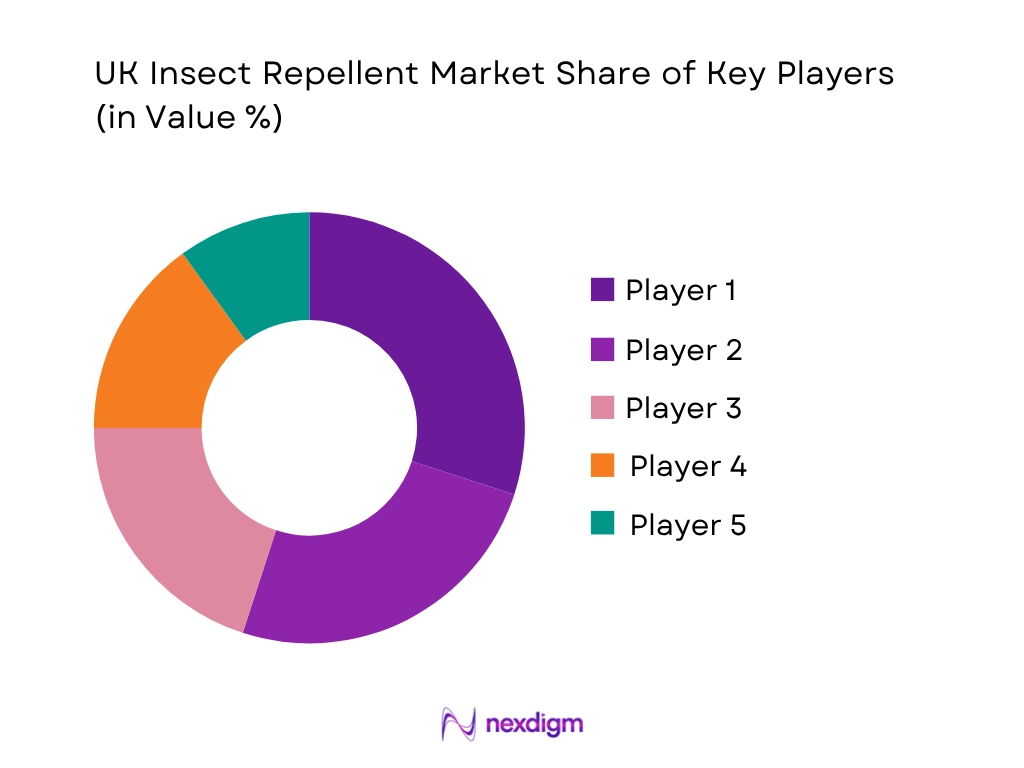
The UK insect repellent market is characterized by a mix of global multinationals and specialist brands, with competition focused on product effectiveness, range of active ingredients, distribution reach, and compliance with UK Biocidal Products Regulation. Above table, competitive landscape is driven by innovation, broad distribution channels, and formulation differentiation, particularly between synthetic actives (e.g., DEET, icaridin) and natural/botanical repellents. Market leaders focus on consumer trust, brand heritage, and strong retail penetration across pharmacies, supermarkets, and online platforms, while newer entrants emphasize sustainable or advanced wearable features.
| Company | Est. Year | Headquarters | Active Ingredient Portfolio | Product Format Range | Distribution Reach | UK Regulatory Approval Status | Brand Positioning |
| SC Johnson & Son | 1886 | USA | ~ | ~ | ~ | ~ | ~ |
| Reckitt Benckiser | 1823 | UK | ~ | ~ | ~ | ~ | ~ |
| Spectrum Brands | 1906 | USA | ~ | ~ | ~ | ~ | ~ |
| Johnson & Johnson | 1886 | USA | ~ | ~ | ~ | ~ | ~ |
| Para’Kito Ltd | 2005 | Switzerland | ~ | ~ | ~ | ~ | ~ |
UK Repellent Market Analysis
Growth Driver
Vector‑Borne Disease Awareness
In the United Kingdom, awareness of vector‑borne disease risk significantly influences demand for insect repellent products. In 2025, there were 1,581 laboratory‑confirmed cases of Lyme disease reported, a bacterial infection transmitted through tick bites, with the highest incidence in the South East, South West and London regions, making it a prominent public health consideration for outdoor consumers. In addition, travel‑associated vector‑borne infections reported in England, Wales and Northern Ireland showed 904 confirmed dengue infections and 112 chikungunya infections in 2025, the highest totals since surveillance began, primarily among travellers returning from abroad. These figures reinforce health advisories and public messaging from UK Health Security Agency urging personal protection measures, including insect repellent use. Heightened disease reporting stimulates public health communication and influences consumer behaviour toward purchasing repellent products for both domestic outdoor activities and travel to tropical regions where vector‑borne diseases are endemic. The tangible rise in imported mosquito‑related infections and ongoing Lyme disease cases demonstrates persistent risk exposure that underpins a sustained awareness of repellent utility among UK consumers and travellers.
Outdoor Lifestyle Adoption
The growth of the UK insect repellent market is supported by macro‑behavioural patterns showing significant engagement in outdoor recreational activities. According to UK government data, 1,581 Lyme disease cases were laboratory confirmed in 2024, with regions such as the South East, South West, and London consistently reporting high tick‑related infections in outdoor environments, reflecting widespread exposure during countryside walking, camping, and rural travel. The UK Health Security Agency’s Tick Surveillance Scheme reported 536 Ixodes ricinus tick records submitted in 2024, a figure indicative of tick activity in nationally popular outdoor spaces including woodlands and heathlands across England and Wales. With the UK’s resident population standing at approximately ~ million people in 2025, a large proportion engages in periodic outdoor recreation that correlates with incremental demand for repellents as a preventive health measure tied to comfort and safety in natural settings. The macro trend toward outdoor leisure—evidenced by high tick encounter reports and public health alerts—stimulates appetite for products that mitigate insect bite risk. Increased usage aligns with broader population participation in outdoor sports, walking, and rural tourism.
Market Challenge
Skin Safety Concerns
One key challenge for the UK insect repellent market lies in consumer safety perceptions related to skin application, especially given regulatory oversight of topical biocidal products. In the UK, products such as insect repellents are regulated under the UK Biocidal Products Regulation (GB BPR), which mandates rigorous safety evaluation and compliance before market authorisation, including dermatological risk assessment. UK Health and Safety Executive guidance highlights that repellents are considered biocidal products that must demonstrate safety for human use, including minimal skin irritation potential, before they can be legally marketed. Regulatory scrutiny under GB BPR and residual frameworks such as the Control of Pesticides Regulations reinforce safety requirements to ensure that repellents do not pose undue risks to consumers or the environment. These regulatory conditions can heighten consumer sensitivity toward active ingredients and formulations, as products requiring additional compliance often circulate with advisories for cautious application on children or individuals with sensitive skin. With a population exceeding 67 million residents and robust product oversight by national authorities, any perceived or real dermatological concern can slow market adoption, as consumers weigh protective benefits against the potential for irritation or allergic reactions.
Ingredient Regulatory Restrictions
A persistent challenge for the UK repellent market is the complex regulatory environment governing active ingredient approval and classification. In the UK, insect repellents fall under the GB Biocidal Products Regulation (GB BPR), which requires that active substances and formulations undergo comprehensive assessment before authorisation, to ensure human and environmental safety. This regulatory framework strictly controls which active ingredients can be included, how they are described on labels, and the conditions under which repellents can be sold, especially post‑Brexit where divergence from EU frameworks may arise. Products classified as biocidal based on their chemical action must be evaluated for safety and efficacy through a central authorisation process, involving submission of toxicological data and compliance documentation. The need for rigorous approval may slow the introduction of new actives or formulations compared to less restricted cosmetic products. In addition, the UK maintains oversight through bodies such as the Health and Safety Executive (HSE), applying additional pesticide and biocide controls that affect manufacturing and importers. In a country with approximately ~ million residents and stringent product safety priorities, navigating this complex landscape can impose barriers to innovation, limiting the entry of novel repellent technologies or botanically derived actives until full regulatory clearance is obtained.
Opportunity
Biopesticide Launches
A key opportunity within the UK insect repellent market stems from the expanding interest in biopesticide and botanical‑based active ingredients, which align with health and environmental priorities among UK consumers. Recognition of natural actives such as plant essential oils and biogenic compounds has grown due to increased conscience around chemical exposure and sustainable product profiles observed in other UK consumer health categories. Biopesticides are biological agents derived from natural sources that repel insects without introducing synthetic chemicals, and their acceptance can be strengthened by trends across agricultural and pest control sectors where natural pest deterrents are increasingly adopted. Although specific UK government data on repellent biopesticide usage is limited, broader environmental policy and consumer behavioural studies in the UK show strong preferences for natural alternatives in household and personal care markets. As the UK population of around 67 million people continues to emphasise lifestyle health and eco‑friendly products, there is an opportunity for repellent brands to leverage biological actives that meet both regulatory safety expectations and consumer demand for low‑toxicity solutions. Integration of biopesticides into repellent formulations could enhance appeal among outdoor enthusiasts, parents, and environmentally conscious buyers, expanding usage beyond traditional synthetic offerings.
Smart Repellent Devices
The UK insect repellent market has a growing opportunity in smart and technology‑enhanced repellents, including wearable repellent devices and app‑linked protection systems. Although direct macro data on smart repellent adoption is not officially tracked by government sources, national technology usage patterns provide context for opportunity. In 2024, the UK reached an overall internet user base of approximately 64.7 million individuals, with smartphone penetration exceeding 92 percent among adults, indicating a population highly receptive to connected consumer technologies. Technology‑enabled repellents such as wearable devices, sensor‑activated emitters, and Bluetooth‑linked diffusers can integrate into existing high technology usage in daily life, providing automated or continuous protection without manual re‑application of topical products. Adoption of wearable health and safety technologies is consistent with broader consumer trends observed in the UK, including smart watches, fitness trackers, and app‑integrated health devices. With 68 million residents frequently using smartphones and connected devices, the environment is conducive to smart repellent innovation, particularly for outdoor leisure markets, families, and technology‑oriented segments. Integration of digital features that provide reminders, usage duration tracking, and geofenced activation offers a differentiated value proposition that aligns with contemporary consumer behaviour patterns. This intersection of digital adoption and repellent technology represents a clear growth opportunity for market participants seeking to broaden product appeal beyond traditional formats.
Future Outlook
Over the next decade, the UK insect repellent market is expected to steadily expand driven by sustained health awareness, increasing outdoor leisure activities, travel health demand, and technological innovations such as wearable repellent devices and eco‑friendly formulations. Even though mosquito‑borne disease risk remains lower domestically compared to some regions, emphasis on tick exposure prevention and travel health advice supports demand. Additionally, post‑Brexit regulatory agility allows differentiated active ingredient approvals, encouraging product innovation tailored to UK consumer preferences. Retail channel diversification—especially online—will further broaden reach while natural and plant‑based repellents gain traction among health and environmentally conscious purchasers.
Major Players
- SC Johnson & Son
- Reckitt Benckiser Group
- Spectrum Brands Holdings
- Johnson & Johnson
- Para’Kito Ltd
- Godrej Consumer Products
- Coghlan’s Ltd
- Sawyer Products
- 3M Company
- Avon Products
- ExOfficio (Permethrin‑treated apparel)
- Insect Shield
- Tender Corporation
- Henkel AG & Co KGaA
- Local UK Specialist Brands
Key Target Audience
- Personal care & consumer goods manufacturers
- Retail & pharmacy buying teams
- Outdoor & travel product distributors
- Investments and venture capitalist firms
- Government and regulatory bodies
- Institutional procurement agencies
- Travel health advisory services
- Occupational safety product procurement teams
Research Methodology
Step 1: Identification of Key Variables
We defined the insect repellent market scope, including product formats (sprays, lotions, wearables), insect types (mosquito, tick, fly), distribution channels (pharmacy, supermarkets, online), and regulatory classifications under UK Biocidal Products Regulation.
Step 2: Market Analysis and Construction
Historical revenue, import data, and retail sales volumes were compiled and analysed to construct comprehensive market size models. Segmentation metrics were verified using cross‑referenced sources reflecting UK and European market behavior.
Step 3: Hypothesis Validation and Expert Consultation
Initial hypotheses about segment dominance, consumer preferences, and growth drivers were validated through consultations with industry participants, retail analysts, and public health experts.
Step 4: Research Synthesis and Final Output
Final analysis integrated data from multiple validated sources, synthesizing consumer trends, regulatory frameworks, and competitor intelligence to deliver a detailed and actionable market report aligned to business professional needs.

- Executive Summary
- Research Methodology (Market Definitions and Assumptions, Abbreviations, UK Regulatory Classification, Market Sizing Methodology [Retail + Import Data], Data Collection Framework, Primary Research Approach, Limitations & Verification Protocols)

- Definition and Scope
- Genesis and Evolution of Repellent Demand
- Regional Behavioral Mapping
- Market Value Chain Analysis
- UK Regulatory Framework
- Public Health and Vector Surveillance Impact

- Growth Drivers (Increasing Vector‑Borne Disease Awareness, Rising Outdoor Recreational Activity Patterns, Online Channel Expansion & Digital Health Adoption, UK Travel Trends and Global Exposure Insect Risk )
- Market Challenges (Regulatory Classification Complexity (Biocidal vs Cosmetic, Ingredient Approval Processes Post‑Brexit)
- Opportunities (Eco‑Friendly & Natural Ingredient Innovations, Smart & Wearable Repellent Devices, Retail Channel Diversification)
- Market Trends (Shift Toward Natural/Botanical Repellents, Growth of Subscription & Direct‑to‑Consumer Sales)
- Government Regulation and Standards (BPR, HSE Guidelines)
- UK Market SWOT Analysis
- Stakeholder Ecosystem Mapping
- Porter’s Five Forces Evaluation
- Competition Ecosystem

- By Market Value (2020-2025)
- By Market Volume (2020-2025)
- By Primary Channel Breakdowns (2020-2025)
- By Natural vs Synthetic Ingredient Product Distribution (2020-2025)

- By Insect Type (In Value %)
Mosquito Repellent
Tick Repellent
Bug/General Insect Repellent
Fly Repellent
Other Target Insects - By Product Format (In Value %)
Aerosol & Spray Repellents
Cream & Lotion Formulations
Wearable Devices
Vaporizers & Spatial Devices
Candles & Diffusers - By Active Ingredient Class (In Value %)
DEET‑Based Formulations
Picaridin & IR3535
Natural Plant‑Derived Actives
Biopesticide / Botanical Blends
Other Proprietary Actives - By Distribution Channel (In Value %)
Supermarkets & Hypermarkets
Pharmacies & Health Retail
Online Retail Platforms
Convenience & Independent Stores
Travel & Specialty Retail - By End‑Use Application (In Value %)
Personal Protection
Travel & Tourism Health
Outdoor & Recreational Use
Commercial/Institutional Sector
Occupational Safety

- Market Share by Revenue & Volume
- Cross‑Comparison Parameters (Company Overview, Active Ingredient Portfolio, Formulation Strength, Innovation Pipeline, Channel Reach, Distribution Footprint, Price Positioning, Regulatory Approvals, Marketing Channel Spend)
- Brand Positioning Matrix (Premium vs Mass, Natural vs Synthetic)
- Company SWOT Profiles
- Category Pricing Analysis (SKU‑Level)
- Detailed Profiles of Major Companies
SC Johnson & Son Ltd
Reckitt Benckiser Group plc
Spectrum Brands Holdings Inc
Henkel AG & Co KGaA
Johnson & Johnson
Avon Products
3M Company
Coghlan’s Ltd
Sawyer Products
PARA’KITO Ltd
Boots UK Brand
Jungle Formula
Insect Shield LLC
ExOfficio
Tender Corporation

- Usage Patterns & Repurchase Behaviors
- Seasonal Consumption Variability
- Consumer Safety & Preference Drivers
- Price Elasticity & Sensitivity

- By Market Value Outlook (2026-2035)
- By Expected Volume Growth by Format (2026-2035)
- By Projected Natural vs Synthetic Mix (2026-2035)
- By Sales Channel Trajectories (2026-2035)


 Request a Sample
 Ask for Customization
 Get a Quote
 Enquire Now