
 Download PDF
Market Overview
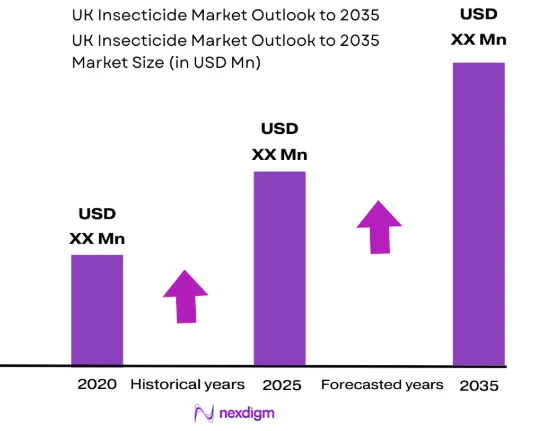
The UK Insecticide Market is valued at approximately USD ~ million, supported by the country’s extensive cereal, oilseed rape, potato, and horticultural production sectors. The broader UK crop protection chemicals market reached approximately USD ~ million, while the overall crop protection market exceeded USD ~ billion. Demand is driven by increasing pest resistance, aphid infestations, cabbage stem flea beetle pressure, integrated pest management programs, and the need to protect wheat, barley, potato, and horticultural yields. The market also benefits from growing adoption of biological insecticides and precision agriculture technologies.
Market Segmentation
By Product Category
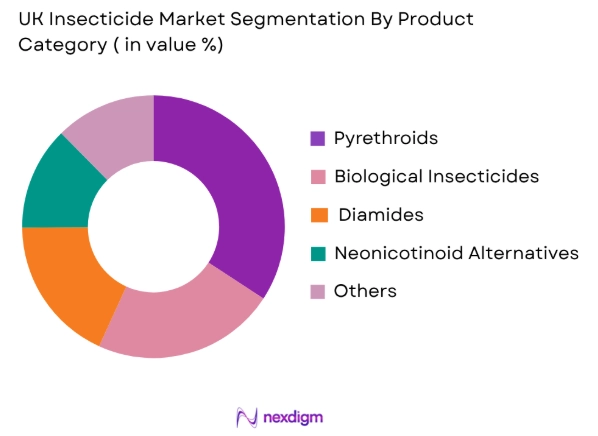
UK Insecticide Market is segmented by product category into pyrethroids, biological insecticides, diamides, neonicotinoid alternatives, and others. Recently, pyrethroids have held the dominant market share under product category because they remain one of the most widely approved and economically viable insecticide classes available for cereals, oilseed rape, potatoes, and horticultural crops. Growers continue to rely on pyrethroids for controlling aphids, flea beetles, caterpillars, and other economically damaging pests. Their broad-spectrum efficacy, compatibility with integrated pest management programs, established distribution networks, and widespread agronomic familiarity contribute to their leading position. While biological insecticides are gaining traction due to sustainability requirements and environmental stewardship initiatives, pyrethroids remain the primary solution for large-scale commercial crop protection owing to their proven performance and operational flexibility across multiple crop types.
By Crop Type
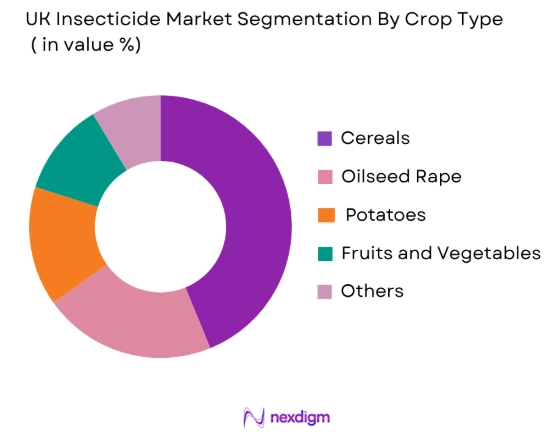
UK Insecticide Market is segmented by crop type into cereals, oilseed rape, potatoes, fruits and vegetables, and others. Recently, cereals have held the dominant market share because wheat and barley account for the largest share of the United Kingdom’s arable farming area. These crops require regular insecticide applications to manage aphids and other pests that can directly reduce yields and transmit viral diseases. Food security considerations, domestic grain demand, and export-quality requirements reinforce the importance of protecting cereal crops. Additionally, cereal producers have increasingly adopted integrated pest management programs and precision application technologies to maximize crop performance. The extensive acreage devoted to wheat and barley cultivation ensures that cereals remain the largest consumer segment for insecticide products across the UK agricultural sector.
Competitive Landscape
The UK Insecticide Market is moderately consolidated, with multinational crop protection companies accounting for a significant share of insecticide registrations, distributor relationships, and product innovation. Bayer Crop Science, Syngenta, BASF, Corteva, and FMC maintain strong positions through extensive active ingredient portfolios, biological product investments, and agronomic support capabilities. Competition is increasingly shaped by sustainability requirements, resistance management solutions, biological insecticide development, and compliance with UK pesticide regulations.
| Company | Establishment Year | Headquarters | Insecticide Portfolio | Biological Portfolio | Key Crop Focus | Distribution Strength | Regulatory Expertise | Competitive Position |
| Bayer Crop Science | 1863 | ~ | ~ | ~ | ~ | ~ | ~ | ~ |
| Syngenta Group | 2000 | ~ | ~ | ~ | ~ | ~ | ~ | ~ |
| BASF Agricultural Solutions | 1865 | ~ | ~ | ~ | ~ | ~ | ~ | ~ |
| Corteva Agriscience | 2019 | ~ | ~ | ~ | ~ | ~ | ~ | ~ |
| FMC Corporation | 1883 | ~ | ~ | ~ | ~ | ~ | ~ | ~ |
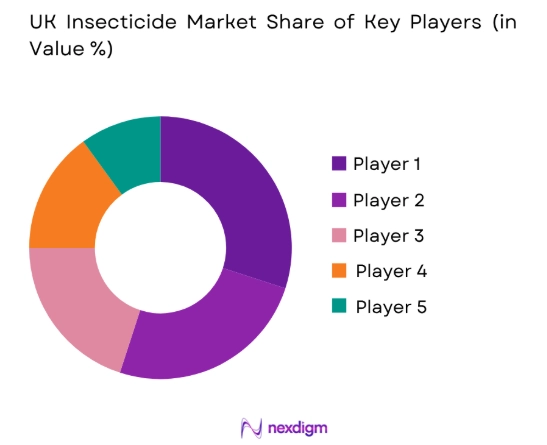
UK Insecticide Market
Growth Drivers
Cereal and Oilseed Rape Cultivation Supporting Insecticide Demand
The UK Insecticide Market is significantly supported by extensive cereal and oilseed rape cultivation, which require continuous pest management to protect yields and crop quality. According to the UK Department for Environment, Food & Rural Affairs (DEFRA), the total area planted with wheat reached approximately 1.64 million hectares, while barley cultivation covered around 1.13 million hectares and oilseed rape exceeded 300,000 hectares. The UK economy generated approximately USD 3.6 trillion in GDP according to the IMF, while the agri-food sector contributed more than GBP 147 billion to national economic output. Aphids, cereal leaf beetles, flea beetles, and other pests continue to threaten crop productivity, encouraging growers to invest in insecticide-based crop protection programs. Large-scale cereal production concentrated across East Anglia, Yorkshire, Lincolnshire, and the East Midlands ensures consistent demand for foliar insecticides, seed treatments, and integrated pest management solutions throughout the UK agricultural sector.
Rising Pest Resistance and Food Security Requirements
The UK Insecticide Market is increasingly driven by rising pest resistance and the need to safeguard domestic food production. The United Kingdom manages more than 17 million hectares of agricultural land, including over 4.5 million hectares of arable land, according to DEFRA. Climatic fluctuations and milder winters have increased the survival rates of economically important pests such as aphids, cabbage stem flea beetles, and wireworms. The UK population exceeded 68 million people, increasing the importance of maintaining stable food supplies and agricultural productivity. Resistance development among several pest species has encouraged growers to adopt advanced insecticide chemistries, biological products, and resistance-management programs. The continued emphasis on domestic food security, coupled with the need to maximize crop yields from existing farmland, supports long-term demand for effective insecticide solutions across cereal, potato, and horticultural production systems.
Market Challenges
Stringent Regulatory Framework and Active Ingredient Restrictions
The UK Insecticide Market faces challenges from stringent pesticide registration requirements and restrictions on several conventional active ingredients. The Health and Safety Executive (HSE) and Chemicals Regulation Division (CRD) oversee pesticide approvals and environmental risk assessments across the UK. More than 2,000 pesticide products are regulated under UK pesticide legislation, requiring comprehensive safety evaluations before approval. Increasing scrutiny regarding pollinator protection, biodiversity conservation, and environmental sustainability has reduced the availability of certain insecticide classes. The UK exported food, feed, and drink products worth over GBP 24 billion, making compliance with domestic and international residue standards critical for agricultural producers. These regulatory obligations increase product development complexity and encourage manufacturers to invest in alternative chemistries and biological crop protection technologies.
Resistance Development and Limited Pest Control Options
Resistance development among key agricultural pests remains a significant challenge for the UK Insecticide Market. Aphids, cabbage stem flea beetles, and other economically damaging insects have demonstrated reduced sensitivity to some traditional insecticide groups, limiting available treatment options. The UK cultivates approximately 1.64 million hectares of wheat, 1.13 million hectares of barley, and substantial areas of oilseed rape and potatoes, all of which require effective pest management programs. Reduced availability of approved active ingredients has increased pressure on remaining products and accelerated resistance concerns. Growers are increasingly required to integrate crop rotation, biological controls, monitoring systems, and precision application technologies into their pest management strategies. This transition increases operational complexity and places additional demands on agronomic expertise and farm management resources.
Market Opportunities
Expansion of Biological Insecticides and Sustainable Crop Protection
The UK Insecticide Market presents significant opportunities through the adoption of biological insecticides and sustainable crop protection solutions. The UK organic farming area exceeded 500,000 hectares, while environmentally focused agricultural programs continue expanding under national sustainability initiatives. The agri-food sector contributes more than GBP 147 billion to the UK economy, creating strong incentives to maintain crop productivity while reducing environmental impact. Biological insecticides are increasingly used in fruit, vegetable, greenhouse, and specialty crop production because they support integrated pest management programs and align with pollinator protection objectives. Growing retailer requirements for sustainable sourcing and residue management further encourage adoption of biological crop protection products. These factors create favorable conditions for biological insecticide manufacturers and suppliers seeking to expand their presence within the UK agricultural market.
Precision Agriculture and Digital Pest Monitoring Technologies
The UK Insecticide Market has strong growth opportunities through precision agriculture technologies, digital pest monitoring systems, and data-driven crop management platforms. The United Kingdom maintains one of Europe’s most technologically advanced agricultural sectors, supported by GDP exceeding USD 3.6 trillion and significant investment in agricultural innovation. More than 4.5 million hectares of arable land provide a large addressable market for precision application technologies. Digital monitoring tools, remote sensing systems, automated pest traps, GPS-guided sprayers, and farm management software are increasingly integrated into crop protection programs. These technologies help growers optimize insecticide usage, improve application accuracy, reduce environmental impact, and strengthen resistance-management strategies. As sustainability and efficiency become more important across UK agriculture, precision crop protection technologies are expected to gain wider adoption.
Future Outlook
The UK Insecticide Market is expected to evolve steadily through the forecast period, supported by increasing demand for sustainable crop protection solutions, rising pest resistance, and growing adoption of integrated pest management practices. Regulatory scrutiny on conventional pesticides is encouraging manufacturers to develop innovative products with improved environmental profiles. Biological insecticides are expected to gain greater adoption as growers seek alternatives that align with environmental stewardship requirements and pollinator protection objectives. Precision agriculture technologies, digital pest monitoring platforms, and AI-based pest forecasting tools are also expected to improve decision-making and optimize insecticide applications. The expansion of protected agriculture, greenhouse production, and high-value horticulture is likely to generate additional demand for specialized insecticide solutions. Manufacturers that can combine efficacy, sustainability, and regulatory compliance are expected to strengthen their market positions over the coming decade.
Major Players
- Bayer Crop Science UK
- Syngenta UK
- BASF Agricultural Solutions UK
- Corteva Agriscience UK
- FMC Corporation UK
- UPL UK
- ADAMA UK
- Nufarm UK
- Certis Belchim UK
- Sumitomo Chemical UK
- Koppert UK
- Biobest UK
- Russell IPM
- Andermatt UK
- Agrigem
Key Target Audience
- Crop Protection Chemical Manufacturers
- Biological Crop Protection Companies
- Agricultural Cooperatives
- Commercial Farming Enterprises
- Agrochemical Distributors and Agri-Retail Networks
- Horticulture and Greenhouse Operators
- Investments and Venture Capitalist Firms
- Government and Regulatory Bodies
Research Methodology
Step 1: Identification of Key Variables
The initial phase involves constructing an ecosystem map encompassing all major stakeholders within the UK Insecticide Market. This includes insecticide manufacturers, biological crop protection companies, distributors, agronomists, growers, agricultural cooperatives, and regulatory bodies. Extensive desk research is conducted to identify the variables influencing insecticide demand, product adoption, pest pressure, and crop protection expenditure.
Step 2: Market Analysis and Construction
In this phase, historical data relating to crop acreage, pest incidence, insecticide consumption, active ingredient demand, crop protection expenditure, and regional agricultural output are compiled and analyzed. Market sizing is performed using top-down and bottom-up methodologies to ensure robust validation of revenue and volume estimates.
Step 3: Hypothesis Validation and Expert Consultation
Market hypotheses are developed and validated through computer-assisted telephone interviews with growers, distributors, agronomists, crop protection manufacturers, and agricultural cooperatives. These consultations provide operational insights into purchasing behavior, product preferences, pest management practices, and emerging technology adoption.
Step 4: Research Synthesis and Final Output
The final phase involves integrating secondary research findings with primary interview results. Direct engagement with industry participants validates market segmentation, competitive positioning, growth drivers, challenges, and future opportunities. This process ensures a comprehensive and accurate assessment of the UK Insecticide Market.

- Executive Summary
- Research Methodology (Market definitions and assumptions, abbreviations, UK insecticide taxonomy, active ingredient classification, agricultural and non-agricultural insecticide scope, HSE pesticide registration framework, CRD approval process, market sizing approach, top-down and bottom-up triangulation, distributor validation, agronomist interviews, grower consultations, pest pressure assessment, treated acreage analysis, crop protection expenditure analysis, limitations and future conclusions)

- Definition and Scope
- Overview Genesis
- Timeline of Major Players
- Business Cycle
- Supply Chain and Value Chain Analysis

- Growth Drivers (Cereal acreage protection, oilseed rape pest management, biological insecticide adoption, resistance management programs, food security concerns, integrated pest management implementation, precision agriculture adoption, high-value horticulture production)
- Market Challenges (Neonicotinoid restrictions, stringent pesticide approvals, pollinator protection requirements, resistance development, declining active ingredient availability, climate variability, rising farm input costs, environmental compliance obligations)
- Opportunities (Biological crop protection expansion, regenerative agriculture adoption, precision spraying technologies, digital pest monitoring platforms, greenhouse crop protection, reduced-risk insecticides, sustainable farming initiatives, integrated pest management solutions)
- Market Trends (Biological insecticide adoption, precision agriculture integration, pollinator-safe crop protection, digital crop monitoring, resistance management programs, AI-based pest forecasting, regenerative farming practices, reduced-risk chemistry development)
- Government Regulation (HSE pesticide approvals, CRD registrations, UK National Action Plan for Sustainable Pesticides, pollinator protection regulations, pesticide residue compliance standards, environmental stewardship schemes, integrated pest management requirements, pesticide usage monitoring)
- SWOT Analysis
- Stakeholder Ecosystem
- Porter’s Five Forces

- By Market Value (2020-2025)
- By Volume Consumption (2020-2025)
- By Active Ingredient Consumption (2020-2025)

- By Product Category (In Value %)
Pyrethroids
Biological Insecticides
Diamides
Neonicotinoid Alternatives
Others - By Crop Type (In Value %)
Cereals (Wheat, Barley and Oats)
Oilseed Rape
Potatoes
Fruits and Vegetables
Others - By Application Method (In Value %)
Foliar Spray
Seed Treatment
Soil Treatment
Greenhouse Application
Precision and Drone Application - By Pest Type (In Value %)
Aphids
Cabbage Stem Flea Beetles
Wireworms
Thrips
Caterpillars and Lepidopteran Pests
Others - By Distribution Channel (In Value %)
Agricultural Input Distributors
Direct Manufacturer Sales
Agricultural Cooperatives
Agri-Retail Networks
Digital and E-Commerce Platforms - By Region (In Value %)
England
Scotland
Wales
Northern Ireland
East Anglia Agricultural Belt

- Market Share of Major Players (Market value, volume sales, active ingredient portfolio, treated acreage coverage, cereal crop penetration, biological product portfolio, distributor reach, regional footprint)
- Cross Comparison Parameters (Registered active ingredients, biological insecticide portfolio, cereal and oilseed rape crop penetration, distributor and agronomy network strength, manufacturing and formulation capabilities, R&D investment in crop protection, resistance management solutions portfolio, precision agriculture integration capability)
- SWOT Analysis of Major Players
- Pricing Analysis Basis SKUs (Lambda-cyhalothrin formulations, Deltamethrin formulations, Flonicamid products, Chlorantraniliprole formulations, Biological insecticides, Seed treatment insecticides, Aphid control products, Flea beetle control products, Caterpillar control products, Greenhouse insecticides)
- Detailed Profiles of Major Companies
Bayer Crop Science UK
Syngenta UK
BASF Agricultural Solutions UK
Corteva Agriscience UK
FMC Corporation UK
UPL UK
ADAMA UK
Nufarm UK
Certis Belchim UK
Sumitomo Chemical UK
Koppert UK
Biobest UK
Russell IPM
Andermatt UK
Agrigem

- Cereal Grower Analysis
- Oilseed Rape Producer Analysis
- Potato Farmer Analysis
- Fruit and Vegetable Grower Analysis
- Agricultural Cooperative Analysis
- Commercial Farm Enterprise Analysis

- By Market Value (2026-2035)
- By Volume Consumption (2026-2035)
- By Active Ingredient Consumption (2026-2035)


 Request a Sample
 Ask for Customization
 Get a Quote
 Enquire Now