
 Download PDF
 Download PDF
Market Overview
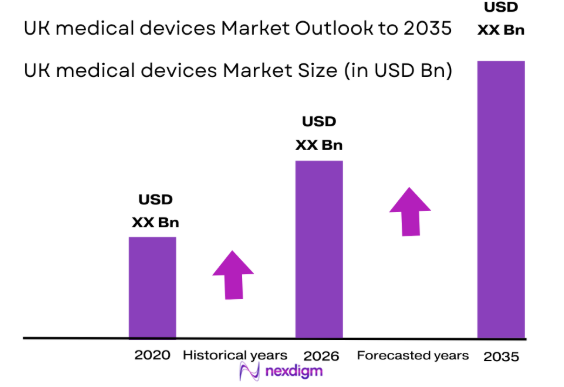
The UK medical devices market is valued at approximately USD ~ billion based on a recent historical assessment. The growth is driven by rising healthcare demand, particularly for diagnostic devices, therapeutic equipment, and minimally invasive surgical tools. The market has been propelled by an increase in chronic diseases and the need for advanced medical technology. Government initiatives and private sector investments in healthcare infrastructure further contribute to the market’s expansion, ensuring continuous development of the medical devices sector.
The UK continues to dominate the market with its well-established healthcare infrastructure. Major cities such as London, Birmingham, and Manchester host some of the most advanced healthcare facilities in Europe. This concentration of medical expertise and technological development, combined with the country’s leading role in medical research and regulatory oversight, solidifies its market dominance. Furthermore, the UK’s strategic partnerships with European and global manufacturers enhance its position as a hub for cutting-edge medical technology.
Market Segmentation
By Product Type
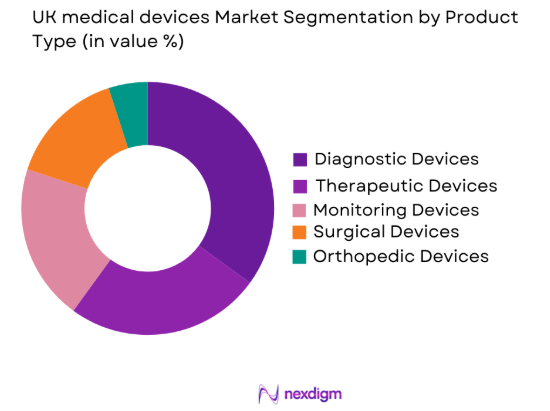
The UK medical devices market is segmented by product type into diagnostic devices, therapeutic devices, monitoring devices, surgical devices, and orthopedic devices. Among these, diagnostic devices hold the largest market share, driven by the growing demand for early disease detection and the increasing prevalence of chronic diseases such as diabetes and cardiovascular conditions. The rise in preventive healthcare and the continuous advancements in diagnostic imaging and point-of-care devices further bolster the dominance of this sub-segment.
By End-User Segment
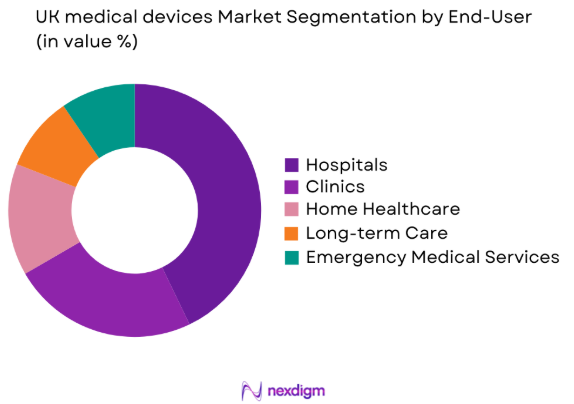
The UK medical devices market is segmented by end-user into hospitals, clinics, home healthcare providers, long-term care facilities, and emergency medical services. Hospitals dominate this segment, accounting for the majority of medical device utilization due to their extensive infrastructure and the wide variety of medical equipment required for diverse treatments. The ongoing push for hospital modernization and an increase in specialized treatments further contributes to the growth and dominance of this sub-segment.
Competitive Landscape
The competitive landscape of the UK medical devices market is characterized by significant consolidation, with a few major players dominating the market. These companies continue to innovate and acquire smaller firms to expand their product offerings and improve their market position. Key players focus on developing advanced technologies and strengthening their distribution networks across the country. The competitive environment is also shaped by regulatory bodies, which ensure that only the most reliable and high-quality products enter the market.
| Company Name | Establishment Year | Headquarters | Technology Focus | Market Reach | Key Products | Revenue | Additional Parameter |
| Medtronic | 1949 | Dublin, Ireland | ~ | ~ | ~ | ~ | ~ |
| Siemens Healthineers | 1847 | Erlangen, Germany | ~ | ~ | ~ | ~ | ~ |
| GE Healthcare | 1892 | Chicago, USA | ~ | ~ | ~ | ~ | ~ |
| Abbott Laboratories | 1888 | Abbott Park, USA | ~ | ~ | ~ | ~ | ~ |
| Philips Healthcare | 1891 | Amsterdam, Netherlands | ~ | ~ | ~ | ~ | ~ |
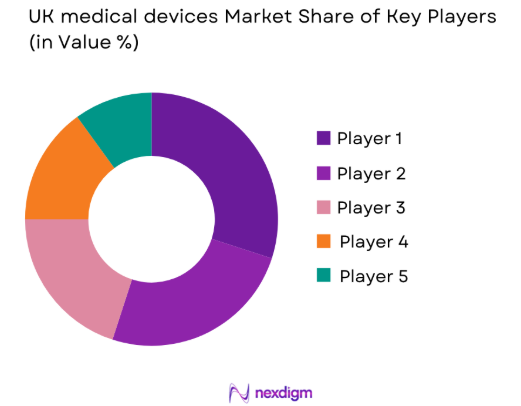
UK medical devices Market Analysis
Growth Drivers
Technological Advancements in Medical Devices
The continuous evolution of medical technologies has significantly driven the growth of the medical devices market. Innovations in diagnostic imaging, therapeutic devices, and minimally invasive surgical tools have greatly improved healthcare delivery. The integration of artificial intelligence (AI) and machine learning (ML) into diagnostic and treatment devices has further accelerated market expansion by enabling faster, more accurate diagnoses. These technological advancements enhance device functionality and efficiency, meeting the growing demand from hospitals and healthcare facilities for improved diagnostic and treatment options. As a result, the medical devices market continues to evolve, with these innovations playing a critical role in shaping the future of healthcare by improving patient outcomes and operational efficiency across the sector.
Rising Healthcare Expenditure
Increased healthcare spending from both public and private sectors has fueled the growth of the UK medical devices market. The UK government has made significant investments in healthcare infrastructure, emphasizing hospital modernization and the upgrade of medical equipment. At the same time, the private healthcare sector is expanding due to higher demand for quality medical care, especially in private hospitals and diagnostic centers. As healthcare spending continues to rise, medical device manufacturers have opportunities to capitalize on this growth by providing advanced, efficient, and cost-effective solutions to healthcare providers. These investments not only improve healthcare access and quality but also create a favorable environment for the development and adoption of innovative medical devices.
Market Challenges
Regulatory Complexity
The UK medical devices market faces significant regulatory challenges, as manufacturers must comply with stringent standards set by organizations like the UK Medicines and Healthcare products Regulatory Agency (MHRA). This compliance involves extensive documentation, quality assurance, and approval processes before products can be marketed. Additionally, the regulatory landscape is constantly evolving, requiring manufacturers to stay informed about changing requirements to avoid penalties or product recalls. The high costs associated with regulatory compliance create barriers for smaller firms, making it difficult for them to enter the market or compete effectively. These regulatory challenges also contribute to the consolidation of the market, as larger companies are better equipped to navigate complex regulations and absorb associated costs.
High Production Costs
The rising costs of manufacturing medical devices pose a significant challenge for the UK market. Designing, testing, and producing high-quality devices that meet strict regulatory standards requires substantial investment. Manufacturers must also account for the costs of raw materials, skilled labor, and ongoing research and development to maintain a competitive edge. While demand for advanced medical devices continues to grow, these high production costs can strain profit margins and make it difficult for smaller manufacturers to compete. As a result, balancing cost management with innovation becomes a key hurdle, particularly for companies looking to stay viable in a highly competitive market while meeting the increasing demand for advanced medical technologies.
Opportunities
Growth in Home Healthcare Solutions
The aging population and the rise in chronic diseases are driving the demand for home healthcare solutions in the UK. Devices that enable remote monitoring, telemedicine, and at-home diagnostics are becoming increasingly popular as they reduce hospital admissions and allow patients to receive care in the comfort of their homes. This shift towards home healthcare presents substantial growth opportunities for medical device manufacturers. By innovating and offering cost-effective, user-friendly solutions, manufacturers can meet the growing demand for convenient home healthcare. As more people prefer managing their health at home, there is a clear opportunity for companies to capitalize on this trend and improve healthcare access while enhancing patient satisfaction and outcomes.
Integration of Artificial Intelligence in Diagnostics
The integration of artificial intelligence (AI) in diagnostic devices offers significant opportunities for the medical devices market. AI-powered tools in imaging and pathology allow for faster, more precise diagnoses, enhancing patient outcomes. Utilizing machine learning and deep learning algorithms, these devices can identify diseases at earlier stages, which is crucial for preventive healthcare. The continued growth of AI technologies is expected to drive further advancements in diagnostic devices, providing opportunities for manufacturers to create innovative, efficient, and smart solutions. This trend is likely to reshape the medical devices market, addressing the increasing demand for accurate diagnostics and contributing to the overall improvement of healthcare systems globally.
Future Outlook
The UK medical devices market is expected to see steady growth over the next five years, driven by ongoing technological advancements, increasing healthcare expenditure, and growing demand for diagnostic and therapeutic devices. Technological innovations such as the integration of artificial intelligence and robotics in medical devices will continue to improve healthcare delivery. Moreover, the rise in chronic diseases, coupled with an aging population, will sustain demand for advanced medical technologies. Regulatory support and investments in healthcare infrastructure are anticipated to create a favorable environment for market growth.
Major Players
- Medtronic
- Siemens Healthineers
- GE Healthcare
- Abbott Laboratories
- Philips Healthcare
- Stryker
- Johnson & Johnson
- Boston Scientific
- Zimmer Biomet
- Cardinal Health
- Becton Dickinson
- ThermoFisher Scientific
- 3M
- Hologic
- Cook Medical
Key Target Audience
- Investments and venture capitalist firms
- Government and regulatory bodies
- Hospitals and healthcare providers
- Medical device manufacturers
- Private sector healthcare organizations
- Diagnosticcenters
- Home healthcare service providers
- Medical device distributors
Research Methodology
Step 1: Identification of Key Variables
Identifying the key variables, such as market size, growth rate, and technological trends, is crucial to formulating a clear research framework. This step involves a review of existing reports, industry data, and expert consultations to ensure that the data reflects current market conditions.
Step 2: Market Analysis and Construction
The market analysis involves reviewing historical data, identifying market drivers, challenges, and segmentation. The construction of the market model helps predict future trends and provides insights into the various segments of the medical devices market.
Step 3: Hypothesis Validation and Expert Consultation
The hypotheses developed during market analysis are validated through expert interviews and consultations with industry professionals. These consultations provide in-depth insights and help ensure that the findings are accurate and reliable.
Step 4: Research Synthesis and Final Output
The final output synthesizes all the data collected and analyzed, forming the comprehensive market report. The conclusions drawn from the research provide actionable insights for businesses, investors, and other stakeholders to make informed decisions.

- Executive Summary
- Research Methodology (Definitions, Scope, Industry Assumptions, Market Sizing Approach, Primary & Secondary Research Framework, Data Collection & Verification Protocol, Analytic Models & Forecast Methodology, Limitations & Research Validity Checks)

- Market Definition and Scope
- Value Chain & Stakeholder Ecosystem
- Regulatory / Certification Landscape
- Sector Dynamics Affecting Demand
- Strategic Initiatives & Infrastructure Growth

- Growth Drivers
Advancements in Healthcare Technology
Increasing Aging Population
Rising Demand for Diagnostic Devices - Market Challenges
Stringent Regulatory Standards
High Production Costs
Intense Price Competition - Market Opportunities
Integration of AI in Medical Devices
Growth in Home Healthcare Solutions
Technological Advances in Diagnostic Equipment - Trends
Growth of Wearable Medical Devices
Integration of IoT in Healthcare
Rising Adoption of Telemedicine - Government Regulations
- SWOT Analysis of Key Competitors
- Porter’s Five Forces

- By Market Value, 2020-2025
- By Installed Units, 2020-2025
- By Average System Price, 2020-2025
- By System Complexity Tier, 2020-2025

- By System Type (In Value%)
Diagnostic Devices
Therapeutic Devices
Monitoring Devices
Surgical Devices
Orthopedic Devices - By Platform Type (In Value%)
Home Healthcare Platforms
Hospital Platforms
Mobile Healthcare Platforms
Ambulatory Care Platforms
Integrated Healthcare Platforms - By Fitment Type (In Value%)
Portable Devices
Fixed Devices
Wearable Devices
Embedded Devices
Modular Devices - By End User Segment (In Value%)
Hospitals
Clinics
Home Healthcare Providers
Long-term Care Facilities
Emergency Medical Services - By Procurement Channel (In Value%)
Direct Procurement
Public Tenders
Private Sector Procurement
Online Sales Platforms
Third-party Distributors

- Market Share Analysis
- Cross Comparison Parameters (System Type, Platform Type, Procurement Channel, End User Segment, Fitment Type, Technology Integration, Regulatory Compliance, Market Reach, Product Innovation, Production Cost)
- SWOT Analysis of Key Competitors
- Pricing & Procurement Analysis
- Key Players
Medtronic
Philips Healthcare
Siemens Healthineers
GE Healthcare
Abbott Laboratories
Johnson & Johnson
Stryker Corporation
Boston Scientific
Zimmer Biomet
Cardinal Health
Becton Dickinson
Thermo Fisher Scientific
3M
Hologic
Cook Medical

- Increasing Healthcare Expenditure
- Focus on Preventative Healthcare
- Demand for Personalized Healthcare Solutions
- Expansion of Telemedicine Services

- Forecast Market Value, 2026-2035
- Forecast Installed Units, 2026-2035
- Price Forecast by System Tier, 2026-2035
- Future Demand by Platform, 2026-2035


 Request a Sample
 Ask for Customization
 Get a Quote
 Enquire Now