

 Download PDF
Market Overview
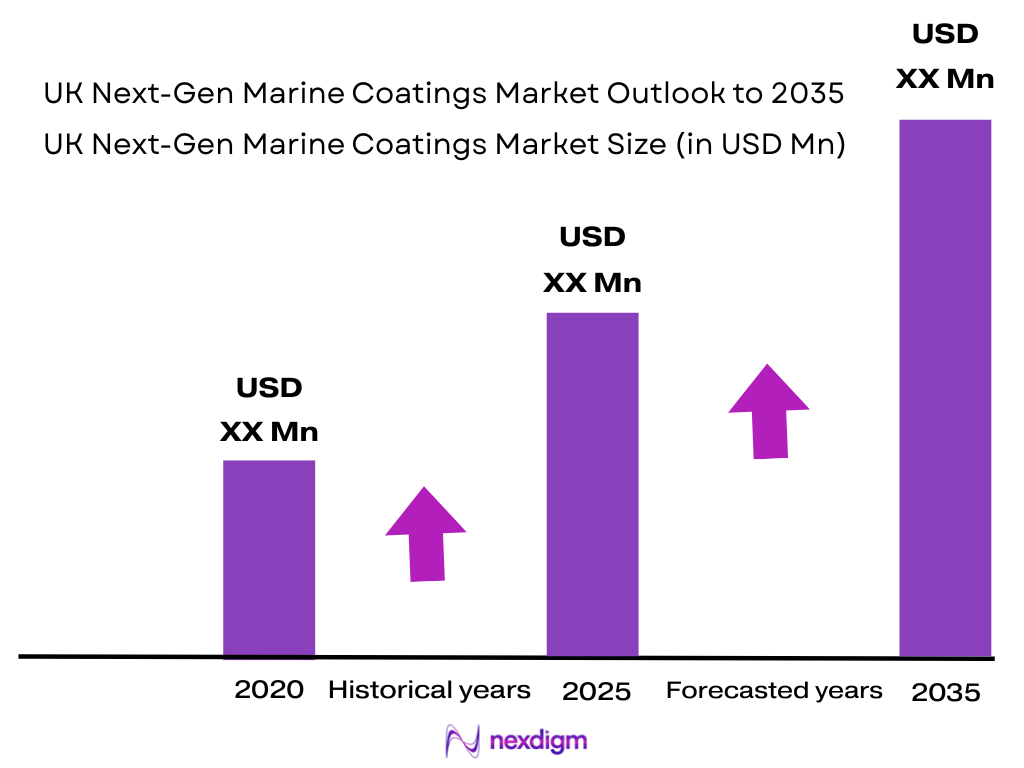
The UK Next-Gen Marine Coatings Market is estimated at ~USD XX billion in 2024 and is projected to expand at a CAGR of ~XX% during 2026-2035. The market growth is supported by increasing demand for corrosion protection, antifouling technologies, low-friction coatings, and advanced protective systems across naval vessels, commercial shipping, offshore wind assets, and marine infrastructure. The UK maritime ecosystem includes significant ship repair, offshore energy and defence activities, with advanced coatings becoming essential for extending asset life and improving operational efficiency.
The market expansion is driven by the UK’s strong maritime clusters concentrated around Aberdeen, Glasgow, Southampton, Portsmouth, Newcastle and Hull. Aberdeen remains important due to North Sea offshore energy operations, while Glasgow and Portsmouth are significant defence and shipbuilding locations supporting naval coating requirements. Southampton and Hull benefit from commercial shipping, port activity and marine engineering capabilities. The UK offshore wind sector is also increasing demand for advanced marine protection systems due to harsh North Sea operating conditions and long lifecycle requirements for offshore structures.
Market Segmentation
By Technology Type
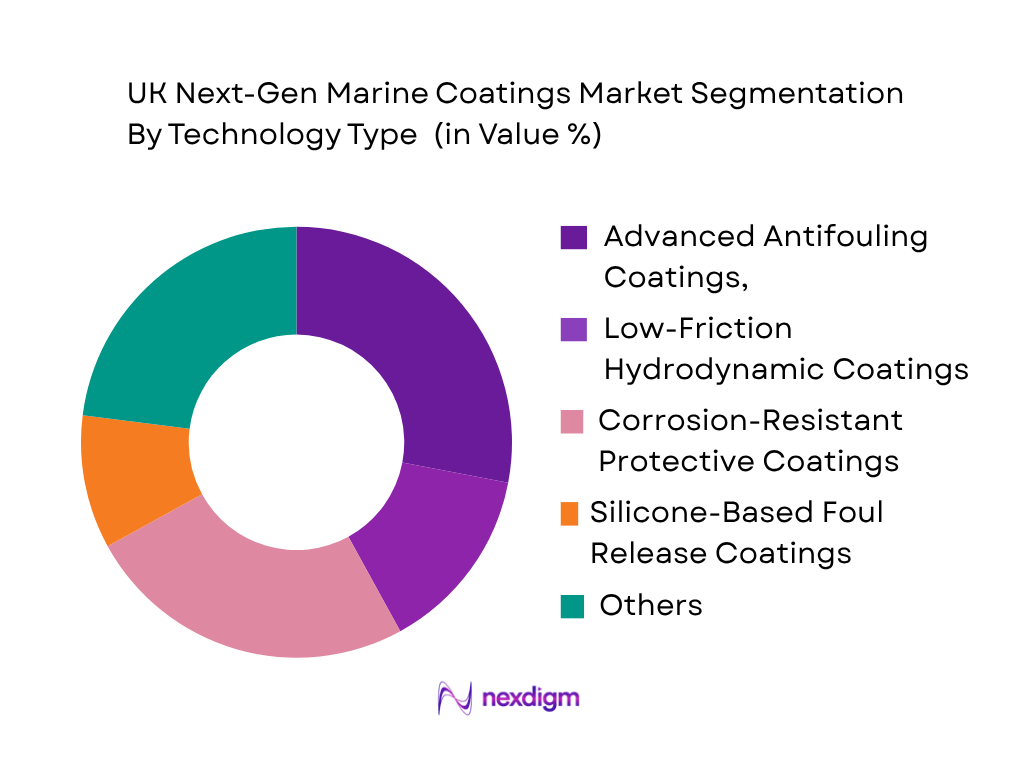
The UK Next-Gen Marine Coatings Market is segmented into advanced antifouling coatings, low-friction hull coatings, corrosion-resistant protective coatings, silicone-based foul release coatings, bio-based coatings, smart coatings, self-healing coatings and nanotechnology-based coatings. Among these, corrosion-resistant protective coatings represent the dominant segment due to the extensive requirement for protecting naval vessels, commercial ships, offshore structures and marine infrastructure exposed to seawater corrosion. Epoxy and polyurethane-based protective systems continue to be widely specified because of their durability, chemical resistance and ability to withstand harsh marine conditions. Advanced antifouling and foul-release technologies are also gaining adoption due to environmental regulations restricting harmful biocides and increasing focus on fuel efficiency. The UK’s offshore wind expansion and vessel maintenance activities further support demand for long-life coating technologies designed for reduced maintenance cycles and improved asset performance.
By Application Industry
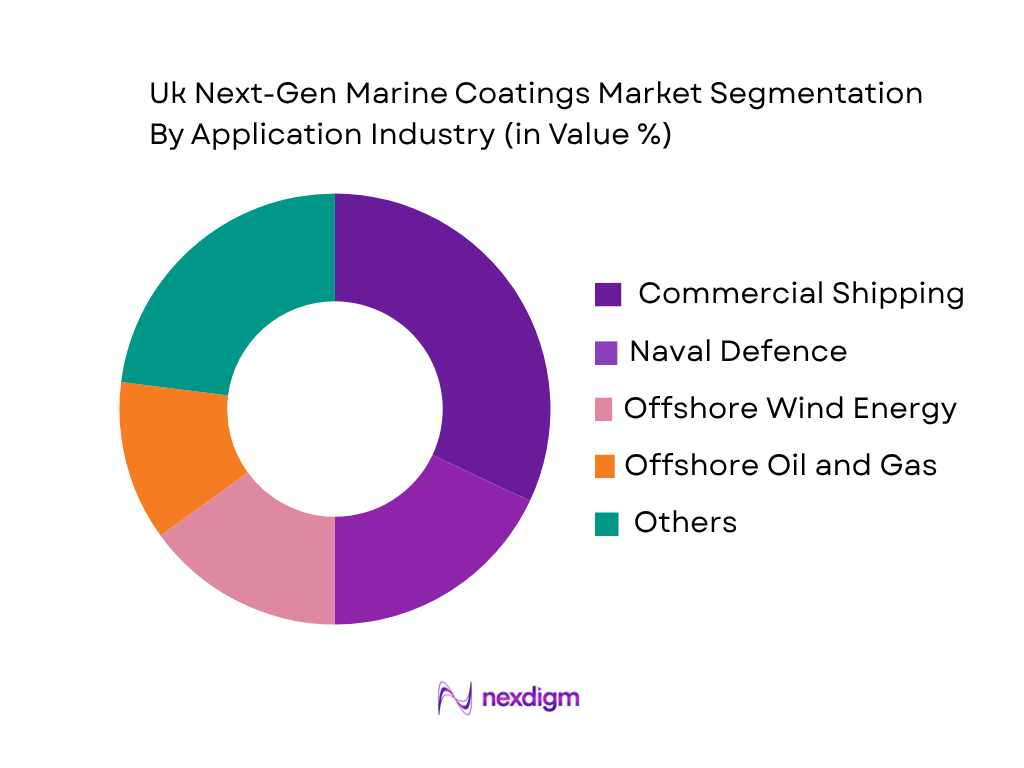
The UK Next-Gen Marine Coatings Market is segmented into commercial shipping, naval defence, offshore wind energy, offshore oil and gas, port infrastructure, ship repair and recreational marine applications. Commercial shipping and ship maintenance represent major demand areas due to continuous vessel operation, corrosion exposure and the requirement for periodic recoating activities. The UK’s strategic maritime position, supported by major ports and shipping routes, creates recurring demand for protective coatings. Naval defence is another important application segment, supported by Royal Navy fleet maintenance and requirements for advanced coating systems offering corrosion resistance, durability and specialised performance characteristics. Offshore wind is emerging as a significant opportunity area as turbine foundations, substations and marine structures require coatings capable of operating under saltwater exposure, wave impact and extreme weather conditions.
Competitive Landscape
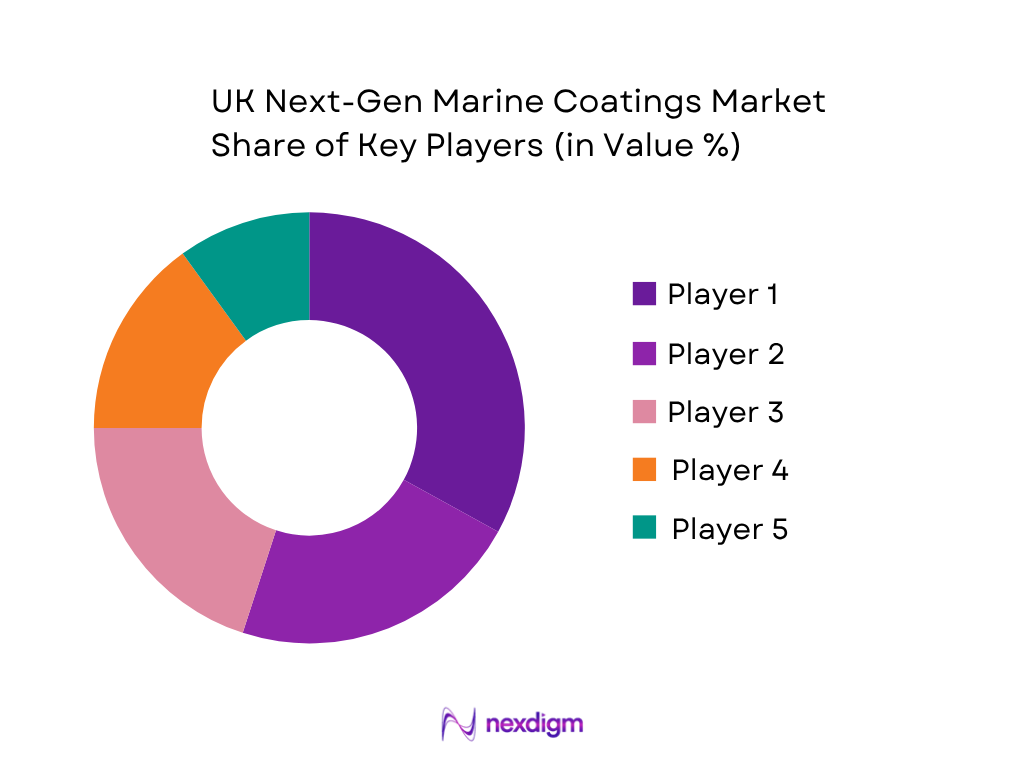
The UK Next-Gen Marine Coatings Market is characterised by the presence of multinational coating manufacturers and specialised marine technology providers. Companies compete through technology development, environmental compliance capabilities, antifouling innovation, naval qualification approvals and relationships with shipbuilders, offshore operators and maintenance contractors. Major players focus on developing low-VOC coatings, sustainable formulations, smart monitoring technologies and advanced corrosion protection systems to address evolving maritime requirements.
| Company | Establishment Year | Headquarters | Key Marine Product Areas | Core Technologies | Major End Users | UK Market Role |
| AkzoNobel (International Paint) | 1792 | Amsterdam, Netherlands | ~ | ~ | ~ | ~ |
| Jotun | 1926 | Sandefjord, Norway | ~ | ~ | ~ | ~ |
| Hempel | 1915 | Lyngby, Denmark | ~ | ~ | ~ | ~ |
| PPG Industries | 1883 | Pittsburgh, USA | ~ | ~ | ~ | ~ |
| Sherwin-Williams | 1866 | Cleveland, USA | ~ | ~ | ~ | ~ |
UK Next-Gen Marine Coatings Market Analysis
Growth Drivers
UK Naval Fleet Modernization and Commercial Vessel Maintenance Requirements
The UK Next-Gen Marine Coatings Market is supported by continuous naval asset maintenance, fleet modernization initiatives and increasing requirements for high-performance protective coating systems. The Royal Navy operates a fleet of approximately 70 commissioned vessels, including aircraft carriers, destroyers, frigates, submarines and support vessels, creating recurring demand for corrosion protection, antifouling technologies and advanced surface protection solutions. The UK Ministry of Defence allocated approximately GBP 64.6 billion for defence spending in the latest spending period, supporting naval capability development, vessel maintenance and maritime technology upgrades. Commercial maritime activity also contributes significantly to coating demand, with the UK managing more than 120 commercial ports, requiring continuous maintenance of vessels, terminals and marine structures. Advanced coatings are increasingly required to improve vessel durability, reduce maintenance frequency and enhance operational efficiency in saltwater environments. The expansion of ship repair activities across maritime clusters including Portsmouth, Glasgow, Southampton and Aberdeen further supports adoption of next-generation epoxy, polyurethane, silicone-based and smart marine coating technologies. The increasing focus on extending vessel service life and reducing lifecycle maintenance costs continues to strengthen demand for advanced marine protection systems.
Maritime Decarbonization Targets and Offshore Wind Expansion
The UK Next-Gen Marine Coatings Market is gaining momentum due to maritime decarbonization initiatives, fuel efficiency requirements and rapid offshore renewable energy development. The UK government has established long-term maritime emission reduction objectives, increasing demand for low-friction hull coatings, advanced antifouling systems and technologies that reduce vessel fuel consumption. The UK Department for Energy Security and Net Zero reported that offshore wind capacity connected to the UK grid exceeded 14 GW, creating demand for specialized coatings protecting turbine foundations, subsea structures and offshore equipment from corrosion and marine growth. The UK maritime sector handles substantial international trade volumes, with the Department for Transport reporting that UK ports handle more than 450 million tonnes of freight annually, requiring efficient and durable vessel operations. Low-friction marine coatings help reduce underwater resistance, improving operational efficiency for commercial fleets. Additionally, offshore wind projects in the North Sea require coating technologies capable of operating under severe conditions including saltwater exposure, high winds and temperature variations. These factors are accelerating adoption of advanced marine coating solutions designed for efficiency, durability and environmental compliance.
Market Challenges
High Technology Development Costs and Marine Testing Complexity
The UK Next-Gen Marine Coatings Market faces challenges due to significant technology development requirements, complex marine testing procedures and long validation periods. Advanced coating technologies such as self-healing surfaces, smart monitoring coatings and bio-based antifouling systems require extensive testing under marine conditions before commercial deployment. Marine environments expose coatings to continuous saltwater corrosion, ultraviolet radiation, mechanical abrasion and temperature fluctuations, increasing technical requirements compared with conventional industrial coatings. The UK Maritime and Coastguard Agency maintains strict safety and operational standards for marine equipment and vessel operations, requiring coating technologies used in critical applications to meet durability and performance requirements. Naval applications involve additional qualification procedures because coatings must provide long-term protection for strategic assets operating in demanding environments. The UK defence sector allocated approximately GBP 2.5 billion toward research and development activities across defence capabilities, supporting advanced technology development but also maintaining strict qualification requirements. These factors increase development timelines for next-generation marine coatings and create barriers for smaller manufacturers attempting to commercialize innovative solutions. The need for extensive performance validation remains a key challenge affecting market adoption.
Specialty Raw Material Dependency and Skilled Application Requirements
The UK Next-Gen Marine Coatings Market is challenged by dependence on specialty raw materials, skilled application requirements and complex supply chain management. Advanced marine coatings require high-performance materials including epoxy resins, polyurethane components, silicone polymers, fluoropolymers and functional additives that often depend on specialized chemical supply networks. The UK chemical industry remains an important manufacturing sector, contributing approximately GBP 30 billion annually to the economy, but several advanced coating inputs are sourced through international supply chains. Fluctuations in global logistics, chemical availability and trade conditions can affect material availability for coating manufacturers. In addition, marine coating application requires specialized workforce capabilities involving surface preparation, environmental control, thickness measurement and quality inspection. The UK shipbuilding and repair sector faces workforce challenges, with the government identifying maritime skills development as a priority area due to shortages in technical marine professions. Improper coating application can reduce performance, increase maintenance requirements and shorten asset protection cycles. These requirements create operational challenges for shipyards, vessel operators and offshore infrastructure companies adopting advanced coating technologies.
Market Opportunities
AI-Enabled Marine Coating Systems and Smart Corrosion Monitoring Technologies
The UK Next-Gen Marine Coatings Market presents opportunities through integration of artificial intelligence, digital monitoring and smart coating technologies. Smart marine coatings equipped with sensing capabilities can help operators detect corrosion, coating degradation and environmental exposure conditions before major maintenance requirements occur. The UK maritime sector is increasingly adopting digital technologies to improve operational efficiency, supported by government initiatives focused on maritime innovation. The UK Department for Transport has highlighted digitalisation as a key component of future maritime development, encouraging adoption of advanced monitoring systems across vessels and marine infrastructure. The UK commercial shipping sector operates thousands of vessels and marine assets requiring regular condition monitoring, creating demand for predictive maintenance solutions. AI-enabled coating systems can combine sensor data with analytics platforms to optimize maintenance schedules, reduce downtime and improve asset lifecycle management. These technologies are particularly relevant for naval vessels, offshore wind installations and commercial fleets operating in harsh marine environments. The combination of advanced materials, artificial intelligence and predictive maintenance capabilities creates opportunities for next-generation coating manufacturers to develop multifunctional marine protection systems.
Bio-Based Antifouling Technologies and Fuel-Saving Low-Friction Coatings
The UK Next-Gen Marine Coatings Market has significant opportunities in sustainable antifouling technologies, low-friction coatings and environmentally responsible marine protection systems. Increasing environmental regulations are encouraging the replacement of traditional antifouling solutions with alternatives that reduce ecological impact while maintaining vessel performance. The UK Environment Agency regulates activities affecting marine environments, increasing focus on sustainable chemical usage and pollution prevention. The UK maritime industry is also pursuing fuel efficiency improvements as shipping companies seek to reduce operating emissions and comply with international climate targets. Advanced low-friction hull coatings and silicone-based foul-release technologies provide opportunities to reduce marine drag and improve vessel efficiency. Offshore renewable energy expansion further increases demand for environmentally durable coatings, with the UK operating one of the world’s largest offshore wind markets with more than 14 GW of installed capacity. Offshore wind foundations, cables and marine structures require long-life coating systems capable of protecting assets for decades under challenging conditions. These trends create opportunities for bio-based coatings, sustainable antifouling systems and advanced protective technologies supporting the transition toward lower-emission maritime operations.
Future Outlook
The UK Next-Gen Marine Coatings Market is expected to experience continued transformation driven by maritime decarbonisation, offshore renewable energy expansion, naval modernization and stricter environmental regulations. Demand will increasingly shift from conventional marine paints toward multifunctional coating systems offering corrosion resistance, antifouling performance, fuel efficiency improvement and environmental compliance. Offshore wind development, vessel lifecycle extension programmes and adoption of smart coating technologies are expected to create new opportunities for advanced marine coating manufacturers.
Major Players
- AkzoNobel
- PPG Industries
- Jotun
- Hempel
- Chugoku Marine Paints
- Nippon Paint Holdings
- Sherwin-Williams
- Kansai Paint
- Axalta Coating Systems
- RPM International
- HMG Paints
- Subsea Industries
- Seajet International
- Berger Paints
- Tremco CPG
Key Target Audience
- Shipbuilding Companies and Shipyard Operators
- Commercial Shipping Companies and Vessel Fleet Owners
- Naval Defence Organizations (Royal Navy, UK Ministry of Defence)
- Offshore Energy Companies and Wind Farm Developers
- Marine Repair and Maintenance Service Providers
- Investments and Venture Capitalist Firms (Maritime Technology Investors, Clean Technology Investors)
- Government and Regulatory Bodies (Maritime and Coastguard Agency, Department for Transport, UK Environment Agency)
- Marine Equipment Manufacturers and Offshore Infrastructure Developers
Research Methodology
Step 1: Identification of Key Variables
The research process begins with defining the UK Next-Gen Marine Coatings ecosystem, including coating manufacturers, vessel operators, shipyards, offshore energy companies, regulatory bodies and technology providers. Secondary research is conducted to identify major market variables such as coating technology adoption, vessel maintenance requirements, environmental regulations and marine infrastructure development trends.
Step 2: Market Analysis and Construction
Historical market information is analysed through demand-side and supply-side assessments covering commercial shipping, naval applications, offshore wind infrastructure and ship repair activities. The analysis evaluates coating technology penetration, application requirements, product categories and industry-specific demand factors influencing market development.
Step 3: Hypothesis Validation and Expert Consultation
Market assumptions are validated through discussions with industry participants including marine coating suppliers, shipyard professionals, vessel operators and technical specialists. These interactions provide operational insights regarding coating performance requirements, technology adoption barriers, regulatory challenges and future demand patterns.
Step 4: Research Synthesis and Final Output
The final research output integrates quantitative and qualitative findings from multiple sources to develop a comprehensive assessment of the UK Next-Gen Marine Coatings Market. Data validation includes technology trends, competitive positioning, application analysis and strategic opportunities for market participants.

- Executive Summary
- Research Methodology (Market Definitions and Scope, Next-Generation Marine Coatings Classification, Advanced Coating Technology Mapping, Market Sizing Framework, Top-Down Market Assessment, Bottom-Up Market Assessment, Demand-Side Analysis, Supply-Side Analysis, Primary Industry Interviews, Shipyard and Vessel Operator Validation, Technology Adoption Assessment, Data Triangulation Framework, Forecasting Methodology, Research Limitations and Assumptions)

- Definition and Scope
- Market Evolution and Development Timeline of Marine Coating Technologies
- Transition from Conventional Marine Coatings to Next-Generation Coating Systems
- UK Marine Coatings Value Chain Analysis
- Marine Coatings Supply Chain Analysis
- Raw Material Ecosystem Analysis

- Growth Drivers (UK Naval Fleet Modernization, Commercial Vessel Maintenance Requirements, Maritime Decarbonization Targets, Offshore Wind Expansion, Shipbuilding Industry Development, Port Infrastructure Modernization, Fuel Efficiency Requirements, Anti-Biofouling Compliance)
- Market Challenges (High Technology Development Costs, Marine Testing Complexity, Regulatory Approval Requirements, Limited Adoption of Advanced Coating Technologies, Specialty Raw Material Dependency, Skilled Application Requirements, Long Qualification Cycles, Performance Validation Requirements)
- Market Opportunities (AI-Enabled Marine Coating Systems, Bio-Based Antifouling Technologies, Fuel-Saving Low-Friction Coatings, Offshore Wind Turbine Protection Coatings, Autonomous Vessel Protection Systems, Smart Corrosion Monitoring Coatings, Carbon Reduction Marine Technologies, Self-Healing Marine Surfaces)
- Market Trends (Sustainable Marine Coating Adoption, Low-VOC Coating Development, Digital Monitoring Integration, Bio-Inspired Antifouling Technologies, Nanotechnology Adoption, Advanced Corrosion Protection Systems, Autonomous Vessel Coating Requirements)
- Government Regulations and Industry Standards (UK Maritime Safety Regulations, Maritime and Coastguard Agency Standards, IMO Marine Pollution Regulations, UK Environmental Protection Requirements, VOC Emission Controls, Antifouling System Regulations, Offshore Wind Environmental Compliance)
- SWOT Analysis
- Porter’s Five Forces Analysis
- PESTLE Analysis

- By Market Value (2020-2025)
- By Coating Volume Consumption (2020-2025)
- By Application Area Consumption (2020-2025)
- By Average Selling Price (2020-2025)
- By Technology Adoption Level (2020-2025)
- By End-Use Industry Contribution (2020-2025)

- By Coating Technology Type (In Value %)
Advanced Antifouling Coatings
Low-Friction Hull Coatings
Self-Healing Marine Coatings
Smart Sensor-Integrated Coatings
Nanotechnology-Based Marine Coatings
Bio-Based Marine Coatings
Thermal Barrier Marine Coatings
Corrosion-Resistant Protective Coatings - By Resin Technology (In Value %)
Epoxy-Based Marine Coatings
Polyurethane-Based Marine Coatings
Silicone-Based Foul Release Coatings
Fluoropolymer Marine Coatings
Hybrid Polymer Coatings
Bio-Based Resin Coatings - By Vessel Type (In Value %)
Naval Vessels
Commercial Shipping Vessels
Offshore Support Vessels
Passenger and Cruise Vessels
Fishing and Workboats
Recreational Marine Vessels
Autonomous and Unmanned Marine Vessels - By Application Area (In Value %)
Hull Protection Coatings
Deck and Superstructure Coatings
Ballast Tank Protection Coatings
Propeller and Underwater Component Coatings
Offshore Structure Protection Coatings
Marine Equipment Protection Coatings - By End-Use Industry (In Value %)
Defence and Naval Applications
Commercial Shipping
Offshore Oil and Gas
Offshore Renewable Energy
Port and Marine Infrastructure
Ship Repair and Maintenance Services

- Market Positioning of Major Players (By Technology Portfolio, Application Segment, Vessel Type, Product Innovation, Distribution Network)
- Cross Comparison Parameters (Advanced Marine Coating Technology Portfolio, Antifouling Solution Capability, Low-Friction Coating Development, Smart Coating Integration Capability, Bio-Based Coating Portfolio, Naval Application Experience, Offshore Protection Capability, Research and Development Strength)
- SWOT Analysis of Major Players
- Detailed Profiles of Major Companies
AkzoNobel
PPG Industries
Jotun
Hempel
Sherwin-Williams
Nippon Paint Marine Coatings
Chugoku Marine Paints
Kansai Paint Marine Coatings
Axalta Coating Systems
RPM International
3M
BASF
Dow
Evonik Industries
Teknos

- Vessel Operator Requirements Assessment
- Shipyard Procurement Analysis
- Naval Procurement Assessment
- Offshore Energy Operator Analysis
- Purchasing Decision Factors
- Technology Adoption Barriers

- By Market Value (2026-2035)
- By Coating Volume Consumption (2026-2035)
- By Application Area Consumption (2026-2035)
- By Average Selling Price (2026-2035)
- By Technology Adoption Level (2026-2035)
- By End-Use Industry Contribution (2026-2035)


 Request a Sample
 Ask for Customization
 Get a Quote
 Enquire Now