
 Download PDF
Market Overview
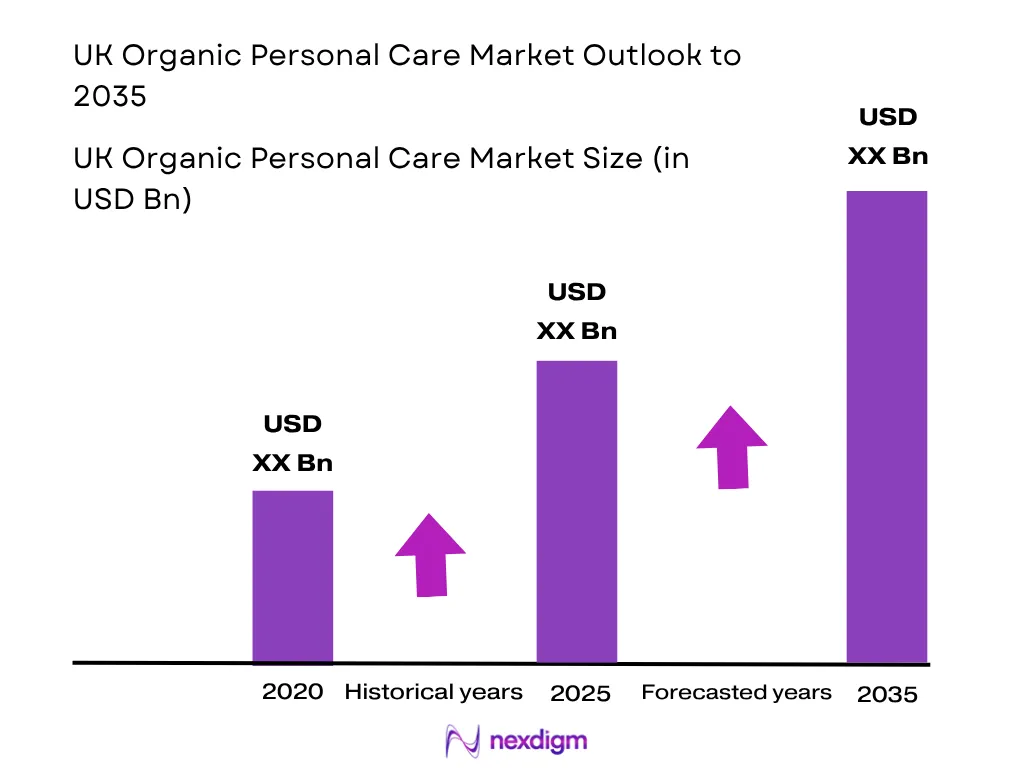
The UK Organic Personal Care Market is valued at approximately USD ~ billion. The market growth is primarily driven by the increasing consumer demand for organic and eco-conscious products, supported by a shift towards healthier lifestyles. In recent years, more consumers are opting for personal care products that are not only effective but also made from sustainable and organic ingredients. With the rise in environmental awareness, concerns over harmful chemicals in traditional beauty products, and the growth of veganism, the demand for organic personal care products has surged. The preference for cruelty-free, non-toxic products has significantly influenced purchasing decisions, further boosting the market’s size.
The UK is one of the largest players in the European organic personal care sector, with London emerging as a key hub due to its thriving retail market, diverse consumer base, and strong e-commerce presence. Other prominent regions include Manchester and Birmingham, which also show a high consumer inclination toward eco-conscious and organic products. The growth of natural and organic beauty boutiques, coupled with online retail channels, makes the UK a leader in this space. The country’s stringent regulations on cosmetic ingredients and a highly educated consumer population contribute to the high demand and dominance of the organic personal care market.
Market Segmentation
By Product Type
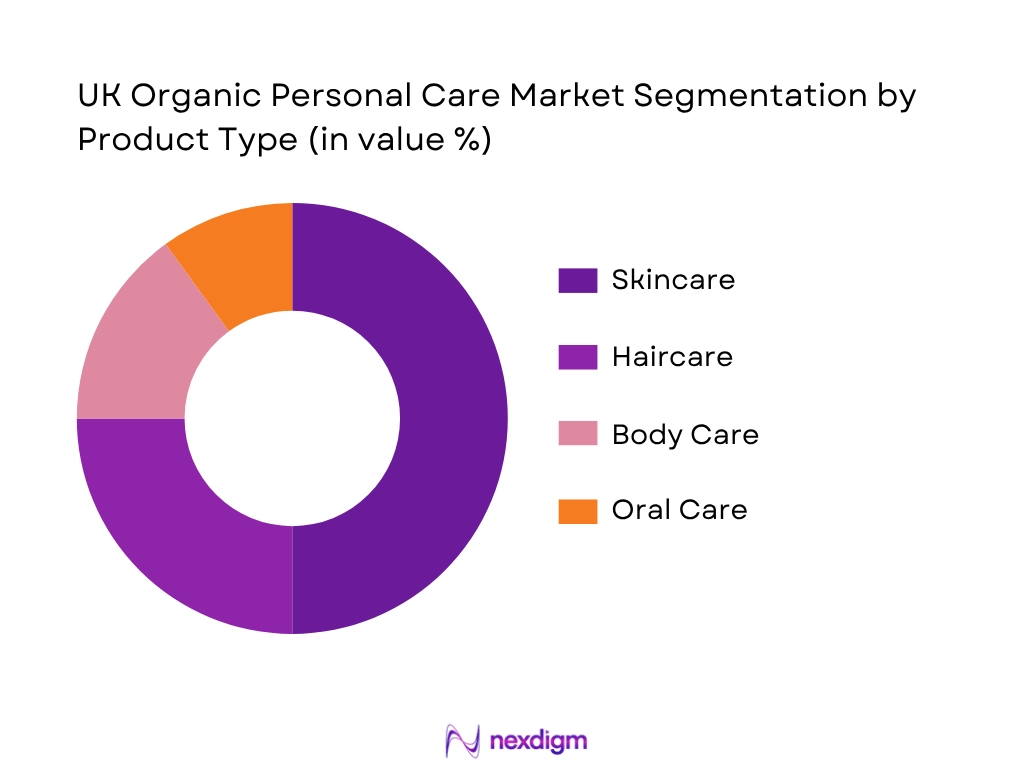
The UK Organic Personal Care Market is segmented by product type into skincare, haircare, body care, and oral care. Among these, skincare has witnessed the most substantial market share. Skincare products such as creams, serums, and moisturizers lead the organic personal care market due to the increasing consumer awareness about the harmful effects of synthetic chemicals on the skin. The rise of skin sensitivity concerns, coupled with a growing preference for natural and organic ingredients, has driven the dominance of this segment. Major brands have launched skincare lines incorporating botanicals, essential oils, and plant-based ingredients, further pushing skincare’s market dominance.
By Distribution Channel
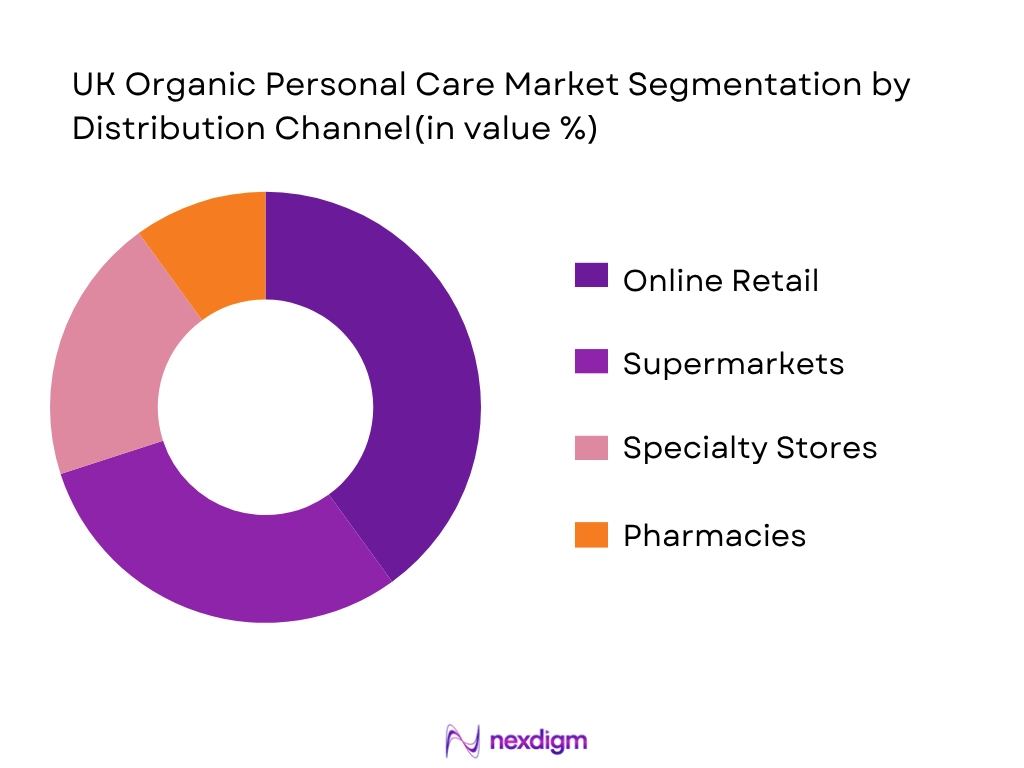
The organic personal care market in the UK is segmented by distribution channels into supermarkets, online retail, specialty stores, and pharmacies. The online retail segment is projected to dominate the market due to the rise in e-commerce and consumer preference for convenience. The increasing use of social media for promoting organic beauty products and influencer marketing has further bolstered online sales. Consumers increasingly prefer to purchase organic personal care products online due to better accessibility, detailed product information, and user reviews, driving this segment’s growth.
Competitive Landscape
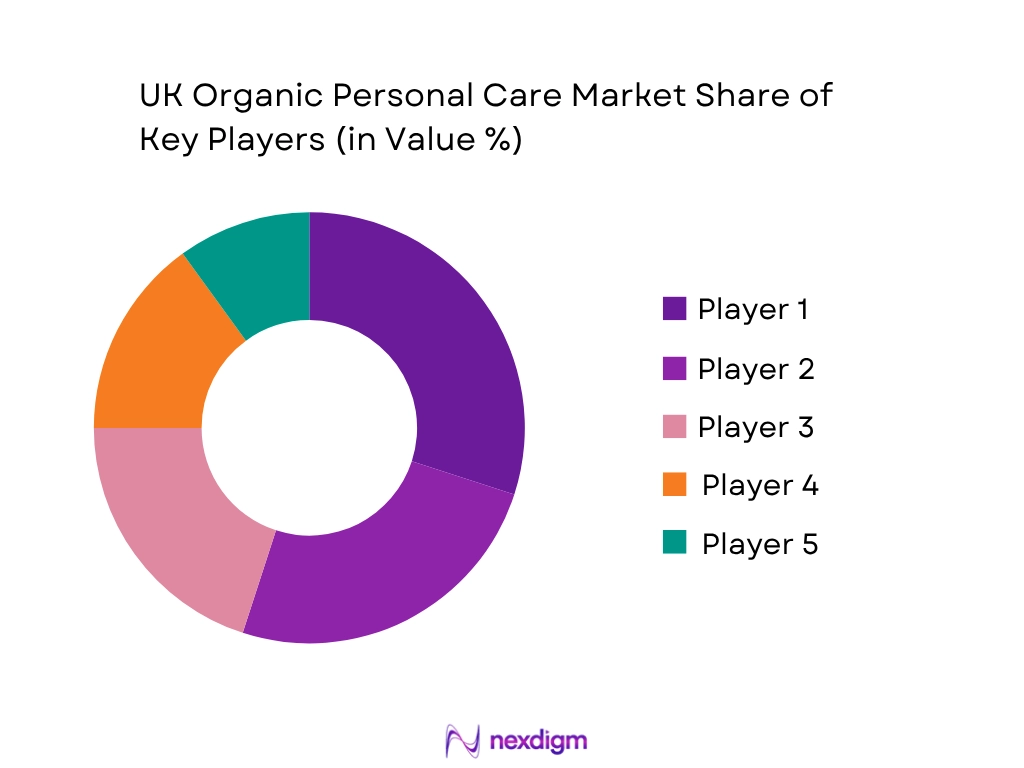
The UK Organic Personal Care market is dominated by several leading brands that have established a significant presence in both retail stores and online platforms. Companies like The Body Shop, Neal’s Yard Remedies, and Lush are recognized for their strong brand loyalty and commitment to eco-friendly products. The market is also increasingly competitive with newer entrants leveraging social media and e-commerce channels to attract consumers. These companies offer a wide range of organic personal care products, with a significant emphasis on ingredient transparency, sustainability, and ethical sourcing practices. The competitive landscape is expected to remain strong, driven by consumer preference for natural products and increased availability of organic beauty lines.
| Brand Name | Established | Headquarters | Sustainability Commitment | Product Range | Distribution Channels | Market Focus |
| The Body Shop | 1976 | London, UK | ~ | ~ | ~ | ~ |
| Neal’s Yard Remedies | 1981 | London, UK | ~ | ~ | ~ | ~ |
| Lush | 1995 | Poole, UK | ~ | ~ | ~ | ~ |
| Green People | 1997 | Sussex, UK | ~ | ~ | ~ | ~ |
| REN Clean Skincare | 2000 | London, UK | ~ | ~ | ~ | ~ |
UK Organic Personal Care Market Analysis
Growth Drivers
Ingredient Transparency Demand
The growing consumer demand for ingredient transparency in the personal care industry is a significant driver for the UK Organic Personal Care Market. Consumers are increasingly seeking products with clear, traceable, and safe ingredients. The UK government has placed a strong emphasis on the safety and traceability of cosmetic ingredients. In 2024, the UK government’s “UK Cosmetics Regulation” mandates that all personal care products disclose their ingredient list, ensuring that consumers are well-informed about the products they use. According to a 2023 report by the UK Department for Business, Energy & Industrial Strategy (BEIS), nearly 60% of UK consumers consider ingredient transparency a key factor when choosing personal care products. Furthermore, the demand for products with natural, non-toxic ingredients is on the rise, with the latest government statistics revealing a 35% increase in the number of organic certification applications in 2024. This demand is fueled by growing awareness of the harmful effects of chemicals such as parabens and phthalates, prompting consumers to seek safer alternatives. The Food Standards Agency (FSA) also reports a marked increase in consumer interest in ingredient transparency, as products with full ingredient lists are consistently ranked higher in consumer satisfaction surveys.
Sustainability and Eco-Conscious Consumer Behaviour
Sustainability continues to shape consumer behaviour in the UK, particularly in the organic personal care market. As of 2024, 45% of UK consumers are actively seeking products from companies that adopt sustainable practices. This shift is supported by the increasing government initiatives aimed at reducing carbon emissions and waste, with the UK aiming to achieve net-zero emissions by 2050. A 2024 report by the UK Department for Environment, Food & Rural Affairs (DEFRA) states that 41% of UK consumers have made lifestyle changes to be more environmentally friendly, directly influencing their purchasing decisions in the personal care sector. Additionally, consumer preference for eco-conscious products has grown in the last decade, with sales of eco-friendly products increasing by 32% from 2020 to 2024. Government policies such as the Plastic Packaging Tax, introduced in 2022, further encourage manufacturers to move towards sustainable packaging solutions, making eco-friendly products even more desirable. The rise of sustainability-focused certifications such as the Soil Association Organic Standard has also played a critical role in driving this market shift, with over 1,500 new products certified under these eco-labels in 2024 alone.
Market Constraints
Higher Price Premium vs Conventional Products
A significant constraint for the UK Organic Personal Care Market is the higher price premium of organic products compared to conventional alternatives. According to the Office for National Statistics (ONS), organic personal care products in the UK are priced 30-40% higher on average than their non-organic counterparts. This price difference is attributed to the higher costs of sourcing certified organic ingredients and ensuring eco-friendly packaging. A survey conducted by the UK-based Financial Conduct Authority (FCA) in 2024 found that while 62% of consumers are willing to pay a premium for sustainable and organic products, 45% find the price point of these goods prohibitive. This higher cost is particularly evident in product categories like skincare and haircare, where organic alternatives often rely on specialty ingredients that are costly to source. Additionally, the regulatory requirements for organic certifications add to the production costs, which in turn affect retail pricing. As the cost of living increases in 2024, UK consumers are becoming more price-conscious, leading to a potential slowdown in the willingness to pay higher premiums for organic products.
Certification Ambiguity and Label Credibility
Another constraint facing the UK Organic Personal Care Market is the ambiguity around certifications and the lack of uniformity in labeling, which often causes confusion among consumers. The UK government, in partnership with organizations like the Soil Association, regulates organic certification, but there are still challenges with the clarity and consistency of organic claims on packaging. In 2024, the UK’s National Consumer Agency found that over 20% of consumers did not fully trust the organic labels on personal care products, primarily due to the lack of clear regulations and the proliferation of non-verified claims. The Organic Trade Association reports that many personal care products claim to be “natural” or “organic” without meeting the stringent criteria set by certification bodies. This creates consumer distrust and can lead to decreased sales for genuinely organic brands. A survey by the UK Competition and Markets Authority (CMA) in 2024 found that 19% of respondents said they avoid organic personal care products because they feel they are misleading or unclear about their certification. This certification ambiguity creates a barrier for the organic personal care market, particularly for new entrants who may struggle with the certification process.
Opportunities
E-commerce Penetration
The rapid growth of e-commerce presents a significant opportunity for the UK Organic Personal Care Market. In 2024, the UK’s e-commerce sales for personal care products accounted for 38% of the total market, with this number expected to continue growing. According to the UK Digital Market Report 2024, the growth of online shopping has been accelerated by changing consumer preferences and the COVID-19 pandemic, which led to an increased reliance on online retail. Additionally, e-commerce platforms offer personal care brands an efficient way to reach environmentally-conscious consumers who prefer the convenience of online shopping. As per data from the UK Retail Consortium, over 60% of UK consumers now prefer purchasing organic personal care products through online stores, especially those offering detailed product information and reviews. In particular, platforms such as Amazon and dedicated organic marketplaces like Natural Collection have seen a surge in organic product listings, further driving growth in this segment. Social media marketing and influencer endorsements also play a crucial role in driving e-commerce sales, especially in the organic beauty sector, where social proof is essential for consumer confidence.
Multi-Functional Organics
The increasing demand for multi-functional organic products presents a significant growth opportunity in the UK Organic Personal Care Market. In 2024, the trend toward products that offer multiple benefits, such as anti-aging and moisturizing in a single formula, is gaining traction. The UK consumer is increasingly looking for convenience and effectiveness in their personal care routines, and multi-functional products cater to these needs. A 2024 report by the UK’s Cosmetics and Personal Care Association (CPCA) reveals that multi-functional skincare products, such as those offering both sun protection and anti-aging benefits, have seen a 25% increase in sales compared to single-purpose products. This trend aligns with the broader consumer move toward simplifying personal care routines, driven by busy lifestyles. Furthermore, the demand for eco-friendly products is pushing brands to formulate multi-functional products that use fewer resources and packaging, thereby meeting both the convenience and sustainability needs of consumers. Multi-functional organic products are expected to continue growing in popularity, with brands like Dr. Hauschka and Neal’s Yard Remedies leading the way in offering these types of products.
Future Outlook
Over the next decade, the UK Organic Personal Care market is expected to witness strong growth, primarily driven by an ongoing shift toward more sustainable and eco-friendly products. Advancements in organic ingredient formulations and increasing consumer demand for transparency in sourcing will continue to shape the market landscape. The rising popularity of personalized skincare solutions and the growing influence of digital marketing will contribute to further market expansion. Government policies promoting sustainability and eco-labeling will further boost the adoption of organic personal care products.
Major Players
- The Body Shop
- Neal’s Yard Remedies
- Lush
- Green People
- REN Clean Skincare
- Dr. Bronner’s
- Weleda UK
- Kiehl’s
- Aveda
- Origins
- Jurlique
- L’Occitane
- Tropic Skincare
- Lavera
- Faith in Nature
Key Target Audience
- Investments and Venture Capitalist Firms
- Government and Regulatory Bodies (Department for Environment, Food & Rural Affairs)
- Major Retailers
- Natural and Organic Product Manufacturers
- Online Retailers (E‑commerce platforms)
- Private Label Companies
- Private Equity Firms
- Sustainability Consultancies
Research Methodology
Step 1: Identification of Key Variables
The initial step involves identifying all key drivers and stakeholders in the UK Organic Personal Care market. This includes understanding market trends, consumer preferences, and supply chain dynamics. Secondary research is conducted to define critical variables such as market segments and growth drivers.
Step 2: Market Analysis and Construction
In this phase, historical data related to the UK Organic Personal Care market is analyzed. We examine market penetration across different segments, review the performance of major distribution channels, and evaluate growth patterns. The objective is to derive key insights into the potential for market expansion.
Step 3: Hypothesis Validation and Expert Consultation
Expert interviews are conducted with professionals in the organic personal care industry, including product developers, retailers, and sustainability consultants. Their insights help to validate the hypotheses formed during the research phase and ensure accuracy in market projections.
Step 4: Research Synthesis and Final Output
The final stage involves synthesizing all findings and creating a comprehensive market report. This includes cross-checking with manufacturers, distributors, and retailers to verify and complement the insights gathered through secondary research and expert consultations.

- Executive Summary
- Research Methodology (Market Definitions & Organic Certification Standards (Soil Association, COSMOS, Ecocert), Organic Claim Taxonomy & Categorisation Thresholds, Market Sizing Approach (Bottom‑Up & Top‑Down Integration), Data Triangulation Method (Primary Interviews + Retail Scan + Panel Data), Limitations & Data Normalisation Rules)

- Definition and Scope (Organic vs Natural Claims)
- Market Genesis & Evolution
- Certification and Labeling Architecture
- Market Regulatory Framework
- Supply Chain Anatomy
- Value Chain Dynamics
- Import Dependence, Traceability, and Fraud-Control Architecture

- Growth Drivers (Ingredient Transparency Demand, Sustainability & Eco‑Conscious Consumer Behaviour, Digital Influence & Social Media Advocacy)
- Market Constraints (Higher Price Premium vs Conventional Products, Certification Ambiguity and Label Credibility)
- Opportunities (E‑commerce Penetration, Multi‑Functional Organics)
- Trends(Shift Towards Clean & Biodegradable Packaging, Rise in Male Organic Personal Care)
- Regulatory Landscape (retailer compliance standards, Organic certification and labeling thresholds, Cosmetic safety substantiation, GMP, and adverse-event obligations, Environmental and sustainability claim substantiation, State-level ingredient disclosure)
- Value Chain and Supply Chain Analysis (farm-to-extract flow, import dependencies, converter margins, fill-finish nodes, quality controls)
- Porter’s Five Forces(Threat of New Entrants, Supplier Power)
- SWOT Profiles of Key Players
- Porter’s Five Forces Analysis

- By Value (2020-2025)
- By Volume (2020-2025)
- By Average Selling Price (2020-2025)
- By Category Contribution (2020-2025)
- By Distribution Channel Revenue Mix (2020-2025)

- By Product Category (In Value %)
Skincare (Creams, Serums, Cleansers)
Haircare (Shampoo, Conditioner, Serums)
Oral Care (Toothpaste, Mouthwash)
Body/Lotion & Bath Products
Cosmetics & Colour Organic Lines - By Ingredient Claim Type (In Value %)
Certified Organic (%)
Vegan & Cruelty‑Free
Plant‑Based Actives
Fragrance‑Free/Sensitive Formulations - By Distribution Channel (In Value %)
E‑Commerce & Direct‑to‑Consumer
Specialty Stores & Organic Boutiques
Supermarkets/Hypermarkets
Pharmacies/Drugstores - By Consumer Demographic (In Value %)
Millennials (Age Cohort)
Gen Z
Baby Boomers
Male Grooming Segment - By Price Tier (In Value %)
Mass Organic
Mid‑Tier Organic
Premium/Prestige Organic

- Market Share of Leading Players (by Value, overall share, category share, channel share, and branded vs private label)
- Cross‑Comparison Parameters (Brand Organic Certification Count, Product SKU Count by Organic Claim, Revenue by Distribution Channel, E‑Commerce Penetration, Ingredient Sourcing Transparency Score, Sustainability & Packaging Scorecard, Average Unit Price by Category, Consumer Loyalty Index)
- SWOT Analysis (Major Competitors)
- Pricing & Promotion Analysis (Average Selling Prices by Segment, Promotional Intensity Across Channels, Discounting vs Brand Premium Strategies)
- Category-Claim Benchmarking (baby-safe, sensitive-skin, lip care, soap, scalp care, deodorant, oral care, sun care)
- Detailed Profiles of Major Companies
The Body Shop
Neal’s Yard Remedies
Liberty London Beauty
Green People
REN Clean Skincare
Tata Harper Skincare
Lavera
Dr. Bronner’s
Faith in Nature
Weleda UK
Country Life Essentials
Organic Surge
Ella Baché UK
Tropic Skincare
Bare Biology

- Buyer Cohort Profiling (age, income, household type, condition-led needs, wellness orientation)
- Purchase Drivers and Barriers (seal trust, safety perception, efficacy, scent, value, availability)
- Shopper Journey and Decision Funnel (awareness source, trial trigger, review influence, conversion friction, repurchase trigger)
- Channel Behavior Analysis (discovery channel, purchase channel, replenishment channel, basket mission)
- E-Commerce, DTC, and Social Commerce Analysis (traffic source, CAC, conversion rate, subscription mix, repeat rate)
- Basket Composition and Repurchase Economics (cross-sell, attach rate, replenishment cycle, bundle uptake)
- Retailer and Practitioner Influence (buyer gatekeeping, shelf standards, dermatologist/esthetician/pediatric endorsement)

- By Value (2026-2035)
- By Volume (2026-2035)
- By Average Selling Price (2026-2035)
- By Category Growth Contribution (2026-2035)
- By Channel Growth Contribution (2026-2035)


 Request a Sample
 Ask for Customization
 Get a Quote
 Enquire Now