

 Download PDF
Market Overview
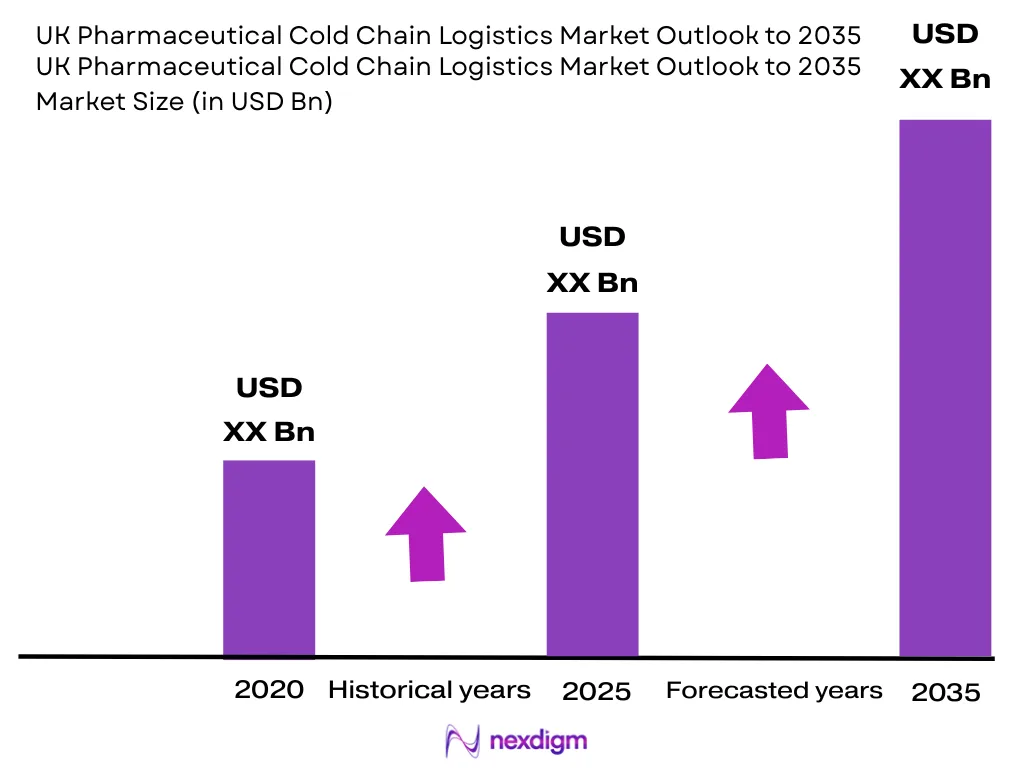
The UK Pharmaceutical Cold Chain Logistics Market was valued at USD ~ Billion in 2024 and is anticipated to expand at a CAGR of ~% during 2026-2035. The market is primarily driven by the expanding pipeline of biologics, vaccines, and cell & gene therapies requiring strict temperature control, stringent MHRA Good Distribution Practice compliance requirements under the UK Orange Guide, and continued growth in NHS homecare and direct-to-patient specialty pharmacy distribution. According to industry estimates, the UK pharmaceutical logistics market was valued at approximately USD 11.28 billion in 2025 and is projected to grow at a CAGR of approximately 4.1% through 2031, with the cold-chain segment identified as the faster-growing category at approximately 5.6% CAGR, outpacing non-cold-chain distribution. The UK healthcare cold chain logistics segment specifically is projected to grow from approximately USD 293.75 million in 2024 to USD 461.25 million by 2035, while the broader UK cold chain logistics market, in which pharmaceuticals and biologics represent the fastest-growing application at approximately 5.26% CAGR, was valued at approximately USD 9.37 billion in 2025, reflecting the market’s rapid maturation across storage, transportation, and monitoring segments.
Market Segmentation
By Service Type
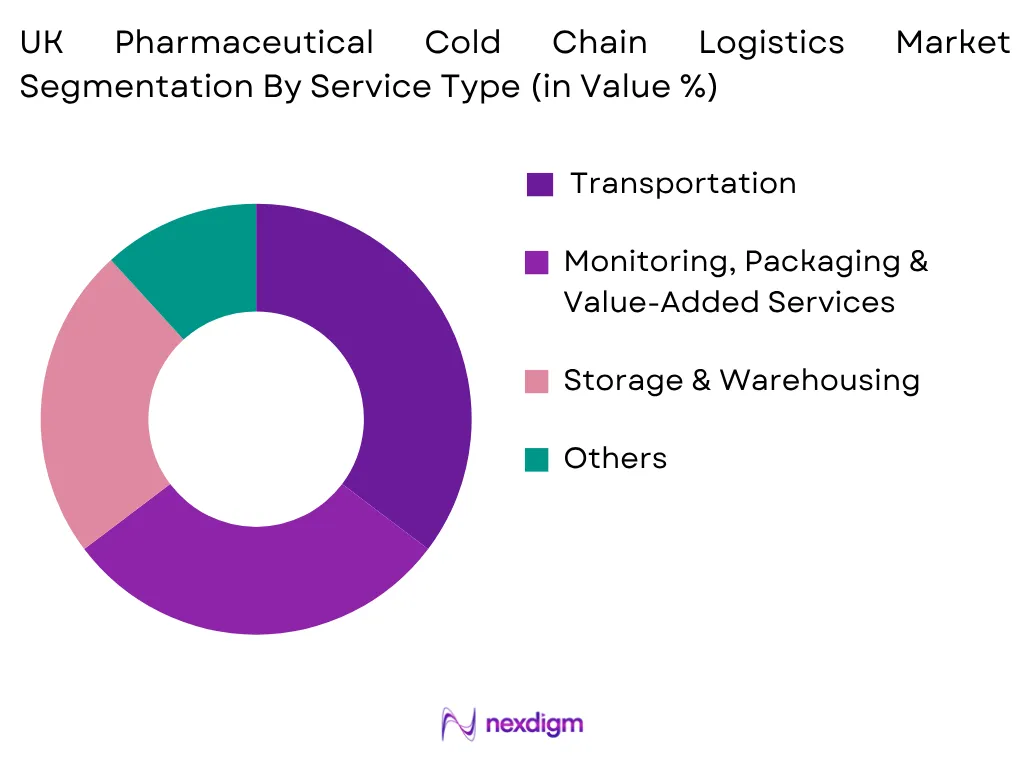
Among these, Transportation continues to represent the largest service category within the UK Pharmaceutical Cold Chain Logistics Market, with DHL Supply Chain, Kuehne+Nagel, and UPS Healthcare expanding dedicated temperature-controlled road and air networks to serve pharmaceutical manufacturers and NHS distribution channels. Storage & Warehousing remains a critical foundation of the market, with Movianto UK and Alloga UK continuing to expand GDP-compliant cold storage capacity across major distribution hubs in Bedford, Lutterworth, and the East Midlands to support growing biologics and vaccine inventories. Monitoring, Packaging & Value-Added Services represent the fastest-growing service category, driven by rising adoption of IoT-enabled sensors, real-time shipment tracking, and predictive analytics platforms from providers such as Cryoport Systems and Sonoco ThermoSafe, as pharmaceutical companies increasingly prioritize shipment visibility and chain-of-custody verification for high-value biologics and cell & gene therapy payloads.
By Temperature Range
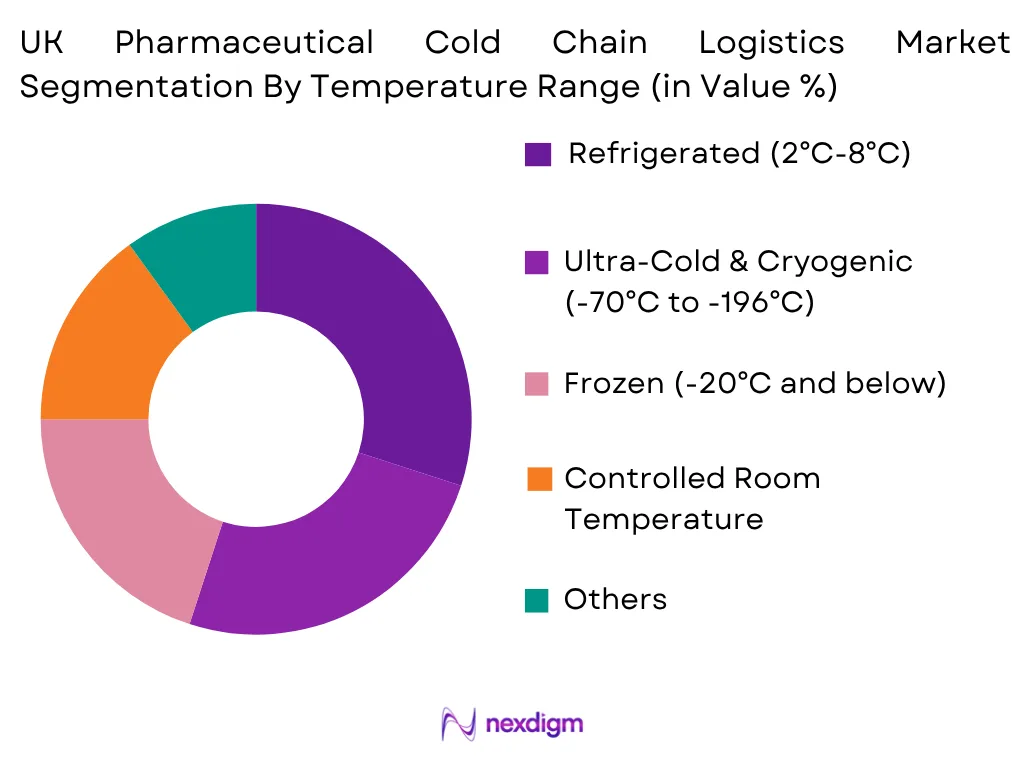
The Refrigerated (2°C-8°C) segment remains the largest temperature range category within the UK Pharmaceutical Cold Chain Logistics Market, encompassing the majority of vaccines, insulin, and biologics distributed nationally through NHS and private pharmacy networks, with providers such as Envirotainer and Sonoco ThermoSafe supplying validated passive and active packaging systems to maintain precise temperature control. The Ultra-Cold & Cryogenic segment is witnessing the fastest growth, driven by the expansion of mRNA vaccine distribution and the rapid commercialization of cell & gene therapies that require storage as low as -196°C, with Movianto expanding its ultra-frozen storage network down to -80°C and Cryoport Systems growing its cryogenic shipper fleet and liquid nitrogen dry-vapor logistics network to serve this segment. The Frozen segment continues to grow steadily, supported by rising distribution of frozen biologics and specialty compounded medications across hospital trust and specialty pharmacy networks.
Competitive Landscape
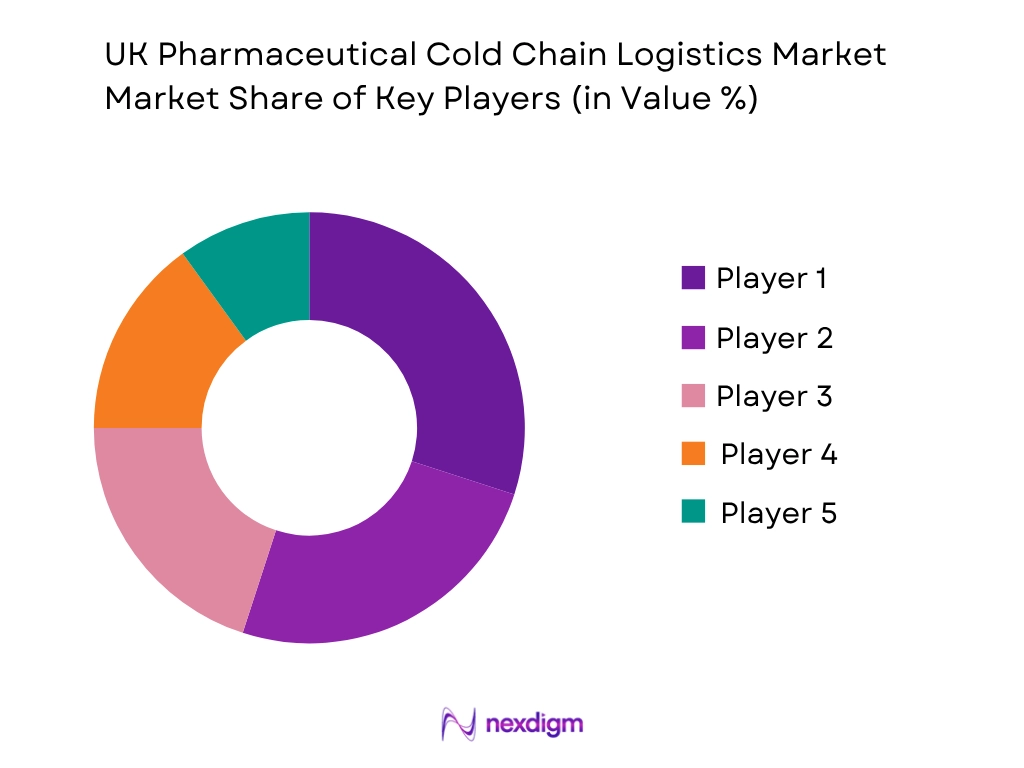
The UK Pharmaceutical Cold Chain Logistics Market is moderately concentrated, with DHL Supply Chain, Kuehne+Nagel, UPS Healthcare, Movianto, and Alloga UK together controlling a substantial share of specialty pharmaceutical distribution volume. Competition is primarily based on MHRA GDP and regulatory compliance certifications, temperature-range service breadth, network coverage, real-time monitoring capability, and long-term relationships with pharmaceutical manufacturers, NHS trusts, and specialty pharmacies. Movianto UK maintains a strong position through its Walden Group-backed network of Bedford, Lutterworth, and Haydock warehouses, which include one of the largest controlled-drugs vaults in Europe, while Alloga UK, part of Cencora, continues to expand its integrated nine-warehouse East Midlands campus and cold chain qualification services across complex international and domestic shipping lanes. UPS Healthcare maintains a strong position through its Marken subsidiary’s specialization in clinical trial and cell & gene therapy logistics, while DHL Supply Chain’s Life Sciences & Healthcare division continues to expand GDP-compliant warehousing and transport capacity to support growing biologics inventories. Cryoport Systems, Envirotainer, and Sonoco ThermoSafe compete on cryogenic and ultra-cold packaging innovation, creating increasingly differentiated service tiers as system integrators shift toward software-enabled visibility platforms rather than transportation capacity alone. Global freight forwarders including DB Schenker and CEVA Logistics continue to expand dedicated pharmaceutical verticals to capture growing demand for GDP-compliant end-to-end distribution across the country, while post-Brexit customs complexity has pushed operators to upgrade traceability systems to maintain compliant cross-border flows with the EU.
| Company | Establishment Year | Headquarters | Primary Service Portfolio | Temperature Range Portfolio
|
Network Presence | Major End-Use Industries | Key Strategic Focus | Certifications & Compliance |
| UPS Healthcare (Marken) | 1907 | ~ | ~ | ~ | ~ | ~ | ~ | ~ |
| DHL Supply Chain UK | 1969 | ~ | ~ | ~ | ~ | ~ | ~ | ~ |
| Kuehne+Nagel UK | 1890 | ~ | ~ | ~ | ~ | ~ | ~ | ~ |
| Movianto UK | 1976 | ~ | ~ | ~ | ~ | ~ | ~ | ~ |
| Alloga UK (Cencora) | 1969 | ~ | ~ | ~ | ~ | ~ | ~ | ~ |
UK Pharmaceutical Cold Chain Logistics Market Analysis
Growth Drivers
Expansion of Biologics, Vaccines, and Cell & Gene Therapy Pipelines
The UK Pharmaceutical Cold Chain Logistics Market continues to be shaped decisively by the pharmaceutical industry’s accelerating shift toward biologics, monoclonal antibodies, and cell & gene therapies, which are highly sensitive to temperature fluctuations and require strict temperature control throughout storage and transportation. The success of mRNA-based COVID-19 vaccines, which require ultra-cold storage at temperatures as low as -70°C, highlighted the necessity for ultra-cold chain logistics and prompted companies such as Movianto to expand ultra-frozen storage capabilities down to -80°C and invest in innovative packaging solutions. According to industry estimates, cold-chain pharmaceutical logistics in the UK is forecast to grow at approximately 5.6% CAGR through 2031, outpacing non-cold-chain distribution, driven by rising demand for temperature-controlled distribution of vaccines, insulin, monoclonal antibodies, and specialty cancer therapies. The rapid expansion of the cell & gene therapy market, with the UK positioned as a leading European hub for advanced therapy medicinal products (ATMPs), has directly encouraged specialty logistics providers such as Cryoport Systems and Marken to expand cryogenic shipping capacity and liquid nitrogen dry-vapor fleets.
Stringent Regulatory Compliance and Growth in NHS Homecare Distribution
Stringent regulations for maintaining accurate temperature control for temperature-sensitive drugs, including MHRA Good Distribution Practice guidelines under the UK Orange Guide and post-Brexit traceability requirements derived from the Falsified Medicines Directive framework, continue to be a critical driver of investment in validated cold chain infrastructure across the United Kingdom. The growing adoption of telematics and IoT-enabled monitoring in cold chain pharmaceutical logistics is aiding companies in improving the connectivity, safety, and efficiency of transport cargoes, while rising documentation and chain-of-custody requirements are pushing manufacturers toward specialty logistics partners with proven GDP compliance track records. The continued expansion of NHS homecare medicines delivery and direct-to-patient specialty pharmacy models is also driving demand for last-mile temperature-controlled delivery capability, as patients increasingly receive biologics, insulin, and specialty medications directly at home rather than through traditional retail pharmacy or hospital dispensary channels.
Market Challenges
High Capital Expenditure and Cold Storage Infrastructure Constraints
The UK Pharmaceutical Cold Chain Logistics Market faces significant challenges from the high capital expenditure required to build and maintain GDP-compliant cold storage facilities, temperature-controlled fleets, and validated packaging systems across a geographically dispersed national network. Cold storage specialists such as Movianto and Alloga UK must continue to invest heavily in energy-intensive refrigeration infrastructure to support growing biologics and vaccine inventories, while smaller regional providers face increasing difficulty competing with the scale advantages of national and multinational players. Temperature excursion risk remains a persistent operational challenge, as even brief deviations from validated temperature ranges during transit or storage can compromise product efficacy and trigger costly product recalls, requiring continuous investment in redundant monitoring and contingency systems across the value chain.
Post-Brexit Customs Complexity and Driver Shortages
Post-Brexit customs and border complexity continues to increase deployment challenges across the UK Pharmaceutical Cold Chain Logistics Market, as providers must maintain unbroken temperature control while navigating lengthened customs lead-times at the South East corridor spanning Dover and London Gateway, which together handle approximately 47.6% of inbound temperature-sensitive import volumes. Persistent shortages of qualified commercial drivers and skilled cold chain logistics personnel continue to constrain network capacity and increase labor costs across the industry. Packaging waste and sustainability pressures present an additional operational challenge, as single-use passive packaging systems generate significant waste volumes, prompting regulatory and customer pressure for providers to transition toward reusable and recyclable packaging solutions. These operational bottlenecks continue to extend delivery timelines and increase costs across the industry, requiring providers to maintain larger safety buffers and redundant capacity to offset network disruptions.
Market Opportunities
Growth in Cell & Gene Therapy Logistics and Emerging Packaging Technologies
The rapidly expanding cell & gene therapy market presents substantial opportunities for companies developing specialized cryogenic and dry-vapor shipping capabilities beyond conventional refrigerated and frozen logistics. Cryoport Systems and similar specialty providers are well positioned to capture growing demand for chain-of-custody verification and cryogenic transport as these advanced therapies, which often require storage below -150°C, move from clinical trials toward broader commercial distribution across the UK’s leading ATMP manufacturing and research clusters. Expansion of reusable and sustainable packaging solutions, including vacuum-insulated and phase-change material systems from providers such as Envirotainer and Sonoco ThermoSafe, presents a growing opportunity as pharmaceutical manufacturers and logistics providers face increasing pressure to reduce single-use packaging waste while maintaining validated temperature performance across extended transit times.
AI-Enabled Monitoring, Biosimilars Growth, and Reshoring
The continued expansion of AI and IoT-enabled predictive monitoring platforms presents significant opportunities for companies with strong technology and data analytics capabilities, as pharmaceutical manufacturers increasingly demand real-time shipment visibility and predictive risk analytics rather than passive temperature logging alone. Growth in the UK biosimilars market, which requires cold chain distribution comparable to reference biologics, is expanding the addressable market for specialty logistics providers as several major biosimilar products approach patent-driven market entry. Companies capable of combining strong domestic network coverage, regulatory compliance expertise, and advanced monitoring technology are well positioned to capture growing demand as pharmaceutical manufacturers increasingly favor reshored and domestic biomanufacturing capacity that shortens cold chain distribution distances and reduces post-Brexit cross-border regulatory complexity.
Future Outlook
The UK Pharmaceutical Cold Chain Logistics Market is expected to witness robust expansion over the forecast period, supported by continued growth in biologics, vaccines, and cell & gene therapy pipelines, stringent regulatory compliance requirements, and rising NHS homecare and direct-to-patient specialty pharmacy distribution. Continued investment in cryogenic and ultra-cold shipping capacity, AI-enabled predictive monitoring platforms, and reusable packaging technologies is expected to further strengthen the market’s competitive landscape. Growing regulatory emphasis on chain-of-custody verification and sustainability, alongside continued adaptation to post-Brexit customs and traceability requirements, will continue to reshape infrastructure investment decisions and competitive dynamics across the industry through 2035.
Major Players
- DHL Supply Chain UK (Life Sciences & Healthcare)
- Kuehne+Nagel UK
- UPS Healthcare (Marken) UK
- FedEx Express UK
- DB Schenker UK
- Movianto UK (Walden Group)
- Alloga UK (Cencora)
- AAH Pharmaceuticals Ltd. (Cencora)
- CEVA Logistics UK
- NewCold Advanced Cold Logistics UK
- Lineage Logistics UK
- Culina Group
- Cryoport Systems UK
- Envirotainer AB (UK Operations)
- Sonoco ThermoSafe UK
Key Target Audience
- Pharmaceutical & Biotech Manufacturers
- Specialty Logistics and Cold Chain Service Providers
- Hospitals, Clinics, and Specialty Pharmacy Networks
- Clinical Research Organizations and Academic Institutes
- Investment and Venture Capitalist Firms
- Government and Regulatory Bodies (U.S. Food and Drug Administration (FDA), Centers for Disease Control and Prevention (CDC), U.S. Department of Transportation (DOT))
- Cold Chain Packaging and Monitoring Technology Suppliers
- Airlines, Freight Forwarders, and Warehousing Operators
Research Methodology
Step 1: Identification of Key Variables
The research process begins with identifying the complete ecosystem of the UK Pharmaceutical Cold Chain Logistics Market, including specialty logistics providers, cold storage operators, packaging and monitoring technology suppliers, pharmaceutical manufacturers, and regulatory authorities. Extensive secondary research is conducted using company annual reports, government publications, regulatory agency disclosures, industry journals, and proprietary databases to determine the variables influencing market demand, pricing, shipment volume, and technological developments.
Step 2: Market Analysis and Construction
Historical market information is collected and analyzed to estimate market size, shipment volume, application-wise demand, and pricing trends. A combination of top-down and bottom-up approaches is used to estimate market revenues and validate segment-level performance. Consumption patterns across manufacturers, hospitals, pharmacies, and research institutes are evaluated to establish an accurate representation of the industry.
Step 3: Hypothesis Validation and Expert Consultation
The preliminary findings are validated through Computer-Assisted Telephone Interviews (CATIs) and structured discussions with logistics providers, cold storage operators, pharmaceutical procurement managers, regulatory experts, and senior executives operating within the UK’s pharmaceutical cold chain logistics industry. These interviews help verify market assumptions, competitive developments, technology adoption trends, pricing dynamics, and future investment opportunities while refining the overall market estimates.
Step 4: Research Synthesis and Final Output
The final stage integrates insights obtained from primary interviews with quantitative information collected through secondary sources. Data triangulation techniques are applied to reconcile differences between supply-side and demand-side estimates, ensuring robust market forecasting. The report is then reviewed through multiple quality assurance checkpoints to deliver a comprehensive analysis covering market size, segmentation, competitive landscape, future outlook, and strategic recommendations for industry stakeholders.

- Executive Summary
- Research Methodology (Market Definitions and Assumptions, Abbreviations, Market Sizing Approach, Top-Down Analysis, Bottom-Up Analysis, Demand-Side Assessment, Supply-Side Assessment, Primary Industry Interviews, Secondary Research Validation, Data Triangulation, Forecasting Framework, Limitations and Future Conclusions)

- Definition and Scope
- Market Evolution and Industry Genesis
- Timeline of Major Industry Developments
- Pharmaceutical Cold Chain Logistics Industry Value Chain Analysis
- Supply Chain Analysis

- Growth Drivers (Expansion of Biologics, Cell & Gene Therapy Pipelines, Rising Vaccine and Ultra-Cold Distribution Requirements, Growth of Direct-to-Patient and NHS Homecare Distribution, Stringent MHRA and EU GDP-Equivalent Temperature Compliance Requirements, Growth in Domestic Biomanufacturing Capacity, Rising Adoption of IoT-Enabled Real-Time Monitoring)
- Market Challenges (High Capital Expenditure for Cold Storage Infrastructure, Post-Brexit Customs and Border Complexity, Packaging Waste and Sustainability Pressures, Driver and Skilled Labor Shortages, Temperature Excursion and Product Loss Risk, Fragmented Regulatory Compliance Across the UK and EU)
- Market Opportunities (Growth in Cell & Gene Therapy Logistics, Expansion of Reusable and Sustainable Packaging Solutions, AI and IoT-Enabled Predictive Monitoring Platforms, Growth of Biosimilars Requiring Cold Chain Distribution, Reshoring of Pharmaceutical Manufacturing, Blockchain-Enabled Chain-of-Custody Verification)
- Market Trends (Rise of Direct-to-Patient Home Delivery Models, Growth in Reusable Passive and Active Packaging Systems, Integration of Predictive AI-Based Temperature Analytics, Consolidation Among Specialty Logistics Providers, Expansion of Regional Micro-Fulfillment Cold Hubs, Increasing Use of Electric Cold Chain Fleets)
- Government Regulations (MHRA Good Distribution Practice (GDP) Guidelines, UK Orange Guide Good Distribution Practice Requirements, Falsified Medicines Directive-Derived UK Traceability Requirements, DVSA and ADR Regulations for Dry Ice and Cryogenic Shipments, General Pharmaceutical Council (GPhC) Licensing Requirements, MHRA Vaccine Storage and Handling Guidelines)
- Import and Export Analysis (Trade Volume, Major Import Sources, Export Destinations, HS Code Analysis, Trade Balance)
- Infrastructure Availability Analysis (Cold Storage Warehousing Capacity, Temperature-Controlled Fleet Availability, Airport and Port Cold Chain Handling Infrastructure at Heathrow and Dover, Packaging and Insulation Material Supply, Monitoring Hardware and Sensor Availability)
- Technology Landscape (IoT-Enabled Real-Time Temperature Monitoring, Phase-Change Material and Vacuum Insulation Packaging, Cryogenic and Dry-Vapor Shipper Technologies, AI-Based Predictive Route and Risk Analytics, Blockchain-Enabled Track-and-Trace Platforms)
- Sustainability Assessment (Reusable and Recyclable Packaging Adoption, Electrification of Cold Chain Fleets, Energy-Efficient Cold Storage Facility Design, Carbon Emissions Reduction Across Distribution Networks, Packaging Waste Reduction Initiatives)
- PESTLE Analysis
- SWOT Analysis
- Porter’s Five Forces Analysis
- Stakeholder Ecosystem
- Competition Ecosystem

- By Market Value (2020-2025)
- By Shipment Volume (2020-2025)
- By Average Pricing (2020-2025)

- By Service Type (In Value %)
Storage & Warehousing
Transportation
Monitoring, Packaging & Value-Added Services - By Temperature Range (In Value %)
Refrigerated (2°C-8°C)
Frozen (-20°C and below)
Ultra-Cold & Cryogenic (-70°C to -196°C)
Controlled Room Temperature - By Product Type (In Value %)
Vaccines
Biopharmaceuticals & Biologics
Cell & Gene Therapies
Clinical Trial Materials - By End User (In Value %)
Pharmaceutical & Biotech Manufacturers
Hospitals & Clinics (NHS Trusts)
Retail & Specialty Pharmacies
Research & Academic Institutes - By Region (In Value %)
South East (Dover & London Gateway Corridor)
London
Midlands
North West & North East
Scotland, Wales & Northern Ireland

- Market Share of Major Players (By Value, Shipment Volume, Service Type, Temperature Range, Region Served)
- Cross Comparison Parameters (Service Portfolio Breadth, Cold Storage and Fleet Capacity, GDP and Regulatory Compliance Certifications, Network Coverage, Technology and Monitoring Platform Capability, Customer Base, Innovation & New Service Launch Frequency, Sustainability Initiatives)
- SWOT Analysis of Major Players
- Pricing Analysis by Service Type and Temperature Range
- Storage & Fleet Capacity Analysis
- Network Footprint Analysis
- Distribution Network Analysis
- Innovation Benchmarking
- Detailed Profiles of Major Companies
DHL Supply Chain UK (Life Sciences & Healthcare)
Kuehne+Nagel UK
UPS Healthcare (Marken) UK
FedEx Express UK
DB Schenker UK
Movianto UK (Walden Group)
Alloga UK (Cencora)
AAH Pharmaceuticals Ltd. (Cencora)
CEVA Logistics UK
NewCold Advanced Cold Logistics UK
Lineage Logistics UK
Culina Group
Cryoport Systems UK
Envirotainer AB (UK Operations)
Sonoco ThermoSafe UK

- Consumption Pattern Analysis (Shipment Volume, System Capacity Distribution, Product Category Penetration, Seasonal Demand, Domestic vs Cross-Border Shipment Activity)
- Purchasing Criteria (Temperature Excursion Rate, Regulatory Compliance, Cost per Shipment, On-Time Delivery Performance, Real-Time Visibility, Packaging Reliability)
- Procurement and Supplier Selection Analysis
- GDP Compliance Adoption Assessment
- In-House vs Outsourced Logistics Demand
- Product Attribute Preference Analysis (Temperature Range Precision, Shipment Turnaround Time, Real-Time Monitoring Capability, Packaging Sustainability, Regulatory Documentation Support, Network Coverage)
- Customer Reliability and Risk Mitigation Expectations
- Pain Point Analysis
- Decision-Making Process

- By Market Value (2026-2035)
- By Shipment Volume (2026-2035)
- By Average Pricing (2026-2035)


 Request a Sample
 Ask for Customization
 Get a Quote
 Enquire Now