
 Download PDF
Market Overview
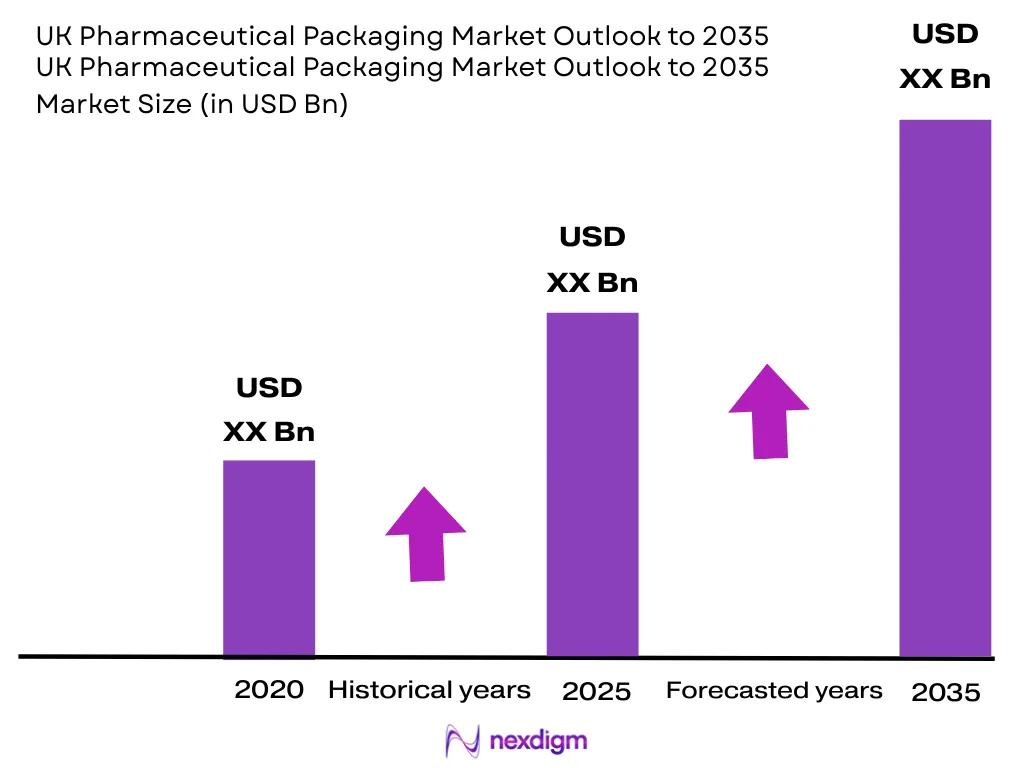
The UK Pharmaceutical Packaging Market was valued at USD ~ Billion in 2024 and is anticipated to expand at a CAGR of ~ % during 2026–2035. The market is primarily driven by rising investment in biologics and advanced therapy research, continued growth of generic drug manufacturing, and sustained government funding for the country’s life sciences sector. According to Packaging Market Insights, the United Kingdom Pharmaceutical Packaging Market was valued at USD ~ billion in 2024 and is projected to reach USD ~ billion by 2033, with the UK representing approximately 7.14 percent of the overall global pharmaceutical packaging market. According to the Office for Life Sciences, the UK life sciences sector exceeds USD 120 billion in annual output, sustaining consistent demand for compliant, high-performance packaging across oral drugs, injectables, biologics, and advanced therapy applications.
Market Segmentation
By Material
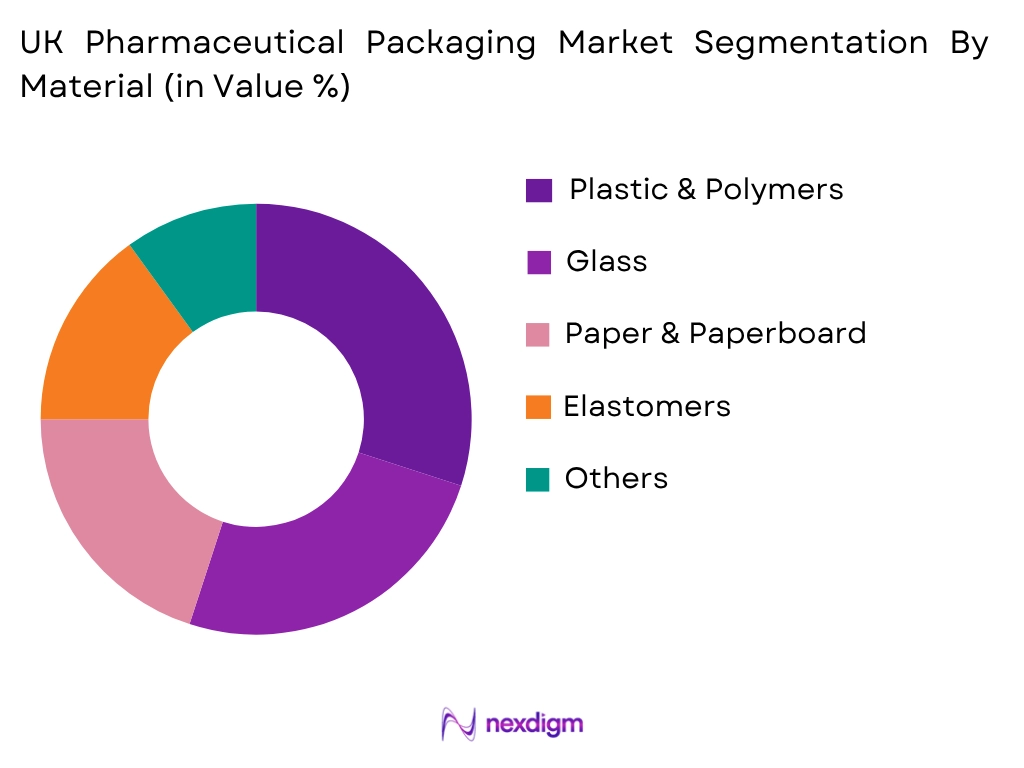
Among these, Plastics & Polymers hold the largest share of the UK Pharmaceutical Packaging Market, accounting for approximately 41.24 percent of total revenue in 2024 according to Grand View Research, driven by demand for lightweight bottles, blister packs, and closures offering strong barrier performance. This is supported by an estimated USD 900 million to USD 1.05 billion in investments in medical-grade polymers, sustainable containers, and advanced pharmaceutical packaging manufacturing systems. Glass remains essential for injectable and biologic formats such as vials and ampoules, where inertness and barrier performance are critical for drug stability. At the same time, the UK’s limited domestic manufacturing base for core validated plastic packaging systems contrasts with its high-value, low-to-medium volume domestic demand, which is characterized by extreme sensitivity to technical performance and regulatory compliance given the UK’s significant concentration of pharmaceutical and biopharma R&D, particularly in biologics and advanced therapies.
By Packaging Type
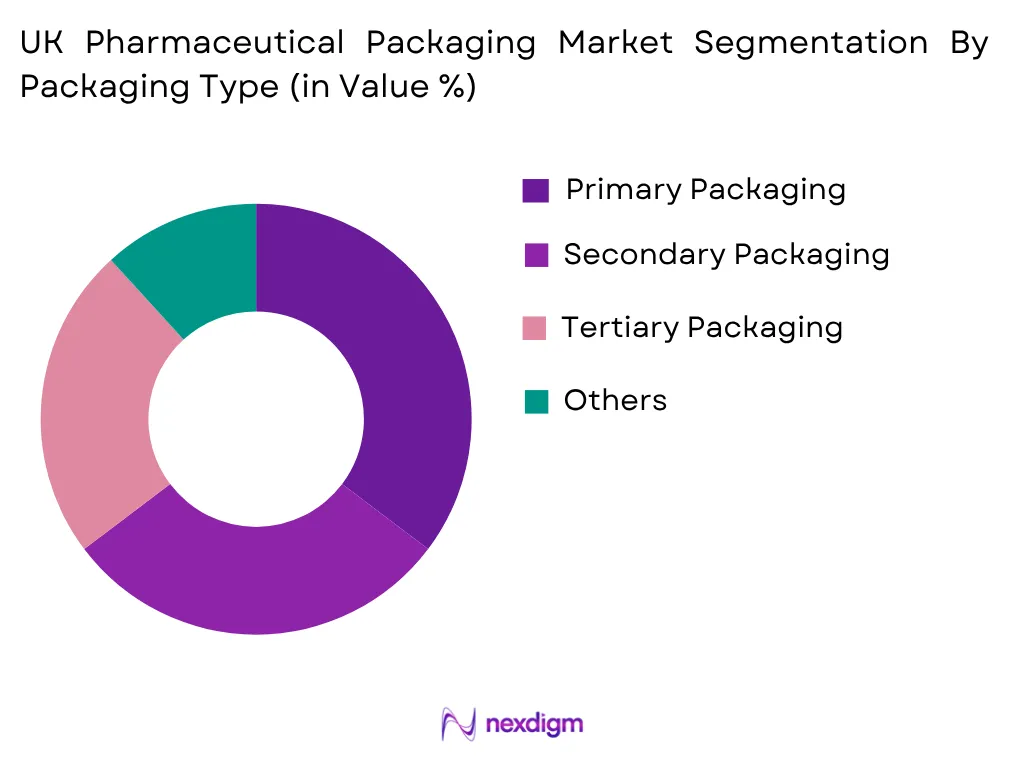
The Primary Packaging segment holds a leading share, as bottles, tubes, and blister packs directly contact the medication, enveloping it and preventing contamination while frequently playing a role in dosage and distribution. Packaging manufacturers are increasingly concentrating on dispensing systems that deliver the appropriate dosage at the appropriate time and easy-to-open closures that can help the senior population manage medication dosage. Within primary packaging, Parenteral Containers represent the most lucrative and fastest-growing product segment, registering strong growth as the UK’s biologics and advanced therapy sector continues to expand, according to Grand View Research. In April 2024, the UK launched the Circularity in Primary Pharmaceutical Packaging Accelerator (CiPPPA) initiative, a non-profit programme bringing together stakeholders from across the pharmaceutical supply chain to develop sustainable solutions for packaging waste, particularly for blisters, inhalers, and injectables, reflecting the industry’s growing focus on circularity within primary packaging formats.
Competitive Landscape
The UK Pharmaceutical Packaging Market is moderately consolidated, with the presence of established multinational packaging companies alongside specialty converters serving the UK’s biologics and advanced therapy R&D base. Key market players include Amcor Plc, Sonoco Products Co., Sealed Air Corp., Schott AG, WestRock Co., Omnicell Inc., AptarGroup, Inc., Berry Global Group Inc., DS Smith Plc, and Nolato AB, among others, competing on the basis of regulatory compliance, sterile and aseptic packaging capability, and sustainability credentials. Companies are increasingly capitalising on demand for sustainable packaging solutions by providing customers with attractive cashback offers for eco-friendly practices, while the integration of intelligent microprocessors into medicine bottle caps allows patients and healthcare professionals to measure dosage timing and temperature levels, contributing to improved patient healthcare outcomes. The UK’s regulatory agency, the Medicines and Healthcare products Regulatory Agency (MHRA), and its alignment with European Pharmacopoeia standards, sets a high compliance bar that all supplying firms must meet.
| Company | Establishment Year | Headquarters | Primary Product Portfolio | Pharmaceutical Packaging Portfolio
|
Manufacturing Presence | Major End-Use Industries | Key Strategic Focus | Certifications & Compliance |
| Amcor Plc | 1860 | ~ | ~ | ~ | ~ | ~ | ~ | ~ |
| Schott AG | 1884 | ~ | ~ | ~ | ~ | ~ | ~ | ~ |
| Gerresheimer AG | 1864 | ~ | ~ | ~ | ~ | ~ | ~ | ~ |
| AptarGroup, Inc. | 1992 | ~ | ~ | ~ | ~ | ~ | ~ | ~ |
| Berry Global Group Inc. | 1967 | ~ | ~ | ~ | ~ | ~ | ~ | ~ |
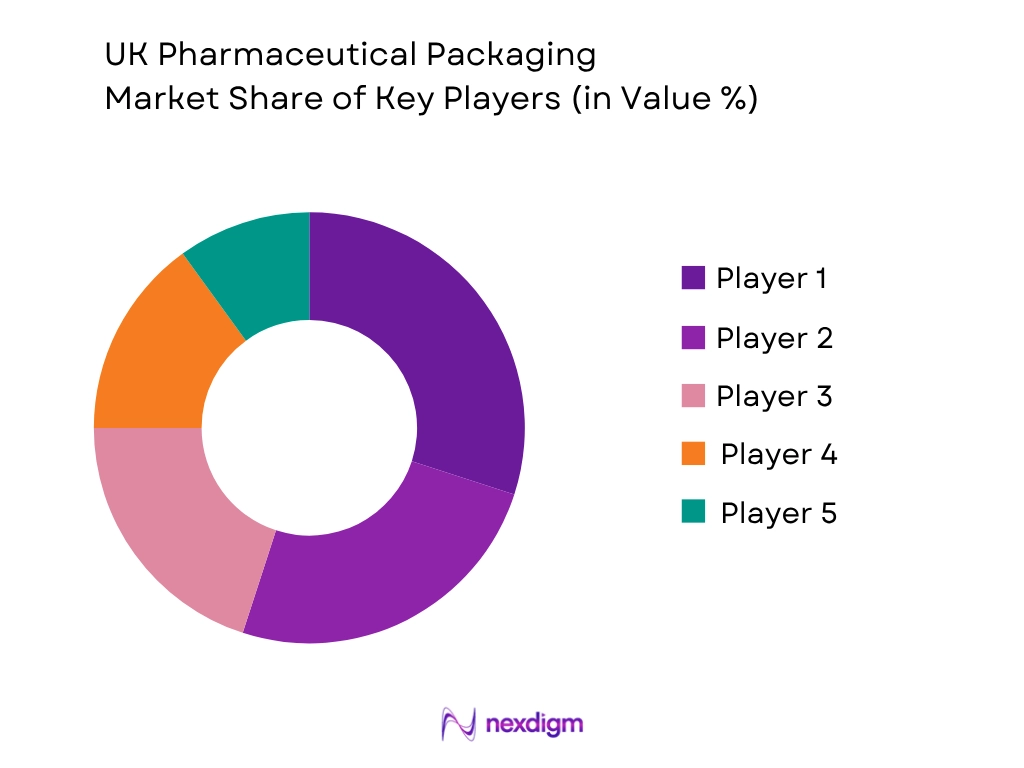
UK Pharmaceutical Packaging Market Analysis
Growth Drivers
Rising Investment in Biologics, Advanced Therapies and Life Sciences
The UK pharmaceutical packaging market is experiencing sustained growth due to rising investment in biologics, advanced therapies, and the broader life sciences sector. According to the Office for Life Sciences, the UK life sciences sector exceeds USD 120 billion annually, driving pharmaceutical packaging demand supported by an estimated USD 3 billion to USD 4 billion in investments in cold-chain logistics, compliance packaging, and high-barrier healthcare systems expansion. The UK government has allocated USD 3.5 billion between 2024 and 2026 through the Department of Health and Social Care (DHSC) toward healthcare innovation, pharmaceutical manufacturing, and vaccine infrastructure, accelerating pharmaceutical packaging modernization, cold-chain expansion, and compliant drug delivery systems across the national life sciences ecosystem. The country hosts a significant concentration of pharmaceutical and biopharma R&D, particularly in biologics and advanced therapies, which drives early-stage demand for innovative, application-specific packaging solutions characterized by high value and extreme sensitivity to technical performance and regulatory compliance.
Growth of Generic Drug Manufacturing and Ageing Population Demand
The steady growth of generic drug manufacturing and the UK’s ageing population remain major drivers for pharmaceutical packaging consumption. Plastic pharmaceutical packaging holds approximately 39 percent of UK market share, driven by lightweight demand and barrier performance, supported by an estimated USD 900 million to USD 1.05 billion in investments in medical-grade polymers, sustainable containers, and advanced pharmaceutical packaging manufacturing systems. Advanced pharmaceutical packaging solutions that possess child-resistant features and enhance medication adherence among patients continue to witness widespread adoption across the UK, particularly dispensing systems that deliver the appropriate dosage at the appropriate time to support the senior population in managing complex medication regimens. UK plastic bottle consumption reached 291 thousand tons in 2024 and is projected to reach 305 thousand tons by 2035, reflecting the continued reliance on established primary packaging formats even as the market shifts toward more technically advanced solutions.
Market Challenges
Post-Brexit Regulatory Divergence Between Great Britain and Northern Ireland
The UK pharmaceutical packaging market faces significant complexity from post-Brexit regulatory divergence between Great Britain and Northern Ireland. The safety-features and decommissioning requirements under the EU Falsified Medicines Directive no longer apply in Great Britain, where wholesalers and pharmacies are not required to scan or decommission packs against the EU repositories, while the requirements continue to apply in Northern Ireland, which remains aligned with relevant EU rules under the Windsor Framework. This split-market structure requires manufacturers to design packaging and serialization systems against current published MHRA guidance for each leg of the supply chain separately, with unique identifiers and tamper-evident devices required on packs with a Northern Ireland-valid marketing authorisation while medicines with a Great Britain-only marketing authorisation do not require a unique identifier. Compliance for Northern Ireland packs is verified against the UKNI Medicines Verification System, run by SecurMed UK, requiring manufacturers to maintain two distinct packaging and compliance procedures depending on the destination market, adding cost and operational complexity to UK pharmaceutical packaging supply chains.
Limited Domestic Manufacturing Base and Raw Material Volatility
The UK pharmaceutical packaging market faces structural challenges from a limited domestic manufacturing base for core validated plastic packaging systems, despite the country’s high-value, low-to-medium volume domestic demand profile. This demand is characterized by extreme sensitivity to technical performance and regulatory compliance, given the UK’s concentration of pharmaceutical and biopharma R&D in biologics and advanced therapies. The UK’s regulatory agency, the MHRA, and its alignment with European Pharmacopoeia standards, sets a high compliance bar that all supplying firms must meet, creating validation and testing requirements that can extend development timelines for new packaging formats. In addition, pharmaceutical packaging manufacturers face continued exposure to volatility in resin and glass raw material prices, requiring careful supply chain management to maintain consistent production of compliant, sterile packaging formats for both domestic and export markets.
Market Opportunities
Rising Investment in Circular and Recyclable Primary Packaging
The UK pharmaceutical packaging market presents significant opportunities for manufacturers investing in circular and recyclable primary packaging solutions. The April 2024 launch of the Circularity in Primary Pharmaceutical Packaging Accelerator (CiPPPA) initiative brings together stakeholders from across the pharmaceutical supply chain to develop sustainable solutions for packaging waste, particularly targeting blisters, inhalers, and injectables, which have historically been difficult to recycle due to multi-material construction and sterility requirements. Companies are increasingly capitalising on demand for sustainable packaging solutions by offering customers attractive incentives for eco-friendly practices, while continued government funding for healthcare innovation and life sciences creates favorable conditions for manufacturers developing next-generation circular packaging formats capable of meeting both sustainability goals and stringent MHRA compliance requirements.
Expansion of Parenteral Containers and Smart Adherence Packaging
The UK’s growing biologics and advanced therapy sector creates substantial long-term opportunities for manufacturers of parenteral containers, prefilled syringes, and smart adherence-focused packaging. Parenteral containers represent the most lucrative product segment registering the fastest growth in the UK primary pharmaceutical packaging market, driven by rising production of injectable biologics and specialty therapies. The integration of intelligent microprocessors into medicine bottle caps allows patients and healthcare professionals to measure dosage timing and temperature levels, offering significant opportunities for manufacturers developing smart packaging technologies that support medication adherence among the UK’s ageing population. As the UK government continues allocating substantial funding toward healthcare innovation and pharmaceutical manufacturing infrastructure, manufacturers offering advanced, technically sophisticated packaging solutions are well positioned to capture growing demand from both branded and generic pharmaceutical manufacturers.
Future Outlook
The UK Pharmaceutical Packaging Market is expected to witness sustained expansion over the forecast period, supported by continued growth in biologics and advanced therapy investment, expanding government funding for life sciences and healthcare innovation, and increasing focus on circular and sustainable primary packaging solutions. Continued investment in parenteral containers, smart adherence packaging, and domestic validated manufacturing capacity will further accelerate innovation across the industry. The market is also likely to benefit from the UK’s concentrated pharmaceutical and biopharma R&D base, enabling greater investment in advanced, compliant packaging technologies capable of serving both the domestic National Health Service supply chain and international export markets.
Major Players
- Amcor Plc
- Schott AG
- Gerresheimer AG
- AptarGroup, Inc.
- Berry Global Group Inc.
- Sonoco Products Co.
- Sealed Air Corp.
- WestRock Co.
- Omnicell Inc.
- DS Smith Plc
- Nolato AB
- West Pharmaceutical Services, Inc.
- SGD Pharma
- CCL Industries
- International Paper
Key Target Audience
- Pharmaceutical Packaging Manufacturers
- Pharmaceutical and Biopharmaceutical Companies
- Contract Manufacturing Organizations (CMOs)
- NHS Trusts, Hospitals and Specialty Pharmacies
- Retail and Community Pharmacy Chains
- Investment and Venture Capitalist Firms
- Government and Regulatory Bodies (Medicines and Healthcare products Regulatory Agency (MHRA), Department of Health and Social Care (DHSC), SecurMed UK)
- Packaging Material Suppliers and Industrial Raw Material Distributors
Research Methodology
Step 1: Identification of Key Variables
The research process begins with identifying the complete ecosystem of the UK Pharmaceutical Packaging Market, including raw material and resin suppliers, packaging converters and manufacturers, pharmaceutical and biopharmaceutical companies, contract manufacturing organizations, distributors, and regulatory authorities. Extensive secondary research is conducted using company annual reports, government publications, trade associations, customs statistics, industry journals, and proprietary databases to determine the variables influencing market demand, pricing, production, consumption, and technological developments.
Step 2: Market Analysis and Construction
Historical market information is collected and analyzed to estimate market size, production volumes, import-export activity, application-wise demand, and pricing trends. A combination of top-down and bottom-up approaches is used to estimate market revenues and validate segment-level performance. Consumption patterns across oral drugs, injectables, biologics, and topical formulations are evaluated to establish an accurate representation of the industry.
Step 3: Hypothesis Validation and Expert Consultation
The preliminary findings are validated through Computer-Assisted Telephone Interviews (CATIs) and structured discussions with pharmaceutical packaging manufacturers, procurement managers, regulatory affairs experts, quality assurance professionals, and senior executives operating within the UK pharmaceutical packaging industry. These interviews help verify market assumptions, competitive developments, technology adoption trends, pricing dynamics, and future investment opportunities while refining the overall market estimates.
Step 4: Research Synthesis and Final Output
The final stage integrates insights obtained from primary interviews with quantitative information collected through secondary sources. Data triangulation techniques are applied to reconcile differences between supply-side and demand-side estimates, ensuring robust market forecasting. The report is then reviewed through multiple quality assurance checkpoints to deliver a comprehensive analysis covering market size, segmentation, competitive landscape, future outlook, and strategic recommendations for industry stakeholders.

- Executive Summary
- Research Methodology (Market Definitions and Assumptions, Abbreviations, Market Sizing Approach, Top-Down Analysis, Bottom-Up Analysis, Demand-Side Assessment, Supply-Side Assessment, Primary Industry Interviews, Secondary Research Validation, Data Triangulation, Forecasting Framework, Limitations and Future Conclusions)

- Definition and Scope
- Market Evolution and Industry Genesis
- Timeline of Major Industry Developments
- Pharmaceutical Packaging Industry Value Chain Analysis
- Supply Chain Analysis

- Growth Drivers (Rising Investment in Biologics and Advanced Therapy R&D, Growth of Generic Drug Manufacturing, Expansion of Contract Manufacturing Organizations, Increasing Demand for Prefilled and Self-Administration Devices, Rising Chronic Disease Prevalence and Ageing Population, Government Life Sciences and Healthcare Innovation Funding)
- Market Challenges (Stringent Regulatory Compliance Under MHRA Requirements, Divergence Between Great Britain and Northern Ireland Regulatory Regimes, Limited Domestic Manufacturing Base for Validated Plastic Packaging Systems, Volatility in Resin and Glass Raw Material Prices, High Cost of Circular and Recyclable Sterile Packaging, Complexity of Cold Chain Packaging for Biologics)
- Market Opportunities (Growth in Prefilled Syringes and Parenteral Containers, Investment in Circular and Recyclable Primary Packaging, Expansion of Domestic Validated Plastic Packaging Manufacturing, Smart and Anti-Counterfeiting Packaging Technologies, Cell and Gene Therapy Packaging Innovation, Sustainable Blister and Inhaler Packaging Development)
- Market Trends (Shift Toward Circular Primary Pharmaceutical Packaging, Rising Adoption of Prefilled and Self-Injection Systems, Growth in Parenteral Container Demand, Smart Packaging with Dosage and Adherence Features, Post-Brexit Regulatory Divergence from the EU, Industry Consolidation Through M&A)
- Government Regulations (Medicines and Healthcare products Regulatory Agency (MHRA) Licensing Requirements, Human Medicines Regulations 2012, Falsified Medicines Directive Safety Features (Northern Ireland via Windsor Framework), UK Extended Producer Responsibility (EPR) for Packaging, European Pharmacopoeia Alignment Standards, Circularity in Primary Pharmaceutical Packaging Accelerator (CiPPPA) Initiative)
- Import and Export Analysis (Trade Volume, Major Import Sources, Export Destinations, HS Code Analysis, Trade Balance)
- Raw Material Availability Analysis (Pharmaceutical-Grade Resins, Borosilicate Glass, Aluminium Foil, Elastomeric Closures, Cyclic Olefin Polymers)
- Technology Landscape (Serialization and Track-and-Trace Systems, Parenteral Container Manufacturing, Prefilled Syringe and Auto-Injector Assembly, Barrier Coating and Extractables Testing, Smart and Adherence-Focused Packaging)
- Sustainability Assessment (Recyclability and Post-Consumer Recycled Content, Circular Blister and Inhaler Packaging Initiatives, Carbon Footprint Reduction, Sterile Packaging Waste Minimization, Circular Economy Integration)
- PESTLE Analysis
- SWOT Analysis
- Porter’s Five Forces Analysis
- Stakeholder Ecosystem
- Competition Ecosystem

- By Market Value (2020-2025)
- By Volume Consumption (2020-2025)
- By Average Selling Price (2020-2025)

- By Material (In Value %)
Plastics & Polymers
Glass
Paper & Paperboard
Aluminium Foil
Other Materials - By Packaging Type (In Value %)
Primary Packaging
Secondary Packaging
Tertiary Packaging - By Application (In Value %)
Oral Drugs
Injectables & Parenteral
Biologics & Vaccines
Topical Formulations
Nasal & Inhalation Products - By End Use (In Value %)
Pharmaceutical Companies
Contract Manufacturing Organizations (CMOs)
Hospitals & NHS Trusts
Retail & Community Pharmacies - By Region (In Value %)
England
Scotland
Wales
Northern Ireland

- Market Share of Major Players (By Value, Volume, Material Type, Application Industry, Product Category)
- Cross Comparison Parameters (Material Portfolio Breadth, Sterile & Aseptic Packaging Capability, Drug Delivery Device Portfolio, Application Technical Support Capability, Manufacturing Capacity, Regulatory Compliance & Certifications, Pharmaceutical Customer Base, Innovation & New Product Launch Frequency)
- SWOT Analysis of Major Players
- Pricing Analysis by Product Category and SKU
- Production Capacity Analysis
- Manufacturing Footprint Analysis
- Distribution Network Analysis
- Innovation Benchmarking
- Detailed Profiles of Major Companies
Amcor Plc
Schott AG
Gerresheimer AG
AptarGroup, Inc.
Berry Global Group Inc.
Sonoco Products Co.
Sealed Air Corp.
WestRock Co.
Omnicell Inc.
DS Smith Plc
Nolato AB
West Pharmaceutical Services, Inc.
SGD Pharma
CCL Industries
International Paper

- Consumption Pattern Analysis (Industrial Usage, Batch Size, Product Category Penetration, Seasonal Demand, Reformulation Activity)
- Purchasing Criteria (Barrier Performance, Regulatory Compliance, Sterility Assurance, Cost Efficiency, Tamper-Evidence, Child-Resistance)
- Procurement and Supplier Selection Analysis
- Sustainable Packaging Adoption Assessment
- Premium vs Conventional Packaging Demand
- Product Attribute Preference Analysis (Barrier Properties, Extractables & Leachables Profile, Tamper-Evidence, Child-Resistance, Recyclability, Dosage and Adherence Features)
- Patient Safety and Adherence Influence on Packaging Design
- Pain Point Analysis
- Decision-Making Process

- By Market Value (2026-2035)
- By Volume Consumption (2026-2035)
- By Average Selling Price (2026-2035)


 Request a Sample
 Ask for Customization
 Get a Quote
 Enquire Now