
 Download PDF
Market Overview
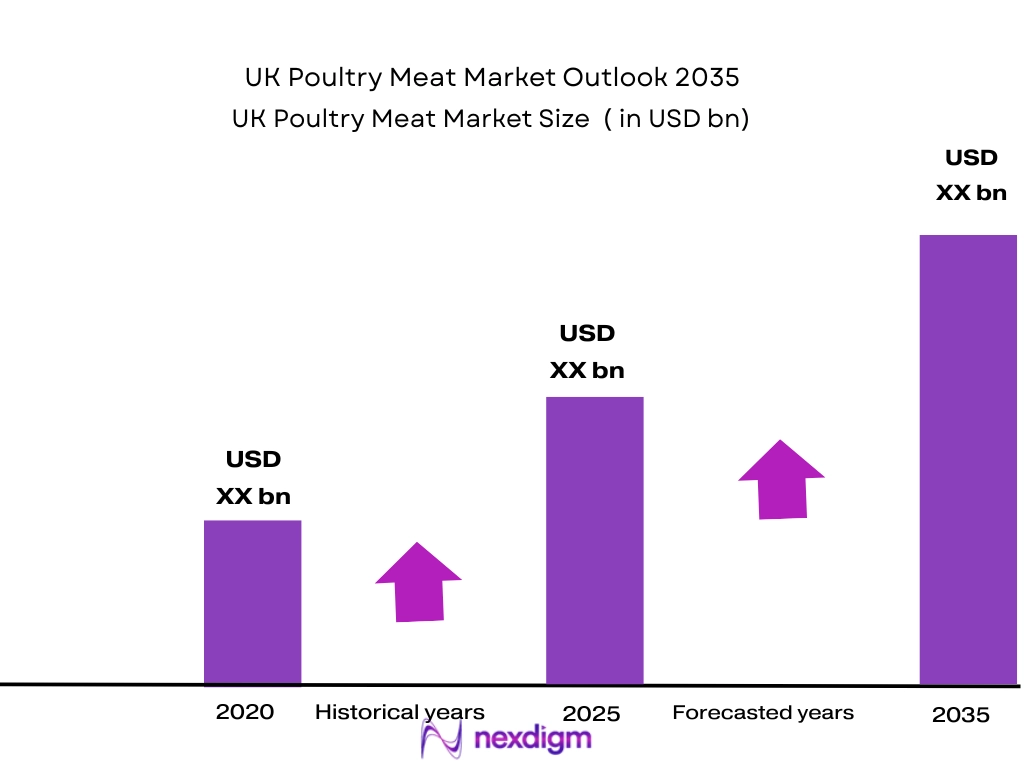
The UK poultry meat market is valued at USD ~ billion, based on the latest base-year market assessment, and is expected to expand at a CAGR of around 1.33% during 2024–2030. Market demand is driven by poultry’s position as an affordable, high-protein meat category, supported by production growth from 1.97 million tonnes to 2.03 million tonnes and total market supplies rising to 2.46 million tonnes.
England dominates the UK poultry meat market, particularly East Anglia, Yorkshire, the Midlands, and Lincolnshire, due to integrated broiler farms, feed access, hatcheries, and processing plants. London, Manchester, Birmingham, Leeds, and Glasgow are major demand centres because of dense retail networks, foodservice outlets, and ethnic food consumption. Imports of 644,100 tonnes and exports of 214,800 tonnes also show the UK’s reliance on both domestic production and international supply balancing.
Market Segmentation
By Product Type
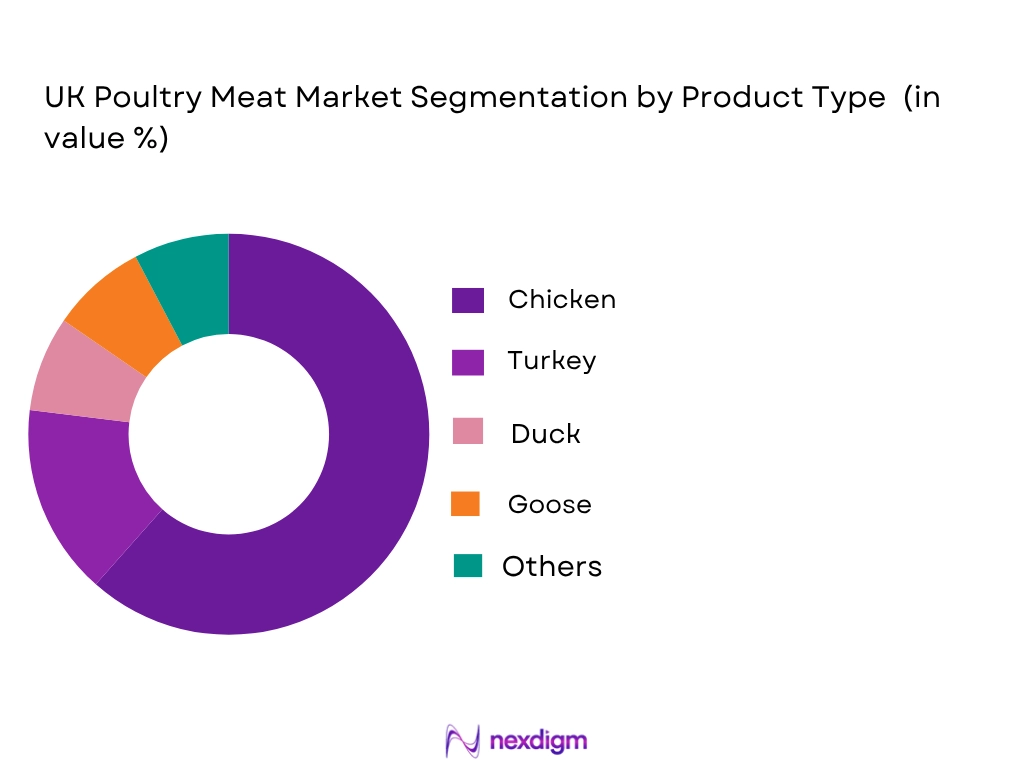
The UK poultry meat market is segmented by product type into chicken, turkey, duck, goose, and others. Chicken dominates the product type segment due to its affordability, high household penetration, availability across supermarkets and foodservice, and suitability for multiple cuisines. It is preferred over red meat by cost-conscious and health-conscious consumers because it is leaner, faster to cook, and adaptable across fresh, frozen, marinated, and processed formats. Major retailers and quick-service restaurant chains use chicken as a core protein in meal deals, sandwiches, ready meals, and takeaway menus. Turkey remains important, especially for seasonal consumption and lean-protein positioning, while duck and goose are more premium and occasion-led categories.
By Distribution Channel
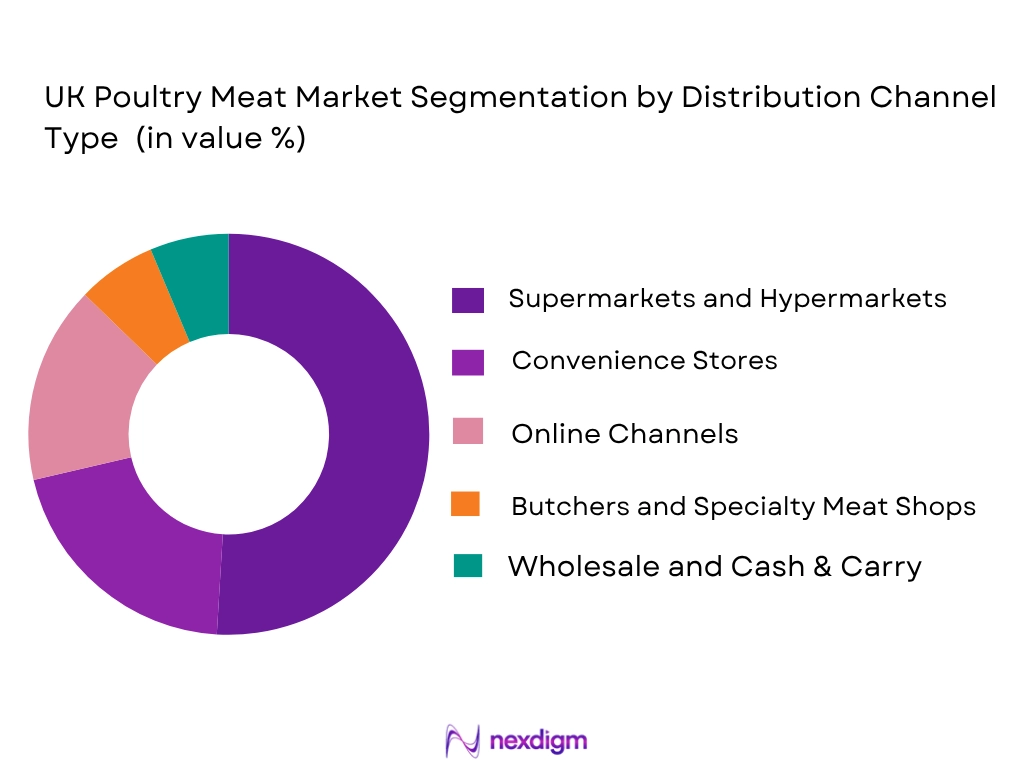
The UK poultry meat market is segmented by distribution channel into off-trade, on-trade, online channels, butchers and specialty stores, and wholesale/cash-and-carry. Off-trade dominates because supermarkets and hypermarkets remain the main purchase points for fresh and chilled poultry. Consumers prefer these channels due to price promotions, private-label packs, portioned cuts, traceability labels, and easy access to fresh chicken, turkey, and processed poultry products. Large grocery chains also support cold-chain efficiency and frequent replenishment, which is critical for fresh meat. Online grocery and direct-to-consumer meat boxes are growing, but most weekly household poultry purchases still occur through mainstream retail channels.
Competitive Landscape
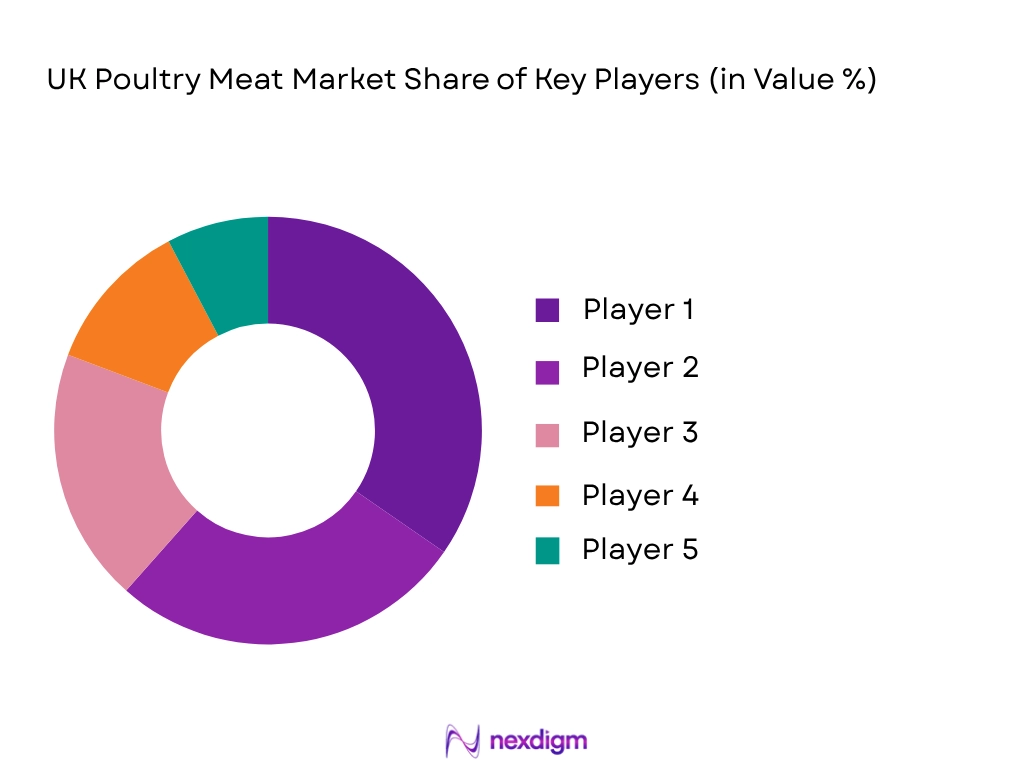
The UK poultry meat market is moderately consolidated, with a few large integrated processors controlling a significant part of farming, processing, chilled distribution, and retail supply. Companies such as 2 Sisters Food Group, Moy Park, Avara Foods, Cranswick, and Gressingham Foods compete through scale, retailer contracts, processing capacity, welfare standards, product innovation, and private-label supply. The market is also shaped by foodservice contracts, chilled logistics, biosecurity management, and demand for higher-welfare poultry.
| Company | Establishment Year | Headquarters | Core Poultry Category | Key Channels | Integration Level | Product Strength | Strategic Focus | Market Positioning |
| 2 Sisters Food Group | 1993 | Birmingham, UK | ~ | ~ | ~ | ~ | ~ | ~ |
| Moy Park | 1943 | Craigavon, Northern Ireland | ~ | ~ | ~ | ~ | ~ | ~ |
| Avara Foods | 2018 | Brackley, UK | ~ | ~ | ~ | ~ | ~ | ~ |
| Cranswick plc | 1970s | Hull, UK | ~ | ~ | ~ | ~ | ~ | ~ |
| Gressingham Foods | 1971 | Suffolk, UK | ~ | ~ | ~ | ~ | ~ | ~ |
UK Poultry Meat Market Analysis
Growth Drivers
Rising Consumer Preference for Affordable Protein Sources
The UK poultry meat market is strongly driven by the increasing consumer preference for affordable protein sources. Poultry, especially chicken, is widely consumed because it is cheaper than beef, lamb, and many seafood options, making it suitable for regular household meals. Consumers facing cost-of-living pressure are prioritizing value-for-money food products, and poultry fits this requirement due to its availability in multiple pack sizes, cuts, and private-label formats. Supermarkets offer frequent promotions on chicken breasts, thighs, wings, and whole birds, further supporting demand. Poultry is also versatile across British, Asian, Middle Eastern, and African cuisines, which strengthens its appeal among diverse consumer groups. Its affordability, nutritional value, and easy availability continue to support market growth.
Growing Demand for Convenient and Ready-to-Cook Meat Products
The rising demand for convenient and ready-to-cook poultry products is another key growth driver in the UK poultry meat market. Busy lifestyles, dual-income households, and growing preference for quick meal preparation have increased demand for marinated chicken, seasoned turkey, pre-cut poultry portions, skewers, breaded chicken, and ready-to-cook meal kits. Consumers prefer products that reduce preparation time while still offering freshness and taste. Retailers and processors are responding with value-added poultry ranges, including chilled, frozen, and oven-ready formats. These products are especially popular among younger consumers and urban households. Food manufacturers are also using poultry in sandwiches, wraps, salads, ready meals, and protein-based snacks, helping expand poultry consumption beyond traditional home cooking occasions.
Market Challenges
Disease Outbreaks and Biosecurity Risks
Disease outbreaks and biosecurity risks remain major challenges for the UK poultry meat market. Avian influenza and other poultry-related diseases can disrupt production, restrict farm operations, increase mortality rates, and create supply shortages. Producers must invest heavily in biosecurity systems, farm monitoring, hygiene protocols, vaccination strategies where applicable, and movement controls to reduce disease transmission. These measures increase operating costs, particularly for small and medium-sized farms. Disease outbreaks can also affect consumer confidence and lead to stricter regulatory oversight. In addition, export opportunities may be restricted when disease cases are reported, affecting processors and producers involved in international trade. Managing disease risk is therefore critical for maintaining stable poultry supply and market confidence.
Volatility in Feed Prices
Volatility in feed prices is a significant challenge for the UK poultry meat market because feed represents one of the largest input costs in poultry production. Prices of maize, wheat, soybean meal, and other feed ingredients are affected by global commodity markets, weather conditions, energy costs, currency fluctuations, and geopolitical disruptions. When feed costs rise, poultry producers face pressure on margins, especially because retailers often resist passing the full cost increase to consumers. This creates profitability challenges across the supply chain, from farmers to processors. Smaller producers are more vulnerable because they may lack long-term procurement contracts or scale advantages. Feed-price instability also affects pricing strategies, production planning, and the competitiveness of UK poultry products.
Opportunities
Rising Demand for Free-range and Organic Poultry Meat
The rising demand for free-range and organic poultry meat presents a strong opportunity in the UK poultry meat market. Consumers are becoming more concerned about animal welfare, food quality, sustainability, and production transparency. This has increased interest in poultry products that carry higher-welfare claims, organic certification, outdoor-reared positioning, and clear traceability information. Although these products are priced higher than standard poultry, they appeal to premium consumers willing to pay for perceived ethical and quality benefits. Supermarkets are expanding premium private-label poultry ranges, while specialty butchers and online meat platforms are also promoting free-range and organic options. This opportunity allows producers to improve margins, differentiate their products, and target consumers seeking healthier and more responsible meat choices.
Innovation in Processed and Value-added Poultry Products
Innovation in processed and value-added poultry products offers a major growth opportunity for the UK poultry meat market. Producers can expand beyond basic fresh chicken and turkey by developing marinated cuts, breaded products, cooked slices, sausages, kebabs, burgers, protein snacks, meal kits, and ready-to-eat poultry items. These products meet demand for convenience, taste variety, and quick meal preparation. Flavour innovation using peri-peri, barbecue, tikka, Korean-style, Mediterranean, and Middle Eastern profiles can attract younger consumers and multicultural households. Value-added poultry also supports higher margins compared with raw poultry meat. Retailers and foodservice operators are increasingly seeking differentiated poultry products that combine convenience, affordability, and quality, creating opportunities for processors to strengthen their product portfolios.
Future Outlook
Over the next five years, the UK poultry meat market is expected to grow steadily, supported by affordable protein demand, foodservice recovery, and continued supermarket dependence on fresh and chilled poultry. Growth will not be aggressive, as the market is mature and exposed to feed-price volatility, avian influenza risk, labour constraints, and animal welfare compliance costs. However, value-added poultry, marinated products, ready-to-cook meals, online grocery, and higher-welfare ranges are expected to support premiumisation. The market will also benefit from private-label expansion, as retailers continue to compete on price and freshness. Chicken will remain the largest category, while turkey, duck, and organic poultry will serve more specific consumer niches. Producers are likely to invest in automation, cold-chain efficiency, traceability, and biosecurity to protect margins and meet retailer standards. Imports will remain relevant for processed poultry and foodservice supply, while UK-origin fresh poultry will remain important in supermarkets.
Major Players
- 2 Sisters Food Group
- Moy Park
- Avara Foods
- Cranswick plc
- Gressingham Foods
- Banham Poultry
- Faccenda Foods
- Hook 2 Sisters
- Bernard Matthews
- Pilgrim’s Europe
- Cargill UK
- PD Hook
- Noble Foods
- JBS S.A.
- Tyson Foods
Key Target Audience
- Poultry meat producers and processors
- Supermarkets and hypermarket chains
- Foodservice operators and QSR chains
- Frozen and chilled meat distributors
- Meat importers and exporters
- Investments and venture capitalist firms
- Government and regulatory bodies
- Packaging, cold-chain, and logistics providers
Research Methodology
Step 1: Identification of Key Variables
The initial phase involves constructing an ecosystem map covering poultry farmers, hatcheries, feed suppliers, processors, cold-chain operators, retailers, foodservice companies, importers, exporters, and regulators in the UK poultry meat market. This step is supported by secondary research and proprietary databases to identify major variables affecting demand, supply, pricing, and consumption.
Step 2: Market Analysis and Construction
In this phase, historical data for the UK poultry meat market is compiled and assessed across production, imports, exports, consumption, product categories, and distribution channels. The analysis also evaluates market penetration, pricing patterns, retail movement, and foodservice demand to construct a reliable view of revenue and volume performance.
Step 3: Hypothesis Validation and Expert Consultation
Market hypotheses are validated through interviews with poultry processors, distributors, supermarket procurement teams, foodservice buyers, and industry stakeholders. These discussions provide operational and financial insights related to production costs, supply reliability, channel demand, pricing pressure, and the role of value-added poultry products.
Step 4: Research Synthesis and Final Output
The final stage involves triangulating secondary research, expert inputs, and bottom-up market assessment to refine market size, segmentation, competitive positioning, and future outlook. This process ensures that the final analysis reflects the practical structure of the UK poultry meat market and its medium-term growth potential.

- Executive Summary
- Research Methodology (Market Definitions and Assumptions, Abbreviations, Market Sizing Approach, Consolidated Research Approach, Understanding Market Potential Through In-Depth Industry Interviews, Primary Research Approach, Limitations and Future Conclusions)

- Definition and Scope
- Market Dynamics Overview
- Market Genesis
- Major Players and Market Timeline
- Business Cycle and Trends
- Supply Chain and Value Chain Analysis b

- Growth Drivers
Rising Consumer Preference for Affordable Protein Sources
Growing Demand for Convenient and Ready-to-Cook Meat Products
Expansion of Retail and Online Grocery Channels
Increasing Demand from Food Service and QSR Chains
Rising Health Awareness and Preference for Lean Meat - Market Challenges
Volatility in Feed Prices
Disease Outbreaks and Biosecurity Risks
Labour Shortages in Poultry Processing
Regulatory Compliance and Animal Welfare Requirements
Price Sensitivity Among Consumers
Supply Chain Disruptions and Import Dependency - Opportunities
Rising Demand for Free-range and Organic Poultry Meat
Innovation in Processed and Value-added Poultry Products
Expansion of Online Meat Delivery Platforms
Growth in Halal and Ethnic Poultry Meat Segments
Increasing Demand for Sustainable and Locally Sourced Poultry
Development of Premium and High-welfare Poultry Products - Key Trends
Shift Toward High-welfare and Free-range Poultry
Growing Demand for Fresh and Chilled Poultry Meat
Rising Popularity of Marinated and Ready-to-Cook Products
Expansion of Private Label Poultry Meat Products
Increasing Focus on Sustainable Packaging
Adoption of Traceability and Food Safety Technologies - Government Regulations
- SWOT Analysis
- Porter’s Five Forces

- By Value, 2020–2025
- By Volume, 2020–2025
- By Average Price, 2020–2025

- By Product Type (In Value %)
Chicken
Turkey
Duck
Goose
Others - By Form (In Value %)
Fresh Poultry Meat
Frozen Poultry Meat
Chilled Poultry Meat
Processed Poultry Meat - By Processing Type (In Value %)
Raw Poultry Meat
Marinated Poultry Meat
Cooked Poultry Meat
Ready-to-Eat Poultry Products
Ready-to-Cook Poultry Products - By Application (In Value %)
Household Consumption
Food Service and HoReCa
Food Processing Industry
Retail and Supermarkets
Institutional Sales - By Distribution Channel (In Value %)
Supermarkets and Hypermarkets
Convenience Stores
Online Channels
Butchers and Specialty Meat Shops
Wholesale and Cash & Carry
Direct Sales - By Region (In Value %)
England
Scotland
Wales
Northern Ireland
Rest of UK

- Market Share of Major Players by Value/Volume
- Market Share of Major Players by Product Type
- Cross Comparison Parameters (Company Overview, Business Strategies, Recent Developments, Strength, Weakness, Organizational Structure, Revenues, Revenues by Product Type, Number of Touchpoints, Distribution Channels, Number of Dealers and Distributors, Margins, Processing Plants, Production Capacity, Unique Value Offering and Others)
- SWOT Analysis of Major Players
- Pricing Analysis Based on Product Categories for Major Players
- Detailed Profiles of Major Companies
2 Sisters Food Group
Avara Foods
Moy Park
Cranswick plc
Noble Foods
Faccenda Foods
Banham Poultry
Hook 2 Sisters
Cargill UK
Pilgrim’s Europe
Sanderson Farms
Tyson Foods
JBS S.A.
Bernard Matthews

- Market Demand and Utilization
- Purchasing Power and Budget Allocations
- Regulatory and Compliance Requirements
- Needs, Desires, and Pain Point Analysis
- Decision-Making Process

- By Value, 2026–2035
- By Volume, 2026–2035
- By Average Price, 2026–2035


 Request a Sample
 Ask for Customization
 Get a Quote
 Enquire Now