
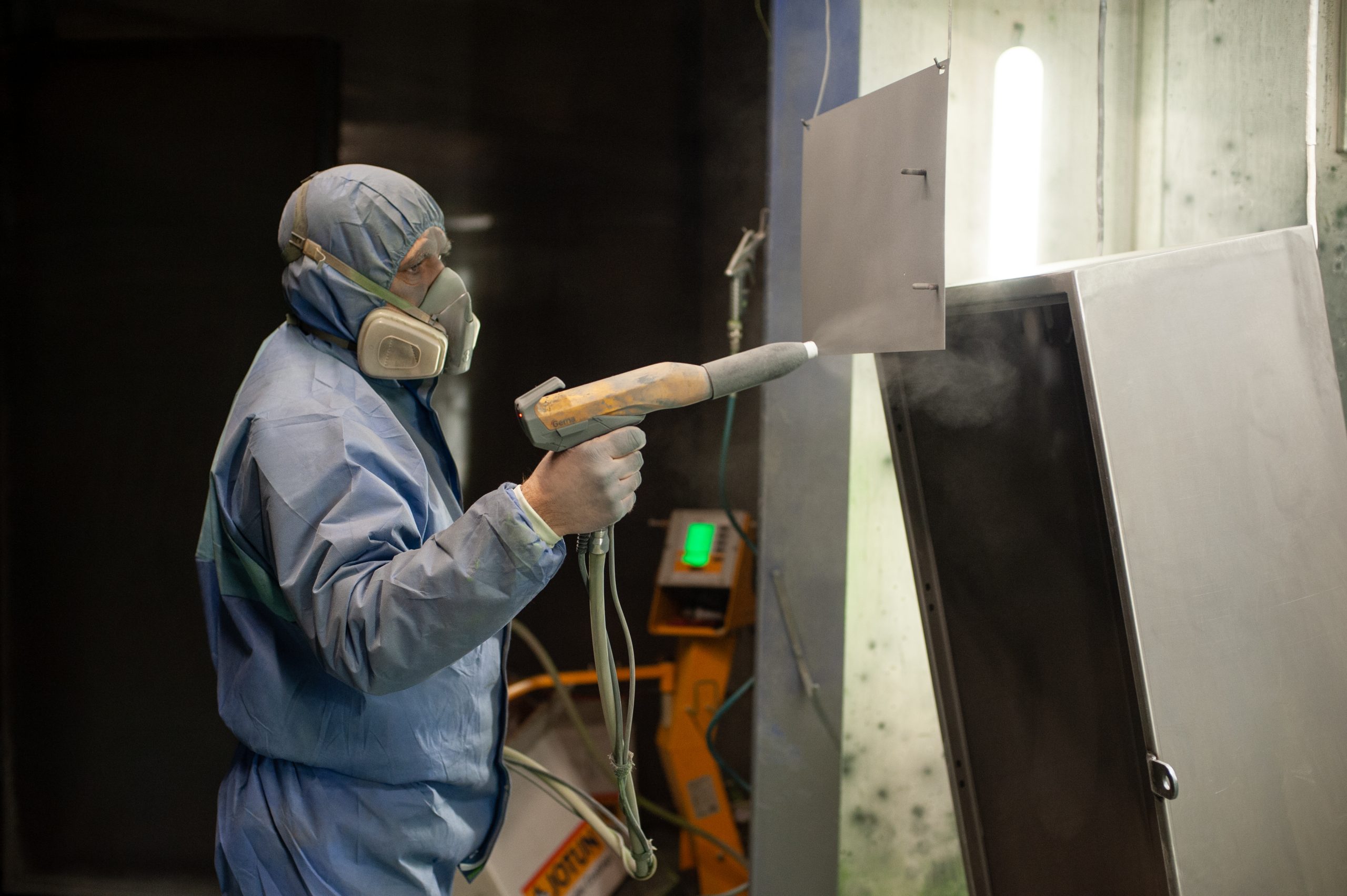
 Download PDF
Market Overview
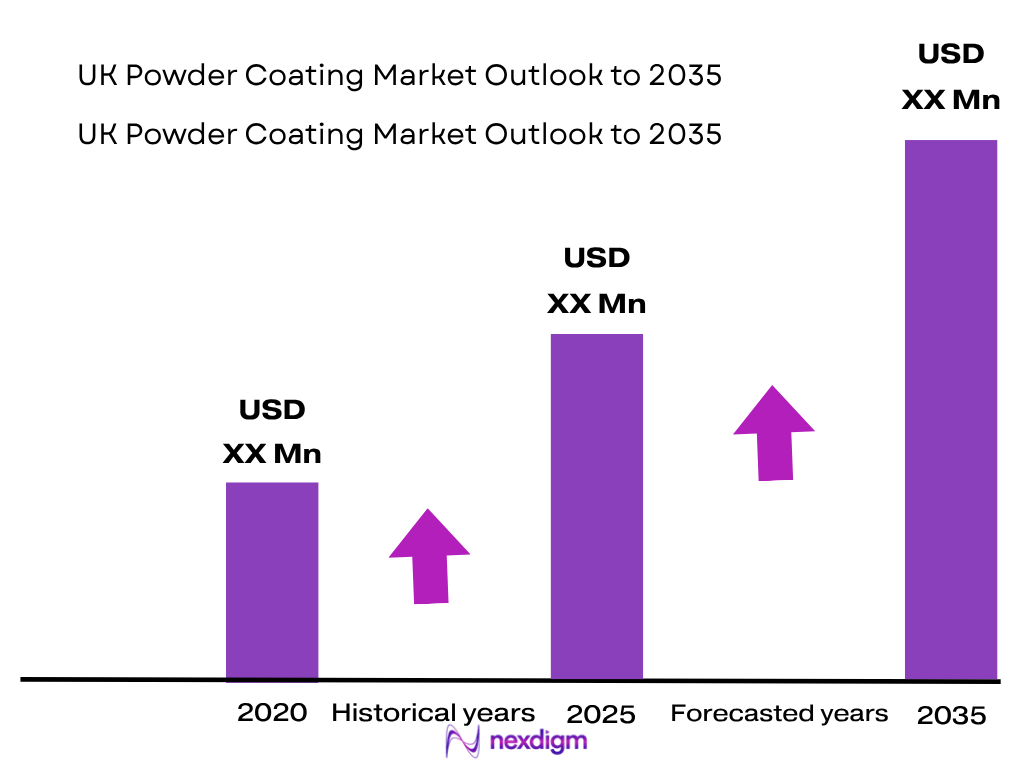
The UK Powder Coating Market is valued at approximately USD ~ million in 2024, compared with approximately USD ~X million in 2023, supported by architectural aluminium, fabricated metals, automotive components, appliances, electrical equipment and industrial machinery. UK manufacturing domestic turnover increased from £411.2 billion to £420.5 billion, while Great Britain’s construction new-work value reached £140.7 billion, creating a substantial addressable base for polyester, epoxy, hybrid and functional powder-coating systems.
The West Midlands, North West, North East, Yorkshire and London-South East form important centres of the UK Powder Coating Market. Birmingham and surrounding West Midlands manufacturing clusters benefit from automotive, engineering and metal-fabrication activity; Greater Manchester and Yorkshire support machinery and fabricated-metal demand; and the North East hosts major powder-coating production, including AkzoNobel in Gateshead and Axalta operations in Darlington. London and South East demand is driven particularly by architectural façades, aluminium fenestration and commercial building specifications.
Market Segmentation
By Resin Type
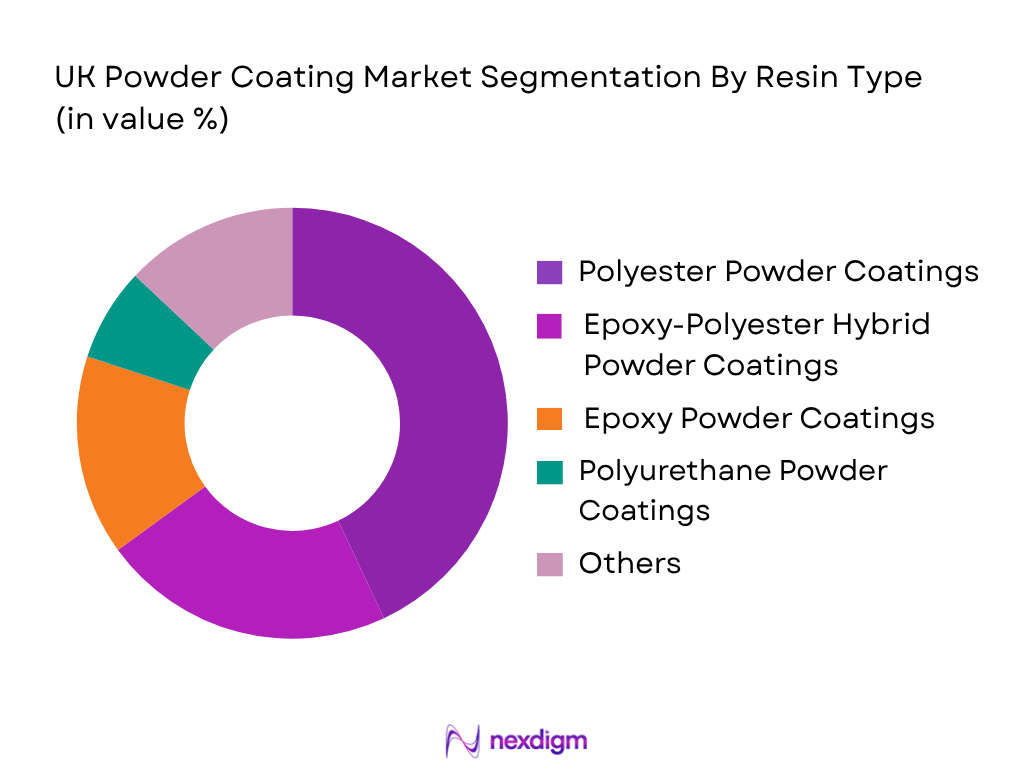
The UK Powder Coating Market is segmented into polyester, epoxy, epoxy-polyester hybrid, polyurethane, acrylic, thermoplastic and other specialty resin systems. Polyester powder coatings hold the dominant position because they combine exterior weather resistance, colour retention, mechanical durability and broad applicability across architectural aluminium, outdoor furniture, transportation equipment and general fabricated-metal products. Their position is strengthened by demand for windows, doors, curtain walling, façades, fencing and exterior metal systems, where UV stability is essential. QUALICOAT-approved polyester products are widely supplied to UK architectural applicators, while domestic manufacturers such as Thermaset maintain polyester, architectural QUALICOAT and specialist exterior coating portfolios. Polyester chemistry also supports gloss, matt, texture, metallic and super-durable formulations, allowing manufacturers to serve both functional and aesthetic specifications using a common resin platform. Epoxy systems remain important for chemical resistance, electrical insulation and primers but have weaker exterior UV durability. Epoxy-polyester hybrids remain prominent for indoor furniture, appliances and general industrial products where appearance and economical curing are major requirements.
By End-Use Industry
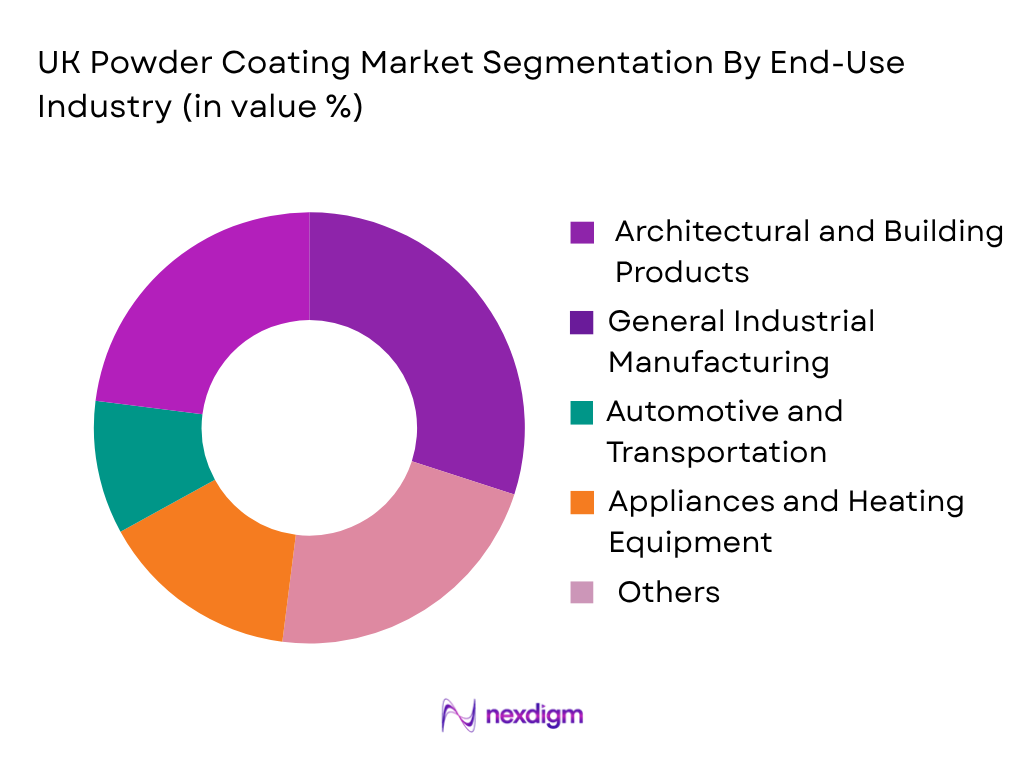
The UK Powder Coating Market is segmented into architectural and construction products, general industrial manufacturing, automotive and transportation, appliances, furniture, electrical equipment, energy infrastructure and other applications. Architectural and construction applications represent the dominant segment, supported by extensive coating of aluminium windows, doors, curtain walling, façade components, balustrades, cladding systems and external architectural metalwork. Great Britain recorded £140.684 billion of construction new work in 2024, while annual construction new orders reached £71.707 billion, reinforcing demand for durable coated metal building components. Architectural applications favour powder coatings because they provide consistent colour, corrosion resistance, weatherability and high material utilisation without conventional liquid-coating solvent emissions. The UK’s established QUALICOAT applicator ecosystem further supports adoption by specifying aluminium pretreatment, powder application and performance requirements for architectural components. Automotive and general industrial users nevertheless remain important consumers, particularly for wheels, brackets, chassis components, machinery, shelving, electrical cabinets and fabricated-metal assemblies requiring abrasion resistance, corrosion protection and controlled film build.
Competitive Landscape
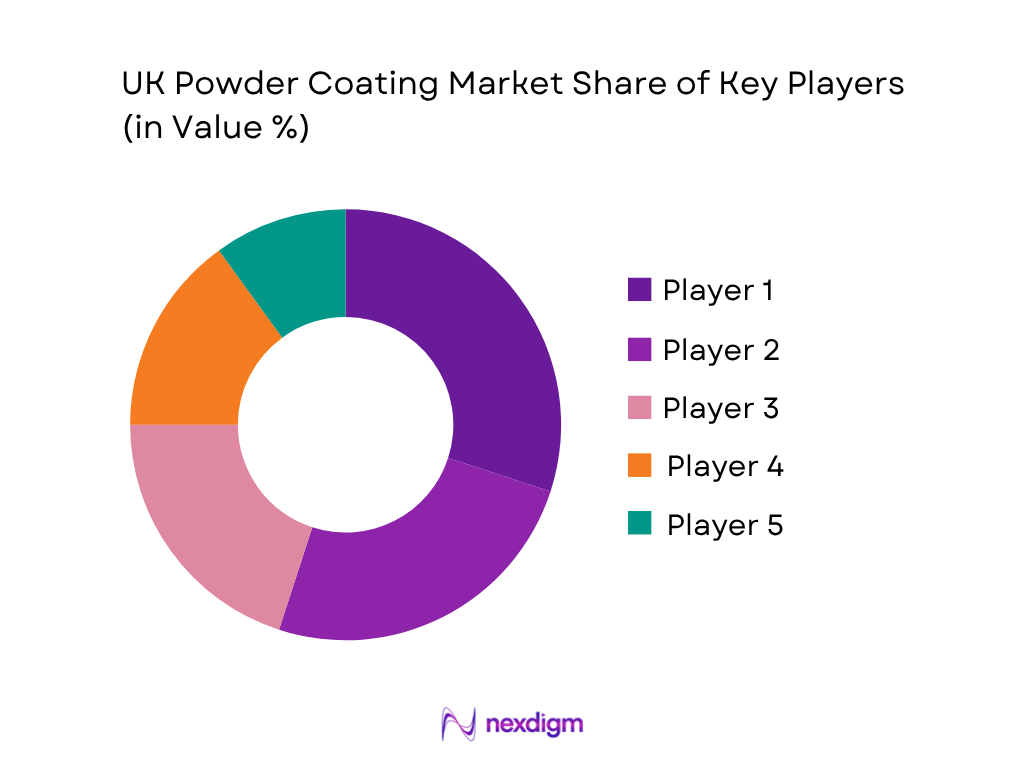
The UK Powder Coating Market contains global coatings groups alongside established UK manufacturers and specialist European suppliers. AkzoNobel, Axalta, PPG, Sherwin-Williams and Thermaset compete through resin technology, architectural certification, colour availability, curing efficiency, functional performance and technical support. Competition extends beyond powder formulation because applicators increasingly evaluate stock availability, bespoke colour matching, batch consistency, low-temperature curing, corrosion performance and troubleshooting support. Axalta operates a dedicated powder-coating business in Darlington, while AkzoNobel’s Interpon business maintains UK powder-coating operations in Gateshead.
| Company | Establishment Year | Headquarters | Major Powder Technologies | Key End Uses | Architectural Capability | Specialty / Functional Capability | UK Footprint | Sustainability / Low-Energy Capability |
| AkzoNobel / Interpon | 1792 | Amsterdam, Netherlands | ~ | ~ | ~ | ~ | ~ | ~ |
| Axalta Coating Systems | 1866 heritage | Philadelphia, US | ~ | ~ | ~ | ~ | ~ | ~ |
| PPG Industries | 1883 | Pittsburgh, US | ~ | ~ | ~ | ~ | ~ | ~ |
| Sherwin-Williams | 1866 | Cleveland, US | ~ | ~ | ~ | ~ | ~ | ~ |
| Thermaset Limited | 1984 | Tamworth, UK | ~ | ~ | ~ | ~ |
UK Powder Coating Market Analysis
Growth Drivers
Expansion of Construction and Fabricated-Metal Activity
The UK’s construction and metal-fabrication ecosystem creates sustained demand for polyester, epoxy, hybrid and corrosion-resistant powder coatings used on aluminium windows, curtain walls, doors, balustrades, fencing, steel structures, HVAC equipment and architectural components. Construction new work reached £140,684 million in 2024, while construction new orders totalled £71,707 million. Great Britain also had 370,770 VAT- and PAYE-registered construction businesses, demonstrating the breadth of the contractor and fabrication ecosystem that consumes coated components. Fabricated-metal manufacturing strengthened simultaneously, with the production index for fabricated metal products reaching 103.1 in 2024, compared with a 2023 reference level of 100.0. UK exports of fabricated metal products to the European Union reached £5,004 million in 2024, highlighting the scale of downstream metal processing requiring durable industrial finishes. Powder coatings fit these applications because aluminium and steel components require corrosion protection, UV stability, abrasion resistance and consistent decorative appearance. UK GDP stood at USD 3,686,033 million in 2024, while GDP per capita reached USD 53,246.4, supporting substantial commercial, residential and infrastructure activity and associated demand for powder-coated architectural and fabricated-metal products.
Automotive and Transportation Manufacturing Supports Technical Powder Coating Demand
The UK automotive and transportation manufacturing base supports demand for powder coatings used on alloy wheels, seat structures, springs, brackets, chassis parts, battery housings, electrical components and commercial-vehicle assemblies. UK factories manufactured 905,233 vehicles in 2024, comprising 779,584 passenger cars and 125,649 commercial vehicles. Commercial-vehicle production reached its strongest volume since 2008, while factories simultaneously undertook major retooling programmes for electrified vehicle production. The installed vehicle base also provides a substantial downstream industrial ecosystem, with 41,964,268 vehicles operating on UK roads, including 36,165,401 cars and 5,102,180 vans. More than 1.3 million electric cars were already in use, increasing the application base for powder-coated battery enclosures, busbars, motor housings and electrically insulating components. These applications require corrosion resistance, mechanical durability, edge coverage and controlled film build that favour engineered powder systems over basic decorative finishes. Total UK manufacturers’ product sales amounted to £452.2 billion in 2024, illustrating the scale of the production environment supporting industrial metal finishing. UK GDP reached USD 3,686,033 million, with GDP per capita at USD 53,246.4, providing a substantial economic base for advanced manufacturing and transportation supply chains.
Market Challenges
Energy-Intensive Thermal Curing Increases Pressure on Powder Coating Operations
Powder-coating production and application depend on electricity and thermal energy across extrusion, grinding, air handling, electrostatic spraying, pretreatment and oven curing, making energy efficiency a major operational challenge for UK applicators. UK industry consumed 19.5 million tonnes of oil equivalent of final energy in 2024, including substantial electricity and natural-gas requirements across manufacturing processes. Electricity consumption within industry declined by approximately 0.2 million tonnes of oil equivalent, while overall industrial energy consumption reached its lowest level in more than 50 years, illustrating the continuing pressure on manufacturers to reduce process energy intensity. Powder coating is particularly exposed because conventional thermoset systems require coated components to remain in curing ovens until the substrate reaches the specified temperature and cure duration; large steel fabrications increase the thermal load further. UK electricity generation amounted to 285.0 TWh in 2024, with major power producers generating 229.0 TWh, reinforcing the wider importance of energy productivity to manufacturing competitiveness. UK GDP stood at USD 3,686,033 million, while GDP per capita reached USD 53,246.4. These conditions encourage powder formulators and coaters to prioritise low-bake chemistries, faster cure cycles, efficient ovens, improved line loading and heat recovery to reduce energy demand per coated component.
Manufacturing Contraction Creates Utilisation Pressure for Industrial Powder Coaters
The UK Powder Coating Market is exposed to manufacturing cycles because a large proportion of powder consumption occurs on fabricated metals, machinery, vehicles, appliances, electrical equipment and industrial components. UK manufacturers’ product sales declined from £466.7 billion in 2023 to £452.2 billion in 2024, representing a reduction of £14.5 billion in annual manufactured-product activity. Automotive production demonstrates this challenge particularly clearly: UK factories manufactured 905,233 vehicles during 2024, including 779,584 passenger cars and 125,649 commercial vehicles, while production facilities underwent model transitions and electric-vehicle retooling. The pressure extended into 2025, when the fabricated-metal-products production index declined to 96.5, compared with 103.1 in 2024, demonstrating weaker activity across an important powder-coated substrate industry. This matters directly to contract coaters because coating booths, pretreatment lines and curing ovens require sufficient throughput to operate efficiently, while individual customers frequently require dedicated colours, gloss levels, film thicknesses and technical specifications. UK GDP reached USD 3,686,033 million in 2024, but the manufacturing slowdown demonstrates that overall economic scale does not eliminate sector-specific utilisation risks. Diversification across architecture, energy, transportation, electrical equipment and general fabrication therefore remains important for powder manufacturers and applicators.
Market Opportunities
Electric Mobility Creates Future Demand for Functional and Insulating Powder Coatings
The existing scale of UK vehicle electrification creates a strong foundation for future expansion of functional powder coatings used on battery enclosures, busbars, electric motors, charging equipment, brackets and thermal-management components. More than 1.3 million battery-electric cars were operating on UK roads in 2024, within a total road fleet of 41,964,268 vehicles. The passenger-car fleet alone contained 36,165,401 vehicles, while 5,102,180 vans were operating nationally. UK factories produced 905,233 vehicles during 2024, including 779,584 cars and 125,649 commercial vehicles, providing an established domestic supply chain of metal stampers, fabricators and component suppliers capable of adopting additional powder-coated EV components. Powder coatings are particularly relevant to electrification because specialised epoxy and hybrid systems can provide dielectric insulation, corrosion protection, edge coverage and mechanical durability in selected applications. The opportunity is reinforced by the wider UK manufacturing base, which generated £452.2 billion of manufacturers’ product sales in 2024. UK GDP reached USD 3,686,033 million, while GDP per capita stood at USD 53,246.4, indicating substantial economic capacity for automotive engineering and industrial investment. Current vehicle electrification therefore provides a foundation for future demand for functional and electrically insulating powder formulations beyond conventional decorative automotive coatings.
Renewable-Energy Infrastructure Expands the Addressable Base for Corrosion-Resistant Powder Coatings
The expansion of the UK renewable-energy system creates future opportunities for durable powder coatings applied to electrical cabinets, switchgear, battery enclosures, mounting structures, wind-energy components and other fabricated equipment exposed to demanding environments. The UK had 14.8 GW of installed offshore-wind capacity, 14.2 GW of onshore-wind capacity, 16.6 GW of solar capacity and 4.55 GW of battery capacity in 2024. These assets create an established equipment base requiring corrosion-resistant metal enclosures, structural parts and electrical protection rather than representing speculative future demand. Renewable infrastructure frequently operates outdoors, in coastal areas or in high-humidity environments, increasing the relevance of super-durable polyester powders, zinc-rich primers and multilayer corrosion-protection systems. The wider construction pipeline strengthens this opportunity, with £71,707 million of new construction orders recorded during 2024. UK fabricated-metal exports to the European Union reached £5,004 million, demonstrating an established metal-processing base capable of producing coated energy equipment for domestic and export applications. UK GDP reached USD 3,686,033 million, while GDP per capita stood at USD 53,246.4 in 2024. These indicators support future powder-coating demand associated with renewable generation, grid equipment and energy-storage infrastructure, particularly for formulations combining exterior durability, electrical performance and enhanced corrosion protection.
Future Outlook
The UK Powder Coating Market is expected to grow at approximately ~X% CAGR during 2026-2035, supported by increasing demand for durable, solvent-free surface finishing and continued substitution of liquid coatings across suitable metal applications. Architectural aluminium, infrastructure, automotive components, electrical equipment and general industrial fabrication are expected to remain central demand areas. Low-temperature and fast-curing powder technologies should gain greater strategic importance as UK manufacturers seek to reduce oven energy consumption and improve coating-line productivity. Traditional powder systems require thermal curing, meaning energy efficiency can become a decisive technology-selection criterion for applicators operating gas or electrically heated ovens.
Architectural coatings are also expected to shift toward super-durable polyester systems offering longer gloss and colour retention. Premium façade specifications, coastal environments and long-life building components increase the requirement for coating systems capable of maintaining appearance while resisting ultraviolet exposure, humidity and corrosion.
Major Players
- AkzoNobel Powder Coatings / Interpon
- Axalta Powder Coating Systems
- PPG Industries
- Sherwin-Williams
- Jotun Powder Coatings
- TIGER Coatings
- IGP Powder Coatings
- Teknos
- Thermaset Limited
- HMG Paints
- Neokem
- ST Powder Coatings
- Pulver Kimya
- Oxyplast
- Protech-Oxyplast Group
Key Target Audience
- Powder Coating Manufacturers and Resin Formulators
- Architectural Aluminium Extruders, Fabricators and Façade System Manufacturers
- Automotive, Commercial Vehicle and Transportation Component Manufacturers
- Powder Coating Applicators and Metal Finishing Companies
- General Industrial, Appliance and Electrical Equipment Manufacturers
- Resin, Pigment, Additive and Pretreatment Chemical Suppliers
- Investments and Venture Capitalist Firms
- Government and Regulatory Bodies (Health and Safety Executive, Environment Agency, Department for Business and Trade, Department for Energy Security and Net Zero, Office for Product Safety and Standards)
Research Methodology
Step 1: Identification of Key Variables
The initial phase involves constructing an ecosystem map covering powder manufacturers, resin and pigment suppliers, distributors, application-equipment companies, pretreatment providers, contract coaters, metal fabricators and end-use OEMs. The research identifies variables such as powder volume, resin chemistry, film thickness, coated surface area, transfer efficiency, curing temperature, substrate mix, domestic production, imports and end-use application intensity.
Step 2: Market Analysis and Construction
Historical information for the UK Powder Coating Market is analysed using top-down and bottom-up approaches. The bottom-up model assesses powder-manufacturer supply, applicator consumption, imports and domestic production, while the top-down framework maps demand from construction, fabricated metals, automotive components, appliances, furniture, electrical products and industrial machinery. Powder consumption and coated area are reconciled using application-specific film-build and transfer-efficiency assumptions.
Step 3: Hypothesis Validation and Expert Consultation
Market hypotheses are validated through structured discussions and CATIs with powder manufacturers, distributors, applicators, architectural aluminium coaters, metal fabricators and industrial OEMs. Interviews examine polyester and epoxy demand, curing conditions, powder-recovery performance, stock-colour requirements, custom-colour activity, customer qualification, coating defects and sustainability requirements. Industry feedback is used to adjust assumptions and validate differences between powder supplied and powder effectively consumed.
Step 4: Research Synthesis and Final Output
The final phase triangulates company information, primary interviews, government manufacturing statistics, construction indicators, trade information and technical standards. Estimates are reconciled across resin type, technology, substrate, end-use industry and distribution channel. Forecast assumptions incorporate architectural activity, industrial output, automotive production, energy-efficiency requirements, low-bake technology adoption, powder-line investment and development of functional coatings to produce a consistent long-term UK Powder Coating Market outlook.

- Executive Summary
- Research Methodology (Market Definition and Scope, UK Powder Coating Taxonomy, Thermoset and Thermoplastic Powder Coating Classification, Resin Chemistry Mapping, Substrate Assessment, Powder Particle Size Assessment, Curing Technology Assessment, Application Equipment Mapping, End-Use Application Mapping, Raw Material Assessment, Sustainable Powder Coating Technology Evaluation, Market Sizing Framework)

- Definition and Scope
- UK Powder Coating Industry Evolution and Powder Application Technology
- Development
- Powder Coating Manufacturing and Extrusion Process
- Powder Coating Value Chain Analysis
- UK Powder Coating Supply Chain Analysis
- Resin, Pigment, Additive and Crosslinker Ecosystem Analysis
- UK Powder Coating Import Dependency and Domestic Manufacturing Assessment
- OEM Powder Coating Application Architecture and Specialty Coating Solution Framework

- Growth Drivers (Expansion of Architectural Aluminium Applications, Growth of Fabricated Metal Production, Increasing Automotive Component Coating Demand, Rising Replacement of Liquid Coatings, Zero and Low-VOC Finishing Requirements, Higher Powder Recovery Efficiency, Industrial Automation, Increasing Demand for Durable Exterior Finishes)
- Market Challenges (Resin and Pigment Supply Volatility, Energy-Intensive Curing Requirements, Industrial Production Cyclicality, Colour-Change Downtime, Heat-Sensitive Substrate Limitations, Powder Storage and Moisture Sensitivity, Specialist Applicator Skill Requirements, Certification and Compliance Costs)
- Market Opportunities (Low-Bake Powder Coatings, Super-Durable Architectural Powders, EV Electrical Insulation Powders, Anti-Corrosion Powder Systems, Heat-Sensitive Substrate Coatings, Antimicrobial Powder Coatings, Bio-Based Resin Systems, High-Recovery Automated Powder Application)
- Market Trends (Ultra-Matt Powder Finishes, Fine-Texture Architectural Powders, Low-Temperature Cure Systems, Faster Colour Change Technology, Digital Colour Matching, Super-Durable Polyester Adoption, Primer-Free Corrosion Systems, Lower-Carbon Powder Coating Formulations)
- Regulatory and Standards Landscape (UK REACH Requirements, GB Classification Labelling and Packaging Requirements, COSHH Workplace Exposure Requirements, DSEAR Powder Explosion and Fire Safety Requirements, Qualicoat Architectural Powder Coating Standards, GSB Quality Requirements, BS and EN Coating Test Standards, Waste and Environmental Compliance Requirements)
- SWOT Analysis
- Porter’s Five Forces Analysis
- PESTLE Analysis
- Stakeholder Ecosystem
- Competition Ecosystem

- By Market Value (2020-2025)
- By Powder Coating Consumption Volume (2020-2025)
- By Coated Surface Area (2020-2025)
- By Domestic Production Volume (2020-2025)
- By Import Volume (2020-2025)
- By Export Volume (2020-2025)
- By Average Powder Consumption per Square Metre (2020-2025)
- By Thermoset Powder Coating Consumption (2020-2025)
- By Thermoplastic Powder Coating Consumption (2020-2025)

- By Resin Type (In Value %)
Polyester Powder Coatings
Epoxy Powder Coatings
Epoxy-Polyester Hybrid Powder Coatings
Polyurethane Powder Coatings
Acrylic Powder Coatings
Polyamide Powder Coatings
Polyethylene Powder Coatings
PVC Powder Coatings
Fluoropolymer Powder Coatings
Other Specialty Resin Systems - By Powder Coating Technology (In Value %)
Thermoset Powder Coatings
Thermoplastic Powder Coatings
Low-Bake Powder Coatings
Fast-Cure Powder Coatings
UV-Curable Powder Coatings
Heat-Sensitive Substrate Powder Coatings
Dual-Layer and Primer-Topcoat Powder Systems - By Substrate Type (In Value %)
Aluminium
Mild Steel
Galvanised Steel
Stainless Steel
Cast Iron
Zinc-Coated Substrates
Magnesium and Light Alloys
MDF and Engineered Wood
Heat-Sensitive Composite Substrates - By End-Use Industry (In Value %)
Architectural Aluminium and Building Products
Automotive and Automotive Components
Commercial Vehicles and Transportation
General Industrial Manufacturing
Appliances and White Goods
Furniture and Shelving
Electrical Equipment and Enclosures
Agricultural and Construction Machinery
HVAC and Heating Equipment
Renewable Energy Equipment
Oil, Gas and Energy Infrastructure
Rail and Mass Transit
Medical and Healthcare Equipment
Retail Fixtures and Shopfitting
Fencing, Gates and Outdoor Structures - By Distribution Channel (In Value %)
Direct Manufacturer-to-OEM Sales
Direct Sales to Approved Powder Applicators
Specialist Powder Coating Distributors
Industrial Coatings Distributors
Architectural Specification Channels
Contract Coater Supply Channels
Automotive Tier Supplier Channels
General Industrial Distribution Channels
Online and Digital Ordering Channels - By Region (In Value %)
London and South East England
London
Kent
Surrey
Essex
West Midlands
Birmingham
Coventry
Wolverhampton
East Midlands
Derbyshire
Leicestershire
Nottinghamshire
North West England
Manchester
Lancashire
Cheshire
Yorkshire and the Humber
Leeds
Sheffield
Hull
North East England
Newcastle upon Tyne
Sunderland
East of England
South West England
Scotland
Wales
Northern Ireland

- Market Share of Major Players (By Revenue, Volume, Resin Type, Powder Coating Technology, Substrate Type, End-Use Industry, Market Type, Distribution Channel)
- Cross Comparison Parameters (Resin Chemistry Breadth, UK Powder Manufacturing and Stocking Footprint, Architectural Qualicoat and GSB Portfolio, Low-Bake and Fast-Cure Technology Capability, Custom Colour and Special-Effect Capability, Corrosion and Functional Powder Portfolio, Applicator and OEM Technical Support Network, Sustainable and Lower-Carbon Powder Portfolio)
- SWOT Analysis of Major Players
- Competitive Positioning Matrix
- Product and Technology Portfolio Benchmarking
- Pricing and Distribution Network Benchmarking
- Market Entry Strategy Assessment
- Detailed Profiles of Major Companies
AkzoNobel Powder Coatings / Interpon
Axalta Powder Coating Systems
PPG Industries
Sherwin-Williams
Jotun Powder Coatings
TIGER Coatings
IGP Powder Coatings
Teknos
Thermaset Limited
HMG Paints
Neokem
ST Powder Coatings
Pulver Kimya
Oxyplast
Protech-Oxyplast Group

- Buyer Segmentation
- OEM Procurement Behaviour
- Powder Applicator Procurement Behaviour
- Supplier Selection Criteria
- Buyer Pain Points
- Technology Adoption Assessment
- Replacement and Recoat Behaviour

- By Market Value (2026-2035)
- By Powder Coating Consumption Volume (2026-2035)
- By Coated Surface Area (2026-2035)
- By Domestic Production Volume (2026-2035)
- By Import Volume (2026-2035)
- By Export Volume (2026-2035)
- By Average Powder Consumption per Square Metre (2026-2035)
- By Thermoset Powder Coating Consumption (2026-2035)
- By Thermoplastic Powder Coating Consumption (2026-2035)


 Request a Sample
 Ask for Customization
 Get a Quote
 Enquire Now