

 Download PDF
Market Overview
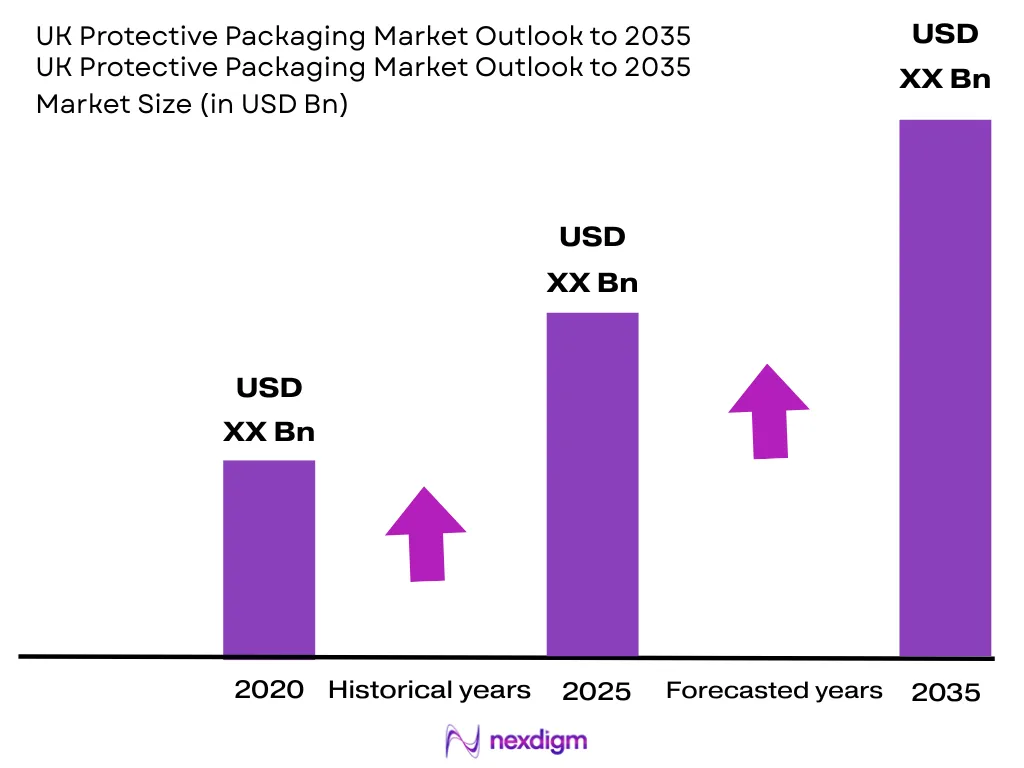
The UK Protective Packaging Market was valued at USD ~ Billion in 2024 and is anticipated to expand at a CAGR of ~% during 2026–2035. The market is primarily driven by continued growth of the UK’s flexible packaging sector, sustained e-commerce expansion, and rising demand for specialized protective packaging across automotive, aerospace, electronics, and healthcare applications. The global protective packaging market, within which the UK represents a mature and innovation-oriented segment, was valued at USD ~ billion in 2026 and is projected to reach USD ~ billion by 2036, growing at a CAGR of 4.70%, with flexible protective packaging formats such as bubble wrap, air pillows, and inflatable packaging accounting for approximately 62.4% of total demand given their lightweight nature, adaptability, and cost efficiency in high-volume logistics operations. Macfarlane Group plc, registered in Scotland, has established itself as the UK market leader in the distribution of protective packaging products, a business contributing approximately 87% of the Group’s total revenue, while its Design and Manufacture division provides bespoke protective packaging for high-value products across medical, aerospace, automotive, defence, offshore/subsea, and electronics applications.
Market Segmentation
By Type
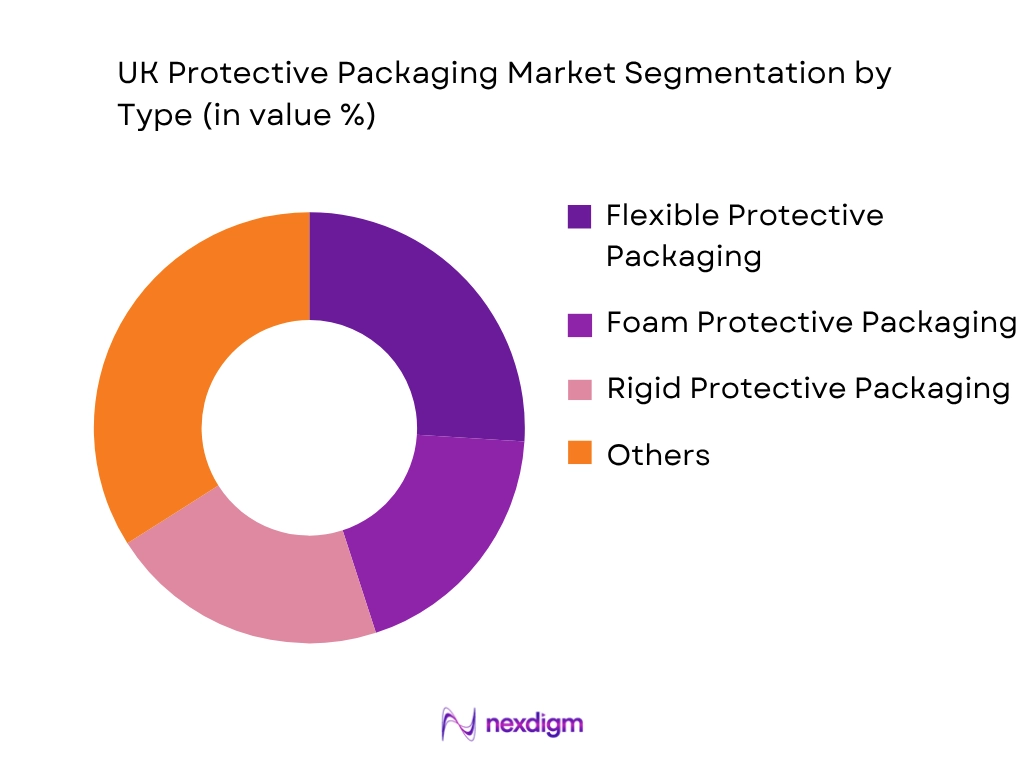
Flexible Protective Packaging represents the dominant format within the UK Protective Packaging Market, mirroring the global pattern in which bubble wrap, air pillows, and inflatable packaging account for the majority of total protective packaging demand due to their lightweight nature, adaptability, and cost efficiency in high-volume logistics operations. Storopack, which operates a dedicated UK packaging facility in Sheffield, has invested heavily in sustainable flexible protective packaging innovation, including its AIRplus product line made from 50% recycled content and available in void, bubble, and cushion film formats, alongside AIRfiber air pillows engineered to be recycled together with paper waste streams. Foam Protective Packaging retains a critical role for automotive and electronics applications requiring high-impact absorption, an area in which Storopack manufactures foam components for vehicle interiors, bumpers, headrests, and impact absorbers using a process certified to ISO and TS automotive quality standards. Rigid Protective Packaging, including heavy-duty corrugated, timber, and composite packs, remains essential for Macfarlane’s bespoke industrial packaging solutions serving large, fragile, or high-value products across aerospace, defence, and offshore/subsea applications.
By End-Use Industry
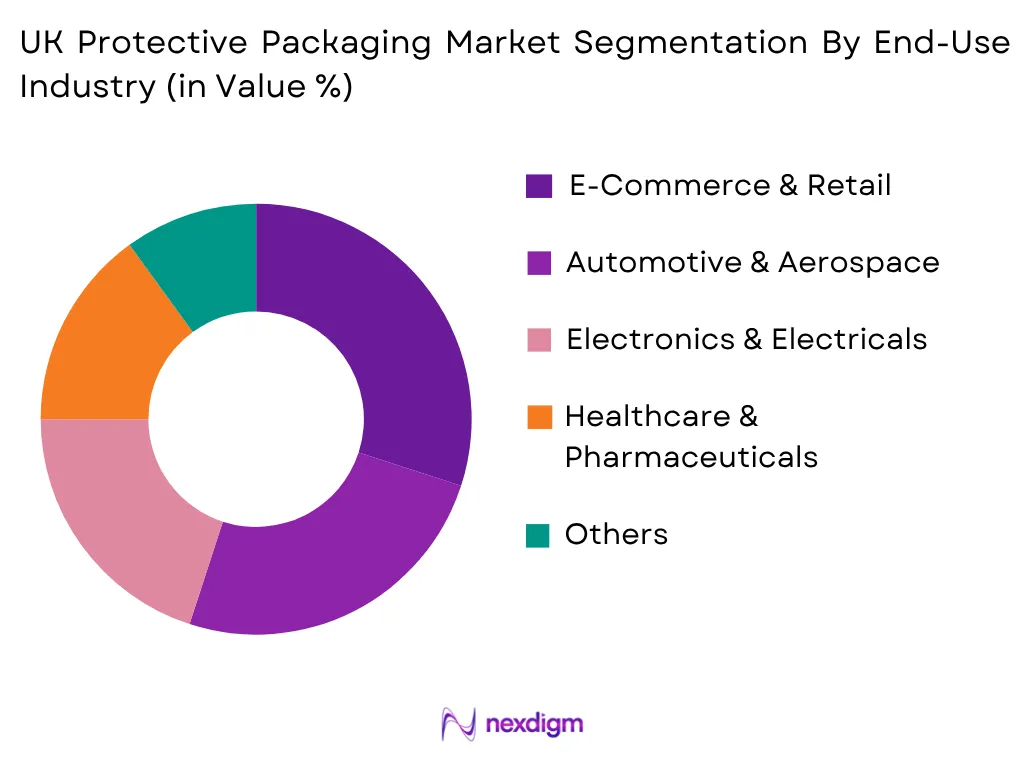
E-Commerce & Retail continues to represent a substantial share of the UK Protective Packaging Market, reflecting the country’s high online retail penetration and the corresponding need for lightweight, cost-effective cushioning and void-fill materials suited to high-volume parcel shipping. Automotive & Aerospace and Electronics & Electricals represent significant and technically demanding end-use categories, with Macfarlane Packaging’s industrial design and manufacture team noting particular strength serving medical, aerospace, automotive, defence, offshore/subsea, and electronics customers who require packaging engineered for large, fragile, expensive, or specialist products. Healthcare & Pharmaceuticals has grown into an increasingly important end-use category, a trend reinforced during the COVID-19 pandemic when protective packaging suppliers such as Storopack continued supplying essential materials for pharmaceuticals, medical supplies, and other critical goods, establishing supply relationships that have persisted well beyond the immediate public health emergency.
Competitive Landscape
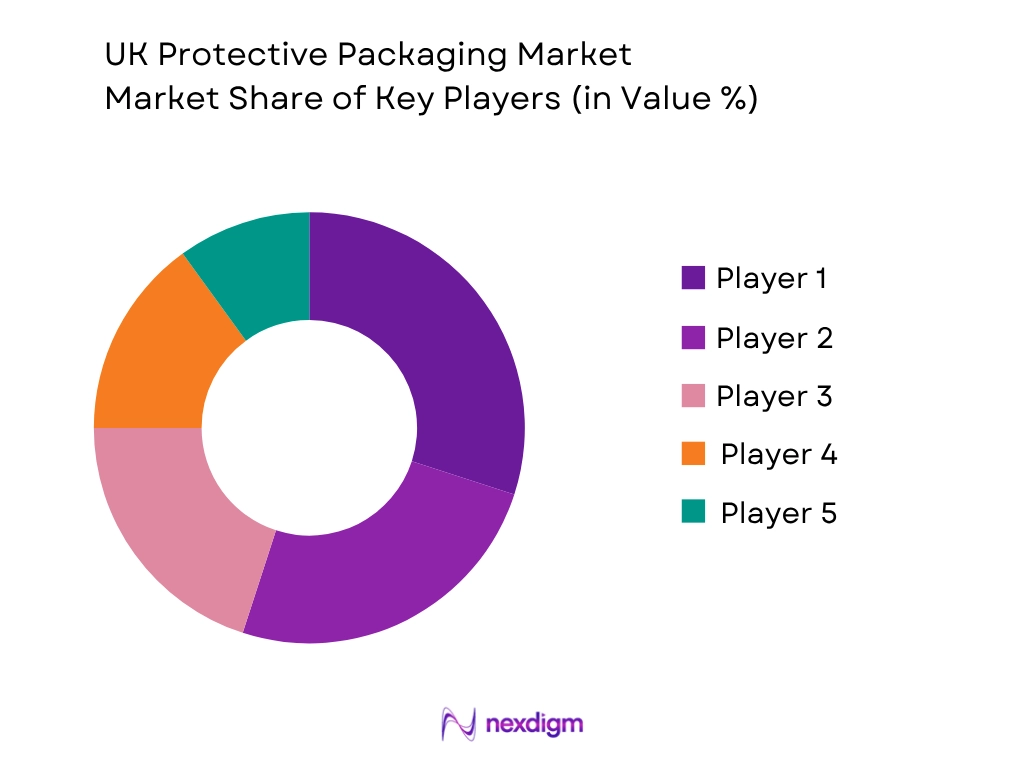
The UK Protective Packaging Market is led by Macfarlane Group plc, registered in Scotland, which operates as the UK market leader in the distribution of protective packaging products through an extensive network of regional distribution centres across the UK, Ireland, and Europe, complemented by a bespoke design and manufacture division serving high-value industrial customers; the company strengthened its industrial packaging capabilities through the acquisition of protective packaging solutions provider Armagrip in January 2020. Storopack, headquartered in Germany, maintains a dedicated UK operation based in Sheffield, offering an extensive portfolio of protective packaging solutions spanning loose-fill, foam, air pillows, and paper cushioning, with particular strength in automotive foam components and increasingly AI-enabled automated packaging technology through its AUTO.PROTECT module. Global protective packaging leader Sealed Air Corporation and diversified UK packaging major DS Smith plc compete alongside these specialists, while Sonoco Products Company and other international players round out a moderately fragmented market in which competition increasingly centers on sustainable material innovation, bespoke design capability for high-value industrial applications, and automation technology that reduces material usage and labor costs at the point of pack.
| Company | Established | Headquarters | Recyclable/Sustainable Portfolio | Automation & Right-Sizing Portfolio | Manufacturing Presence | Major End-Use Industries | Key Strategic Focus | UK market position |
| Macfarlane Group plc | 1949 | ~
|
~ | ~ | ~ | ~ | ~ | ~ |
| Storopack | 1874 | ~
|
~ | ~ | ~ | ~ | ~ | ~ |
| Sealed Air Corporation | 1960 | ~
|
~ | ~ | ~ | ~ | ~ | ~ |
| DS Smith plc | 1940 | ~ | ~ | ~ | ~ | ~ | ~ | ~ |
| Sonoco Products Company | 1899 | ~
|
~ | ~ | ~ | ~ | ~ | ~ |
UK Protective Packaging Market Analysis
Growth Drivers
Growth in Flexible Protective Packaging Adoption
The UK Protective Packaging Market continues to benefit from sustained growth in the flexible packaging sector, which industry analysts identify as the primary driver of UK protective packaging market expansion. Flexible protective packaging formats, including bubble wrap, air pillows, and inflatable packaging, account for approximately 62.4% of global protective packaging demand given their lightweight nature, adaptability, and cost efficiency in high-volume logistics operations, a pattern closely mirrored in the UK market. Macfarlane Packaging Distribution, which contributes approximately 87% of Macfarlane Group’s total revenue, has built its position as UK market leader by leveraging purchasing scale to cost-effectively source a comprehensive range of protective packaging products, operating through an extensive network of regional distribution centres across the UK, Ireland, and Europe to provide single-source, just-in-time supply for business customers across multiple sectors.
Rising Demand for High-Value Product Protection in Automotive and Aerospace
Growing demand for specialized protective packaging capable of safeguarding large, fragile, expensive, or specialist products continues to drive investment in the UK’s industrial protective packaging segment, particularly across medical, aerospace, automotive, defence, offshore/subsea, and electronics applications. Storopack’s automotive-focused foam solutions, which protect vehicle interiors, bumpers, headrests, and impact absorbers using a manufacturing process certified to ISO and TS automotive quality standards, illustrate the technical sophistication increasingly demanded across the UK’s high-value manufacturing supply chains. Macfarlane’s acquisition of protective packaging solutions provider Armagrip in January 2020 further reflects the strategic importance UK packaging distributors place on building bespoke, bepoke industrial design and manufacturing capability to serve customers shipping high-value components that require both single-trip and returnable packaging solutions.
Market Challenges
High Cost of Specialized Industrial Protective Packaging
Bespoke protective packaging solutions designed for large, fragile, or high-value products across aerospace, automotive, defence, and offshore/subsea applications require significant design, engineering, and manufacturing investment relative to standardized e-commerce protective packaging formats. Packaging designers must assess not only the product itself but also logistics routes, handling requirements, and returnability considerations before recommending heavy-duty corrugated, timber, or composite single-trip packs, or reusable solutions such as Correx totes or bespoke protective cases, adding cost and lead time relative to off-the-shelf protective packaging solutions. This complexity creates a meaningful barrier for smaller manufacturers seeking cost-effective protection for specialized or high-value shipments without the scale to justify fully bespoke packaging design services.
Complex Multi-Sector Regulatory and Certification Requirements
Protective packaging suppliers serving the UK’s diverse end-use industries must navigate an increasingly complex certification landscape spanning general packaging regulations such as the Plastic Packaging Tax and Extended Producer Responsibility framework, alongside sector-specific requirements including ISO and TS automotive component standards for foam products used in vehicle manufacturing and RecyClass certification for recyclable film portfolios. This layered compliance environment requires protective packaging manufacturers to maintain multiple parallel certification programs depending on the end-use sector served, adding cost and administrative complexity relative to suppliers serving a single, more narrowly defined industry vertical.
Market Opportunities
AI-Driven Automated Packaging and Right-Sizing Technology
Storopack’s AUTO.PROTECT module, which uses artificial intelligence to optimize padding placement within cartons as part of automated packaging processes, illustrates a significant opportunity for protective packaging suppliers to differentiate through automation technology that reduces material usage, labor costs, and packing time simultaneously. As UK e-commerce and industrial fulfillment operations continue to scale, protective packaging suppliers capable of integrating AI-enabled automation directly into customers’ packing stations stand to capture significant investment from businesses seeking to control rising labor and material costs while maintaining consistent protective packaging quality across high-volume operations.
Recyclable Flexible Protective Packaging Innovation
Growing regulatory and customer pressure for recyclable protective packaging is creating sustained opportunity for material innovation, exemplified by Storopack’s AIRplus product line, which incorporates 50% recycled content across void, bubble, and cushion film formats, and its AIRfiber air pillows, engineered so they can be recycled together with paper waste streams rather than requiring separate plastic film recycling infrastructure. Storopack has also pursued full RecyClass certification across its entire recycled film portfolio, providing a template for third-party verified recyclability that other UK protective packaging suppliers are likely to pursue as customers increasingly require documented evidence of recyclability claims rather than general sustainability messaging.
Future Outlook
The UK Protective Packaging Market is expected to witness sustained expansion over the forecast period, supported by continued growth in the UK’s flexible packaging sector, sustained e-commerce expansion, and rising demand for specialized, certified protective packaging across automotive, aerospace, electronics, and healthcare applications. Growing investment in AI-enabled automated packaging technology and recyclable flexible protective packaging formats, alongside continued consolidation among UK protective packaging distributors, will further shape the competitive landscape. The market is also likely to benefit from the UK’s position as a hub for high-value manufacturing and specialist industrial applications, as domestic and international protective packaging suppliers continue to invest in bespoke design capability, automation technology, and certified recyclable materials to serve the country’s diverse and technically demanding end-use industries.
Major Players
- Macfarlane Group plc
- Storopack
- Sealed Air Corporation
- DS Smith plc
- Sonoco Products Company
- Intertape Polymer Group
- Pregis LLC
- Ranpak Holdings Corp.
- Smurfit WestRock
- Mondi Group
- RAJA UK
- Priory Direct
- FP International
- Knauf Industries
- Nefab Group
Key Target Audience
- Protective Packaging Manufacturers and Distributors
- E-Commerce Retailers and Online Marketplaces
- Automotive and Aerospace Manufacturers
- Electronics and Consumer Durables Manufacturers
- Pharmaceutical and Healthcare Companies
- Investment and Venture Capitalist Firms
- Government and Regulatory Bodies (Environment Agency, Department for Environment, Food & Rural Affairs – Defra, WRAP)
- Industrial Equipment and Machinery Manufacturers
Research Methodology
Step 1: Identification of Key Variables
The research process begins with identifying the complete ecosystem of the UK Protective Packaging Market, including raw material suppliers, packaging manufacturers and distributors, e-commerce retailers, industrial manufacturers, and regulatory authorities. Extensive secondary research is conducted using company reports, government publications, trade associations, customs statistics, industry journals, and proprietary databases to determine the variables influencing market demand, pricing, production, consumption, and technological developments.
Step 2: Market Analysis and Construction
Historical market information is collected and analyzed to estimate market size, import volumes, application-wise demand, and pricing trends. A combination of top-down and bottom-up approaches is used to estimate market revenues and validate segment-level performance. Consumption patterns across e-commerce, automotive, aerospace, electronics, and healthcare applications are evaluated to establish an accurate representation of the industry.
Step 3: Hypothesis Validation and Expert Consultation
The preliminary findings are validated through Computer-Assisted Telephone Interviews (CATIs) and structured discussions with packaging distributors, procurement managers, industrial design engineers, sustainability officers, and senior executives operating within the UK protective packaging industry. These interviews help verify market assumptions, competitive developments, technology adoption trends, pricing dynamics, and future investment opportunities while refining the overall market estimates.
Step 4: Research Synthesis and Final Output
The final stage integrates insights obtained from primary interviews with quantitative information collected through secondary sources. Data triangulation techniques are applied to reconcile differences between supply-side and demand-side estimates, ensuring robust market forecasting. The report is then reviewed through multiple quality assurance checkpoints to deliver a comprehensive analysis covering market size, segmentation, competitive landscape, future outlook, and strategic recommendations for industry stakeholders.

- Executive Summary
- Research Methodology (Market Definitions and Assumptions, Abbreviations, Market Sizing Approach, Top-Down Analysis, Bottom-Up Analysis, Demand-Side Assessment, Supply-Side Assessment, Primary Industry Interviews, Secondary Research Validation, Data Triangulation, Forecasting Framework, Limitations and Future Conclusions)

- Definition and Scope
- Market Evolution and Industry Genesis
- Timeline of Major Industry Developments
- Protective Packaging Industry Value Chain Analysis
- Supply Chain Analysis

- Growth Drivers (Growth in Flexible Protective Packaging Adoption, Rising Demand for High-Value Product Protection in Automotive and Aerospace, Continued E-Commerce Sector Expansion, Growth in Electronics and Consumer Durables Shipping, Expansion of Pharmaceutical and Healthcare Logistics, Consolidation Among UK Packaging Distributors)
- Market Challenges (High Cost of Specialized Industrial Protective Packaging, Complex Multi-Sector Regulatory and Certification Requirements, Rising Raw Material and Energy Costs, Post-Brexit Supply Chain and Customs Complexity, Returnable vs Single-Trip Packaging Trade-Offs, Skilled Packaging Design Labor Shortages)
- Market Opportunities (AI-Driven Automated Packaging and Right-Sizing Technology, Recyclable Flexible Protective Packaging Innovation, Growth in Returnable and Reusable Industrial Packaging, Bespoke Design Services for High-Value Manufacturing, Expansion into Offshore, Subsea and Defence Applications, Public-Private Sustainability Partnerships)
- Market Trends (Rise of AI-Enabled Automated Padding Systems, Growth of Recyclable Air Pillow and Cushioning Formats, RecyClass and Third-Party Recyclability Certification, Consolidation Among Protective Packaging Distributors, Bespoke Industrial Packaging Design Services, Growing Use of Downgauged and Lightweight Materials)
- Government Regulations (UK Plastic Packaging Tax, Extended Producer Responsibility (pEPR) for Packaging, RecyClass and Recyclability Certification Standards, ISO and TS Automotive Component Standards, Packaging Waste (Essential Requirements) Regulations, Post-Brexit UKCA and Customs Compliance)
- Import and Export Analysis (Trade Volume, Major Import Sources, Export Destinations, HS Code Analysis, Trade Balance)
- Raw Material Availability Analysis (Domestic and Imported Recovered Paper Feedstocks, Plastic Foam and Film Feedstocks, Molded Pulp Fiber Availability, Recycled Content Material Supply, Packaging Recovery Note (PRN) Market Dynamics)
- Technology Landscape (AI-Enabled Automated Padding and Void-Fill Systems, Foam Extrusion and Molding Technology, Air Pillow and Cushion Film Technology, Bespoke Industrial Packaging Design Tools, Recyclable Material Innovation)
- Sustainability Assessment (Recyclable and Mono-Material Packaging Adoption, RecyClass Certification Uptake, Downgauging and Lightweighting Initiatives, Returnable Packaging System Development, Circular Economy Alignment)
- PESTLE Analysis
- SWOT Analysis
- Porter’s Five Forces Analysis
- Stakeholder Ecosystem
- Competition Ecosystem

- By Market Value (2020-2025)
- By Volume Consumption (2020-2025)
- By Average Selling Price (2020-2025)

- By Type (In Value %)
Flexible Protective Packaging
Foam Protective Packaging
Rigid Protective Packaging - By Function (In Value %)
Void Fill
Wrapping
Insulation
Blocking & Bracing
Cushioning - By Material (In Value %)
Paper & Paperboard
Plastic Foams
Plastic Film
Molded Pulp
Corrugated Board - By End-Use Industry (In Value %)
E-Commerce & Retail
Electronics & Electricals
Automotive & Aerospace
Healthcare & Pharmaceuticals
Industrial & Manufacturing - By Region (In Value %)
England
Scotland
Wales
Northern Ireland

- Market Share of Major Players (By Value, Volume, Type, End-Use Industry, Function)
- Cross Comparison Parameters (Distribution Network Reach, Bespoke Design and Manufacturing Capability, Recyclable/Sustainable Portfolio Breadth, Automation Technology Capability, Manufacturing Capacity, Regulatory Compliance & Certifications, Customer Base, Innovation & New Product Launch Frequency)
- SWOT Analysis of Major Players
- Pricing Analysis by Product Category and Application
- Production Capacity Analysis
- Manufacturing Footprint Analysis
- Distribution Network Analysis
- Innovation Benchmarking
- Detailed Profiles of Major Companies
Macfarlane Group plc
Storopack
Sealed Air Corporation
DS Smith plc
Sonoco Products Company
Intertape Polymer Group
Pregis LLC
Ranpak Holdings Corp.
Smurfit WestRock
Mondi Group
RAJA UK
Priory Direct
FP International
Knauf Industries
Nefab Group

- Consumption Pattern Analysis (Order Volume Intensity, Product Value and Fragility Profile, End-Use Industry Penetration, Seasonal and Peak-Period Demand, Returnable Packaging Cycle Impact)
- Purchasing Criteria (Protective Performance, Regulatory and Certification Compliance, Cost Efficiency, Recyclability, Bespoke Design Capability, Supply Reliability)
- Procurement and Supplier Selection Analysis
- Sustainable and Recyclable Packaging Adoption Assessment
- Bespoke Industrial vs Standard E-Commerce Packaging Demand
- Product Attribute Preference Analysis (Cushioning Performance, Recyclability, Dimensional Efficiency, Returnability, Certification Compatibility, Weight Efficiency)
- Sustainability & ESG Influence on Procurement Decisions
- Pain Point Analysis
- Decision-Making Process

- By Market Value (2026-2035)
- By Volume Consumption (2026-2035)
- By Average Selling Price (2026-2035)


 Request a Sample
 Ask for Customization
 Get a Quote
 Enquire Now