
 Download PDF
 Download PDF
Market Overview
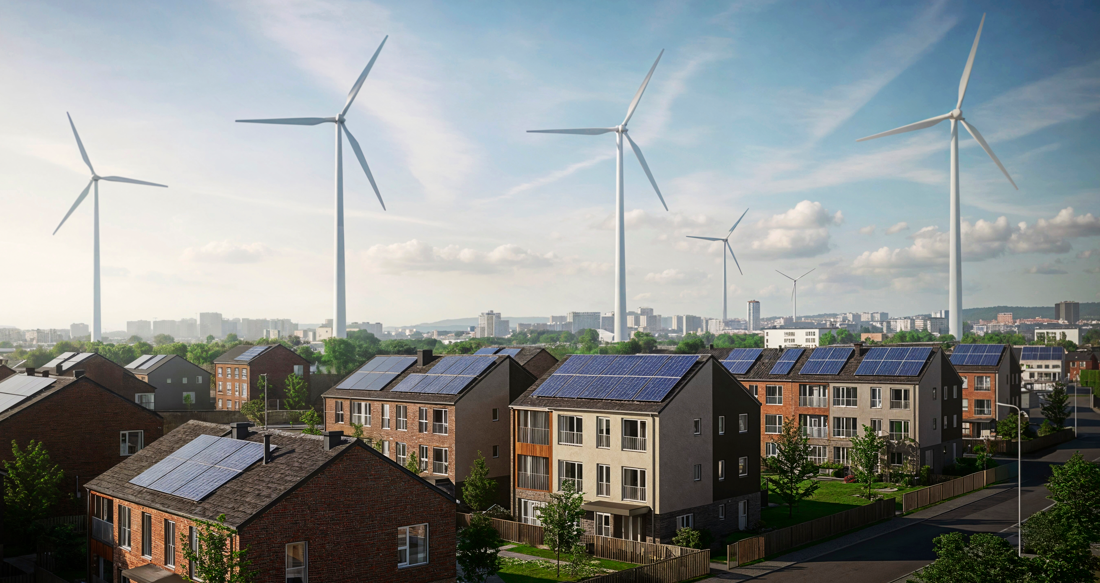
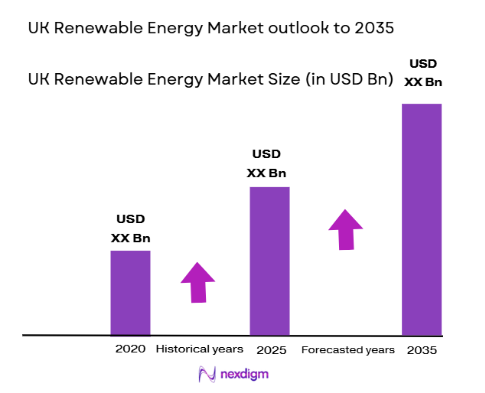
The UK Renewable Energy market is experiencing substantial growth driven by increasing investments in clean energy infrastructure, technological advancements, and government policies aimed at reducing carbon emissions. The market size is estimated to be valued at approximately USD ~ billion, bolstered by a surge in demand for renewable energy sources such as wind, solar, and biomass. This growth is supported by substantial government subsidies, innovation in energy storage systems, and a shift towards sustainability in various sectors, including residential, commercial, and industrial applications. The UK government’s ambitious renewable energy targets and commitment to achieving net-zero carbon emissions by 2050 further drive market development.
The UK stands as a leader in renewable energy within Europe, with cities like London, Manchester, and Edinburgh showing significant demand for renewable energy technologies. The country’s dominance in offshore wind power and solar energy is driven by the development of specialized infrastructure and strategic location along the coast. As the UK continues to transition to a cleaner energy system, these cities are central to the adoption and expansion of green energy technologies, thanks to their government-led initiatives, robust financial incentives, and growing consumer awareness about sustainability.
Market Segmentation
By Product Type:
UK Renewable Energy market is segmented by product type into wind power, solar power, hydroelectric power, biomass, and geothermal. Recently, wind power has had a dominant market share due to factors such as advancements in offshore wind turbine technology, strong governmental support, and the country’s ideal geography for wind energy production. Wind power provides a reliable and scalable solution for large-scale energy production, particularly off the coast of the UK, leading to its prominence in the renewable energy market. 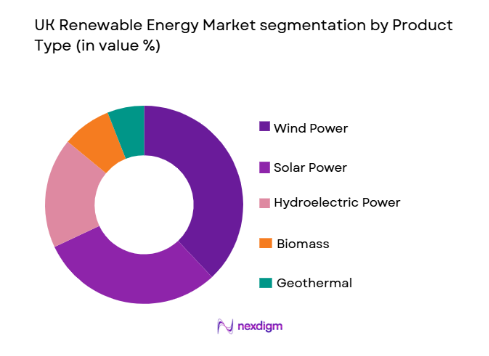
By Platform Type:
UK Renewable Energy market is segmented by platform type into land-based platforms, offshore platforms, floating platforms, hybrid platforms, and onshore platforms. Offshore platforms, particularly those used for wind energy, are dominant in the UK market due to the country’s large and accessible coastal areas, combined with increasing investments and technological advancements in floating and fixed offshore wind farms. These platforms support the UK’s goals of being a global leader in renewable energy. 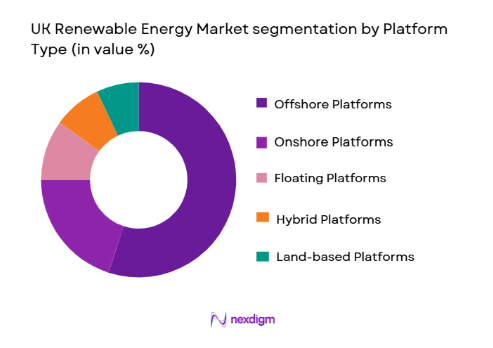
Competitive Landscape
The competitive landscape of the UK Renewable Energy market is marked by significant investments from both domestic and international companies. Major players such as Ørsted, Iberdrola, and Vestas dominate the market, driving innovation and contributing to the country’s renewable energy objectives. The market also experiences consolidation, with several partnerships and mergers aimed at strengthening market positions and enhancing technological capabilities. These players continue to invest in offshore wind energy, solar power, and energy storage solutions, which are expected to shape the competitive dynamics in the coming years.
| Company Name | Establishment Year | Headquarters | Technology Focus | Market Reach | Key Products | Revenue (USD billion) | Additional Parameter |
| Ørsted | 2006 | Denmark | ~ | ~ | ~ | ~ | ~ |
| Iberdrola | 1992 | Spain | ~ | ~ | ~ | ~ | ~ |
| Vestas | 1945 | Denmark | ~ | ~ | ~ | ~ | ~ |
| SSE Renewables | 1998 | UK | ~ | ~ | ~ | ~ | ~ |
| Enel Green Power | 2008 | Italy | ~ | ~ | ~ | ~ | ~ |
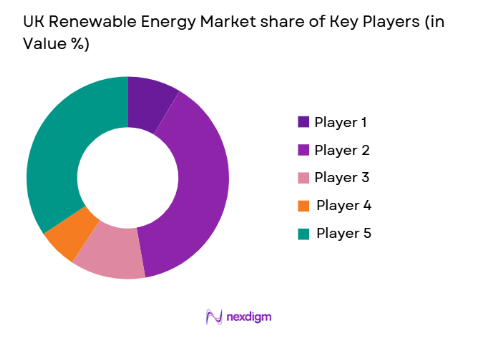
UK Renewable Energy Market Analysis
Growth Drivers
Government Initiatives:
The UK government has implemented various policies and incentives to accelerate the adoption of renewable energy. Programs such as the Contracts for Difference (CfD) scheme provide financial support for energy projects, particularly offshore wind. With a target to achieve net-zero carbon emissions by 2050, these government initiatives have greatly incentivized the renewable energy market. Moreover, the UK has seen increased investments from private and public sectors, which further strengthen the market’s growth potential. Continued focus on achieving sustainability goals by reducing fossil fuel reliance continues to be a key driver of renewable energy growth. These policy actions and frameworks create a stable environment for renewable projects, which promotes long-term industry growth.
Technological Advancements:
Technological innovation is another critical driver of the UK’s renewable energy market. Advancements in energy storage systems, offshore wind turbine efficiency, and smart grid technologies have significantly lowered the cost of renewable energy systems, making them more competitive against conventional fossil fuels. Offshore wind technology, in particular, has seen breakthroughs in turbine size and efficiency, resulting in greater energy production per unit. Innovations in solar photovoltaic cells have made solar energy more affordable, while advancements in storage systems have addressed the intermittency challenges associated with renewable energy sources. These advancements foster more widespread adoption and deployment across the UK, further driving market expansion.
Market Challenges
High Initial Investment:
One of the most significant challenges facing the UK renewable energy market is the high capital investment required for infrastructure development. Large-scale renewable energy projects, particularly offshore wind farms, require substantial upfront capital for installation, which can deter smaller developers or investors from entering the market. Although government incentives help mitigate these costs, the initial financial outlay remains a major barrier to faster market adoption. Overcoming these investment challenges is essential for sustaining the growth of the renewable energy sector in the UK.
Intermittency of Renewable Energy Sources:
Renewable energy sources like wind and solar are often subject to variability and intermittency, which can lead to supply-demand mismatches. For example, solar energy is less available on cloudy days or during the winter months, while wind power may not always be reliable. These factors challenge grid stability and require significant investment in energy storage systems to maintain consistent supply levels. The UK continues to invest in improving storage technology and grid flexibility, but balancing intermittent energy sources with demand remains a complex issue that needs addressing for future growth.
Opportunities
Expansion of Offshore Wind Power:
Offshore wind power presents a significant opportunity for the UK’s renewable energy market. With vast untapped resources along its coasts, the UK is well-positioned to expand its offshore wind capacity, further solidifying its position as a leader in the global renewable energy sector. Offshore wind farms offer higher capacity factors compared to onshore wind farms, making them more reliable and efficient. As turbine technology advances, the costs of offshore wind power are expected to continue to decline, making it even more attractive for both investors and developers. With ongoing government support, offshore wind power could dominate the UK renewable energy landscape for years to come.
Green Hydrogen Production:
Green hydrogen has emerged as a promising opportunity for the UK’s renewable energy market. Produced using renewable energy sources, green hydrogen can serve as a clean fuel for industries such as steel manufacturing, transportation, and energy storage. The UK has set ambitious targets for the development of hydrogen infrastructure, which presents significant growth potential in the coming years. By leveraging renewable energy sources for hydrogen production, the UK can reduce its dependence on fossil fuels while promoting the transition to a carbon-neutral economy.
Future Outlook
The future of the UK renewable energy market looks promising, with steady growth driven by technological advancements, government policies, and increasing environmental awareness. Over the next five years, the country is expected to expand its offshore wind capacity and see continued advancements in solar and energy storage technologies. The push for net-zero emissions and further investment in green hydrogen production will help diversify the energy mix and contribute to cleaner energy solutions. Additionally, as technological innovation continues, renewable energy systems are expected to become more affordable and efficient, making them increasingly accessible to consumers and businesses alike.
Major Players
- Ørsted
- Iberdrola
- Vestas
- SSE Renewables
- Enel Green Power
- Siemens Gamesa
- NextEra Energy
- Brookfield Renewable Partners
- EDF Energy
- Statkraft
- GE Renewable Energy
- Nordex
- First Solar
- RWE Renewables
- Siemens Energy
Key Target Audience
- Government and regulatory bodies
- Energy companies
- Renewable energy investors
- Private sector energy consumers
- Real estate developers
- Financial institutions and banks
- Venture capitalists
- Environmental NGOs
Research Methodology
Step 1: Identification of Key Variables
Identify the critical variables influencing the renewable energy market, such as government policies, technological trends, and economic factors.
Step 2: Market Analysis and Construction
Conduct an in-depth analysis of market trends, demand patterns, and consumer behavior to develop a comprehensive market model.
Step 3: Hypothesis Validation and Expert Consultation
Validate hypotheses with insights from industry experts and stakeholders, including government bodies, private companies, and technological innovators.
Step 4: Research Synthesis and Final Output
Synthesize the findings into a final report, ensuring all insights and data are clearly presented and actionable for decision-makers.

- Executive Summary
- Research Methodology (Definitions, Scope, Industry Assumptions, Market Sizing Approach, Primary & Secondary Research Framework, Data Collection & Verification Protocol, Analytic Models & Forecast Methodology, Limitations & Research Validity Checks)

- Market Definition and Scope
- Value Chain & Stakeholder Ecosystem
- Regulatory / Certification Landscape
- Sector Dynamics Affecting Demand
- Strategic Initiatives & Infrastructure Growth

- Growth Drivers
Government Incentives for Renewable Projects
Technological Advancements in Renewable Energy
Increased Demand for Clean Energy
Rising Environmental Awareness
Favorable Regulatory Policies - Market Challenges
High Capital Investment Requirements
Intermittency of Renewable Energy Sources
Grid Integration and Storage Issues
Dependence on Weather Conditions
Policy and Regulatory Uncertainty - Market Opportunities
Growth in Offshore Wind Energy
Development of Green Hydrogen
Advancements in Energy Storage Systems - Trends
Integration of AI in Renewable Energy Management
Rise of Decentralized Energy Systems
Increased Adoption of Smart Grid Technologies
Growth of Green Financing in Renewable Projects
Development of Floating Wind Farms - Government Regulations & Defense Policy
Energy Efficiency Regulations
Carbon Emission Reduction Targets
Subsidies and Tax Incentives for Renewable Energy - SWOT Analysis
- Stakeholder and Ecosystem Analysis
- Porter’s Five Forces Analysis
- Competition Intensity and Ecosystem Mapping

- By Market Value, 2020-2025
- By Installed Units, 2020-2025
- By Average System Price, 2020-2025
- By System Complexity Tier, 2020-2025

- By System Type (In Value%)
Wind Power
Solar Power
Hydropower
Geothermal Energy
Biomass Energy - By Platform Type (In Value%)
Land-based Platforms
Offshore Platforms
Floating Platforms
Hybrid Platforms
Onshore Platforms - By Fitment Type (In Value%)
On-premise Solutions
Cloud-based Solutions
Hybrid Solutions
Integrated Solutions
Modular Solutions - By EndUser Segment (In Value%)
Government Agencies
Private Sector
Energy Providers
Residential Users
Commercial & Industrial Users - By Procurement Channel (In Value%)
Direct Procurement
Government Tenders
Private Sector Procurement
Online Platforms
Distributors and Agents - By Material / Technology (in Value%)
Wind Turbine Technology
Solar Photovoltaic Panels
Battery Storage Technologies
Hydropower Technologies
Biomass Fuel Systems

- Market structure and competitive positioning
- Market share snapshot of major players
- CrossComparison Parameters (System Type, Platform Type, Procurement Channel, EndUser Segment, Fitment Type, Material/Technology, Government Regulations, Supply Chain, Market Reach, R&D Investment)
- SWOT Analysis of Key Players
- Pricing & Procurement Analysis
- Key Players
Vestas
Siemens Gamesa
Nordex
Orsted
Iberdrola
EDF Energy
SSE Renewables
Enel Green Power
GE Renewable Energy
First Solar
Mitsubishi Heavy Industries
NextEra Energy
Brookfield Renewable Partners
Statkraft
Ørsted

- Government Policies Shaping Demand
- Increasing Consumer Demand for Green Energy
- Industrial Adoption of Renewable Energy Solutions
- The Role of Private Sector Investments

- Forecast Market Value, 2026-2035
- Forecast Installed Units, 2026-2035
- Price Forecast by System Tier, 2026-2035
- Future Demand by Platform, 2026-2035


 Request a Sample
 Ask for Customization
 Get a Quote
 Enquire Now