

 Download PDF
Market Overview
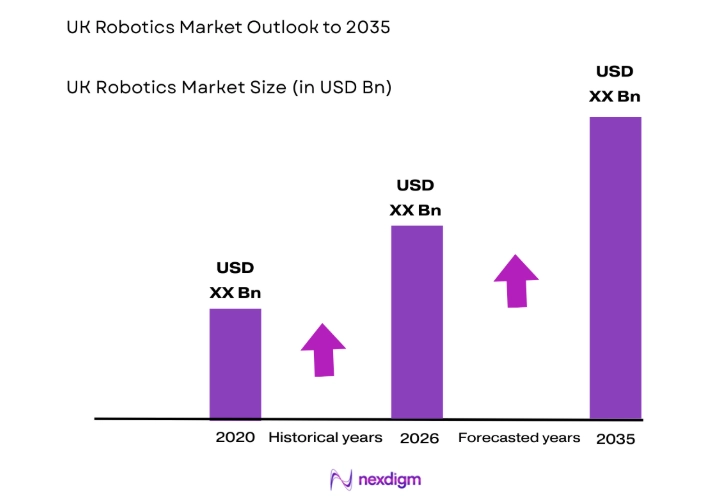
The UK Robotics market is projected to reach USD ~ billion in 2025, driven by advancements in automation technologies, robotics, and artificial intelligence. Industries such as manufacturing, logistics, and healthcare are increasingly adopting robotic systems to enhance productivity, reduce operational costs, and improve safety. The demand for robots, including industrial, collaborative, and service robots, is growing across sectors looking to optimize operations and address labor shortages, particularly in high-demand industries like automotive and electronics.
Regions such as London, Birmingham, and Cambridge dominate the UK’s robotics landscape due to their strong technological ecosystems and industrial bases. London is a hub for robotics innovation, with numerous technology firms and startups driving advancements in robotics and AI. Birmingham is home to a significant automotive industry, where robotics plays a crucial role in assembly lines. Cambridge, known for its research-driven environment, fosters collaborations between academic institutions and companies specializing in robotic technologies, helping drive the market’s growth in the region.
Market Segmentation
By Product Type
The UK Robotics market is segmented by product type into industrial robots, service robots, and others. Recently, industrial robots have gained a dominant market share due to their widespread use in manufacturing sectors such as automotive, electronics, and consumer goods. These robots are essential for automating repetitive tasks such as assembly, welding, and packaging, leading to significant improvements in production efficiency. With advancements in robotics, including increased flexibility and collaboration with human workers (cobots), industrial robots continue to be integral to modernizing manufacturing processes. The growing emphasis on precision, productivity, and cost reduction in the UK manufacturing sector is further driving the demand for industrial robots.

By End-User Industry
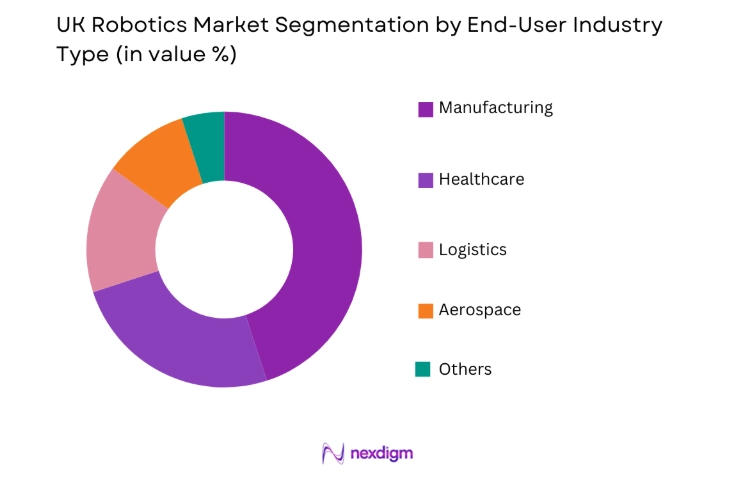
The UK Robotics market is segmented by end-user industry into manufacturing, healthcare, logistics, aerospace, and others. The manufacturing industry holds a dominant market share due to the increasing adoption of robotics for automation in production lines. In the automotive sector, robots are essential for performing tasks like assembly, welding, and painting with high precision and efficiency. The growing trend of Industry 4.0, where automation, AI, and IoT are integrated into manufacturing processes, is driving the widespread use of robotics in factories. Additionally, the automotive sector’s focus on electric vehicle production, which requires advanced robotics for battery assembly and component handling, contributes to the continued dominance of this industry.
Competitive Landscape
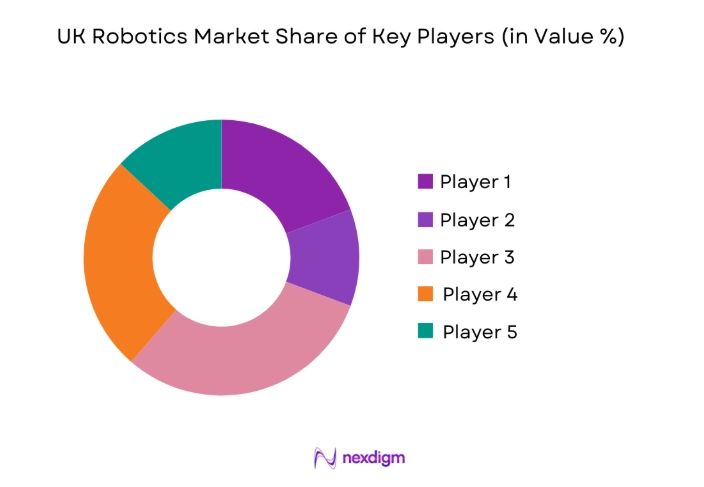
The UK Robotics market is highly competitive, with several global and regional players contributing to its growth. Major robotics companies are focusing on technological innovations, such as the integration of AI, machine learning, and cloud connectivity into robotic systems. These advancements are making robots more intelligent, flexible, and capable of performing complex tasks across a range of industries. The market also sees increasing collaboration between robotics manufacturers, tech companies, and research institutions to develop cutting-edge solutions. The presence of government support for research and development in robotics and automation further intensifies competition as companies vie for market leadership.
| Company Name | Establishment Year | Headquarters | Technology Focus | Market Reach | Key Products | Revenue | Additional Parameter |
| ABB | 1988 | Zurich, Switzerland | ~ | ~ | ~ | ~ | ~ |
| FANUC | 1956 | Oshino, Japan | ~ | ~ | ~ | ~ | ~ |
| KUKA | 1898 | Augsburg, Germany | ~ | ~ | ~ | ~ | ~ |
| Universal Robots | 2005 | Odense, Denmark | ~ | ~ | ~ | ~ | ~ |
| Rethink Robotics | 2008 | Boston, USA | ~ | ~ | ~ | ~ | ~ |
UK Robotics Market Analysis
Growth Drivers
Increasing Demand for Automation in Manufacturing
Increasing demand for automation in manufacturing is one of the primary growth drivers of the UK Robotics market. The UK manufacturing sector, particularly automotive, electronics, and consumer goods, is increasingly adopting robotic systems to enhance production efficiency, reduce labor costs, and improve product quality. Robotics plays a crucial role in automating repetitive and high-precision tasks such as assembly, welding, and material handling. As manufacturers strive to optimize their processes and meet global competition, robotics provides an effective solution to boost productivity and reduce human error. Moreover, the increasing trend of adopting Industry 4.0 technologies—such as smart factories, IoT, and AI—further accelerates the integration of robotics into manufacturing operations. The need for greater flexibility and adaptability in production systems, especially with the rise of customized products and mass personalization, is driving the growing demand for robotic automation in the UK manufacturing sector.
Government Initiatives and Funding for Robotics Research
Government initiatives and funding for robotics research and development are another significant growth driver in the UK Robotics market. The UK government has been actively investing in initiatives that promote innovation in automation, robotics, and AI. These initiatives include grants, funding programs, and policy support to encourage the adoption of robotics in various industries such as manufacturing, healthcare, and logistics. Additionally, the establishment of robotics and AI research hubs in universities and research institutions has provided a platform for companies to collaborate on developing cutting-edge robotics solutions. The UK government’s commitment to increasing the country’s digital and industrial capabilities is driving the adoption of robotics, particularly in industries aiming to boost productivity and efficiency. This ongoing support for innovation in robotics will continue to drive market growth and help the UK stay competitive in the global robotics landscape.
Market Challenges
High Initial Investment Costs for Robotics Systems
High initial investment costs remain a key challenge in the UK Robotics market. While robots can significantly improve productivity and reduce operational costs in the long run, the upfront costs for purchasing and implementing robotic systems are substantial. Small and medium-sized enterprises (SMEs) often face difficulties in securing the necessary capital to invest in robotics, limiting their ability to adopt automation technologies. Additionally, the costs associated with training employees to work with advanced robotic systems and integrating these systems with existing manufacturing processes can add to the financial burden. Although costs are expected to decrease with advancements in technology and increased competition among robotics providers, the high initial investment required remains a significant barrier to widespread adoption of robotics, especially in cost-sensitive industries.
Integration and Interoperability Issues with Existing Systems
Integration and interoperability issues with existing systems are a significant challenge for the UK Robotics market. Many businesses in the UK, particularly those in traditional manufacturing sectors, rely on legacy systems that were not designed for compatibility with modern robotics technologies. Integrating new robotic systems with existing equipment, software, and workflows can be complex and time-consuming, leading to production downtime and increased costs. Additionally, the lack of standardized protocols for integrating robotics with other automation systems can further complicate the process, making it difficult for companies to achieve seamless operation. Overcoming these integration challenges requires significant investment in infrastructure upgrades and customizations, which may be beyond the reach of smaller businesses. To address this challenge, robotics manufacturers must focus on developing more flexible and interoperable systems that can be easily integrated with existing operations.
Opportunities
Adoption of Collaborative Robots (Cobots) in SMEs
The adoption of collaborative robots (cobots) presents a significant opportunity for the UK Robotics market, particularly among small and medium-sized enterprises (SMEs). Cobots, which are designed to work alongside human operators, offer a flexible and cost-effective solution for automating tasks in industries with lower production volumes and more diverse tasks. Unlike traditional industrial robots, which often require safety barriers and dedicated workspaces, cobots can be integrated into existing production lines with minimal disruption. This makes them particularly attractive for SMEs that may not have the resources to implement large-scale automation systems. The increasing affordability of cobots, coupled with their ease of use and adaptability, is driving their adoption across various industries, including manufacturing, logistics, and healthcare. The continued development of user-friendly, safe, and cost-effective cobots will expand their adoption in the UK market, creating new opportunities for growth.
Growth of Robotics in Healthcare Applications
The growth of robotics in healthcare applications presents a significant opportunity for the UK Robotics market. Robotics is increasingly being used in healthcare settings for tasks such as surgery, rehabilitation, and patient care. Surgical robots, for example, offer greater precision and flexibility compared to traditional methods, leading to improved patient outcomes and faster recovery times. Additionally, robots are being used in rehabilitation to assist patients with physical therapy, providing more consistent and personalized treatment. The growing demand for robotic solutions in healthcare is driven by the need to improve patient care, enhance surgical precision, and reduce healthcare costs. As the UK healthcare sector continues to adopt new technologies, the demand for advanced robotic systems is expected to rise, creating new growth opportunities for companies in the robotics industry.
Future Outlook
The future outlook for the UK Robotics market is highly positive, with continued growth expected driven by advancements in robotics technology and the increasing adoption of automation solutions across industries. Government support for robotics research and the adoption of Industry 4.0 technologies will further accelerate the integration of robotics into manufacturing, logistics, and healthcare applications. The continued development of collaborative robots and the growing focus on energy-efficient and sustainable robotics solutions will create new opportunities in the market. As robotics technology becomes more affordable and accessible, SMEs will be able to capitalize on automation to improve productivity and competitiveness, contributing to the overall growth of the UK Robotics market.
Major Players
- ABB
- FANUC Corporation
- KUKA
- Universal Robots
- Rethink Robotics
- Mitsubishi Electric
- Yaskawa Electric
- Omron Corporation
- Epson Robots
- ST Robotics
- Denso Robotics
- Kawasaki Robotics
- Universal Automation
- Teradyne
- Bosch Rexroth
Key Target Audience
- Investments and venture capitalist firms
- Government and regulatory bodies
- Robotics manufacturers
- Healthcare providers
- Manufacturing industry leaders
- Logistics companies
- Automotive manufacturers
Research Methodology
Step 1: Identification of Key Variables
Identification of key market drivers, challenges, and trends affecting the UK Robotics market, including technological developments and regulatory factors.
Step 2: Market Analysis and Construction
An in-depth analysis of market trends, segmentation, and competition is conducted to create an accurate representation of the UK Robotics market.
Step 3: Hypothesis Validation and Expert Consultation
Consultations with industry experts and key stakeholders help validate assumptions and refine the research findings.
Step 4: Research Synthesis and Final Output
The final report synthesizes the findings, providing actionable insights and strategic recommendations for stakeholders in the UK Robotics market.

- Executive Summary
- Research Methodology (Definitions, Scope, Industry Assumptions, Market Sizing Approach, Primary & Secondary Research Framework, Data Collection & Verification Protocol, Analytic Models & Forecast Methodology, Limitations & Research Validity Checks)

- Market Definition and Scope
- Value Chain & Stakeholder Ecosystem
- Regulatory / Certification Landscape
- Sector Dynamics Affecting Demand

- Growth Drivers
Increased Demand for Automation in Manufacturing Processes
Adoption of Collaborative Robots in Various Industries
Rising Demand for Robotics in Logistics and Warehousing - Market Challenges
High Initial Capital Investment for Robotics Systems
Technological Integration Challenges with Existing Manufacturing Processes
Lack of Skilled Workforce for Advanced Robotics Operations - Market Opportunities
Growth in E-Commerce Driving Robotics for Order Fulfillment
Expanding Applications of Robotics in Healthcare and Surgery
Rise of Robotics as a Service (RaaS) Model in Small and Medium Enterprises - Trends
Growth of Autonomous Mobile Robots (AMRs) in Industrial Environments
Increased Integration of AI and Machine Learning with Robotics - Government Regulations
- SWOT Analysis
- Porter’s Five Forces

- By Market Value, 2020-2025
- By Installed Units, 2020-2025
- By Average System Price, 2020-2025
- By System Complexity Tier, 2020-2025

- By System Type (In Value%)
Industrial Robots
Collaborative Robots (Cobots)
Articulated Robots
SCARA Robots
Cartesian Robots - By Platform Type (In Value%)
Manufacturing Automation Platforms
Material Handling Platforms
Inspection and Quality Control Platforms
Packaging Platforms - By Fitment Type (In Value%)
New Robotics Installations
Robotics Upgrades and Retrofits
Robotics as a Service (RaaS)
Integrated Robotics Systems - By End User Segment (In Value%)
Automotive Manufacturers
Electronics and Semiconductor Manufacturers
Consumer Goods Manufacturers

- Market Share Analysis
- Cross Comparison Parameters (Robot Type, Industry Application, Robotics Platform, Integration Flexibility, Pricing Structure, Technological Innovation, After-Sales Support)
- SWOT Analysis of Key Competitors
- Pricing & Procurement Analysis
- Key Players
ABB Ltd
KUKA AG
Fanuc Corporation
Yaskawa Electric Corporation
Mitsubishi Electric
Universal Robots
Omron Corporation
Honda Robotics
Staubli Robotics
Denso Robotics
Nachi Robotic Systems
Festo AG
Seiko Epson Corporation
Rethink Robotics
Boston Dynamics

- Automotive Industry’s Growing Demand for Advanced Robotics
- Electronics Industry’s Adoption of Robotics for Precision Tasks
- Manufacturing Sector’s Shift Towards Smart Factory Robotics
- E-Commerce and Logistics Companies Integrating Robotics for Efficiency

- Forecast Market Value, 2026-2035
- Forecast Installed Units, 2026-2035
- Price Forecast by System Tier, 2026-2035
- Future Demand by Platform, 2026-2035


 Request a Sample
 Ask for Customization
 Get a Quote
 Enquire Now