

 Download PDF
Market Overview
The USA rolling stock market is valued at ~USD XX billion, supported by continuous investment in passenger rail modernization, freight transportation expansion, and rail infrastructure upgrades. The market is driven by replacement requirements for aging locomotives, freight wagons, commuter rail vehicles, and urban transit fleets. Federal initiatives supporting rail infrastructure improvement, including passenger rail expansion and freight network efficiency enhancement, are strengthening demand for new rolling stock, digital rail systems, and energy-efficient propulsion technologies.
The USA rolling stock market is concentrated across major metropolitan and freight corridors due to high passenger density, industrial activity, and extensive railway networks. Cities such as New York, Chicago, Washington D.C., Los Angeles, Boston, and San Francisco represent major passenger rail demand centers because of commuter rail dependency and urban transit requirements. Freight-dominant regions including Texas, Illinois, California, and the Midwest remain important due to manufacturing activity, agricultural transportation, and intermodal freight movement. The Northeast Corridor remains one of the most significant passenger rail regions due to dense population concentration and high demand for intercity connectivity.
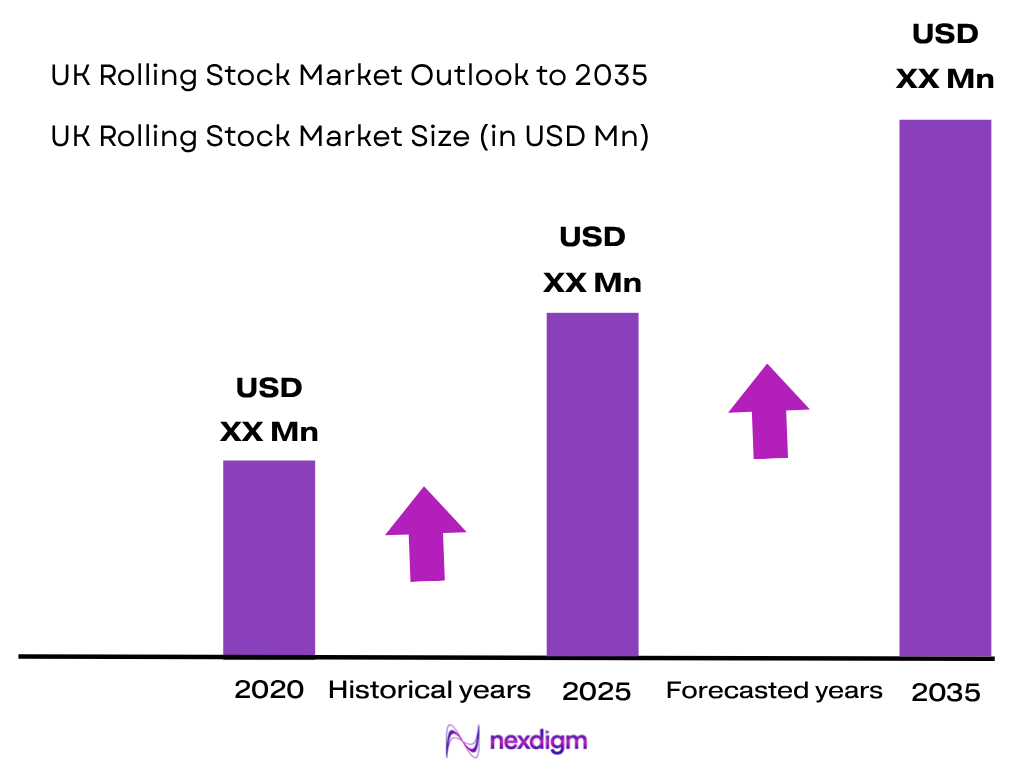
Market Segmentation
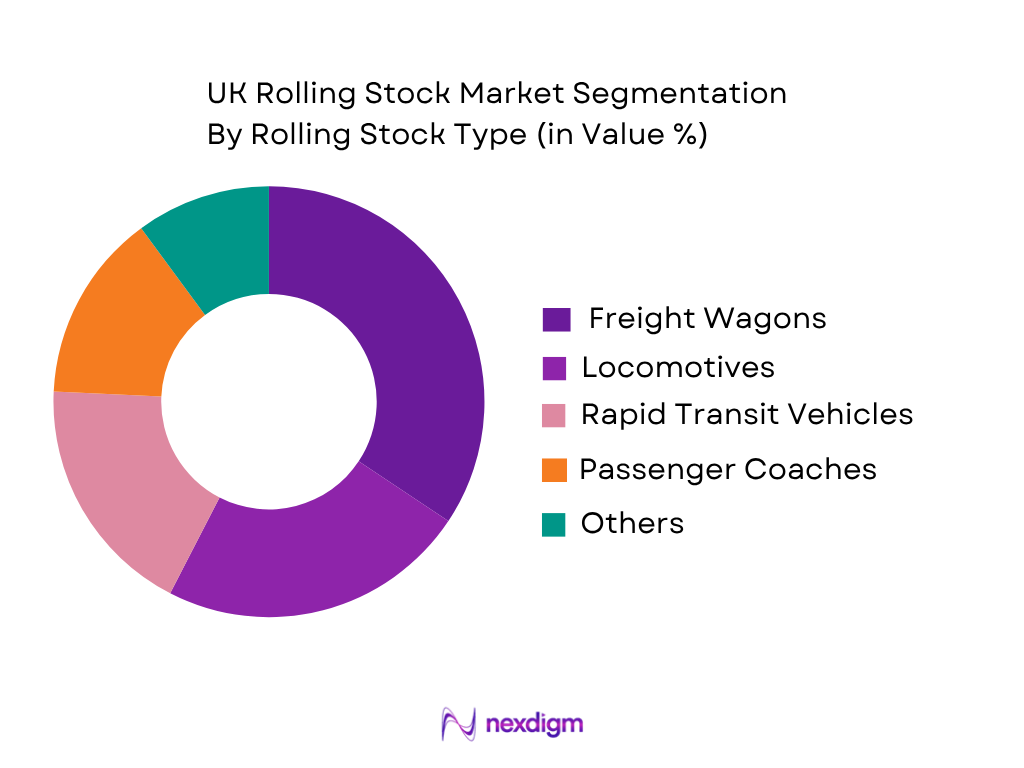
By Rolling Stock Type
The USA rolling stock market is segmented into freight wagons, locomotives, rapid transit vehicles, passenger coaches, and light rail vehicles. Freight wagons represent the dominant segment due to the country’s extensive freight rail network, strong industrial transportation requirements, and increasing demand for efficient bulk commodity movement. The USA operates one of the largest freight rail systems globally, transporting significant volumes of coal, agricultural products, chemicals, automobiles, and intermodal containers. Freight operators continue investing in wagon replacement, capacity improvement, and operational efficiency enhancement. Locomotives also maintain strong demand due to fleet modernization requirements and the transition toward fuel-efficient and alternative propulsion systems. Passenger rolling stock demand is increasing through urban transit expansion, commuter rail upgrades, and intercity rail development programs.
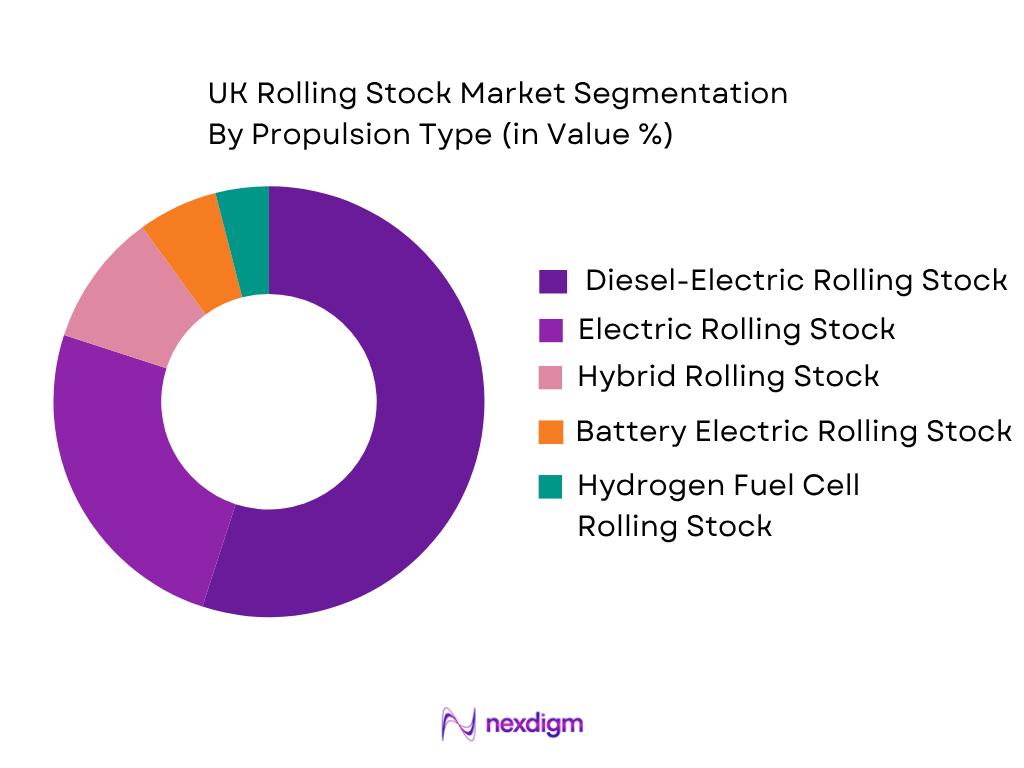
By Propulsion Type
The USA rolling stock market is segmented by propulsion type into diesel-electric, electric, hybrid, battery electric, and hydrogen fuel cell rolling stock. Diesel-electric propulsion dominates due to the extensive non-electrified freight rail network and the operational requirements of long-distance freight transportation. However, electric and alternative propulsion systems are gaining attention due to decarbonization initiatives, government sustainability objectives, and increasing demand for cleaner transportation solutions. Passenger rail operators are increasingly evaluating battery-electric and hydrogen-powered trains for regional routes where full electrification is economically challenging. Hybrid propulsion systems are also being explored for improving fuel efficiency and reducing emissions. The transition toward low-carbon rolling stock is expected to reshape propulsion preferences as rail operators focus on lifecycle efficiency and environmental compliance.
Competitive Landscape
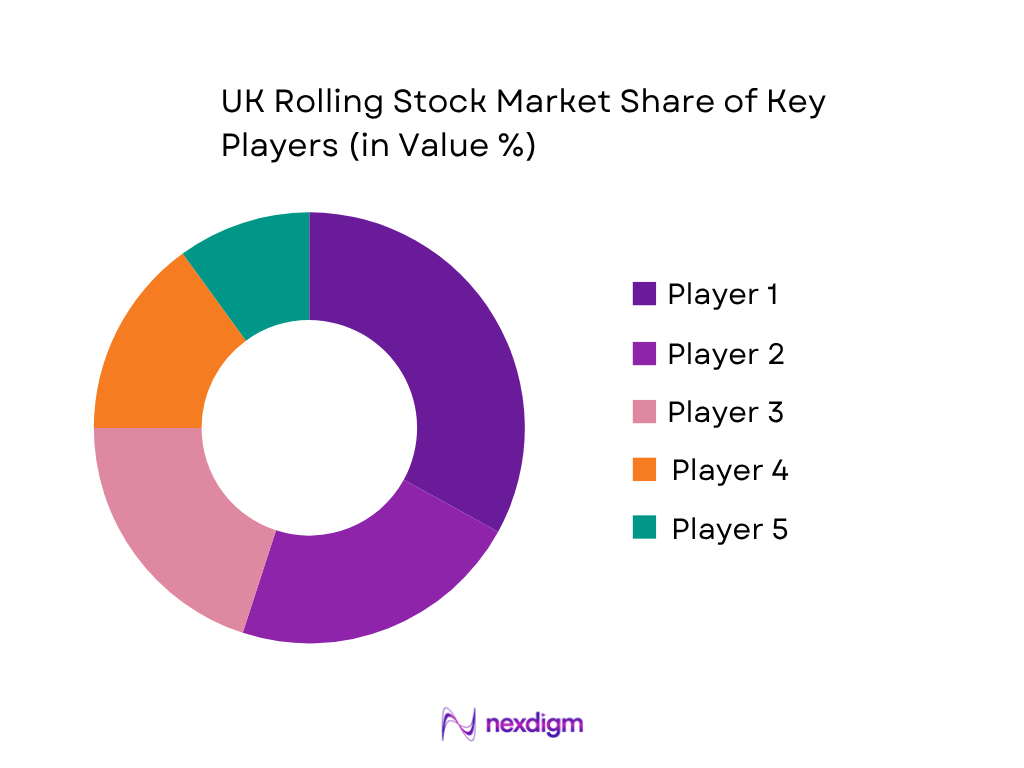
The USA rolling stock market is moderately consolidated, with major global manufacturers and domestic rail technology companies competing across passenger rail, freight rail, locomotives, and transit vehicle segments. Companies differentiate through manufacturing capabilities, maintenance services, digital rail solutions, propulsion technologies, and long-term service agreements.
| Company | Establishment Year | Headquarters | Rolling Stock Portfolio | Manufacturing Capability | Key Technologies | Major Customers / Market Presence | Maintenance & Service Capability | Alternative Propulsion Expertise |
| Wabtec Corporation | 1869 | Pittsburgh, USA | ~ | ~ | ~ | ~ | ~ | ~ |
| Siemens Mobility | 1847 | Munich, Germany | ~ | ~ | ~ | ~ | ~ | ~ |
| Alstom | 1928 | Saint-Ouen, France | ~ | ~ | ~ | ~ | ~ | ~ |
| Hitachi Rail | 2015 | Tokyo, Japan | ~ | ~ | ~ | ~ | ~ | ~ |
| Stadler Rail | 1942 | Bussnang, Switzerland | ~ | ~ | ~ | ~ | ~ | ~ |
USA Rolling Stock Market Analysis
Growth Drivers
Fleet Modernization Programs
The modernization of aging rail fleets is a major growth driver for the USA rolling stock market as freight operators, passenger rail agencies, and transit authorities are replacing older locomotives and rail vehicles with technologically advanced units. The average age of several locomotive fleets in North America exceeds 20 years, creating demand for replacement and refurbishment programs. Federal transportation investments are supporting fleet upgrades, with the Infrastructure Investment and Jobs Act allocating USD 66 billion for passenger and freight rail improvements. Amtrak is implementing fleet renewal programs involving new ALC-42 locomotives and Airo passenger trainsets to improve reliability and operational efficiency. Freight operators are also investing in locomotive modernization, including engine upgrades, digital monitoring systems, and fuel efficiency improvements. The Association of American Railroads reported that US Class I railroads operated more than 25,000 locomotives, creating a substantial requirement for lifecycle replacement and maintenance services. Modern rolling stock adoption is further supported by demand for improved safety systems, reduced emissions, and higher operational availability across passenger and freight rail networks.
Rail Electrification Expansion
Rail electrification expansion is accelerating demand for electric rolling stock, propulsion systems, and supporting rail technologies in the USA. Although freight rail remains primarily diesel-powered, passenger transit systems and urban rail networks are increasingly adopting electric propulsion to achieve emission reduction targets. The US government has established climate objectives requiring transportation sectors to reduce dependence on fossil fuels, encouraging investment in zero-emission rail technologies. Transit agencies are expanding electrified rail systems, particularly in metropolitan regions where commuter rail and light rail networks require energy-efficient vehicles. The Federal Transit Administration continues supporting rail modernization projects through funding programs focused on sustainable transportation infrastructure. The USA rail network extends over 220,000 route miles, creating significant opportunities for modernization of propulsion technologies. Electrification initiatives are also supported by growing renewable energy integration, enabling rail operators to reduce operational emissions. Increasing adoption of battery-electric and hybrid rail technologies is creating new demand for specialized rolling stock manufacturers capable of supplying low-emission vehicles for passenger and regional rail applications.
Market Challenges
Procurement Complexity
Complex procurement procedures represent a significant challenge for the USA rolling stock market due to lengthy approval processes, strict technical requirements, and coordination between multiple stakeholders. Rolling stock procurement typically involves government agencies, transit authorities, operators, and manufacturers, resulting in extended decision cycles. Public transportation projects require compliance with federal procurement frameworks, including domestic manufacturing requirements under Buy America regulations. The Federal Transit Administration manages billions of dollars in annual transit funding, requiring agencies to follow detailed procurement and compliance procedures. Rolling stock development also requires extensive testing, certification, and safety approvals before commercial deployment. Passenger rail vehicles often undergo multi-year development cycles due to requirements related to crashworthiness, accessibility, signaling compatibility, and operational testing. These complexities increase project timelines and create uncertainty for manufacturers. Smaller suppliers face additional barriers due to qualification requirements and limited access to large-scale contracts. The need for customized rail solutions based on regional operating conditions further increases procurement complexity across passenger, freight, and urban transit segments.
Infrastructure Constraints
Infrastructure compatibility limitations create challenges for rolling stock deployment in the USA due to variations in rail networks, signaling systems, track conditions, and electrification availability. The country operates one of the largest rail networks globally, with more than 220,000 route miles, but infrastructure conditions vary significantly between freight corridors, passenger routes, and urban transit systems. Many existing rail lines were designed for traditional diesel-powered equipment, creating challenges for the introduction of electric, battery, or hydrogen-powered rolling stock. Limited electrified rail infrastructure restricts the adoption of electric trains outside specific commuter and transit corridors. The Federal Railroad Administration continues supporting infrastructure improvement programs, but modernization requires substantial coordination between infrastructure owners and rolling stock manufacturers. Compatibility issues related to platform dimensions, signaling standards, and maintenance facilities can increase deployment complexity. Aging bridges, tunnels, and track infrastructure also influence rolling stock design requirements by limiting vehicle weight, speed capability, and operational flexibility. These constraints can delay fleet modernization projects and increase engineering requirements for new rolling stock solutions.
Market Opportunities
Future Rail Investment
Future rail investment presents significant opportunities for rolling stock manufacturers as the USA expands passenger rail capacity, improves freight efficiency, and modernizes transportation infrastructure. Federal infrastructure initiatives are increasing financial support for rail development, including passenger rail expansion, corridor improvements, and safety upgrades. The Infrastructure Investment and Jobs Act provides USD 66 billion for rail infrastructure development, creating opportunities for new trainsets, locomotives, and supporting equipment. Amtrak is expanding intercity passenger rail services and upgrading its fleet to meet increasing demand for reliable rail transportation. Urban regions are also investing in commuter rail and light rail systems to address congestion and provide sustainable mobility alternatives. Freight rail operators are focusing on improving efficiency through locomotive modernization, automation, and higher-capacity freight equipment. Increasing government focus on reducing transportation emissions is encouraging investment in cleaner propulsion technologies. These developments are expected to create opportunities for rolling stock suppliers across passenger vehicles, freight equipment, maintenance systems, and digital rail solutions.
Alternative Propulsion Adoption
Alternative propulsion technologies provide new growth opportunities for the USA rolling stock market as operators seek lower-emission transportation solutions. Battery-electric, hydrogen fuel cell, and hybrid propulsion systems are gaining attention as alternatives to conventional diesel-powered trains. The US Department of Transportation is supporting research and deployment of cleaner transportation technologies through multiple infrastructure and innovation programs. Battery-powered rail vehicles are being evaluated for regional passenger routes where full electrification is economically challenging. Hydrogen-powered trains are also emerging as potential solutions for non-electrified rail corridors due to their ability to reduce direct emissions. Freight operators are testing hybrid locomotive technologies to improve fuel efficiency and reduce environmental impact. The US transportation sector remains one of the largest contributors to national greenhouse gas emissions, increasing pressure for cleaner mobility solutions. Development of alternative propulsion rolling stock creates opportunities for manufacturers specializing in energy storage systems, fuel cells, electric traction equipment, and advanced control technologies.
Future Outlook
The USA rolling stock market is expected to experience steady expansion driven by fleet replacement programs, rail infrastructure modernization, freight transportation demand, and increasing focus on sustainable mobility. Future growth will be supported by investments in passenger rail connectivity, urban transit expansion, and alternative propulsion technologies. The adoption of digital maintenance systems, automated rail operations, and energy-efficient rolling stock will further transform the industry. Increasing demand for reliable, low-emission transportation solutions will encourage manufacturers to develop advanced electric, battery-powered, and hydrogen-based rail vehicles.
Major Players
- Wabtec Corporation
- Siemens Mobility
- Alstom
- Hitachi Rail
- Stadler Rail
- CRRC Corporation
- Trinity Industries
- Greenbrier Companies
- Progress Rail
- Kawasaki Rail Car
- Hyundai Rotem
- Talgo
- Knorr-Bremse
- Thales Transportation
- CAF USA
Key Target Audience
- Freight Railroad Operators (Union Pacific Railroad, BNSF Railway, CSX Transportation, Norfolk Southern Corporation)
- Passenger Rail Operators (Amtrak, commuter rail operators, regional transit authorities)
- Urban Transit Authorities (Metropolitan Transportation Authority, Chicago Transit Authority, Los Angeles County Metropolitan Transportation Authority)
- Rolling Stock Manufacturers and OEMs
- Rail Component Manufacturers and Technology Suppliers
- Investments and Venture Capitalist Firms (Infrastructure investment funds, transportation technology investors, private equity firms)
- Government and Regulatory Bodies (Federal Railroad Administration, Department of Transportation, Federal Transit Administration)
- Railway Leasing and Asset Management Companies
Research Methodology
Step 1: Identification of Key Variables
The initial stage involves developing a comprehensive ecosystem map covering rolling stock manufacturers, freight operators, passenger rail companies, transit agencies, component suppliers, leasing companies, and regulatory authorities. Secondary research is conducted through government transportation databases, railway infrastructure reports, company disclosures, and industry publications to identify key market variables influencing rolling stock demand.
Step 2: Market Analysis and Construction
Historical market information is analyzed through fleet composition assessment, rolling stock procurement activity, replacement cycles, railway infrastructure investments, and operator expenditure patterns. The analysis includes evaluation of freight rail demand, passenger transportation trends, propulsion technology adoption, and maintenance requirements to establish a structured market estimation framework.
Step 3: Hypothesis Validation and Expert Consultation
Market assumptions are validated through discussions with railway operators, rolling stock manufacturers, component suppliers, and industry specialists. Expert consultations provide insights into procurement strategies, technology adoption, fleet modernization plans, regulatory impacts, and future investment priorities affecting the USA rolling stock ecosystem.
Step 4: Research Synthesis and Final Output
The final stage integrates primary and secondary findings to validate market conclusions. Direct industry interactions with manufacturers, operators, and technology providers are used to assess rolling stock demand trends, emerging propulsion technologies, competitive positioning, and future investment opportunities.

- Executive Summary
- Research Methodology (Market Definitions and Assumptions, Rolling Stock Classification Framework, Market Sizing Approach, Top-Down Analysis, Bottom-Up Analysis, Demand-Side Assessment, Supply-Side Assessment, Railway Operator Interviews, OEM and Component Supplier Interviews, Data Triangulation, Forecasting Framework, Regulatory Assessment, Limitations and Future Conclusions)

- Definition and Scope
- UK Rail Network Evolution and Rolling Stock Industry Development Timeline
- Major Rolling Stock Modernization Milestones
- UK Railway Value Chain Analysis
- Rolling Stock Supply Chain Analysis
- Rail Decarbonization Landscape and Rolling Stock Transition Framework
- Rail Franchise Reform and Rolling Stock Procurement Ecosystem

- Growth Drivers (Fleet Modernization Programs, Rail Electrification Expansion, Passenger Rail Recovery, Decarbonization Targets, Urban Mobility Demand)
- Market Challenges (Procurement Complexity, Infrastructure Constraints, Manufacturing Challenges)
- Market Opportunities (Future Rail Investment, Alternative Propulsion, Digitalization)
- Government Regulations and Industry Standards (Rail Safety, Emission Compliance, Procurement Framework)
- SWOT Analysis
- Porter’s Five Forces Analysis
- PESTLE Analysis
- Stakeholder Ecosystem Analysis
- Competition Ecosystem Analysis

- By Market Value (2020-2025)
- By Fleet Units (2020-2025)
- By Rolling Stock Deliveries (2020-2025)
- By Passenger Rail Fleet Renewal Investments (2020-2025)
- By Freight Rolling Stock Replacement Demand (2020-2025)

- By Rolling Stock Type (in value %)
Electric Multiple Units (EMUs)
Diesel Multiple Units (DMUs)
Bi-Mode Trains
High-Speed Trainsets
Passenger Coaches
Locomotives
Freight Wagons
Light Rail Vehicles and Tram Rolling Stock
Metro Rolling Stock
Battery Electric Trains
Hydrogen Fuel Cell Trains - By Propulsion Type (in value %)
Electric Rolling Stock
Diesel-Electric Rolling Stock
Bi-Mode Propulsion Systems
Battery Electric Propulsion
Hydrogen Fuel Cell Propulsion
Hybrid Propulsion Systems - By Application (in value %)
Intercity Passenger Rail
Regional Passenger Rail
Commuter Rail
Urban Transit Systems
High-Speed Rail Services
Freight Transportation
Special Purpose Rail Operations - By Train Operator Type (in value %)
Train Operating Companies (TOCs)
Passenger Rail Operators
Freight Operating Companies (FOCs)
Rolling Stock Leasing Companies (ROSCOs)
Government-Owned Rail Services - By Procurement Channel (in value %)
New Rolling Stock Procurement
Fleet Replacement Programs
Leasing Agreements
Refurbishment and Life Extension Programs
Maintenance and Overhaul Contracts - By Component Type (in value %)
Traction Systems
Bogies and Wheelsets
Braking Systems
Signalling and Communication Systems
Passenger Information Systems
Interior Systems
Digital Monitoring Systems

- Market Share Analysis of Major Players (By Revenue, Fleet Deliveries, Rolling Stock Category, Procurement Contracts, Maintenance Services)
- Cross Comparison Parameters (Rolling Stock Portfolio Breadth, Fleet Manufacturing Capacity, Train Delivery Capability, Electrification Technology Expertise, Battery and Hydrogen Train Capability, Maintenance Network Coverage, Digital Rail Technology Integration, Long-Term Service Contract Capability)
- Pricing and Contract Analysis by Rolling Stock Category
- Detailed Profiles of Major Companies
Alstom
Siemens Mobility
Hitachi Rail
Stadler Rail
CAF
Talgo
CRRC Corporation
Wabtec Corporation
Knorr-Bremse
Thales
Bombardier Transportation
Porterbrook Leasing
Eversholt Rail
Angel Trains
CrossCountry

- Passenger Travel Behaviour Assessment
- Passenger Demographic Analysis
- Passenger Preference Analysis
- Passenger Technology Adoption Behaviour
- Passenger Purchase Decision-Making Factors
- Passenger Pain Point Analysis

- By Market Value (2026-2035)
- By Fleet Units (2026-2035)
- By Rolling Stock Deliveries (2026-2035)
- By Passenger Rail Fleet Renewal Investments (2026-2035)
- By Freight Rolling Stock Replacement Demand (2026-2035)


 Request a Sample
 Ask for Customization
 Get a Quote
 Enquire Now