
 Download PDF
Market Overview
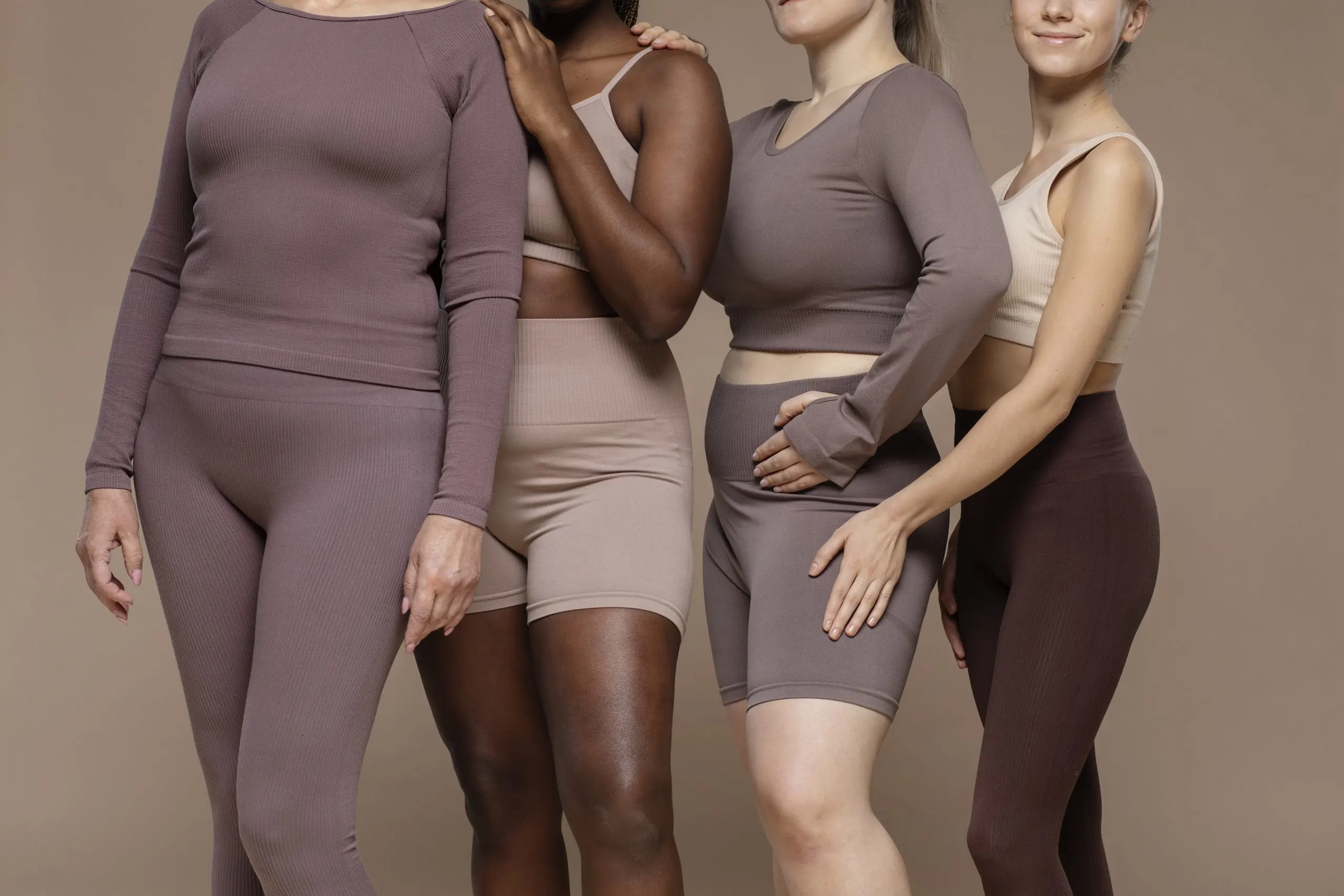
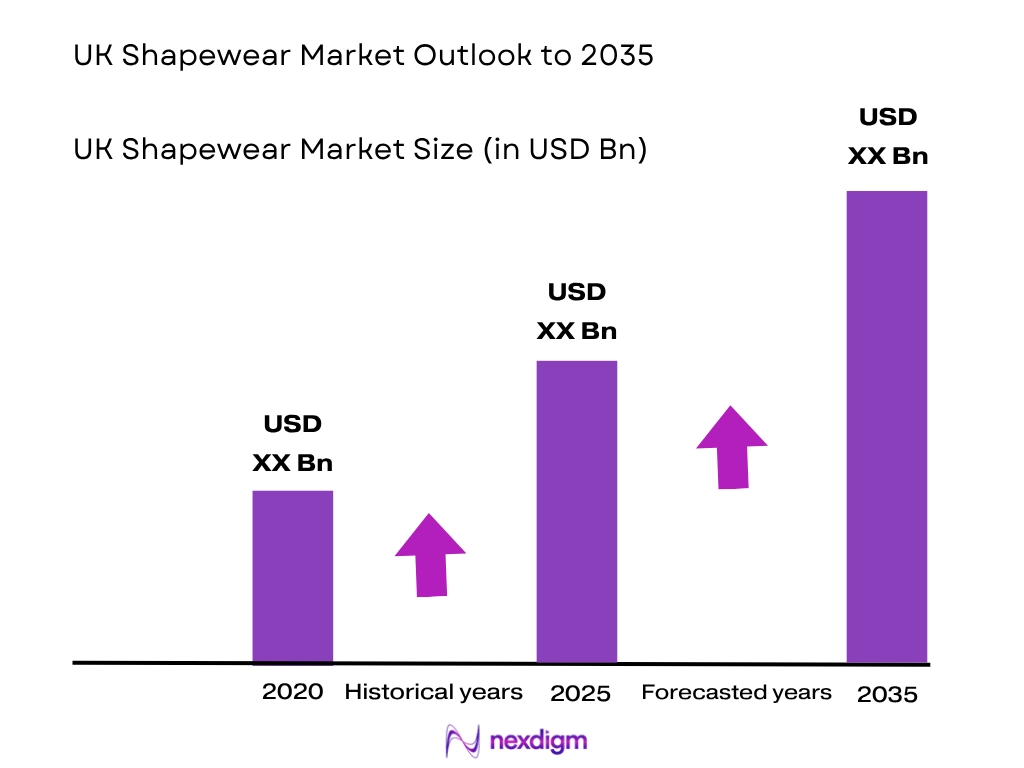
The UK shapewear market was valued at approximately USD ~ billion in 2025. The growth of this market is driven by increasing consumer demand for body-positive fashion, advancements in shapewear technology (such as seamless, breathable fabrics), and the rise of inclusive sizing. The market has seen significant momentum, largely attributed to the growing trend of shapewear as both a functional and fashion-forward product. Additionally, the expansion of e-commerce platforms, making these products more accessible to consumers, has contributed substantially to market growth.
The UK market is predominantly driven by major urban centers such as London, Manchester, and Birmingham. These cities are home to a large proportion of the UK’s population and are key fashion hubs, where bodywear trends often originate. London, in particular, serves as a global fashion capital, which helps brands stay ahead of trends, especially for high-end shapewear brands. Urban areas also have higher disposable income, making them central to shapewear sales. The ongoing urbanization and increasing awareness of body positivity further drive the market in these areas.
Market Segmentation
By Product Type
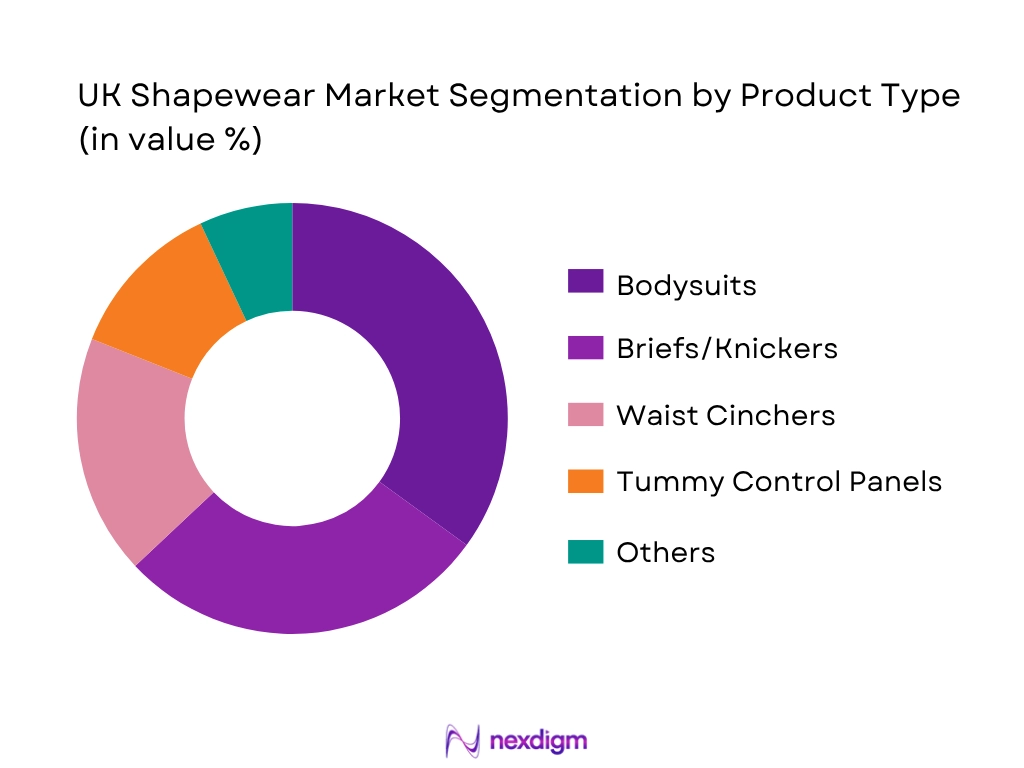
The UK shapewear market is segmented by product type into bodysuits, briefs/knickers, waist cinchers, tummy control panels, shorts, and corsets. Bodysuits are the dominant sub-segment within this category, as they offer full-body shaping and are highly popular among consumers seeking versatile shapewear solutions. This dominance can be attributed to the increasing demand for all-in-one body shaping products that cater to multiple body areas. Bodysuits are also suitable for various occasions, from daily wear to special events, enhancing their appeal to a broad audience. Additionally, advancements in fabric technology, such as seamless designs and breathable materials, have boosted the comfort and popularity of bodysuits.
By Fabric Technology
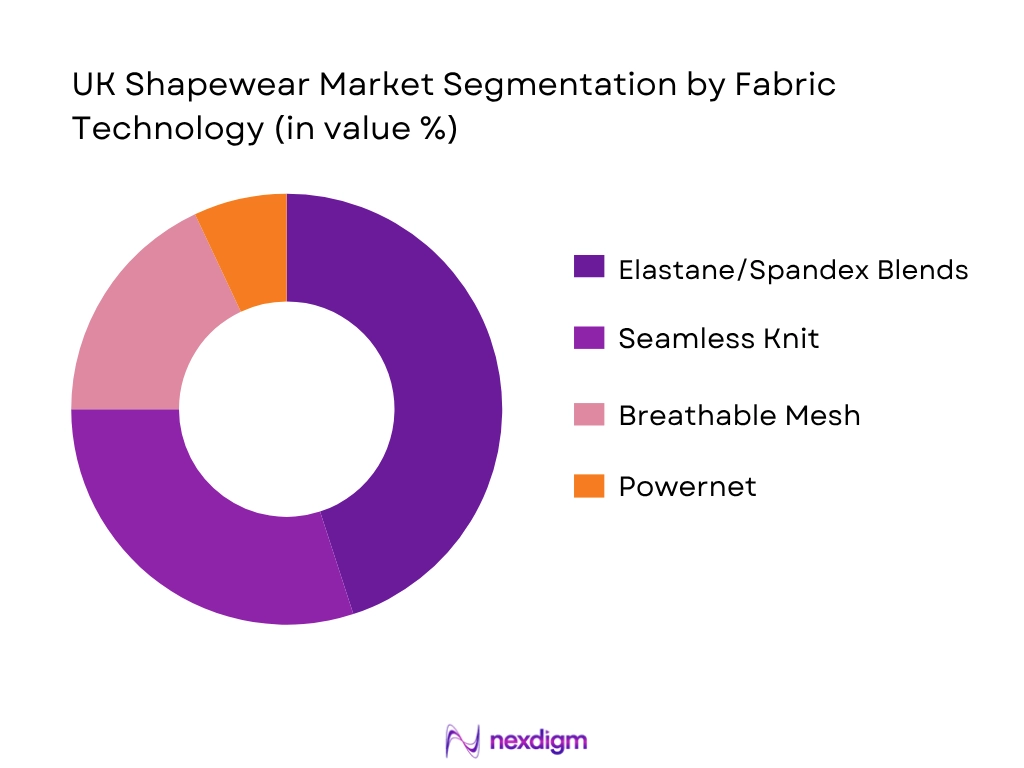
The market is also segmented based on fabric technology, including seamless knit, elastane/spandex blends, breathable mesh, and powernet. Among these, elastane/spandex blends dominate the market. These materials are favored for their stretchability, comfort, and durability, which are key factors for shaping garments. The elasticity of elastane and spandex blends allows for the production of high-performance shapewear that adapts to various body types while maintaining the desired compression. This flexibility makes elastane-based shapewear suitable for both everyday and special occasion wear, contributing to its market share dominance.
Competitive Landscape
The UK shapewear market is dominated by a few major players, including global brands like Spanx and SKIMS, as well as local and established players such as Marks & Spencer and Wacoal. These companies have capitalized on strong brand recognition, expansive retail networks, and a wide variety of products that cater to different customer preferences. The market consolidation indicates the significant influence of these key companies, which continue to lead the market through innovation, advertising, and strategic partnerships with retailers.
| Brand | Establishment Year | Headquarters | Revenue | Product Range | Compression Levels | Pricing Strategy | Technology Adoption | Retail Reach | Size Range | Customer Loyalty |
| SKIMS | 2019 | Los Angeles, USA | USD 300M+ | ~ | ~ | ~ | ~ | ~ | ~ | ~ |
| Spanx | 2000 | Atlanta, USA | USD 500M+ | ~ | ~ | ~ | ~ | ~ | ~ | ~ |
| Marks & Spencer | 1884 | London, UK | USD 15B+ | ~ | ~ | ~ | ~ | ~ | ~ | ~ |
| Wacoal | 1949 | Kyoto, Japan | USD 1B+ | ~ | ~ | ~ | ~ | ~ | ~ | ~ |
| Dorina | 1968 | London, UK | USD 50M+ | ~ | ~ | ~ | ~ | ~ | ~ | ~ |
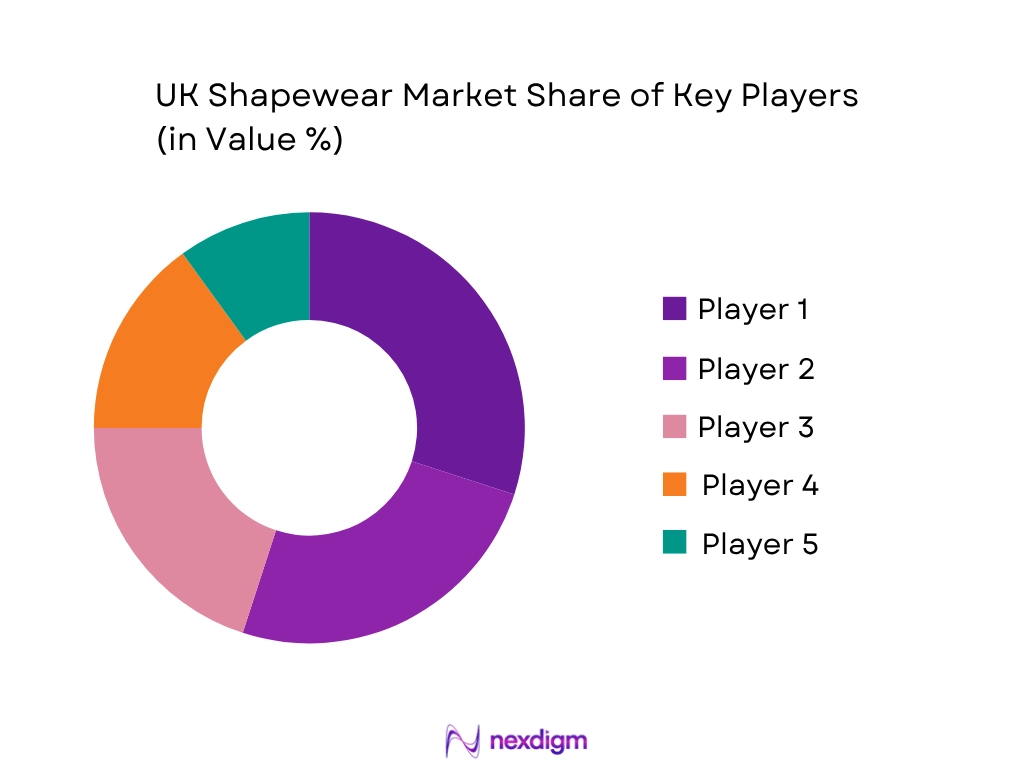
UK Shapewear Market Analysis
Growth Drivers
Body-confidence spending
Body-confidence spending is a real driver for UK shapewear because the category sits inside the funded personal-appearance basket, not just the basic-underwear basket. The macro base was large and supportive, with the UK population at 69,226,000, GDP at $3.69 trillion, and GDP per capita at $53,246.4 in 2024. That purchasing base translated into persistent apparel outlay: household spending on clothing and footwear stood at £19,413 million in Q1 2024, rose to £19,982 million in Q4 2024, and then reached £20,883 million in Q4 2025. The wider intimate-apparel pipeline also remained deep. In 2024, the UK imported 8,088,610 kilograms of brassieres, while girdle and panty-girdle shipments to the UK included 82,331 kilograms from China, 12,244 kilograms from the United States, 11,991 kilograms from Turkey, and 8,827 kilograms from Sri Lanka. For shapewear, that combination matters: when consumers keep allocating nearly £20 billion per quarter to clothing and footwear and retailers keep replenishing the intimate-apparel stack at scale, smoothing shorts, control briefs, and shaping bodysuits stay anchored to active wardrobe-building rather than being deferred as optional extras. Source links: official macroeconomic, retail expenditure, and trade releases.
Occasion-led demand
Occasion-led demand is one of the clearest engines for UK shapewear because the category is commonly bought as a companion layer for partywear, wedding guest dressing, bridalwear, holiday wardrobes, and Christmas-event outfits. The retail pattern is visible in official clothing-channel data. ONS non-seasonally adjusted online average weekly sales for textiles, clothing, and footwear increased from £315.5 million in October 2024 to £378.3 million in November 2024 and £444.4 million in December 2024. The same seasonal build repeated in 2025, rising from £328.6 million in October to £438.4 million in November and £459.8 million in December. Travel data point in the same direction. ONS provisional estimates show Great Britain residents made 18.7 million trips abroad and spent £16.5 billion in Q1 2025, then 26.0 million trips and £22.1 billion in Q2 2025. Overseas visitors made 7.2 million visits to Great Britain in Q1 2025 and 9.3 million in Q2, with spend of £4.7 billion and £7.9 billion respectively. This matters for shapewear because occasion dressing expands when travel, hospitality, and social calendars are active, and the category typically rides underneath fitted dresses, tailoring, and vacation looks rather than being bought in isolation. Source links: official retail and travel releases.
Market Challenges
Fit-related returns
Fit-related returns are a structurally important challenge in UK shapewear because the category has to get size, compression feel, body length, and garment hold right on the first purchase, especially online. The online exposure is large. ONS seasonally adjusted online average weekly sales for textiles, clothing, and footwear were £304.6 million in December 2024, £326.7 million in November 2025, £318.3 million in December 2025, £317.9 million in January 2026, and £319.7 million in February 2026. At that digital scale, even a modest fit mismatch creates heavy reverse-logistics pressure. A leading UK online fashion retailer said that improving size and fit content, adding richer product display, and using AI to understand return reasons reduced its underlying returns rate by more than 1 point year on year in FY24 and by around 150 basis points in the first half of FY25; the same retailer also introduced a minimum net-order threshold for free returns for customers with exceptionally high return behaviour. That is highly relevant to shapewear because return friction is amplified when shoppers trial multiple sizes or compression levels before deciding. In practice, brands without clearer fit architecture, better compression descriptors, or more precise digital guidance will keep losing sales conversion to return-led dissatisfaction. Source links: official retail datasets and current company filings.
Markdown pressure
Markdown pressure is a serious challenge for UK shapewear because the category is often bought in the same basket as highly promotional fashion, particularly around Black Friday and year-end party dressing. ONS data show how concentrated that demand can become. Non-seasonally adjusted online average weekly sales for textiles, clothing, and footwear rose from £328.6 million in October 2025 to £438.4 million in November and £459.8 million in December, then dropped to £283.5 million in January 2026 and £246.1 million in February 2026. ONS also reported that consumers delayed spending in October 2025 in the run-up to Black Friday, with clothing and mail-order retailers among those affected. A large UK online fashion retailer separately noted that elevated clearance activity attracted one-off shoppers seeking discounts and said that “heightened levels of clearance” weakened customer quality and buying behaviour. For shapewear, this matters because the category is frequently attached to eventwear, sale-period baskets, and online multi-buy behaviour, rather than to a steady replenishment cycle. That leaves brands vulnerable to becoming promotion-led, particularly in Q4 and immediately after festive peaks, when clearing sizes, colours, and discontinued silhouettes can become harder than maintaining full-price sell-through. Source links: official retail releases and current company filings.
Market Opportunities
Premium seamless
Premium seamless is a strong opportunity in UK shapewear because it sits exactly at the intersection of two live market signals: consumers are still spending heavily on apparel, and retailers are actively trying to reduce fit-driven friction online. Household spending on clothing and footwear reached £20,883 million in Q4 2025, while ONS seasonally adjusted online average weekly sales for textiles, clothing, and footwear remained at £319.7 million in February 2026. On the sourcing side, the UK imported 8,088,610 kilograms of brassieres in 2024, and the UK’s girdle and panty-girdle inflow included 82,331 kilograms from China, 12,244 kilograms from the United States, 11,991 kilograms from Turkey, and 8,827 kilograms from Sri Lanka, showing that the intimate and shaping supply chain is already broad and scalable. At the same time, a major UK online fashion retailer said fit-focused initiatives lowered returns by around 150 basis points in the first half of FY25. That is where premium seamless shapewear has a commercial edge: it can push the offer away from entry-price, cut-and-sew trial-and-return behaviour and toward better comfort, smoother layering, and more reliable all-day wear. The UK also recorded GDP per capita of $53,246.4 in 2024, while ONS put UK manufacture of wearing apparel at £1,894.3 million in 2024 and £2,065.0 million in 2025, giving the market both a spending base and a technical production base for more premium shapewear capsules. Source links: official macroeconomic, retail, production, trade, and filing data.
Sustainable blends
Sustainable blends are a meaningful opportunity in UK shapewear because the market is under measurable environmental and circularity pressure, while apparel production and textile handling infrastructure are still active enough to support a shift in product design. The World Bank puts the UK’s carbon dioxide emissions excluding land use change and forestry at 4.2 tonnes per person in 2024. In the textile system itself, a UK textile-circularity programme reported that reuse and recycling signatories displaced 1.12 million tonnes of CO2 equivalent in 2024 and handled 210,000 tonnes of used textiles in the same year. ONS also recorded UK manufacture of wearing apparel at £1,894.3 million in 2024 and £2,065.0 million in 2025. For shapewear, this creates a practical opening for ranges built around lower-impact material mixes, stronger fibre disclosure, and more considered product architecture, because the category relies on technical performance yet now operates in a market where textile reuse, recycling, and carbon reduction are being measured in very large numbers, not niche pilots. Commercially, that means brands can use sustainable-blend shapewear to protect premium positioning, improve retail acceptance, and future-proof the category against rising scrutiny of synthetic-heavy apparel without waiting for hypothetical future demand signals. Source links: official macroeconomic, textile-circularity, and production data.
Future Outlook
Over the next decade, the UK shapewear market is expected to show significant growth, driven by a surge in body-positive fashion trends, growing demand for size-inclusive products, and increased digital shopping experiences. The development of innovative fabrics, the rise of eco-friendly shapewear materials, and advancements in manufacturing techniques will continue to drive market expansion. Furthermore, the adoption of shapewear by both men and women in daily life, and as part of special occasion wear, is expected to further fuel demand in the coming years.
Major Players in the UK Shapewear Market
- SKIMS
- Spanx
- Marks & Spencer
- Wacoal
- Dorina
- Honeylove
- Maidenform
- Simiya
- Yitty
- Conturve
- Shapermint
- Next Shapewear
- Bali
- Playtex
- Marks & Spencer Lingerie
Key Target Audience
- Fashion Retailers
- Shapewear Manufacturers
- E‑Commerce Platforms
- Private Label Brands
- Investments and Venture Capitalist Firms
- Government and Regulatory Bodies (e.g., UK Department for Business, Energy & Industrial Strategy)
- Textile & Fabric Suppliers
- Shapewear Distribution Networks
Research Methodology
Step 1: Identification of Key Variables
In this step, we mapped out the ecosystem surrounding the UK shapewear market, identifying stakeholders, such as manufacturers, consumers, and retail channels. Secondary research was conducted through industry reports, company websites, and market intelligence databases to outline key market variables influencing growth and consumer behavior.
Step 2: Market Analysis and Construction
We analyzed historical data and conducted market assessments to understand the penetration rate of shapewear across different segments in the UK. This involved evaluating the product variety, growth trends, and consumer purchase patterns. The goal was to understand the market’s current state and forecast future developments.
Step 3: Hypothesis Validation and Expert Consultation
The formulated market hypotheses were validated via in-depth interviews and consultations with experts from major shapewear brands and manufacturers. These consultations helped to refine key assumptions, uncover emerging trends, and validate data.
Step 4: Research Synthesis and Final Output
In the final phase, primary data was synthesized with secondary research to produce a comprehensive analysis. This phase involved working with key stakeholders to verify market insights, providing a 360-degree perspective on the UK shapewear market, and delivering reliable and actionable data.

- Executive Summary
- Research Methodology (Market definitions, scope boundary, top-down demand model, bottom-up SKU-store-brand build-up, primary interviews, pricing normalization, forecasting assumptions, limitations)

- Definition and Scope (shaping briefs, shaping shorts, bodysuits, waist cinchers, shaping camisoles, shaping slips, postpartum corsets)
- Market Inclusion and Exclusion Criteria (Shapewear scope, adjacent-category filters, product universe)
- Category Boundary versus Adjacent Categories
- Timeline of Brand, Channel and Product Evolution
- Business Cycle and Demand Seasonality
- Supply Chain and Value Chain Analysis
- Demand Lifecycle and Purchase Trigger Map
- Market Ecosystem and Stakeholder Landscape

- Growth Drivers (Body-confidence spending, occasion-led demand, inclusive sizing, comfort innovation, digital discovery)
- Market Challenges (Fit-related returns, markdown pressure, freight and input volatility, CAC inflation, dupe competition)
- Market Opportunities (Men, bridal, postpartum, premium seamless, sustainable blends, private-label white spaces)
- Key Trends (Low-back and plunge solutions, no-VPL finishes, anti-chafe shorts, shapewear-as-outerwear, tone expansion)
- Regulatory and Compliance Landscape (Fibre-content labels, UK REACH, product safety, online returns, hygiene exemptions)
- Import, Sourcing and Lead-Time Analysis (Supplier country concentration, landed cost, MOQ, replenishment cycle, duty exposure)
- Industry Structure and Profit Pool Analysis (Buyer power, supplier power, substitute intensity, entry barriers, rivalry)
- White Space by Need State (Petite, plus-size, men, postpartum, bridal, backless occasions)

- By Value (2020-2025)
- By Volume (2020-2025)
- By Average Selling Price per Garment (2020-2025)
- By Branded and Private Label (2020-2025)

- By Product Architecture (In Value %)
Shaping Briefs and Panties
Shaping Shorts and Thigh Slimmers
Bodysuits and Body Briefers
Shaping Slips and Camisoles
Waist Cinchers and Waist Trainers
Leggings, Tights and Hosiery Shapers - By Control Level (In Value %)
Light Control
Medium Control
Firm Control
Extra-Firm Control - By Target Area (In Value %)
Waist and Tummy
Thigh and Hip
Whole Body
Bust and Back
Butt-Lift and Curve Enhancement
Postpartum and Abdominal Recovery - By Material and Fabric Technology (In Value %)
Polyamide or Nylon and Elastane Blends
Cotton-Rich Comfort Blends
Seamless Circular Knit
Power Mesh and Powernet Constructions
Bonded-Edge Microfibre and No-VPL Constructions
Recycled Synthetic Blends - By End User (In Value %)
Women
Men
Unisex - By Wear Occasion (In Value %)
Everyday Smoothing
Occasion and Bridal
Workwear and Formalwear Layering
Active and Athleisure Layering
Maternity and Postpartum - By Distribution Channel (In Value %)
Brand Websites and DTC
Department Stores
Lingerie Specialty Retailers
Fashion Multiples and High-Street Chains
Online Pure-Play Retailers and Marketplaces - By Price Tier (In Value %)
Entry
Mid-Market
Premium
Luxury

- Market Share of Major Players on the Basis of By Value, By Volume, By Product Architecture, By Distribution Channel, By Market Share by Price Tier)
- Cross Comparison Parameters (UK hero-SKU ASP ladder, compression-level ladder, size-curve depth, nude-shade breadth, solution-led assortment depth, target-area architecture, fabric-tech mix, UK channel and fulfilment architecture)
- Competitive Positioning Matrix (Price index, control intensity, assortment width, channel breadth)
- Hero SKU Pricing Benchmark (MRP, promo price, pack-adjusted price, discount depth, price per garment)
- SWOT Analysis
- Strategic Benchmarking of Major Players (DTC maturity, retail reach, innovation cadence, proposition strength, risk exposure)
- Detailed Profiles of Major Companies
Marks & Spencer
Next
ASOS
John Lewis
SKIMS
SPANX
Heist Studios
Leonisa
Triumph
Chantelle
Wolford
Honeylove
Shapermint
Maidenform
Commando

- Consumer Cohort Analysis (Age, size curve, income band, body-confidence motivation)
- Purchase Trigger Analysis (Event type, outfit type, target-area need, comfort threshold)
- Basket and Frequency Analysis (AOV, units per basket, reorder cycle, cross-sell attach)
- Fit and Return Leakage Analysis (Size mismatch, roll-down, dig-in, VPL, transparency, anti-chafe)
- Merchandising and Assortment Analysis (Hero SKUs, SKU depth, shade breadth, seasonal drops, promo cadence)
- Channel Economics and Service Analysis (Shipping thresholds, delivery speed, free-return policy, click-and-collect, conversion friction)

- By Value (2026-2035)
- By Volume (2026-2035)
- By Average Selling Price per Garment (2026-2035)
- By Branded and Private Label (2026-2035)


 Request a Sample
 Ask for Customization
 Get a Quote
 Enquire Now