
 Download PDF
Market Overview
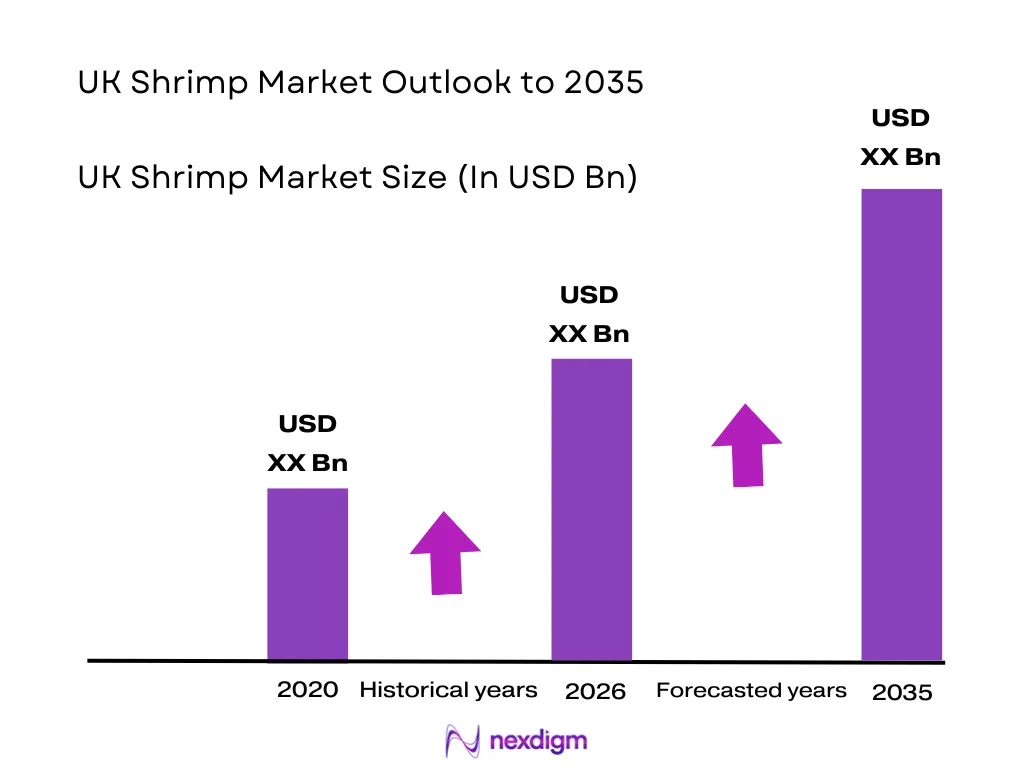
The UK Shrimp Market is supported by rising seafood consumption, increasing demand for frozen convenience foods, and expanding foodservice penetration of shellfish-based cuisine. The market is valued at approximately USD ~ billion, supported by strong import dependency and high consumer preference for shrimp across retail and restaurant channels. Shrimp remains one of the most imported seafood categories in the United Kingdom because of growing protein consumption and the popularity of Asian and Mediterranean cuisine. Expansion of online grocery delivery, ready-to-cook seafood meals, and frozen retail seafood assortments has accelerated market penetration across households and HoReCa channels.
Cities and regions such as London, Manchester, Birmingham, Glasgow, and Liverpool dominate the UK Shrimp Market because of their dense retail infrastructure, multicultural food consumption patterns, and strong seafood foodservice demand. England remains the leading consumption hub due to higher urban population concentration and greater penetration of supermarkets and frozen seafood retailers. Internationally, India, Vietnam, Ecuador, and Thailand dominate supply to the UK because of advanced shrimp aquaculture ecosystems, strong export infrastructure, and year-round production capacity. Northern European suppliers remain important for premium cold-water shrimp products due to sustainable fisheries and certified seafood sourcing capabilities.
Market Segmentation
By Shrimp Species
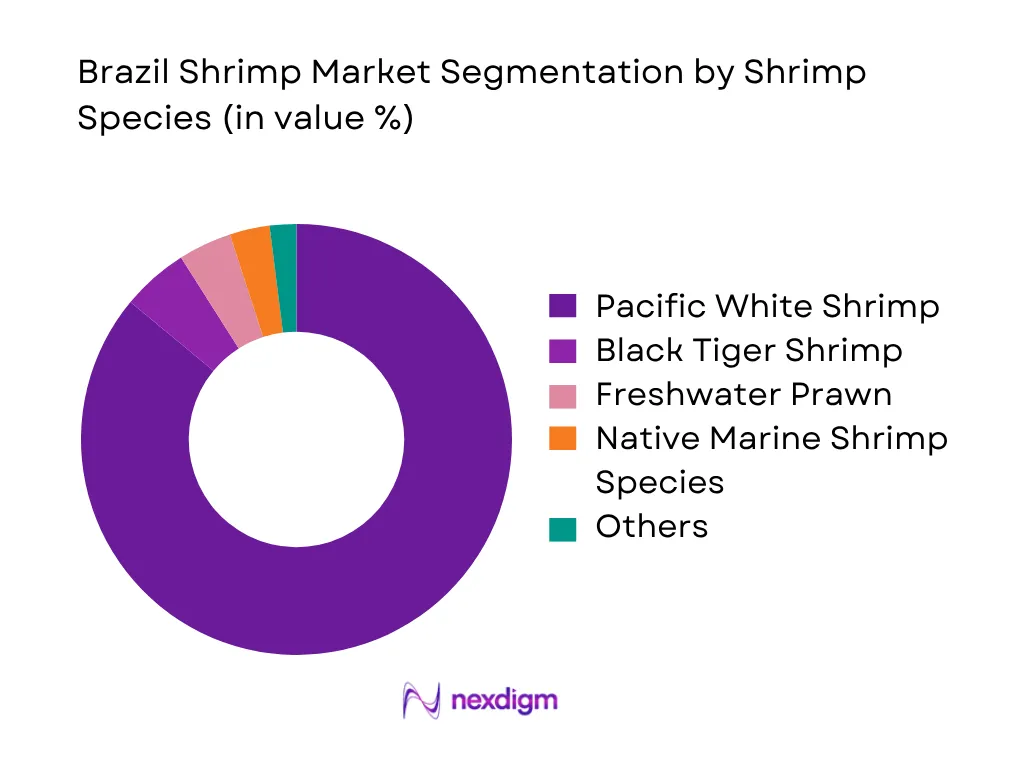
The UK Shrimp Market is segmented by shrimp species into vannamei shrimp, cold-water shrimp, black tiger shrimp, Argentine red shrimp, brown shrimp, and king prawns. Vannamei shrimp dominates the UK Shrimp Market under the species segmentation because of its large-scale aquaculture production, affordable pricing structure, and year-round supply availability from major exporting countries. Retailers and foodservice operators prefer vannamei shrimp because of its versatility in frozen meals, breaded products, and ready-to-cook seafood applications. The species also benefits from strong processing efficiency and compatibility with frozen distribution networks. In addition, sustainability certifications and increasing aquaculture traceability have improved retailer acceptance and strengthened shelf penetration across supermarkets and wholesale seafood distributors in the UK.
By Product Form
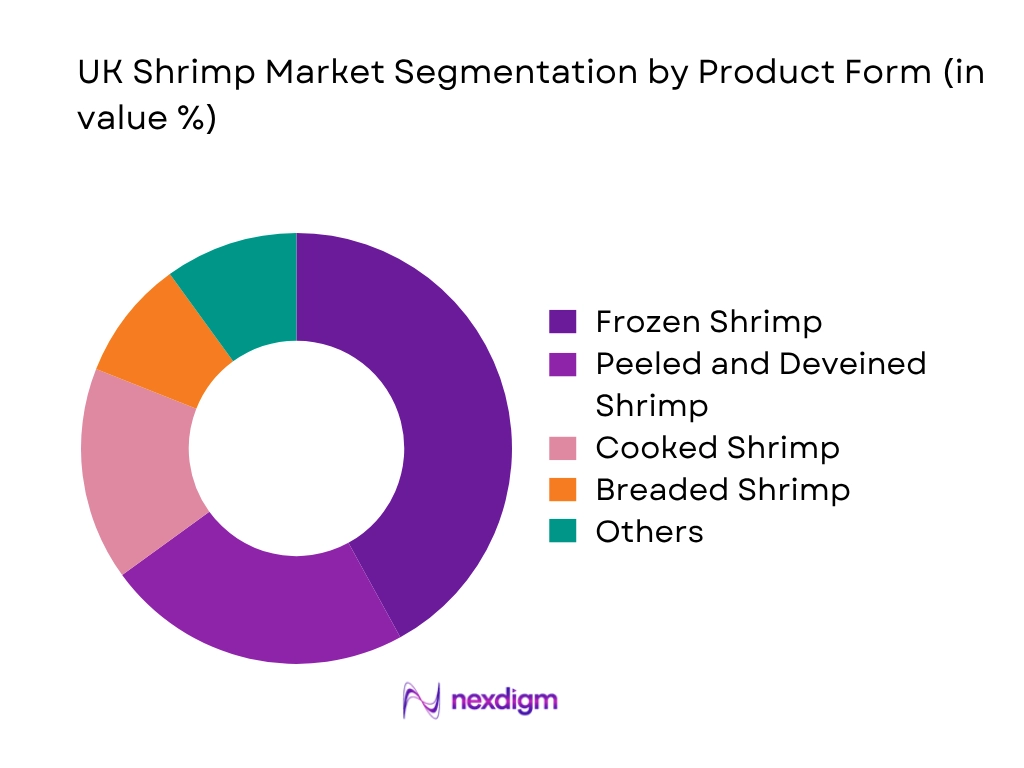
The UK Shrimp Market is segmented by product form into frozen shrimp, peeled and deveined shrimp, cooked shrimp, breaded shrimp, chilled fresh shrimp, and ready-to-eat shrimp. Frozen shrimp dominates the UK Shrimp Market because of its extended shelf life, ease of transportation, and compatibility with the country’s cold-chain seafood infrastructure. Supermarkets and foodservice operators rely heavily on frozen shrimp because it minimizes spoilage risks and supports bulk inventory management. Consumers increasingly prefer frozen seafood products due to convenience, affordability, and the growing popularity of home-cooked seafood meals. Advancements in IQF processing technology and vacuum-sealed packaging have further improved product quality and storage efficiency. The segment also benefits from expanding online grocery retail platforms and the increasing penetration of private-label frozen seafood products across the UK retail market.
Competitive Landscape
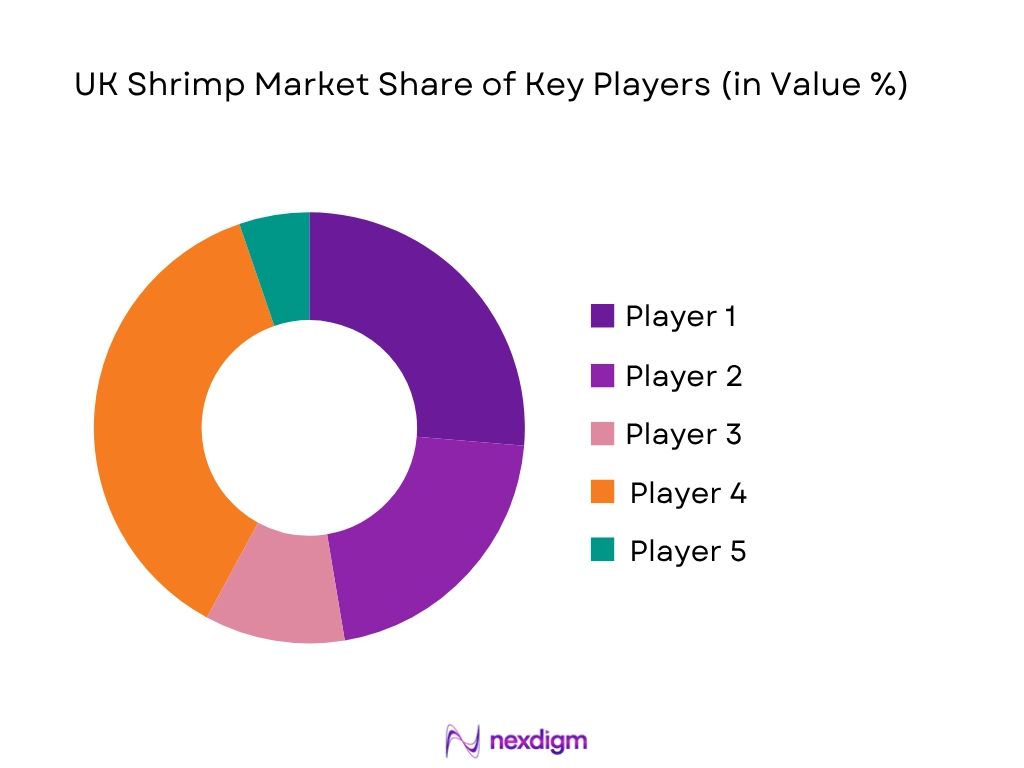
The UK Shrimp Market is moderately consolidated, with major seafood importers and processors competing through cold-chain infrastructure, sustainability certifications, and value-added seafood offerings. Companies operating in the market are increasingly focusing on traceable sourcing, frozen convenience products, and expansion across retail and foodservice channels. The market is also witnessing rising investments in sustainable packaging, private-label seafood products, and advanced seafood processing technologies to strengthen operational efficiency and retailer partnerships.
| Company | Establishment Year | Headquarters | Key Product Focus | Distribution Strength | Processing Facilities | Sustainability Certifications | Foodservice Presence | Innovation Focus |
| Young’s Seafood | 1805 | Grimsby, UK | ~ | ~ | ~ | ~ | ~ | ~ |
| Seachill | 1996 | Grimsby, UK | ~ | ~ | ~ | ~ | ~ | ~ |
| Thai Union Group | 1977 | Samut Sakhon, Thailand | ~ | ~ | ~ | ~ | ~ | ~ |
| M&J Seafood | 2000 | London, UK | ~ | ~ | ~ | ~ | ~ | ~ |
| Clearwater Seafoods | 1976 | Nova Scotia, Canada | ~ | ~ | ~ | ~ | ~ | ~ |
UK Shrimp Market Analysis
Growth Drivers
Rising Seafood Import Dependency and Strong Consumer Demand for Shellfish
The UK shrimp market continues to benefit from the country’s increasing dependence on imported seafood and rising shellfish consumption across households and foodservice channels. The United Kingdom imported more than 73 thousand tonnes of shrimps and prawns during recent trade cycles, with India, Vietnam, and Ecuador remaining major suppliers due to large-scale aquaculture production. Urban seafood demand has increased because of higher consumption of protein-rich convenience foods and expanding multicultural cuisine penetration. The growth of supermarkets, frozen meal categories, and online grocery delivery platforms has significantly improved consumer access to frozen and processed shrimp products across metropolitan regions.
Expansion of Frozen and Convenience Food Consumption
The growth of frozen and convenience-oriented food consumption remains a major driver for the UK shrimp market. Retailers continue expanding frozen seafood shelf space due to increasing household demand for easy-to-cook protein products. Shrimp products are widely used in ready meals, breaded seafood products, and quick-service restaurant offerings because of their longer shelf stability and operational convenience. The development of advanced cold-chain logistics and IQF processing technologies has improved product quality and reduced spoilage risks. Increasing urban employment and changing consumer lifestyles are further strengthening demand for frozen seafood products across retail and foodservice sectors.
Market Challenges
High Import Dependence and Supply Chain Vulnerability
The UK shrimp market faces significant challenges because of its high dependence on imported seafood products and exposure to global supply chain disruptions. The majority of shrimp consumed in the UK is sourced internationally, creating vulnerability to freight volatility, customs disruptions, geopolitical instability, and delays in global shipping routes. Rising fuel costs and container shortages have increased logistics pressure on seafood importers and cold-chain operators. In addition, disruptions in seafood harvesting and aquaculture production across exporting countries can directly impact supply consistency for retailers and foodservice distributors operating within the UK market.
Inflationary Pressure and Rising Food Logistics Costs
Inflationary pressure and increasing cold-chain operating expenses remain major concerns for seafood suppliers and retailers in the UK shrimp market. Frozen seafood products require temperature-controlled transportation, packaging, warehousing, and retail storage, all of which contribute to higher operational costs. Rising labor expenses, electricity prices, and fuel costs continue to affect seafood distribution efficiency. Consumer purchasing power fluctuations are also impacting demand for premium shrimp products in retail channels. These macroeconomic pressures are encouraging suppliers to optimize inventory management and improve logistics efficiency to maintain profitability within the market.
Market Opportunities
Increasing Demand for Sustainable and Certified Seafood Products
Growing consumer preference for sustainable and traceable seafood products is creating significant opportunities for certified shrimp suppliers and seafood processors in the UK market. Retailers and foodservice operators are increasingly prioritizing seafood products certified under ASC, MSC, and BAP standards to comply with environmental and ethical sourcing requirements. Consumers are also becoming more conscious regarding responsibly farmed seafood products with transparent supply chain information. This trend is encouraging exporters and processors to strengthen traceability systems, sustainable aquaculture practices, and eco-certified sourcing strategies to improve market access and retailer partnerships across the United Kingdom.
Growth of Online Grocery and Cold-Chain Seafood Distribution
The expansion of online grocery retailing and cold-chain infrastructure presents strong growth opportunities for the UK shrimp market. Supermarkets and e-commerce grocery platforms continue expanding frozen seafood categories to meet increasing demand for home delivery and convenience-based food consumption. Investments in temperature-controlled warehousing and last-mile frozen logistics are improving seafood accessibility across suburban and regional markets. Enhanced cold-chain capabilities are also reducing spoilage losses and improving distribution efficiency for imported shrimp products. This logistics transformation is supporting higher penetration of premium frozen seafood products across retail and foodservice channels.
Future Outlook
The UK Shrimp Market is expected to witness stable expansion over the coming years due to increasing demand for seafood convenience products, sustainable protein alternatives, and premium frozen meals. Retailers are likely to strengthen private-label seafood offerings while foodservice operators continue integrating shrimp into Asian, Mediterranean, and fusion cuisine menus. Technological advancements in shrimp processing, cold-chain logistics, and sustainable aquaculture are expected to improve product quality, shelf life, and supply efficiency across the market. Growing emphasis on sustainability certifications and traceability standards is expected to encourage wider adoption of certified shrimp products among retailers and consumers. Expansion of online grocery retailing and frozen food delivery infrastructure is also likely to increase accessibility of shrimp products across urban and regional markets. In addition, increasing consumer focus on high-protein diets and healthy seafood consumption is expected to support long-term market growth in the United Kingdom.
Major Players
- Young’s Seafood
- Whitby Seafoods
- Lyons Seafoods
- Seachill
- Hilton Foods Seafood
- Thai Union Group
- Clearwater Seafoods
- Cooke Seafood
- Aqua Star
- Nordic Seafood
- Pacific West Foods
- M&J Seafood
- Bidfood Seafood
- Sysco GB
- New England Seafood International
Key Target Audience
- Seafood Importers and Exporters
- Frozen Seafood Manufacturers
- Retail Supermarket Chains
- Foodservice and HoReCa Operators
- Cold Chain and Seafood Logistics Providers
- Investments and Venture Capitalist Firms
- Government and Regulatory Bodies
- Seafood Packaging and Sustainable Material Providers
Research Methodology
Step 1: Identification of Key Variables
The initial stage involved identifying critical variables influencing the UK Shrimp Market, including seafood import dependency, frozen seafood consumption, cold-chain infrastructure, foodservice demand, and sustainability compliance. Extensive secondary research was conducted using seafood trade databases, government publications, customs statistics, and retail industry reports to map the market ecosystem and supply chain structure.
Step 2: Market Analysis and Construction
Historical market analysis was conducted using seafood import statistics, retail sales performance, product consumption trends, and foodservice procurement patterns. Market estimations were derived through bottom-up calculations based on species-wise demand, retail channel performance, and regional seafood consumption across the United Kingdom.
Step 3: Hypothesis Validation and Expert Consultation
The preliminary market findings were validated through interviews with seafood importers, processors, distributors, retail procurement managers, and foodservice operators. These interactions provided operational insights regarding sourcing trends, frozen seafood demand, sustainability requirements, and cold-chain logistics within the shrimp market.
Step 4: Research Synthesis and Final Output
The final phase involved consolidating qualitative and quantitative findings to produce a comprehensive assessment of the UK Shrimp Market. Cross-validation was conducted using trade intelligence, seafood import data, retailer disclosures, and supply chain analysis to ensure consistency and reliability of market estimates and future growth projections.

- Executive Summary
- Research Methodology (Market Definitions and Assumptions, Abbreviations, Research Framework, Bottom-Up Market Estimation, Top-Down Validation, Seafood Consumption Mapping, Import-Export Assessment, Retail Audit Analysis, Cold Chain Evaluation, Primary Interviews with Importers and Distributors, Forecasting Model, Limitations and Assumptions)

- Definition and Scope
- Evolution of Shrimp Consumption in the UK
- Industry Ecosystem and Stakeholder Mapping
- Supply Chain and Value Chain Analysis
- Import Dependency Structure
- Cold Chain and Seafood Logistics Infrastructure

- Growth Drivers
Rising Seafood Import Dependency and Strong Consumer Demand for Shellfish
Expansion of Frozen and Convenience Food Consumption
Increasing Foodservice Penetration of Asian Cuisine
Growth in Sustainable Seafood Consumption
Expansion of Online Grocery and Frozen Food Retailing - Market Challenges
High Import Dependence and Supply Chain Vulnerability
Inflationary Pressure and Rising Food Logistics Costs
Stringent Traceability and Sustainability Compliance
Cold Chain Infrastructure and Inventory Management Challenges - Market Opportunities
Increasing Demand for Sustainable and Certified Seafood Products
Growth of Online Grocery and Cold-Chain Seafood Distribution
Expansion of Premium Ready-to-Cook Shrimp Products
Increasing Consumption of High-Protein Convenience Foods - Market Trends
Premiumization of Frozen Seafood Products
Expansion of Ready-to-Eat Shrimp Meals
Sustainable Packaging Adoption
Retail Expansion of Private Label Seafood
Growth of Traceable Aquaculture Sourcing - Government Regulations
UK Seafood Import Regulations
Food Safety and Hygiene Compliance
Seafood Traceability Standards
Sustainability and Ethical Sourcing Policies
Cold Chain and Packaging Compliance - Porter’s Five Forces Analysis
- PESTLE Analysis
- Pricing Analysis
- Competition Ecosystem

- By Value, 2020-2025
- By Volume, 2020-2025
- By Average Import Price, 2020-2025
- By Per Capita Consumption, 2020-2025

- By Shrimp Species (in Value %)
Consumption Volume
Import Dependency
Retail Shelf Presence
Average Processing Yield - By Product Form (in Value %)
Shelf Life
Processing Complexity
Retail Penetration
Foodservice Utilization - By Distribution Channel (in Value %)
Store Penetration
SKU Rotation
Cold Storage Utilization
Online Seafood Penetration - By End User (in Value %)
Consumption Frequency
Bulk Procurement Volume
Menu Penetration
Average Order Value - By Packaging Type (in Value %)
Shelf Stability
Leakage Prevention
Packaging Sustainability
Storage Efficiency - By Source Type (in Value %)
Aquaculture Dependency
Wild Catch Availability
Traceability Compliance
Sustainability Certification - By Certification Type (in Value %)
Certified Supply Share
Retail Acceptance
Export Compliance
Consumer Trust Index - By Region (in Value %)
England
Scotland
Wales
Northern Ireland

- Market Share Analysis of Major Players on the Basis of Revenue and Import Volume
- Cross Comparison Parameters (Company Overview, Shrimp Product Portfolio, Import Capacity, Cold Storage Infrastructure, Distribution Reach, Foodservice Penetration, Sustainability Certification Coverage, Processing Capacity, Packaging Capabilities, Retail Shelf Presence, Value-Added Product Portfolio, Traceability Systems, Online Retail Penetration, Strategic Collaborations, EBITDA Margins, Expansion Strategy)
- Competitive Benchmarking Matrix
- SWOT Analysis of Major Players
- Pricing Analysis by Product Form and SKU
- Detailed Profiles of Major Companies
Young’s Seafood
Whitby Seafoods
Lyons Seafoods
Seachill
Hilton Foods Seafood
Thai Union Group
Clearwater Seafoods
Cooke Seafood
Aqua Star
Nordic Seafood
Pacific West Foods
M&J Seafood
Bidfood Seafood
Sysco GB
New England Seafood International

- Consumption Frequency Analysis
- Consumer Spending and Basket Analysis
- Retail vs Foodservice Consumption Mapping
- Purchase Decision Parameters
- Sustainability Preference Analysis
- Health and Protein Consumption Trends

- By Value, 2026-2035
- By Volume, 2026-2035
- By Average Import Price, 2026-2035
- By Per Capita Consumption, 2026-2035


 Request a Sample
 Ask for Customization
 Get a Quote
 Enquire Now