

 Download PDF
 Download PDF
Market Overview
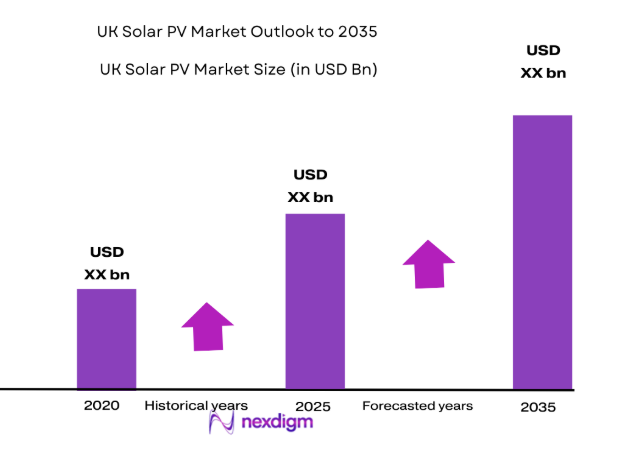
The UK solar photovoltaic (PV) market is currently valued at approximately USD ~ billion, driven by strong government incentives, technological advancements in solar panels, and a steady decline in installation costs. The market’s expansion is also propelled by the increasing push for renewable energy sources and carbon reduction targets set by the UK government. The combination of lower solar system prices and the government’s Renewable Energy Guarantees of Origin (REGO) scheme has significantly enhanced the affordability of solar PV installations.
The UK is a dominant player in the European solar PV market, with major developments happening in cities like London, Manchester, and Birmingham. The strong demand in these areas is attributed to high urbanization, government-backed incentives, and investments in renewable energy infrastructure. Additionally, the UK government’s ongoing commitment to reaching net-zero carbon emissions by 2050 has solidified the country’s position in the solar energy market. The country’s solar energy initiatives are further supported by technological innovation and increasing adoption in both residential and commercial sectors.
Market Segmentation
By Product Type
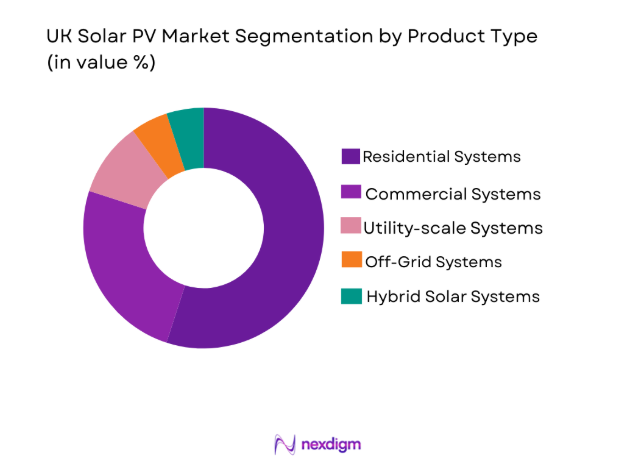
The UK solar PV market is segmented by product type into residential systems, commercial systems, utility-scale systems, off-grid systems, and hybrid solar systems. Recently, residential systems have dominated the market share due to a growing trend of homeowners seeking energy independence and lower electricity bills. The decreasing cost of solar installations, along with government incentives, has further fueled demand for residential solar systems. These systems provide a practical solution for households looking to reduce their carbon footprint and dependency on the grid, making them the most popular choice among consumers.
By Platform Type
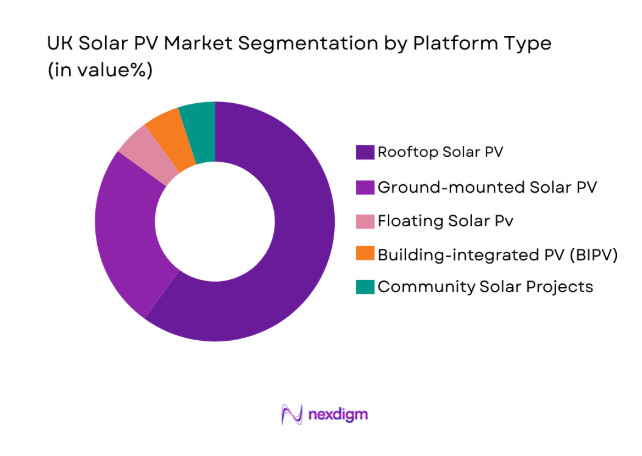
The UK solar PV market is segmented by platform type into rooftop solar PV, ground-mounted solar PV, floating solar PV, building-integrated photovoltaics (BIPV), and community solar projects. Rooftop solar PV systems dominate the market due to their ease of installation and low cost, especially in urban areas with limited land availability. As the most cost-effective and accessible solution for residential and commercial properties, rooftop systems continue to drive significant adoption across the country. Moreover, with new developments and urban projects incorporating solar installations into building designs, rooftop systems are expected to remain the preferred platform type in the UK market.
Competitive Landscape
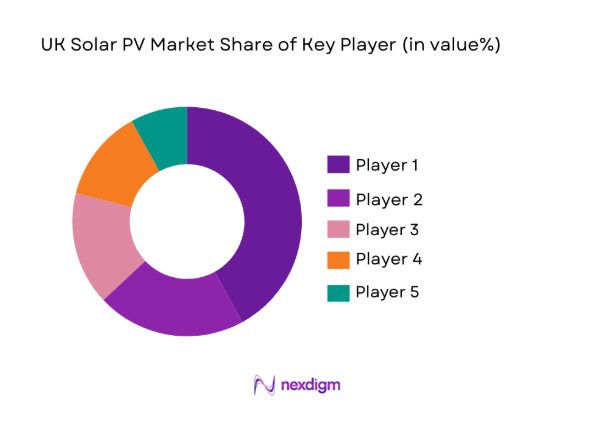
The UK solar PV market has seen increased consolidation over the past few years, with major players dominating the industry through strategic mergers, acquisitions, and partnerships. These companies focus on increasing solar PV system efficiency and reducing installation costs. The influence of large companies has accelerated technological advancements in solar panels and inverters, helping to drive market growth and competitiveness.
| Company Name | Establishment Year | Headquarters | Technology Focus | Market Reach | Key Products | Revenue (USD) | Additional Parameter |
| British Solar Renewables | 2010 | London, UK | ~ | ~ | ~ | ~ | ~ |
| Lightsource bp | 2010 | London, UK | ~ | ~ | ~ | ~ | ~ |
| First Solar | 1999 | Tempe, Arizona | ~ | ~ | ~ | ~ | ~ |
| SunPower | 1985 | Richmond, CA | ~ | ~ | ~ | ~ | ~ |
| Solarplicity | 2012 | Manchester, UK | ~ | ~ | ~ | ~ | ~ |
UK Solar PV Market Analysis
Growth Drivers
Government Incentives
Government incentives, such as the Smart Export Guarantee (SEG), have significantly boosted the adoption of solar PV systems across the UK. These incentives have made solar systems more affordable and attractive to homeowners, small businesses, and large commercial enterprises looking to reduce energy costs and increase energy independence. As a result, government policies designed to promote renewable energy sources have played a pivotal role in the growth of the solar PV market. The implementation of these programs has not only led to increased installations, particularly in residential and commercial sectors, but it has also played a key role in creating a favorable market environment for solar energy technologies. Additionally, the UK government’s long-term commitment to achieving net-zero carbon emissions by 2050, as well as the transition to a low-carbon economy, provides further impetus for solar energy adoption. Such government backing and regulatory support encourage further investments in solar PV projects, making it a driving force behind the market’s continued growth and expansion. The attractive incentives also encourage household owners and businesses to consider installing solar panels, further boosting the market’s potential.
Technological Advancements
Technological advancements in solar panel efficiency and storage solutions have been key drivers of the UK solar PV market’s growth. Over the past decade, the solar industry has experienced substantial improvements in technology, resulting in higher energy conversion rates and reducing the overall cost of solar PV systems. Innovations in solar inverters, storage systems, and efficiency upgrades have greatly enhanced the effectiveness of solar energy systems. This has not only led to an increase in energy savings for consumers but has also helped in overcoming some of the initial limitations of solar technology. Furthermore, advancements in energy storage technologies, such as lithium-ion batteries, have made it easier to store excess solar energy, enabling consumers to use it when needed, even at night or during cloudy days. This improvement has significantly increased consumer confidence in solar PV systems, making them a more reliable energy source. Additionally, these technological breakthroughs allow for greater integration of solar energy into the national grid, which is essential for increasing the overall renewable energy mix in the country. These advancements make solar energy more accessible and attractive, particularly to environmentally conscious consumers, and have provided a strong foundation for the growth of the market.
Market Challenges
High Initial Investment
Despite the substantial growth of the UK solar PV market, high initial investment costs remain a significant barrier to widespread adoption, especially for residential installations. While installation prices have steadily dropped over the years, the upfront costs for solar PV systems can still be prohibitive for many potential consumers. This financial hurdle is particularly prominent in the commercial sector, where large-scale installations require considerable capital outlay. Even with the availability of government subsidies and incentives, the initial cost of purchasing and installing a solar PV system can still deter many businesses and homeowners from making the transition to solar energy. In addition, financing options for solar PV systems are underdeveloped in some regions, and access to affordable financing remains a challenge. The ongoing need for substantial investment in solar energy technologies could slow down adoption, particularly for lower-income households and small businesses, where securing the funds to invest in solar systems is often difficult. This high initial investment continues to limit the pace at which solar systems can be installed, particularly in underserved regions.
Regulatory Challenges
Navigating the regulatory landscape surrounding solar PV system installations can be a significant challenge for developers and installers in the UK. Although the government provides strong incentives for the adoption of solar PV, the regulatory framework can be complex and inconsistent across various regions. There are often differing approaches and standards for planning permissions, grid connection requirements, and system certifications, which can lead to delays and added costs for solar PV projects. In particular, local councils and permitting bodies often impose varying requirements, making it difficult for developers to plan and implement solar energy projects efficiently. These challenges are particularly problematic in rural areas, where the demand for solar installations is growing, but the regulatory environment can significantly slow down project timelines. Additionally, the lack of a unified regulatory framework across the UK adds to the complexity, causing uncertainty and increasing the time and effort required to navigate the approval process. As a result, developers are often confronted with hurdles that slow down the implementation of solar projects, hindering the overall pace of solar energy adoption in the country.
Opportunities
Growth in Off-Grid Solar Solutions
The increasing need for energy independence and sustainable energy solutions has driven the growth of off-grid solar systems in the UK, particularly in remote and rural areas. The UK’s commitment to achieving net-zero emissions by 2050 has provided significant opportunities for off-grid solutions, especially in locations where connecting to the national grid is either cost-prohibitive or logistically challenging. These off-grid systems offer a reliable and cost-effective alternative to traditional energy sources, providing electricity to homes, businesses, and other facilities in areas that are not connected to the national grid. The declining cost of solar technology, along with advancements in energy storage solutions, has made these systems more affordable and accessible. As consumers seek to reduce their carbon footprints and minimize their reliance on traditional energy sources, off-grid solar PV systems are expected to gain increasing adoption. Moreover, the demand for these systems is growing in off-the-grid rural locations, where they can provide an essential and sustainable energy supply without relying on external infrastructure. As more individuals and businesses explore ways to achieve energy independence, the market for off-grid solar PV solutions is expected to grow rapidly in the coming years.
Corporate and Institutional Solar Adoption
The growing adoption of solar energy by corporations and institutions presents a significant opportunity for the UK solar PV market. As businesses seek to reduce their operational costs and improve their sustainability profiles, investing in solar PV systems has become an attractive option. Government policies, including the Carbon Price Floor and initiatives related to Corporate Social Responsibility (CSR), have encouraged businesses to explore renewable energy sources, with solar PV being a key player in their sustainability strategies. Additionally, many companies are being driven by the need to meet carbon reduction targets and improve their green credentials in the eyes of consumers, investors, and regulators. This trend is particularly prominent in the commercial real estate sector, where building-integrated photovoltaics (BIPV) systems are being increasingly adopted to reduce energy costs and contribute to sustainability goals. Moreover, the public sector, including government buildings and facilities, is also actively pursuing solar energy solutions to reduce energy expenditure and meet environmental targets. This surge in corporate and institutional solar adoption is expected to significantly drive the demand for solar PV systems across the country, contributing to the expansion of the market.
Future Outlook
The future outlook for the UK solar PV market is optimistic, with steady growth expected over the next five years. Technological innovations in solar panel efficiency and storage solutions will continue to improve the affordability and effectiveness of solar systems, further driving consumer demand. Additionally, the government’s strong commitment to renewable energy and net-zero carbon goals will provide ongoing support for the industry. As regulatory frameworks evolve to make solar adoption more accessible, the market is likely to experience an influx of new players and a greater shift towards renewable energy sources. This evolution will foster an environment ripe for sustainable growth.
Major Players
- British Solar Renewables
- Lightsource bp
- First Solar
- SunPower
- Solarplicity
- Tesla Energy
- BayWa r.e.
- Vestas
- EDF Renewables
- Enel Green Power
- Engie
- Siemens Gamesa
- Ørsted
- Iberdrola
- NextEnergy Solar Fund
Key Target Audience
- Investments and venture capitalist firms
- Government and regulatory bodies
- Solar installation companies
- Renewable energy investors
- Energy consultants
- Utility providers
- Real estate developers
Research Methodology
Step 1: Identification of Key Variables
We identify key market variables through a combination of primary and secondary research, including expert consultations and existing market reports. This step helps ensure we focus on the most relevant factors affecting market dynamics.
Step 2: Market Analysis and Construction
In this step, we analyze market trends, technological innovations, and regulatory frameworks to build a robust model of the market. This includes evaluating demand drivers, competitive forces, and key market opportunities.
Step 3: Hypothesis Validation and Expert Consultation
We validate market hypotheses through expert consultations and interviews with industry leaders. This step ensures the accuracy of our findings and aligns our research with the latest market developments.
Step 4: Research Synthesis and Final Output
The final output synthesizes data from all stages into a comprehensive report, offering actionable insights and strategic recommendations based on solid research and market projections.

- Executive Summary
- Research Methodology (Definitions, Scope, Industry Assumptions, Market Sizing Approach, Primary & Secondary Research Framework, Data Collection & Verification Protocol, Analytic Models & Forecast Methodology, Limitations & Research Validity Checks)

- Market Definition and Scope
- Value Chain & Stakeholder Ecosystem
- Regulatory / Certification Landscape
- Sector Dynamics Affecting Demand
- Strategic Initiatives & Infrastructure Growth

- Growth Drivers
Government Incentives and Subsidies
Technological Advancements in Solar Cells
Declining Installation Costs
Increased Focus on Renewable Energy
Rising Demand for Energy Independence - Market Challenges
High Initial Investment for Large-Scale Projects
Regulatory Hurdles and Delays in Permitting
Grid Integration Issues
Weather Dependency and Energy Storage Limitations
Public and Private Sector Collaboration Barriers - Market Opportunities
Expansion of Community Solar Programs
Development of Advanced Solar Storage Solutions
Increase in Corporate and Institutional Solar Adoption - Trends
Adoption of Floating Solar Systems
Integration of Solar with Energy Storage Solutions - Government Regulations
Government Support for Solar PV Development
New Policy Frameworks for Net Metering
Energy Efficiency Standards and Certifications - SWOT Analysis
- Porter’s Five Forces

- By Market Value, 2020-2025
- By Installed Units, 2020-2025
- By Average System Price, 2020-2025
- By System Complexity Tier, 2020-2025

- By System Type (In Value%)
Residential Solar Systems
Commercial Solar Systems
Utility-Scale Solar Systems
Off-Grid Solar Solutions
Hybrid Solar Solutions - By Platform Type (In Value%)
Rooftop Solar PV
Ground-mounted Solar PV
Floating Solar PV
Building-integrated Photovoltaics
Community Solar Projects - By Fitment Type (In Value%)
On-grid Systems
Off-grid Systems
Hybrid Systems
Integrated Solutions - By End User Segment (In Value%)
Residential Consumers
Commercial Enterprises
Government and Public Sector
Utility Providers

- Market Share Analysis
- Cross Comparison Parameters (System Type, Platform Type, End User Segment, Procurement Channel, Fitment Type, Government Regulations, Market Trends)
- SWOT Analysis of Key Competitors
- Pricing & Procurement Analysis
- Key Players
British Solar Renewables
Lightsource bp
Sungrow Power Supply Co.
First Solar
NextEnergy Solar Fund
Mosaic Solar
E.ON Climate & Renewables
Solarcentury
Grimshaw Associates
REC Group
Ecoligo
Vattenfall
Enel Green Power
Duke Energy
EDF Renewables

- Residential Sector’s Growing Demand for Solar
- Commercial Sector’s Shift Towards Sustainable Energy
- Government Agencies’ Role in Solar Policy Implementation
- Energy Companies’ Increasing Investment in Solar

- Forecast Market Value, 2026-2035
- Forecast Installed Units, 2026-2035
- Price Forecast by System Tier, 2026-2035
- Future Demand by Platform, 2026-2035


 Request a Sample
 Ask for Customization
 Get a Quote
 Enquire Now