
 Download PDF
Market Overview
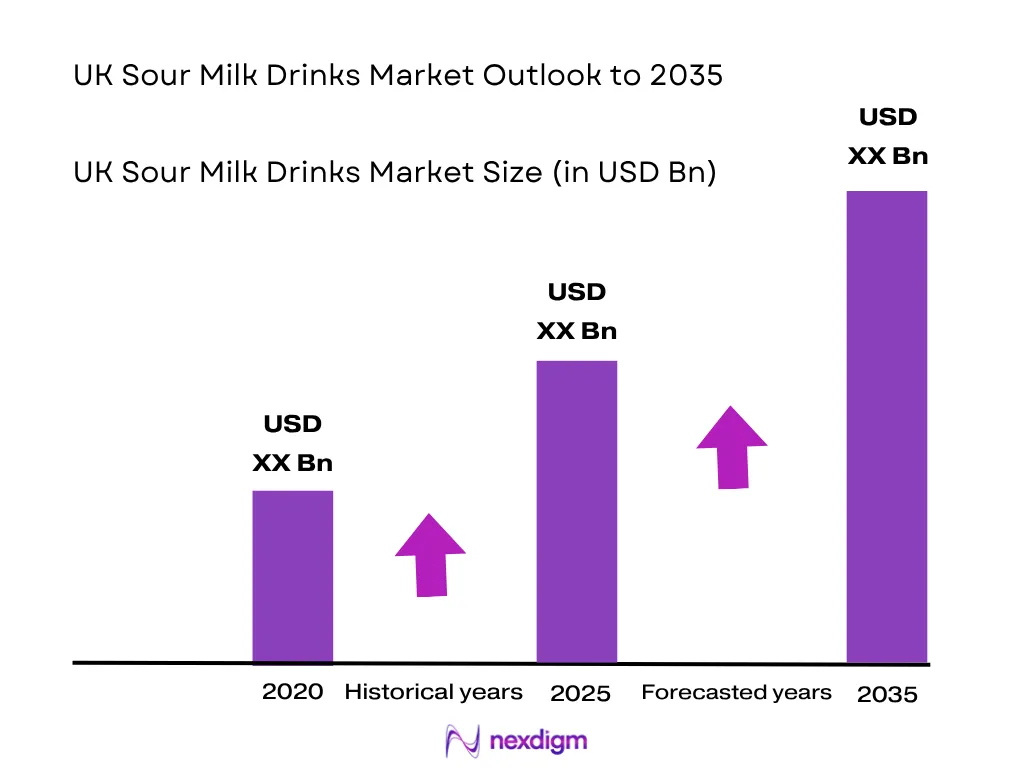
The UK Sour Milk Drinks Market is best measured through the publicly available UK yogurt and probiotic drink boundary, covering kefir drinks, cultured yoghurt drinks and probiotic dairy shots. The market is valued at USD ~ billion, while the wider global sour milk drinks category moved from USD ~ billion to USD ~ billion across the comparable historical period, driven by kefir adoption, digestive wellness, live cultures and daily functional dairy routines.
London, Birmingham, Manchester, Leeds, Glasgow and other dense urban grocery markets dominate the UK Sour Milk Drinks Market because chilled functional dairy sells fastest where supermarket density, online grocery penetration, premium health positioning and multicultural sour-dairy consumption overlap. The UK population reached 69,281,400, increasing by 755,300 from the prior mid-year base; England and Wales reached 61,806,682, supporting higher chilled dairy demand in large commuter and family retail catchments.
Market Segmentation
By Product Type
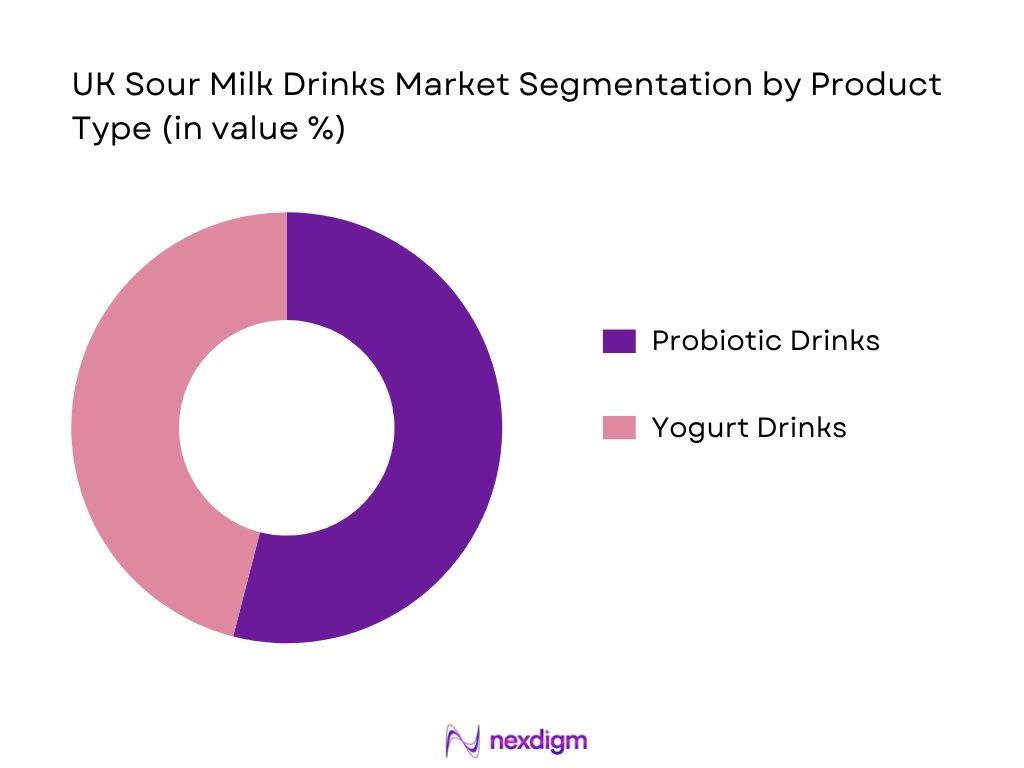
The UK Sour Milk Drinks Market is segmented by product type into probiotic drinks and yogurt drinks. Probiotic drinks dominate the market with 54.2% share because small-format cultured shots and kefir-based drinks have become habitual purchases among gut-health, immunity-support and daily wellness consumers. Brands such as Actimel, Yakult, Biotiful and Activia benefit from strong consumer recall, repeat-purchase routines and chilled multipack visibility. Kefir is especially important because it bridges functional dairy, natural fermentation and premium wellness positioning. Yogurt drinks remain important but face stronger overlap with spoonable yoghurt and flavoured dairy desserts. Nexdigm identifies probiotic drink as the largest UK yogurt and probiotic drink segment with 54.2% revenue share.
By Distribution Channel
The UK Sour Milk Drinks Market is segmented by distribution channel into supermarkets/hypermarkets, convenience stores, online grocery, specialty health and organic stores, foodservice channels and others. Supermarkets and hypermarkets dominate because sour milk drinks are chilled, date-sensitive products that require reliable cold-chain execution, high footfall and visible shelf placement near yoghurt, active health dairy and breakfast products. Tesco, Sainsbury’s, Asda, Morrisons and Waitrose provide national reach, while online grocery supports repeat basket addition for daily shots and kefir bottles. Convenience stores are strongest for single-serve formats, but broader pack choice and multipack pricing remain concentrated in supermarket-led retail. The split below is a desk-research allocation because exact 2024 audited UK channel shares for sour milk drinks are not publicly disclosed.

Competitive Landscape
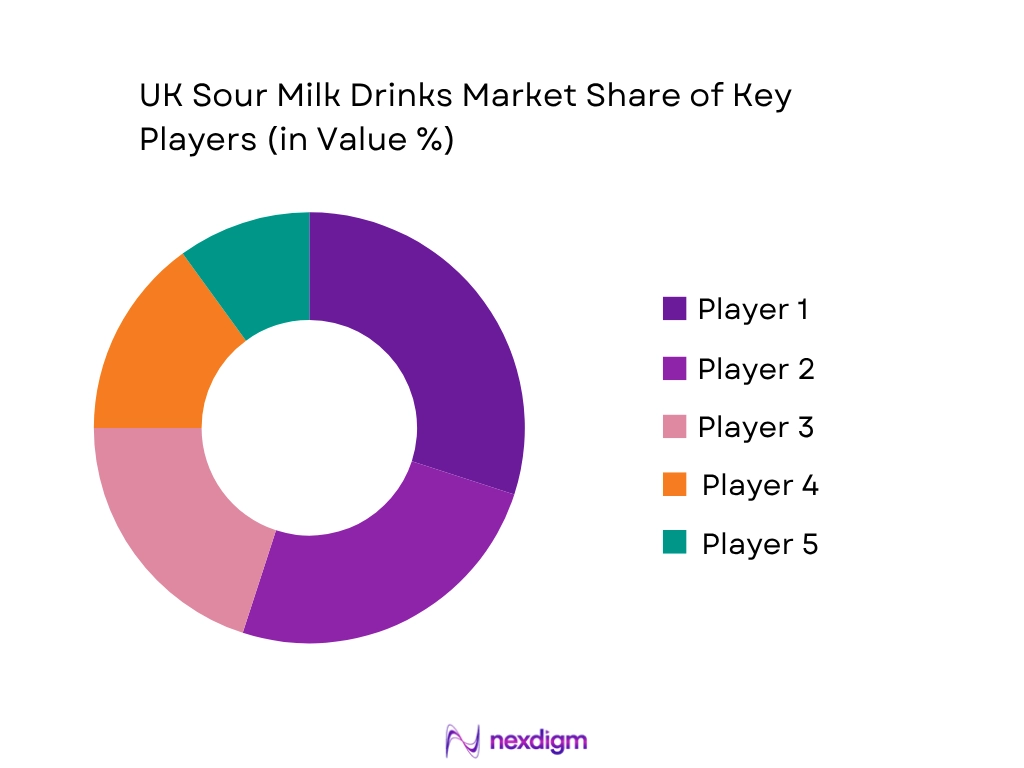
The UK Sour Milk Drinks Market is concentrated around kefir specialists, multinational fermented dairy brands and functional shot leaders. Biotiful is central to the UK kefir category and was described as a UK kefir market leader; Müller’s acquisition of Biotiful strengthened its position in functional dairy. Danone competes through Actimel and Activia, Yakult remains a specialist probiotic milk drink brand, and Yeo Valley Organic supports premium organic kefir demand.
| Company | Establishment Year | Headquarters | Core UK Sour Milk Drink Portfolio | Lead Positioning | Dominant Pack Architecture | Retail Strength | Culture/Functional Cue | Strategic Relevance |
| Biotiful Gut Health | 2012 | London, UK | ~ | ~ | ~ | ~ | ~ | ~ |
| Müller UK & Ireland | 1896 | Market Drayton, UK | ~ | ~ | ~ | ~ | ~ | ~ |
| Danone | 1919 | Paris, France | ~ | ~ | ~ | ~ | ~ | ~ |
| Yakult Honsha | 1935 | Tokyo, Japan | ~ | ~ | ~ | ~ | ~ | ~ |
| Yeo Valley Organic | 1994 | Blagdon, UK | ~ | ~ | ~ | ~ | ~ | ~ |
UK Sour Milk Drinks Market Analysis
Growth Drivers
Gut-health literacy
Gut-health literacy is strengthening the UK Sour Milk Drinks Market because consumers already maintain regular dairy consumption and are more receptive to fermented formats such as kefir, cultured yoghurt drinks and live-culture shots. In FYE 2024, UK household milk purchases stood at 1,471 ml per person per week, while cheese purchases were 125 grams per person per week, showing that dairy remains embedded in weekly diets. On the supply side, Defra recorded 15,269 million litres of milk from the UK dairy herd and 430 million litres of milk allocated to yoghurt production, giving fermented dairy brands a sizeable domestic raw-material base. The UK population reached 69,281,400 people, creating a broad consumer base for daily digestive-wellness routines. For sour milk drink brands, this supports education-led conversion from ordinary dairy consumption to kefir, probiotic shots and drinkable yoghurt formats.
Functional dairy premiumisation
Functional dairy premiumisation is supporting the UK Sour Milk Drinks Market as consumers shift from basic dairy products toward added-benefit formats such as protein kefir, vitamin-fortified cultured shots, organic kefir and live-culture yoghurt drinks. The macroeconomic base is relevant: the World Bank reports UK GDP at USD 3.69 trillion and GDP per capita at USD 53,246.4, indicating a high-income market where shoppers can absorb specialised chilled dairy formats when benefits are clearly communicated. UK household food and non-alcoholic drink consumption expenditure in chained-volume terms was GBP 138,368 million, while FYE 2024 household food and non-alcoholic drink spend reached GBP 32.30 per person per week. Defra also recorded an average dairy cow yield of 8,278 litres per annum, supporting consistent dairy-processing capacity for higher-value fermented products. These indicators justify a premium tier in kefir, gut-health shots and fortified sour milk drinks.
Market Challenges
Health-claim restrictions
Health-claim restrictions remain a direct challenge for the UK Sour Milk Drinks Market because brands cannot freely use probiotic, digestive or immunity language unless claims align with authorised wording and conditions. The Great Britain Nutrition and Health Claims Register states that only authorised claims may be used in Great Britain, and the register was updated on 8 April 2024, 27 February 2025 and 19 May 2026, including additions of non-authorised claims in later updates. The Nutrition and Health Claims (England) (Amendment) Regulations 2024 came into force on 1 October 2024, strengthening enforcement through improvement notices. For kefir and live-culture drink producers, this shifts marketing away from broad “probiotic cure” language toward compliant claims around nutrients such as calcium, vitamin D or vitamin B6. This raises compliance complexity for brands competing in gut-health and immune-support positioning.
Cold-chain dependence
Cold-chain dependence is a structural challenge in the UK Sour Milk Drinks Market because kefir, yoghurt drinks and cultured dairy shots require chilled processing, transport, warehousing and retail display to protect freshness and live-culture quality. Defra reported that UK dairies processed 1,206 million litres of milk in December 2024, with liquid milk production at 504 million litres in the same month, showing the scale of chilled dairy handling. Annual milk supply-and-use data recorded 14,363 million litres of total new supply, including 6,101 million litres for liquid consumption and 7,911 million litres for manufacture. Yoghurt alone accounted for 430 million litres of milk use. For sour milk drinks, this means expansion is tied to refrigerated distribution capacity, retailer shelf-life rules, short date-code management, depot efficiency and wastage control, not only consumer demand.
Opportunities
Lactose-free kefir
Lactose-free kefir represents a strong opportunity for the UK Sour Milk Drinks Market because it allows brands to retain dairy nutrition while addressing digestive discomfort associated with lactose. NHS Inform describes lactose intolerance as a common digestive problem involving difficulty digesting lactose, a sugar mainly found in milk and dairy products; NHS guidance also lists milk, yoghurt, cream, butter and other dairy products as lactose-containing foods. The opportunity is commercially relevant because UK consumers continue to buy dairy in meaningful quantities, with household milk purchases at 1,471 ml per person per week and the UK dairy herd producing 15,269 million litres of milk. Defra also recorded 15,128 million litres of milk volume for human consumption and 430 million litres allocated to yoghurt production. Lactose-free kefir can therefore target consumers who want gut-health positioning but currently avoid standard sour dairy drinks due to digestive sensitivity.
Low-sugar flavours
Low-sugar flavours create a practical growth route for the UK Sour Milk Drinks Market because flavoured kefir and cultured shots need wider family acceptance while staying aligned with public-health pressure on sugar and weight outcomes. Government-published NCMP data measured more than 1.1 million children in state-maintained schools in England during academic year 2024 to 2025, while NHS Digital reported that 30 in every 100 adults aged 16 and over were living with obesity in 2024. The market relevance is clear: sour milk drinks often rely on fruit flavours such as strawberry, mango, cherry and vanilla to offset acidity, but high sweetness can weaken health positioning. Low-sugar kefir, no-added-sugar yoghurt drinks and lightly flavoured fermented milk can use the same chilled dairy infrastructure while serving parents, adults and wellness consumers seeking functional dairy without excessive sweetness.
Future Outlook
The UK Sour Milk Drinks Market is expected to expand as kefir, probiotic shots and high-protein fermented dairy become more embedded in daily wellness routines. The closest public 2026–2035 forecast benchmark for yogurt drinks indicates a 4.3% CAGR, while UK-specific yogurt and probiotic drinks are forecast by Nexdigm to grow strongly to USD 7,166.1 million by 2030. Growth will be led by four forces: premium kefir expansion, supermarket private-label entry, reduced-sugar reformulation and regulatory-safe functional claims. The strongest white spaces are lactose-free kefir, high-protein kefir bottles, children’s low-sugar gut-health multipacks and savoury ayran/laban-style drinks for multicultural urban demand. However, brands must manage cold-chain economics, live-culture communication, short shelf life, price sensitivity and UK restrictions on probiotic or gut-health claims.
Major Players
- Biotiful Gut Health
- Müller UK & Ireland
- Danone Actimel
- Danone Activia
- Yakult UK
- Yeo Valley Organic
- Benecol
- Bio&Me
- The Collective Dairy
- Arla Foods UK
- Onken
- Graham’s The Family Dairy
- Biomel
- Tesco Private Label
- Sainsbury’s Private Label
Key Target Audience
- Sour milk drink and kefir manufacturers
- Dairy processors and chilled beverage producers
- Supermarket and hypermarket category managers
- Online grocery and quick-commerce platforms
- Functional food and beverage brands
- Investments and venture capitalist firms
- Government and regulatory bodies: Food Standards Agency, Department for Environment, Food & Rural Affairs, Advertising Standards Authority, Competition and Markets Authority
- Chilled logistics, dairy packaging and ingredient suppliers
Research Methodology
Step 1: Identification of Key Variables
The initial phase involves mapping the UK Sour Milk Drinks Market ecosystem across kefir brands, probiotic shot manufacturers, dairy processors, retailers, ingredient suppliers and chilled logistics providers. Key variables include product type, price per litre, pack size, culture positioning, distribution channel, claim language, sugar content and retail availability.
Step 2: Market Analysis and Construction
The second phase compiles historical and current data from credible secondary sources, company disclosures, retail listings, market databases and regulatory references. Market construction uses a top-down benchmark from yogurt and probiotic drink market values and a bottom-up view based on product portfolio depth, retail shelf presence and category participation.
Step 3: Hypothesis Validation and Expert Consultation
Market hypotheses are validated through structured discussions with dairy processors, grocery buyers, distributors, packaging suppliers and nutrition-positioned brand operators. These interviews test assumptions on kefir adoption, probiotic shot repeat rates, supermarket channel dominance, private-label pressure, pricing architecture and cold-chain constraints.
Step 4: Research Synthesis and Final Output
The final phase triangulates secondary evidence, expert inputs and category-level modelling to prepare a validated view of the UK Sour Milk Drinks Market. The output focuses on market size, segmentation, competitive structure, growth levers, channel strategy and investable white spaces for business decision-makers.

- Executive Summary
- Research Methodology (Market definitions and assumptions, sour milk drinks inclusion and exclusion criteria, kefir and cultured yoghurt drink classification, probiotic and live-culture terminology treatment, TAM/SAM/SOM approach, top-down dairy drinks spend estimation, bottom-up SKU velocity mapping, retailer shelf audit methodology, price-per-litre benchmarking, primary interviews with dairy processors, retailers, nutritionists and distributors, consumer cohort sampling, limitations and future conclusions)

- Definition and Scope
- Market Genesis and Category Evolution
- Timeline of Major Players
- Business Cycle
- Supply Chain and Value Chain Analysis
- Chilled Dairy Drinks Category Architecture
- Role of Gut Health, Immunity and Digestive Wellness in Category Formation
- Retail Shelf Positioning Across Yoghurts, Kefir, Probiotic Shots and Functional Dairy

- Growth Drivers (Gut-health literacy, functional dairy premiumisation, breakfast routine formation, supermarket shelf expansion, high-protein snacking, immunity-support demand, organic and natural product preference)
- Market Challenges (Health-claim restrictions, cold-chain dependence, sugar concerns, price-per-litre resistance, short shelf life, retailer delisting risk, culture viability communication, dairy intolerance)
- Opportunities (Lactose-free kefir, low-sugar flavours, ethnic sour drinks, high-protein kefir, kids’ gut-health packs, foodservice kefir applications, private label entry, chilled vending, personalised nutrition)
- Market Trends (Kefir premiumisation, microbiome language, organic British milk, vitamin-fortified shots, protein-led dairy, natural sour taste acceptance, multipack promotions, sustainable chilled packs)
- Government Regulation and Compliance (Nutrition and health claims, food information regulations, live-culture wording, allergen labelling, dairy hygiene standards, chilled-chain compliance, organic certification, packaging recycling obligations)
- SWOT Analysis (Kefir momentum, strong chilled retail access, high claim sensitivity, price-per-litre premium, lactose-free whitespace, private label threat, culture-strain differentiation)
- Stakeholder Ecosystem (Dairy farmers, milk processors, culture suppliers, fermentation technologists, co-packers, chilled logistics providers, retailers, wholesalers, nutrition scientists, claims consultants, advertising regulators, foodservice buyers, consumers)
- Porter’s Five Forces (Retailer bargaining power, supplier concentration in cultures and milk, private label substitution, branded rivalry, plant-based probiotic adjacency, barriers from cold-chain scale)
- Competition Ecosystem (Kefir specialists, multinational dairy companies, probiotic shot leaders, organic dairy brands, cholesterol-management functional dairy, private labels, dairy-free probiotic brands, ethnic sour dairy suppliers)
- Pricing and Promotion Analysis (Price per litre, price per shot, multipack discounting, loyalty-card pricing, online grocery promotions, premium organic pricing, value-tier pressure)

- By Value (2020-2025)
- By Volume (2020-2025)
- By Average Selling Price (2020-2025)
- By Price per Litre (2020-2025)
- By Retail Shelf Share (2020-2025)
- By Household Penetration and Repeat Purchase Rate (2020-2025)

- By Product Format (In Value%)
Kefir Milk Drinks
Cultured Yoghurt Shots
Drinkable Yoghurt
Fermented Milk Beverages
Buttermilk-Style Drinks
Ayran/Laban-Style Sour Dairy Drinks
High-Protein Kefir Drinks
Kids’ Fermented Dairy Drinks
Dairy-Free Probiotic Adjacent Drinks - By Fermentation and Culture Type
Kefir Grain-Based Fermentation
Live Kefir Culture Formulation
L. casei-Based Cultured Drinks
Bifidobacterium-Based Formulation
Multi-Strain Live Culture Drinks
Added Probiotic Culture Drinks - By Dairy Base (In Value%)
Whole Milk Sour Drinks
Semi-Skimmed Milk Sour Drinks
Skimmed Milk Sour Drinks
Organic British Milk Sour Drinks
Lactose-Free Sour Milk Drinks
Fortified Dairy Base Drinks
Plant-Based Probiotic Adjacent Base - By Flavour and Sweetener Profile (In Value%)
Natural/Plain
Vanilla
Strawberry and Berry
Cherry and Morello Cherry
Mango and Mango-Passionfruit
Multifruit
Salted/Savoury
No-Added-Sugar and Low-Sugar - By Nutrition and Functional Positioning (In Value%)
Gut Health and Microbiome Positioning
Digestive Wellbeing Positioning
Immune Support Positioning
High-Protein Positioning
Cholesterol Management Positioning
Organic and Natural Positioning
Fat-Free and Calorie-Control Positioning
No-Added-Sugar Positioning - By Packaging and Serving Architecture (In Value%)
Daily Mini Shots
Single-Serve Bottles
500ml Bottles
1L Bottles
Multipacks
Protein Cups and Spoonable-Drink Hybrids
Sustainable and Recyclable Packs - By Distribution Channel (In Value%)
Supermarkets and Hypermarkets
Online Grocery
Convenience Stores
Discounters
Premium Grocers
Health Food Stores
Ethnic Grocery Stores
Foodservice
Direct-to-Consumer and Subscription - By Consumer Cohort (In Value%)
Gut-Health Seekers
Fitness and High-Protein Consumers
Organic and Natural Shoppers
Lactose-Sensitive Consumers
Ethnic Sour Dairy Consumers
Children and Teens
Older Digestive-Health Consumers
Flexitarian and Dairy-Reduction Shoppers - By Geography (In Value%)
England
Scotland
Wales
Northern Ireland
London and South East
Midlands and North
South West and Rural Dairy Catchments - By Price Tier (In Value%)
Value
Mainstream
Premium
Super-Premium
Functional Fortified Premium
Private Label

- Market Share of Major Players (Value share, volume share, kefir share, yoghurt shot share, online grocery share, retail shelf share)
- Cross Comparison Parameters (Culture strain and live-culture architecture, CFU/live-culture communication, product format and pack-size portfolio, price per litre and price per serving, sugar-fat-protein nutrition profile, permitted health/nutrition claim strategy, chilled shelf-life and cold-chain model, retailer distribution breadth)
- SWOT Analysis of Major Players (Kefir brand equity, multinational scale, claim compliance risk, flavour portfolio, retailer dependence, innovation velocity)
- Pricing Analysis Basis SKUs for Major Players (65ml shots, 100ml shots, 280ml bottles, 500ml kefir bottles, 1L kefir bottles, 6-pack formats, 8-pack formats, 12-pack formats, organic premium packs, high-protein formats)
- Detailed Profiles of Major Companies
Biotiful Gut Health
Müller UK & Ireland
Danone Actimel
Danone Activia
Yakult UK
Yeo Valley Organic
Benecol
Bio&Me
The Collective Dairy
Arla Foods UK
Onken
Graham’s The Family Dairy
Biomel
Tesco Private Label
Sainsbury’s Private Label

- Market Demand and Utilisation (Daily shot frequency, kefir bottle consumption, breakfast pairing, smoothie usage, family sharing)
- Purchasing Power and Budget Allocation (Premium dairy spend, price-per-litre tolerance, promotional switching, private label adoption)
- Regulatory and Compliance Requirements (Claim credibility, allergen clarity, sugar disclosure, vitamin and calcium claim substantiation)
- Needs, Desires and Pain Point Analysis (Gut comfort, immunity support, natural ingredients, low sugar, flavour acceptability, lactose concerns, trust in live cultures)
- Decision-Making Process (Health claim recognition, brand trust, flavour choice, pack size, price promotion, retailer availability, nutrition panel comparison)
- Consumer Journey Mapping (Awareness, trial, repeat, subscription, trade-up, switching, abandonment)
- Usage and Attitude Analysis (Kefir familiarity, sour taste acceptance, live-culture understanding, daily routine adherence)

- By Value (2026-2035)
- By Volume (2026-2035)
- By Average Selling Price (2026-2035)
- By Price per Litre (2026-2035)
- By Retail Shelf Share (2026-2035)
- By Household Penetration and Repeat Purchase Rate (2026-2035)


 Request a Sample
 Ask for Customization
 Get a Quote
 Enquire Now