

 Download PDF
Market Overview
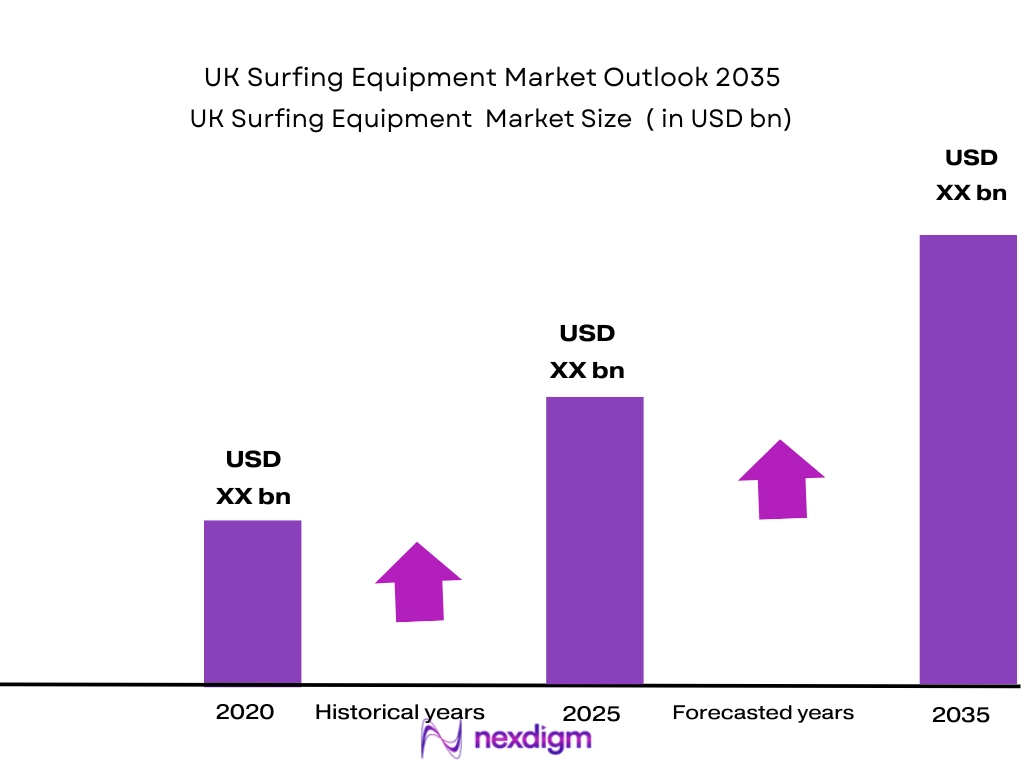
The UK Surfing Equipment Market is valued at approximately USD ~ billion, based on an in-depth historical analysis and current market data. The growth of the market can be attributed to the rising popularity of surfing as both a recreational and competitive sport. As surfing continues to gain traction, particularly along the UK’s coastline, demand for related equipment such as surfboards, wetsuits, and accessories is expanding. Additionally, the surf tourism industry, which includes both local enthusiasts and international visitors, is contributing significantly to the market’s growth. Furthermore, growing awareness about sustainability and the increasing trend towards eco-friendly products are also influencing purchasing decisions in the market.
The UK’s dominant surfing regions include Cornwall, Devon, and Wales. These areas are known for their world-class surf spots such as Fistral Beach in Newquay and Rhossili Bay in Swansea. The UK’s well-established surf culture, aided by the scenic coastline and ideal surf conditions, provides a strong foundation for the market. The growing surf tourism, particularly in these coastal regions, continues to fuel demand for high-quality surfing equipment. Additionally, London, with its thriving retail sector and the growing presence of e-commerce, plays a pivotal role in driving the market.
Market Segmentation
By Product Type
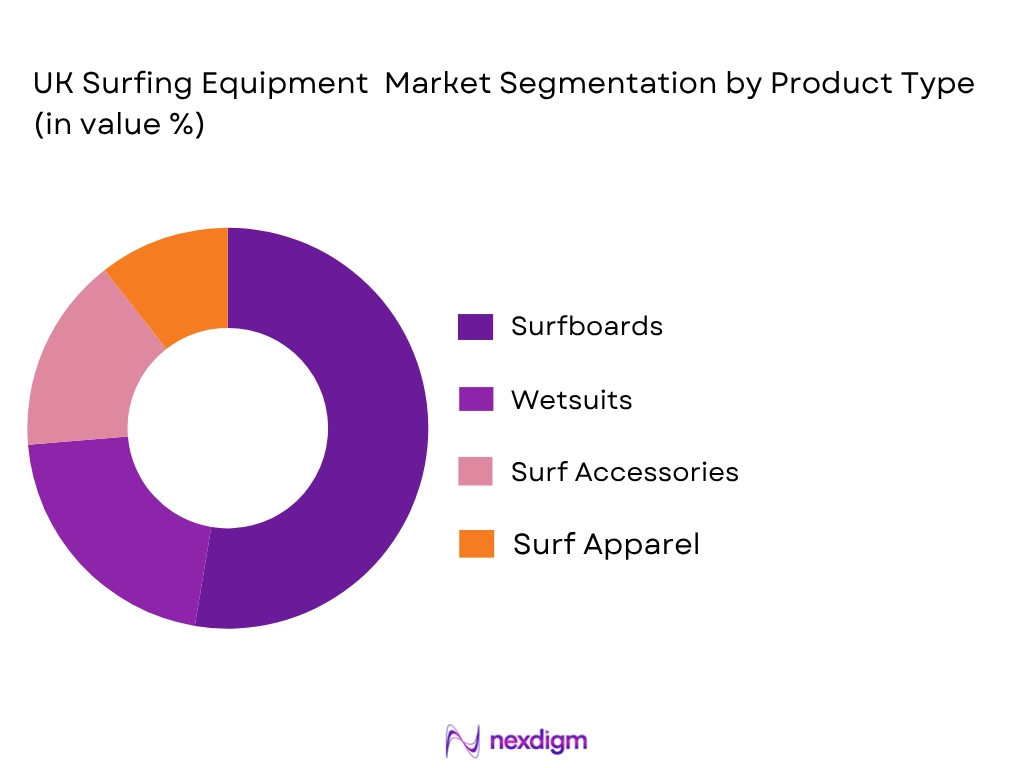
The UK Surfing Equipment Market is segmented by product type into surfboards, wetsuits, surf accessories (such as leashes, fins, etc.), and surf apparel. Among these, surfboards hold the dominant market share due to their central role in the sport. The growing number of surfers, both beginners and professionals, continues to drive the demand for surfboards. Companies are introducing a range of surfboard options to cater to various skill levels and preferences, including eco-friendly boards made from sustainable materials. The increasing interest in high-performance and custom surfboards has further bolstered their demand, making surfboards the leading category in the market.
By Usage Type
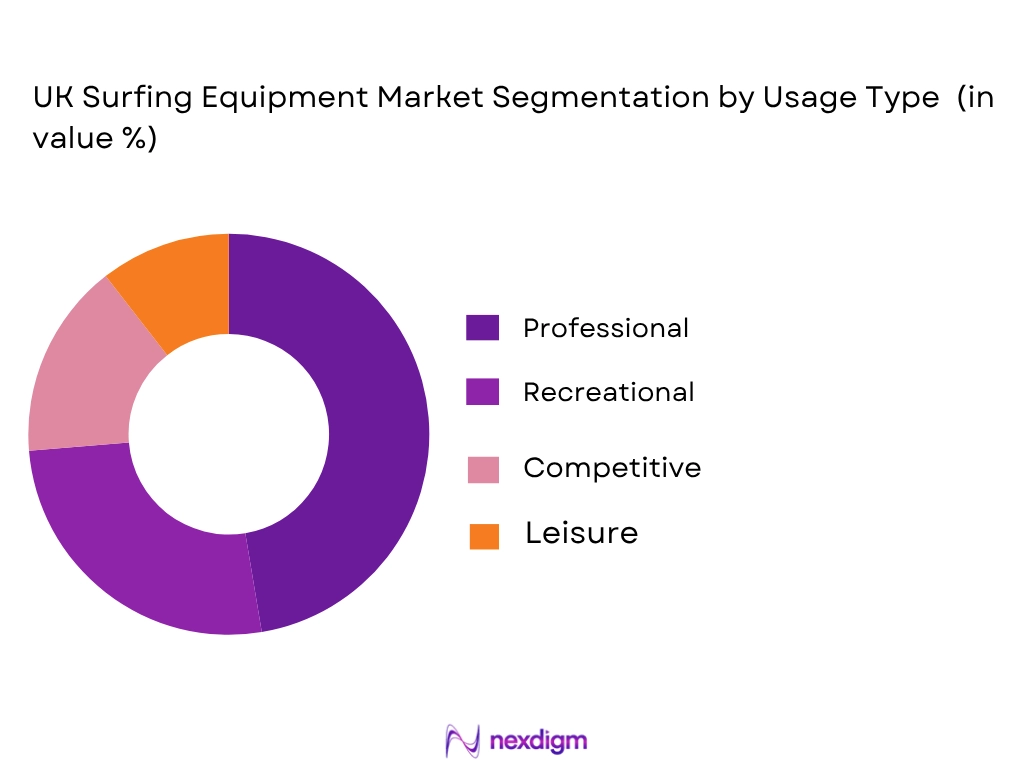
The market is also segmented by usage type into professional surfing, recreational surfing, competitive surfing, and leisure surfing. Recreational surfing dominates this segment, primarily driven by the growing number of people engaging in surfing as a leisurely activity. Many people now view surfing not just as a competitive sport, but as a way to enjoy nature and stay fit. Surfing clubs, schools, and a rising number of surf-friendly beaches contribute to the increase in recreational surfers. Additionally, affordable entry-level equipment designed for recreational surfers further fuels growth in this segment.
Competitive Landscape
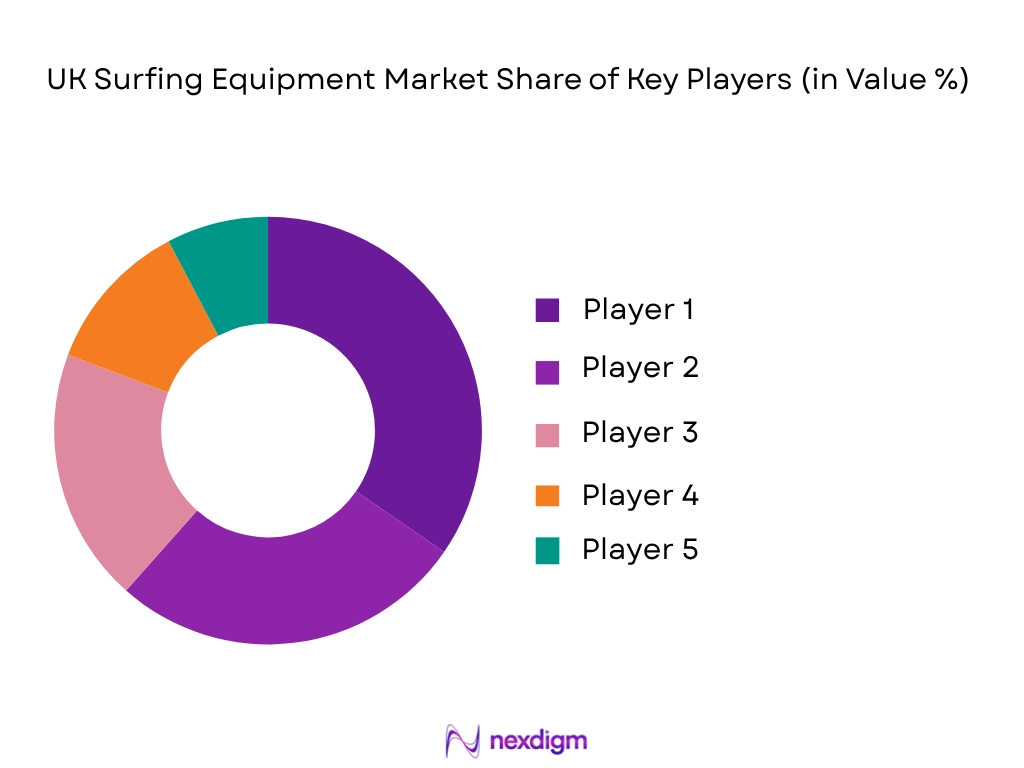
The UK Surfing Equipment Market is dominated by a blend of local and global brands, reflecting the widespread appeal of surfing. Major players such as Quiksilver, Rip Curl, Billabong, O’Neill, and Channel Islands lead the market due to their strong brand presence, extensive product portfolios, and wide distribution networks. These companies continue to drive the market forward with innovations in surfing technology, such as improved surfboard designs and eco-friendly wetsuits. Additionally, UK-based brands like Rebel Surf and Saltrock have also seen significant growth, tapping into the increasing demand for sustainable and locally made products.
| Company Name | Establishment Year | Headquarters | Product Range | Market Focus | Distribution Channels | Brand Strength |
| Quiksilver | 1969 | Huntington Beach, US | ~ | ~ | ~ | ~ |
| Rip Curl | 1969 | Torquay, Australia | ~ | ~ | ~ | ~ |
| Billabong | 1973 | Gold Coast, Australia | ~ | ~ | ~ | ~ |
| O’Neill | 1952 | Santa Cruz, USA | ~ | ~ | `~ | ~ |
| Channel Islands | 1969 | Santa Barbara, USA | ~ | ~ | ~ | ~ |
UK Surfing Equipment Market Analysis
Growth Drivers
Rising Popularity of Surfing as a Recreational Sport
Surfing has become a popular recreational activity across the UK, driven by a growing interest in outdoor sports and fitness. Coastal areas such as Cornwall, Devon, and Wales are witnessing increasing numbers of both locals and tourists taking up surfing. As more individuals embrace surfing for its fitness benefits and connection with nature, the demand for surfing equipment continues to grow. This trend is also supported by the rise in surf schools and beginner-friendly beaches, which are making it easier for newcomers to join the sport. The sport’s growing popularity is not only limited to summer months but is also expanding year-round, further contributing to increased equipment sales.
Government Support for Sports and Recreation
The UK government has been actively supporting outdoor sports, including surfing, through initiatives aimed at increasing participation in physical activities. Policies promoting healthier lifestyles and outdoor recreation are helping to boost the appeal of surfing among a broader demographic. Furthermore, investment in surf-friendly infrastructure, such as designated surf zones and improved beach access, is making surfing more accessible. With government-backed campaigns promoting beach sports, the visibility of surfing as a recreational activity continues to rise. Additionally, public funds and local authorities are working to enhance the development of surf tourism, which indirectly benefits the surfing equipment market.
Market Challenges
High Import Dependency
The UK Surfing Equipment Market is heavily reliant on imports, particularly for high-quality surfboards, wetsuits, and accessories. Most premium surfing gear comes from countries such as the United States, Australia, and European nations, which drives up costs for consumers. Import tariffs, logistical challenges, and exchange rate fluctuations also contribute to the higher prices of imported products. This dependency on foreign manufacturers limits the growth potential of local brands, making it difficult for the UK to become fully self-sufficient in surfing equipment production. While domestic brands are rising, they still face significant competition from established international companies in terms of quality and innovation.
Seasonality of Surfing Demand
The UK experiences significant seasonal fluctuations in demand for surfing equipment due to the country’s temperate climate. Surfing activity is typically higher during the summer months when favorable weather conditions attract both local surfers and international tourists. However, demand sharply decreases during the colder months, especially in regions with less consistent wave patterns. This seasonality creates challenges for manufacturers and retailers, who must find ways to maintain sales throughout the year. To address this, many companies are diversifying their product offerings or targeting winter sports enthusiasts, but overall, seasonality remains a key challenge for the market.
Opportunities
Increasing Investment in Surfing Infrastructure
The growing interest in surfing in the UK is accompanied by significant investments in infrastructure, which presents a major opportunity for the surfing equipment market. Local authorities and private investors are expanding surf-friendly facilities, such as surf parks, beaches with improved access, and dedicated surf zones. These investments aim to support the increasing number of recreational surfers and attract surf tourists, both domestically and internationally. As infrastructure improves, it becomes easier for surfers to access high-quality waves, thereby increasing the demand for equipment. These infrastructure improvements also create opportunities for brands to showcase their products to a broader and more diverse audience.
Development of Eco-Friendly and Sustainable Surfing Equipment
As environmental concerns rise, there is a significant opportunity for growth in the eco-friendly surfing equipment segment. More consumers are opting for sustainable alternatives to traditional surfing gear, such as surfboards made from recycled materials or wetsuits made from plant-based or biodegradable substances. Companies that adopt sustainable manufacturing processes and materials are gaining traction among environmentally-conscious surfers. This trend is also supported by the growing popularity of green tourism, where surfers seek eco-friendly accommodations and equipment. Brands that prioritize sustainability can gain a competitive advantage, appealing to a new generation of eco-conscious consumers who are increasingly mindful of the environmental impact of their purchases.
Future Outlook
Over the next 5 years, the UK Surfing Equipment Market is expected to witness significant growth driven by the continued popularity of surfing as a mainstream sport. The growing trend towards eco-consciousness will drive innovation in sustainable surfing equipment, particularly in surfboards and wetsuits. Moreover, expanding surfing infrastructure, such as new surf parks and beach facilities, will increase the sport’s accessibility. Alongside this, there will likely be a rise in surf tourism, contributing further to equipment demand. Additionally, technological advancements in surfboard designs and the growing adoption of electric surfboards are anticipated to add new dimensions to the market.
Major Players in the Market
- Quiksilver Inc.
- Rip Curl
- Billabong International Ltd.
- O’Neill
- Channel Islands Surfboards
- Lost Enterprises
- Hurley International LLC
- Firewire Surfboards
- JS Industries
- Roxy
- Patagonia
- Vissla
- Reef
- Dakine
- Sun Bum
Key Target Audience
- Investments and Venture Capitalist Firms
- Government and Regulatory Bodies
- Surf Tourism Companies
- Major Retail Chains
- Surfing Product Manufacturers
- E-commerce Platforms
- Sports Equipment Distributors
- Eco-Friendly Product Advocates
Research Methodology
Step 1: Identification of Key Variables
In the first phase, the market is analyzed through extensive secondary research, gathering insights into industry trends, product categories, and consumer behavior. This step aims to identify key factors that drive the UK Surfing Equipment market, including demographic trends and purchasing patterns.
Step 2: Market Analysis and Construction
The next phase involves collecting historical data on the UK Surfing Equipment Market, such as sales figures, market penetration, and seasonal trends. This data is analyzed to assess growth patterns and forecast future market trajectories.
Step 3: Hypothesis Validation and Expert Consultation
To validate market hypotheses, consultations are conducted with key industry experts, such as surf shop owners, manufacturers, and professional surfers. These interviews provide valuable insights into current market trends, product demand, and emerging opportunities.
Step 4: Research Synthesis and Final Output
In the final phase, the research findings are compiled and cross-verified with data from primary research sources. This ensures that the final report presents an accurate, reliable analysis of the UK Surfing Equipment Market, supported by expert opinions and verified data.

- Executive Summary
- Research Methodology (Market Definitions and Assumptions, Abbreviations, Market Sizing Approach, Consolidated Research Approach, Understanding Market Potential Through In-Depth Industry Interviews, Primary Research Approach, Limitations and Future Conclusions)

- Definition and Scope
- Market Dynamics Overview
- Market Genesis
- Major Players and Market Timeline
- Business Cycle and Trends
- Supply Chain and Value Chain Analysis

- Growth Drivers
Rising Popularity of Surfing as a Recreational Sport
Government Support for Sports and Recreation
Growing Surf Tourism Industry
Increasing Demand for Eco-Friendly Surf Products
Technological Advancements in Surfing Equipment - Market Challenges
High Import Dependency
Seasonality of Surfing Demand
Competition from Other Water Sports
Limited Availability of Surfing Locations in Some Regions
Economic Factors Affecting Consumer Spending - Opportunities
Increasing Investment in Surfing Infrastructure
Development of Eco-Friendly and Sustainable Surfing Equipment
Expanding Surfing Events and Competitions - Trends
Growth of the Electric Surfboard Market
Sustainability Focus in Surfing Equipment
Smart Surfing Technology Integration
Expansion of Online Retail and Direct-to-Consumer Models
Focus on Surfing Safety Equipment - Government Regulations
Import and Product Quality Regulations
Environmental Regulations for Surfing Equipment
Safety and Health Standards for Surf Gear
Supportive Policies for Water Sports and Recreation
Regulations on Surf Tourism and Beach Access - SWOT Analysis
- Porter’s Five Forces Analysis

- By Value, 2020-2025
- By Volume, 2020-2025
- By Average Price, 2020-2025

- By Product Type (In Value %)
Surfboards
Wetsuits
Surf Accessories (Leashes, Fins, etc.)
Surf Apparel - By Usage Type (In Value %)
Professional
Recreational
Competitive
Leisure - By Distribution Channel (In Value %)
Direct Sales
Online Retailers
Specialty Surf Shops
Department Stores
Other Retail Channels - By Price Tier (In Value %)
Economy / Entry-Level
Mid-Tier
Premium / High-End

- Market Share of Major Players by Value/Volume
- Market Share of Major Players by Product Type
- Market Share of Major Players by Distribution Channel
- Cross Comparison Parameters (Company Overview, Business Strategies, Recent Developments, Strengths, Weaknesses, Organizational Structure, Revenues, Revenues by Product Type, Number of Retail Outlets, Distribution Channels, Margins, Production Capabilities, Unique Value Offering)
- SWOT Analysis of Major Players
- Pricing Analysis Based on Surfing Equipment Categories for Major Players
- Detailed Profiles of Major Companies
Quiksilver Inc.
Rip Curl
Billabong International Ltd.
O’Neill
Channel Islands Surfboards
Lost Enterprises
Hurley International LLC
Firewire Surfboards
JS Industries
Roxy
Patagonia
Vissla
Reef
Dakine
Other Major Players

- Surf Camps and Retreats
- Surfboard Customization Demand
- Water Sports Enthusiasts
- Fitness and Wellness Segments
- Youth and Student Participation

- By Value, 2026-2035
- By Volume, 2026-2035
- By Average Price, 2026-2035


 Request a Sample
 Ask for Customization
 Get a Quote
 Enquire Now