

 Download PDF
 Download PDF
Market Overview
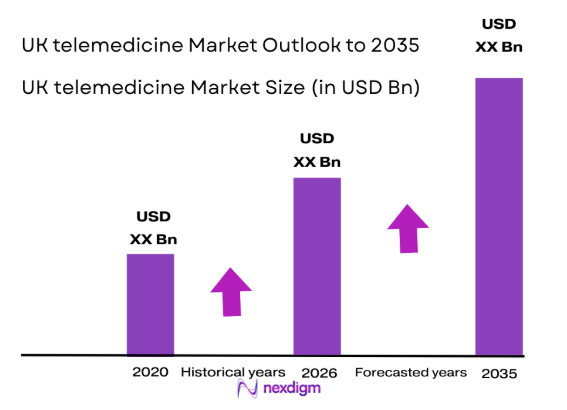
The UK telemedicine market is valued at approximately USD ~ billion based on a recent historical assessment. Driven by rising demand for remote healthcare services and advancements in communication technology, telemedicine adoption has surged across the country. A key factor in this growth is the increased integration of telemedicine into mainstream healthcare services, allowing patients to access healthcare from their homes. The rapid technological advancements, especially in AI and mobile health platforms, have also significantly contributed to the market’s growth, making healthcare more accessible and efficient.
The market is dominated by large metropolitan areas such as London, Manchester, and Birmingham, where healthcare infrastructure is most advanced and the demand for telehealth solutions is high. These cities benefit from higher internet penetration, better healthcare access, and a growing elderly population that prefers remote care options. London, in particular, stands out due to its concentration of healthcare services and tech-based startups that are driving innovation in telemedicine. Additionally, government initiatives and investments are concentrated in these regions to expand telehealth infrastructure and make remote healthcare services widely available.
Market Segmentation
By Product Type
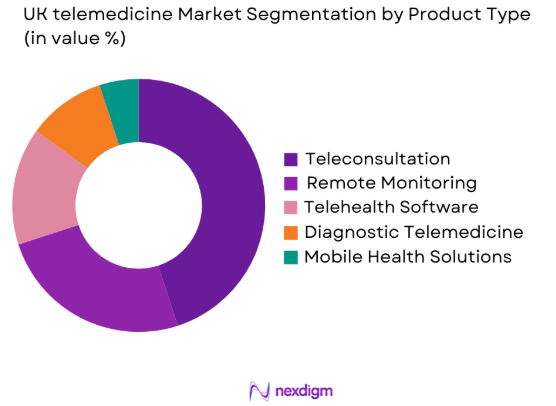
The UK telemedicine market is segmented by product type into teleconsultation, remote monitoring, telehealth software, diagnostic telemedicine, and mobile health solutions. Teleconsultation has recently emerged as the dominant sub-segment, driven by the increasing preference for virtual doctor visits due to convenience, affordability, and the expansion of digital health infrastructure. The rising demand for more accessible healthcare services, particularly among the aging population and those in remote locations, has fueled the growth of teleconsultation services. Additionally, teleconsultation is increasingly covered by insurance, which further drives its adoption.
By Platform Type
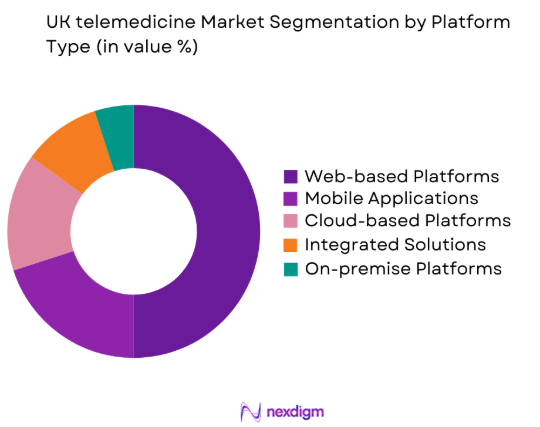
The UK telemedicine market is segmented by platform type into web-based platforms, mobile applications, cloud-based platforms, integrated solutions, and on-premise platforms. Web-based platforms dominate the market due to their broad accessibility, ease of use, and low cost of implementation. These platforms are particularly preferred by healthcare providers as they enable seamless patient-provider interactions without the need for specialized hardware. The growing reliance on internet-based services, along with the widespread use of broadband in the UK, contributes to the strong market presence of web-based platforms.
Competitive Landscape
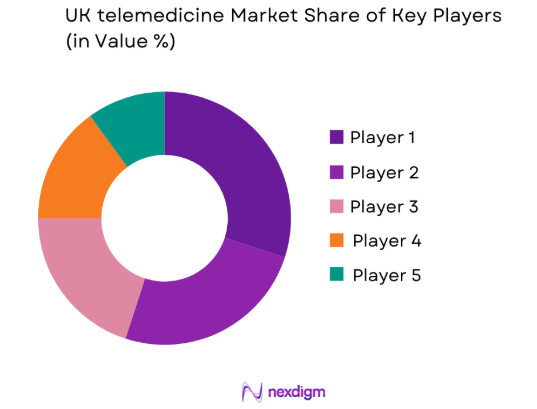
The competitive landscape of the UK telemedicine market is marked by the presence of numerous technology-driven healthcare providers and digital health startups. Major players are investing in expanding their platforms, integrating AI and machine learning for better diagnostics, and partnering with healthcare providers to increase service availability. The market has witnessed significant consolidation, as larger healthcare organizations seek to acquire innovative tech startups to enhance their telehealth capabilities. The strong competition is expected to drive rapid innovation, with players focusing on improving user experience and expanding service offerings.
| Company Name | Establishment Year | Headquarters | Technology Focus | Market Reach | Key Products | Revenue (USD) | Additional Parameter |
| Babylon Health | 2013 | London | ~ | ~ | ~ | ~ | ~ |
| Doctor Care Anywhere | 2013 | London | ~ | ~ | ~ | ~ | ~ |
| Livi | 2015 | London | ~ | ~ | ~ | ~ | ~ |
| HealthHero | 2017 | London | ~ | ~ | ~ | ~ | ~ |
| Medibuddy | 2017 | London | ~ | ~ | ~ | ~ | ~ |
UK telemedicine Market Analysis
Growth Drivers
Technological Advancements in Telemedicine
The UK telemedicine market is experiencing significant growth driven by advancements in digital healthcare technologies. The integration of AI and machine learning into telemedicine services improves diagnostic accuracy, enhances patient management, and optimizes the overall user experience. As healthcare providers increasingly adopt telehealth solutions, patients can access quality healthcare from the comfort of their homes, particularly benefiting those with mobility issues or living in remote areas. The growth of high-speed internet and mobile networks has further expanded the reach of telemedicine, making it a practical option for millions across the country. These technological developments have paved the way for more accessible, efficient, and personalized healthcare services, increasing the market’s potential and adoption rates.
Government Support for Telemedicine Expansion
The UK government has been instrumental in promoting telemedicine adoption through financial incentives and regulatory support. Initiatives like the NHS Long Term Plan aim to expand digital healthcare services, including telehealth, to improve accessibility, lower healthcare costs, and enhance service delivery. The introduction of favorable reimbursement policies for telemedicine consultations has also encouraged broader adoption by both patients and healthcare providers. As the government continues to prioritize digital health solutions, telemedicine is set to play an increasingly central role in the UK healthcare system, offering innovative ways to deliver care, reduce strain on traditional healthcare services, and provide better access to healthcare across the country.
Market Challenges
Data Privacy and Security Concerns
A key challenge facing the UK telemedicine market is ensuring the security and privacy of sensitive patient data. As telemedicine services grow, with more consultations and medical records being shared online, the risk of cyberattacks and data breaches increases. The UK’s strict data protection regulations, such as the GDPR, mandate that telemedicine providers implement strong data security measures to prevent unauthorized access to patient information. Despite these efforts, maintaining robust data security in a digital environment remains a significant challenge. The risk of security breaches could undermine patient trust in telemedicine platforms, potentially limiting their adoption and affecting the overall credibility of digital healthcare services.
Regulatory Barriers to Widespread Adoption
Another challenge facing the UK telemedicine market is the complex regulatory landscape. Despite significant progress in integrating telemedicine into mainstream healthcare, regulatory barriers remain, particularly around licensing, reimbursement, and cross-border healthcare services. Telemedicine providers must navigate a range of local, national, and international regulations, which can hinder service expansion and complicate operations. Additionally, the lack of standardization in telemedicine practices across regions can lead to confusion, inefficiencies, and inconsistencies in service delivery. This regulatory complexity not only slows the growth of telemedicine but also creates challenges for providers seeking to ensure compliance and deliver a seamless experience to patients across various jurisdictions.
Opportunities
Telemedicine Integration with AI and Machine Learning
The integration of artificial intelligence (AI) and machine learning (ML) technologies offers a major growth opportunity for the UK telemedicine market. AI and ML can enhance diagnostic accuracy, predict patient outcomes, and provide personalized treatment recommendations, making telemedicine more efficient and effective. As AI-powered telemedicine services become more widespread, they are expected to improve the quality of care provided through telehealth platforms, increasing their appeal to both healthcare providers and patients. The continuous advancements in AI technology, such as improved algorithms and data analytics, are expected to drive further innovation, leading to more widespread adoption of telemedicine solutions and enhancing their value in delivering healthcare services.
Expansion of Telemedicine in Rural Areas
Telemedicine presents a unique solution to address healthcare disparities in rural and underserved areas in the UK. Limited access to healthcare professionals in these regions often results in delayed diagnoses and treatments. Telemedicine can mitigate this by enabling remote consultations, monitoring, and follow-up care, thus reducing the need for patients to travel long distances for basic healthcare services. Expanding telemedicine services into rural communities can improve healthcare access and outcomes. With continued government support and increased awareness of telehealth benefits, the expansion of telemedicine in these areas is expected to drive significant growth, providing more equitable healthcare opportunities across the country.
Future Outlook
The UK telemedicine market is poised for significant growth over the next five years, with expected technological advancements and increased government support. As the demand for convenient, remote healthcare continues to rise, telemedicine services are becoming an integral part of the UK healthcare system. With the expansion of AI, machine learning, and IoT technologies, telemedicine platforms will become more efficient and accessible, offering a wider range of services. Additionally, regulatory changes and reimbursement policies will continue to play a crucial role in shaping the future of telemedicine in the UK, encouraging greater adoption by healthcare providers and patients alike.
Major Players
- Babylon Health
- Doctor Care Anywhere
- Livi
- HealthHero
- Medibuddy
- Push Doctor
- Online Doctor UK
- Teladoc Health
- HealthUnlocked
- MyHealthTeams
- Medigo
- Zesty
- Visionable
- Doctorlink
- The GP Service
Key Target Audience
- Investments and venture capitalist firms
- Government and regulatory bodies
- Private healthcare providers
- Insurance companies
- Digital health startups
- Telemedicine service providers
- Healthcare technology firms
- Pharmaceutical companies
Research Methodology
Step 1: Identification of Key Variables
This step involves defining the primary market drivers, such as technological advancements, government policies, and consumer behavior trends. We identify relevant market segments, key players, and regulatory factors that influence market dynamics.
Step 2: Market Analysis and Construction
We perform qualitative and quantitative analysis based on market data, industry reports, and market trends. This step includes developing a market model to assess growth potential and opportunities for new entrants.
Step 3: Hypothesis Validation and Expert Consultation
Expert consultations with industry professionals, stakeholders, and key players are conducted to validate market assumptions and ensure the accuracy of the forecasts. We refine market predictions based on feedback and expert insights.
Step 4: Research Synthesis and Final Output
The final output synthesizes all research findings, including growth drivers, challenges, and opportunities. A comprehensive market report is produced, offering actionable insights and recommendations for stakeholders in the UK telemedicine market.

- Executive Summary
- Research Methodology (Definitions, Scope, Industry Assumptions, Market Sizing Approach, Primary & Secondary Research Framework, Data Collection & Verification Protocol, Analytic Models & Forecast Methodology, Limitations & Research Validity Checks)

- Market Definition and Scope
- Value Chain & Stakeholder Ecosystem
- Regulatory / Certification Landscape
- Sector Dynamics Affecting Demand
- Strategic Initiatives & Infrastructure Growth

- Growth Drivers
Growing Demand for Remote Healthcare Services
Technological Advancements in Telemedicine Solutions
Government Support for Telehealth Initiatives - Market Challenges
Data Privacy and Security Concerns
Regulatory Barriers to Telemedicine Adoption
Limited Internet Access in Remote Areas - Market Opportunities
Integration of AI and Machine Learning in Telemedicine
Telemedicine Adoption in Rural Areas
Growth of Mobile Health Solutions - Trends
Increased Use of Artificial Intelligence
Rise in Teleconsultations and Virtual Care
Growth of IoT-enabled Devices in Telemedicine - Government Regulations
- SWOT Analysis of Key Competitors
- Porter’s Five Forces

- By Market Value, 2020-2025
- By Installed Units, 2020-2025
- By Average System Price, 2020-2025
- By System Complexity Tier, 2020-2025

- By System Type (In Value%)
Teleconsultation
Remote Monitoring
Telehealth Software
Diagnostic Telemedicine
Mobile Health Solutions - By Platform Type (In Value%)
Web-based Platforms
Mobile Applications
Cloud-based Platforms
Integrated Solutions
On-premise Platforms - By Fitment Type (In Value%)
On-premise Solutions
Cloud-based Solutions
Hybrid Solutions
Modular Solutions
Integrated Solutions - By End User Segment (In Value%)
Healthcare Providers
Insurance Providers
Government Health Agencies
Telemedicine Providers
Patients - By Procurement Channel (In Value%)
Direct Procurement
Government Tenders
Private Sector Procurement
Online Bidding Platforms
Third-party Distributors

- Market Share Analysis
- Cross Comparison Parameters (System Type, Platform Type, Procurement Channel, End User Segment, Fitment Type, Pricing Strategy, Technology Integration, Regulatory Compliance, Geographic Reach, Service Delivery Model)
- SWOT Analysis of Key Competitors
- Pricing & Procurement Analysis
- Key Players
Babylon Health
Doctor Care Anywhere
Push Doctor
Livi
HealthHero
Medibuddy
Teladoc Health
Practitioner Health
NHS Digital
Consulting Room
Virtually Healthcare
Visionable
Zesty
CareSimple
GP at Hand

- Increasing Demand from Healthcare Providers
- Patient Adoption of Telemedicine Solutions
- Insurance Providers Integrating Telehealth
- Government Agencies Supporting Telemedicine

- Forecast Market Value, 2026-2035
- Forecast Installed Units, 2026-2035
- Price Forecast by System Tier, 2026-2035
- Future Demand by Platform, 2026-2035


 Request a Sample
 Ask for Customization
 Get a Quote
 Enquire Now