

 Download PDF
Market Overview
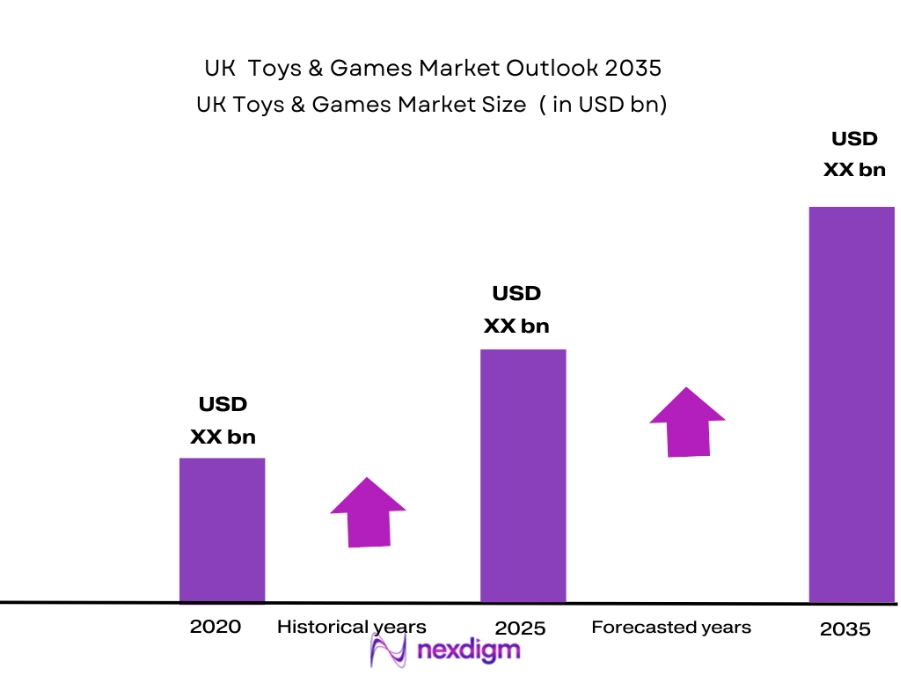
The UK toys and games market is valued at approximately USD ~ billion in 2025, based on industry analyses reporting a toy industry revenue of around ~ billion British pounds as part of broader consumer spending trends in the sector, and additional research noting a larger toy & games spend when aggregated across all product categories. This reflects a rebound from earlier declines linked to a cost‑of‑living squeeze, with sales of affordable toys, licensed entertainment products, and adult‑oriented collectibles helping stabilise demand after previous downturns driven by weaker consumer spending.
Major urban centres such as London, Manchester, and Birmingham exert a dominant influence on the UK toys and games market due to their high population densities and concentrated retail ecosystems. These metropolitan areas benefit from substantial footfall in both high‑street retail outlets and experiential toy stores, as well as stronger online fulfillment networks that serve broad catchment areas. The presence of major retailers and distribution hubs in these cities supports wider market penetration and year‑round consumer engagement.
Market Segmentation
By Product Type
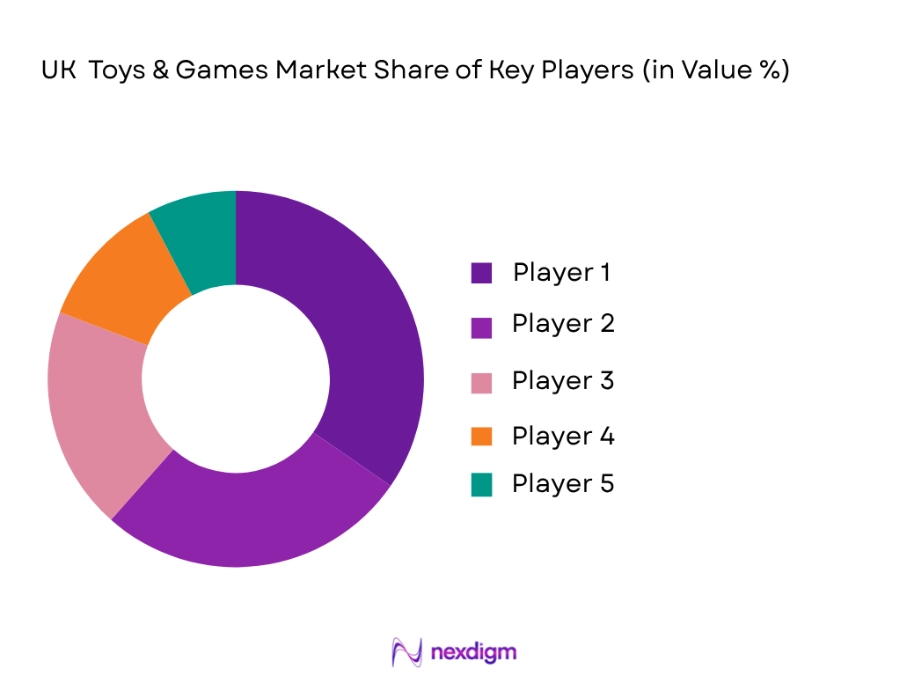
The UK toys and games market is segmented by product category into building sets & construction toys, dolls & action figures, games & puzzles, electronic & interactive toys, outdoor & sports toys, and other smaller categories. Building sets & construction toys hold a leading market share, largely due to sustained consumer interest in brands like LEGO and other modular play systems that appeal across age groups, including adults (“kidults”) seeking complex builds. Dolls and action figures benefit from strong licensing partnerships with entertainment franchises, while games & puzzles have seen renewed traction as family‑oriented and tabletop gaming experiences gain cultural relevance through social and media trends. Segment growth is influenced by evolving preferences for interactive play, digital integration, and collectible products that extend beyond traditional child demographics.
 By Age Group
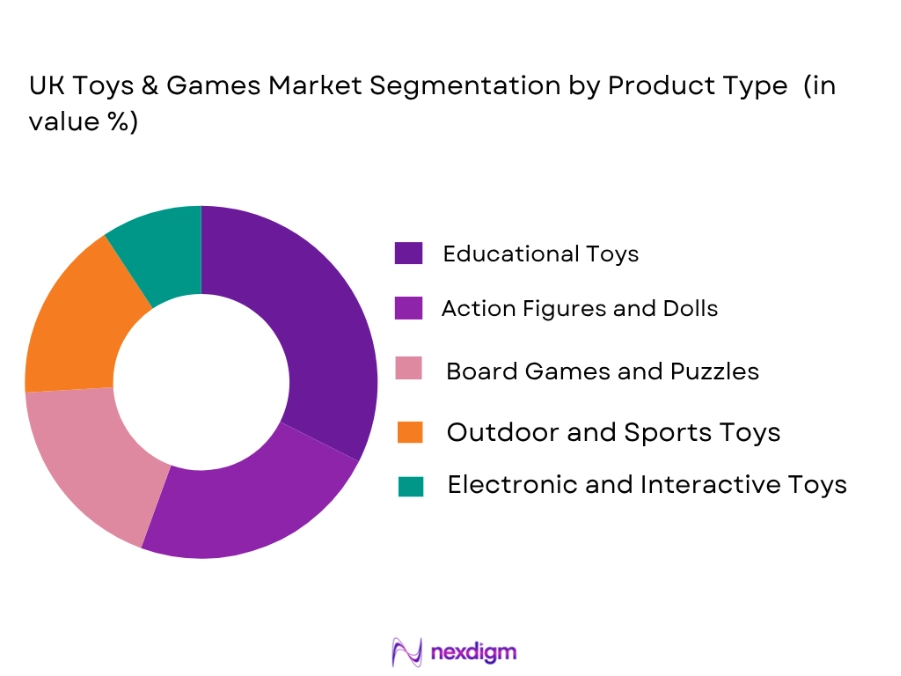
The age‑group segmentation of the UK toys and games market includes early childhood (0‑5 years), primary school age (6‑12 years), teenagers (13‑17 years), and adult consumers (18+). The early childhood segment remains the largest, driven by parental spending on developmental toys and educational products. However, the adult segment is highly significant, reflecting a growing trend of “kidult” participation in toy purchasing, particularly for hobbyist collectibles, licensed fiction‑related merchandise, and premium construction sets. Consumer behaviour in this cohort is influenced by nostalgia, social media trends, and the integration of toys into lifestyle and pop‑culture engagement beyond traditional youth demographics.
Competitive Landscape
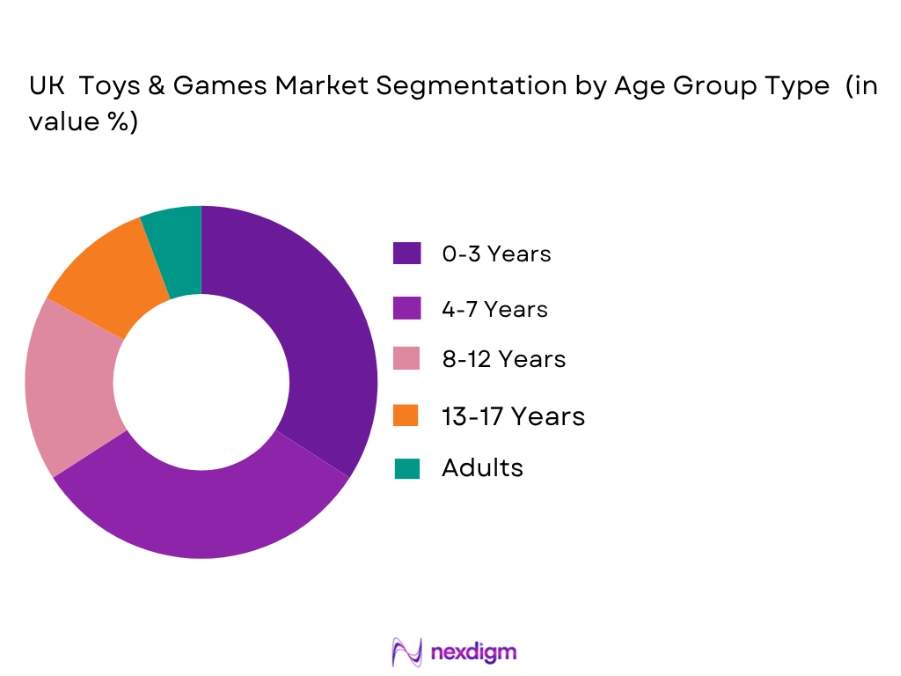
The UK toys & games market is characterised by both global toy manufacturers and specialised domestic companies. A concentrated competitive environment features long‑standing brands that leverage licensing agreements, extensive distribution networks, and product innovation to sustain market relevance. Leading companies are active in a range of segments from construction sets and collectibles to electronic and interactive toys. Consolidation among retailers and the digital shift toward online channels have also influenced market dynamics, with omni‑channel strategies becoming crucial for sustained competitiveness.
| Company Name | Establishment Year | Headquarters | Product Focus | Distribution Channels | Licensing Portfolio | Brand Strength | UK Market Presence |
| LEGO Group | 1932 | Billund, Denmark | ~ | ~ | ~ | ~ | ~ |
| Hasbro Inc. | 1923 | USA | ~ | ~ | ~ | ~ | ~ |
| Mattel Inc. | 1945 | USA | ~ | ~ | ~ | ~ | ~ |
| Spin Master | 1994 | Canada | ~ | ~ | ~ | ~ | ~ |
| Vivid Imaginations | 1992 | UK | ~ | ~ | ~ | ~ | ~ |
UK Toys & Games Market Analysis
Growth Drivers
Rising Demand for Educational and STEM Toys
The UK toys and games market is strongly driven by the rising demand for educational and STEM-focused toys. Products like coding kits, robotics sets, and science-based construction kits appea to parents who prioritize learning alongside play, fostering cognitive development and problem-solving skills. This trend is reinforced by school curricula emphasizing STEM skills, which encourages adoption of educational toys at home. Additionally, children’s exposure to digital technologies increases interest in interactive and tech-enabled play, making educational toys more engaging. The combination of educational value, parental endorsement, and technological integration ensures that STEM and learning-oriented toys maintain strong and sustained growth in the market.
Digital and Interactive Gaming Trends
Digital and interactive gaming trends are another critical driver for the UK toys and games market. Augmented reality toys, app-enabled board games, and smart toys that connect with mobile devices provide immersive play experiences, enhancing engagement across age groups. The rapid growth of e-commerce and online retail channels supports this trend by enabling consumers to access a wide range of interactive and niche products conveniently. Rising disposable income and a strong gift-giving culture during holidays and special occasions also contribute to market expansion, encouraging consumers to purchase higher-value or technologically advanced toys. Collectively, these factors sustain year-round demand and innovation in the market.
Market Challenges
Competition from Digital Entertainment and Regulatory Compliance
The UK toys and games market faces significant challenges from digital entertainment alternatives such as video games, streaming platforms, and mobile applications, which compete for children’s attention and discretionary spending. Regulatory compliance and safety standards impose strict production requirements, particularly for products intended for young children, increasing manufacturing costs and limiting flexibility. Price sensitivity among consumers also constrains demand for higher-priced toys, particularly during periods of economic uncertainty, which can affect the sales of premium and collectible items. Seasonal demand fluctuations, concentrated around holidays and school events, further create uneven revenue streams, making inventory management and marketing planning more complex for manufacturers and retailers.
Competition and Supply Chain Constraints
Another challenge for the UK toys and games market is the increasing competition from both domestic and international toy manufacturers, which drives pressure on pricing and product differentiation. Short product lifecycles and rapid changes in consumer preferences, often influenced by social media and pop culture, require companies to continuously innovate, adding to operational complexity. Supply chain disruptions, including delays in raw material sourcing and logistics, can affect timely product availability. Additionally, sustainability expectations are rising, with consumers demanding eco-friendly materials and packaging, which can increase production costs. Together, these factors create a complex operating environment that manufacturers must navigate to maintain market share and profitability.
Opportunities
Expansion of Licensed Merchandise and Franchises
The UK toys and games market presents strong opportunities in the expansion of licensed merchandise and franchise-based products. Popular entertainment franchises, including movies, TV shows, and video games, continue to drive consumer demand for character-based toys, action figures, and themed playsets. This trend leverages brand recognition and fan loyalty, encouraging repeat purchases and premium pricing. Collaborations between toy manufacturers and media companies allow for cross-promotional campaigns, increasing visibility and engagement. Additionally, limited-edition releases and collectible items tied to franchises create a sense of urgency among consumers, further boosting sales and creating
Integration of Smart Toys and Augmented Reality
Another key opportunity in the UK toys and games market is the integration of smart technologies and augmented reality (AR) into play experiences. Smart toys, including app-connected robots, interactive learning kits, and AR-enabled board games, offer immersive and educational experiences that appeal to both children and adult collectors. The adoption of these technologies enhances engagement, fosters learning, and aligns with increasing consumer interest in interactive digital play. Moreover, the rising e-commerce penetration allows these technologically advanced toys to reach wider audiences. Manufacturers investing in innovation and connectivity are positioned to capture growing demand for high-tech, experience-driven products, expanding market share and profitability.
Future Outlook
Over the next decade, the UK toys & games market is expected to maintain steady growth propelled by an expanding “kidult” consumer base, continued adoption of digital and interactive play products, and increasing integration of licensed content across major franchises. The rising importance of online retail channels alongside traditional retail formats will support wider market access and consumer engagement. Sustainability trends, including eco‑friendly toy options, are also likely to influence product development and purchasing behaviours. Market expansion will be underpinned by technological advancements that blend physical and digital play, alongside strong cultural drivers linked to media and entertainment properties.
Major Players
- LEGO Group
- Hasbro Inc.
- Mattel Inc.
- Spin Master
- Vivid Imaginations
- Funko Inc.
- Ravensburger AG
- Bandai Namco Holdings
- The Entertainer (Retail)
- Smyths Toys Superstores
- VTech Holdings Ltd.
- Character Options Ltd.
- Hornby Hobbies
- Playmobil GmbH
- Melissa & Doug
Key Target Audience
- Market participants and stakeholders
- Retailers and ecommerce toy sellers
- Consumer goods investors and venture capitalist firms
- Manufacturers and brand licensors
- Toy and game distributors
- Children’s product innovators and developers
- Parenting and family lifestyle product buyers
- Government and regulatory bodies
- Toy franchise and licensing partners
Research Methodology
Step 1: Identification of Key Variables
Research began with mapping primary stakeholders and product categories within the UK toys & games market using extensive secondary data sources including industry reports, trade bodies, and economic databases. Key variables such as revenue, consumer behaviour trends, and distribution channels were defined to frame the market scope.
Step 2: Market Analysis and Construction
Historical revenue data and recent market performance were aggregated to analyse segment growth and product trends. Distribution performance across retail and online channels was evaluated to understand changes in consumer purchasing patterns and market structure.
Step 3: Hypothesis Validation and Expert Consultation
Market assumptions were tested through interviews with industry professionals, senior retail buyers, and brand managers to validate growth drivers, segment momentum, and competitive pressures. These insights provided operational perspectives that enhanced the quantitative analysis.
Step 4: Research Synthesis and Final Output
Final market insights were consolidated by combining bottom‑up segment forecasts with qualitative trends. Interactions with leading toy manufacturers and retail networks helped verify segment revenue distributions, product category performance, and future growth expectations to ensure analytical accuracy.

- Executive Summary
- Research Methodology (Market Definitions and Assumptions, Abbreviations,
Market Sizing Approach, Consolidated Research Approach, Understanding Market Potential Through In-Depth Industry Interviews, Primary Research Approach, Limitations and Future Conclusions)

- Definition and Scope
- Market Dynamics Overview
- Market Genesis
- Major Players and Market Timeline
- Business Cycle and Trends
- Supply Chain and Value Chain Analysis

- Growth Drivers
Rising Demand for Educational and STEM Toys
Digital and Interactive Gaming Trends
Growth in E-commerce and Online Retail Channels
Increasing Disposable Income and Gift-Giving Culture - Market Challenges
High Competition from Digital Entertainment
Regulatory Compliance and Safety Standards
Price Sensitivity Among Consumers
Seasonal Demand Fluctuations - Opportunities
Expansion of Licensed Merchandise and Franchises
Integration of Augmented Reality and Smart Toys
Growth of Collectibles and Hobbyist Segments
Increasing Popularity of Eco-Friendly and Sustainable Toys - Trends
Shift Toward Digital and Interactive Toys
Rise of Subscription-Based Toy Services
Focus on Gender-Neutral and Inclusive Toy Designs
Integration of AI and Connectivity in Play Experiences - Government Regulations
Safety Standards and Product Compliance
Import and Tariff Regulations
Environmental Regulations
Consumer Protection Policies - SWOT Analysis
- Porter’s Five Forces Analysis

- By Value, 2020-2025
- By Volume, 2020-2025
- By Average Price, 2020-2025

- By Product Type (In Value %)
Educational Toys
Action Figures and Dolls
Board Games and Puzzles
Outdoor and Sports Toys
Electronic and Interactive Toys - By Age Group (In Value %)
0-3 Years
4-7 Years
8-12 Years
13-17 Years
Adults - By Distribution Channel (In Value %)
Specialty Toy Stores
Department Stores
Online Retailers
Supermarkets / Hypermarkets
Other Retail Channels - By Price Tier (In Value %)
Economy / Entry-Level
Mid-Tier
Premium / High-End

- Market Share of Major Players by Value/Volume
- Market Share of Major Players by Product Type
- Market Share of Major Players by Distribution Channel
- Cross Comparison Parameters (Company Overview, Business Strategies, Recent Developments, Strength, Weakness, Organizational Structure, Revenues, Revenues by Product Type, Number of Retail Outlets, Distribution Channels, Number of Dealers and Distributors, Margins, Production Capabilities, Unique Value Offering)
- SWOT Analysis of Major Players
- Pricing Analysis Based on Product Categories for Major Players
- Detailed Profiles of Major Companies
Hasbro Inc.
Mattel Inc.
LEGO Group
Spin Master Corp.
Funko Inc.
Bandai Namco Holdings
Jakks Pacific Inc.
VTech Holdings Ltd.
Fisher-Price
Ravensburger AG
Tomy Company Ltd.
Melissa & Doug
Playmobil GmbH
Schleich GmbH
Character Options Ltd.

- Market Demand and Utilization
- Purchasing Power and Budget Allocations
- Regulatory and Compliance Requirements
- Needs, Desires, and Pain Point Analysis
- Decision-Making Process

- By Value, 2026-2035
- By Volume, 2026-2035
- By Average Price, 2026-2035


 Request a Sample
 Ask for Customization
 Get a Quote
 Enquire Now