
 Download PDF
Market Overview
The UK vegan cosmetics market is valued at approximately USD ~ billion, based on aggregated retail sales data from sources such as the British Beauty Council, Statista, and industry trade publications. The market is driven by strong ethical consumption trends, with over ~ million consumers in the UK identifying as vegan and a broader base adopting plant-based lifestyle. Growth is supported by increasing availability of certified vegan SKUs across major retailers, premiumisation in skincare and makeup, and rapid expansion of direct-to-consumer and online sales channels.
The market is primarily concentrated in cities such as London, Manchester, Birmingham, and Bristol, driven by higher disposable income, strong retail presence, and early adoption of sustainability-led consumption. London leads due to its dense network of specialty beauty retailers, flagship brand stores, and influencer-driven demand. Northern cities show increasing adoption due to expanding retail infrastructure, while Scotland and South East regions benefit from growing awareness of ethical beauty and access to premium product offerings.
Market Segmentation
By Product Category
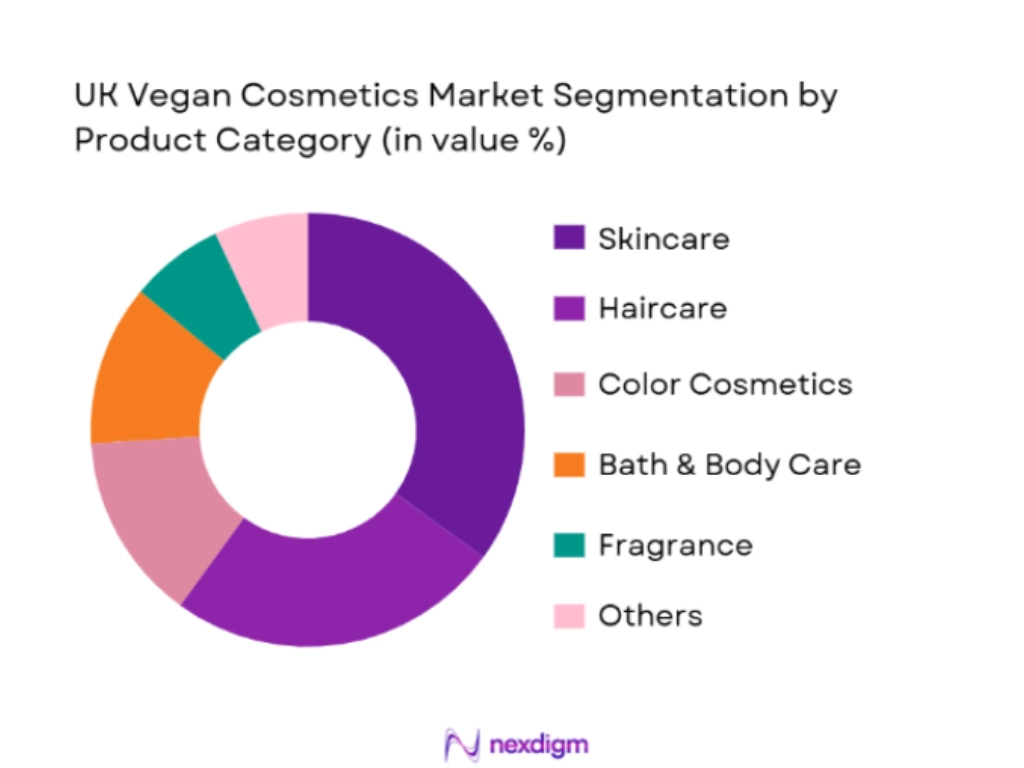
The UK vegan cosmetics market is segmented into skincare, colour cosmetics, haircare, bath & body care, fragrance, lip care, and men’s grooming. Among these, skincare dominates the market, primarily due to heightened consumer focus on ingredient transparency, skin health, and sensitivity concerns. Vegan skincare products often emphasize plant-based actives and clean-label formulations, which resonate strongly with UK consumers seeking safe and ethical options. Additionally, skincare products typically have higher repeat purchase frequency compared to other categories, further strengthening their market share. The presence of dermatologist-backed vegan brands and premium serums and moisturisers also contributes to higher average selling prices, reinforcing the segment’s dominance.
By Distribution Channel
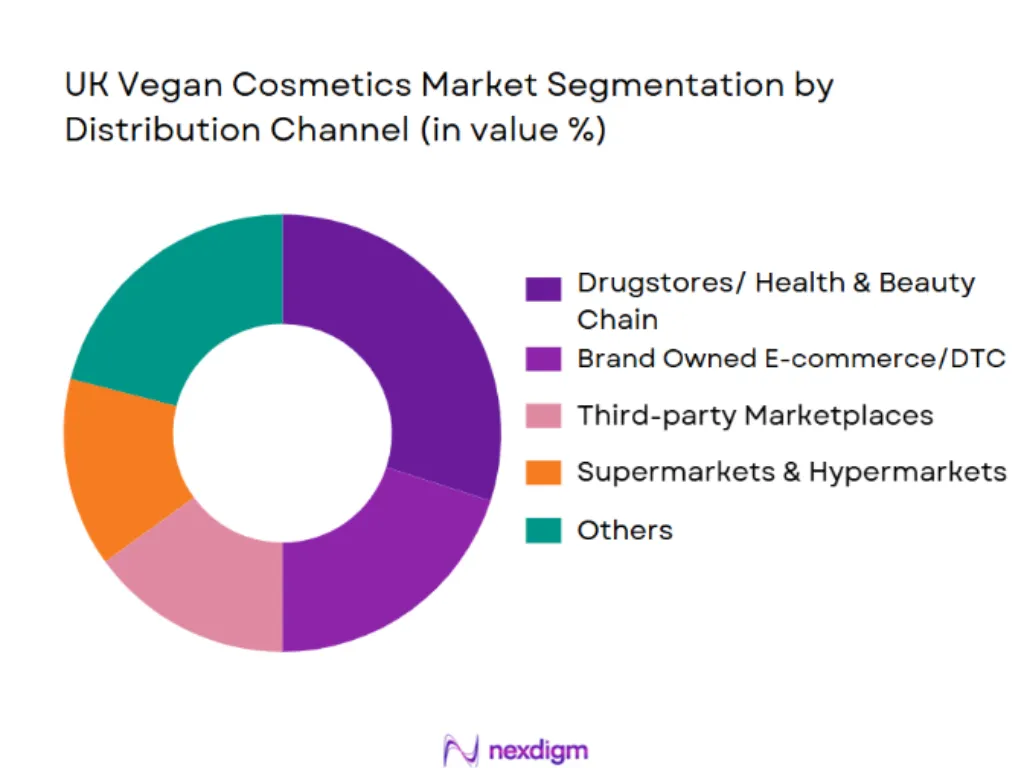
The market is segmented into drugstores, DTC platforms, marketplaces, supermarkets, specialty retailers, health stores, pharmacies, and salons. Drugstores and health & beauty chains dominate the market, driven by their extensive physical presence and strong brand partnerships. Retailers such as Boots and Superdrug offer wide assortments of vegan-labelled products, often supported by in-store promotions and private-label offerings. These channels provide high accessibility and trust among consumers, particularly for everyday skincare and makeup purchases. Additionally, omnichannel strategies combining in-store experiences with online platforms enhance customer engagement and convenience, further strengthening the dominance of this segment in the UK vegan cosmetics market.
Market Competitive Landscape
The UK vegan cosmetics market is moderately consolidated, with a mix of established ethical brands and emerging digital-first players. Legacy companies such as The Body Shop and Lush maintain strong brand recognition due to their early adoption of cruelty-free and vegan positioning. At the same time, newer brands leverage social media, influencer marketing, and direct-to-consumer strategies to capture market share. The competitive environment is intensifying with the entry of private-label products from major retailers and global brands expanding their vegan portfolios.
| Company | Establishment Year | Headquarters | Vegan SKU Share | Certification Strength | Price Tier | Distribution Reach | Innovation Rate | Sustainability Focus |
| The Body Shop | 1976 | London, UK | ~ | ~ | ~ | ~ | ~ | ~ |
| Lush | 1995 | Poole, UK | ~ | ~ | ~ | ~ | ~ | ~ |
| Revolution Beauty | 2014 | London, UK | ~ | ~ | ~ | ~ | ~ | ~ |
| Barry M | 1982 | London, UK | ~ | ~ | ~ | ~ | ~ | ~ |
| Pai Skincare | 2007 | London, UK | ~ | ~ | ~ | ~ | ~ | ~ |
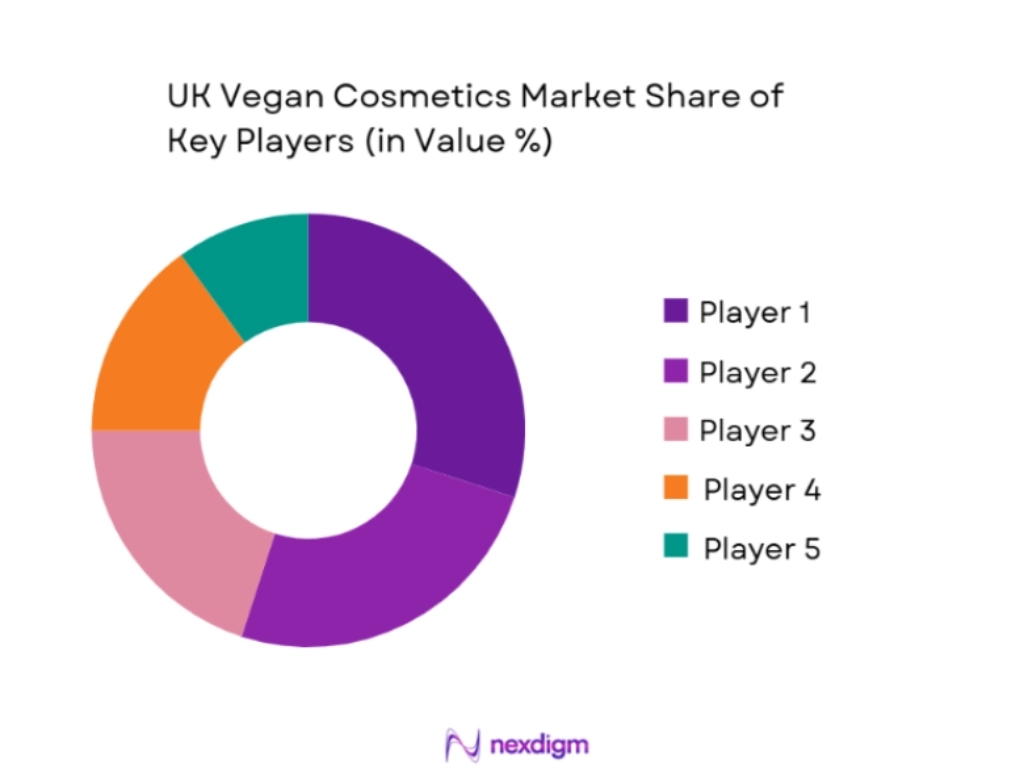
UK Vegan Cosmetics Market Analysis
Growth Drivers
Ethical Consumption
Ethical consumption is a structural growth driver for UK vegan cosmetics because the category sits at the intersection of discretionary beauty spending, sustainability, and traceable product claims. The UK had a population of 69,226,000 in 2024, GDP of USD 3.69 trillion, and GDP per capita of USD 53,246.4, giving vegan cosmetics brands access to a large, high-spending consumer base capable of trading into certified ethical beauty lines. The same year, UK consumer price inflation was 3.3, showing that demand for premium-positioned but values-led products continued in a still-inflationary environment. On the demand side, the Office for National Statistics reported that household spending growth was 0.2 quarter-on-quarter in April–June 2024, while spending versus the same quarter a year earlier was unchanged, indicating that households were still active in non-essential consumption categories even without a broad-based demand surge. For vegan cosmetics specifically, ethical buying is reinforced by label visibility and digital product discovery: the World Bank records internet use at 95 out of every 100 people in the UK in 2024, which matters because vegan beauty discovery, ingredient checks, and certification verification are heavily online-led. This macro backdrop supports vegan cosmetics not through price-led expansion, but through consumers allocating beauty spending toward products that better align with animal-free, ingredient-transparent and sustainability-led preferences.
Vegan Society Trademark Visibility
Vegan Society Trademark visibility is a direct commercial driver because it reduces friction in product choice and gives shoppers a clear shorthand for ingredient and testing reassurance in a crowded beauty aisle. In September 2024, the Vegan Society reported that the Vegan Trademark had passed 70,000 product registrations across 68 countries. Its statistics page further states that more than 2,500 companies use the mark globally and that more than 30,000 cosmetics and toiletries products are registered under the Trademark. For the UK vegan cosmetics market, this matters because beauty is one of the largest trademarked product pools, so the logo is not marginal; it is already scaled across a category consumers buy repeatedly. Visibility is further supported by the UK’s digital and consumer infrastructure. The World Bank reports 95 internet users per 100 people in the UK in 2024 and a population of 69,226,000, which together support rapid search-led checking of ingredients, labels and retailer listings. In a market where claim confusion still exists between “vegan”, “cruelty-free” and “natural”, a recognised third-party symbol improves shelf conversion and online click-through by simplifying verification at the moment of purchase. The certification also has an operational consequence: the Vegan Society states that the Trademark is renewed yearly, which keeps label relevance current and helps brand owners maintain consistent market-facing claim discipline instead of treating vegan status as a one-off packaging statement.
Market Restraints
Claim Ambiguity
Claim ambiguity remains a real restraint in UK vegan cosmetics because brand communication has to navigate multiple adjacent claims that consumers often read as interchangeable, while regulators assess them through different compliance lenses. UK cosmetics sold in Great Britain must comply with the national cosmetics framework, including safety assessment and notification requirements, and government guidance makes clear that cosmetic products must be safe and tightly regulated. Enforcement data show why ambiguity matters commercially. The UK Product Safety Database recorded 1,418 notifications covering 1,792 products between April 2024 and March 2025, with 24 reported as serious risk and 12 as high risk. In the OPSS Product Safety Testing Sampling Protocol for 2024–2025, 583 products were tested and 464 were found non-compliant; within the top tested categories, cosmetics accounted for 183 products tested, of which 168 were non-compliant. These figures do not mean vegan claims themselves are routinely false, but they do show that the broader cosmetics compliance environment is active, document-heavy and enforcement-led. In that setting, brands using “vegan”, “cruelty-free”, “clean”, “natural” and “sustainable” together face a higher burden to keep ingredient records, packaging language and supporting files aligned. For smaller and indie vegan beauty brands, the commercial effect is slower launch cycles, higher legal review needs and greater risk that unclear wording weakens consumer trust, especially when the category depends on ethical credibility rather than only sensory performance or colour payoff.
Certification Cost
Certification cost restrains the UK vegan cosmetics market less through one headline fee and more through recurring documentation, traceability and renewal workload layered onto an already regulated cosmetics environment. The Vegan Society states that its Trademark is renewed yearly, which means vegan beauty brands must repeatedly maintain ingredient, supplier and formulation records rather than treating verification as permanent. The scale of participation also shows that certification is now competitive infrastructure, not a niche extra: the Vegan Society reports over 70,000 registered products, more than 2,500 companies, and more than 30,000 cosmetics and toiletries products in the Trademark system. That scale raises the competitive pressure on uncertified brands because they must either absorb the operational burden of formal verification or risk looking less credible on shelf. The macro context tightens this restraint. The World Bank shows UK GDP growth at 1.1 in 2024 and consumer price inflation at 3.3, while the IMF lists projected real GDP growth of 0.8 and projected consumer prices growth of 3.2 for 2026. In a slower-growth environment, certification-related compliance work can be harder for small and mid-sized cosmetics brands to fund from internal cash flow. This is especially relevant in vegan cosmetics because brands often also pursue cruelty-free, natural or organic validation alongside vegan status, multiplying dossier work, supplier checks and packaging updates even when direct consumer demand is strong.
Market Opportunities
Refillable Formats
Refillable formats represent one of the clearest growth opportunities in UK vegan cosmetics because they align the category’s animal-free positioning with a measurable packaging-reduction case. Government waste data show the scale of the packaging challenge. For 2024, the UK recorded 10,844 thousand tonnes of packaging waste under methodology 2, including 2,149 thousand tonnes of plastic packaging waste. Of that plastic total, 1,154 thousand tonnes were recycled, implying a lower recycling performance for plastics than for several other materials. The policy direction is equally clear. HMRC states that Plastic Packaging Tax applied at GBP 217.85 per tonne in 2024–2025 to plastic packaging with less than 30 recycled content, and from April 2025 the rate moved to GBP 223.69 per tonne. Even though refill is not the same as recycled content, both policies and waste figures push beauty brands toward lower single-use packaging dependence. For UK vegan cosmetics, this creates a future-facing innovation lane in deodorants, body care, haircare and skincare, where repeat-use packs and refill pods can strengthen the category’s ethical proposition without relying on animal-free claims alone. The opportunity is especially strong because vegan beauty consumers often expect alignment across formulation, packaging and brand values. Refill can therefore improve brand stickiness, repeat purchase mechanics and sustainability credibility at the same time, particularly in channels that can explain system-based products clearly, such as DTC, premium retail and specialty beauty.
Vegan SPF Innovation
Vegan SPF innovation is a meaningful opportunity for the UK vegan cosmetics market because sun-care demand is underpinned by a real health need, while formulation and claims complexity still leave room for differentiated animal-free products. Cancer Research UK reported a projected 20,800 melanoma cases in the UK for 2024 and noted that around 17,000 cases each year are preventable because almost 9 in 10 are linked to ultraviolet exposure from the sun and sunbeds. NHS Wales guidance states that sunscreen in the UK should have at least SPF 30 and at least 4-star UVA protection, with stronger protection available at 50+. These are not niche specifications; they define the performance baseline a vegan SPF has to meet to compete credibly. At the same time, UK cosmetics regulation remains technically active around UV filters. A 2024 government scientific opinion notes that 4-MBC is used up to a maximum concentration of 4 in cosmetic products and that its use in UK sunscreen and other cosmetics is on a downward trend, highlighting how ingredient scrutiny can reshape formulation choices. For vegan cosmetics brands, that combination of rising UV-related need, clear public-health guidance and ongoing filter review supports innovation in broad-spectrum, animal-free, sensorially elegant SPF products. The opening is strongest in face SPF, hybrid skincare-SPF, sensitive-skin formats and lower-waste packaging, where consumers want protection, cosmetic elegance and ethical assurance in one product rather than separate functional purchases.
Future Outlook
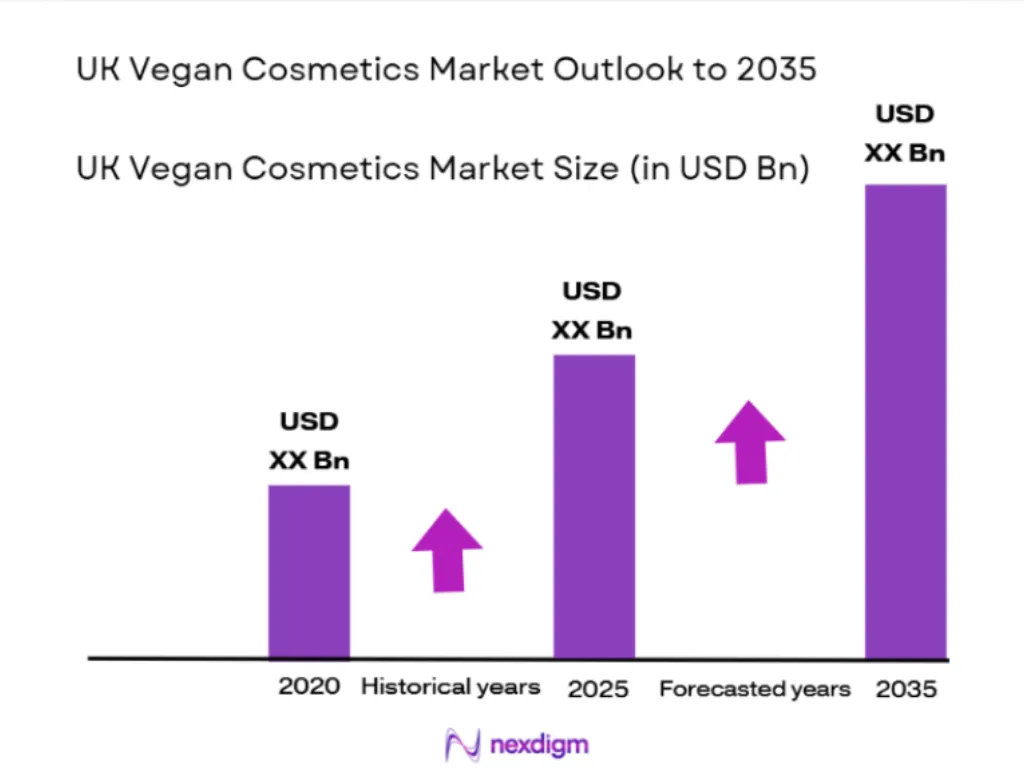
Over the next decade, the UK vegan cosmetics market is expected to experience sustained growth driven by increasing consumer preference for ethical and sustainable products. The market is projected to register a CAGR of 6.8%–8.0%, supported by expanding product portfolios and growing penetration across both mass and premium segments.
Key growth drivers include advancements in plant-based and biotechnology-derived ingredients, increased availability of certified vegan products, and rising demand for eco-friendly packaging solutions such as refillable and recyclable formats. Digital channels are expected to play a critical role, with direct-to-consumer platforms and marketplaces gaining traction due to convenience and personalized offerings. Additionally, the integration of vegan formulations into mainstream beauty categories will further accelerate market expansion.
Major Players in the UK Vegan Cosmetics Market
- The Body Shop
- Lush
- Barry M
- Revolution Beauty
- e.l.f. Cosmetics
- Charlotte Tilbury
- Pai Skincare
- UpCircle Beauty
- BY BEAUTY BAY
- NYX Professional Makeup
- Pacifica Beauty
- Sukin
- Dr. Organic
- B. by Superdrug
- Naturtint
Key Target Audience
- Beauty and Personal Care Retail Chains
- E-commerce and Online Marketplace Operators
- Cosmetic Manufacturers and Private Label Producers
- Raw Material and Ingredient Suppliers
- Certification and Compliance Bodies
- Investments and Venture Capitalist Firms
- Government and Regulatory Bodies (UK Office for Product Safety and Standards, Department for Business and Trade)
- Packaging and Sustainability Solution Providers
Research Methodology
Step 1: Identification of Key Variables
The research begins with mapping the UK vegan cosmetics ecosystem, identifying stakeholders such as brands, retailers, suppliers, and certification bodies. Extensive desk research is conducted using secondary sources including industry reports, company filings, and retail data. The aim is to define variables such as pricing, product categories, and distribution networks.
Step 2: Market Analysis and Construction
Historical data is compiled and analyzed to estimate market size and structure. This includes evaluating product penetration, distribution channel performance, and revenue contributions. A combination of top-down and bottom-up approaches ensures accurate market sizing and segmentation.
Step 3: Hypothesis Validation and Expert Consultation
Market assumptions are validated through interviews with industry experts, including brand representatives, distributors, and formulation specialists. These consultations provide insights into market trends, competitive dynamics, and consumer preferences, refining the overall analysis.
Step 4: Research Synthesis and Final Output
Data from multiple sources is triangulated to ensure accuracy and consistency. Final insights are derived by integrating quantitative data with qualitative findings, resulting in a comprehensive and validated market report.

- Executive Summary
- Research Methodology [Market Definitions and Assumptions, Abbreviations, Inclusion/Exclusion Criteria, Top-to-Bottom Sizing Approach, Bottom-to-Top Revenue Build, Retailer SKU Audit, Brand Universe Mapping, Certification Mapping, Pricing Basket Construction, Demand-Side Consumer Assessment, Supply-Side Expert Interviews, Forecasting Framework, Data Triangulation, Limitations and Analyst Judgement]

- Definition and Scope
- Market Genesis and Evolution
- Value Chain Evolution from Conventional to Vegan Beauty
- Business Cycle and Demand Maturity
- Supply Chain and Value Chain Analysis
- Regulatory and Claims Environment
- Certification Landscape
- Retail and Channel Structure
- Brand Positioning Landscape

- Growth Drivers (Ethical Consumption, Vegan Society Trademark Visibility, Ingredient Transparency, Skinification, Sensitive-Skin Demand, Clean Beauty Convergence, Social Commerce Influence, Omnichannel Accessibility, High-Street Retail Availability, Celebrity/Creator-Led Brand Pull)
- Market Restraints (Claim Ambiguity, Certification Cost, Formula Stability Challenges, Pigment and Texture Performance Gaps, Premium Pricing Pressure, Shelf Competition, Consumer Skepticism, Regulatory Compliance Burden, Evidence-Backed Claims Scrutiny)
- Market Opportunities (Refillable Formats, Vegan SPF Innovation, Dermatologist-Backed Vegan Skincare, Men’s Vegan Grooming, Hybrid Skincare-Makeup, Travel Minis, Shade Expansion, Marketplace Premiumization, Pharmacy-Led Sensitive-Skin Positioning, Giftable Vegan Bodycare)
- Market Trends (Tinted and Skin-Like Finishes, Multi-Use Formats, Fragrance-Free Expansion, Barrier Repair Positioning, Fermentation-Derived and Biotech Actives, Minimalist Routines, Wellness-Led Beauty, Value-Conscious Premiumization, Clinical-Led Vegan Skincare, Waterless and Solid Formats)
- Regulatory Landscape (UK Cosmetics Regulation Compliance, Responsible Person Requirement, SCPN Notification, Product Safety Assessment, Label Claim Guardrails, Ingredient Disclosure, Packaging Label Compliance, Claims Substantiation, Northern Ireland/GB Placement Considerations)
- Ingredient and Formulation Benchmarking (Beeswax Alternatives, Carmine Alternatives, Lanolin Alternatives, Vegan Collagen Alternatives, Plant Oils and Butters, Biotech Actives, Ceramides and Barrier Complexes, Preservative Systems, Sensory Performance, Fragrance-Free Formulation, Sensitive-Skin Compatibility)
- Import Dependence and Sourcing Analysis (raw material origin, contract manufacturing, private label sourcing, logistics exposure)
- Margin Pool Analysis
- Porter’s Five Forces
- SWOT Analysis
- Stakeholder Ecosystem
- White Space Opportunity Mapping (Underpenetrated Categories, Channel Gaps, Certification Gaps, Shade Gaps, Price White Spaces, Region White Spaces, Consumer White Spaces, Packaging White Spaces, Sensitive-Skin White Spaces, Prestige Vegan White Spaces)

- By Value (2020-2025)
- By Volume (2020-2025)
- By Average Selling Price (2020-2025)
- By Pack Units Sold (2020-2025)
- By Online vs Offline Contribution (2020-2025)

- By Product Category (In Value%)
Skincare
Colour Cosmetics / Makeup
Haircare
Bath & Body Care
Fragrance
Lip Care and Treatment
Men’s Grooming Cosmetics - By Consumer Need-State (In Value%)
Sensitive Skin / Hypoallergenic
Hydration and Moisture Repair
Anti-ageing / Firming
Acne / Blemish Control
Brightening / Pigmentation Care
Multi-functional / Hybrid Beauty - By Price Tier (In Value%)
Entry / Mass
Mid-Mass / Masstige
Premium
Prestige / Luxury - By Distribution Channel (In Value%)
Supermarkets / Hypermarkets
Drugstores / Health & Beauty Chains
Specialty Beauty Retailers
Health Stores / Natural Product Retailers
Brand-owned E-commerce / DTC
Third-party E-commerce / Marketplaces
Pharmacies and Apothecary-led Retail
Salons / Professional Beauty Channels - By Certification and Claims (In Value%)
Vegan Society Certified
Leaping Bunny / Cruelty Free International Approved
COSMOS Organic / COSMOS Natural
Vegan + Cruelty-free Dual-Claim
Vegan + Natural / Organic Positioning
Vegan + Sustainable / Refillable / Recycled-Pack Positioning
Self-claimed / Non-third-party Verified Vegan - By Ingredient Positioning (In Value%)
Botanicals and Plant Oils
Fruit / Seed / Nut-derived Actives
Biotech / Fermentation-derived Alternatives
Upcycled Ingredients
Fragrance-free / Essential-oil-led Formulations
Free-from Formulations - By Demographic Cohort (In Value%)
Gen Z
Millennials
Gen X and Above
Women
Men
Gender-neutral / Unisex Buyers - By Region (In Value%)
London
South East
South West
Midlands
North of England
Scotland
Wales
Northern Ireland - By Packaging Format (In Value%)
Bottles
Tubes
Jars
Sticks
Pumps / Droppers
Compacts / Palettes
Refill Pods / Refill Packs
Solid / Waterless Formats

- Market Share Analysis of Major Players (By Overall Market, By Product Category, By Distribution Channel, By Price Tier)
- Competitive Positioning Matrix (mass-premium spectrum, certification depth, innovation speed, channel breadth)
- Cross Comparison Parameters (Vegan-certified SKU Breadth, Share of Portfolio Marketed as Vegan, Average Selling Price Architecture, Shade Range Depth in Colour Cosmetics, Channel Footprint Across UK Retail Doors and DTC, Certification Stack Strength (Vegan Trademark / Leaping Bunny / COSMOS), Packaging Sustainability Intensity, Promotional Intensity and New Launch Cadence)
- Benchmarking of Major Players (brand equity, hero SKU concentration, assortment depth, claim hierarchy, repeat potential)
- Pricing Analysis (SKU-level ASP, entry packs, premium laddering, promo price points, bundle economics)
- Shelf and Assortment Analysis (retailer presence, facings, hero lines, exclusive launches, category adjacency)
- E-commerce and Digital Visibility Analysis (search visibility, reviews, ratings, social engagement, subscription/refill options)
- SWOT Analysis of Major Players (portfolio strength, certification credibility, channel dependency, pricing power)
- Detailed Profiles of Major Companies
The Body Shop
Lush
Barry M
Revolution Beauty
e.l.f.Cosmetics
Charlotte Tilbury
Pai Skincare
UpCircle Beauty
BY BEAUTY BAY
NYX Professional Makeup
Pacifica Beauty
Sukin
Dr. Organic
B. by Superdrug
Naturtint

- Consumer Demand and Usage Patterns (routine depth, category penetration, frequency of use, repurchase cycle)
- Purchase Decision Framework (ingredients, ethics, certification, efficacy proof, price-value equation)
- Consumer Pain Points (greenwashing concern, sensitivity reactions, shade mismatch, fragrance intolerance, value perception)
- Consumer Cohort Mapping (ethical vegans, flexitarians, clean-beauty seekers, sensitive-skin buyers, prestige beauty users)
- Channel Preference Mapping (high-street, beauty specialist, DTC, marketplaces, subscription/refill models)
- Basket Composition and Trading-up Behaviour (single-category entry, regimen build, cross-sell, premium step-up)
- Review, Community and Influencer Impact (UGC influence, creator conversion, review density, social proof)
- Brand Loyalty and Switching Triggers (new launches, shade extension, promotional events, certification visibility, refill economics)

- By Value (2026-2035)
- By Volume (2026-2035)
- By Average Selling Price (2026-2035)
- By Pack Units Sold (2026-2035)
- By Online vs Offline Contribution (2026-2035)


 Request a Sample
 Ask for Customization
 Get a Quote
 Enquire Now