

 Download PDF
 Download PDF
Market Overview
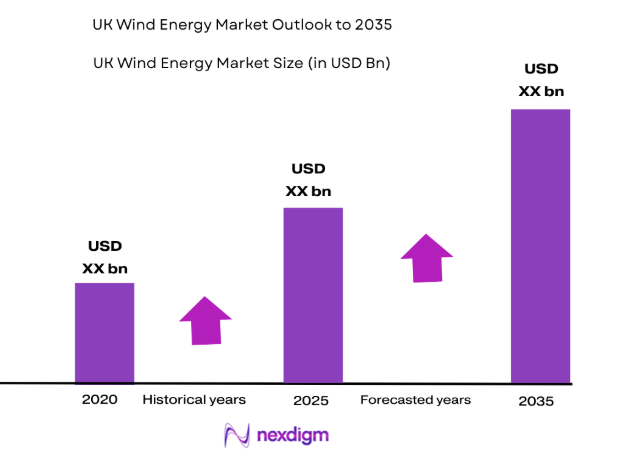
The UK wind energy market has experienced significant growth driven by the increasing demand for clean and renewable energy sources. The market is valued at approximately USD ~ billion based on recent historical assessments, with a sharp rise in investments from both government and private sectors. The shift towards reducing carbon emissions and reliance on fossil fuels has led to a surge in offshore and onshore wind energy installations, contributing to the growing market size.
The dominant players in the UK wind energy market are located in regions with substantial wind resources, such as Scotland and coastal areas in England. These areas have been favored for their high wind speeds, making them ideal locations for both offshore and onshore wind farms. Government initiatives and infrastructure developments in these areas have significantly contributed to their dominance in the market.
Market Segmentation
By Product Type
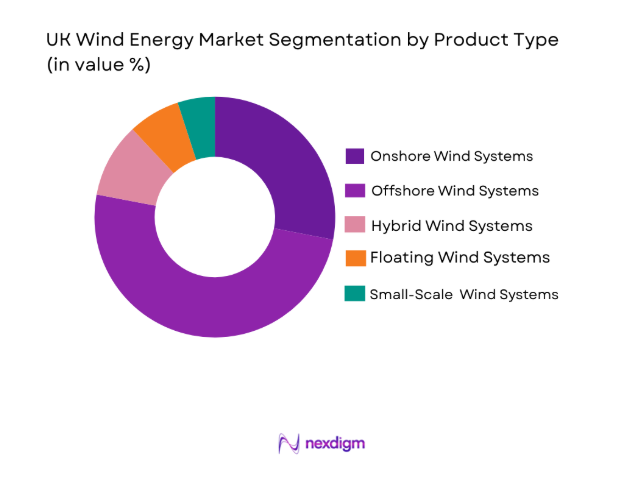
The UK wind energy market is segmented by product type into onshore wind systems, offshore wind systems, hybrid wind systems, floating wind systems, and small-scale wind systems. Recently, offshore wind systems have captured a dominant market share due to the UK’s vast coastal areas and favorable government policies that support offshore wind farm development. With the increasing focus on reducing carbon emissions, offshore wind systems have become the preferred choice due to their high energy output and ability to generate power at scale, making them essential to the country’s renewable energy strategy.
By Platform Type
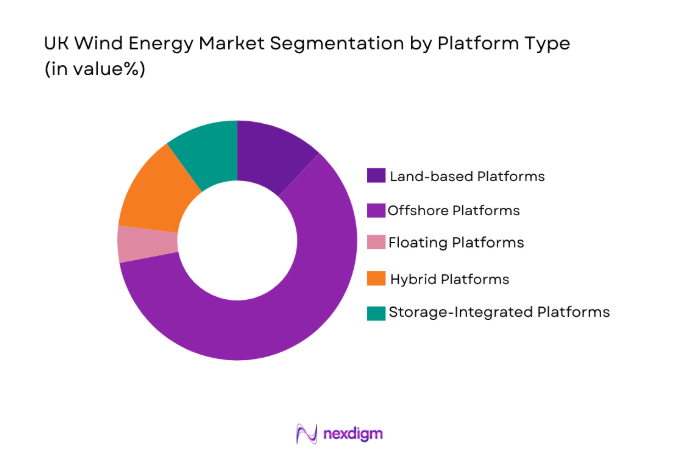
The UK wind energy market is segmented by platform type into land-based platforms, offshore platforms, floating platforms, hybrid platforms, and storage-integrated platforms. Offshore platforms dominate the market due to the availability of large-scale projects in coastal regions and advancements in turbine technology. The UK’s focus on offshore wind energy and its substantial offshore wind farm capacity have driven the growth of this sub-segment, making offshore platforms the primary contributor to the country’s renewable energy generation.
Competitive Landscape
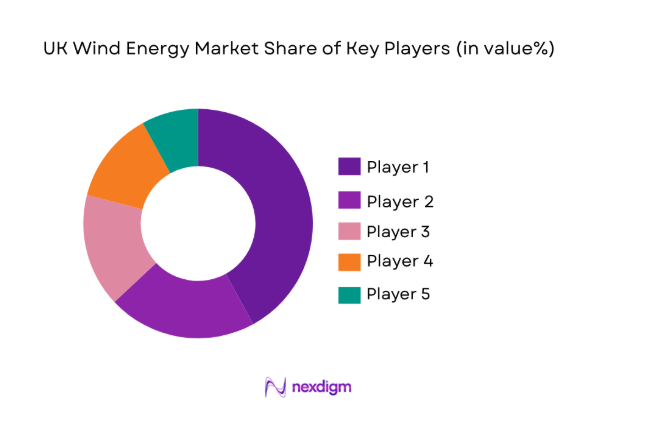
The competitive landscape of the UK wind energy market is characterized by the presence of both established multinational corporations and new entrants focused on renewable energy solutions. These players influence market dynamics through technological advancements, large-scale project investments, and partnerships with governments. The market has witnessed considerable consolidation with major players leading in the offshore wind sector.
| Company Name | Establishment Year | Headquarters | Technology Focus | Market Reach | Key Products | Revenue (USD) | Wind Energy Projects |
| Siemens Gamesa | 1976 | Spain | ~ | ~ | ~ | ~ | ~ |
| GE Renewable Energy | 1892 | USA | ~ | ~ | ~ | ~ | ~ |
| Vestas Wind Systems | 1945 | Denmark | ~ | ~ | ~ | ~ | ~ |
| Nordex SE | 1985 | Germany | ~ | ~ | ~ | ~ | ~ |
| MHI Vestas | 2014 | Denmark | ~ | ~ | ~ | ~ | ~ |
UK Wind Energy Market Analysis
Growth Drivers
Government Incentives
The UK government has been a strong supporter of renewable energy through a variety of initiatives such as the Offshore Wind Sector Deal, clean energy subsidies, and financial grants. These incentives play a crucial role in making wind energy projects economically viable and attractive for developers. The government’s commitment to reaching net-zero carbon emissions has bolstered this push, with a clear target of 40 gigawatts of offshore wind capacity by 2030. This not only drives the demand for wind energy infrastructure and technology but also creates thousands of new job opportunities, fostering a green economy. Moreover, these government-backed incentives help lower the financial risks associated with wind farm development, making the market more attractive for both public and private investments. As part of the UK’s broader decarbonization strategy, the government continues to prioritize wind energy, ensuring that favorable financial conditions persist to stimulate long-term market growth.
Technological Advancements
One of the primary drivers for growth in the UK wind energy market is the constant technological innovation in wind turbine designs and related systems. Over the past few decades, significant advancements have been made, particularly in the efficiency and size of turbines, making them more cost-effective and powerful. The development of larger, more efficient turbines has enhanced the overall capacity factor of wind farms, allowing them to generate more power per unit installed. Additionally, the introduction of advanced materials and digital technologies has significantly reduced the levelized cost of energy (LCOE), bringing wind energy closer to price parity with traditional fossil fuel-based power generation. As technology continues to evolve, the operational efficiency of wind farms will improve even further, lowering energy generation costs and making wind power more accessible to a broader range of consumers. These technological advancements also open the door for new and innovative ways to integrate wind energy into the national grid, further bolstering the sector’s growth prospects.
Market Challenges
High Initial Capital Investment
One of the most significant challenges in the UK wind energy market is the high upfront costs associated with establishing wind farms, particularly offshore wind projects. Despite ongoing decreases in the cost of wind turbines, the capital required for constructing large-scale wind farms remains substantial. The financial outlay for infrastructure, such as turbines, grid connectivity, and maintenance facilities, can be a significant barrier to entry for smaller players and new developers. Moreover, the long return-on-investment (ROI) periods required to recover the initial capital investment can deter investors, especially when market conditions fluctuate, or when competing with other energy sources. The complexity of offshore wind projects, combined with the need for extensive logistical and technical planning, further elevates capital expenditure requirements. While the UK government’s incentives play a crucial role in reducing this financial burden, the capital-intensive nature of wind energy development remains a primary challenge for the market’s expansion.
Regulatory and Licensing Delays
Regulatory inefficiencies and lengthy licensing procedures continue to hinder the development of new wind energy projects in the UK. The process of obtaining permits for onshore and offshore wind farms can span several years, leading to delays that significantly affect project timelines. These delays are often exacerbated by bureaucratic inefficiencies and inconsistencies in local planning policies, making it difficult for developers to navigate the approval processes. Furthermore, while the government has expressed strong support for wind energy development, regulatory frameworks often lack the flexibility to keep pace with the fast-evolving renewable energy sector. As a result, some developers face difficulties in securing timely approvals for new projects, leading to missed opportunities and increased project costs. Streamlining the regulatory and licensing processes is essential to accelerating the pace of wind energy development in the UK, ensuring that the country meets its ambitious renewable energy targets on time.
Opportunities
Offshore Wind Expansion
The UK’s expansive coastline provides a unique opportunity for the rapid expansion of offshore wind farms. Offshore wind projects have become an essential component of the UK’s renewable energy strategy, offering high capacity generation capabilities and a more consistent energy output compared to onshore wind turbines. The government’s goal of having 40 gigawatts of offshore wind capacity by 2030 has created a clear growth trajectory for this sub-sector, attracting significant investments from both domestic and international stakeholders. Offshore wind farms, due to their location in areas with stronger and more persistent wind patterns, generate more electricity, contributing to the UK’s renewable energy targets. As technology advances, the cost of offshore wind energy generation is expected to decrease, further enhancing the market’s attractiveness to developers and investors. The growing emphasis on offshore wind energy presents a considerable opportunity for industry players, as the UK seeks to strengthen its position as a global leader in offshore wind energy generation.
Floating Wind Turbines
Floating wind turbine technology presents a transformative opportunity in the UK’s wind energy market. Unlike traditional fixed-bottom turbines, floating wind turbines can be deployed in much deeper waters, opening up vast new areas for wind farm development that were previously inaccessible. These floating platforms are highly flexible, offering the ability to position turbines farther offshore in regions with higher wind speeds, where wind patterns are more consistent. This new technology significantly expands the potential for offshore wind energy generation, especially in areas where seabed conditions make traditional offshore wind farms impractical. As floating wind turbine technology continues to mature, the costs associated with these systems are expected to decrease, making them more competitive with traditional offshore turbines. The introduction of floating wind farms could dramatically increase the UK’s overall offshore wind capacity and attract additional investment into the sector. This opportunity will be a key driver of growth in the coming years, as the market capitalizes on the potential of floating turbines to revolutionize offshore wind energy generation.
Future Outlook
The future outlook for the UK wind energy market looks promising, with continued growth expected over the next five years. Advances in offshore and floating wind technology, coupled with strong government support, will drive the market forward. The sector is expected to see increased investment, particularly in offshore wind farms, as the UK aims to meet its renewable energy targets. With the integration of storage solutions and grid improvements, the wind energy market is poised to play a pivotal role in the UK’s transition to a low-carbon energy future.
Major Players
- Siemens Gamesa
- GE Renewable Energy
- Vestas Wind Systems
- Nordex SE
- MHI Vestas
- Suzlon Energy Ltd
- Senvion
- Siemens AG
- Iberdrola
- EDPR
- Dong Energy
- First Solar
- Envision Energy
- Orsted
- SSE Renewables
Key Target Audience
- Investments and venture capitalist firms
- Government and regulatory bodies
- Wind energy developers
- Utility providers
- Private energy investors
- Green energy solution providers
- Renewable energy consultants
Research Methodology
Step 1: Identification of Key Variables
We identified key market drivers, trends, and challenges through primary research, industry reports, and expert consultations.
Step 2: Market Analysis and Construction
We conducted detailed market analysis using historical data, macroeconomic factors, and industry trends to construct the market model.
Step 3: Hypothesis Validation and Expert Consultation
We validated hypotheses through discussions with industry experts, stakeholders, and regulatory bodies to ensure accuracy in our findings.
Step 4: Research Synthesis and Final Output
We synthesized all findings, analyzed data, and produced the final report, ensuring comprehensive insights into the market.

- Executive Summary
- Research Methodology (Definitions, Scope, Industry Assumptions, Market Sizing Approach, Primary & Secondary Research Framework, Data Collection & Verification Protocol, Analytic Models & Forecast Methodology, Limitations & Research Validity Checks)

- Market Definition and Scope
- Value Chain & Stakeholder Ecosystem
- Regulatory / Certification Landscape
- Sector Dynamics Affecting Demand
- Strategic Initiatives & Infrastructure Growth

- Growth Drivers
Government Incentives and Support for Green Energy
Technological Advancements in Turbine Efficiency
Increasing Demand for Clean and Renewable Energy - Market Challenges
Land Availability for Onshore Wind Projects
Regulatory Hurdles and Licensing Delays
Interconnection and Grid Expansion Issues - Market Opportunities
Growth of Offshore Wind Energy
Expansion of Floating Wind Technologies
Increase in Corporate Power Purchase Agreements - Trends
Technological Innovations in Turbine Design
Integration of Energy Storage Systems with Wind Farms - Government Regulations
Renewable Energy Targets and Compliance Standards
Environmental Impact Assessment Regulations
Grid Connection Policies for Wind Energy - SWOT Analysis
Porter’s Five Forces

- By Market Value, 2020-2025
- By Installed Units, 2020-2025
- By Average System Price, 2020-2025
- By System Complexity Tier, 2020-2025

- By System Type (In Value%)
Onshore Wind Systems
Offshore Wind Systems
Hybrid Wind Systems
Floating Wind Systems
Small-Scale Wind Systems - By Platform Type (In Value%)
Land-Based Platforms
Offshore Platforms
Floating Platforms
Hybrid Platforms
Storage-integrated Platforms - By Fitment Type (In Value%)
On-premise Solutions
Hybrid Solutions
Modular Solutions
Integrated Solutions - By End User Segment (In Value%)
Utility Providers
Private Sector / Technology Firms
Government Agencies

- Market Share Analysis
- Cross Comparison Parameters (System Type, Platform Type, Procurement Channel, End User Segment, Fitment Type, Regulatory Compliance, Technological Innovations)
- SWOT Analysis of Key Competitors
- Pricing & Procurement Analysis
- Key Players
Siemens Gamesa
GE Renewable Energy
Vestas Wind Systems
Nordex SE
Suzlon Energy Ltd
MHI Vestas Offshore Wind
Siemens AG
Senvion
Envision Energy
Nordex Acciona
GE Wind Energy
Iberdrola
EDP Renewables
Dong Energy
First Solar

- Demand from Utility Providers for Large-Scale Wind Farms
- Government Incentives Driving Public Sector Adoption
- Private Sector Investment in Renewable Energy
- Emerging Trends in Green Power Purchases

- Forecast Market Value, 2026-2035
- Forecast Installed Units, 2026-2035
- Price Forecast by System Tier, 2026-2035
- Future Demand by Platform, 2026-2035


 Request a Sample
 Ask for Customization
 Get a Quote
 Enquire Now