

 Download PDF
 Download PDF
Market Overview
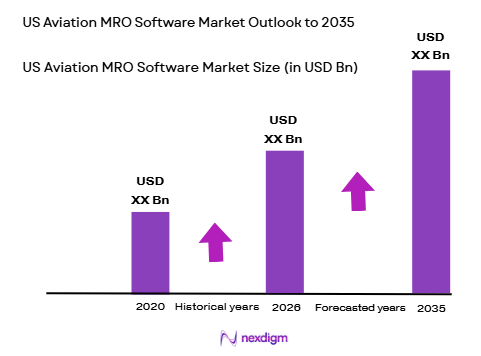
The US Aviation MRO Software market is valued at approximately USD ~ billion, driven by increasing demand for efficient maintenance, repair, and overhaul processes across the aviation industry. With a strong focus on digitalization, AI integration, and real-time tracking, aviation MRO software is becoming crucial for managing fleets, enhancing operational efficiency, and improving asset longevity. The rise in aircraft numbers and the need for cost-effective, automated solutions further contribute to the growth of this market.
The market is primarily dominated by regions with a significant concentration of aviation industry players, particularly in cities such as Seattle, Dallas, and Atlanta, which serve as key hubs for airlines, MRO providers, and aerospace manufacturers. These cities benefit from a well-established infrastructure and close proximity to major airports and aviation-related entities, facilitating the widespread adoption of MRO software solutions. As a result, they contribute substantially to the growth and development of the market in the US.
Market Segmentation
By Product Type
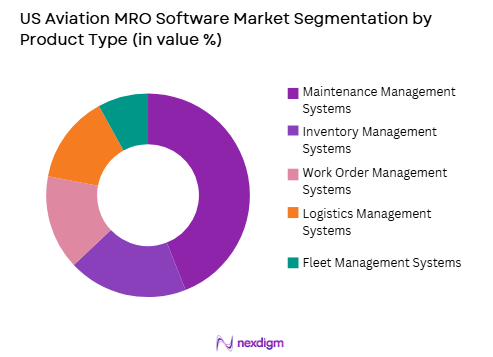
The US Aviation MRO Software market is segmented by product type into Maintenance Management Systems, Inventory Management Systems, Work Order Management Systems, Logistics Management Systems, and Fleet Management Systems. Recently, the Maintenance Management Systems sub-segment has dominated the market share due to their increasing adoption for streamlining maintenance schedules, ensuring compliance, and minimizing downtime. These systems offer real-time tracking and predictive maintenance, making them indispensable for both commercial and military aviation operators. Their ability to optimize operations, reduce operational costs, and ensure aircraft safety makes them the preferred choice for a wide range of aviation companies.
By Platform Type
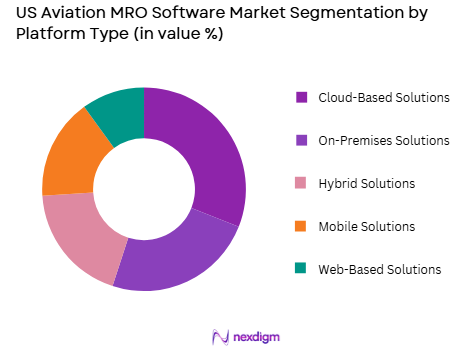
The market is segmented by platform type into Cloud-Based Solutions, On-Premise Solutions, Hybrid Solutions, Mobile Solutions, and Web-Based Solutions. Cloud-Based Solutions have seen the highest market share due to their flexibility, cost-effectiveness, and scalability. The ability to access and manage data remotely, along with the reduced upfront costs associated with cloud solutions, has made them highly attractive to MRO service providers, airlines, and OEMs. Cloud-based platforms also facilitate seamless updates, real-time data sharing, and improved collaboration across different stakeholders in the aviation ecosystem.
Competitive Landscape
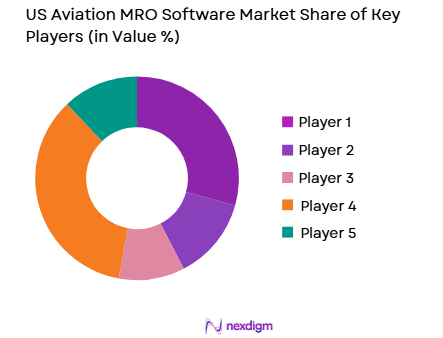
The competitive landscape of the US Aviation MRO Software market is marked by the presence of both established software providers and new entrants offering innovative solutions. Key players in the market continue to expand their product portfolios through strategic acquisitions, partnerships, and investments in research and development. Consolidation is evident as companies seek to enhance their offerings with advanced technologies such as AI, machine learning, and cloud-based solutions to meet the growing demand for automation and predictive maintenance.
| Company Name | Establishment Year | Headquarters | Technology Focus | Market Reach | Key Products | Revenue (USD Billion) | Additional Market-Specific Parameter |
| SAP | 1972 | Walldorf, Germany | ~ | ~ | ~ | ~ | ~ |
| Ramco Systems | 1992 | Chennai, India | ~ | ~ | ~ | ~ | ~ |
| IFS | 1983 | Linköping, Sweden | ~ | ~ | ~ | ~ | ~ |
| Hexaware Technologies | 1990 | Navi Mumbai, India | ~ | ~ | ~ | ~ | ~ |
| Boeing | 1916 | Chicago, IL | ~ | ~ | ~ | ~ | ~ |
US Aviation MRO Software Market Analysis
Growth Drivers
Digital Transformation in Aviation Maintenance
Digital transformation in aviation maintenance has become a major driver for growth in the US Aviation MRO Software market. The shift from manual, paper-based processes to digital systems allows aviation companies to manage maintenance schedules, track performance, and ensure regulatory compliance more effectively. The increased use of cloud-based solutions, artificial intelligence, and IoT devices has significantly enhanced real-time data accessibility, enabling predictive maintenance and reducing downtime. These technological advancements are being embraced by MRO providers and OEMs, helping them streamline operations, reduce costs, and improve the safety and reliability of aircraft. Furthermore, the growing emphasis on improving operational efficiency and maintaining high safety standards within the aviation industry is pushing the adoption of advanced MRO software solutions. As a result, the US market is seeing an increased demand for digital MRO solutions that provide end-to-end management of maintenance, repair, and overhaul operations.
Increased Aircraft Fleets and Aging Infrastructure
The continued growth of global aircraft fleets and the aging of existing aircraft are driving the need for more efficient and effective MRO software solutions. The demand for aircraft maintenance services has risen due to an increase in air traffic and the continuous expansion of commercial airlines. As aircraft fleets expand, the pressure to maintain a large number of assets, ensure optimal performance, and minimize unscheduled maintenance increases. Additionally, the aging of aircraft fleets demands more frequent and sophisticated maintenance, which can be better managed through the use of advanced software. MRO software helps airlines and MRO providers to optimize resources, schedule maintenance efficiently, and ensure compliance with evolving safety standards. With the increasing reliance on air travel and the need for operational continuity, the demand for sophisticated software solutions in the MRO sector continues to grow.
Market Challenges
Integration with Legacy Systems
One of the key challenges in the US Aviation MRO Software market is the integration of new MRO software with existing legacy systems. Many MRO providers and airlines still operate on older systems that are not fully compatible with modern software solutions. Integrating these legacy systems with new cloud-based platforms, mobile solutions, and predictive maintenance tools can be complex and costly. These integration challenges often lead to delays in implementation, increased costs, and operational disruptions. Furthermore, training employees to use new systems and ensuring that data flows seamlessly between old and new systems adds another layer of complexity. The difficulty in ensuring a smooth transition and migration from legacy to modern systems is a significant barrier to the rapid adoption of advanced MRO software in the market.
High Initial Investment Costs
Another challenge is the high initial investment required for MRO software solutions. While these software systems provide long-term cost savings and operational efficiencies, the upfront costs for purchasing, implementing, and maintaining these solutions can be prohibitive, especially for smaller MRO providers or regional airlines. The costs associated with software licensing, system customization, and training staff can be substantial, discouraging some companies from making the switch to digital MRO solutions. Additionally, the need for continuous software updates and the potential for system maintenance costs can further deter businesses from adopting new solutions. As a result, many smaller players in the market may struggle to afford the transition to advanced MRO software, creating a barrier to broader market adoption.
Opportunities
Expansion of Predictive Maintenance Solutions
The expansion of predictive maintenance solutions presents a significant opportunity in the US Aviation MRO Software market. Predictive maintenance uses advanced algorithms and data analytics to forecast when equipment is likely to fail, enabling MRO providers to perform maintenance before a failure occurs. This reduces downtime, improves asset lifespan, and lowers overall maintenance costs. Airlines and MRO providers are increasingly investing in these solutions to enhance fleet reliability and minimize unscheduled maintenance, which can lead to substantial cost savings. The growing demand for predictive maintenance in aviation is being fueled by the increasing availability of sensor data, improvements in machine learning, and advances in data analytics. As the aviation industry continues to prioritize efficiency and cost reduction, the demand for predictive maintenance software is expected to increase significantly.
Adoption of Cloud-Based MRO Solutions
Cloud-based MRO solutions offer significant opportunities for growth in the US market due to their flexibility, scalability, and cost-effectiveness. These solutions enable aviation companies to manage their operations remotely, improve collaboration across teams, and access real-time data from anywhere. The reduced upfront costs, faster implementation times, and easier integration with other enterprise systems are key factors driving the adoption of cloud-based MRO solutions. As the market shifts toward cloud technologies, smaller MRO providers and regional airlines can benefit from the reduced financial burden of implementing advanced software. The ability to update and maintain software without requiring extensive IT infrastructure is also an attractive feature of cloud-based solutions. The ongoing digitalization trend in the aviation industry is likely to increase the demand for cloud-based MRO software, creating new market opportunities for providers.
Future Outlook
The US Aviation MRO Software market is poised for steady growth over the next five years, driven by advancements in cloud computing, predictive maintenance, and increased demand for operational efficiency in aviation. As airlines and MRO providers continue to expand their fleets and improve maintenance practices, the adoption of digital solutions will play a critical role in reducing costs and enhancing aircraft performance. The market is also expected to benefit from regulatory support and technological innovations that enable better integration of new software with existing systems. Overall, the US market will continue to witness the expansion of MRO software solutions as the aviation industry increasingly embraces digital transformation.
Major Players
- SAP
- Ramco Systems
- IFS
- Hexaware Technologies
- Boeing
- IBM
- Oracle
- Airbus
- Rolls-Royce
- GE Aviation
- Honeywell Aerospace
- Siemens
- Dassault Systems
- Microsoft
- V2Soft
Key Target Audience
- Investments and venture capitalist firms
- Government and regulatory bodies
- Aviation MRO providers
- Commercial airlines
- Private aviation companies
- OEMs (Original Equipment Manufacturers)
- Technology solution providers
- Aerospace manufacturing companies
Research Methodology
Step 1: Identification of Key Variables
Identification of key market drivers, barriers, and emerging technologies that influence the Aviation MRO Software market.
Step 2: Market Analysis and Construction
Collection of data through primary and secondary research to build a comprehensive market analysis model, including segmentation and growth patterns.
Step 3: Hypothesis Validation and Expert Consultation
Validation of findings with industry experts and stakeholders to ensure the relevance and accuracy of the market analysis.
Step 4: Research Synthesis and Final Output
Synthesis of all data into a final market report, providing actionable insights and strategic recommendations for stakeholders.

- Executive Summary
- Research Methodology (Definitions, Scope, Industry Assumptions, Market Sizing Approach, Primary & Secondary Research Framework, Data Collection & Verification Protocol, Analytic Models & Forecast Methodology, Limitations & Research Validity Checks)

- Market Definition and Scope
- Value Chain & Stakeholder Ecosystem
- Regulatory / Certification Landscape
- Sector Dynamics Affecting Demand
- Strategic Initiatives & Infrastructure Growth

- Growth Drivers
Adoption of AI and Machine Learning in Maintenance Processes
Increased Demand for Aircraft Fleet Modernization
Rising Focus on Digitalization in Aviation Maintenance - Market Challenges
High Initial Investment Costs
Integration Challenges with Legacy Systems
Complexity in Regulatory Compliance for Software Solutions - Market Opportunities
Expansion of Cloud-Based MRO Software Solutions
Growing Use of Predictive Maintenance Tools
Rising Demand for Integrated Aviation Software Platforms - Trends
Shift Towards Automated Maintenance Procedures
Integration of Blockchain for Enhanced Supply Chain Management
Use of IoT for Real-Time Aircraft Data Tracking - Government regulations
Aviation Safety and Compliance Regulations
Government Funding for Aviation Digitalization Projects
Environmental Standards for Aircraft Maintenance and Operations - SWOT analysis
- Porters five forces

- By Market Value, 2020-2025
- By Installed Units, 2020-2025
- By Average System Price, 2020-2025
- By System Complexity Tier, 2020-2025

- By System Type (In Value%)
Maintenance Management Systems
Inventory Management Systems
Work Order Management Systems
Logistics Management Systems
Fleet Management Systems - By Platform Type (In Value%)
Cloud-Based Solutions
On-Premise Solutions
Hybrid Solutions
Mobile Solutions
Web-Based Solutions - By Fitment Type (In Value%)
On-Aircraft Solutions
Off-Aircraft Solutions
Engine Maintenance Solutions
Component Maintenance Solutions
Logistics & Supply Chain Solutions - By EndUser Segment (In Value%)
Commercial Aviation
Military Aviation
Private Aviation
MRO Service Providers
OEMs (Original Equipment Manufacturers) - By Procurement Channel (In Value%)
Direct Procurement
Channel Partnerships
Online Marketplaces
Government Tenders
Third-party Distributors

- Market Share Analysis
- Cross Comparison Parameters (System Type, Platform Type, Procurement Channel, End User Segment, Fitment Type, Market Share, Technology Integration, Software Deployment Model, Customer Support Services, Regulatory Compliance)
- SWOT Analysis of Key Competitors
- Pricing & Procurement Analysis
- Key Players
GE Aviation
Honeywell Aerospace
SAP
Rockwell Collins
IFS
Ramco Systems
Epicor
Ultimo Software Solutions
Boeing
Lufthansa Technik
AviIT
Xerox
Ingersoll Rand
UTC Aerospace Systems
SKF

- Commercial Airlines’ Increasing Demand for MRO Software Solutions
- MRO Service Providers’ Adoption of Cloud Technologies
- Private Aviation Industry’s Need for Efficient Fleet Management Solutions
- OEMs’ Focus on Integrating Maintenance Software into New Aircraft Models

- Forecast Market Value, 2026-2035
- Forecast Installed Units, 2026-2035
- Price Forecast by System Tier, 2026-2035
- Future Demand by Platform, 2026-2035


 Request a Sample
 Ask for Customization
 Get a Quote
 Enquire Now