
 Download PDF
 Download PDF
Market Overview
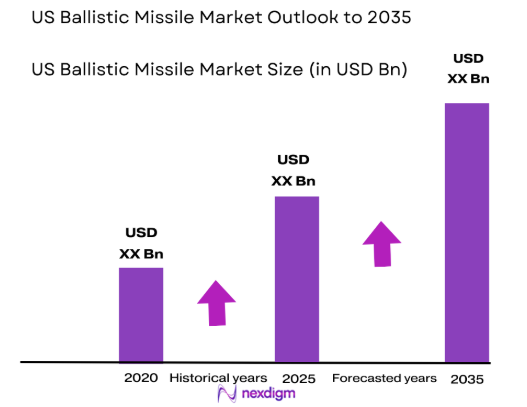
The US ballistic missile market is experiencing substantial growth, with the market size expected to reach USD ~ billion based on a recent historical assessment. This growth is primarily driven by technological advancements in missile defense systems, increasing defense budgets, and rising geopolitical tensions. The demand for enhanced security systems is growing, with significant investments in intercontinental and submarine-launched ballistic missiles (ICBMs and SLBMs). The modernization of defense systems across various military platforms also significantly contributes to market expansion.
The US market is dominated by major players in cities like Washington D.C., California, and Texas, where a large concentration of defense contractors and military installations are located. The US government’s substantial funding for defense, along with military innovations, drives the dominance of these regions. Additionally, areas with key military bases, such as the Pacific coast and southern states, play a significant role in the development and deployment of ballistic missile systems, boosting regional expertise and production.
Market Segmentation
By Product Type
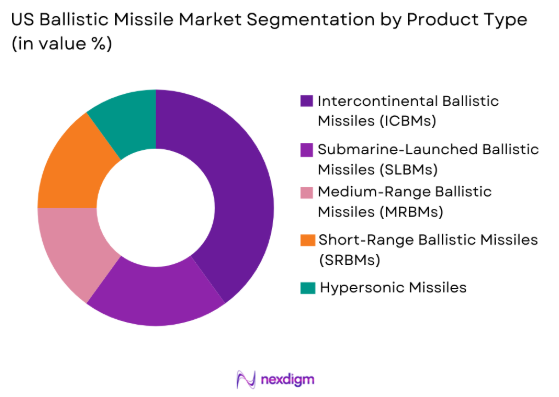
The US ballistic missile market is segmented by product type into intercontinental ballistic missiles (ICBMs), submarine-launched ballistic missiles (SLBMs), medium-range ballistic missiles (MRBMs), short-range ballistic missiles (SRBMs), and hypersonic missiles. Recently, intercontinental ballistic missiles (ICBMs) have dominated the market due to the increasing importance of long-range missile systems for strategic defense. As nations continue to invest in deterrence capabilities, the need for ICBMs grows, particularly for military superpowers. The technological advancements in warhead delivery and guidance systems have bolstered ICBM development, as they are perceived as essential for maintaining deterrence in a rapidly changing geopolitical landscape. Governments worldwide are also focused on enhancing the survivability of ICBMs through various systems, contributing to their dominant position in the market.
By Platform Type
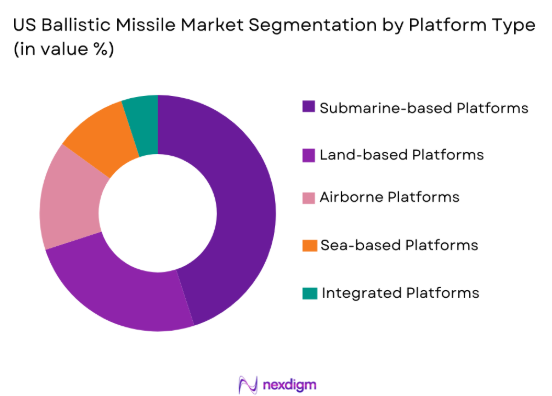
The US ballistic missile market is segmented by platform type into land-based platforms, submarine-based platforms, airborne platforms, sea-based platforms, and integrated platforms. Submarine-based platforms currently hold a dominant market share due to their strategic importance in modern defense systems. Submarine-launched ballistic missiles (SLBMs) provide a survivable second-strike capability, making them crucial for nuclear deterrence strategies. The stealth and mobility of submarine platforms make them highly secure and difficult to target, ensuring their dominance in this segment. Additionally, advancements in submarine technology, such as nuclear-powered submarines, have improved the range and effectiveness of SLBMs, further solidifying their position in the market.
Competitive Landscape
The US ballistic missile market is highly competitive, with a mix of established defense contractors and emerging technology firms. Consolidation is expected as key players merge or acquire smaller firms to access advanced technologies and strengthen their product portfolios. Major players in the defense sector influence the market with their technological innovations, shaping the future of missile systems. Additionally, the increasing demand for advanced, high-performance missiles across military forces worldwide has spurred greater competition among these players, resulting in frequent collaborations, partnerships, and joint ventures.
| Company Name | Establishment Year | Headquarters | Technology Focus | Market Reach | Key Products | Revenue (USD Billion) | Product Lifespan |
| Lockheed Martin | 1995 | Bethesda, MD | ~ | ~ | ~ | ~ | ~ |
| Northrop Grumman | 1939 | Falls Church, VA | ~ | ~ | ~ | ~ | ~ |
| Raytheon Technologies | 2020 | Waltham, MA | ~ | ~ | ~ | ~ | ~ |
| Boeing | 1916 | Chicago, IL | ~ | ~ | ~ | ~ | ~ |
| BAE Systems | 1999 | London, UK | ~ | ~ | ~ | ~ | ~ |
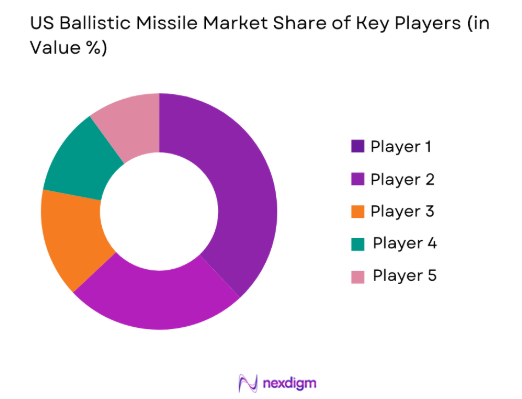
US Ballistic Missile Market Analysis
Growth Drivers
Increasing Geopolitical Tensions
Increasing geopolitical tensions globally are driving demand for ballistic missile defense systems. Governments are investing heavily in advanced missile defense technology to ensure national security and deterrence capabilities. With ongoing military conflicts and rising threats from adversarial nations, ballistic missile systems, especially long-range and hypersonic missiles, are gaining attention. Countries with advanced military forces are particularly focused on improving their offensive and defensive missile capabilities. Technological advancements in missile guidance and propulsion systems also contribute to the growing demand for these missile systems. As a result, defense budgets are increasing, and nations are upgrading their defense infrastructure to protect against missile threats. The growing focus on strategic deterrence and maintaining a credible second-strike capability is expected to continue fueling market expansion. Additionally, defense contractors are increasingly working with governments to develop tailored, advanced missile systems.
Technological Advancements in Missile Systems
he continuous evolution of missile technology is significantly contributing to market growth. Innovations such as improved propulsion systems, more accurate guidance systems, and the development of hypersonic weapons are key factors driving growth. Military agencies are prioritizing the development of advanced missile technologies to ensure their readiness against evolving threats. For example, hypersonic missiles, which can travel at speeds greater than Mach 5, are becoming an integral part of modern defense strategies. The demand for systems capable of rapid response and precise targeting is also increasing, which accelerates the research and development of cutting-edge missile systems. Furthermore, advancements in autonomous systems, such as the integration of artificial intelligence in missile defense, are expected to further shape the market. These technological improvements are making defense systems more effective, reliable, and efficient, which is driving both military investments and market growth.
Market Challenges
High Costs of Ballistic Missile Development
A key challenge facing the US ballistic missile market is the high cost of research, development, and production. Developing advanced missile systems requires significant investments in technology, infrastructure, and skilled personnel. The cost of ballistic missile systems can be prohibitively high, especially when considering the cost of testing and ongoing maintenance. Additionally, funding for missile defense systems is subject to government budgets, which can be unpredictable and fluctuate with changing political priorities. For instance, government defense budgets may shift, leading to changes in defense spending allocations. The high cost of developing hypersonic missiles and advanced warheads, coupled with the need for highly specialized materials and components, further contributes to the market’s cost challenges. As a result, defense contractors face pressure to optimize their production processes while ensuring that missile systems meet the highest standards of performance and reliability. These financial challenges are expected to continue to impact the market’s growth and expansion.
Regulatory and Compliance Barriers
The US ballistic missile market is also challenged by stringent regulatory and compliance requirements. National and international regulations control the development, production, and deployment of ballistic missile systems, with an emphasis on non-proliferation, arms control, and export restrictions. Regulations such as the Missile Technology Control Regime (MTCR) and the International Traffic in Arms Regulations (ITAR) impose limits on the trade and dissemination of missile technologies. These regulations require missile manufacturers to comply with complex legal requirements, which can slow down the development and deployment of new missile systems. Moreover, export restrictions imposed by the US government can limit the market potential for certain missile systems, particularly in countries seeking advanced missile technologies. Navigating these regulatory challenges adds significant costs and complexities to the development and commercialization of ballistic missile systems.
Opportunities
Expansion of Hypersonic Missile Capabilities
The rapid advancement of hypersonic missile technology presents a major growth opportunity in the US ballistic missile market. Hypersonic weapons are seen as a significant technological leap forward due to their ability to travel at speeds faster than Mach 5, making them incredibly difficult to intercept. The US military is increasingly focused on developing these systems to counter emerging threats from adversarial nations that are also working to develop hypersonic capabilities. As governments invest in next-generation missile defense systems, there is a growing demand for hypersonic technologies, particularly in military applications. The strategic advantages offered by these weapons, such as their speed, precision, and evasive capabilities, are expected to drive significant investments and research in this area. As such, the US ballistic missile market is poised to benefit from continued advancements in hypersonic missile technologies, with increasing defense budgets dedicated to this segment.
Public-Private Collaborations in Defense R&D
Increased collaboration between government agencies and private-sector defense contractors presents a key opportunity for the market. Public-private partnerships enable the pooling of resources, expertise, and innovative technologies, accelerating the development of next-generation missile systems. These collaborations are critical in advancing research in areas such as missile guidance systems, propulsion technologies, and stealth capabilities. Moreover, private companies benefit from government contracts, while government agencies gain access to cutting-edge technologies without having to bear the full development costs. With growing geopolitical tensions and an evolving security environment, both the US government and private contractors are motivated to work together to develop missile systems that ensure national security. This trend is expected to foster innovation, reduce development time, and increase market growth opportunities for advanced missile technologies.
Future Outlook
The US ballistic missile market is expected to witness steady growth over the next five years, driven by technological advancements, growing defense budgets, and strategic investments in missile defense systems. As nations continue to focus on enhancing their military capabilities, demand for advanced missile systems such as hypersonic weapons and submarine-launched ballistic missiles (SLBMs) will increase. Innovations in missile guidance, propulsion, and warhead technology will further drive market expansion. Additionally, government support for defense R&D will fuel the growth of new and upgraded missile systems. With continuous investments in next-generation defense technologies, the US ballistic missile market is well-positioned to grow significantly over the coming years.
Major Players
- Lockheed Martin
- Northrop Grumman
- Raytheon Technologies
- Boeing
- BAE Systems
- Thales Group
- General Dynamics
- L3 Technologies
- Harris Corporation
- Leonardo
- Saab Group
- Rheinmetall AG
- Elbit Systems
- Rockwell Collins
- Dynetics
Key Target Audience
- Investments and venture capitalist firms
- Government and regulatory bodies
- Defense contractors
- Military forces
- Aerospace companies
- Homeland security agencies
- Technology developers
- Private defense firms
Research Methodology
Step 1: Identification of Key Variables
Identify key market variables, such as defense budgets, geopolitical tensions, and technological advancements, that influence market dynamics and demand patterns.
Step 2: Market Analysis and Construction
Analyze historical trends, current market status, and future projections to construct a comprehensive market model that reflects the latest industry developments.
Step 3: Hypothesis Validation and Expert Consultation
Validate hypotheses through expert consultations with industry leaders, defense contractors, and government agencies to refine the market forecast.
Step 4: Research Synthesis and Final Output
Synthesize collected data, expert opinions, and market analysis to produce a final report that provides insights into the US ballistic missile market’s current and future state.

- Executive Summary
- Research Methodology (Definitions, Scope, Industry Assumptions, Market Sizing Approach, Primary & Secondary Research Framework, Data Collection & Verification Protocol, Analytic Models & Forecast Methodology, Limitations & Research Validity Checks)

- Market Definition and Scope
- Value Chain & Stakeholder Ecosystem
- Regulatory / Certification Landscape
- Sector Dynamics Affecting Demand
- Strategic Initiatives & Infrastructure Growth

- Growth Drivers
Increased Geopolitical Tensions
Government Investment in Defense and National Security
Technological Advancements in Propulsion and Guidance Systems
Enhanced Military Modernization Programs
Strategic Partnerships and Alliances in Defense - Market Challenges
High Development and Production Costs
Technological Integration and Interoperability Issues
Regulatory and Compliance Barriers
Cybersecurity Threats and Vulnerabilities
Political and Social Resistance to Military Expansion - Market Opportunities
Expansion of Hypersonic Missile Technologies
Collaborations between Military and Technology Firms
Advancements in Autonomous Systems and Missiles - Trends
Growing Use of Hypersonic Missiles in Modern Warfare
Increased Focus on Cybersecurity in Missile Systems
Integration of Artificial Intelligence in Ballistic Missiles
Modernization of Strategic Missile Forces
Growing Military Collaborations for Research and Development - Government Regulations & Defense Policy
Export Control and Compliance Policies
Government Funding and Grants for Advanced Missile Technologies
National Security and Arms Control Regulations

- By Market Value, 2020-2025
- By Installed Units, 2020-2025
- By Average System Price, 2020-2025
- By System Complexity Tier, 2020-2025

- By System Type (In Value%)
Intercontinental Ballistic Missiles (ICBMs)
Submarine-Launched Ballistic Missiles (SLBMs)
Medium-Range Ballistic Missiles (MRBMs)
Short-Range Ballistic Missiles (SRBMs)
Hypersonic Missiles - By Platform Type (In Value%)
Land-based Platforms
Submarine-based Platforms
Airborne Platforms
Sea-based Platforms
Integrated Platforms - By Fitment Type (In Value%)
On-premise Solutions
Cloud-based Solutions
Modular Solutions
Integrated Solutions
Hybrid Solutions - By End User Segment (In Value%)
Military Forces
Defense Contractors
Government Agencies
Security Services
Private Sector / Technology Firms - By Procurement Channel (In Value%)
Direct Procurement
Government Tenders
Private Sector Procurement
Online Bidding Platforms
Third-party Distributors - By Material / Technology (in Value%)
Solid Propellant Systems
Liquid Propellant Systems
Advanced Propulsion Technologies
Guidance & Control Systems
Warhead Materials

- Military Forces’ Increasing Demand for Advanced Ballistic Missiles
- Government Agencies’ Role in Missile Defense and Procurement
- Defense Contractors’ Technological Innovations in Missile Systems
- Private Sector’s Growing Role in Research and Development

- Forecast Market Value, 2026-2035
- Forecast Installed Units, 2026-2035
- Price Forecast by System Tier, 2026-2035
- Future Demand by Platform, 2026-2035


 Request a Sample
 Ask for Customization
 Get a Quote
 Enquire Now