
 Download PDF
Market Overview
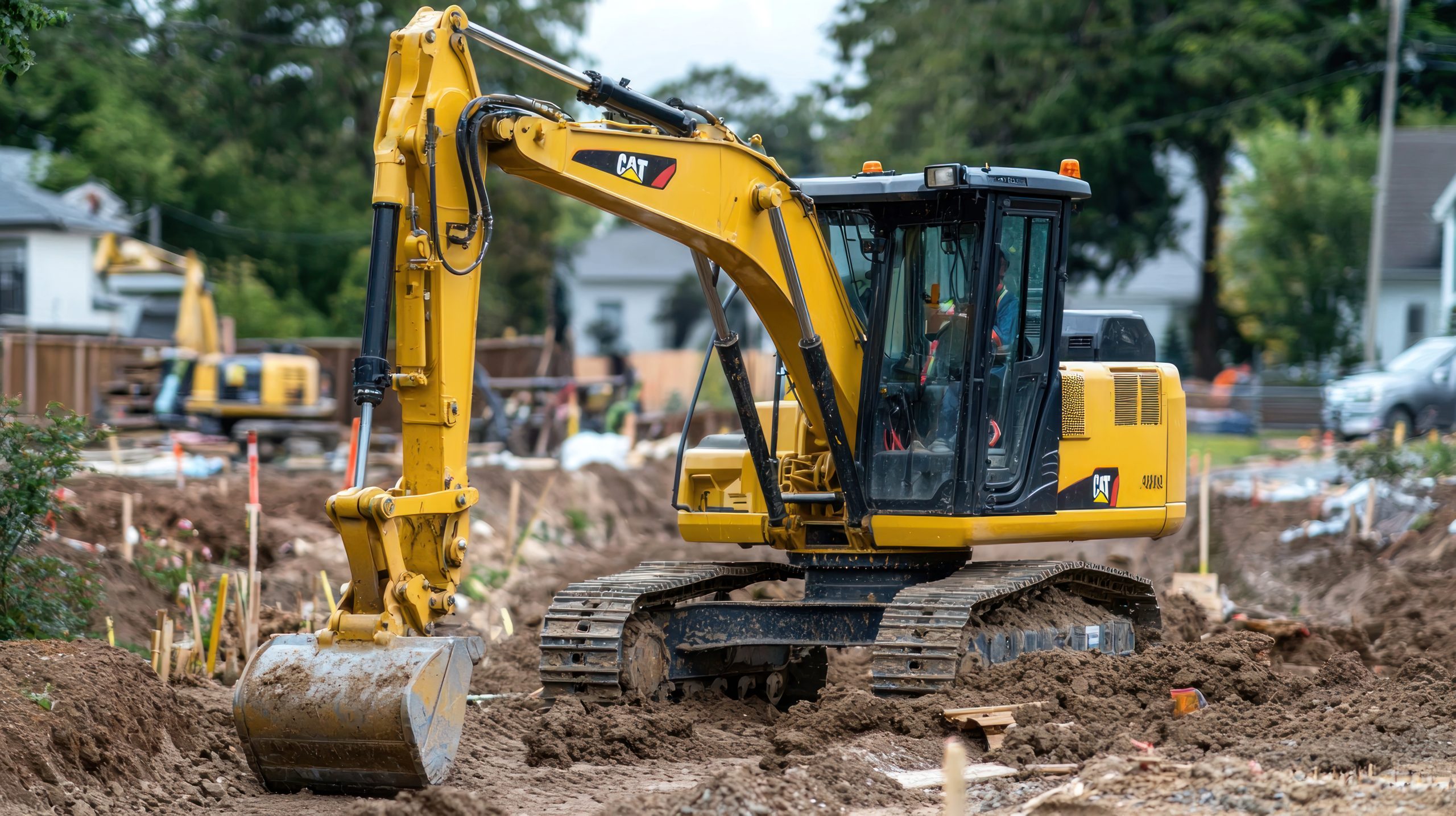
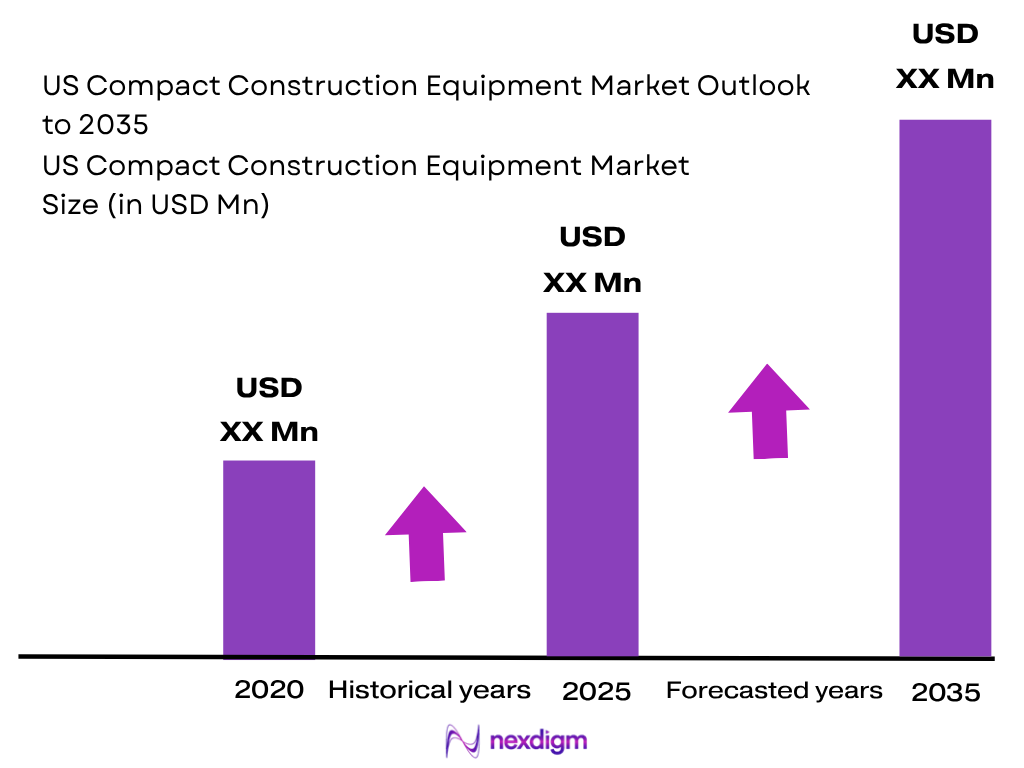
The US Compact Construction Equipment Market is valued at approximately ~USD XX billion, with demand anchored by residential development, public works, utility construction, landscaping and confined-site earthmoving. US Census Bureau data show total construction spending running at an annualized USD 2.096 trillion at the close of 2023 and USD 2.192 trillion at the close of 2024. Public construction alone increased from USD 450.7 billion to USD 492.7 billion, creating substantial equipment-intensive workloads. GovDelivery
The US Compact Construction Equipment Market has particularly strong demand centers across Texas, Florida, California, Georgia and North Carolina, supported by infrastructure, housing, utilities and commercial development. State and local construction put in place reached USD 60.693 billion in Texas, USD 27.552 billion in Florida, USD 13.857 billion in Georgia and USD 12.729 billion in North Carolina in 2024. Texas alone recorded USD 51.079 billion in the preceding year, supporting sustained requirements for compact excavation, loading and grading equipment.
Market Segmentation
By Equipment Type
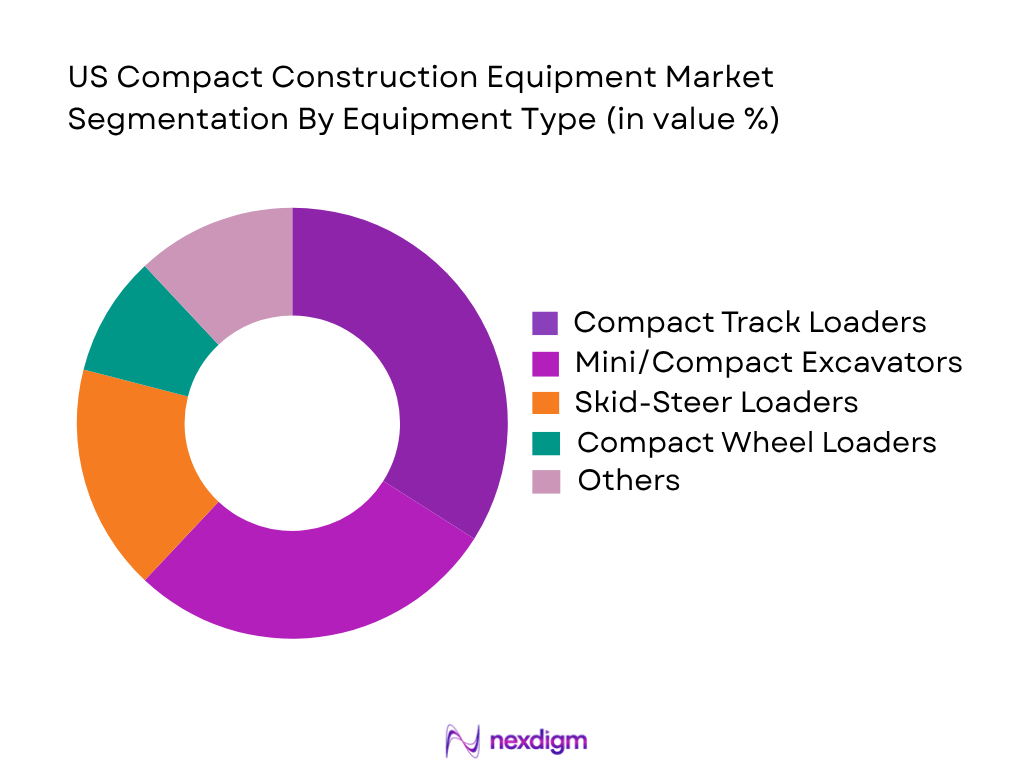
The US Compact Construction Equipment Market is segmented by equipment type into compact track loaders, mini/compact excavators, skid-steer loaders, compact wheel loaders, compact telehandlers and other compact equipment. Compact track loaders represent the dominant segment because their tracked undercarriages support construction, landscaping, utility and earthmoving work across soft, muddy and uneven terrain. Their attractiveness is further strengthened by attachment versatility: current Bobcat compact track loaders can support more than 60 available attachments, while Caterpillar positions the machines across construction, landscaping, agriculture and utility applications. The category combines loading capability with grading, trenching, material handling, land clearing and snow-management functions, enabling contractors to increase utilization from a single power unit. Compact excavators represent another major demand pool, particularly for trenching, utility installation and restricted-access excavation, while skid-steer loaders remain relevant on firm surfaces and jobs requiring maneuverability.
By End-Use Industry
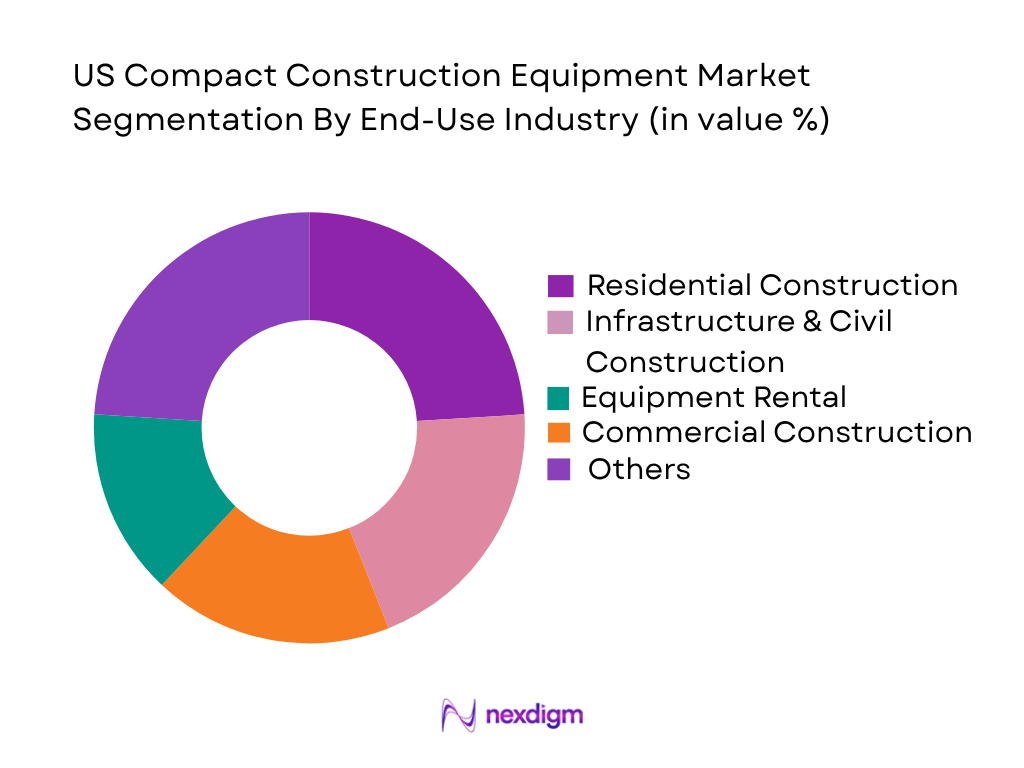
The US Compact Construction Equipment Market is segmented by end-use industry into residential construction, commercial construction, infrastructure and civil construction, utility construction, landscaping, equipment rental, agriculture and municipal/public works. Construction contractors collectively represent the dominant demand base, supported by the enormous volume of construction put in place across the country. Public construction expenditure reached USD 492.7 billion in 2024, including USD 142.7 billion devoted to highway construction, creating recurring requirements for compact excavation, loading, grading and material-handling machinery. Residential activity adds another important demand layer: fourth-quarter single-family housing starts operated at an annualized 1.016 million units. Rental companies are also strategically important because compact machines can serve multiple customer groups and applications. Their transportability and attachment interchangeability make compact track loaders, skid steers and mini excavators particularly suitable for short-duration projects where contractors prefer accessing equipment without maintaining permanent fleets.
Competitive Landscape
The US Compact Construction Equipment Market features established full-line construction equipment manufacturers alongside specialists with strong positions in compact loaders and excavators. Competition centers on rated operating capacity, hydraulic flow, attachment compatibility, machine dimensions, operator technology, dealer coverage and lifecycle support. Bobcat currently offers nine compact track-loader models and more than 60 attachments, while Caterpillar markets compact track loaders for general construction, landscaping and utility work. This breadth illustrates the importance of machine-plus-attachment ecosystems in competitive differentiation.
| Major Player | Established | Headquarters | Key Compact Equipment | Power/Performance Coverage | Attachment Capability | Technology Focus | Distribution Model | Major Applications |
| Caterpillar Inc. | 1925 | Irving, Texas | ~ | ~ | ~ | ~ | ~ | ~ |
| Bobcat Company | 1958 | West Fargo, North Dakota | ~ | ~ | ~ | ~ | ~ | ~ |
| Deere & Company | 1837 | Moline, Illinois | ~ | ~ | ~ | ~ | ~ | ~ |
| Kubota Corporation | 1890 | Osaka, Japan | ~ | ~ | ~ | ~ | ~ | ~ |
| CASE Construction Equipment | 1842 | Racine, Wisconsin | ~ | ~ | ~ | ~ | ~ | ~ |
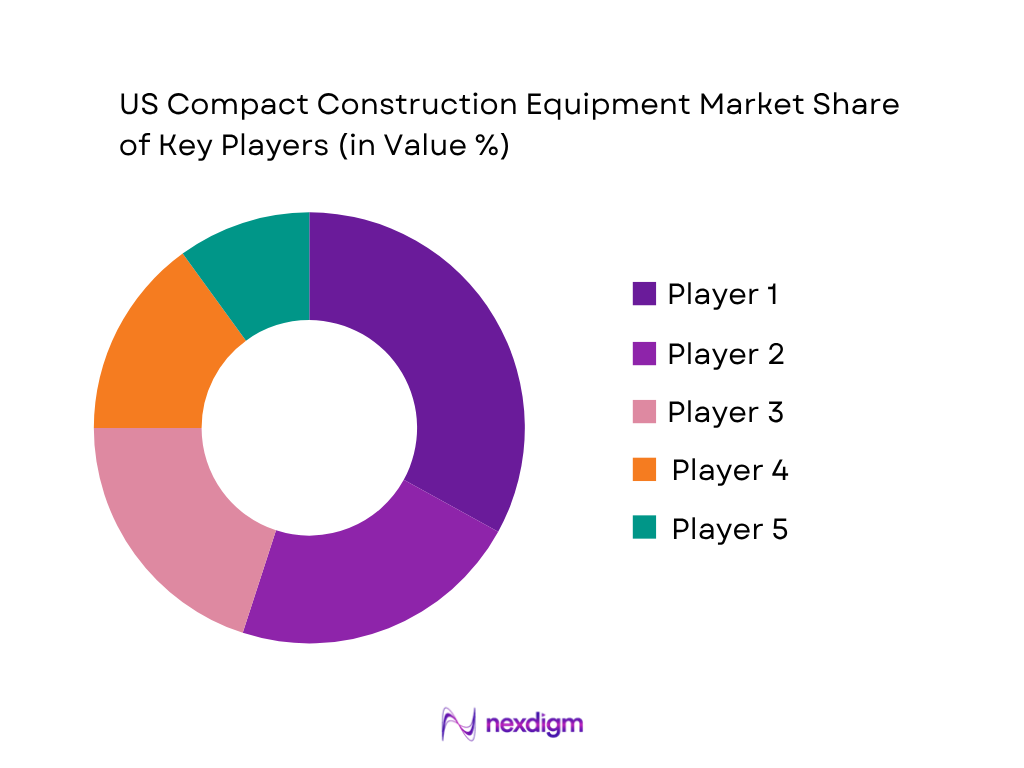
US Compact Construction Equipment Market Analysis
Growth Drivers
Sustained Infrastructure Construction and Public-Works Pipeline
Federal and state infrastructure activity is a major demand driver for compact excavators, compact track loaders, skid-steer loaders and compact wheel loaders because road rehabilitation, bridge work, drainage, utility relocation and confined-site earthmoving require maneuverable equipment. US Census Bureau data show USD 492.7 billion of public construction was put in place during 2024, including USD 142.7 billion of highway construction and USD 105.2 billion of educational construction. The Federal Highway Administration separately allocated approximately USD 61 billion to states for federal-aid highway formula programs for fiscal 2024, while the National Highway Performance Program carried USD 29.588 billion in contract authority. Bridge-related construction also received USD 5.5 billion through the Bridge Formula Program. This activity operates within a US economy that generated USD 28.75 trillion of GDP and supported approximately 340.1 million people, according to World Bank data. The combination of a very large economic base and federally funded road, bridge and municipal projects supports recurring utilization of compact equipment for excavation, loading, grading, trenching, backfilling and site preparation, particularly where conventional full-size construction machinery has restricted access. Compact excavators can be deployed for drainage and utility trenches, while compact track loaders can perform grading, material handling and site-clearing activities. Highway rehabilitation also generates requirements for attachments such as breakers, trenchers, cold planers, sweepers and compactors. The extensive public construction pipeline therefore increases equipment utilization opportunities across contractors, rental fleets and municipal agencies. Equipment manufacturers with broad attachment portfolios and strong dealer-service networks are particularly relevant to these infrastructure-intensive operating environments.
Large Residential Construction and Specialty-Contractor Activity
Residential construction provides another direct operating base for US compact construction equipment because mini excavators, compact track loaders and skid steers are extensively applicable to foundation preparation, grading, trenching, landscaping, material movement and utility installation. The US Census Bureau recorded 1,627,900 privately owned housing completions during 2024, creating a substantial pool of active and recently completed sites requiring equipment across multiple construction phases. Labor data further demonstrate the scale of the equipment-using ecosystem. Bureau of Labor Statistics figures showed approximately 8.313 million construction employees in November 2024, including 5.268 million specialty trade contractor employees, approximately 2.416 million residential specialty trade contractor employees and 1.161 million workers in heavy and civil engineering construction. Construction employment added an average 16,000 jobs per month during 2024. Against this backdrop, World Bank data place US GDP at approximately USD 28.75 trillion and GDP per capita at roughly USD 84,534 in 2024. This combination of extensive housing delivery, millions of construction workers and a large specialty-contractor base strengthens demand for versatile compact machines capable of moving between residential, landscaping, plumbing, utility, demolition and small-site excavation assignments. Residential contractors particularly benefit from machines that can be transported between sites without the logistical requirements associated with heavier construction equipment. Mini excavators support foundations, sewer lines and utility trenches, while compact loaders can perform grading, debris removal and landscaping. The large specialty-trade workforce also supports attachment-intensive equipment utilization because contractors can configure one machine for multiple jobsite activities. This versatility strengthens compact equipment’s position within residential and light-construction fleets.
Market Challenges
Construction Workforce Availability and Equipment-Operator Constraints
Labor availability remains an operational challenge for the US Compact Construction Equipment Market because even increasingly automated mini excavators, compact loaders and skid steers require operators, technicians and field personnel capable of safely using hydraulic attachments, machine controls and digital systems. Bureau of Labor Statistics data recorded approximately 217,000 construction job openings in December 2024, alongside 301,000 construction hires and 279,000 construction separations during the month, illustrating substantial labor movement within the sector. The Federal Highway Administration specifically identified workforce requirements in highway construction when it awarded USD 4.2 million across 16 workforce-training programs in December 2024. Those initiatives were designed to train and place nearly 1,100 workers, including heavy-equipment operators and commercial-driver-license candidates. The issue matters across an industry employing more than 8.3 million construction workers during late 2024 and operating within a roughly USD 28.75 trillion US economy, according to World Bank data. For compact-equipment suppliers, insufficient availability of experienced operators and technicians can constrain fleet utilization, increase the importance of intuitive machine controls and elevate demand for operator-assistance, telematics, diagnostic systems and dealer-provided training rather than simply increasing installed equipment numbers. Modern compact equipment increasingly incorporates electronic controls, advanced hydraulics and machine-management systems, which also raise technician skill requirements. Rental operators must support customers with different levels of operating experience across multiple equipment platforms. Contractors may consequently favor machines with simplified control interfaces, automated functions and enhanced visibility. Manufacturers that reduce training requirements through standardized controls and integrated operator-assistance technologies can address an increasingly important operational constraint within the US construction ecosystem.
Exposure to Construction Cyclicality and Uneven Equipment Utilization
Compact construction equipment demand remains exposed to changes in construction workloads because contractors and rental companies generally align fleet additions and replacements with expected machine utilization. The scale of this exposure is visible in official activity indicators. US construction employed approximately 8.313 million workers in November 2024, but construction job openings declined from 434,000 in December 2023 to 217,000 in December 2024, while monthly construction hires stood at 301,000 and separations reached 279,000 at the end of 2024. Housing activity can also fluctuate substantially between project phases even within a large underlying market; Census data recorded 1,627,900 housing completions during 2024, while December privately owned housing completions operated at an annualized 1,544,000 units. These changes matter for skid steers, mini excavators and compact track loaders because utilization is directly connected with active housing sites, earthmoving requirements and specialty-trade workloads. The broader economic foundation remains large—World Bank data place US GDP at approximately USD 28.75 trillion—but compact-equipment manufacturers must still manage geographically uneven construction activity, dealer inventories and rental-fleet utilization. This reinforces the strategic importance of flexible production, diversified end-use exposure and strong aftermarket operations. Rental fleets can become particularly sensitive to utilization changes because equipment availability may exceed immediate contractor requirements when construction activity moderates in individual regions. OEMs consequently need balanced exposure across residential, infrastructure, landscaping, utility and municipal applications. Attachment versatility can partly mitigate this challenge by enabling one compact machine to serve multiple jobs. Strong parts, maintenance and remanufacturing capabilities can additionally support revenue generation when customers extend equipment replacement cycles.
Market Opportunities
Expansion of Road, Bridge and Municipal Equipment Applications
The existing US infrastructure pipeline creates a significant forward opportunity for compact construction equipment without requiring assumptions about future market values. Federal Highway Administration data show the Infrastructure Investment and Jobs Act provides approximately USD 350 billion for federal highway programs across fiscal 2022-2026. Within fiscal 2024 alone, USD 9.4544 billion was appropriated for Highway Infrastructure Programs, including USD 5.5 billion for the Bridge Formula Program, USD 1.847 billion for the Bridge Investment Program and USD 640 million for nationally significant freight and highway projects. Separately, federal-aid highway formula apportionments totaled approximately USD 61 billion for fiscal 2024. These allocations translate into project environments requiring trenching, grading, drainage construction, roadside preparation, demolition, material handling and utility relocation—applications where compact excavators and compact loaders can operate efficiently around existing infrastructure and constrained work zones. The World Bank records US GDP at approximately USD 28.75 trillion and population at around 340.1 million in 2024, demonstrating the economic and demographic scale of the infrastructure base being maintained. This supports opportunities for OEMs, dealers, attachment suppliers and rental fleets targeting infrastructure contractors and municipal users. Bridge rehabilitation and urban road projects are especially compatible with compact equipment because work frequently occurs beside operating infrastructure where maneuverability is critical. Hydraulic breakers, sweepers, compactors, trenchers and grapples can extend machine utilization across different project phases. Rental fleets can also place compact equipment across multiple contractors instead of dedicating machines to individual long-duration projects. This infrastructure workload therefore creates opportunities extending beyond equipment units into attachments, maintenance, telematics and fleet-management services.
Equipment Modernization Through Infrastructure, Utilities and Specialized Compact Applications
A second opportunity lies in replacing general-purpose equipment with compact machines configured for specialized infrastructure, utility and urban applications. US public construction reached approximately USD 492.7 billion during 2024, with USD 142.7 billion directed toward highway construction and USD 105.2 billion toward educational facilities. Federal transportation programs add another large project base: the National Highway Performance Program carried approximately USD 29.588 billion in fiscal 2024 contract authority, while Highway Infrastructure Program appropriations included USD 1.0 billion for the National Electric Vehicle Infrastructure Formula Program. Such projects can generate work involving conduit installation, trench excavation, surface preparation, landscaping, material handling and restoration, all compatible with compact excavators, track loaders and hydraulic attachments. At the workforce level, the United States supported approximately 5.268 million specialty-trade contractor employees in November 2024, providing a large potential user base for smaller multi-attachment machines. World Bank figures additionally show around 340.1 million residents and USD 28.75 trillion in national output in 2024. These conditions create room for manufacturers to expand attachment ecosystems, telematics, operator-assistance systems, compact electric platforms and machines optimized for restricted-access construction sites. Urban utility projects particularly favor reduced machine footprints because excavation frequently occurs near buildings, roads, underground services and pedestrian areas. Battery-electric compact machines can also address applications where localized exhaust emissions or operating noise are important considerations. Telematics can improve fleet visibility across geographically dispersed projects, while grade-control and operator-assistance technologies can support productivity where skilled labor availability is constrained. These developments expand opportunities from conventional machine replacement toward technology-enabled fleet modernization.
Future Outlook
The US Compact Construction Equipment Market is expected to expand at approximately ~XX% CAGR during 2026-2035. Future development will increasingly center on compact track loaders, mini excavators, attachment-intensive machines, connected equipment and battery-electric models. Public infrastructure renewal, utilities, housing development and construction in space-constrained locations should sustain the underlying equipment requirement.
The technology mix is also expected to shift toward integrated telematics, grade assistance, remote diagnostics and increasingly sophisticated hydraulic attachments. Equipment manufacturers that combine broad machine platforms with strong dealer service, attachments and digital lifecycle support will be positioned to address increasingly productivity-focused contractors and rental fleets.
Major Players
- Caterpillar Inc.
- Bobcat Company
- Deere & Company
- Kubota
- CASE Construction Equipment
- Takeuchi-US
- JCB
- Volvo Construction Equipment
- Wacker Neuson
- Yanmar Compact Equipment
- Komatsu
- New Holland Construction
- Manitou
- HD Hyundai Construction Equipment
- Hitachi Construction Machinery Americas
Key Target Audience
- Compact Construction Equipment Manufacturers
- Construction Equipment Dealers and Distributors
- Equipment Rental and Fleet Management Companies
- Construction and Infrastructure Contractors
- Attachment, Hydraulic System and Powertrain Manufacturers
- Investments and Venture Capitalist Firms
- Government and Regulatory Bodies (US Department of Transportation, Federal Highway Administration, Environmental Protection Agency, Occupational Safety and Health Administration)
- Construction Equipment Financing and Leasing Companies
Research Methodology
Step 1: Identification of Key Variables
The initial research phase develops the US Compact Construction Equipment Market ecosystem across OEMs, component manufacturers, dealers, rental fleets, contractors, attachment suppliers and end users. Key variables include equipment unit demand, compact track loader and mini excavator penetration, installed fleet, replacement cycles, construction activity, rental utilization, hydraulic capability, operating capacity and technology adoption.
Step 2: Market Analysis and Construction
Historical demand is constructed through top-down and bottom-up analysis covering construction activity, equipment shipments, OEM portfolios, rental fleet procurement and application-specific demand. Category-level assessment separates compact track loaders, mini excavators, skid-steer loaders, compact wheel loaders and related machines to prevent larger construction equipment from distorting the addressable market.
Step 3: Hypothesis Validation and Expert Consultation
Market hypotheses are validated through CATIs and structured discussions with OEM executives, authorized dealers, rental fleet managers, contractors, attachment suppliers and equipment financing participants. Interviews focus on machine replacement intervals, fleet utilization, equipment preferences, attachment adoption, dealer inventory, electric-machine acceptance and demand variations between residential, infrastructure and utility construction.
Step 4: Research Synthesis and Final Output
Primary findings are triangulated against construction spending, residential construction, public infrastructure activity, manufacturer product portfolios and equipment specifications. Bottom-up machine-level analysis is reconciled with top-down industry demand to establish market structure, segmentation and competitive positioning. The final framework evaluates both equipment demand and associated attachment, aftermarket and technology developments.

- Executive Summary
- Research Methodology (Market Definition and Scope, US Compact Construction Equipment Market Classification, Equipment Technology Mapping, Compact Track Loader Assessment, Mini Excavator Evaluation, Skid-Steer Loader Analysis, Compact Wheel Loader Assessment, Compact Telehandler Evaluation, Equipment Operating Weight Classification, Rated Operating Capacity Assessment, Engine Power Assessment, Diesel Powertrain Evaluation, Battery-Electric Equipment Assessment, Hydraulic System Evaluation, Attachment Compatibility Assessment, Equipment Productivity Analysis, Rental Fleet Assessment, Equipment Utilization Analysis, Dealer Network Mapping, Aftermarket and Service Assessment, Domestic Manufacturing Assessment, Import Dependency Assessment, Supply-Side Assessment, Demand-Side Assessment, Top-Down Market Sizing, Bottom-Up Market Sizing, Primary Industry Interviews, Data Triangulation, Forecasting Framework)

- Definition and Scope
- US Compact Construction Equipment Industry Evolution and Development of Compact Track Loaders, Mini Excavators, Skid-Steer Loaders, Compact Wheel Loaders, Compact Telehandlers, Mini Skid-Steers, Zero-Tail-Swing Excavators, High-Flow Hydraulic Equipment, Attachment-Based Compact Machines, Battery-Electric Compact Equipment, Telematics-Enabled Equipment, Grade-Control-Enabled Machines, Remote-Controlled Equipment, Operator-Assistance Technologies, Advanced Compact Construction Equipment Technologies
- Compact Construction Equipment Value Chain Analysis
- Compact Construction Equipment Supply Chain Analysis
- Engine and Powertrain Suppliers, Hydraulic Component Manufacturers, Track and Tire Suppliers, Steel and Structural Component Suppliers, Battery and Electric Powertrain Suppliers, Attachment Manufacturers, Compact Construction Equipment OEMs, Assembly Plants, Authorized Equipment Dealers, Independent Equipment Dealers, Equipment Rental Companies, Equipment Financing Providers, Used Equipment Dealers, Auction Platforms, General Contractors, Specialty Contractors, Landscaping Contractors, Utility Contractors, Municipalities, Industrial End Users

- Growth Drivers (Infrastructure Rehabilitation Spending, Residential Construction Activity, Utility and Broadband Installation, Data Center Construction Expansion, Rental Fleet Procurement, Increasing Compact Track Loader Adoption, Contractor Labor Constraints, Growing Attachment-Based Equipment Utilization, Urban and Confined-Site Construction Requirements)
- Market Challenges (Construction Industry Cyclicality, Equipment Financing Constraints, Skilled Operator Shortages, Diesel Engine Emission Compliance Requirements, Electric Equipment Charging Infrastructure Limitations, Battery Runtime Constraints, Component and Parts Availability, Competition from Used Equipment, Dealer Technician Shortages)
- Market Opportunities (Compact Track Loader Fleet Expansion, Sub-5-Ton Excavator Adoption, Battery-Electric Compact Equipment, Data Center Construction, Underground Utility Replacement, Broadband and Fiber Deployment, Rental Fleet Electrification, Remote Equipment Operation, Machine Control and Grade Assist Technologies, High-Flow Hydraulic Attachment Adoption)
- Market Trends (Shift from Skid-Steer Loaders toward Compact Track Loaders, Zero-Tail-Swing Excavator Adoption, Electric Mini Excavators, Battery-Electric Compact Loaders, High-Flow Auxiliary Hydraulics, Attachment Consolidation, Remote Equipment Operation, Integrated Telematics, Predictive Maintenance, Grade Control, Operator-Assistance Systems)
- Government Regulations and Standards (EPA Tier 4 Final Nonroad Diesel Engine Standards, OSHA Construction Equipment Safety Requirements, ANSI Equipment Safety Standards, Buy America Requirements for Applicable Infrastructure Projects, State-Level Emission Requirements, Battery Safety Requirements, Jobsite Noise Regulations, Construction Equipment Compliance Standards)
- SWOT Analysis
- Porter’s Five Forces Analysis
- PESTLE Analysis
- Stakeholder Ecosystem
- Competition Ecosystem

- By Market Value (2020-2025)
- By New Equipment Unit Sales (2020-2025)
- By Installed Equipment Base (2020-2025)
- By Average Selling Price per Equipment Unit (2020-2025)
- By Compact Track Loader Unit Sales (2020-2025)
- By Mini Excavator Unit Sales (2020-2025)
- By Skid-Steer Loader Unit Sales (2020-2025)
- By Compact Wheel Loader Unit Sales (2020-2025)
- By Rental Fleet Equipment Purchases (2020-2025)
- By Attachment and Work-Tool Revenue (2020-2025)

- By Equipment Type (In Value %)
Compact Track Loaders
Mini and Compact Excavators
Skid-Steer Loaders
Compact Wheel Loaders
Compact Backhoe Loaders
Compact Telehandlers
Mini Skid-Steers and Stand-On Loaders
Compact Compaction Equipment - By Application (In Value %)
Excavation and Trenching
Loading and Material Handling
Grading and Site Preparation
Lifting and Placement
Demolition
Land Clearing
Compaction
Landscaping and Hardscaping
Snow Removal
Utility Installation and Maintenance - By End-Use Industry (In Value %)
Residential Construction
Commercial Construction
Infrastructure and Civil Construction
Utility Construction
Landscaping and Grounds Maintenance
Agriculture
Forestry
Municipal and Public Works
Industrial Construction
Equipment Rental - By Sales Channel (In Value %)
OEM-Authorized Dealers
Independent Equipment Dealers
Direct and Fleet Sales
Equipment Rental Companies
Used Equipment Dealers
Equipment Auctions
Digital Equipment Marketplaces - By Region (In Value %)
Northeast USA
Midwest USA
South USA
West USA
Texas
California
Florida
North Carolina
Georgia
Rest of USA

- Market Share of Major Players (By US Revenue, Compact Equipment Unit Sales, Compact Track Loader Portfolio, Mini Excavator Portfolio, Skid-Steer Loader Portfolio, Manufacturing Capacity, Dealer Network Coverage, Rental Fleet Presence, Attachment Portfolio, Electric Equipment Capability, Telematics Capability, Aftermarket Support, Installed Equipment Base)
- Cross Comparison Parameters (Rated Operating Capacity and Lift Performance, Auxiliary Hydraulic Flow and Attachment Compatibility, Compact Equipment Product Portfolio Breadth, Battery-Electric Equipment Capability, Telematics and Machine-Control Capability, Dealer and Service Network Coverage, Rental Fleet Penetration, Aftermarket Parts and Lifecycle Support)
- SWOT Analysis of Major Players
- Competitive Positioning Matrix
- Compact Construction Equipment Technology and Application Benchmarking
- Major Companies
Caterpillar Inc.
Bobcat Company
Deere & Company
Kubota Tractor Corporation
CASE Construction Equipment
Takeuchi-US
JCB North America
Volvo Construction Equipment
Wacker Neuson
Yanmar Compact Equipment North America
Komatsu
New Holland Construction
Manitou
Hyundai Construction Equipment Americas
Hitachi Construction Machinery Americas

- General Contractor Equipment Requirement Assessment
- Specialty Contractor Equipment Demand Analysis
- Residential Construction Equipment Requirement Assessment
- Infrastructure Contractor Application Assessment
- Utility Construction Equipment Requirement Assessment
- Landscaping Contractor Application Assessment
- Rental Fleet Procurement Assessment
- Municipal and Public Works Equipment Assessment
- Attachment Utilization Assessment
- Equipment Performance Requirement Assessment (Rated Operating Capacity, Lift Height, Digging Depth, Breakout Force, Auxiliary Hydraulic Flow, Operating Weight, Transportability, Fuel Efficiency)

- By Market Value (2026-2035)
- By New Equipment Unit Sales (2026-2035)
- By Installed Equipment Base (2026-2035)
- By Average Selling Price per Equipment Unit (2026-2035)
- By Compact Track Loader Unit Sales (2026-2035)
- By Mini Excavator Unit Sales (2026-2035)
- By Skid-Steer Loader Unit Sales (2026-2035)
- By Compact Wheel Loader Unit Sales (2026-2035)
- By Electric Compact Equipment Unit Sales (2026-2035)
- By Rental Fleet Equipment Purchases (2026-2035)


 Request a Sample
 Ask for Customization
 Get a Quote
 Enquire Now